
Tech
Apple Has $1 Billion in Chips Waiting — and Memory Is the Problem


Apple is reportedly racing to secure DRAM for the iPhone 18 Pro and foldable iPhone as a memory shortage threatens to tighten launch supply.
The post Apple Has $1 Billion in Chips Waiting — and Memory Is the Problem appeared first on TechRepublic.
>

HR software provider Rippling this week unveiled AI Spend Console, an anti-tokenmaxxing product that helps a company track and contain its AI spending. One of the most interesting features is that it maps how much individual employees, teams, and roles are spending and if they are genuinely more productive, or generally producing more AI slop.
The company promises the tool will show “which engineers have high AI spend whose peers frequently ask them to redo work in code reviews,” the company says in its blog post.
The tool was born after Rippling went all in on tokenmaxxing at the start of the year — as so many did — only to discover employees were wildly burning cash. Chief Product Officer Matt MacInnis still recalls the executive team meeting in March when CFO Adam Swiecicki presented a number that shocked them.
Rippling was on track to burn 40% of its R&D headcount budget on AI tokens, meaning it was spending as much on tokens as 40% of all the compensation it paid employees in that unit. Millions of dollars. (The R&D org is home to engineering at most tech companies.)
Spending was growing by 80% month-over-month, and if that trend continued, the next year it would spend almost as much on AI tokens — 90% — as it spent on its high-paid R&D unit employees.
“We were incredulous,” MacInnis told TechCrunch.
Management immediately undertook an “urgent” project to understand the spending and what they were getting for that money, he said. In fact, the launch ad for this new product features Swiecicki sitting on a stool while employees are picking up wads of cash and dumping them into a paper shredder.
When Rippling conducted an analysis, it discovered facts like “roughly 10–15% of our employees were driving about 60% of total AI spend. One engineer was spending $50,000 a month,” its blog post shared.
Rippling didn’t want to stop AI usage, just rein it in — a lot. It started by negotiating a max spending cap with each of the tools its company used: Cursor, OpenAI, and Anthropic. It immediately found an obvious issue: Employees defaulted to using the most recent, and most expensive, frontier models for all tasks.
“The truth is that the inference providers, like Anthropic and OpenAI, have absolutely no incentives to help you control your spend. They have every incentive for it to be a runaway expense, and that’s exactly what they do. They don’t provide you with great usage insight, and they don’t collaborate with one another,” MacInnis said.
That was a common early-2026 problem. Now, eight months into the year, enterprises have figured out a couple of things. First, they know they need multiple models from multiple AI labs at various price points, including a frontier open weight option, perhaps of Chinese origin.
Rippling founder and CEO Parker Conrad noted last month that when his company conducted its own benchmarks for its own internal uses, it discovered SpaceX’s Grok was the all-around leader but that “GLM 5.2 is 85% cheaper but [had] nearly identical performance” to the frontier models. (SpaceX now owns Cursor, which offers access to Grok and dozens of other models.) Z.ai’s GLM 5.2 has become a particular favorite Chinese model for coding tasks among tech companies these days. Databricks has also been championing it.
Second, enterprises now know they need an AI gateway that routes prompts to the best, most cost-effective model for the task. Rippling came to that conclusion too. So it built its own AI gateway that is also part of this product. MacInnis says it is possible for enterprises that already use another gateway to still use the AI Spend Console product, though if they want the features that govern spending, they would need to use Rippling’s gateway.
AI Spend Console produces dashboards (once known as leaderboards in the tokenmaxxing days) that score attributes such as prompts per day combined with work output (lines of code/pull requests) and spend.
With this tool in place, Rippling said it dropped its token spend from 40% of its headcount budget to about 15%. But it didn’t curtail AI usage. The company spent a peak of 605 billion tokens the month the CFO issued his warning, MacInnis shared. In July, internal usage hit 600 billion tokens again, yet “the cost of July’s token spend was 37% of the cost of April’s token spend,” he said.
“That’s just because now we’re routing to the more effective models,” he said, joking that “we’re not letting the sales team do grammar updates using Fable.”
But technology solutions aren’t enough, Rippling notes. The company found people using AI effectively and made them “AI captains” tasked with assisting the rest of the company.
Still, such efforts to use AI beyond engineering are a work in progress, MacInnis says, as software engineers have been the primary users so far. But Rippling is, for example, working on it for customer onboarding teams to automate some mailing data and data-reconciliation tasks. The dashboard will then measure productivity in terms of onboarding more customers.
“We have to be able to link token consumption in G&A functions and in customer-facing functions back to productivity. If we can’t do that, all bets are off on any of this stuff being available to the broader employee base,” MacInnis says.
So, if Rippling is an example, tokenmaxxing may have swung so far the other direction that employee AI access may no longer be like Slack or email. If the company can’t measure productivity, then all employees might not have access.
As for the product, AI Spend Console is included for Rippling’s HR subscribers, though there are additional AI usage-based costs. It can also be purchased as a stand-alone product and integrated with another HR system of record, MacInnis says.
When you purchase through links in our articles, we may earn a small commission. This doesn’t affect our editorial independence.
>
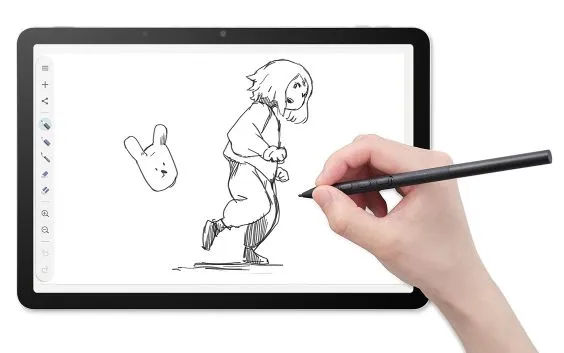
Since the advent of the internet, there has been a dedicated digital art community that’s all about creating through computing.
Wacom, a Japanese company founded in 1983, is considered one of the longstanding leaders in this sector. One of the oldest producers of graphics tablets in the world, Wacom has spent the last few years iterating on its Movinkpad series — a specialized Android tablet that creators can use to spin up digital art at the click of a button or the swipe of a stylus.
I’m not a professional artist, or even a hobbyist. But I am a tech enthusiast and was interested to see how a digital art newbie like myself might use a device like the Movinkpad.
Wacom lent TechCrunch a Movinkpad 11, the first tablet in the series. The Movinkpad 11 is not Wacom’s latest release. That’s the Movinkpad Pro 14, which came out last fall and costs substantially more at $899 and offers a number of impressive upgrades, including an OLED screen with 3K resolution and broader color spectrum. But I wanted to start with the first in the series to get to know Movinkpad from its earliest iteration.
The upshot: The Movinkpad 11 easy to setup and a capable device that won’t break your budget. At $500, it’s a little too expensive for a casual user who isn’t specifically interested in digital art. But for those who have a passion for digital doodling and not a lot of cash to throw around, it’s a relatively mid-range price point — stuck somewhere between budget picks like the Huion Inspiroy H640P (only around $30) and a more high-end item like Wacom’s own Cintiq Pro 27 (which is a whopping $3,500), or an iPad (up to $1,100).

For those unfamiliar with the digital art community, you might wonder why anyone would ever want to use one of these? If you’re into making art, why not just stick to paper and pencil?
Digital art affords a distinct kind of creative experience that is impossible to replicate anywhere else, proponents argue. Its patrons include graphic designers, cartoonists, animators, and even video game designers. Some traditional artists use tablet art as a sketching and conceptualization method, and then transfer their drawings onto paper. Others do the opposite, sketching something on paper and transferring it to their tablet. Whatever you’re into, the right tablet can go a long way towards helping you realize your creative vision.
Specs and setup
The Movinkpad 11 is an 11.45-inch device that comes with 8 gigabytes of memory and 128 gigabytes of storage, and is battery-free, with a USB charger. It weighs just 1.3 pounds, so it’s relatively light-weight and easy to carry around with you wherever you go.
It also comes with the Pro Pen 3, a 6.3-inch stylus that is easy to use, and includes three separate side buttons. Those side-buttons can be programmed to your liking. Users can also swap out and customize the stylus nibs to their choosing (Wacom offers a whole variety of $15 replacement nib packs of varying qualities).
Personally I found the stylus to be lightweight, easy to use, and similar to wielding a fine tipped felt pen.
The tablet was relatively straightforward to set up, although you’ll need to create an initial pin number to log into it. I questioned the reason for this level of security, at least for my sketches. (If you’re worried someone is going to steal your digital drawings, then your device will be locked and protected). Setting up the pin is easy enough though. Just head to the device’s settings, then Security and Privacy. Then you can choose your unlock settings to either swipe or none.
Since it’s an Android device, the Movinkpad can also be synced to your Google account, which could make integrating your creative materials significantly easier.
Movinkpad also comes with its own free digital art software, Wacom Canvas. With Canvas, users have some basic tools that they can use to get their digital sketches up and running. There’s also a paid app, Clip Studio Paint, which offers a larger range of features and capabilities (you can buy a license for a one-time fee that varies by version).
Depending on which program you’re using, the style and functionality of your stylus nib can also be adjusted. Within Clip Studio Paint, for instance, you can choose between a pen, paintbrush, or sketching pencil, and within each of those categories, there are a multitude of options.
The Movinkpad has quite a long list of competitors — including the iPad, which has its own variety of art apps and a dedicated stylus, dubbed the Apple Pencil. However, the Movinkpad offers a more focused and elegant solution than many of those options, and it comes from a longtime player in the graphics tablet space.
If digital art is your thing (or even if it’s not), the Movinkpad 11 is quite a bit of fun. I played around with it for several hours over a recent weekend and managed to work up some pretty goofy drawings. While none of my sketches are destined to hang in the Louvre, it was definitely a fun way to pass an afternoon.
When you purchase through links in our articles, we may earn a small commission. This doesn’t affect our editorial independence.
>
Tech
Security researchers scanned the Polish web and found courts, hospitals, and airports at risk of hacks

Two Polish security researchers wanted to find out how vulnerable their country’s internet was to potential cyberattacks, and quickly found that thousands of public agencies and websites were at risk of being hacked.
At the Def Con cybersecurity conference in Las Vegas on Friday, security researchers Robert Kruczek and Kamil Szczurowski said they wanted to understand the state of Poland’s public web out of a sense of patriotism and a desire to make it safer for everyone.
Before long, the duo discovered more than 10,000 affected public entities with 250,000 websites with security flaws, including airports, hospitals, and government offices.
The researchers found that some of the vendors’ buggy software, coupled with a lack of bug bounties and ways to report security flaws, are putting Poland’s public services at risk of hijacks and other attacks. The researchers also said that some bugs were incredibly easy to exploit but were not always taken seriously, with some vendors describing the bug reports as inconveniences.
The research comes as Poland is trying to shore up its cyber defenses after a wave of suspected Russian hacks targeting the country’s energy and water providers. Some of the hacks have been carried out by taking advantage of weak cybersecurity.
Kruczek and Szczurowski found several bugs in the widely used content management system Pad CMS, which website owners use to organize and display content.
The two found critical vulnerabilities in one web system called Pad CMS, which allowed them to easily access over 300 public websites without needing a password. The software developer did not patch the software because it had become “end of life” and was no longer supported.
Another bug allowed them to gain access to the websites of some two-thirds of Poland’s judiciary, or about 245 courts, they said.
The duo reported their findings to the government through various official channels.
The researchers said during their talk that it was ultimately worth the hassle, saying that as a result we are “a little bit more safe.”
When you purchase through links in our articles, we may earn a small commission. This doesn’t affect our editorial independence.
>

Indie Films Opening: ‘Tony’, ‘Teenage Sex And Death At Camp Miasma’, ‘Late Fame’

SAG-AFTRA Lists Voice Actor Michael Donovan’s Death – News

Brandon Clarke’s death ruled accidental overdose of cocaine, heroin
-

 movies3 months ago
Search For Canadian TV Actor Stewart McLean Now Homicide Investigation
-

 Fashion9 years ago
These ’90s fashion trends are making a comeback in 2017
-
Fashion9 years ago
According to Dior Couture, this taboo fashion accessory is back
-
Fashion9 years ago
Model Jocelyn Chew’s Instagram is the best vacation you’ve ever had
-
Fashion9 years ago
Your comprehensive guide to this fall’s biggest trends
-
Fashion9 years ago
9 Celebrities who have spoken out about being photoshopped
-
Fashion9 years ago
Emily Ratajkowski channels back-to-school style
-
Fashion9 years ago
A photo diary of the nightlife scene from LA To Ibiza