
movies
Sigurjón Sighvatsson Talks Propaganda Films, Working With David Lynch

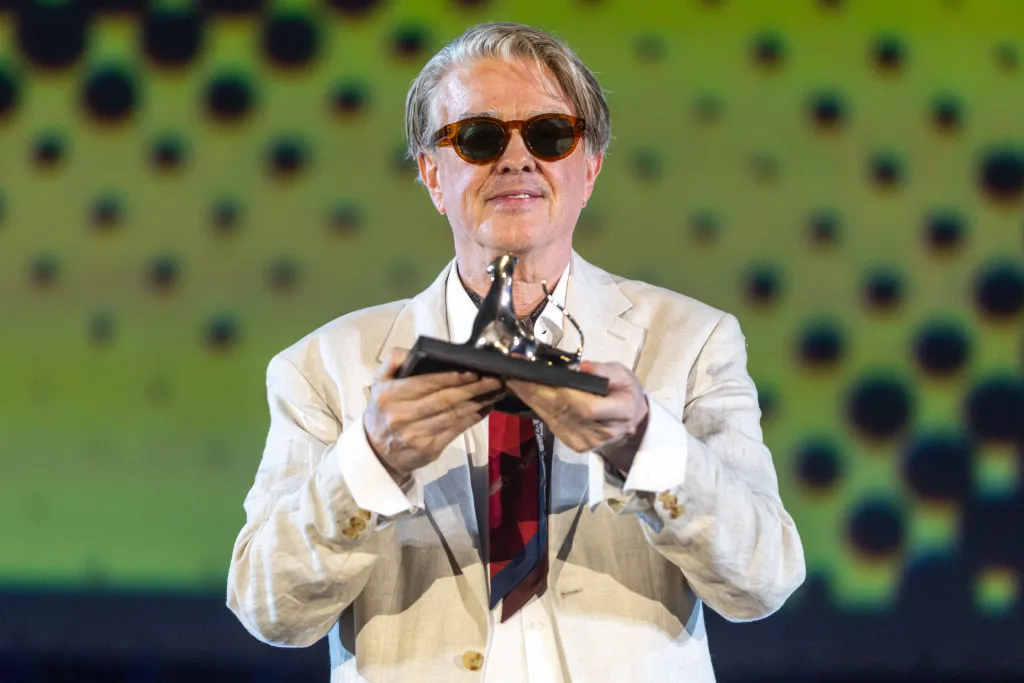
“Everybody who’s in film, and you don’t need to go to a doctor to be diagnosed, we have OCD… and ADHD, so when you look at a filmmaker, you know they have one of these traits, and I have both,” declared veteran producer Sigurjón “Yoni” Sighvatsson as he opened a masterclass on his 50-year career at the Locarno Film Festival on Friday.
There was much to chew on as Sighvatsson, who is being feted with Locarno’s Raimondo Rezzonico Award celebrating independent producers, looked back at a packed career spanning more than 100 music video, feature film and TV show credits spanning features Wild at Heart, Basquiat, A Thousand Acres and Arlington Road as well as groundbreaking TV shows Twin Peaks, Beverly Hills, 90210 and Tales of the City.
He touched briefly on his rock career in his native Iceland in the late 1960s and 1970s and role in creating the country’s first modern recording studio with his brother, before focusing on his arrival in L.A. on a Fulbright Scholarship in the early 1980s to study film at the USC School of Cinematic Arts, followed by a stint at the AFI Conservatory.
Sighvatsson said the creation of Propaganda Films in 1986 with a focus on music videos, with late Steve Golin, who went on to found Anonymous Content, was born out of the fact they and most the filmmakers they met at AFI were shut out of the mainstream Hollywood system.
“We started doing music videos because they were unregulated, because the big guys in Hollywood, they were not interested in that,” said Sighvatsson, confirming that the company produced at least a third of all music videos being made within four years of its launch.
At its height it had some 50 directors on its books including Michael Bay, John Dahl, Spike Jonze, David Lynch, Antoine Fuqua and Michel Gondry.
Sighvatsson recalled that the company first connected with Lynch when he approached them for help after Giorgio Armani commissioned him to make a commercial for then new fragrance Giò.
“It was supposed to be 30 seconds. David said, ‘I don’t do anything in 30 seconds’. So, it was three minutes. Armani called to complain, and David said, ‘Mr. Armani, I’m giving you something very special. You paid for 30 seconds. I gave you three minutes’.”
The veteran producer said most those associated with Propaganda Films regarded music videos and commercials as stepping stones to cinema.
“Propaganda was not really money driven. What united us, and later what became the thing that unravelled Propaganda, was that everybody had the goal of making feature films, so everything we were doing, even though it was short form, was all a quest to do feature films, particularly David Fincher.
Every video he did was a part of something he wanted to later incorporate into some kind of a film. He had this whole list of: I’m doing this scene because one day I want to shoot somebody on a plane, or one day I want to do this, and they somehow inserted that into the videos.”
In 1988, Propaganda struck a deal with Dutch German entertainment company PolyGram, under which the latter would finance Propaganda’s feature films in exchange for a part of the profits.
He recalled how the entertainment group had turned down the opportunity to buy the rights to Bill Gifford’s book ‘Wild at Heart’, which Sighvatsson was initially trying to adapt to the big screen with director Monty Montgomery at the helm.
“Polygram didn’t want to buy the book because they didn’t want to make violent movies, so I bought the book with Monty Montgomery. We said, ‘Fuck Polygram. We love the book. Let’s just buy the book’,” he said, revealing the project got stuck again after Montgomery struggled to deliver a screenplay .
“It wasn’t going well for Monty who was trying to write the screenplay. David was trying to do another film that never got made called Ronnie Rocket, about a dwarf…a few months go by, and nothing is happening, I say to Monty, ‘Nothing is happening with the book. Every draft of the script you make gets worse. Why don’t we send the book to David? Let’s see what he thinks.’ We sent the book to David on a Friday, and he called me on the Monday. He said, ‘I love it, and I started writing the script’. And I said, ‘David, we have to make a deal’. He said, ‘There’s no deal. I’ll just write it and let me make it’. So that’s how that came about.”
Around the same time, Sighvatsson also got involved in the pilot for Twin Peaks, created by Lynch with Mark Frost, with a promise of backing from ABC, which was then under the control of Bob Iger.
“David and Mark wrote this pilot called Twin Peaks and of course when they saw it at ABC, they freaked out. There was a meltdown. They had lunch and there was food poisoning afterwards,” he recalled to laughter.
“Through continuous talks with Bob Iger, who by the way, was not very friendly. He’s a big figure today, but he was not a fan of Twin Peaks. He said, ‘I will make it, but I will only give you one and a half million dollars’.”
Sighvatsson noted it marked one of the first examples of crossover between the film and TV business, which is commonplace today.
“We were making movies, and David said, ‘I’ll only make it if I get my film team’. That was new in television, and they said, ‘Well, with your million and a half, you can do whatever you want.’ That wasn’t really true but it clear we needed to find more finance elsewhere.”
Tap into Europe was also tough with the broadcast landscape at the time dominated by state broadcasters, which were as freaked out by Lynch’s screenplay as ABC.
“They would all say, “What is this? We’re not going to broadcast this at 8 o’clock on a Sunday, no way,” he recounted.
It was then that Sighvatsson hit on the idea of tapping into VHS sales, taking inspiration from a video operation he had helped set up in Iceland to help fill the viewing gap on Thursday when the screen went dark for the day at the time.
Using this model, he secured a video deal with Aaron Spelling under his World Vision banner. ABC agreed to the deal on the condition that the pilot was not shown in cinemas. On upshot of this was that while the pilot revealed the identity of Laura Palmer’s killer in a pre-convergence, analogue world this fact did not travel.
“That’s why the Twin Peaks pilot was never shown in movie theatres in Europe and was only on VHS and wasn’t even on television.”
Sighvatsson would go on to take TV credits on Beverly Hills, 90210 and Tales of the City (1993), driving the small screen adaptation of Amistead Maupin’s San Francisco-set novels against the odds.
He recounted how he had fallen in love with the books and flown to San Francisco to meet Maupin who granted him the rights. He then encountered pushback in the U.S. over the suitability of Maupin’s book for a TV adaptation due to the fact many of the characters were gay.
“People said, ‘Sorry, Yoni, it’s gay. And I said, ‘Well, it’s not about that. It’s about people, and yeah, they happen to be gay, but they’re like us’. Nobody wanted to buy it. And again, Polygram didn’t want to buy it, and nobody wanted to buy it,” he recalled.
In the end, he turned to Propaganda’s affiliates Tim Bevan and Eric Fellner at Working Title in the UK, while attaching Richard Kramer to write the screenplay, to see if they could help. “They got ITV in the UK to come aboard, that’s how Tales of the City got made. ITV came in and decided to fund most of it, and then I got PBS to fund the rest.”
Most of Sighvatsson’s career since has focused on feature films. One of his personal highlights was Mark Pellington’s 1999 political thriller Arlington Road, starring Jeff Bridges as a history professor who suspects his neighbor Tim Robbins of being involved in an anti-government extremist movement.
The film tapped into growing fears in the U.S. over homegrown terrorists in the wake of the 1995 Oklahoma City bombing.
It was the first thriller about extremists in America but the key to Arlington Road was that we killed the hero. In a Hollywood film, the hero doesn’t die. That’s always the story. The hero wins,” said the producer.
Sighvatsson recounted how Sony was interested in the story and cast he had assembled but were not keen in killing off the protagonist.
“Somebody said, ‘Well, you kill the good guy. That’s not that’s not a Hollywood movie. Nobody’s gonna come. So they insisted we shoot two endings. Shoot an ending where he lives and an ending where he dies. And if the ending where he dies tests because we test the films worse than the ending where he lives, you have to use the ending where he lives because it cost 20 million the film, which was a big budget at the time. So we screened the film, and you know what? Everybody liked the ending where Jeff Bridges dies,” he recounted.
“Everybody should see Arlington Road because it’s the beginning of the right-wing extremists, and the good guy loses, which is what’s happening in America, the good guys are losing.”
Now based between Portugal and Iceland, having left L.A. during the Covid-19 pandemic, Sighvatsson continues to produce under his Palomar Pictures and has trio of projects on the go which he is keeping under wraps for now.
Asked on advice for upcoming filmmakers, Sighvatsson replied: “One thing that has always worked is just go and make your own thing. And now you can do it even on your phone… You will get there, and now you don’t need all this big system around you to get people to see visually what you do. I would say do it yourself.”
>

Jean Lodge, the British actor who play Queen Guinevere in the 1954 King Arthur movie The Black Knight and who was the mother of Days of Our Lives and The Nanny star Charles Shaughnessy and soap opera director David Shaughnessy, died Wednesday, August 5. She was 99.
Her death was announced on Facebook by her granddaughter Amy Shaughnessy.
“Jean Margaret Shaughnessy (neé Lodge) left us today, one day after her 99th birthday,” Amy Shaughnessy wrote. “She passed, as she would say, ‘quite quietly’ and peacefully in her sleep.”
Lodge was married to Alfred Shaughnessy, the chief writer of the British 1970s hit series Upstairs, Downstairs, from 1948 until his death in 2005. Son David Shaughnessy has directed for Days of Our Lives, The Young and the Restless and The Bold and the Beautiful, among other soaps, and is a voice actor with credits including Big Hero 6 and Star Wars Rebels.
Charles Shaughnessy is best known for his long-running roles of Shane Donovan on Days of Our Lives and Victor Cassadine on General Hospital, as well as for costarring with Fran Drescher on the 1993-1999 sitcom The Nanny.
From the late 1940s through the mid-1960s, Jean Lodge’s prolific career in British film and TV included, in addition to The Black Knight, the movies White Corridors, Brandy for the Parson, and, in 1961, The Hellfire Club opposite Peter Cushing. Lodge also appeared on stage in the West End in the 1950s.

Born Jean Margaret Lodge on August 4, 1927, in Hull, England, Lodge was, her granddaughter writes, “a beautiful, talented, complicated, passionate, emotional, energetic woman who was always on the move and full of life. The perfect hostess Jean enjoyed parties, friends, socializing, the theatre, feeding the ducks, museums, gardening, music, culture, long walks in nature, animals, painting (she was amazing!), cooking, art, traveling… the list goes on.”
The statement continues, “She loved her two sons, Charles and David, her daughters-in-law, Susie and Annie, and her five granddaughters, Amy, Jenny, Katie, Maddy, and Josie. She was blessed with two great-grandsons, Julian and Noa.
“An ever-present matriarch, her silliness, stubbornness, joyfulness, and her love for storytelling will continue on through her family. Us. Forever. We will miss her. We will carry her with us always. We love her all the world and then some.”
>

Ted’s back!
Well, first, Rebecca (Hannah Waddingham), Leslie Higgins (Jeremy Swift) and Keeley Jones (Juno Temple) have to visit him in Kansas City, where he has taken up a cashier job at the supermarket. After attending a KC Current match, the trio successfully recruit Ted to coach their Division 2 women’s team.
Luckily, Ted’s son Henry (Grant Feely) and ex-wife Michelle (Andrea Anders) are on board this time, and a change of scenery would be good for all three of them. Henry provides a way into the show for some hip hop and Public Enemy references musically thus far in the first episode.
Previous seasons of the soccer comedy have contained memorable moments set to The Rolling Stones’ “She’s A Rainbow,” Hannah Waddingham belting “Let It Go” from Frozen (2013), Ted getting dressed to Philip Bailey and Phil Collins’ “Easy Lover.” Christa Miller, Shrinking star and wife of Ted Lasso executive producer Bill Lawrence, curates the soundtrack.The two trailers both contained songs from Mumford & Sons’ latest album, Prizefighter — “Rubber Band Man (feat. Hozier)” and “Run Together.”
For all the songs in Ted Lasso Season 4 by episode, read on and check back as new episodes come out every week:
Episode 1 – “Home”
- “Magic” by Olivia Newton-John
- “Back in the High Life Again” (re-record) by Steve Winwood
- “Black Steel in the Hour of Chaos” by Public Enemy (lyrics mentioned in Henry’s notebook)
- “Vine Street Boogie” by Jay McShann
- “Can’t Truss It” by Public Enemy (Re-record, Sample Free)
- “I Don’t Want To Know” – Fleetwood Mac
- “Oh, Lady Be Good” by Count Basie
- “KC Blues” – Charlie Parker
- “Be” by Frogpond
- “Kansas City” by The New Basement Tapes
- Ted Lasso Theme song by Marcus Mumford & Tom Howe
RELATED: Jason Sudeikis Sets Up ‘Ted Lasso’ Season 4: “It’s Getting Back To Doing What He Loves”
>
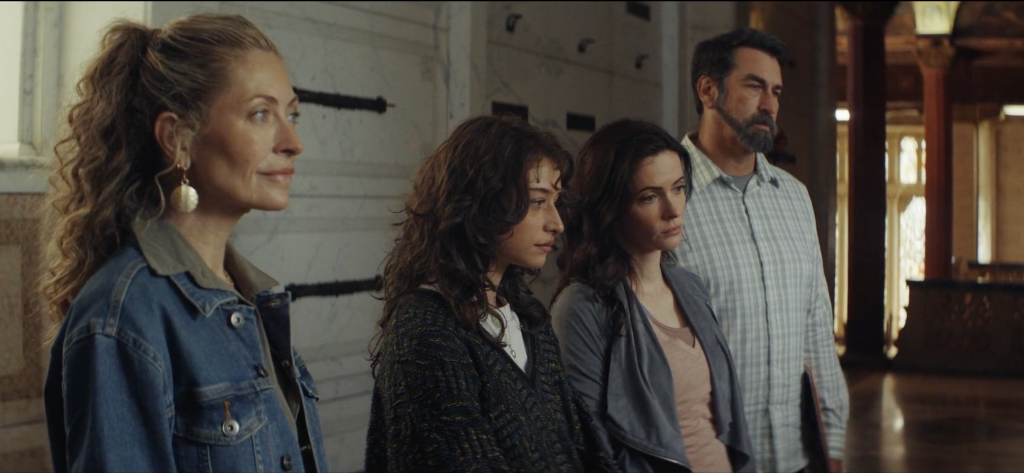
EXCLUSIVE: Briarcliff Entertainment will open Spencer King’s Nickels in select theaters on Oct. 2 as well as on PVOD.
In the pic, Rob Riggle stars as Tom Monroe, a successful entrepreneur and devoted family man who has never recovered from the tragic motorcycle accident that claimed his older brother’s life when he was a teenager. Thirty years later, after his neighbor’s son, Mitch Diller (Aaron Holliday), is involved in a devastating motorcycle crash, Tom begins to believe his brother’s spirit may have returned. His search for answers impacts everyone closest to him including his daughter (Odessa A’zion), and his wife (Bitsie Tulloch) as Tom is forced to confront grief, faith and the possibility of second chances. Written by Tim Tuchrello, the movie also stars Rebecca Gayheart, Vinessa Shaw, Aaron Holliday and Tom Arnold.
The film is produced by Tom Ortenberg, Danielle Goodman Strong, Andrew Ortenberg and Jordan Dykstra. Executive producers are Russell Geyser and Clay Pecorin of Rainmaker Films, Randy Manis, Richard Rapkowski and Robert Paschall Jr.
Producer and Briarcliff CEO Tom Ortenberg said, “Spencer King has crafted a deeply moving and thought-provoking film and the enduring bonds that connect us. Rob, Odessa, Bitsie, Rebecca, Vinessa, Aaron and Tom deliver performances that bring extraordinary heart and authenticity to this beautiful story.”
The film was shot in Los Angeles at locations throughout the city and features music by Isaac Middleton, costume design by Jennifer DeRosa, editing by Amir Mosallaie, production design by Charles LaGola, and cinematography by Luke Dyra.
>

Tour de France Femmes stage seven: Kasia Niewiadoma-Phinney shakes up GC in thrilling solo ride

Avengers: Doomsday Enlists Spider-Man: Brand New Day Writers

Anime NYC Holds Panels for Big West/Macross, English Dub Premieres of Go Forward. Anime, 27th Detective Conan Film – News
-

 movies3 months ago
Search For Canadian TV Actor Stewart McLean Now Homicide Investigation
-

 Fashion9 years ago
These ’90s fashion trends are making a comeback in 2017
-
Fashion9 years ago
According to Dior Couture, this taboo fashion accessory is back
-
Fashion9 years ago
Model Jocelyn Chew’s Instagram is the best vacation you’ve ever had
-
Fashion9 years ago
Your comprehensive guide to this fall’s biggest trends
-
Fashion9 years ago
9 Celebrities who have spoken out about being photoshopped
-
Fashion9 years ago
Emily Ratajkowski channels back-to-school style
-
Fashion9 years ago
A photo diary of the nightlife scene from LA To Ibiza