
movies
Werner Herzog to Receive San Sebastian Film Festival’s Donostia Award

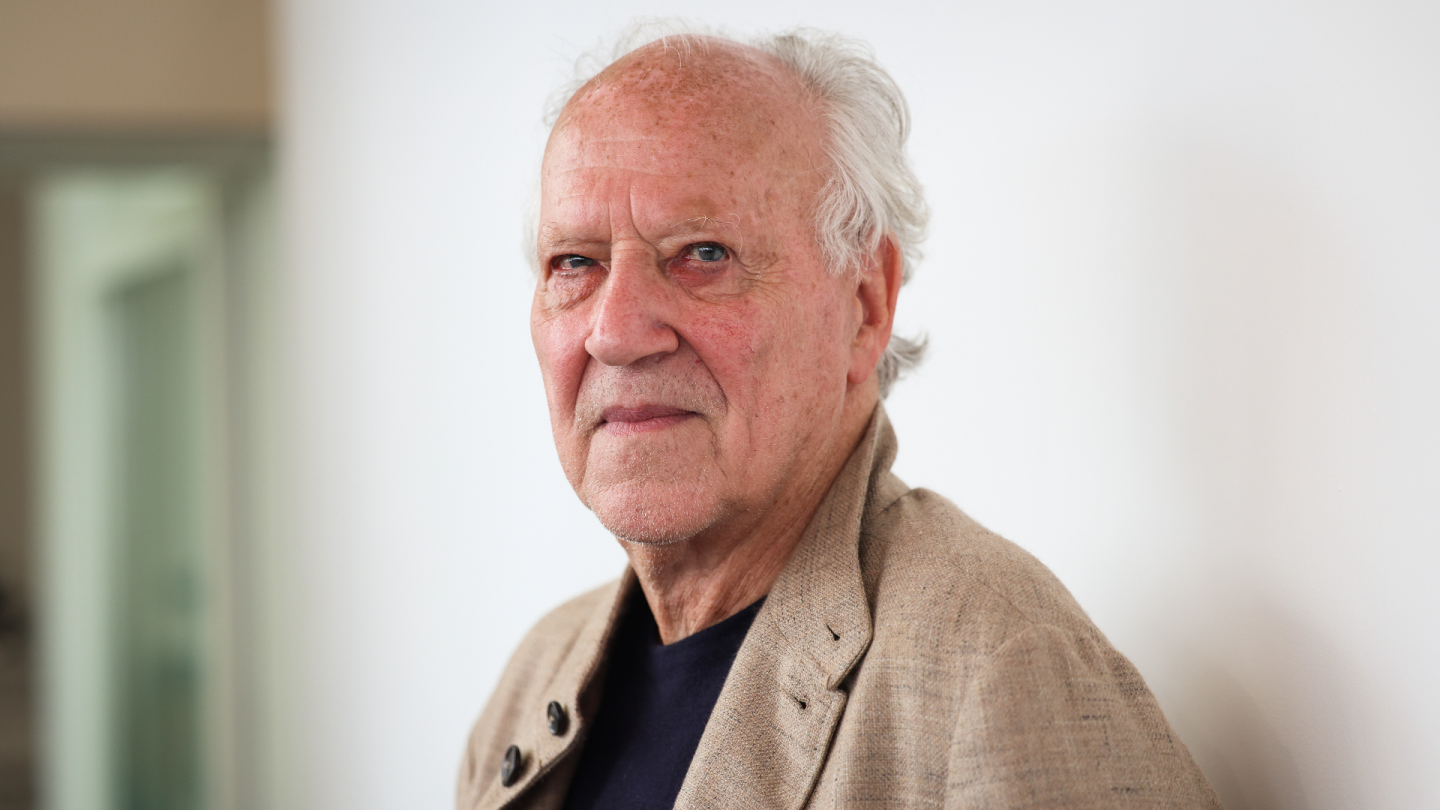
Werner Herzog will receive this year’s Donostia Award at the San Sebastian Film Festival.
The fest’s highest honorary award, received last year by Jennifer Lawrence and veteran Spanish Esther Garcia, will be accompanied by a screening of the German filmmaker’s latest feature film, Bucking Fastard, which is competing in the upcoming Venice Film Festival.
“Over a career spanning six decades, Herzog has become one of the most influential figures in contemporary cinema, building an extraordinary body of work ―around 80 films― shaped by obsession, extreme situations and the contradictions of human nature,” said the San Sebastian Film Festival. “His films, both fiction and non-fiction, are populated by dreamers and conquerors confronted with extreme landscapes and forces beyond their control. Guided by his concept of ‘Ecstatic Truth,’ Herzog advocates a cinema that transcends the mere observation of facts to reveal a deeper, more poetic dimension of reality.”
The Donostia Award screening will take place at the Victoria Eugenia Theatre before the award ceremony at the city’s Kursaal venue. Starring Rooney Mara, Kate Mara, Orlando Bloom and Domhnall Gleeson, Bucking Fastard tells the unusual story of twin sisters whose extraordinary bond leads them to speak in unison, love the same man and share the same dreams.
Some of Herzog’s most iconic films include Aguirre, the Wrath of God (1972), Fitzcarraldo (1982), Grizzly Man (2005) and Cave of Forgotten Dreams (2010).
He has also published poetry and books of prose, such as Of Walking In Ice, Conquest of the Useless and, recently, The Twilight World, a novel. Herzog has staged about a dozen operas and even acted in films, among them Jack Reacher, The Mandalorian and guest roles in The Simpsons.
>

German director Felix Randau hits the Locarno Film Festival’s Piazza Grande this evening with post-World War Two drama I Is Another starring Claes Bang as Heinrich Himmler’s real-life controversial massage therapist Felix Kersten.
In his memoirs, Kersten recounted how he used his influence over the SS founder and Holocaust architect, to halt a planned mass deportation of Dutch citizens as well as save some 60,000 Jewish people being held in concentration camps.
These self-professed humanitarian acts won Kersten accolades in the 1950s – such as the Netherlands’ Grand Cross of the Order of Orange-Nassau – and saw him nominated for the Nobel Peace Prize eight times over that decade but evidence has since come to light casting doubt on his claims.
I Is Another delves into the case through an imagined encounter between Kersten and an investigative journalist on a train to Oslo as the therapist travels to the city with his wife in the expectation that he will finally receive a Nobel Prize.
The journalist, who has her own complex backstory, has uncovered evidence suggesting there are flaws in Kersten’s version of events and wants to confront him on the facts. A psychological game of cat and mouse ensues intercut with flashbacks to Kersten’s interactions and relationship with Himmler across World War Two.

Randau, who was last in Locarno in 2017 with Iceman, set his heart on Danish actor Bang for the role of Kersten from the start as he began developing the project some five years ago.
“Kersten is a shady character, a guy who is in between, who is neither evil or good and that’s the kind of character he likes to play,” Randau tells Deadline. “I also knew – which is a little-known fact – that he speaks near perfect German… he is just perfect for this part because if Claes tells you a lie, you want to believe him.”
Valerie Pachner, whose credits include Terrence Malick’s A Hidden Life and Berlinale 2026 Panorama title Four Minus Three, plays investigative journalist Hedda.
“I’ve been a fan of hers since A Hidden Life… I just sent her the script, and she liked it, and that was that. The only part that was really hard to cast was Heinrich Himmler,” he says, revealing actors were disturbed by the humanizing of the Nazi leader in the script.
“I sent the script to many actors in Germany, famous actors, but they all turned it down, with some even accusing me of providing a stage for Himmler, which is completely ridiculous… If you cancel evil, it grows in the dark, but they had a problem with that.”
“In Germany, these Nazi guys are always portrayed as grotesque kind of characters who could have jumped out of a comic book…. But it’s completely ridiculous because the audience simply pushes these kinds of grotesque characters away… But all these guys, they were all human beings, like you and me, even if it’s hard to accept that. They were full of contradictions… Himmler, he was very, very shy and weak self-confidence stuff like that, and then he was this monster on the other side.”
He credits Casting Suse Marquardt with scouting stage actor Martin Müller for the role.
Randau’s initial curiosity in Kersten was piqued by a meeting some five years ago with French producers over a potential collaboration on a TV series devoted to the exploits of the massage-therapist. Kersten remains a respected figure in France, where his story became the stuff of World War Two legend thanks to the 1960 book ‘The Man with the Miraculous Hands’ by David Kessel.
“I went to Paris and met these guys, and it was nice and then I went back to Berlin and started my own research. In their concept, there was one line that really made me suspicious somehow, and it was something like, ‘If Steven Spielberg had known about Felix Kersten, he would have shot a film about him and not about Oskar Schindler’,” recounts Randau.
“That sounded to me a little bit ridiculous because we all know that Steven Spielberg struggled for about 10 years and hesitated to shoot Schindler’s List… he had an army of assistants and must have known about Felix Kersten,” he continues.
Randau embarked on his own research, consulting archives in Germany, and history experts, to eventually uncover the physiotherapist’s SS membership card and other damning evidence.
“I found out that he wasn’t a hero… He was some kind of impostor or something in between, a shady kind of guy,” says the director, recounting that when he approached the French producers with his findings, they dropped the idea of working with him.
“They said, “Okay, but we are not interested anymore. We want to shoot this hero story, and that’s it.’ I was, as you can imagine, a little bit depressed because I did all this digging and stuff, and then I got the idea, “Okay, then let’s make a movie out of this whole research material, but in a completely different way.”
Randau does not deny that Kersten may have pulled some strings to save some lives, but questions the scale of therapist’s acts as well as his motives, suggesting he was a narcissist and an opportunist who saw the writing was on the wall for Germany after it lost the Battle of Stalingrad and it troops were forced to surrender to Soviet forces in early 1943.
“That’s the point where he started to manipulate Himmler and made him release not 1000s, but some guys from the concentration camps, as well as this mutual whitewashing with the other guys involved in all this stuff, faking a lot of documents for the time after the war. Felix Kersten he did some really good things, but for the wrong reasons. He didn’t do it because he was a nice guy or something, or because of because he believed in humanity or stuff like that. I think he just did it to save his own life,” says the director.
He started writing the screenplay, sending an early draft to Bang, who expressed strong interest in the project, at the same time as getting Marcel Lenz and Claritta Kratochwil at Ostlicht Filmproduktion on board as lead producers in co-production with Wega Film and the support of broadcasters MDR, arte and BR.
“That was the beginning, but to be honest, getting to the bottom of who Kersten really was, nobody can tell. I don’t pretend to tell the truth. My story is based on all the facts that I have. But there may be another truth. I don’t know. He’s like a shimmering marsh flower, a strange kind of guy.”
>
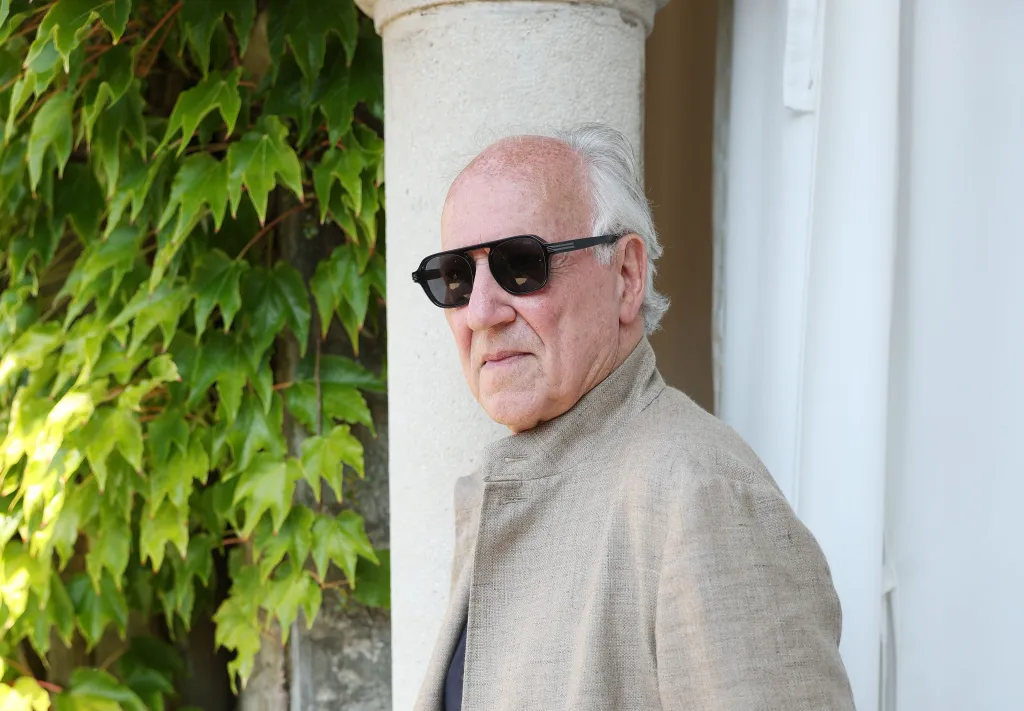
Veteran director, writer, producer and actor Werner Herzog will receive a Donostia Award in recognition of his career during the opening gala of the San Sebastián Festival (18 to 26 September).
The festival’s highest honorary distinction for the German filmmaker will be accompanied by a screening of his new feature, Bucking Fastard, which will launch at the upcoming Venice Film Festival.
The Donostia Award Screening will take place at the Victoria Eugenia Theatre prior to the award ceremony at the Kursaal. The new movie stars Rooney Mara, Kate Mara, Orlando Bloom and Domhnall Gleeson in the story of twin sisters “whose close bond leads them to speak in unison, love the same man and share the same dreams”.
Over a career spanning six decades, Herzog has become one of the most influential figures in international cinema, working on around 80 films often alighting on the subjects of obsession, extreme situations and the contradictions of human nature. Guided by his concept of “ecstatic truth”, Herzog has advocated a cinema that transcends the mere observation of facts to reveal a deeper, more poetic dimension of reality.
Born in Munich in 1942, he grew up as a child in a remote valley in the Bavarian mountains. Until age 11, he did not even know of the existence of cinema. He started to develop film projects from age 15 on, and since no one was willing to finance them, he worked the night shift as a welder in a steel factory during the last years of high school. He also started to travel on foot.
He made his first phone call at age 17 and his first film at 19. He dropped out of college where he studied history and literature.
Since then he has written, produced and directed some 80 films. They include the classics Aguirre, the Wrath of God (1972); Fitzcarraldo (1982), for which he moved a steamship over a mountain in the jungle; Grizzly Man (2005) and Cave of Forgotten Dreams (2010). He has published poetry and books of prose and acted in films, among them Jack Reacher, The Mandalorian and guest roles in The Simpsons.
>

Call Me By Your Name and Challengers director Luca Guadagnino is set to receive the Cartier Glory to the Filmmaker Award of the 83rd Venice International Film Festival (September 2nd – 12th, 2026).
The award is bestowed on “a personality who has made a particularly original contribution to the contemporary film industry.”
The award ceremony will take place on Tuesday September 8thin the Sala Casinò (Palazzo del Casinò), at 3.00 pm, before the screening Out of Competition of his epic Bernardo Bertolucci documentary, Joie de vivre (Italy, 435′).
Guadagnino said: “It might seem like a rhetorical gesture to say I am honored to receive the Glory to the Filmmaker award, but it is the plain truth for many reasons. To be honored for one’s craft or life as a filmmaker is an ambition that no one who makes films could ever presume to imagine achieving—especially by joining a group of filmmakers who have received this prestigious honor before me and to whom I owe so much of my development. So, I want to emphasize once again what an honor it is to receive this award, especially from Alberto Barbera and La Biennale di Venezia. Thank you, thank you!”
Director of the Venice Film Festival Alberto Barbera stated: “The Glory to the Filmmaker Award celebrates in Luca Guadagnino an author who has managed to transform his curiosity into a form of creative freedom. Defying alignment with any single school or movement, he has established himself as a global director, capable of working with leading international actors and producers. He has navigated diverse genres—from melodrama to horror, coming-of-age to psychological thriller—while maintaining a consistent and recognizable voice, without ever losing a deeply Italian identity in portraying bodies, settings, and history. His is a vital cinema that does not shy away from risk: nomadic, sensual, sophisticated yet widely accessible, where intellectual provocation and emotion, memory and modernity coexist brilliantly. Glory to the Filmmaker honors the originality of a vision that has succeeded in renewing the language of contemporary cinema, celebrating a career that has brought Italian auteurship into a true dialogue with the entire world.”
Guadagnino has debuted a number of films on the Lido, including most recently After the Hunt (2025), Queer (2024) and Bones and All (2022). Previous films at the festival comprise The Protagonists (1999), Io sono l’amore (2009), Bertolucci on Bertolucci (2013), A Bigger Splash (2015), Suspiria (2018), Salvatore: The Shoemaker of Dreams (2020).
>

Felix Randau Talks I Is Another’With Claes Bang As Himmler’s Masseur

Rangers, Hearts, Hibernian, Motherwell: Scottish summer malaise continues but some room for optimism

Cristian Romero: Atletico Madrid hold talks over move for Tottenham captain
-

 movies3 months ago
Search For Canadian TV Actor Stewart McLean Now Homicide Investigation
-

 Fashion9 years ago
These ’90s fashion trends are making a comeback in 2017
-
Fashion9 years ago
According to Dior Couture, this taboo fashion accessory is back
-
Fashion9 years ago
Model Jocelyn Chew’s Instagram is the best vacation you’ve ever had
-
Fashion9 years ago
Your comprehensive guide to this fall’s biggest trends
-
Fashion9 years ago
9 Celebrities who have spoken out about being photoshopped
-
Fashion9 years ago
Emily Ratajkowski channels back-to-school style
-
Fashion9 years ago
A photo diary of the nightlife scene from LA To Ibiza