
Entertainment
Fjord Review: Sebastian Stan and Renate Reinsve Lead Culture War Drama

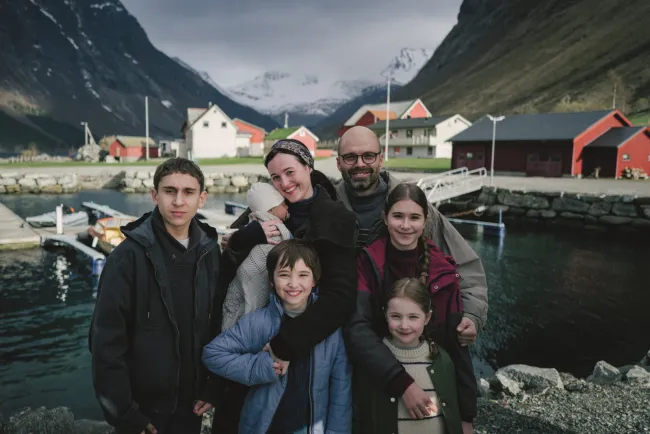
Intolerance assumes a more progressive sheen with Cristian Mungiu’s “Fjord,” a characteristically fraught and tangled drama in which the “R.M.N.” filmmaker continues to vivisect the reactionary pitfalls of globalization — this time in Norway, which the annual World Happiness Report consistently lists as one of the happiest countries in the world.
Perhaps that explains why Romanian software engineer Mihai Gheorghiu (a bald Sebastian Stan, looking more like Damon Lindelof than the Winter Soldier) was so quick to move his brood from the middle of Bucharest to a scenic fjord in Stranda after his parents died; Mihai’s wife Lisbet (Renate Reinsve, her performance like a shaken willow) was raised in the area, and her mother is supposedly still around to help care for the couple’s five kids. The religiously conservative Gheorghius might not mesh right away with the ultra-liberal utopianism of their new home, but Jesus didn’t have a problem with good schools and excellent healthcare. He said “thou shalt love thy neighbor as thyself,” and for the most part the Gheorghius appear to live by that credo as they settle into a secular community by the sea.


Their woke and godless neighbors — who own televisions and don’t know how to discipline their kids — are a different story. They try to be nice about it, of course, as seeming unkind is among the worst of liberal sins, but the schoolmaster (Markus Scarth Tønseth) who lives nearby looks ever-so-slightly askance at the strict point system that Mihai applies to his children (don’t ask), or his choice to punish the older two by refusing to let them attend a birthday party they can hear from their bedroom window. Never mind that Mats’ teenage daughter Noora (Henrikke Lund-Olsen) is a troubled soul who steals the family boat every night and slashes her wrists to get a rise out of her friends, it’s the well-mannered Catholics next door who are doing things backwards.
And in some ways, I’d argue, they are. I suspect the majority of Mungiu’s audience shares my disgust with Mihai’s belief that gay marriage is an affront to heaven. By the same token, I belong to a generation of American parents who would cut off their own hands if they ever laid them upon their kids (Mihai admits to slapping a butt or two back in the day), and I’m sure I’d judge someone for not letting their children listen to secular music even though I’d happily pay all the money on Earth for the chance to go back in time and stop my six-year-old from hearing that Ice Spice song from the latest Spongebob movie.
Be that as it may, it’s hard not to have some major reservations when the Norwegian Child Welfare Service determines that the small bruises a teacher finds on Mihai and Lisbet’s eldest daughter (Vanessa Ceban as Elia) are reason enough to take all five of their kids into custody while they conduct a thorough investigation. Mungiu’s penchant for soul-scorching sequence shots is at a minimum in this movie, and his visual approach only grows more formally restrained as its story builds towards the stuff of a familiar courtroom drama, but the uninterrupted scene where government workers come into Lisbet’s home and tell her they’ll be leaving with all of Lisbet’s children — including the new baby who still breastfeeds! — is as stomach-churning as anything in the director’s body of work. “We’re here to help,” they say. “We have to look out for the best interests of the children,” they say. In truth, it feels more like a state-funded abduction. It feels like the kind of thing that should inspire any good liberal to take to the streets.
And so, under the gray-periwinkle skies of a perfect Norwegian winter, the Gheorghius find themselves punished for their failure to assimilate into the values of a country that most of them have never lived in before. Whereas earlier in his career Mungiu may have entertained the possibility that Mihai actually is a violent monster at heart (a possibility that would have been fueled by the festering rage of Stan’s rigorous and restrained tri-lingual performance), here the filmmaker is content to prize ambivalence over ambiguity; the very first scene of the movie might demand a second look, but I tend to believe that “Fjord” gives us all the evidence we need to know that the Romanian transplants are getting railroaded.
If that sounds like the recipe for a faith-based persecution drama (or so much worse: an 146-minute dose of Bill Maher-like sermonizing against the messily applied impulse to make the world a better place), rest assured that Mungiu is much less interested in defending biblical values than he is in interrogating the nuclear friction at the root of even the “nicest” culture clash. It’s a bit convenient that the Gheorghius’ kids are compliant little angels while Mats’ daughter is the closest thing their town has to a certified hellion, but the fact remains that Mihai and Lisbet are being persecuted for their differences in a society that prides itself on its freedoms. It’s even suggested that the children’s testimony — the most damning evidence the state has against their father — might be the result of a language-related miscommunication.
The Gheorghius are the victims of good intentions, which is of little comfort to them as the seasons change and they continue to be separated from their kids. A slow-burn snowball that achieves much — or at least some — of Mungiu’s signature entropy despite eschewing the more overt bigotries that fueled his previous films, “Fjord” digs its heels deeper and deeper into the situation as Mihai and Lisbet do their best to cooperate with the investigation.
Lisbet’s relationship with Mats’ ailing father offers a curious inversion of the movie’s cultural mores (Lisbet, a caretaker at the local nursing facility, resists the old man’s request to die with dignity), while Mihai is compelled to amplify — and possibly even exaggerate — his hardline ideology in order to whip up viral support from conservative protestors across Europe. Extremism begets extremism, as tends to be the case in Mungiu’s work, and while the eventual court battle lacks the same intensity that allows “4 Months, 3 Weeks, and 2 Days” and “Beyond the Hills” to grip you in a chokehold, “Fjord” gradually distills its own sense of urgency from the deprivations that it fosters among its children. Among all of its children.
“You need to learn to apologize when you’re wrong,” Mihai instructs his kids during the opening scene, which takes place in the immediate aftermath of an unseen punishment. But none of the adults in this movie — Mihai included — are able to practice what they preach, a failure of perspective that allows the divides between them to grow as thick as the walls that protect the local school from the avalanches that crash down upon it whenever the drama gets too intense. “What does it mean to be a good neighbor?”, “Fjord” wonders in Mungiu’s usual tones, its probing handheld wide shots infused with the callous indifference of the gods. And why is that so rarely a question that people feel required to ask of themselves?
Grade: B+
“Fjord” premiered in Competition at the 2026 Cannes Film Festival. NEON will release it in theaters later this year.
Want to stay up to date on IndieWire’s film reviews and critical thoughts? Subscribe here to our newsletter In Review by David Ehrlich, in which our Chief Film Critic and Head Reviews Editor rounds up the best new reviews and streaming picks along with some exclusive musings — all only available to subscribers.
>
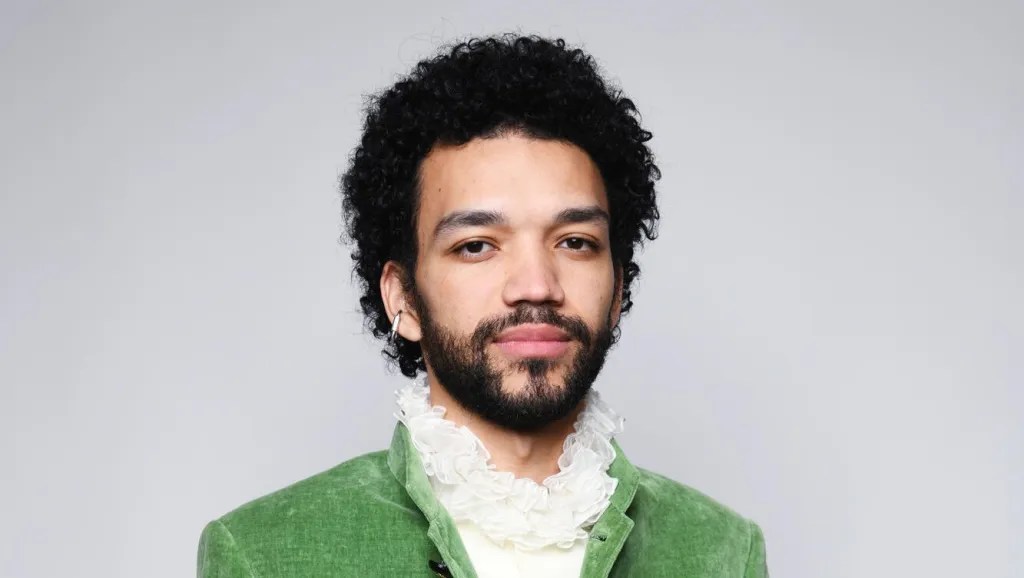
The casting of most beloved literary characters in screen adaptation inevitably creates online discourse as fans of the books have their own preconceived notions for what the characters should look like. Heated Rivalry is no exception, with the announcement on Friday that Justice Smith and Charlie Gillespie will play Harris Drover and Troy Barrett, respectively, in Season 2 of the hugely popular series based on Rachel Reid’s Game Changer books, triggering a strong reaction.
Smith appeared to address the discourse on his Instagram Story.
“I am moved by the support and love I’m getting from fans in my dms, fans who have welcomed me with open arms and who already feel a responsibility to protect me.”
The protecting part is likely a reference to negative comments posted online, a lot of them pointed at Smith’s casting.
“I am honored to play a character that you all care about deeply and I promise that I will take good care of him if you give me the chance,” he wrote, adding, “I am beyond excited for the experience.”
The negative online response to the Harris and Troy castings also prompted Reid to remind fans that Connor Storrie and Hudson Williams — now loved around the world for their portrayal of Ilya Rozanov and Shane Hollander, respectively — weren’t an easy sell either.
“Thinking about all the people last summer who told me the casting for llya and Shane was wrong and bad…,” Reid wrote on her Instagram Story.
Harris Drover and Troy Barrett are the central couple in Role Model, the fifth book in Reid’s bestselling Game Changer series, which is being used as source material for Season 2 alongside the Ilya and Shane follow-up book, The Long Game.
Troy is a hockey player on Ilya’s team with a history of bullying, while Harris is the team’s cheerful social media manager,
“From the start of the casting process, we knew we were looking for actors who could create something truly special together and bring that same depth and heart to the screen,” Heated Rivalry creator Jacob Tierney and fellow executive producer Brendan Brady said on Friday about the search for Harris and Troy. “Justice and Charlie do exactly that. They immediately connected with the vulnerability and resilience at the core of these characters, bringing an instinctive understanding of who Harris and Troy are.”
>
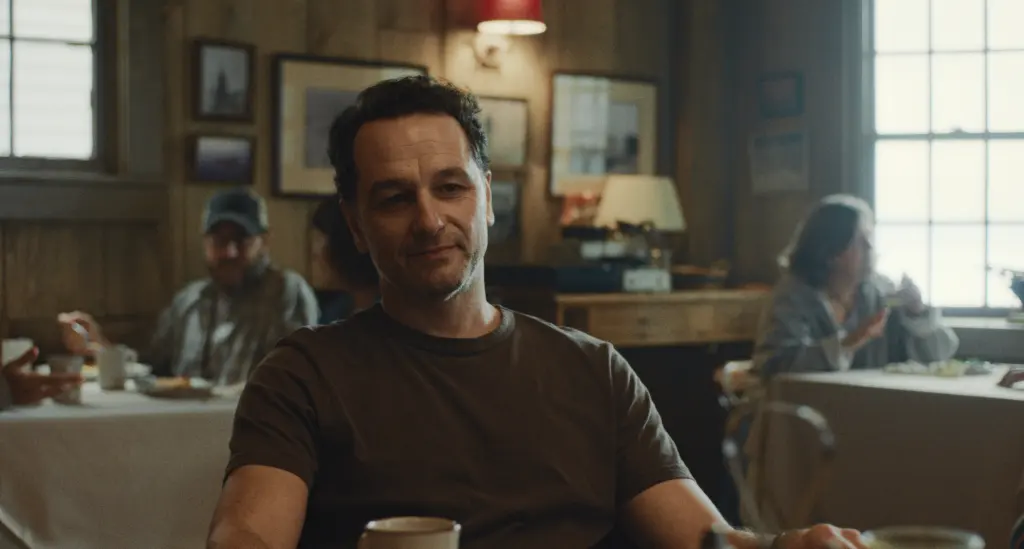
Set Decorators Society of America (SDSA) tonight honored the best in class for contemporary, fantasy, science fiction variety, reality and period series. Apple’s Widow’s Bay & Palm Royale, Netflix’s Wednesday and Amazon’s Fallout among the big winners in the hour-long categories.
The SDSA Awards are presented annually by the Set Decorators Society of America. The SDSA Film Awards and SDSA Television Awards recognize outstanding work on a wide range of productions in each medium. The TV awards were announced tonight.
FULL WINNERS LIST:
Best Achievement in Decor/Design of a One Hour Contemporary Series
Widow’s Bay
Set Decoration by Jennifer Engel with Production Design by Steve Arnold
Best Achievement in Decor/Design of a One Hour Fantasy or Science Fiction Series
Fallout
Set Decoration by Julie Ochipinti with Production Design by Howard Cummings
Wednesday
Set Decoration by David Morison SDSA and Neville Gaynor SDSA with Production Design by Mark Scruton and Philip Murphy SDSA
Best Achievement in Decor/Design of a One Hour Period Series
Palm Royale
Set Decoration by Ellen Reede SDSA with Production Design by Jon Carlos
Best Achievement in Decor/Design of a Television Movie or Limited Series
Beef
Set Decoration by Kellie Jo Tinney SDSA with Production Design by Grace Yun
Best Achievement in Decor/Design of a Half-Hour Single Camera Series
Hacks
Set Decoration by Jennifer Lukehart SDSA with Production Design by Rob Tokarz
Best Achievement in Decor/Design of a Half-Hour Multi-Camera Series
Happy’s Place
Set Decoration by Amy Feldman SDSA with Production Design by Glenda Rovello
Best Achievement in Decor/Design of a Short Format: Web Series, Music Video, or Commercial
Offset & John Legend “Never Let Go”
Best Achievement in Decor/Design of a Variety, Reality, or Competition Series
The Muppet Show
Set Decoration by Bethany Barton SDSA Associate with Production Design by Denise Pizzini
Best Achievement in Decor/Design of a Daytime Series
The Bold and the Beautiful
Set Decoration by Prim Rosales SDSA, Beth Wooke SDSA, Prerna Chawla SDSA, Charlotte Garnell SDSA, Chelsea Mondelli SDSA Associate, Michelle Hall SDSA, Linda Louise Sheets, and Jon Bush SDSA with Production Design by Lou A. Trabbie III SDSA
>
Note: This story contains spoilers from “House of the Dragon” Season 3, Episode 8.
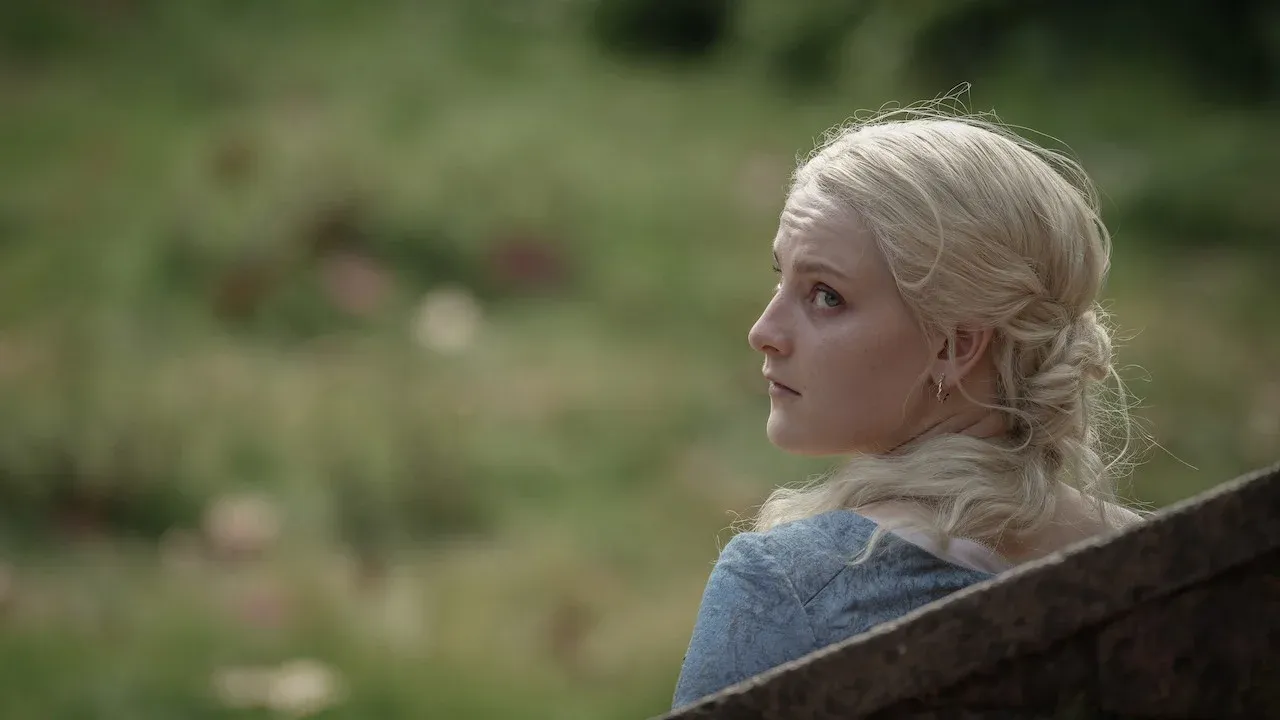
“House of the Dragon” Season 3 was always leading Helaena to that open window.
After a season where Helaena seemed beset on all sides by death — both in reality and her many portentous dreams — it ended with the character, who many considered to be the heart of the show, jumping from a window and taking her own life. Book readers have known that this death was coming but were curious what would be the catalyzing moment – including author George R.R. Martin, who lamented that there was no “fresh horror” to push Helaena to killing herself since the show had not introduced her son Maelor, who’s death is the catalyst in the original story.
Phia Saban is all too aware of the changes made to Helaena’s story leading up to this final moment. All that said, she told TheWrap that Maelor’s influence over the decision is still very much a part of the finale, as Helaena has been pregnant with a son throughout the season and her choice is one based on freedom rather than desperation.

“I know how it differs, but I think that there is a catalyst,” Saban told TheWrap. “He’s not irrelevant in the sense that she can see with this sickening clarity how her and her child’s life would play out, and I think tries to exert this last freedom that she feels she has.”
But before she takes her fateful jump, she has one final conversation with Rhaenyra — who has been holding her in the Keep throughout her pregnancy, worried that she’ll give birth to Aegon’s son, who would threaten her claim at the throne.
“You think that living is not dying,” she tells Rhaenyra, explaining that just because Helaena was drawing breath didn’t really mean much if she was going to be kept as a piece on the board to be used to threaten the now-returned Aegon. Saban said that moment of defiance and Helaena standing in her conviction against Rhaenyra came after a chat she had with the showrunner and writer.

“When I spoke to Ryan (Condal) and Sara (Hess), something that I brought to them that had been really inspiring to me was the Joan of Arc speech, and it’s in the Bernard Shaw play ‘Saint Joan,’ and she gives this incredible speech to the people imprisoning her when she says like, ‘You think life is not being stone dead, but there is more to life because I might as well not be alive if I can’t hear the church bell and the lambs and the wind and the trees and that’s what living is to me,’” Saban said. “Genuinely in such like a thespy way, I’ve literally got goosebumps. But I showed them that, and I was like, ‘I feel like this is really Helaena.’ Her reason for being, her religion, has been taken away from her, and in that way she’s been killed. She’s also saying to Rhaenyra, like ‘there’s no mercy in keeping me alive, but taking away everything from me that I consider living.’”
In the closing moments of the season, Helaena rises up after finishing her embroidery depicting what is likely to come to pass for Rhaenyra and heads to the open window. The scene cuts away and the next time (and last) time viewers see Helaena she is impaled by the spikes far below.
Although the camera doesn’t stay with her for the moment, Saban thought Helaena’s final thoughts were more hopeful than desperate.
“I don’t know if I can give you something literal, but I do think that there was sort of hope in what she did,” Saban said. “That’s really what I was holding on to.”
“House of the Dragon” Seasona 1-3 are now streaming on HBO Max.

>

Justice Smith Addresses Fans On ‘Heated Rivalry’ Harris Drover Casting

Convenient Semi-Friend Manga’s Finale Slated for September 9 – News

Little Mouse’s Red Vest Anime Gets 2nd Season on October 3 – News
-

 movies3 months ago
Search For Canadian TV Actor Stewart McLean Now Homicide Investigation
-

 Fashion9 years ago
These ’90s fashion trends are making a comeback in 2017
-
Fashion9 years ago
According to Dior Couture, this taboo fashion accessory is back
-
Fashion9 years ago
Model Jocelyn Chew’s Instagram is the best vacation you’ve ever had
-
Fashion9 years ago
Your comprehensive guide to this fall’s biggest trends
-
Fashion9 years ago
9 Celebrities who have spoken out about being photoshopped
-
Fashion9 years ago
Emily Ratajkowski channels back-to-school style
-
Fashion9 years ago
A photo diary of the nightlife scene from LA To Ibiza