
Entertainment
House of the Dragon: Emma D’Arcy on Finale’s Big Death, Rhaenyra’s Dark Turn

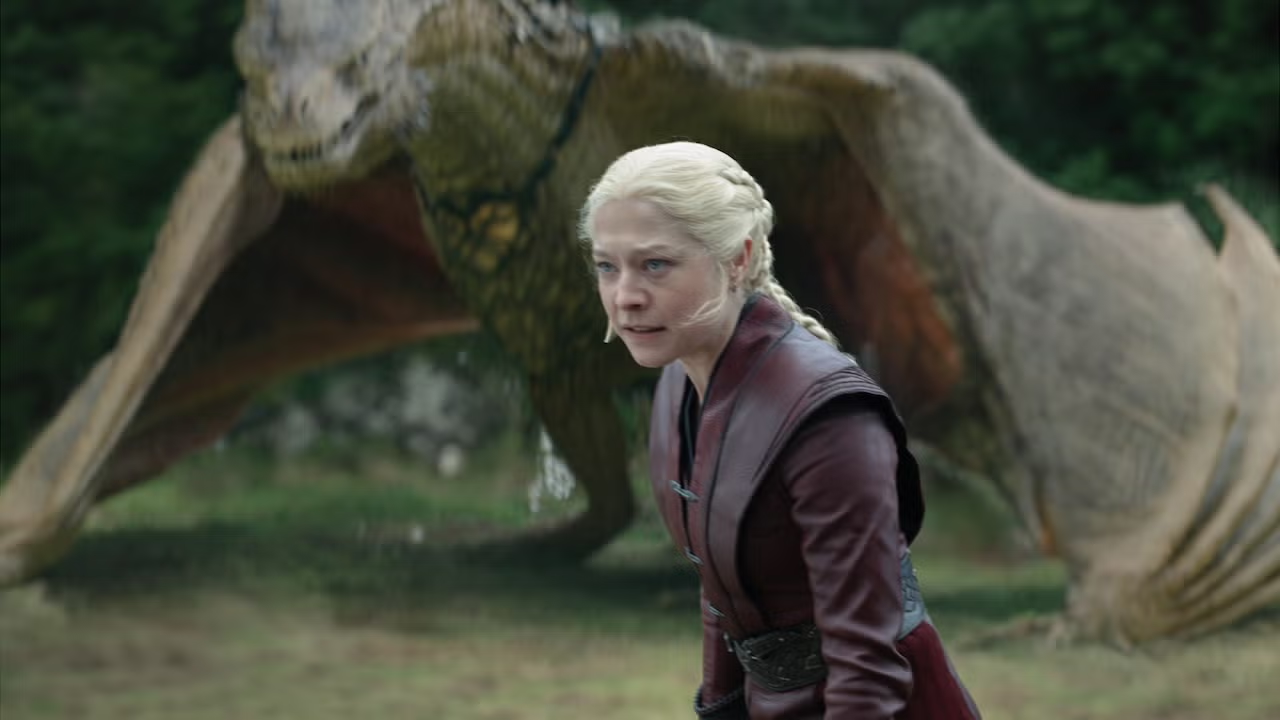
Note: This story contains spoilers from “House of the Dragon” Season 3, Episode 8.
The battle for the Iron Throne in “House of the Dragon” has seen Emma D’Arcy’s Rhaenyra take an authoritarian turn by the end of Season 3 of the “Game of Thrones” prequel series — a path that D’Arcy said is cemented by Helaena’s tragic death.
In the final moments of the Season 3 finale, Rhaenyra discovers that Helaena (Phia Saban) has jumped to her death out of the castle’s window, taking her fate — and that of her unborn baby — into her own hands rather than be held captive by Rhaenyra in light of another heir to be battled. After tormenting an already fragile Helaena with questions of her rule and force-feeding her, D’Arcy noted the death marks the point of no return for Rhaenyra.
“Helaena is the moral heart of the show — I think she’s maybe the only character who has a proximity to power that is not compromised by it,” D’Arcy told TheWrap, adding that her death will “mark the end of any relationship” between Rhaenyra and Alicent (Olivia Cooke), which was already on thin ice after Rhaenyra’s execution of Alicent’s father, Otto (Rhys Ifans), and the subsequent capture of Alicent and Helaena.
“I think her death actually condemns Rhaenyra to her chosen path,” D’Arcy said. “In some way I feel that it condemns Rhaenyra to to be alone in her pursuit for power — I think we’ve already seen her becoming increasingly isolated as the series progresses, or at least increasingly skeptical of allies … Helaena’s death means that there’s no going back.”

Rhaenyra’s descent into a ruthless rule — which is also noted by Baela (Bethany Antonia) in the finale — is largely a product of the societal response to her claim to the throne as a woman, which showrunner Ryan Condal noted stands as the crux of “House of the Dragon.”
“Since really the first episode, [it] has always been about can this realm accept a woman as a leader, and … what will it do when faced with that as not just an eventuality, but it’s here,” Condal said during a finale press conference. “How does that impact Rhaenyra’s ability to lead?”
“On the one hand, we wanted to test — possibly to breaking point — an audience’s allegiance and relationship with that character,” D’Arcy told TheWrap. “But at the same time … if we’re actually broadly [wanting] to become smarter about our understanding of authoritarian regimes, we have to understand those actions better.”
It will all come to a close when “House of the Dragon” returns for its fourth and final season, which is slated for a 2028 release. Despite book fans anticipating a fateful twist for Rhaenyra as the series concludes, D’Arcy said they didn’t know anything “specific” about what’s to come.
“I know nothing. I mean … I know what we all know, but I know nothing specific about what comes next,” D’Arcy said. “I will be really interested to, because she does feel very different. The character feels very different by Episode 8, and [it will] be quite interesting to put her back on in her new state.”

TheWrap: Rhaenyra has been seeking outward validation for her rule, but the realization that Aegon and Sunfyre are alive seems to shake her. How does she go into the finale feeling about her rule?
I think the revelation that Aegon and Sunfyre [are] alive totally disrupts everything that Rhaenyra has been building, and actually feels a bit like the kind of ogre of the first part of the season — this idea of a kind of legitimized form of or … a formalized legitimacy, which has perpetually eluded Rhaenyra, has kind of come back to kill her.
I was sort of excited by that scene. Rhaenyra comes in and she delivers the news to Daemon of the resurrection, and I thought there’s something … quite fun about seeing a monarch in a full body panic attack … at this point her sort of identity and political and military survival have become enmeshed, so this threat to her positioning feels like a threat to the self, a threat to the body.

We quickly see Mysaria (Sonoya Mizuno) get thrown out. Why did Rhaenyra decide to end her term, especially after their intimate moment last episode?
That banishment is a really significant one for me. It sort of marks … the red line in her descent into a kind of tyrannical authoritarianism. I think there’s something really nice this season where some of Rhaenyra’s constituent parts have been externalized — Alicent is the judge and Daemon is sort of the ego and Mysaria, I think, is sort of her conscience — certainly has been, I think in parts in this season and in Season 2. And I think the point at which you banish your conscience from the castle, you’ve set a much darker course.

If Rhaenyra is kicking out Mysaria, where is her head at regarding Daemon and his most recent lies?
This scene at the start of … the finale — that kind of resolves with Rhaenyra and Daemon, I guess, joining on the war path and returning to a kind of something that feels familiar, I think, a certain brand of Targaryen chaos mode. That idea that Rhaenyra and Daemon are sort of, I don’t know, in some way, of the same stuff, and that there is always access to … a profound belief in Targaryen exceptionalism. I think their unity — it feels sort of weirdly ageless to me because it refers back to a kind of much older form, sort of a Feudalism.
I really have enjoyed the increased use of High Valyrian this season because … I’m sort of reminded that there’s something kind of alien about the Targaryens. There’s something so profoundly other, and I think at the end of that scene … they sort of transcend their peers in some way, in some sort of awful way, and become … [an] ultimate force.
There’s this narrative that is thrown at Rhaenyra by both Baela and Helaena about Rhaenyra not caring about people who aren’t useful to her. How is does that hit her? Where does Rhaenyra stand with trust?
it’s a very astute observation that Baela makes. I think part of this tyrannical journey, or this journey towards authoritarianism that Rhaenyra goes on this season, tracks really well with the way that her empathy mechanism is affected by events in the series, and I think actually Jace’s death and the devastating grief that comes with that event does a huge amount to to chart a certain course, because I think it fundamentally disrupts her empathy and it affords her a kind of nihilism and a ruthlessness that wasn’t part of her armory before.
I think that conversation with Baela is interesting because I think they’re communicating at really different scales — something about what Daemon is sort of willing her towards is ultimate and historic, and it’s a horizon of possibility that is so much bigger, actually, than local allies or family members … it’s historic. It’s about a name in the annals. It’s about a legacy that goes on for generations … I think that part of that failure of communication between the two of them is about scale.
Rhaenyra tells the people of King’s Landing about the prophecy, which has been considered a sacred secret. Is laying out the prophecy to the public something she wants to do or is it a plow to win people over?
It’s a really good question. I don’t want to weigh in too much because I think it’s like an interesting interpretive question, and because I can be sort of swayed by different arguments, but I definitely think that’s something that I so appreciate about the way that the season was constructed. Rhaenyra starts the season in a position of great strategic military power, but with a lot of personal doubt about her tenure and about the nature of her potential leadership, and she ends it having had her military political positioning massively compromised, but resolute in her right to rule.
I do think part of that authoritarian mentality is a belief that the people don’t know what they want, and I think part of what’s happening in the speech she gives … it’s laying out a reality. It’s selling a reality. The scale of that disclosure, I think, is interesting because I think she is a person … in the way that she’s dressed, there’s a presentation as [a] demi-god. If once she had been like the people’s leader and her energy had been about sort of sameness and ‘your problems are my problems,’ it’s now sort of totally oppositional thinking … the strangeness and the size of that declaration, even if it’s not totally understood, is about selling a god, selling a leader as god.
Do you think she believes in the prophecy or just thinks its a story that further strengthens her claim to the throne?
I think Rhaenyra believes in the prophecy in the way that she is committed to a sort of fanaticism. I think she has scapegoated a lot of her concern or doubt about her tenure by choosing to believe in a religious right, in a divine right to lead, and so I think I actually think she holds to it. I think she requires it. I think the prophecy has actually become sort of strangely central to her belief system.
Rhaenyra ruthlessly orders the death of a priest. Does she believe she’s beyond religion and other sacred things?
It’s a massive rejection of external critical institutions of legitimization, which is a really scary authoritarian tool. When … she refers to the old gods. She refers to them as this sort of higher, older power.
It’s funny. I think having been a character for three seasons who has often sought to be quite a sort of force for mediation, quite a complex thinker … she’s landed somewhere without nuance and she is kind of leaning entirely on Targaryen exceptionalism as the sort of grounding for her tenure.
We’ve seen threaded throughout this season how much society’s not wanting to accept Rhaenyra has really set her on an authoritarian turn. What have you made of her overall arc this season, especially when it comes to just proving her right to rule as a woman?
I think me and Ryan [Condal] and the team wanted to make sure that journey felt legible. On the one hand, we wanted to test — possibly to breaking point — an audience’s allegiance and relationship with that character. But at the same time … if we’re actually broadly [wanting] to become sort of smarter about our understanding of authoritarian regimes, we have to understand those actions better. For Ryan and I, that was a real priority, which is why I talk about this kind of empathetic capacity. Because actually, as an actor, it felt much more sort of playable to think about how that mechanism is being changed and affected than solely her kind of relationship with authoritarianism.
It’s a triumph of the writing of what Ryan and Sarah [Hess] and the team have constructed that you can have a character who — and this is such a pleasure to play — but who starts a season in one place and then another .. as an actor, that’s a total pleasure.
How are you approaching Season 4? Are you anticipating the fate we’re expecting for Rhaenyra?
I know nothing. I mean … I know what we all know, but I know nothing specific about what comes next. But I will be really interested to, because she does feel very different. The character feels very different by Episode 8, and [it will] be quite interesting to put her back on in her new state.
I mean there have been some book changes as well.
Exactly.
This interview has been edited for length and clarity.
“House of the Dragon” Seasons 1-3 are now streaming on HBO Max.

>
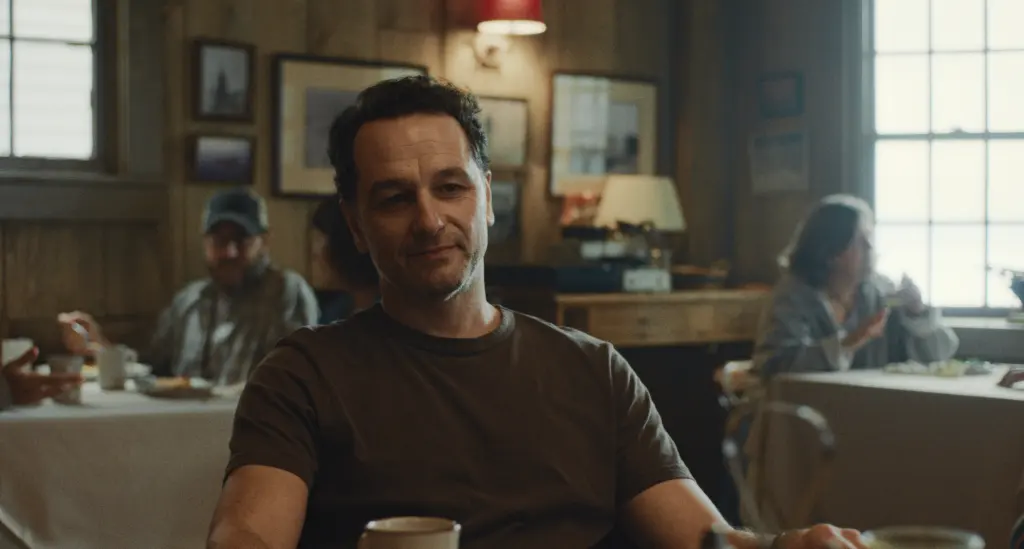
Set Decorators Society of America (SDSA) tonight honored the best in class for contemporary, fantasy, science fiction variety, reality and period series. Apple’s Widow’s Bay & Palm Royale, Netflix’s Wednesday and Amazon’s Fallout among the big winners in the hour-long categories.
The SDSA Awards are presented annually by the Set Decorators Society of America. The SDSA Film Awards and SDSA Television Awards recognize outstanding work on a wide range of productions in each medium. The TV awards were announced tonight.
FULL WINNERS LIST:
Best Achievement in Decor/Design of a One Hour Contemporary Series
Widow’s Bay
Set Decoration by Jennifer Engel with Production Design by Steve Arnold
Best Achievement in Decor/Design of a One Hour Fantasy or Science Fiction Series
Fallout
Set Decoration by Julie Ochipinti with Production Design by Howard Cummings
Wednesday
Set Decoration by David Morison SDSA and Neville Gaynor SDSA with Production Design by Mark Scruton and Philip Murphy SDSA
Best Achievement in Decor/Design of a One Hour Period Series
Palm Royale
Set Decoration by Ellen Reede SDSA with Production Design by Jon Carlos
Best Achievement in Decor/Design of a Television Movie or Limited Series
Beef
Set Decoration by Kellie Jo Tinney SDSA with Production Design by Grace Yun
Best Achievement in Decor/Design of a Half-Hour Single Camera Series
Hacks
Set Decoration by Jennifer Lukehart SDSA with Production Design by Rob Tokarz
Best Achievement in Decor/Design of a Half-Hour Multi-Camera Series
Happy’s Place
Set Decoration by Amy Feldman SDSA with Production Design by Glenda Rovello
Best Achievement in Decor/Design of a Short Format: Web Series, Music Video, or Commercial
Offset & John Legend “Never Let Go”
Best Achievement in Decor/Design of a Variety, Reality, or Competition Series
The Muppet Show
Set Decoration by Bethany Barton SDSA Associate with Production Design by Denise Pizzini
Best Achievement in Decor/Design of a Daytime Series
The Bold and the Beautiful
Set Decoration by Prim Rosales SDSA, Beth Wooke SDSA, Prerna Chawla SDSA, Charlotte Garnell SDSA, Chelsea Mondelli SDSA Associate, Michelle Hall SDSA, Linda Louise Sheets, and Jon Bush SDSA with Production Design by Lou A. Trabbie III SDSA
>
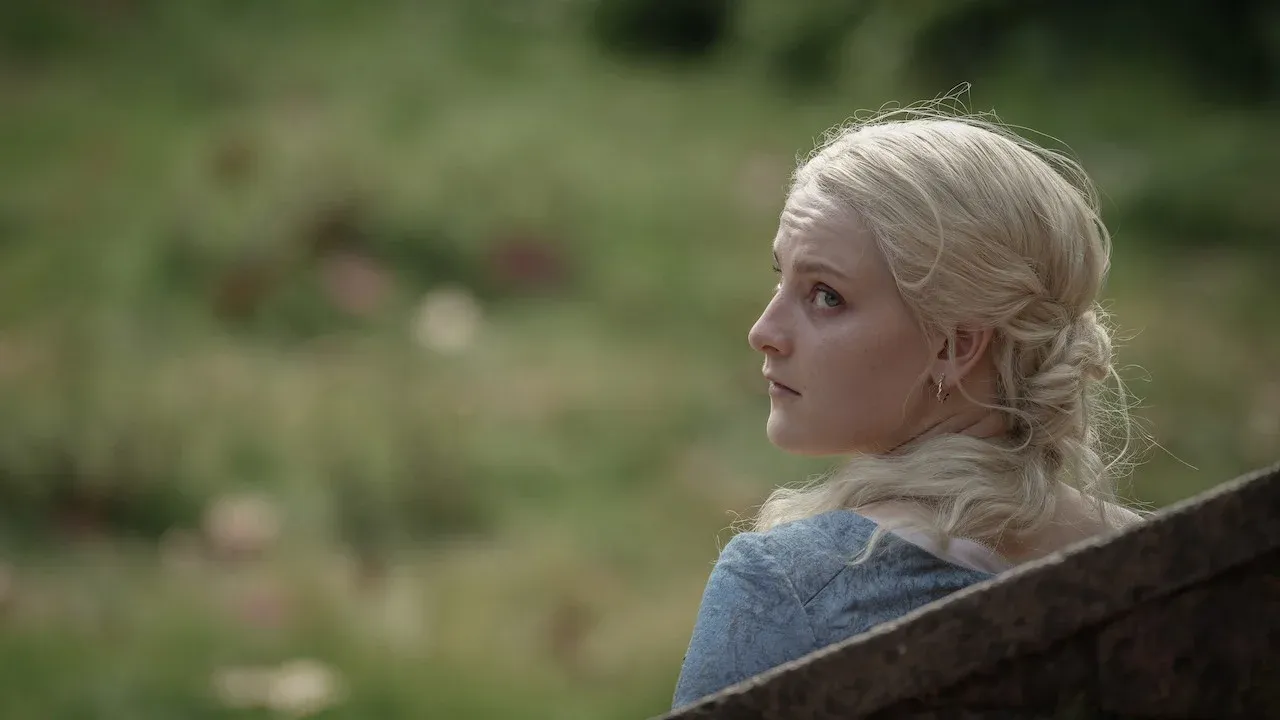
Note: This story contains spoilers from “House of the Dragon” Season 3, Episode 8.
“House of the Dragon” Season 3 was always leading Helaena to that open window.
After a season where Helaena seemed beset on all sides by death — both in reality and her many portentous dreams — it ended with the character, who many considered to be the heart of the show, jumping from a window and taking her own life. Book readers have known that this death was coming but were curious what would be the catalyzing moment – including author George R.R. Martin, who lamented that there was no “fresh horror” to push Helaena to killing herself since the show had not introduced her son Maelor, who’s death is the catalyst in the original story.
Phia Saban is all too aware of the changes made to Helaena’s story leading up to this final moment. All that said, she told TheWrap that Maelor’s influence over the decision is still very much a part of the finale, as Helaena has been pregnant with a son throughout the season and her choice is one based on freedom rather than desperation.
“I know how it differs, but I think that there is a catalyst,” Saban told TheWrap. “He’s not irrelevant in the sense that she can see with this sickening clarity how her and her child’s life would play out, and I think tries to exert this last freedom that she feels she has.”
But before she takes her fateful jump, she has one final conversation with Rhaenyra — who has been holding her in the Keep throughout her pregnancy, worried that she’ll give birth to Aegon’s son, who would threaten her claim at the throne.
“You think that living is not dying,” she tells Rhaenyra, explaining that just because Helaena was drawing breath didn’t really mean much if she was going to be kept as a piece on the board to be used to threaten the now-returned Aegon. Saban said that moment of defiance and Helaena standing in her conviction against Rhaenyra came after a chat she had with the showrunner and writer.

“When I spoke to Ryan (Condal) and Sara (Hess), something that I brought to them that had been really inspiring to me was the Joan of Arc speech, and it’s in the Bernard Shaw play ‘Saint Joan,’ and she gives this incredible speech to the people imprisoning her when she says like, ‘You think life is not being stone dead, but there is more to life because I might as well not be alive if I can’t hear the church bell and the lambs and the wind and the trees and that’s what living is to me,’” Saban said. “Genuinely in such like a thespy way, I’ve literally got goosebumps. But I showed them that, and I was like, ‘I feel like this is really Helaena.’ Her reason for being, her religion, has been taken away from her, and in that way she’s been killed. She’s also saying to Rhaenyra, like ‘there’s no mercy in keeping me alive, but taking away everything from me that I consider living.’”
In the closing moments of the season, Helaena rises up after finishing her embroidery depicting what is likely to come to pass for Rhaenyra and heads to the open window. The scene cuts away and the next time (and last) time viewers see Helaena she is impaled by the spikes far below.
Although the camera doesn’t stay with her for the moment, Saban thought Helaena’s final thoughts were more hopeful than desperate.
“I don’t know if I can give you something literal, but I do think that there was sort of hope in what she did,” Saban said. “That’s really what I was holding on to.”
“House of the Dragon” Seasona 1-3 are now streaming on HBO Max.

>
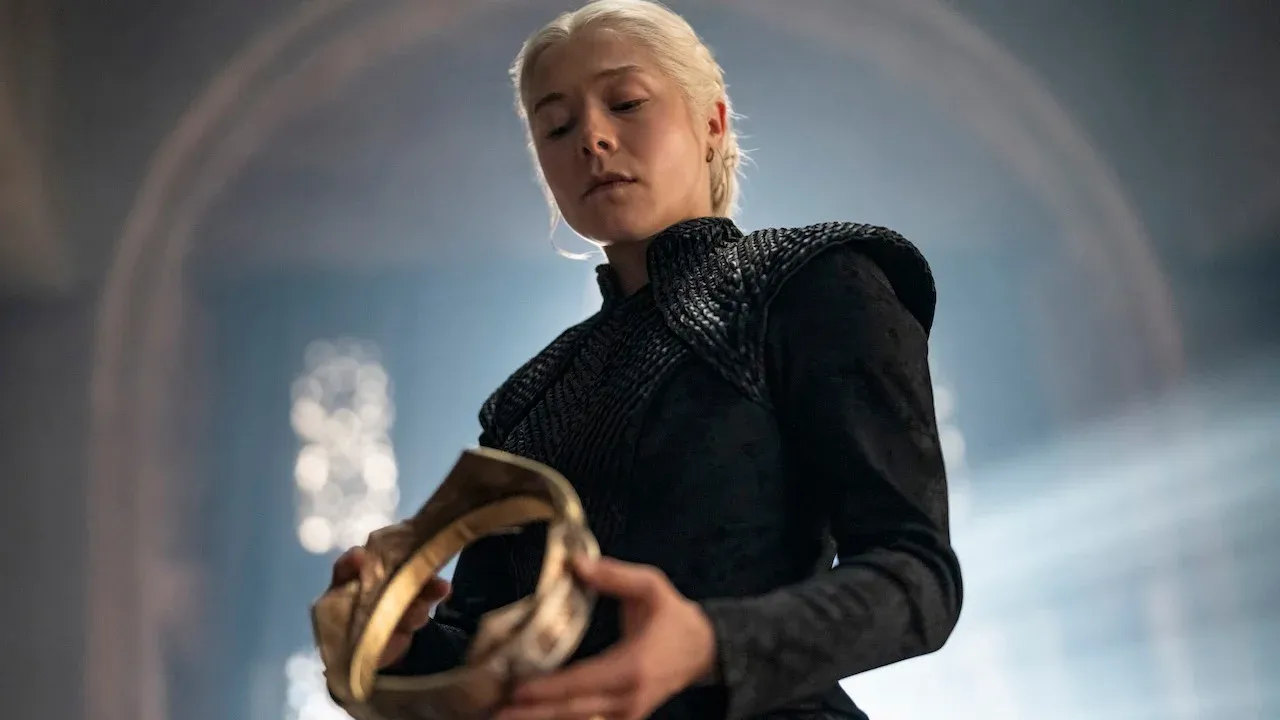
Note: This story contains spoilers from “House of the Dragon” Season 3, Episode 8.
“House of the Dragon” Season 3 ended the only way it knew how — with battles, betrayals and death.
The third season of the HBO drama series was bookended by massive clashes as the armies of Team Black and Team Green squared off and the Dance of the Dragons reached its peak. The finale saw the constant scheming of Ormund in the small town of Tumbleton finally bear fruit as Daemon, Roddy the Ruin, and a huge host of Rhaenyra’s armies appeared to snuff out the threat of the newly-knighted Daeron the Daring for good.
Elsewhere, Rhaenyra’s paranoia continued to spiral with news that her brother Aegon was spotted alive — and with his own returned dragon Sunfyre to boot. That fear caused her to put some drastic measures into motion to ensure she remained on the Iron Throne — despite it clearly rejecting her.
Here is how “House of the Dragon” Season 3 ended and what those big character beats mean for the upcoming final season.

Rhaenyra’s shocking reveal
When news arrives to Rhaenyra that Aegon not only still lives but so does Sunfyre and they’re burning battalions in the Riverlands, she is quick to want to be officially crowned as queen in front of the eyes of the Seven and the people of King’s Landing.
Despite wanting to be officially anointed queen, Rhaenyra dresses for battle and heads to the sept. Inside, not only is she chastised for bringing weapons into the holy place, but those inside seem convinced that the news that Aegon has been “resurrected” is all the proof needed that he’s the rightful heir.
She doesn’t accept the logic and falls to Plan B. Citizens had gathered outside the sept and Rhaenyra heads out and explains her true claim to the throne — her knowledge of the prophecy. Years earlier, after announcing Rhaenyra to be his heir, Viserys confided in his daughter a secret that only Westeros’ rulers knew — a prophecy passed from Aegon the Conqueror called “A Song of Ice and Fire” that told of a coming darkness that would take the entire kingdom united to defeat. This prophecy is what plays out in “Game of Thrones.”
Rhaenyra spins this tale on the entirety of Westeros needing to be unified but — as has been the theme all season — that her dragon might and numbers are the only way to survive. Then she shocks both those in attendance and readers of George R.R. Martin’s books when she claims herself as The Prince That Was Promised, a mythical hero said to be a savior for the world.
“It’s something that is certainly not in the book, and it’s not in the history, but there is a bunch of talk about how Rhaenyra became very despotic and became a tyrant at the end and was very unpopular with the people,” Ryan Condal said during a press conference about the finale. “So we saw it as this could just be something that happened, and there was disagreement over exactly what it was, so it didn’t make the historical record.”
He added: “We wanted something that felt like a real seismic change, a sea change in Rhaenyra’s relationship to her people. She’s seen the death of their religious leaders. She’s standing outside of the church of the faith of most of the people standing there as a member of a totally different faith — this old Valyrian faith of dragons and fire gods and blood magic, and pronouncing herself this chosen one and leader that is going to take them through the fire and out of out of the darkness.”
In “Game of Thrones,” Melisandre talked often about finding the Prince. Stannis Baratheon thought for most of his time in the story that he might be the Prince, but book fans maintained convinced that Jon Snow was the true claimant to the title. That did not prove to be true in the HBO adaptation but who knows what George planned for the books.
Either way, Rhaenyra is calling herself the fabled savior now.
The Battle of Tumbleton
The entire season had been leading to the Battle of Tumbleton. In the books, the poor city is the site of two different battles but the show condenses them both into one bloody affair.
Daemon arrives to lead the battle along with Roddy the Ruin and his Winter Wolves soldiers. They have a pretty standard plan — use Caraxes to blow the main gate and send Roddy and his Northmen through to take out Ormund’s forces. Unfortunately, Ormund planned for that and lined the weakest parts of Tumbleton’s fortifications with children. If Daemon wants to fight with his dragon, he’ll have to roast some kids. Instead, the plan is changed, Roddy goes over the walls with his men and get the doors open from the inside.
Roddy and his men scale the walls and the battle commences, and it’s as bloody as expected. But despite pushing deep into the city, Roddy does not get to the gates quick enough for Daemon, who grows impatient enough to summon Caraxes anyway. He manages to blow open the gates with dragonfire with only minimal child casualties (a win’s a win for the Rogue Prince) and now Team Black’s forces pour in from two fronts. Surely the city is all but lost. Surely.
The Great Betrayal
At the end of Season 3’s penultimate episode, Ulf seemed like he was ready to switch sides. Daemon and Rhaenyra had not given him the respect he thought he deserved and him working as one of the queen’s dragonseeds really cut into his free time to drink with the boys. Ormund made a pitch and Ulf seemed to take it.
Unfortunately, Ulf is not the most punctual guy. Ormund spends have the battle running through the city trying to find his recruited dragonrider but he is nowhere to be found. Eventually, he decides to finally do something about his promises. He goes to his dragon and quickly turns them on Daemon’s forces. Out in the open, they’re no match for the dragonfire.
But Ulf seems to be sick of nobility in general. Atop the battlements, Ormund and Roddy the Ruin are fighting. Ormund manages to hack up Roddy and cut off one of his arms, but a few well-placed shield bashes knock out most of Ormund’s teeth. Roddy throws him (still one-handed) against a wall and jams his knife where the sun doesn’t shine. And to cap off Ormund’s very bad day, Ulf turns away from scorching Daemon’s soldiers and aims straight for Tumbleton, somehow seeing Ormund. He lets his dragon loose on the city, first burning Ormund and Roddy to a crisp and then continuing on through the city. The aftermath leaves Daeron’s fate uncertain, in a potential departure from his fate in the books.
In the books, both Ulf and Hugh agree to betray Rhaenyra together but here Hugh remained loyal … to a point. He ignored his orders to stay at King’s Landing and also joined the battle, but on foot to try finding his family. He finds them after the battle and Ulf’s betrayal dead in his home. Hugh might not have betrayed for the Battle of Tumbleton but it’s hard to think he’ll be still Team Black for Season 4.
Helaena’s final word
Book fans knew it was coming. For the entire season, Helaena has been held prisoner by Rhaenyra and the threat of her pregnancy producing Aegon’s heir that could challenge her succession meant that her life was constantly in danger. Despite all that, she refused her mother’s protestations to get rid of the child.
The penultimate episode saw Helaena cycling through a number of prophetic dreams. Her watching the snows (or ash?) come to King’s Landing much like Daenerys brought at the end of “Game of Thrones,” her atop her dragon Dreamfyre burning the city’s people as they charged the dragonpit. These were all concerns to her and seemed to show only ruin awaited her and her family.
“You think that living is not dying,” she tells Rhaenyra in the finale. Explaining that just because Helaena was drawing breath didn’t really mean much if she was going to be kept as a piece on the board to be used to threaten the now-returned Aegon.
The final moments of the season show Helaena finishing the stitching and patternwork she’d been working on all season. She rises and heads toward the window and the moment cuts to someone running to get the queen. She heads to Helaena’s room to find that her half-sister threw herself from the window and impaled herself on the spikes below (shades of Tommen killing himself in “Game of Thrones”).
But even though Helaena chose her own way out, she had one last message for the queen. The embroidery she’d finished lay on the chair beside the open window. It had a number of prophecies to come stitched in — the main one is that Rhaenyra is doomed to die in fire.
“House of the Dragon” Seasons 1-3 are now streaming on HBO Max.

>

Set Decorators TV Awards Go To ‘Widow’s Bay,’ ‘Fallout,’ ‘Wednesday,’ More

House of the Dragon Star Unpacks Helaena’s Season 3 Fate

House of the Dragon Season 3 Ending Explained
-

 movies3 months ago
Search For Canadian TV Actor Stewart McLean Now Homicide Investigation
-

 Fashion9 years ago
These ’90s fashion trends are making a comeback in 2017
-
Fashion9 years ago
According to Dior Couture, this taboo fashion accessory is back
-
Fashion9 years ago
Model Jocelyn Chew’s Instagram is the best vacation you’ve ever had
-
Fashion9 years ago
Your comprehensive guide to this fall’s biggest trends
-
Fashion9 years ago
9 Celebrities who have spoken out about being photoshopped
-
Fashion9 years ago
Emily Ratajkowski channels back-to-school style
-
Fashion9 years ago
A photo diary of the nightlife scene from LA To Ibiza