
movies
‘Everytime’ Review: An Understated and Mysterious Chronicle of Loss


Austrian auteur Sandra Wollner’s haunting second feature, The Trouble With Being Born, was an impressive genre-bending thriller that played like an episode of Westworld directed by Michael Haneke. Quietly mesmerizing and altogether demented, it told the story of a child robot who finds herself in the care of a man with major — and I mean MAJOR — issues.
It’s not worth spoiling that movie, which is currently available on Mubi and definitely deserves a look. Wollner’s follow-up, Everytime, isn’t worth spoiling either, although one of the problems with this mildly intriguing family saga is that the spoilers arrive too far behind schedule. So subtle that it’s hard, at times, to discern much of a plot, this delicately made tale of grieving and recovery doesn’t resonate until it ultimately does so in a big way. But when that happens, it can feel like too much, too late.
Everytime
The Bottom Line
Delicately crafted and dramatically diffuse.
Venue: Cannes Film Festival (Un Certain Regard)
Cast: Birgit Minichmayr, Lotte Keiling, Tristan López, Carla Hüttermann
Director, screenwriter: Sandra Wollner
2 hours 1 minute
That’s unfortunate, because the film showcases Wollner’s talent for injecting genuine unease into ordinary events, whether it’s an eerie stroll through the streets of Berlin, a text message sent to a deceased person or a trip to the Canary Islands that grows increasingly surreal. But at two hours long and without much of a sustained narrative, Everytime never quite gives us enough to latch onto, even if its giant twist of an ending leaves us with something to contemplate.
Helmed with the rigorous aesthetic of a Berliner Schule feature (the work of Angela Schanelec especially comes to mind), the movie follows a family of three women who, at least for the first 20 minutes, seem to have nothing really special about their lives. The divorced mother, Ella (Birgit Minichmayr), looks after her two daughters, the teenager Jessica (Carla Hütterman) and the younger Melli (Lotte Keiling), who fight a lot because they have to share the same bedroom. Whenever she can, Jessica steals away to hang out with her boyfriend, Lux (Tristan López), a quiet type who likes to party too much.
Just when they’re about to leave on summer holiday, tragedy strikes when Jessica suddenly dies. As with much of what we see in Everytime, it’s not exactly clear why she dies: Did she kill herself? Get into a freak accident? Take too many drugs and make a fatal error? Wollner is less interested in finding a reason for what happened than in portraying how Jessica’s death ripples through the lives of her loved ones in the months that follow, using ellipses to jump ahead and focus on how each of them react.
As a portrait of human behavior in the wake of a terrible loss, the film feels both studied and compassionate, revealing how everyone tries their best to move on but can never quite get Jessica out of their minds. Ella continues to care for Melli, who misses her sister dearly but is also still a kid figuring life out for herself. Lux goes away to Texas, then comes back and appears to have a new girlfriend, though he can’t stop contemplating his guilt with regards to Jessica’s disappearance.
What takes place is not altogether uninteresting, and it’s both well-acted and skillfully crafted — the widescreen cinematography of Gregory Oke (Aftersun) is rich in detail and warmth — but is it enough to fill an entire movie? Hitchcock famously said that “some films are slices of life, mine are slices of cake.” Everytime could have probably used more cake, and perhaps some icing and sprinkles, so much does it tease at the kind of conflicts it never delivers.
The film nonetheless takes a truly unexpected turn during a third act set at the same seaside resort in Tenerife that the family had visited on previous vacations. After they arrive, some of the things we’ve been witnessing — bizarre resonances between past and present, everyday reality and virtual reality (in the form of a Minecraft-style game), home movies and contemporary events — begin to make, well, not complete sense, but at least to serve a purpose.
What that purpose is shouldn’t be spoiled for those who want to give Everytime a chance. Suffice it to say that Wollner’s understated drama offers a solution that feels too good to be true, as if the death faced by Ella, Melli and Lux was so hard for them to accept, they decide to ditch logic altogether. The closing scenes are staged with disquieting aplomb, lending meaning and mystery to this chronicle of a family that cannot get over a devastating loss, to the point that they prefer to believe the unbelievable.
>

The Justice Department argued that Donald Trump can legally ban CNN, MS NOW and Politico from the White House because he determined that they didn’t meet the “minimum requirements of professionalism.”
Last month, a federal judge granted the three outlets a temporary restraining order that forced the White House to reinstate dozens of their reporters’ hard passes. The outlets are now asking the judge to extend that 14-day order for a longer term via a preliminary injunction, claiming that Trump’s ban is a violation of their First and Fifth amendment rights.
U.S. District Judge Timothy Kelly, a Trump appointee, has said that he is bound by the precedent set in In a 1977 D.C. Circuit opinion, Sherrill vs. Knight, in which the judges ruled that “the protection afforded newsgathering under the First Amendment guarantee of freedom of the press requires that this access not be denied arbitrarily or for less than compelling reasons.”
In a court filing on Friday, the DOJ claimed that the Sherrill case still would allow for the president to restrict the three outlets from accessing the White House grounds because the White House has a “compelling interest.”
The DOJ lawyers claimed that the Sherrill decision does not “prevent the President from concluding that bona fide journalists would identify sources instead of relying on anonymous sources, commit to factual accuracy, and provide the White House an opportunity to comment, rather than ‘perform their duties in a way that … interfere[s] with the White House’s daily operations.’ …At a bare minimum, it is a significant violation of decorum to publish classified and sensitive national security information.”
The news outlets’ legal team has rejected that assertion, writing in a filing earlier this week that Trump’s “statements also make clear he implemented the ban to coerce more favorable coverage from CNN, MS NOW, and Politico, and to deter other journalists and news organizations from newsgathering and reporting that the President might view as negative. And his administration has continued to retaliate against Plaintiffs even after the temporary restraining order, only underscoring that Defendants’ motive is to punish and chill journalism they dislike.”
Even as access to the White House grounds has been reinstated, the White House has continued to restrict CNN from coverage of TV pool assignments, including travel with Trump on Air Force One.
The outlets’ lawyers, led by Theodore Boutrous Jr., also noted that Trump and other White House officials “overlooked that the First Amendment protects reporting on matters affecting national security.”
Kelly has set a hearing for Thursday on the news outlets’ motion for a preliminary injunction.
In granting a TRO, Kelly concluded that the White House failed to provide due process to the news outlets.
The DOJ has pointed to letters sent to the outlets as evidence that they were given due process. But those letters were sent on Sept. 22, four days after Trump’s ban was started.
The judge also has noted that some of the objectionable stories cited by the DOJ do not have to do with national security. Kelly wrote in his order that “even the justifications provided to Plaintiffs after this case was filed are ambiguous about the true purpose of the revocations: while Defendants’ letters to Plaintiffs mention national security concerns, they purport to identify reporting that ‘threatened national security and/or spread falsehoods’ leaving open the possibility that all the stories fall into the later bucket, rather than the former.”
>

Following Robert Kraft‘s campaign against Macklemore, Zach Bryan made a statement with his performance at Gillette Stadium.
During Friday’s stop at the Kraft-owned venue for his With Heaven on Tour, the Grammy winner stepped onto the stage with a “Free Palestine” shirt after Kraft and other venue owners pressured Ed Sheeran to drop Macklemore from his tour over his outspoken support for Palestinians.
With another performance scheduled at the Massachusetts venue on Saturday night, it remains to be seen if Kraft will pull the plug.

The show comes after Ed Sheeran was forced to cancel his Gillette Stadium shows last weekend amid a nor’easter headed for Boston, despite caving to Kraft’s demands.
Sheeran dropped Macklemore from his tour last month amid an outcry around the opener’s “Free Palestine” onstage remarks. Opting to remain publicly neutral on the issue, Sheeran subsequently released a statement saying it was the “promoter’s decision” after Kraft assembled several of the tour venues to give him an ultimatum.
Following the statement, fellow tour openers Finneas, Aaron Rowe and Lukas Graham dropped out of the tour, along with Sheeran’s backing band Beoga.
Meanwhile, Macklemore announced the Free Palestine Tour last week, which is “supporting the Palestinian people and movement,” running 10/26-10/30 in Dublin, Paris and London. He since gave an update that the tour “sold out immediately.”
>
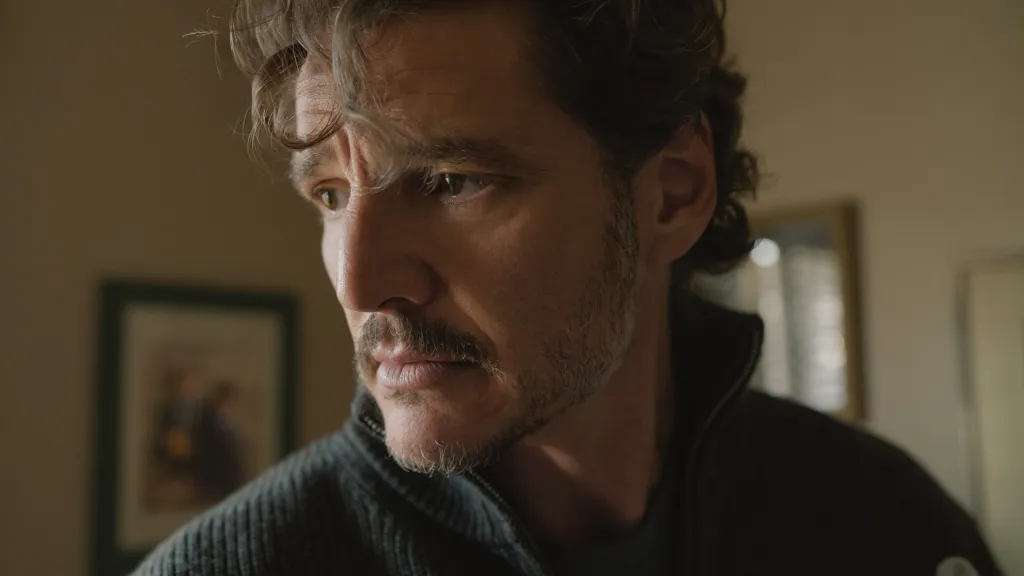
With the world premiere of Behemoth!, Pedro Pascal is praising Tony Gilroy for the intimate drama.
During a Q&A after the film’s premiere screening at the New York Film Festival, the Golden Globe-nominated actor admitted he thought Gilroy was “gonna be kinda mean” before they worked together.
“You have created this complex Jason Bourne-like puzzle over something that is so intimate and so healing this mysterious way,” Pascal told Gilroy in a video shared by NYFF. “And I didn’t think it was gonna come from him, you know what I mean? This intimidating intellectual … you know, I thought you were gonna be kinda mean. And you thought I was gonna be a dork.
In Behemoth!, premiering Dec. 4 in theaters, Pascal stars as cellist Alex Serian, a former child prodigy who returns home to Los Angeles to compose film scores and reconnect with his family.
Written and directed by Gilroy, the Searchlight Pictures film also stars Olivia Wilde, Eva Victor, Will Arnett, Hank Azaria, Margarita Levieva and Matthew Lillard.
>
How to watch White Sox vs. Guardians: Game 1 TV channel and streaming options for October 3
Gabby Williams needed a team to have faith in her. Now, she's given Valkyries reason to believe

Wales v Denmark: How Craig Bellamy can boost Euro 2028 hopes
-

 movies4 months ago
Search For Canadian TV Actor Stewart McLean Now Homicide Investigation
-

 Fashion9 years ago
These ’90s fashion trends are making a comeback in 2017
-
Fashion9 years ago
According to Dior Couture, this taboo fashion accessory is back
-
Fashion9 years ago
Model Jocelyn Chew’s Instagram is the best vacation you’ve ever had
-
Fashion9 years ago
Emily Ratajkowski channels back-to-school style
-
Fashion9 years ago
9 Celebrities who have spoken out about being photoshopped
-

 Anime4 months ago
Rurouni Kenshin: Hokkaido Arc Manga Takes 1-Issue Break – News
-

 Anime3 months ago
HIDIVE to Stream English Dubs for The World Is Dancing, The Forsaken Saintess and Her Foodie Roadtrip in Another World, The Dangers in My Heart: The Movie Anime – News