
‘Down the Arm of God’
Courtesy of EuropaCorp


EXCLUSIVE: The Federation of Screenwriters in Europe (FSE) has waded into the debate over Vincent Bolloré’s control of the French entertainment and media sectors, sparked by the ‘It’s Time To Switch-Off Bolloré’ letter launched on the opening of the Cannes Film Festival, saying it is symptomatic of a wider trend across the Europe.
“The 2026 Cannes Film Festival will be remembered as the unintended stage of a demonstration of the growing threats to freedom of creation and expression in Europe,” said the body, gathering 31 screenwriter organisations in 27 European countries, representing 10,000 professionals.
Initially signed by some 600 cinema professionals, including Juliette Binoche, Cannes 2026 Palme d’Or contenders Arthur Harari and Bertrand Mandico, the letter took aim at Canal+ Group’s recent acquisition of a 34% stake in French production, distribution and exhibition major UGC, with an option to buy it outright by 2028.
It warned the acquisition marked a new step “in Vincent Bolloré’s expansion strategy” and larger project to “push a right-wing, reactionary agenda” in France. The tycoon’s Bolloré Group is pay-TV giant Canal+’s biggest shareholder with a 30% stake.
Canal+ CEO and Chair Maxime Saada sent a chill through the industry this past weekend when he declared at his group’s traditional producers lunch in Cannes that it would never work again with signatories of letter.
The letter has a received a mixed response from French film professionals. Many share its concerns over Bolloré’s growing control of the wider media and entertainment world and right-wing agenda but also suggest that, for now, there are no signs of political interference in Canal+’s cinema activities.
The FSA tackled the differing views and also challenged the notion that for now Canal+ and its pan-European Studiocanal have not been touched by any sort of interference.
“Two professional organisations of producers publicly disavowed the open letter, worried about the consequences for their ongoing negotiations with the financier. Finally, two days later, in Cannes, the president of the financier publicly announced that the company would no longer work with the signatories of the open letter — even though, as president, he embodies a legal entity designed to be independent from its shareholders,” it said.
“Suggestions that the concerns voiced by the six hundred were premature or inappropriate were invalidated in real time in Cannes, by exactly those they were designating.”
The FSA pointed to four reported cases of editorial interference at Canal Plus. They include a 2022 report by satirical newspaper Le Canard Enchainé that the script for the series Paris Police 1900 was modified at the request of Vincent Bolloré because he did not approve of a storyline leaning into the introduction of laïcité in France with the 1905 law separating the state and religion.
“Four cases in which works were affected by decisions attributed to the same shareholder — in their financing, their content or their distribution — have since been documented,” said the FSA.
“Amongst them is the recent testimony of director Christophe Honoré, published in the magazine Trois Couleurs, reporting statements directly attributed to the same shareholder who personally intervened in the film validation committees, leading to the exclusion of two films from Canal+ main funding — one dealing with gay characters, the other with a trade unionist struggle.”
Deadline has contacted Canal+ for comment on these reports of interference which have been reported across French media.
Referring to its recent The Right to Write report, methodically documenting its similar cases in Hungary, Poland, Slovakia, Slovenia and Bulgaria, the FSA said the Vincent Bolloré case chimed with a growing pattern across Europe.
“Acquiring the media and cultural industries to intervene in the creation of their content. Dissenting voices are economically sanctioned while every demand for stronger legal protection of creators is framed, through a rhetoric of disqualification, as a liberty-killing or archaic relic of the past,” it said.
“Under cover of moral principles, these entities deploy purely discretionary decisions serving a targeted ideological agenda. Principles which they invoke only to contradict — such as editorial diversity.”
The body highlighted the fact that law exist at a national and European level to protect freedom of creation and freedom of expression, and to prohibit discrimination on grounds of political opinions, trade union activities or sexual orientation.
“The only remaining question is whether these laws will be applied with the same seriousness with which they were written,” the body concluded.
>
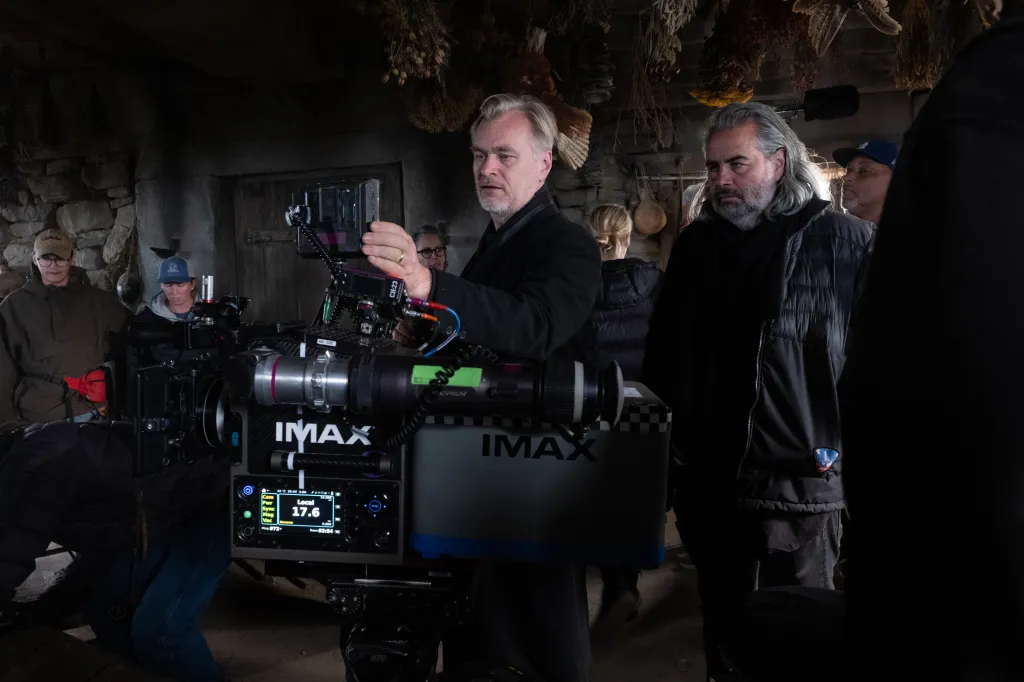
We told you on Friday that The Odyssey cracked the $1 billion mark at the global box office, and Universal is making it known that as of today the feature take of Homer’s epic is now director Christopher Nolan‘s highest grossing movie ever, ahead of 2012’s Dark Knight Rises ($1.085B). The current cume for The Odyssey is $1.1 billion worldwide after four weekends with $461.1M coming from domestic, and $643.6M coming from overseas.
Nolan’s movies have now grossed over $7 billion worldwide, with Universal owning his all-time record and his fourth highest grossing, the 7x Oscar winning Oppenheimer ($975.8M WW).
Another milestone for The Odyssey is that it’s the second highest grossing R-rated movie after Deadpool & Wolverine ($636.7M, $1.33B) both worldwide and domestic. Currently, The Odyssey is the highest grossing R-rated movie of 2026 both in North America and around the world. It’s also the highest grossing movie of Matt Damon, Anne Hathaway and Robert Pattinson’s careers globally.
As we told you, the A CinemaScore The Odyssey became the fifth movie year-to-date to cross $1 billion with Universal laying claim to three of them including Super Mario Galaxy Movie ($1.01B) and Lionsgate’s Michael ($1.016B), on which the studio handled the bulk of foreign. The highest grossing movie at the 2026 B.O. is Sony/Marvel Studio’s Spider-Man: Brand New Day with more than $1.26B. Disney/Pixar’s Toy Story 5 has grossed $1.09B and is the third highest grossing YTD behind Odyssey.
“Christopher Nolan has earned audiences’ trust by consistently delivering must-see theatrical events, and The Odyssey is him operating at the peak of his powers,” said Jim Orr, President of Domestic Theatrical Distribution at Universal Pictures. “Nolan’s epic film has been at the forefront of culture, with audiences seeking out premium formats and repeat viewings for this once-in-a-lifetime cinematic journey.”
“A singular filmmaker with the international following of Christopher Nolan is uniquely fit to adapt Homer’s ancient poem, which is one of the most influential and well-known stories in the world,” said Veronika Kwan Vandenberg, President of Distribution at Universal Pictures International. “The Odyssey is a global epic that has resonated with audiences everywhere with its massive scope and uncompromising vision.”
>
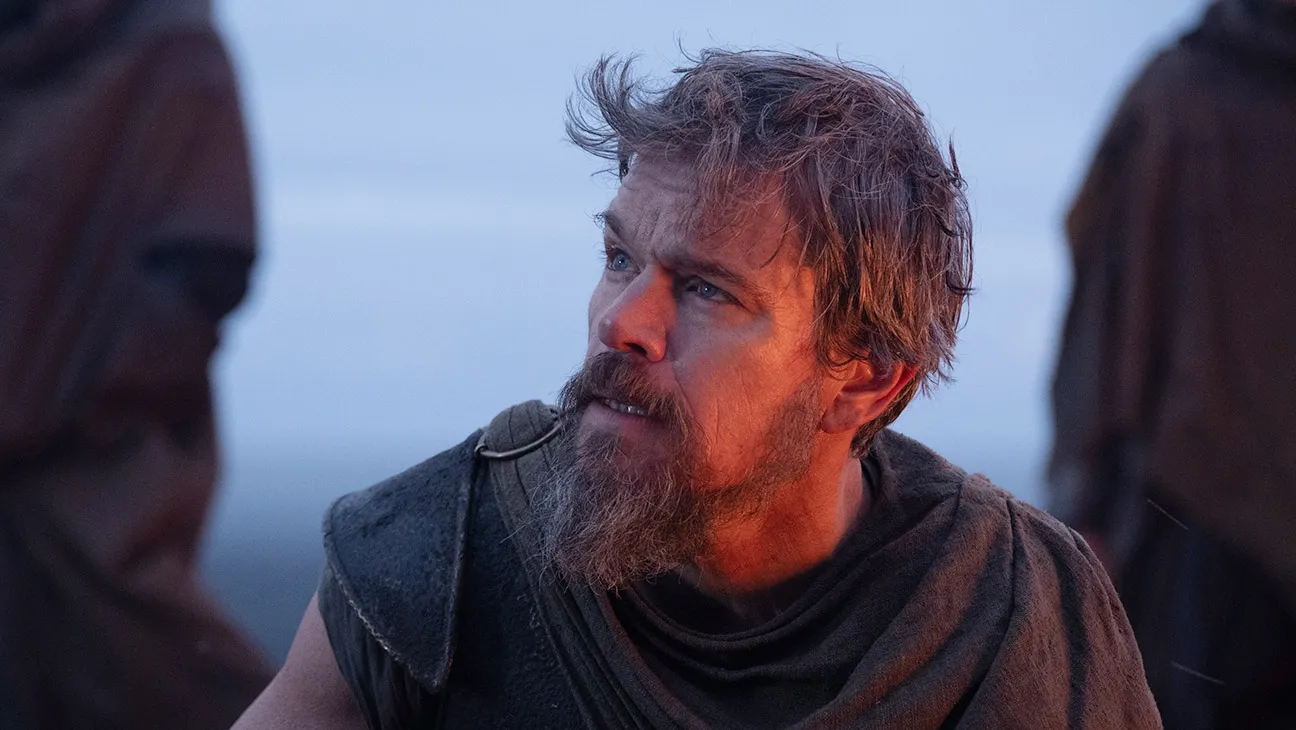
Christopher Nolan has conquered his previous titles with The Odyssey, as the recent Universal Pictures release is now the highest-grossing movie of the acclaimed filmmaker’s career.
The studio confirmed Sunday that the mythological epic has made $1.104 billion worldwide in its first month in theaters following its initial July 17 release. This surpasses 2012’s The Dark Knight Rises, which earned $1.085 billion, and 2008’s The Dark Knight at $1.005 billion, as Warner Bros.’ two Batman films had previously held the top spots on the list of the director’s top global sums.
As of Sunday, The Odyssey has collected $461.1 million domestically. Starring Matt Damon as Odysseus on his arduous journey home after the Trojan War, the film also stars Tom Holland, Anne Hathaway and Robert Pattinson, marking the highest-grossing movie globally for Damon, Hathaway and Pattinson’s careers. Nolan and Emma Thomas produce for Syncopy.
In addition to distributing The Odyssey, Universal was also behind Nolan’s 2023 release Oppenheimer, which counts as the filmmaker’s fourth-highest-grossing title globally with $975.8 million. That film won seven Oscars, including best director for Nolan and best picture.
Nolan’s The Odyssey is one of the year’s top five highest-grossing movies globally, having crossed the billion-dollar mark after The Super Mario Galaxy Movie, Michael, Toy Story 5 and Spider-Man: Brand New Day. Universal distributed The Super Mario Galaxy Movie and also handled international distribution for Michael, while Lionsgate was behind the biopic’s domestic release.
“Christopher Nolan has earned audiences’ trust by consistently delivering must-see theatrical events, and The Odyssey is him operating at the peak of his powers,” said Universal Pictures’ president of domestic theatrical distribution Jim Orr. “Nolan’s epic film has been at the forefront of culture, with audiences seeking out premium formats and repeat viewings for this once-in-a-lifetime cinematic journey.”
Adds Universal Pictures International’s president of distribution Veronika Kwan Vandenberg, “A singular filmmaker with the international following of Christopher Nolan is uniquely fit to adapt Homer’s ancient poem, which is one of the most influential and well-known stories in the world. The Odyssey is a global epic that has resonated with audiences everywhere with its massive scope and uncompromising vision.”
More to come.
>
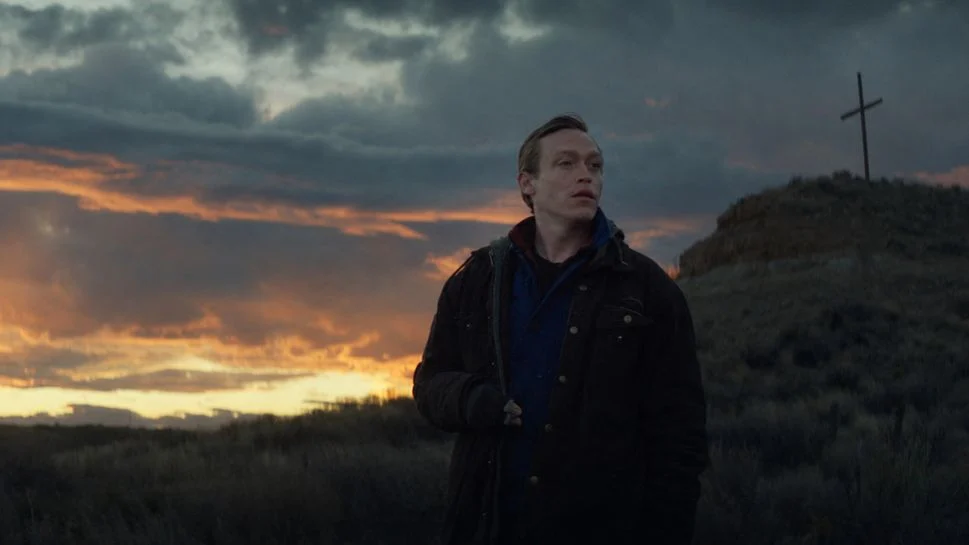
A young pastor in a small Texas town has a mission: to help people experiencing homelessness. But he is faced with a harsh winter – and resistance by his congregation. This is the world of Down the Arm of God, starring Caleb Landry Jones (Three Billboards Outside Ebbing, Missouri; Dracula; X-Men: First Class) and directed by Peter Brunner (My Blind Heart, Luzifer), which world premieres at the 79th edition of the Locarno Film Festival on the Swiss fest’s Piazza Grande program on Aug. 11.
The creative duo, which previously collaborated on To the Night, co-wrote the screenplay, inspired by true events, and developed it with people without housing. Their goal: to highlight that experiencing homelessness is the result of systemic failures.
“For about five years, Caleb and I created this project with people who live the reality of homelessness,” Austrian director Brunner, a former student of Michael Haneke, shares in a director’s note. “Their voices form the heart of our film, which approaches this crisis not through statistics, but through human experience.”
The film stars Jones as young pastor Nick, India Marie Cross (Wicked City), Nick Stahl (Let the Right One in), Mena Suvari (American Beauty) and Jones’ brother John P.W. Jones, among others.
Produced by EuropaCorp‘s Luc Besson, who previously directed the star in Dogman and Dracula, along with Jones, Christian Sosa and Jon Wroblewski via their Roosevelt Film Lab, Down the Arm of God features cinematography by Peter Flinckenberg, with Brunner handling editing. International sales are handled by Kinology.
The Art of Elysium has partnered with Down the Arm of God creatives Brunner, Jones and Besson to launch a companion curriculum “to explore empathy, creativity and the human connection.” After all, Brunner says, “Down the Arm of God is intended as a conversation starter rather than an advocacy film. Created at eye level with people who have lived and continue to experience homelessness, we want to invite audiences to look beyond stereotypes.”
‘Down the Arm of God’
Courtesy of EuropaCorp
Ahead of the Locarno world premiere of Down the Arm of God, Jones and Brunner talked to THR about how they developed the film and brought it to life in a collaborative fashion, why it’s neither poverty porn, nor meant to be preachy, and their hope for what audiences will take away from it.
How did you end up finding this community of homeless people and making a film with and inspired by them?
CALEB LANDRY JONES Peter and I met some years ago when we worked on To the Night, and we’ve been trying to work together ever since then and we’ve been trying to find a project. But Peter and I are both sticklers for the right project. Peter had about four or five ideas for a possible film, and it started with talking about the relationship of a son and a father, and then we began talking more and more. Peter wrote the first draft of the script by himself, which very much had everything already there: the structure, the characters.
A question, with an Austrian and an American making this together, was how I could help with making it more American and making it make more sense to a place like Texas.
PETER BRUNNER The theme of the father was one of the early ideas that we gravitated to, that we felt very strongly about in the world that we were living in back in 2021. It was also very obvious to us that we needed to do something about social help because that is important to us and that touched our lives at a certain point. Nick has his own way of having his life touched by people who are unhoused and live the reality of homelessness.
We really wanted to create a lot of depth to the characters because all of them are based on interviews rather than middle-class tourism and just sugar-coated fairy-taleish things. We wanted to know how it really is in those encampments. How do people talk about their own relationships? Going to encampments with different non-profits and doing outreach was like a stepping stone to rewriting the script. The script was getting updated until the very end, until days before shooting, or sometimes even on the set. It was something that was very much alive because it always had to serve what we would find.
‘Down the Arm of God’
Courtesy of EuropaCorp
We invited our collaborators, even the people in the small town, the people in the unhoused encampment, to be part of a collaboration on eye level in a long process, where they knew these were characters. It’s not themselves being exploited. We wanted this to be something where they have ownership, also when the movie was finished, and where they, in a certain way, teach us about their realities. It was one of the most beautiful, most inspiring experiences of my whole life.
And we experienced day by day how our friends and collaborators grew into such strong forces on the movie and started to tell us: “Maybe the light should be here!”
JONES “The boom [mic] is in!” Yeah, you’re right. Dang, please get the boom out of the shot! Thank you so much. That would have messed things up.
BRUNNER They are underestimated. We saw while making the movie that it was beautiful to have a true collaboration with people.
JONES With responsibility comes a greater need to then take care of the thing that someone is responsible for, and we were finding that very much throughout this entire film with the people we were working with. It was incredibly special that the cast members were really showing Peter and I, a testament to what we were doing, that they weren’t giving up. They were the ones that were showing up and saying: “Come on, Peter, let’s do this! Come on, let’s get the show on the road! It’s going to be difficult, but come on!” They feel the agency.
‘Down the Arm of God’
Courtesy of EuropaCorp
BRUNNER It’s also personal for everyone, including myself. Everyone who participated in making the film had a very personal connection with it. Specifically the actors, I think, because everyone in the film, in one way or another, is bringing something from their lives to the film. So, it’s this blend of fiction and something very true and honest, even if the names are changed and there are slight variations of what happened. It is still rooted in this reality.
Caleb, how did you get into Nick as a character?
JONES I hate when people say, “It was like jazz.” But it really was in this case in the sense that I play music too. It was really about understanding the character and the movie in another kind of way than I’m used to. I think it comes from this brotherly relationship that Peter and I have. Because he allowed me so early on in the process to write with him, I knew the movie better than I’ve ever known a movie.
What do you want audiences to take away from Down the Arm of God?
BRUNNER Our collaborators know better than anyone else that the average American right now is one paycheck away from homelessness with the high living costs and the debt that most people have. You just need to catch a flu or have an accident, and you don’t get that paycheck.
It’s so difficult because some people think you’re doing poverty porn, other people think you’re sugar-coating it, other people think it’s white savior middle-class tourism. But what really interested us with this movie was trying to understand the humanity and searching for and exploring the love and the loyalty to characters to have a dialogue with an audience and not do it for the sake of ego or shock.
‘Down the Arm of God’
Courtesy of EuropaCorp
JONES We were really seeing the film work in another kind of way. It didn’t feel like it was just a film anymore. It felt like it was much bigger than that. [Some people are losing] trust when it comes to our profession of making films and directors being allowed to come to a project with their vision without being bullied into submission to make something else. That’s becoming more and more rare to make a film like this and more difficult.
This film was made to spark a conversation. I was talking to Peter a few days ago about how it annoys me to hear so many people going: “That’s not why you guys made the movie. That’s how you’re selling the movie.” But it is our real desire that there is a conversation outside of this film that can take place with others. It’s not so much a message of, “You better take care of each other.” I don’t like messages in this kind of way either. But at the same time, I think our film has a very strong stance.
We hope that by making the film the way we did, there is a space for non-judgmental viewing of the film and of the people in the film. I can only hope that translates to after the film and to someone’s daily life, and that people may have conversations.
>


Search For Canadian TV Actor Stewart McLean Now Homicide Investigation


These ’90s fashion trends are making a comeback in 2017
According to Dior Couture, this taboo fashion accessory is back
Model Jocelyn Chew’s Instagram is the best vacation you’ve ever had
Your comprehensive guide to this fall’s biggest trends
9 Celebrities who have spoken out about being photoshopped
Emily Ratajkowski channels back-to-school style
A photo diary of the nightlife scene from LA To Ibiza