
‘At Night,’ courtesy of Night Films
Courtesy of Night Films Ltd.


Cinematographer Marine Atlan‘s feature film directorial debut “La Gradiva” takes a simple premise — teenagers on a class trip — and uses it to explore the vast worlds of their individual interiority with insight, empathy, and grace. Mercifully free of typical high school movie tropes, the teenagers at the heart of Atlan’s film are fully realized people, whose fears and desires and ambitions and loneliness and dreams, as well as the intensity of their messy teenage feelings, are treated utmost respect by Atland and co-writer Anne Brouillet, allowing their work to reach toward the sublime.
The film’s title alludes to Wilhelm Jensen’s 1902 novel “Gradiva: a Pompeian fantasy,” which tells the tale of an archaeologist obsessed with the bas-relief of a woman he sees in an Italian museum. Imagining she was among those who died in Pompeii after the eruption of Mount Vesuvius in 79 AD, he names her la Gradiva (or “she who walks”). Jensen’s novel led to a psychological reading by Freud and became a popular subject of Surrealist art.


Like the novel and the works it inspired, Atlan’s film is about the layers below our consciousness, where our desires and our fears and our anger boil until we can no longer contain them. But it’s also about the way that we project a version of ourselves to others, and the dangers of allowing our surface level understanding of people to affect our judgments of them.
We first meet this rowdy troupe of French high schoolers, who are awaiting their college acceptance letters as they travel to Naples via train, where they will not only discover the ruins of Pompeii and all that the destruction wrought by Vesuvius has trapped in time, but also who they are becoming as they move into the adult world. These kids are messy and raw, they’re smart and sensitive, but also have the capacity for cruelty. Pressures mount as the trip progresses, both from their impending futures, but also the pressure that comes with spending so much time with your peers in close quarters. It builds within each kid like the mighty volcano at whose base they find themselves. Will they find a restorative release for this tension, or will they destroy everything in the path like Mount Vesuvius?
At the center of this group is Toni (Colas Quignard), a vibrant young man with a penchant for Grindr hookups whose boisterous charm goes a long way to mask his fragile heart. Then there’s his best friend James (Mitia Capellier-Audat), who is introduced in a post-coital haze on board a train with Angela (Hadya Fofana). Their tryst is observed by Toni, who is in turn observed by Suzanne (Suzanne Gerin), a bookish girl who believes herself to be one of the “unfuckable” women who make other women “fuckable” by comparison (a dream sequence in which Suzanne imagines herself both as la Gravida herself and taking James’ place in his train tryst with Angela connects the film back to the Freudian and surrealist impact of Jensen’s novel). Leading the trip is the harried teacher Mercier (Antonia Buresi) whose desire to inspire passion in her students is clearly starting to lose its spark in her late career.
Before the train arrives in Naples, Toni shares a family fable of his own, illustrated by a faded old photograph. In it his grandmother stands with help in front of a grand old manor. Her gaze is fixed on the other side of the photograph, where Toni’s grandfather stands with his family, looking sharp in an expensive suit. As Toni tells it, his grandparents fell in love immediately, a coup d’foudre. When she became pregnant with his mother, his grandfather’s family disowned him, but before the star-crossed lovers could run away together, Toni’s grandfather was killed in the 1980 earthquake that shook Naples, allegedly destroying the family manor as well. That’s when his grandmother left for France, never daring to love anyone else again.
It’s one hell of a tale, in a way its own Pompeian fantasy, and one that has become a guiding light for Toni, a secret romantic whose love for James is obvious for everyone except the object of his affection himself.
While much of the movie rides on these young actors’ extraordinary abilities to carry both dialogue-heavy scenes as well as contemplating moments of silence, of reflection and observation, Atlan has not crafted a social realist picture. Working in lockstep with co-cinematographer Pierre W. Mazoyer, Atlan wraps her film in a warm, sun-dappled glaze, rife with film grain and like leaks that places the story in a world adjacent to those created by Alice Rohrwacher and her longtime DP Hélène Louvart in their fable-like collaborations. Much like Rohrwacher’s politically and emotionally potent cinema, Atlan places her characters in an almost otherworldly land unstuck in time, but anchors them in both timeless tales of love and friendship, but also the economics and other socio-political realities that pull our dreams down to earth.
Scenes of the stressed out Mercier desperately trying to get her disaffected students to engage in her lessons about volcanology and art history, to see the relevance in the deaths of the people of Pompeii so many centuries ago, are contrasted with much more lively after dinner discussions in which these same students. While the relevance of the past may not yet connect with these young people, the concerns of the present absolutely do.
In one riveting sequence, Mercier watches as her pupils debate the veracity of meritocracy in our late capitalist society, with some of the kids clearly spouting privileged nonsense parroted from their well to do parents, while others point to their own lived experiences that prove the opposite to be true. It’s in these moments where we see the strength not only of Atlan and Brouillet’s sharp script, but of the talented young cast (of mostly newcomers) that she has assembled.
The biggest discovery here is Colas Quignard as Toni, who is tasked with carrying the film’s most explosive story arc. When first introduced, Quignard plays Toni with the kind of gravitas that comes naturally when you’re the coolest kid in school and everyone knows it. But Toni is a sensitive kid, one who feels everything deeply. As his fantasies about his grandparents slowly erode, revealing the harsh economic truths about the relationship between the aristocracy and those who serve them, he also loses his belief in love at first sight. He folds into himself, his swagger fading while his loud mouth drifting into silent contemplation. Eschewing dialogue almost completely by the end, Quignard’s defeated body language speaks volumes for anyone attending to its desperate frequency. My heart ached as I watched him silently make an irrevocable choice that no one else seemed to notice until it was too late.
At two hours and twenty minutes “La Gradiva,” which recently won the top prize at the Cannes sidebar Semaine de la Critique (Critics’ Week), casts a hypnotic spell, fully immersing the audience into the world of Toni and his peers, Atlan makes sure that we feel all of their angst and their desires, their openness to the world, but also their hesitations.
It is so wholly transporting that its running time flies by unnoticed, and as it barrels toward its melancholic end, you’re left breathless in your seat wishing you could spend more time with these kids, hoping they will all be OK, even while knowing that life still has many more knocks waiting for them, and that perhaps none will be ever be as monumental as when love is lost, but if you have patience, also when it is found.
“La Gradvia” premiered at the 2026 Cannes Film Festival. 1-2 Special will release it at a later date.
Want to stay up to date on IndieWire’s film reviews and critical thoughts? Subscribe here to our newsletter In Review by David Ehrlich, in which our Chief Film Critic and Head Reviews Editor rounds up the best new reviews and streaming picks along with some exclusive musings — all only available to subscribers.
>
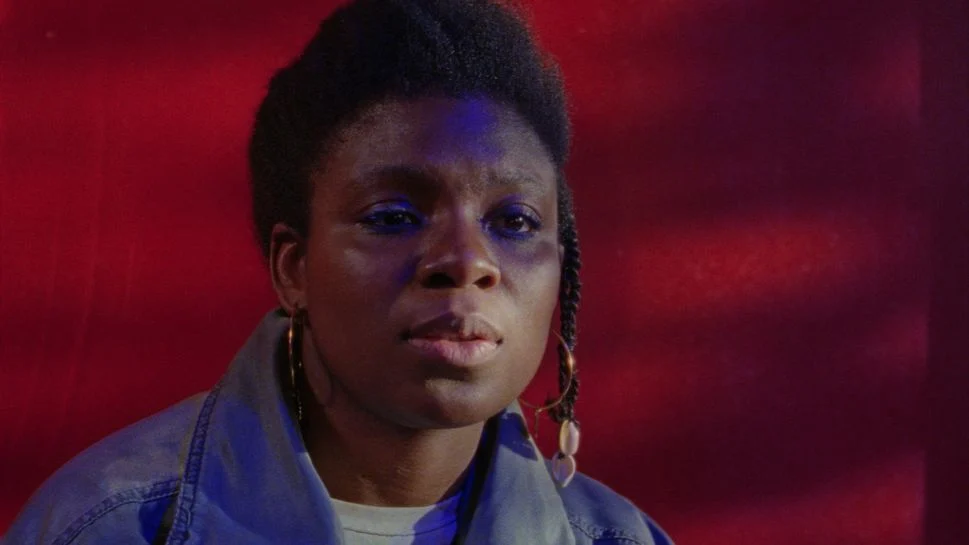
Six women roam the neon-lit city of Paris after dark. Over the course of a single night, their journeys intertwine reality, dreams and fiction. Whether at bus stops or corner shops, in restrooms or in bars, they give voice to their dreams, sexual desires and uncertainties about the future. Welcome to British filmmaker and artist Beatrice Gibson’s full-length feature debut, an experimental and “autofictional” film called, simply, At Night.
The movie will world premiere at the Locarno Film Festival on Saturday, Aug. 8, in the Filmmakers of the Present competition program of the Swiss fest’s 79th edition, which runs Aug. 5-15.
Written and directed by Gibson, At Night features cinematography by her long-time collaborator Ben Rivers and editing by Liyo Gong. The film is produced by Somesuch and Norte Productions.
“A filmmaker struggles to understand the film she is making,” a synopsis says about the women we meet in At Night. “A Black single mother refuses the categories imposed on her. A former sex worker reflects on her past. A poet gives up trying for a child.”
The film features an array of Gibson’s non-professional actor friends and influences as they discuss and explore such topics as sexuality, money, motherhood and mental health. “This isn’t simply a feminist story, but a love letter to friendships, relationships, and the quiet yet poignant stories women share together but rarely to an audience,” the press notes highlight.
A thread that runs through the movie is poetry, with U.S. poet Alice Notley reciting one of her own poems for the film, recorded just months before her death in 2025. Inspired by her writings and the texts of such other cult literary figures as June Jordan and Kathy Acker, Gibson takes us on nocturnal searches for answers.
‘At Night,’ courtesy of Night Films
Courtesy of Night Films Ltd.
“I was interested in the structure of the journey, of a woman just walking through the night,” explains Gibson. The idea for At Night came to her after she read two feminist takes on the epic quest narrative, namely Notley’s book-length poem, The Descent of Alette (1992) and Acker’s gender-flipped knight’s tale, Don Quixote, Which Was a Dream (1986).
But scenes and narratives also emerged from the creative’s thinking about the kinds of encounters and conversations that can only take place at night. “Who really occupies the night? And what kinds of labor take place there?” she wondered. That is why At Night also features “undervalued work done by those who keep the city fed, clean, and moving,” according to the press notes.
“My casting process is one I’ve developed over time and is folded into the writing process. I don’t follow the traditional structure in which I’m writing and then casting,” Gibson explains. Instead, she casts her characters first, thinking about who might produce an interesting performance, and then collaborates with them to develop the material.
“It’s a collectively written film, in many ways,” Gibson emphasizes. “People write their own material for their scenes, depending on what they want to develop.” She concludes: “It’s autofiction really, so generating that material is a delicate and sensitive process, and it takes a lot of time and revision. People need to feel comfortable with what they’ve authored, where it’s placed and with whom it’s in dialogue. It’s quite a deep process.”
No surprise then that it took six years to make At Night.
As with all of Gibson’s work, the film emphasizes a working process that is collaborative and improvisatory. “I’m utopian at heart,” Gibson says. “I wanted to make a film about trying to be together at a time when everyone is divided. Maybe it was a naive and misguided thing to do, although, that said, I would do it again.”
That theme of being together also applies to Gibson appearing in front of the camera in At Night. As for her decision to do so, she says she felt a responsibility to delve into her own sense of privilege: “I didn’t realize the extent to which race and class would play out during the process. That’s why I’m in the film,” she explains. “I wasn’t supposed to be initially, but I felt I had to take responsibility somehow, in relation to my positionality. I come from a deeper place of privilege than most of the characters in the film; there was critical tension in that, and I felt like I had to take responsibility for it and explore it.”
The relationships and shared thoughts, as well as the sights, sounds and rhythm of the film, are what At Night is really all about. You can watch an exclusive clip for the film, which THR can premiere, right here:
>

Flipping the home invasion thriller on its head, Netflix’s The Last House puts a family in peril when a mysterious threat seals them inside their home with no escape while torrential rains pour down — for days that turn into weeks, months and years. Louis Leterrier’s capable direction and reliably solid performances from Greta Lee and Wagner Moura as parents desperate to shield their kids from their worst fears make for a film that, despite its sci-fi and horror elements, is as much a psychological chamber drama and survival thriller about four people using their wits and dwindling resources to stay alive, even as their close-knit ties start fraying.
Inevitably recalling the isolation of COVID lockdown, the screenplay by Matthew Robinson (Good Luck, Have Fun, Don’t Die) oscillates between finding comfort and terrified vulnerability in self-reliance, keeping the exact nature of the force imprisoning the family — and seemingly everyone else in the world — vague until roughly an hour in, when the suspense is turned up even as the storytelling gets wobbly.
The Last House
The Bottom Line
Lockdown redux.
Release date: Friday, Aug. 7
Cast: Greta Lee, Wagner Moura, Riley Chung, Noah Alexander Sosnowski, Emma Ho, Gabriel Barbosa, Arden Cho
Director: Louis Leterrier
Screenplay: Matthew Robinson
Rated PG-13,
1 hour 52 minutes
That wait might frustrate genre fans requiring a more instantaneous stream of high-intensity thrills and scares, or anyone expecting the kind of hard-charging action Leterrier is best known for (the first two Transporter films, Clash of the Titans, Fast X and the forthcoming Fast Forever), but the actors keep it watchable.
The quote from Arthur C. Clarke that opens the film is significant: “How inappropriate to call this planet Earth when it is clearly Ocean.” With global sea levels rising due to climate change, those words could ultimately turn out to be prophetic. The pervasive anxiety attached to such environmental issues contributes to the tensions eating away at the family as they struggle to figure out who or what is holding them captive and what that entity wants from them.
For much of its running time, The Last House feels almost like a more grounded version of the taut 2023 Kaitlyn Dever sci-fi horror No One Will Save You, this time rooted in human response to an ambiguous, possibly alien threat. Right from Day One, when they are grasping for answers, Jason Delgado (Moura) tells his family that whatever force has left them housebound is not man-made. But like the audience, he is making conclusions based on minimal concrete knowledge.
An unemployed engineer, Jason packs up his fishing gear and heads home from the pier as a major storm front moves in, with no catch to show for his early morning efforts. A voiceover identified only at the end tells us: “The day the rains came, we learned we were not alone.”
When Jason hustles his loving wife Ann (Lee), their 12-year-old son Graham (Noah Alexander Sosnowski) and 8-year-old daughter Ruth (Riley Chung) out to the car to go buy a Christmas tree, they find the doors and windows of the house sealed shut. Any attempt to force them open or even smash through them proves futile. Looking out their windows, the Delgados discover that their neighbors are in the same position, including a retired couple across the street who have limited food supplies.
At first, Jason and Ann encourage the kids to stick to a routine — household chores, study, piano practice, PE time — convinced the rain will soon stop and their lives will return to normal. With the Wi-Fi out along with TV and radio reception, entertainment options are limited to board games, Jason’s old vinyl collection (a sweet moment has the family cutting a rug to The Cure) and a choice of two films, Annie or Air Force One, to throw into an old DVD player.
They start rationing food, and Ann begins collecting tomato seeds and vegetable roots to start an indoor garden. One of the advantages of a house in disrepair and sinking into its foundations is easy access to soil by lifting a few floorboards. A crack in the chimney spurs Jason to rig a trap with which he goes “fishing,” catching squirrels and other wild animals that wander into the yard and end up in the frying pan. But this food source also brings a new danger into the house.
Somehow, the need to hide from whatever is outside becomes imperative, even more so when they catch their first partial glimpse of a towering creature, unrecognizable as any species known to man.
Their confinement stretches on, jumping ahead five years, by which time the orderly suburban street has surrendered to overgrown nature. The children grow into teenagers, Graham (Gabriel Barbosa) becoming moodier and more impatient while Ruth (Emma Ho) retreats into her vivid imagination, reading about mermaids and mythological monsters like Krakens and Leviathans. She starts theorizing about undiscovered sea creatures living on the ocean floor.
Things get hairier once the tentacled entities outside reveal themselves and the family is forced to fight them off. But the creature designs are clunky, dipping for inspiration into H.P. Lovecraft, kaiju, the rampaging river mutation in The Host and a whole mishmash of unmemorable sci-fi freaks.
The more we see of them and the more their presence is explained, the more the film slips out of Leterrier’s grasp, cheapened by tired jump-scare tropes like corpses bobbing up in water or bodies infested with creepy-crawlies.
We’ve seen too many more terrifying depictions of families pitted against outsize nonhumanoid aggressors — in the world of A Quiet Place, for one — to be especially transfixed by the faceoffs here, which are less effective than the elemental menace of rising floodwaters threatening to drown the Delgados in their own home. After such a protracted emotional build-up, the conclusion feels rushed, its interspecies-empathy message a bit trite.
The movie’s main strength is its emphasis on familial love as a sustaining force, nodding back to thrillers from the ‘80s. Ann and Jason might both appear to be cracking up under the strain, frightening their children — she becomes more fatalistic, while he is so consumed by his responsibility to keep them safe that he neglects his roles as husband and father — but the unbreakable bond holding them all together makes the stakes more real than Robinson’s script would indicate.
Lee and Moura are gifted actors, especially compelling as the increasingly haggard Ann and Jason give up trying to mask their despair. And Graham and Ruth are superbly cast at both ages, creating an affecting portrait of family as a lifeline that keeps the audience in their corner even when the storytelling falters.
>
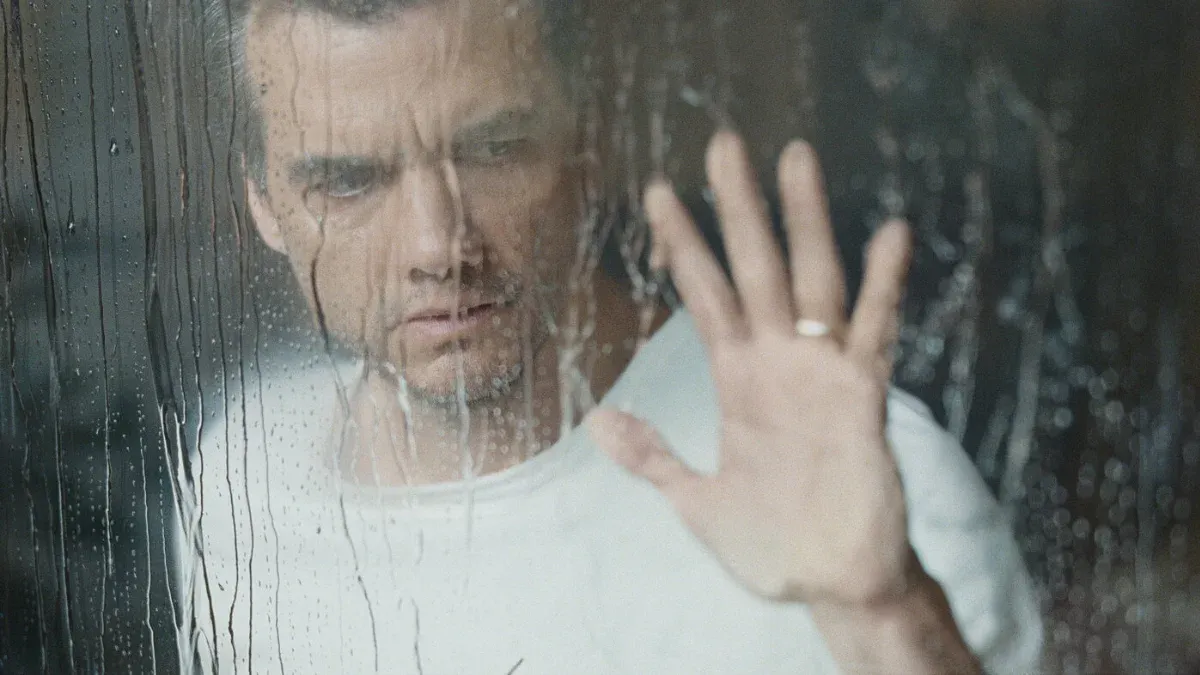
Louis Leterrier’s supernatural horror thriller “The Last House” dares to ask an unthinkable question: What would happen if everyone was suddenly stuck in their houses for a really, really long time?
Yup, it sure is hard to imagine anything like that happening in real life. It’s particularly difficult in the mid-2020s, because nothing like that happened to everyone on the planet within the last half decade.
I kid, I kid. But watching the characters in “The Last House” act like being trapped indoors is something they’ve never experienced before is a bigger stretch than the film’s evil magic raindrops (we’ll get to those in a minute). Everyone in Hollywood seems eager to pretend, at least as far as fictional stories are concerned, that the COVID lockdown never happened but this Netflix original wants to have it both ways. It’s a horror movie that plays on our shared, uncomfortable memories of the early days of the pandemic while also pretending the story, with or without its sci-fi elements, is fresh and exciting.
“The Last House” is neither fresh nor exciting. But it’s not bad. Wagner Moura and Greta Lee star as Jason and Riley, a married couple with two kids and a nice, slightly crumbling suburban house. One day it rains and the water mysteriously coats their doors, windows and walls, which somehow makes them completely impenetrable. A quick glance around the neighborhood reveals everyone else is in the same boat. There’s air, there’s water, there’s gas and electricity (for now), but no matter how hard they try, no one can leave.
Jason and Riley put on a brave face for their kids, and by sheer coincidence they have enough food in the house to last a couple months (thanks, artificial preservatives!), but their plan to wait this disaster out leaves them waiting, and waiting, and waiting.
Oh, and there are monsters outside. Did I forget to mention the monsters?

There comes a point, after this family has been trapped indoors for ages, when someone says they only survived because they got lucky. That rings false. It’s like saying Kevin McAllister was only “Home Alone” because of a little whoopsie. No, it took a lot of storytelling contrivances to make that exact situation play out exactly the way it did. Thank god Jason is both an engineer and a fisherman, because those are the exact skills they need to survive. Thank god their chimney is crumbling, because that’s important later. Thank god one of the kids is really into aerial silks, because eventually they’re going to need those. I could go on like this. The movie certainly does.
Eventually, screenwriter Matthew Robinson, who also penned the wonderful post-apocalyptic kaiju-themed teen romance “Love and Monsters,” gets a little bored with the extended metaphor. The final act shifts into a more horror-heavy gear, which makes “The Last House” feel like part of a grander literary tradition.
I won’t say which one, because there’s not a lot you can spoil about a movie like this. The family doesn’t even snipe at each other much. You’d think spending months, or even years in a single location with your parents during puberty would result in a lot more resentment, or at least sarcasm, but apparently this is the emotionally healthiest family in the world, even in a crisis.
This is where old-fashioned star power comes in handy. Wagner Moura and Greta Lee are bewitching performers who inject their straightforward material with desperately-needed immediacy and sensitivity. They’re not too good for this material. Well, arguably they are, but they don’t act like it. They make “The Last House” feel as real as a contrived allegory probably could.

Meanwhile, director Leterrier keeps the experience humming along, undeterred by the limitations of his production. (In many ways, “The Last House” plays like a charming throwback to the early era of Blumhouse, when every hit horror thriller took place entirely in an inexpensive suburban home.) Leterrier is a confident and energetic blockbuster filmmaker taking an unexpected side road into M. Night Shyamalan territory, but his visual clarity and his sixth sense for pacing make a big difference in a movie which, by nature of its premise, could easily have wound up in the doldrums.
“The Last House” has foundational problems, but also foundational joys. That the premise feels forced — and goes off the rails in the finale — is a drawback. Then again, it’s skillfully presented and exceptionally well cast, which makes up for most of the obvious deficiencies.
It’s a good film to watch while you’re stuck in the house, not because you can’t leave but because you just don’t feel like it. If you couldn’t leave it would get real old, real fast, because the last thing you’d want is to be reminded of how stressful, yet somehow simultaneously boring, it would be to live out this movie for real. Again.

>


Search For Canadian TV Actor Stewart McLean Now Homicide Investigation


These ’90s fashion trends are making a comeback in 2017
According to Dior Couture, this taboo fashion accessory is back
Model Jocelyn Chew’s Instagram is the best vacation you’ve ever had
Your comprehensive guide to this fall’s biggest trends
9 Celebrities who have spoken out about being photoshopped
Emily Ratajkowski channels back-to-school style
A photo diary of the nightlife scene from LA To Ibiza