
Politics
The House | Brexit Scars And UK Political Instability Temper Brussels Enthusiasm For EU Reset


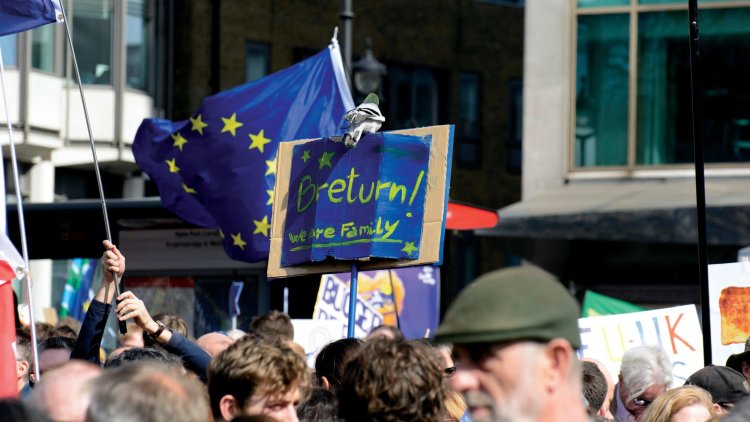
(ZEN – Zaneta Razaite/Alamy)
6 min read
The European Commission and national leaders can see the benefits of a rapprochement but Brexit scars, unresolved disputes and uncertainty over who will be in No 10 are tempering Brussels’ enthusiasm, finds Christian Spillmann
The reset between the European Union and the United Kingdom was much ado about nothing.
Brexit was a tragedy. The ‘reset’ is a farce. ‘Breturn’ is a fantasy. The language of international relations is rarely so blunt, so unvarnished. Instead, pleasantries and embraces conceal a more awkward truth. The divorce negotiations left a bitter aftertaste on the Continent. Yet the return of Donald Trump to the White House has fractured the global order. His disdain for Europeans, and the consequences of his erratic decisions, have made closing ranks imperative. A rapprochement between the UK and its former EU partners is now vital to Europe’s security. Keir Starmer wishes to go further. The British Prime Minister is seeking a reset of relations, though he has drawn three red lines. The reception has been polite; enthusiasm conspicuously absent. In Brussels, the issue is not a priority, and mistrust among European leaders is real. How much faith can be placed in the contrition of a country that offers its former partners a fresh start while preparing to cast its votes for one of the architects of the rupture?
Brexit shattered the relationship between the UK and its EU partners. Negotiations were arduous, at times bruising, and strained relations among member states. Nowhere is the ambivalence more pronounced than in France. Emmanuel Macron has taken Keir Starmer under his wing. The two leaders have forged a privileged bilateral relationship. The French President is strongly in favour of resetting ties with the UK, and the British Prime Minister has become his interlocutor of choice on European defence. Paris regards London as a strategic partner and is acting accordingly. Macron and Starmer co-chair the ‘coalition of the willing’ for Ukraine and are co-ordinating the mobilisation of a naval mission to secure maritime routes through the Strait of Hormuz and the Red Sea.
Yet the Franco-British relationship is not without strain. Beneath the cordiality lies suspicion. Paris refuses to allow London to enjoy the benefits of the single market without accepting its obligations. The UK has been unable to join Safe, the EU’s flagship rearmament programme, stymied by a European preference championed by France – at least 65 per cent of components must be produced within the bloc – as well as by Starmer’s reluctance to pay the entry price, a financial contribution estimated at between €4bn and €6.5bn. London’s defeat in this stand-off has underscored the difficulty of translating a political ‘reset’ into tangible integration.
All is not lost. Starmer has signalled his intention to negotiate participation in a second round of the Safe programme, should the financial terms become more ‘equitable’. A second EU-UK summit is scheduled for late June in Brussels, with the date yet to be fixed. Progress is expected on migration, with the Commission set to present a ‘Channel Plan’, as the issue has become a European one. But the Continent will press the UK to cease being “so attractive to irregular migrants”, citing its labour market, the absence of identity cards and the pull of community networks, as one European negotiator warned. Advances are also anticipated in aligning carbon markets (ETS), sanitary and phytosanitary measures (SPS), UK participation in the Erasmus programme, and the YES scheme for youth mobility.
These remain incremental steps, albeit useful ones. “We are identifying areas for co-operation. We are operating in the narrow margins between the Trade and Co-operation Agreement and Starmer’s three noes: no return to the single market, no customs union, no freedom of movement,” one negotiator explains.
British officials have revived the idea of rejoining the single market for goods. Representatives of the 27 EU member states have unanimously rejected this notion of a ‘pragmatic Breturn’. It does not hold. The four freedoms are indivisible. British negotiators, their counterparts complain in Brussels, appear at times short of subtlety. “They no longer understand us,” comes the lament.
The reset resembles a diplomatic farce – replete with misdirection, half-truths, misunderstandings, slammed doors and sudden reversals. London seeks to escape its isolation. Continental capitals, confronted with a cooling of relations with Trump’s America, are in search of a reliable partner. Scenes of reconciliation multiply: summits, state dinners, grand declarations, smiles for the cameras.
Yet the misunderstanding endures. London appears to believe that a reset entails regaining the commercial and security advantages of EU membership without paying the full price. On the Continent, there is an expectation that the UK will finally accept EU rules and contribute financially to common projects. The result is predictable: when the moment comes to strike agreements and sign cheques, each side discovers it has been talking past the other. Doors slam, recriminations follow and disappointment prevails. The reset is a diplomatic vaudeville: frequent quarrels, regular reconciliations.
The reset is a diplomatic vaudeville: frequent quarrels, regular reconciliations
For now, the reset has disappointed, constrained by the caution of Starmer and his Labour government. The Continent struggles to discern what, precisely, the British want. Their démarche is driven in part by the UK’s economic difficulties – Brexit has proved deeply damaging – yet the ambition of a reset is curtailed by Starmer’s red lines. The mantra ‘Brexit means Brexit’ has become a straitjacket. The EU has other priorities; in Brussels, the matter is viewed as secondary.
European commission president Ursula von der Leyen has entrusted it to the commissioner Maroš Šefčovič, tasked with managing and deepening the EU’s global trade partnerships.
The stance that the UK has not abandoned its status as the opt-out state irritates European partners.
“The British must decide: either we proceed with incremental improvements, or they opt for a broader political debate on rejoining the single market and the customs union,” officials in Brussels argue.
At root lies the question of trust. What are Starmer’s chances of remaining Prime Minister until 2029, given Labour’s heavy losses in the wake of the 7 May electoral bloodbath? The British say they wish to reconnect with the EU, yet Nigel Farage, a leading architect of Brexit and an avowed Eurosceptic, tops voting intentions with his Reform UK party. A paradox – and a nightmare – for the EU.
“The British have paid to discover what Brexit entails,” says an official involved in negotiations with London. “It has plunged the country into a hole. Many now recognise the error and want to end their isolation. Yet a majority appears ready to vote for the man who put them in this predicament.”
In that contradiction lies the essence of Europe’s bewilderment.
Christian Spillmann is a former AFP correspondent in Brussels and co-founder of La Matinale Européenne/Il Mattinale Europeo
>
Politics
Politics Home | Big Tech Firms Are “Winning In A Big Way” On Online Safety, Warns Jess Phillips

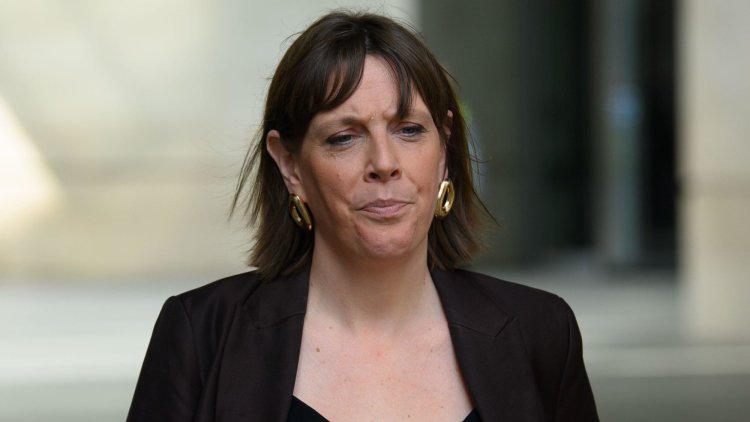
The former safeguarding minister Jess Phillips has warned the big tech firms are winning in the battle over regulation (Alamy)

3 min read
Major tech companies are “winning in a big way” against efforts to make the internet safer for women and children, according to former safeguarding minister Jess Phillips.
Phillips, the Labour MP for Birmingham Yardley, said that during her time in government, parts of Whitehall, including No 10, were reluctant to take action for fear of retaliation by tech giants and the Donald Trump administration.
Speaking on the latest episode of PoliticsHome podcast The Rundown, which will be published on Friday (7 August), Phillips said: “We are too beholden currently in the world to basically five unelected people.”
The Labour MP resigned as a Home Office minister in May, accusing the Keir Starmer administration of not working hard enough to protect women and girls online. Phillips said Starmer was a “decent man” but his reluctance to “have an argument” meant that steps to tackle violence against women and girls (VAWG) were “stalled and delayed”.
In her resignation letter to the then-prime minister, Phillips said that “91 per cent of online child sex abuse is self-generated by children groomed, tricked and exploited into abuse”, and that Google and Apple, the two companies that control the operating systems on almost all smartphones, could quickly and easily install software that would stop them being used by children to take and receive naked pictures.
In June, Starmer gave tech firms a September deadline to make this change, warning that the government would give itself the powers to fine or take criminal action against those that did not comply.
Phillips wants new Prime Minister Andy Burnham to hold them to this, telling the podcast that, as things stand, “tech companies are winning in a big, big way”.
The former minister said there was a divide within Whitehall about how to tackle online safety when she was in government. She described the Home Office as being “hawkish as hell about tech companies”, while No 10 and the now-abolished Department of Science, Innovation and Technology (DSIT) were nervous about being too aggressive.
Phillips recalled “the sense that tech companies and the US would hold us to ransom on all sorts of different things”, adding: “I’ve had it directly said to my face, ‘well, look, they’ll just put trade levies on us if you try and do anything with tech companies’.”
She said Starmer “was always on my side in conversations”, but that she “just started to feel like I was going slowly mad” waiting for the machinery of government to make it happen.
“If you could hear some of the conversations I had to have with people. There are some people who genuinely just think that people taking dick pics is a human right,” Phillips said.
“I had to say to somebody once: ‘You know, you won’t die. It’s not water or shelter’.”
Phillips expressed concern that the government’s Online Safety Act is “woeful for women” in its current form and “20 years behind” where it needs to be to tackle evolving online harms.
“As somebody who was seeking to put down lots of amendments to the Online Safety Act while it was passing through, I’ve never known aggressive lobbying like it,” said the Labour MP. “Every single law firm in the whole of London was basically on retainer to one of the big tech companies so that they couldn’t work for anyone else. That is just anti-democratic.”
The Rundown is presented by Alain Tolhurst, and is produced and edited by Ewan Cameron for Podot
- Click here to listen to the latest episode of The Rundown, or search for ‘PoliticsHome’ wherever you get your podcasts.
>


Prime Minister Andy Burnham has outlined a range of areas he would like to see greater spending in. (Alamy)

4 min read
Andy Burnham has set out some major ambitions for government since entering office. Experts look at how he could pay for them.
The new Prime Minister was keen to hit the ground running when he succeeded Keir Starmer in No 10 last month, promising quick action to help people cope with cost-of-living pressures. He announced that he would take VAT off electricity bills, cap bus fares at £2, and reduce business rates for pubs and restaurants.
When it comes to longer-term policy, Burnham has promised to end rough sleeping and reform adult social care. His vision for the latter, bringing it more in line with NHS provision, is estimated to cost billions of pounds of additional spending every year. The new PM is also under pressure to increase defence spending in response to global security threats.
At the same time, the PM has pledged to stick to the government’s fiscal rules and 2024 manifesto pledges not to raise income tax, national insurance and VAT.
This has raised questions about how Burnham will fund his plans for government.
Many details will not be confirmed until Wednesday, 28 October, when Chancellor John Healey delivers the first Budget of the Burnham Labour government. Healey, who resigned as defence secretary during the final weeks of the Starmer government over defence spending, has said that the Autumn Budget will be “built on fiscal discipline”.
What are Burnham’s options?
Carsten Jung, leader of the economy team at the Institute for Public Policy Research think tank (IPPR), argued that Burnham and Healey have inherited a better economic picture than Starmer and former chancellor Rachel Reeves faced.
“Rachel Reeves, for all of her strategic mistakes, really fixed the public finances,” said Jung.
“What she inherited from Jeremy Hunt [her Tory chancellor predecessor] was unsustainable. It was based on cuts to departmental spending which weren’t sustainable. So she went to the painful exercise of increasing taxes to fix that.
“What Andy Burnham inherits is a much better funded state, and he also has headroom against the fiscal rules he inherited, which makes it less dire.”
However, he said that borrowing money to fund government spending could be riskier for Burnham than it was for Starmer due to “jittery” markets and a more precarious global picture. The Bank of England recently warned that it may be forced to raise interest rates later this year if the US war with Iran escalates, which in turn would make borrowing more expensive.
Jung said that one option available to the government is to increase tax on wealth to bring it closer to tax on earnings, highlighting capital gains tax.
As things stand, people are charged either 18 per cent or 24 per cent on profit they make when selling, gifting or disposing of an asset that has increased in value, such as a second home. Burnham could increase Treasury revenues by aligning capital gains tax rates with income tax bands of 20, 40 and 45 per cent.
Elsewhere, examples of pro-growth policies according to Jung include the Treasury investing more in “leading industries” in the UK as well as “boosting entrepreneurship” while closing tax loopholes.
Isabel Stockton, researcher at the Institute for Fiscal Studies (IFS), said Burnham’s ambitions can be split into two categories: those that are less fiscally challenging, such as the cost-of-living measures he announced in his first few days in office, and policies with greater economic implications, like defence spending and adult social care.
Stockton agreed with Jung that borrowing more money would be “difficult” and “risky” for Burnham as it could push the new government close to breaching its fiscal rules, leaving him with two broad options: raising tax and cutting spending elsewhere.
Burnham has already said that the country must get “really serious” about reducing welfare spending to fund priorities like greater defence spending.
Stockton also suggested that the Labour government explore using the National Wealth Fund as a way of boosting spending power – it was launched under Starmer in 2024 to “mobilise billions of pounds of investment” in UK “clean energy and growth industries”.
By the end of the current parliament, the NWF should be on track to have capitalised with almost £30bn – with government funds directed to “resources to finance economic activity that supports additional private investment”, opening up investment options for the government.
However, NWF is still funded by taxation and borrowing, and is run by the Treasury – meaning the challenges around scrutiny on tax and spend remain.
Stockton told PoliticsHome the limitations Starmer’s government faced on taxation, spending, and spending cuts continue to exist, and remain challenging for Burnham’s government.
“With any new government, it can make different choices, but it is going to be facing essentially the same constraints, especially given that he [Burnham] says he’s committed to the existing fiscal rules,” said Stockton.
“He says he’s committed to the Labour manifesto on tax, so that rules out quite a few things already. That means that the decisions are going to be difficult.”
>


2 min read
Labour candidate Bev Craig has been elected as the next Mayor of Greater Manchester, securing a comfortable victory to succeed the new Prime Minister, Andy Burnham.
She won 309,525 votes (around 66 per cent), with Reform UK candidate Sian Astley receiving 157,178 (around 34 per cent), once first and second preferences were taken into account.
Craig, a close Burnham ally who has led Manchester Council since 2021, said: “I am honoured, I am humbled, and I stand ready to serve the three million people that live across this fantastic city region.”
The turnout was relatively low at just over 25 per cent.
Labour will now need to choose a new leader of the council to succeed Craig.
The by-election in Manchester was triggered after Burnham won a parliamentary by-election in Makerfield, returning to Westminster as an MP and becoming PM just weeks later.
The Greens were initially confident of success in Greater Manchester, following their victory in the Gorton and Denton parliamentary by-election in February.
Former leader of the Green Party Caroline Lucas told The House in June that the party would be “throwing everything” at the contest.
However, after the first round of voting in Greater Manchester, the Greens were in third place on 12 per cent. Rupert Lowe’s Restore Britain got 9 per cent, the Conservatives 8 per cent, and the Liberal Democrats 3 per cent.
The election used a more proportional voting system than first-past-the-post, in which voters express a first and second choice. Under the system, if no candidate secures 50 per cent of the votes after the first round, then the top two candidates will be given the second preference votes from the defeated candidates.
>

How to watch Angels vs. Marlins: TV channel and streaming options for August 7

How to watch Astros vs. Padres: TV channel and streaming options for August 7

Mike Trout becomes first MLB player to homer on six separate birthdays
-

 movies3 months ago
Search For Canadian TV Actor Stewart McLean Now Homicide Investigation
-

 Fashion9 years ago
These ’90s fashion trends are making a comeback in 2017
-
Fashion9 years ago
According to Dior Couture, this taboo fashion accessory is back
-
Fashion9 years ago
Model Jocelyn Chew’s Instagram is the best vacation you’ve ever had
-
Fashion9 years ago
Your comprehensive guide to this fall’s biggest trends
-
Fashion9 years ago
9 Celebrities who have spoken out about being photoshopped
-
Fashion9 years ago
Emily Ratajkowski channels back-to-school style
-
Fashion9 years ago
A photo diary of the nightlife scene from LA To Ibiza