
Politics
The House | Cost Of Living Champion Lord Walker: Rejoining The Single Market “Would Be A Terrible Idea”


Photography by Roy J Baron

10 min read
The government’s cost of living champion, Lord Walker, tells Noah Vickers about defecting from the Tories to Labour, Keir Starmer’s future and why rejoining the single market would be ‘a terrible idea’
Across Britain, almost two years after Labour won a landslide election victory promising to fix the cost of living crisis, millions of families are still unable to keep their homes warm or to access essential dental treatment, while millions more are skipping meals as they struggle to afford food.
The government’s recently appointed ‘cost of living champion’ is not one of them and never has been.
Lord Walker, the multi-millionaire boss of Iceland supermarkets, freely admits that he has never personally struggled with living costs. But that doesn’t mean he’s the wrong man for the job, he insists.
“I make no secret of the fact that I’m very privileged in my background,” the 45-year-old peer tells The House.
“I’ve come from a very entrepreneurial family. Both my granddads, who I never met, died very young. They were both coal-miners who worked their fingers to the bone… I think because of that, mum and dad always knew what a hard day’s graft was, so I grew up with that work ethic.”
Richard Walker, as he was then, served as Iceland’s managing director from 2018 before taking over as executive chairman in 2023 from his father Malcolm, who co-founded the business in 1970. Working at Iceland brings with it an insight into the experiences of people from more humble starts in life, he says: “Given our business, we do see, feel and hear a lot of the issues on a daily basis that our customers are facing.”
Reporting directly to the Prime Minister, who he meets every few weeks, Walker says his job is to “bring some critical outside thinking” into government and to “stress-test some of the ideas already percolating within No 10” about how to reduce people’s daily costs.
He admits that, as a policy area, the cost of living is “an impossibly broad remit”. He is “zeroing in”, therefore, “on a few key territories where I think policy can be enhanced and improved, but also, to be frank, where I think I can make a quick impact and a difference”.
When The House sits down with Walker, he has just returned from a meeting with Kate Dearden, the consumer protection minister, to discuss the government’s work tackling “subscription traps”. From spring 2027, subscription services will be required to provide customers with reminders when their free trial is ending or when their annual contract is being automatically renewed.
But Walker is also working with the government to explore how sidecar savings, liquid savings accounts connected to a pension plan, and child trust funds could be used to provide a “buffer” for Britain’s lowest-income families. He is eager, too, to widen access to “responsible credit”, as he warns too many people are still being driven into the hands of loan sharks.
As part of his role, Walker has been given a private secretary in No 10 and plans to work with an existing Downing Street ‘sprint team’ solely focused on slashing living costs.
The team, he says, are bringing with them a “private sector mentality and trying to just get shit done – and not machinate and pontificate too much but actually make deliverable interventions at pace”.
Walker accepted the job – an unpaid post – on two conditions: “One – I’m not going to stick around and I’ll give it to the end of the year. Two – I am allowed the freedom to say what I think.”
Does that mean he’ll have finished his work by Christmas?
“We’ll see,” he replies. “What I didn’t want to do is be there forever, and write a very long, 100-page report that no one would read. I’m just interested in meaningful interventions and trying to make a difference. It is early days… but I think to try and put an end-stop date to it is important because it drives a sense of urgency and pace.”
Walker’s appointment to the role in February came less than a month after he took his seat in the Lords as a Labour peer – but his path to Parliament was not straightforward. Until the last election, he had only ever voted for the Conservatives, to whom he donated £10,000 in 2020.
In a letter to Rishi Sunak in 2023, he said it was his “most fervent wish” to become a Tory parliamentary candidate, having “given my all to earning that privilege”.
By that point, Walker says he had spent two years door-knocking and leafleting for the party in the hope of being selected for a constituency at the general election.
“I did feel I was being given the endless runaround by CCHQ [Conservative Campaign Headquarters],” he says. “This was a long, committed process. I was not so arrogant to think I could just parachute in and bag a seat.”
Walker says his candidacy was repeatedly deferred, as the party told him he was being too outspoken on issues like sewage in Britain’s seas. But he says he had also become disillusioned by the Tories’ ideological direction.
“I just did not like the aping Reform kind of way that the politics was going. I could see the writing on the wall, and I think I’ve been broadly vindicated in them becoming a bit of a tribute band and this existential crisis they’re now having.”
There was nothing opportunistic, he insists, about his decision to switch his support to Labour in early 2024, and he points out that he has “never donated a penny” to the party.
“I was very clear I’m done with chasing the unicorn of trying to be an MP and we never even discussed this place,” he says, referring to the Lords. He was “blown away”, therefore, by the call from Downing Street offering him the peerage late last year.
Endorsing the party is one thing, but taking the Labour whip in Parliament is clearly another. Having backed the Tories almost all his life, what exactly are his politics?
“I’m kind of a pragmatist, being a businessman. I’m obviously pro-market and pro-business,” he says, before adding: “I’ve always wanted to push an agenda that I suppose is centrist, but looks after those people who don’t have broad shoulders… I have, and continue to develop, quite a strong social conscience, which I think sits very well with a centre-left agenda.”
In a previous interview, Walker said described his father as “more a Farage fan”. How did Malcolm Walker react to seeing his son sworn in as a Labour peer?
“He was very proud,” Walker laughs, before admitting: “As the photos were being taken in the Robing Room afterwards, he did under his breath shout ‘Vote Reform!’”
Walker’s peerage may also have come as a surprise given how publicly lukewarm he had been about Labour’s first year in government.
I’m not going to give a running scoreline. I’ll give you a score at the end of year
In a February 2025 interview with the Financial Times, he warned that the decision to hike employers’ national insurance contributions had “added greatly to the cost of business” and he gave the government a measly score of six out of 10 for its performance thus far. Would he give it a higher score now?
“It haunts me, this question,” he exclaims. “I’m not going to give a running scoreline. I’ll give you a score at the end of year.”
Has the cost of living got better for people since Labour took office?
“I think it’s kind of some and some,” is his answer. While his opinion of the employer’s national insurance hike has not changed, he argues that the decision to increase the minimum wage to £12.71 per hour “is a good thing which will filter through”. He adds, however: “Clearly there have been some things that have been out of their control. I think the two biggest concerns are food and energy.
“At the moment, [with] food inflation, we’re OK, but clearly everyone is watching, praying and hoping that Hormuz will be reopened and things will be resolved. We’ll see what the next energy cap is, but hopefully we can get through the summer, and when heating usage goes up, we’re in a more stable environment.”
One major cost that hits households each month is council tax, charged according to what properties were worth in 1991. It has become an increasingly regressive system, with the Resolution Foundation finding that it now takes nearly five per cent of income from the poorest families but only one per cent from the richest. Shouldn’t the government reform it?
“I agree, and I’ve raised it with them. It isn’t a system which is up to date,” he says. “If there’s the political will and the room to manoeuvre, it should be looked at.”
Walker voted for Brexit in 2016 but has been disappointed by how it turned out: “I’m not quite sure we got to the sunny uplands that Lords Hannan and Gove promised us.”
While he has welcomed the government’s work building a closer relationship with the EU, he does not think it should go as far as taking the UK back into the single market, as London mayor Sir Sadiq Khan has pushed for. “It would be a terrible idea, politically, socially. There was enough of a row over Brexit.”
Is there an economic case for it? “Obviously there’s economic arguments, but we’ve been there and done that,” he replies. “We’ve had the vote, so we can’t go back there.”
He is less willing to pin his colours to the mast when asked whether the government should grant licences to drill the Jackdaw gas field and Rosebank oil field. Despite the question sitting at the centre of a policy debate over whether increased North Sea drilling could reduce energy bills – even if only slightly – the peer says he is “not an expert” on the issue, though he finds it “interesting”.
Walker is speaking to The House in the days ahead of Labour’s disastrous local election results and the subsequent turbulence at Downing Street, but even in advance of those elections, the opinion polls are clear that Keir Starmer is profoundly unpopular across the country. Does he have no sympathy with Labour MPs already calling on him to stand aside?
“No, none at all. I think that’s where they get too consumed in this place. The guy won an absolutely thumping majority, with a record number of seats. He was given a very clear mandate from the British people and it’s his duty to get on and deliver that.
“Opinion polls will bounce around – you’re right, of course, the current ones are pretty rough reading – but he is a man of integrity and of duty, and he wants to see it through, of course.”
While tackling the cost of living remains a top priority for the government, Walker is clear that the issue should be viewed not just in terms of the base cost of products, but in the full context of whether wages are keeping up with them.
“But actually, I think it goes beyond that,” he says, “towards a sense of life being a daily grind. By that, I mean people feeling that there’s an injustice to a system, or they’re getting caught out, or they can’t just catch a beat.
“I don’t think anyone is expecting the price of stuff to go down, long-term. In fact, I’d hope it doesn’t, because then we’d be in a Greek-style deflationary environment, it wouldn’t be a good thing.
“But I do think people should expect a government to work as hard as they can to make interventions where they can.”
>
Politics
Politics Home Article | Public Concern About Climate Change Rises After Summer Of Extreme Heat
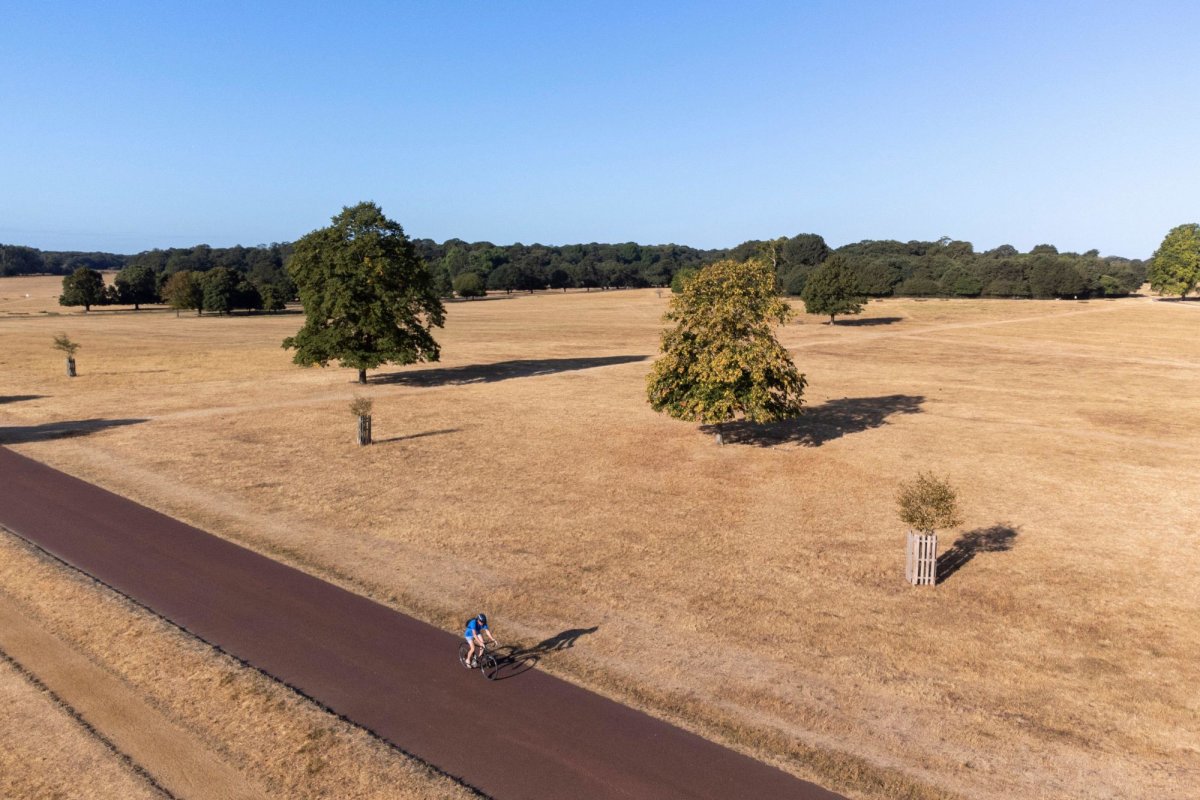

This summer has been the driest summer in England and Wales since records began in 1836. (Alamy)

4 min read
There is growing public concern about climate change after weeks of wildfires and drought in the UK, according to polling shared with PoliticsHome.
Around three-quarters of people (74 per cent) told an Ipsos poll they are concerned about climate change, up from 69 per cent before the summer. At the same time, the share of people who say they are unconcerned has fallen from 28 per cent to 24 per cent.
Over half (56 per cent) said recent high temperatures had affected everyday activities like work, exercise and sleep either a great deal or a fair amount.
Eighty-seven per cent said it is likely that the country will face similar summer heatwaves in the future, compared with just 3 per cent who said it is unlikely.
The online poll of 1,085 people was carried out against a backdrop of heatwaves, drought and wildfires across the UK.
July was the driest month in England and Wales since records began nearly two centuries ago, with the Environment Agency warning that the heat was affecting farmers, wildlife and water availability. Large parts of the country are subject to hosepipe bans, while a recent wildfire in Suffolk was described as the size of 210 football pitches.
Major wildfires have also impacted European countries like France, Greece and Spain.
Raquel de Luis, Head of Energy and Environment at Ipsos in the UK, told PoliticsHome: “The intense heat this summer and visible wildfires across Europe have served as a visible focus point around discussions on climate change, which may be driving a clear uptick in immediate concern and leaving nearly nine in ten convinced that these heatwaves are our new normal.”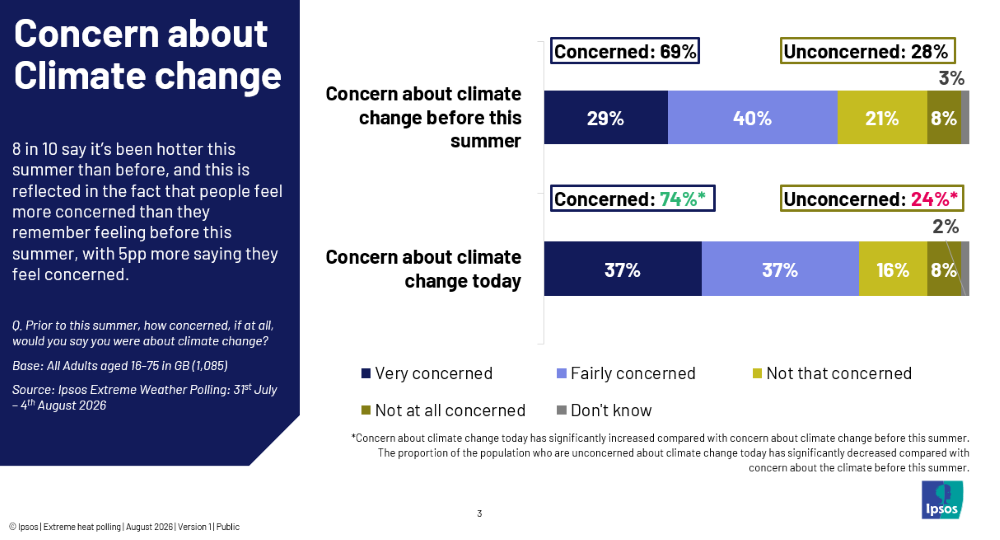
When respondents were asked what measures they planned to install in the next two to three years to help cool their homes, portable air conditioning was the most selected option (29 per cent), followed by a fixed air conditioning unit (23 per cent) and blackout blinds or curtains (19 per cent).
Of those who told Ipsos they do not plan to make changes to their homes to cope with heat, the most common reason was affordability (39 per cent).
“The key challenge for Westminster will be delivering accessible, cost-effective infrastructure and adaptation support that enables households to build resilience against recurring summer heat without adding to their financial burdens,” said de Luis.
Paul McNamee, Director at the Labour Climate and Environment Forum, said the findings show that Labour MPs are right to keep making the case for the UK’s net zero targets at a time when parties on the right are calling for them to be relaxed.
“It has been really good to see Andy Burnham knock some money off energy bills to address people’s concerns [about cost of living],” he added.
“But we also need to keep on rolling out renewables and upgrade our grid to make sure it’s fit for purpose for a future of clean energy, and our main ask is [making] sure that the government makes the absolute most out of the electrification benefits that sit beneath it.”
However, he said there is more that can be done in the short term to boost community resilience in the face of extreme heat, like creating green spaces where people can cool down and better managing land to help avert wildfires.
Managing Director of the Conservative Environment Network, John Flesher, said the government needs to do more on adaptation because the country isn’t “well enough prepared” to deal with the effects of extreme hot weather as things stand.
“We need to think a lot more about preparing for this,” he told PoliticsHome, pointing to water security and agriculture as areas of high importance. “It’s terrible what this [extreme heat] could mean for the cost of food, for farmers’ abilities to conduct their harvest as normal.”
Tom Bradshaw, President of the National Farmers Union, recently told the BBC that the UK has taken its food supply for granted for far too long and called for more resilience planning.
“Those other countries around the world that we currently rely on to produce our food and vegetables, their climates are changing as well,” said Bradshaw.
“It does feel like there is going to be some shortages of [food] products.”
>
Politics
Politics Home | Big Tech Firms Are “Winning In A Big Way” On Online Safety, Warns Jess Phillips

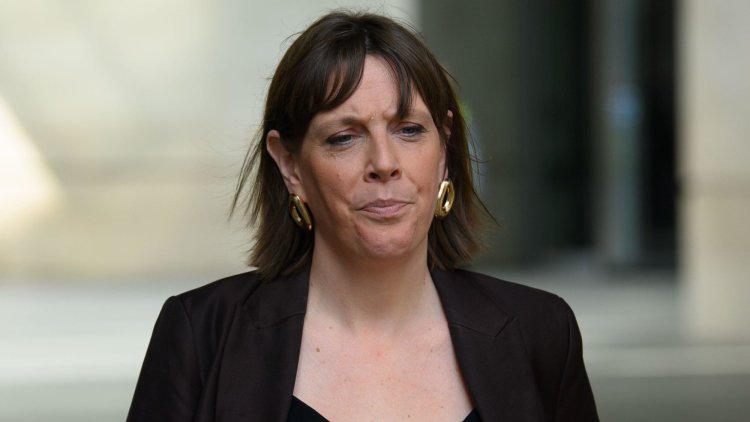
The former safeguarding minister Jess Phillips has warned the big tech firms are winning in the battle over regulation (Alamy)

3 min read
Major tech companies are “winning in a big way” against efforts to make the internet safer for women and children, according to former safeguarding minister Jess Phillips.
Phillips, the Labour MP for Birmingham Yardley, said that during her time in government, parts of Whitehall, including No 10, were reluctant to take action for fear of retaliation by tech giants and the Donald Trump administration.
Speaking on the latest episode of PoliticsHome podcast The Rundown, which will be published on Friday (7 August), Phillips said: “We are too beholden currently in the world to basically five unelected people.”
The Labour MP resigned as a Home Office minister in May, accusing the Keir Starmer administration of not working hard enough to protect women and girls online. Phillips said Starmer was a “decent man” but his reluctance to “have an argument” meant that steps to tackle violence against women and girls (VAWG) were “stalled and delayed”.
In her resignation letter to the then-prime minister, Phillips said that “91 per cent of online child sex abuse is self-generated by children groomed, tricked and exploited into abuse”, and that Google and Apple, the two companies that control the operating systems on almost all smartphones, could quickly and easily install software that would stop them being used by children to take and receive naked pictures.
In June, Starmer gave tech firms a September deadline to make this change, warning that the government would give itself the powers to fine or take criminal action against those that did not comply.
Phillips wants new Prime Minister Andy Burnham to hold them to this, telling the podcast that, as things stand, “tech companies are winning in a big, big way”.
The former minister said there was a divide within Whitehall about how to tackle online safety when she was in government. She described the Home Office as being “hawkish as hell about tech companies”, while No 10 and the now-abolished Department of Science, Innovation and Technology (DSIT) were nervous about being too aggressive.
Phillips recalled “the sense that tech companies and the US would hold us to ransom on all sorts of different things”, adding: “I’ve had it directly said to my face, ‘well, look, they’ll just put trade levies on us if you try and do anything with tech companies’.”
She said Starmer “was always on my side in conversations”, but that she “just started to feel like I was going slowly mad” waiting for the machinery of government to make it happen.
“If you could hear some of the conversations I had to have with people. There are some people who genuinely just think that people taking dick pics is a human right,” Phillips said.
“I had to say to somebody once: ‘You know, you won’t die. It’s not water or shelter’.”
Phillips expressed concern that the government’s Online Safety Act is “woeful for women” in its current form and “20 years behind” where it needs to be to tackle evolving online harms.
“As somebody who was seeking to put down lots of amendments to the Online Safety Act while it was passing through, I’ve never known aggressive lobbying like it,” said the Labour MP. “Every single law firm in the whole of London was basically on retainer to one of the big tech companies so that they couldn’t work for anyone else. That is just anti-democratic.”
The Rundown is presented by Alain Tolhurst, and is produced and edited by Ewan Cameron for Podot
- Click here to listen to the latest episode of The Rundown, or search for ‘PoliticsHome’ wherever you get your podcasts.
>


Prime Minister Andy Burnham has outlined a range of areas he would like to see greater spending in. (Alamy)
4 min read
Andy Burnham has set out some major ambitions for government since entering office. Experts look at how he could pay for them.
The new Prime Minister was keen to hit the ground running when he succeeded Keir Starmer in No 10 last month, promising quick action to help people cope with cost-of-living pressures. He announced that he would take VAT off electricity bills, cap bus fares at £2, and reduce business rates for pubs and restaurants.
When it comes to longer-term policy, Burnham has promised to end rough sleeping and reform adult social care. His vision for the latter, bringing it more in line with NHS provision, is estimated to cost billions of pounds of additional spending every year. The new PM is also under pressure to increase defence spending in response to global security threats.
At the same time, the PM has pledged to stick to the government’s fiscal rules and 2024 manifesto pledges not to raise income tax, national insurance and VAT.
This has raised questions about how Burnham will fund his plans for government.
Many details will not be confirmed until Wednesday, 28 October, when Chancellor John Healey delivers the first Budget of the Burnham Labour government. Healey, who resigned as defence secretary during the final weeks of the Starmer government over defence spending, has said that the Autumn Budget will be “built on fiscal discipline”.
What are Burnham’s options?
Carsten Jung, leader of the economy team at the Institute for Public Policy Research think tank (IPPR), argued that Burnham and Healey have inherited a better economic picture than Starmer and former chancellor Rachel Reeves faced.
“Rachel Reeves, for all of her strategic mistakes, really fixed the public finances,” said Jung.
“What she inherited from Jeremy Hunt [her Tory chancellor predecessor] was unsustainable. It was based on cuts to departmental spending which weren’t sustainable. So she went to the painful exercise of increasing taxes to fix that.
“What Andy Burnham inherits is a much better funded state, and he also has headroom against the fiscal rules he inherited, which makes it less dire.”
However, he said that borrowing money to fund government spending could be riskier for Burnham than it was for Starmer due to “jittery” markets and a more precarious global picture. The Bank of England recently warned that it may be forced to raise interest rates later this year if the US war with Iran escalates, which in turn would make borrowing more expensive.
Jung said that one option available to the government is to increase tax on wealth to bring it closer to tax on earnings, highlighting capital gains tax.
As things stand, people are charged either 18 per cent or 24 per cent on profit they make when selling, gifting or disposing of an asset that has increased in value, such as a second home. Burnham could increase Treasury revenues by aligning capital gains tax rates with income tax bands of 20, 40 and 45 per cent.
Elsewhere, examples of pro-growth policies according to Jung include the Treasury investing more in “leading industries” in the UK as well as “boosting entrepreneurship” while closing tax loopholes.
Isabel Stockton, researcher at the Institute for Fiscal Studies (IFS), said Burnham’s ambitions can be split into two categories: those that are less fiscally challenging, such as the cost-of-living measures he announced in his first few days in office, and policies with greater economic implications, like defence spending and adult social care.
Stockton agreed with Jung that borrowing more money would be “difficult” and “risky” for Burnham as it could push the new government close to breaching its fiscal rules, leaving him with two broad options: raising tax and cutting spending elsewhere.
Burnham has already said that the country must get “really serious” about reducing welfare spending to fund priorities like greater defence spending.
Stockton also suggested that the Labour government explore using the National Wealth Fund as a way of boosting spending power – it was launched under Starmer in 2024 to “mobilise billions of pounds of investment” in UK “clean energy and growth industries”.
By the end of the current parliament, the NWF should be on track to have capitalised with almost £30bn – with government funds directed to “resources to finance economic activity that supports additional private investment”, opening up investment options for the government.
However, NWF is still funded by taxation and borrowing, and is run by the Treasury – meaning the challenges around scrutiny on tax and spend remain.
Stockton told PoliticsHome the limitations Starmer’s government faced on taxation, spending, and spending cuts continue to exist, and remain challenging for Burnham’s government.
“With any new government, it can make different choices, but it is going to be facing essentially the same constraints, especially given that he [Burnham] says he’s committed to the existing fiscal rules,” said Stockton.
“He says he’s committed to the Labour manifesto on tax, so that rules out quite a few things already. That means that the decisions are going to be difficult.”
>

St Mirren 1-0 St Johnstone

'That is another crunching finish!' | Hickey lands DEVASTATING knockout

WNBA commissioner stresses integrity, respect on topic of transgender athletes in league-wide memo
-

 movies3 months ago
Search For Canadian TV Actor Stewart McLean Now Homicide Investigation
-

 Fashion9 years ago
These ’90s fashion trends are making a comeback in 2017
-
Fashion9 years ago
According to Dior Couture, this taboo fashion accessory is back
-
Fashion9 years ago
Model Jocelyn Chew’s Instagram is the best vacation you’ve ever had
-
Fashion9 years ago
Your comprehensive guide to this fall’s biggest trends
-
Fashion9 years ago
9 Celebrities who have spoken out about being photoshopped
-
Fashion9 years ago
Emily Ratajkowski channels back-to-school style
-
Fashion9 years ago
A photo diary of the nightlife scene from LA To Ibiza