
Sports
Dundon’s way: How the NBA’s controversial new owner funded an NHL powerhouse

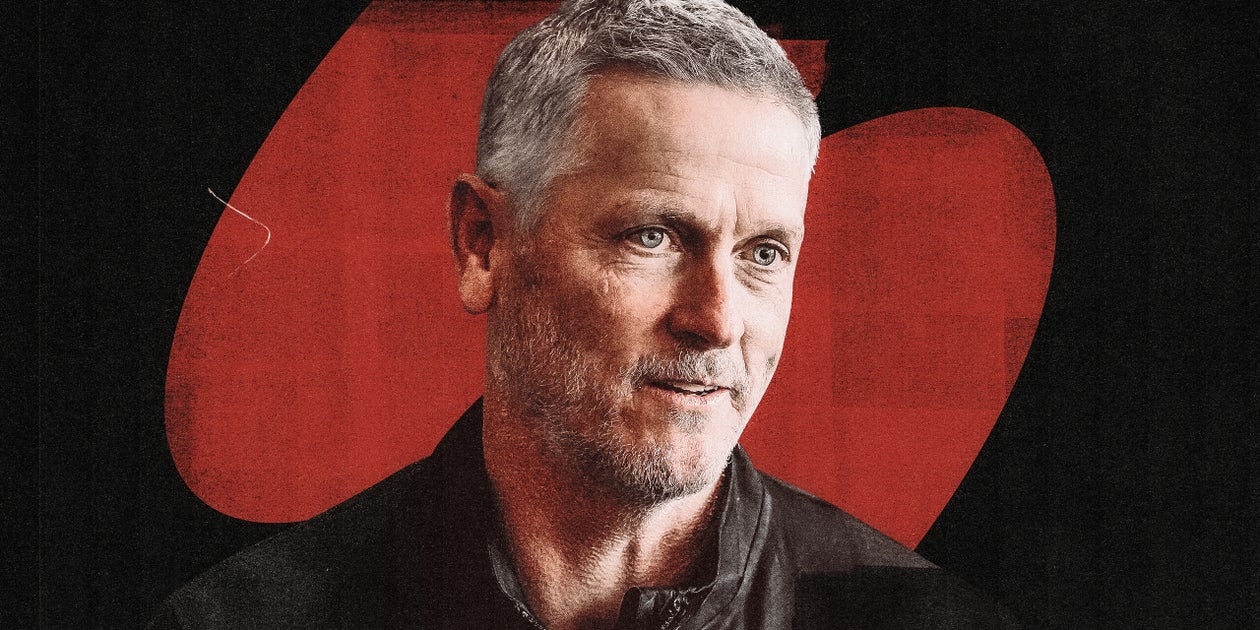
RALEIGH, N.C. — Tom Dundon walked slowly through the Carolina Hurricanes’ home dressing room, stopping every so often to offer fist bumps and words of support amid the celebration.
In one hand behind his back, the billionaire owner held three hats labeled “2026 Eastern Conference Champs,” souvenirs for family and friends who joined him to watch Friday’s Game 5 against the Montreal Canadiens. He chatted with forward Taylor Hall, the opening goal-scorer in a 6-1 rout that clinched the Canes’ first Stanley Cup Final appearance in two decades. He stood next to an emotional Frederik Andersen as the goaltender was honored by teammates as their player of the game, a day after the death of Andersen’s agent and friend, Claude Lemieux.
Wearing a black hoodie, black track pants and a pair of well-worn white Nikes, Dundon was firmly out of the limelight following the biggest win in the Hurricanes’ recent history. And yet, again and again, players and staffers lauded him as an integral part of their accomplishment.
Eight years ago, the Dallas-based Dundon, who made his fortune in subprime auto lending, bought a downtrodden NHL franchise in Carolina and swiftly put his stamp on its operations. Now, after the league’s first 12-1 start to a postseason in 50 years, the Hurricanes are four wins away from their second Stanley Cup championship, with Game 1 against the Vegas Golden Knights set for Tuesday night.
“I give him tons of credit,” coach Rod Brind’Amour said of Dundon. “We’ve been pretty solid ever since he showed up on the scene.”
“He’s given everything he can to get us our best chance,” Hurricanes captain Jordan Staal said. “(He) changed it right from the start.”
“He’s always looking for ways to chart an even better course,” general manager Eric Tulsky added.
But the love-in from Dundon’s hockey team stands in stark contrast to the reception he’s received — not to mention the reputation he’s gained — as the new owner of another major-league franchise some 2,400 miles west of Raleigh.
After years of coveting an NBA team, Dundon’s $4.25 billion bid to buy the Portland Trail Blazers was formally approved by the league’s Board of Governors on March 30, two months before the Hurricanes reached the summit of their sport. Before long, though, he had become a massive lightning rod, with reports of his unusual cost-cutting measures drawing national backlash: During the Blazers’ first-round playoff series, a five-game loss to the eventual Western Conference-champion San Antonio Spurs, The Ringer’s Bill Simmons memorably branded Dundon as “El Cheapo.”
To many who have worked with Dundon in hockey, whether on the Hurricanes or from the vantage point of the NHL’s league office, this recent avalanche of criticism from the basketball world has come as a surprise. In speaking for this story, they provided many colorful words to describe a man laser-focused on both winning games and eliminating inefficiencies — including “demanding,” “intense,” “data-driven” and “obsessive.” But “cheap” was not something any of them had experienced.
“The fact of the matter is, he doesn’t always do things in traditional ways,” NHL commissioner Gary Bettman said. “I think in some ways he’s a bit of a disruptor, but he’s extraordinarily creative and effective. And the results in Carolina — they’re both on and off the ice.”
Earlier on Friday night, Dundon flew into Raleigh via private jet and arrived at Lenovo Center mere minutes before the start of Game 5. As he did, he sent a cryptic text containing only a luxury suite number and the words, “I’m walking in.”
Moments later, with the puck drop nearing, Dundon stood in a private box that was packed with Hurricanes jerseys and poised to erupt. There, in a rare recent instance of him granting an interview request, the two-team owner spoke to The Athletic about the storm that’s swirled around him since he bought the Blazers.
It’s clear from our conversation that Dundon was caught off-guard by the criticism over his early decisions in Portland, which included replacing free T-shirts for fans at home playoff games with towels and, in an unprecedented-for-the-NBA move, not traveling with its two-way players to San Antonio for the start of the first round. (Dundon later apologized for the latter.) But, in reflecting on what he would do differently, he only expressed regret about the timing.
“If there were little changes that I thought were going to get out, that were going to create drama in the middle of the (NBA) playoffs, I wouldn’t have done it,” he said. “That was the main thing.”
Overall, continued Dundon, whose net worth is estimated at $2.3 billion by Forbes, any perceived belt-tightening is really driven by another simple goal: “I don’t make the decisions to save money. I make the decisions to win.”
Dundon brought a similar mindset to Raleigh after buying a controlling stake in the Hurricanes in 2018, and it ruffled feathers then, too. Some staff voluntarily left the organization after deciding that the new owner’s brash ways weren’t for them, while others departed as financial casualties, such as beloved local broadcasters Chuck Kaiton and John Forslund.
“You have somebody who’s coming in and asking in every area: ‘Why are you doing it this way? Are you sure that’s the right way?’” said Tulsky, then the Hurricanes’ manager of hockey analytics. “And the answer — ‘I’ve been doing this for 15 years. Trust me. I know.’ — didn’t fly with him. He wanted you to convince him. And that’s scary for someone who’s been doing it for 15 years and feels like they know it and they’re being challenged.”
The cuts also stoked fears among fans that the franchise would eventually be relocated. But again, Dundon does not apologize. “We kept a lot of people and got rid of a lot of people and all the story was about who you got rid off, not who you kept,” he said. “I think the ability to look at everybody and make sure the people you absolutely have to have (ultimately) stay with you is important. And we did it here.”
At the same time, Dundon began paying considerably to improve the team’s on-ice product. After sporting the NHL’s lowest or second-lowest player payroll for four consecutive years between 2015-16 and 2018-19, Carolina has spent to the salary cap ceiling in four of the past five seasons. Last summer alone, Tulsky signed defenseman K’Andre Miller and forwards Nikolaj Ehlers, Logan Stankoven and Jackson Blake to long-term deals annually worth more than $27 million combined, more than a quarter of the team upper limit for the 2025-26 season. All four have played starring roles during the Hurricanes’ current playoff run.
“He didn’t just wing it,” Brind’Amour said of Dundon. “He sat back and he watched the process … then asked us what we needed to do to be successful. I summed it up: ‘We needed a fair fight. Which meant you gotta pay the players.’ Then he said ‘OK.’ We didn’t have that discrepancy anymore, went out and got good players and kept the ones that we needed to keep.”
The Hurricanes remain a small-market NHL team, but they’ve invested heavily in other areas of their hockey operations, too. The analytics department, for example, expanded to become one of the biggest in the league, adding two data scientists, a data engineer and a second software developer. To help the players, they also hired for new roles such as assistant video coach, massage therapist, nutritionist and team chef.
“Most of the groups in the locker room staff have expanded by one or two people in the time he’s been here,” Tulsky said of Dundon. “He came in, saw a team that was really at bare-bones spending, and said, ‘You guys aren’t spending enough. There’s a lot of places here where we can spend more money and get value for it.’
“It’s not that he’s looking to cut spending: It’s that he is looking to spend only where there is value.”
A Harvard-educated nanotechnologist, Tulsky eventually adapted to those “scary” changes that Dundon initially made; six years after buying the team, Dundon promoted Tulsky to its top hockey operations role. Over this time, Tulsky has learned that his new boss’ drive to improve exceeds that of anything he experienced working in academia or the scientific community.
“We could win four Cups in a row,” Tulsky said, “and the question will be, ‘How do we put ourselves in position to win the next seven?’”
Despite initial concerns that Dundon might relocate the Hurricanes, whose attendance bottomed out to last in the NHL with fewer than 12,000 fans per game in 2016-17, those have proven unfounded. After years of negotiations, the team recently signed a new lease extension at Lenovo Center through 2043-44, with local government officials committing to a $300 million renovation that’s currently underway on the aging facility. Dundon, meanwhile, pledged $800 million to develop the area around an arena that has long been surrounded by only parking lots.
Whether Dundon can reach a similar agreement in Portland for the 31-year-old Moda Center remains an open question, one that serves as a troubling backdrop for Blazers fans anxious about the team’s new owner. Municipal negotiations remain at an early stage, with signs pointing to a potentially more difficult process than in Raleigh.
As the NBA was conducting due diligence on Dundon as a potential owner, commissioner Adam Silver checked in with Bettman on the billionaire’s NHL reputation. Silver received a glowing report back, featuring details on how Dundon had rebuilt the Hurricanes and inked a deal to keep them in Raleigh for the long haul.
“They wanted to make sure he was an owner in good standing, which he is. I think he’s a terrific owner,” Bettman said, calling Dundon “extremely thoughtful and really smart” and the results he’s overseen in Carolina “extraordinary.”
“The team has been well-assimilated into the community in terms of corporate sponsorship and partnerships,” the NHL commissioner added. “The season-ticket base and the fan base is great, the way they sell out that building.”
To those on the ground in Carolina, the path to finalizing the Hurricanes’ arena deal started with their on-ice success. Only then did fans show up in droves, starting a 165-game sellout streak that will surely extend to 166 during Game 1.
Revenues have subsequently skyrocketed. As of 2025, compared to when Dundon took over, the team’s season-ticket base was up 117 percent; its season-ticket revenue was up 227 percent; and its average gate revenue was up 179 percent. The intake from corporate sponsorship had also nearly doubled.
Said Hurricanes CEO Brian Fork: “He is extremely motivated for the team to have success on the ice, but he also pays very close attention to the business, and to studying what are ways that we can make the fan experience better, what are food and beverage offerings that we could add, that will get more people excited.
“Having somebody that involved and that committed to success has certainly been the primary driver in the team’s success over the last eight years.”
The biggest difference between owning the Hurricanes and Trail Blazers may come down to how willing their respective local governments are to work with a new owner. When asked about Portland’s arena situation from his Lenovo Center luxury suite before Game 5 of the Eastern Conference finals, Dundon said he doesn’t believe those negotiations will be his toughest challenge in Portland.
“We’re working in good faith to try to solve the long-term problem,” Dundon said. “And I hope we do.”
Dundon then reiterated that his No. 1 focus with the Blazers is on capturing an NBA championship. Portland had one of the league’s worst records in the four years prior to making the playoffs this spring. But if all goes according to plan, a similar ascent to the one currently on display by his NHL team awaits.
“The way we run the playing team (in Portland) is just like we do (with the Hurricanes),” Dundon said. “We do everything we can to win, players are well taken care of, then we run the business to be efficient. I don’t think any of those things, for me, they’re not very controversial.”

Dundon and Ehlers shared a moment on the ice after Carolina clinched its Cup Final berth. (Katherine Gawlik / Icon Sportswire via Getty Images)
As the conference finals-clinching celebration took over the ice, one of the newest members of the Hurricanes grabbed the team’s owner around the shoulder and shouted into his ear about what the latest win meant. For both Dundon and Ehlers, who arrived in free agency after 10 seasons with the Winnipeg Jets, it was their first trip to the Cup Final.
Dundon may remain controversial in Portland, but he is clearly beloved by Carolina’s players — many of whom shared personal stories when asked about him. Defenseman Sean Walker thanked Dundon for lending a private jet so Walker could attend his daughter’s birth during the playoffs. Forward Jordan Martinook — one of five current Hurricanes remaining from the start of Dundon’s tenure — spoke of memorable dinners and golf outings with “the boss.”
Forward Andrei Svechnikov, meanwhile, grew emotional recalling how Dundon communicated with him throughout a difficult rookie season in 2018-19, after the 18-year-old from Siberia was taken with the No. 2 pick in the 2018 NHL Draft — the owner’s first-ever selection for Carolina. Meeting Dundon changed his life, Svechnikov said, as he was someone who “always will do anything for you.”
“I remember how hard it was in my first couple of months,” Svechnikov said. “He was calling me and telling me that you just got to calm down, everything will be fine, we believe in you — all that stuff. That was very meaningful to me. I would never forget that.”
Standing in his Lenovo Center suite, Dundon seemed hopeful that Carolina’s run to the Cup Final could serve as an olive branch to fans of his new team in Portland, a showcase of what he’s really about. At the same time, he is learning how to process a level of attention and criticism that never came in Carolina, where the spotlight isn’t quite as bright.
“I am extremely lucky to be able to do it,” Dundon said. “How could you regret being able to own an NBA basketball team? It’s a privilege. So, no one likes when people say bad stuff about them. But in the relative to all the other problems in the world, it’s not a big problem.”
When it comes to his latest sports venture with the Blazers, Dundon hasn’t altered his approach; a few weeks after the team was eliminated from the NBA playoffs, it laid off more than 70 members of its business operations staff. But he also wants people in Portland to know that he is not a boogeyman looking to steal away their team. Rather, he just wants to win, the way he’s on the cusp of doing with the Hurricanes, a franchise no one believed in eight short years ago.
“The judgment and empathy you need to be successful, the hard work you have to put in, works across basketball and hockey — and every other business,” Dundon said.
“I’ll do anything I can for these guys (with the Hurricanes) and they do everything they can to help us win. And I don’t think basketball is going to be any different.”
>
After struggling with ball security at Notre Dame, Price has coughed up the ball twice in 32 touches through three games.
>
There are few parallels for what Babcock is about to attempt in Edmonton in their most critical Cup-or-bust season.
>
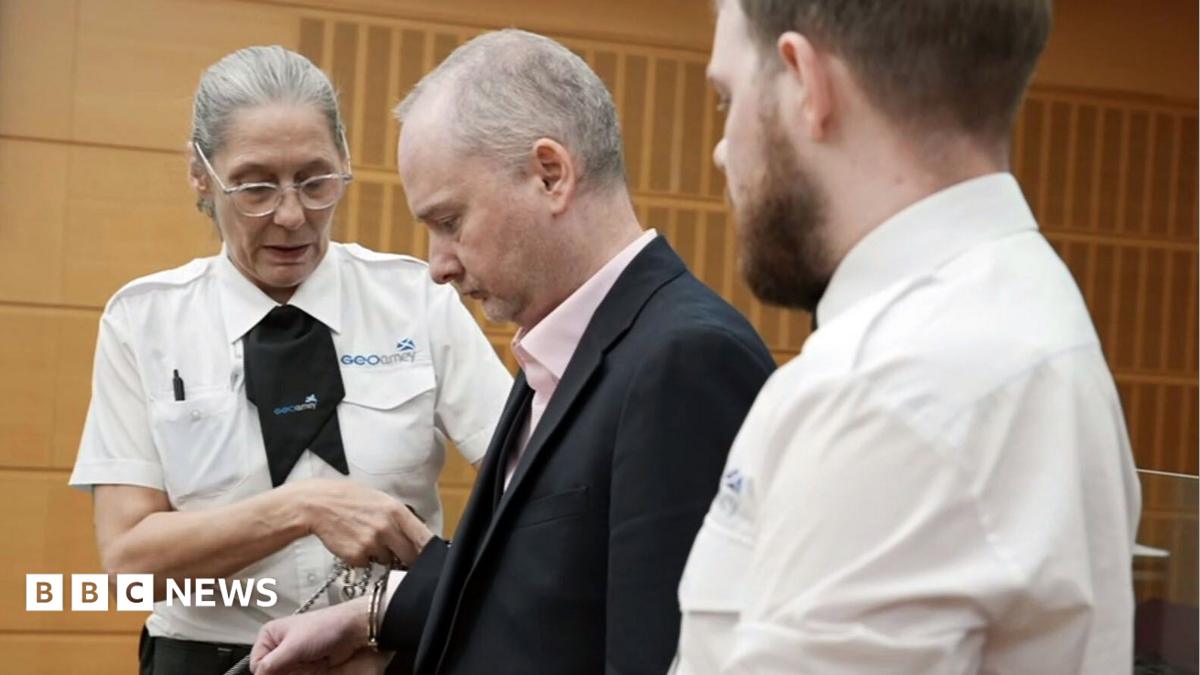
During his evidence, Dott’s male victim said the abuse began shortly after Dott defeated Peter Ebdon to win his sole world title at The Crucible in Sheffield in 2006.
The boy, now a man in his 20s, said he was about eight years old when Dott molested him in a shower at a home in South Lanarkshire.
He told the court that Dott “rewarded” him with crisps and fizzy drinks and once handed him a £50 note, only to accuse the boy of stealing it when his parents found out he had the money.
He also said he was abused in a car on a number of occasions and “inappropriately touched” while Dott played online poker.
Dott was convicted of lewd and libidinous practices, which refer to any sexual crimes against children committed prior to 1 December 2010.
The offence was abolished in 2009, but is still used for crimes carried out before then.
Following his conviction in August, the World Professional Billiards and Snooker Association said it had permanently revoked Dott’s membership with immediate effect.
Dott was previously suspended from all professional snooker activities on 9 April 2025 pending the outcome of his trial.
He was subsequently relegated from the professional ranking list at the conclusion of the 2025/26 season.
Dott has two previous convictions for minor road traffic offences in 2013 and 2015.
>
Seahawks RB Jadarian Price's fumbling problem isn't new, but will it keep him off the field?
The Edmonton Oilers' Mike Babcock experiment begins now

Former world snooker champion Graeme Dott jailed for child sexual abuse
-

 movies4 months ago
Search For Canadian TV Actor Stewart McLean Now Homicide Investigation
-

 Fashion9 years ago
These ’90s fashion trends are making a comeback in 2017
-
Fashion9 years ago
According to Dior Couture, this taboo fashion accessory is back
-
Fashion9 years ago
Model Jocelyn Chew’s Instagram is the best vacation you’ve ever had
-
Fashion9 years ago
Emily Ratajkowski channels back-to-school style
-
Fashion9 years ago
9 Celebrities who have spoken out about being photoshopped
-

 Anime4 months ago
Rurouni Kenshin: Hokkaido Arc Manga Takes 1-Issue Break – News
-

 Anime3 months ago
HIDIVE to Stream English Dubs for The World Is Dancing, The Forsaken Saintess and Her Foodie Roadtrip in Another World, The Dangers in My Heart: The Movie Anime – News