
Tech
Unveiling IC-STAR: Full-Flow Autonomy from Digital to Analog



Learn how engineers can shift from manually managing tools and handoffs to defining objectives and supervising AI-driven execution across the silicon development lifecycle.
Key Takeaways
- Explore four critical technologies enabling silicon design autonomy
- Understand how autonomous AI accelerates complex engineering workflows
- See real-world impact across semiconductor design and verification
- Gain practical insights from Ambiq’s deployment of autonomous AI in production
>
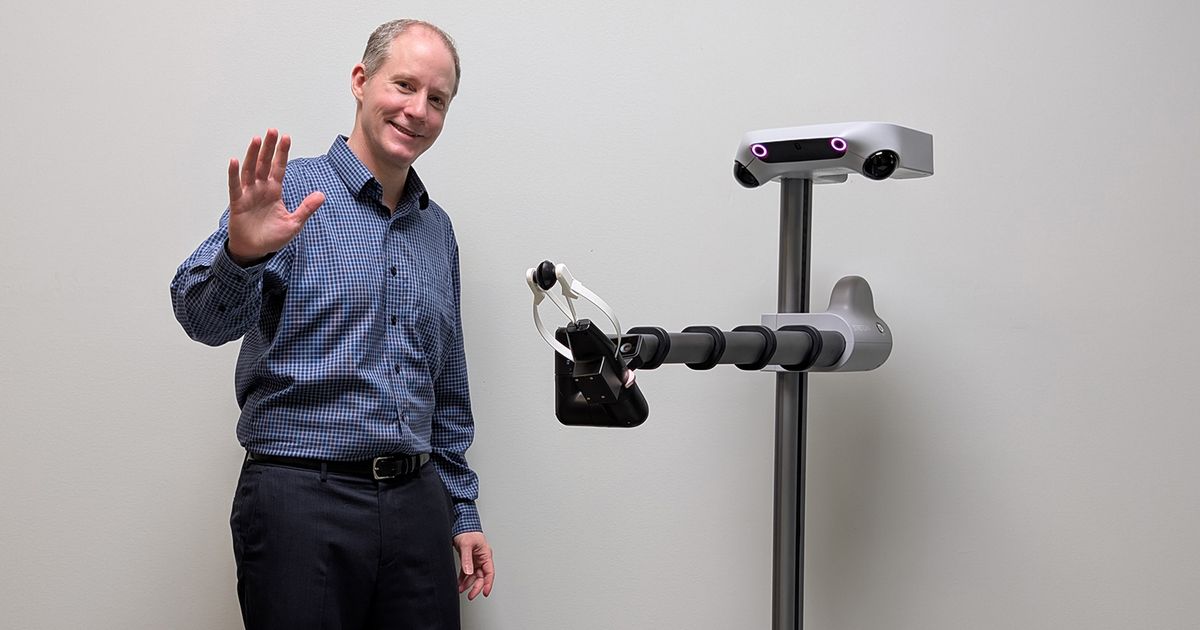
In this edition of our A Day in the Life of a Roboticist series, we meet Charlie Kemp, cofounder and chief technology officer of Hello Robot, who develops mobile manipulators to help people in their homes and workplaces. His interest in robotics began with the grand challenges of artificial intelligence, and his work has taken him from humanoid robots at MIT to assistive robots for older adults and people with disabilities. “Working at Hello Robot is a rewarding experience,” he says. “I love the community using Stretch robots as research and development platforms. They’re discovering new ways that human-friendly robots can benefit society.”

What kind of robotics work do you do?
My focus is on enabling mobile robots with arms to benefit people in homes and workplaces. Many promising applications for robots involve close physical interaction between people and robots, such as robots that physically assist older adults and people with disabilities.
Working at Hello Robot is a rewarding experience. I love the community using Stretch robots as research and development platforms. They’re discovering new ways that human-friendly robots can benefit society. I also love Hello Robot’s collaborative efforts to create assistive robots for older adults and people with severe mobility impairments. Finding human assistance is becoming more difficult due in part to aging societies. Robots have the potential to improve quality of life and empower people to have greater independence.
What does a day working with robots look like for you?
Some of the best days are focused on the people using the robot rather than the robot itself. Keith, Henry and Jane Evans, and hundreds of people who have worked with robots from Hello Robot and my academic lab have changed my perspective on robotics and life in general. What is actually important in people’s lives? Sometimes, scratching an itch or picking up a dropped object is what’s important. What are the real challenges for creating a useful and easy-to-use robot? Sometimes, autonomy isn’t the answer, because the individual wants more control. The answers to these questions aren’t found by sitting in a room by yourself programming a robot. You have to get out into the world with an open mind. It’s where you discover what works, what doesn’t, and what you didn’t anticipate. Real-world interactions almost always reveal new opportunities for improvement, and those lessons shape the way you think and the robots you build.
How did you first get interested in robotics?
Robotics initially attracted me as an approach to tackling the grand challenges of artificial intelligence. I became interested in AI as an undergraduate at MIT. Prof. Rod Brooks had just started the Cog project, a highly ambitious and exciting research effort to use humanoid robots to investigate embodied intelligence. I was hooked! I eventually joined Rod Brooks’s lab and worked on the humanoid robot Domo with my cofounder Dr. Aaron Edsinger. Aaron and I won the best paper award at the IEEE-RAS International Conference on Humanoid Robotics in 2006. The paper was about a system that enabled Domo to help a person put objects on a shelf. This led to my interest in assistive robotics and helped me get a faculty position at Georgia Tech. Now, Aaron and I lead Hello Robot, which we founded together to create non-humanoid robots. I never would have predicted this chain of events.
What are your favorite things about working with robots?
One of the most rewarding aspects of robotics is seeing software come to life in the physical world. There’s a unique satisfaction in writing code that leads to a robot doing something new. The field is still young, so you can see glimpses of the future. More importantly, you have the opportunity to influence the future. I used to imagine there was an inevitable path for technological progress, but I’ve come to realize that many futures are possible. It’s worth working toward the future you want. If you don’t create the future, someone will create it for you.
What advice would you give someone hoping to start a career in robotics?
There are two things I’d emphasize. First, it’s easy to watch videos of robots online and feel like robotics has been solved. But the truth is that there is a vast difference between a demo video and a robot being productive in the real world. The world is more creative than we are. It’s extraordinarily good at breaking robotic systems in ways that surprise roboticists. There is still an enormous amount to build, learn, and discover. For anyone starting a career in robotics, this is not a moment to feel behind. It is a great time to begin.
Second, you don’t have to focus on robotics technology to work in robotics. The most impactful applications of future robots will likely depend on robotics technologists working together with people with expertise in specific application areas. For example, Dr. Vy Nguyễn is the clinical research lead at Hello Robot. She started in robotics while earning her doctorate in occupational therapy. Her expertise in occupational therapy has helped her make important contributions to Hello Robot’s work on assistive robots.
What is one favorite robot project you’ve worked on?
I’ve been fortunate to work on a variety of exciting robotics projects with teams of remarkable people. It’s hard to pick one, but Robots for Humanity stands out.
Back in 2010, Henry Evans saw a demonstration of my academic lab’s research on CNN. This led to a collaboration that continues to this day as part of Henry’s Robots for Humanity effort. Henry has severe quadriplegia, and he and Jane Evans are inspirational pioneers in assistive robotics. In collaboration with Henry, Jane, and others, my former lab at Georgia Tech (the Healthcare Robotics Lab) made progress toward mobile robots with arms (mobile manipulators) that can meaningfully benefit people with disabilities in their daily lives.
Creating a home robot for Henry and Jane was the main inspiration for the prototype robot my lab created that led Aaron and me to found Hello Robot. And the research my lab conducted as part of Robots for Humanity continues to influence Hello Robot’s work on an assistive home robot. Henry and Jane have used each generation of Stretch, which has influenced the subsequent designs, especially Stretch 4.
Describe something about robots that surprised you.
Robotics is full of surprises! It’s fun and humbling. My academic lab focused on physical robotic assistance for tasks such as feeding, hygiene, and dressing. At Hello Robot, I’ve been surprised by the ways physical robotic assistance can help people connect emotionally.
For example, Henry Evans used Stretch to present a rose to Jane. Picking up the rose and handing it to Jane involved relatively simple robotic motions, but the result was an emotionally powerful gesture.
>
Compare six QR payment apps by checkout type, fees, customer requirements, integrations, and business use cases.
The post Best QR Code Payment Apps for 2026 appeared first on TechRepublic.
>
Apple could launch its first smart glasses in late 2027 while exploring a lighter, redesigned Vision headset for 2028 or 2029.
The post Apple Smart Glasses Could Arrive in 2027: What We Know So Far appeared first on TechRepublic.
>

SXSW Teen Comedy ‘Edie Arnold Is A Loser’ Lands International Sales

Red Roses: England to return to Sunderland for Women’s Six Nations

Building Assistive Robots to Help People Live Independently
-

 movies4 months ago
Search For Canadian TV Actor Stewart McLean Now Homicide Investigation
-

 Fashion9 years ago
These ’90s fashion trends are making a comeback in 2017
-
Fashion9 years ago
According to Dior Couture, this taboo fashion accessory is back
-
Fashion9 years ago
Model Jocelyn Chew’s Instagram is the best vacation you’ve ever had
-
Fashion9 years ago
Emily Ratajkowski channels back-to-school style
-
Fashion9 years ago
9 Celebrities who have spoken out about being photoshopped
-

 Anime4 months ago
Rurouni Kenshin: Hokkaido Arc Manga Takes 1-Issue Break – News
-

 Anime3 months ago
HIDIVE to Stream English Dubs for The World Is Dancing, The Forsaken Saintess and Her Foodie Roadtrip in Another World, The Dangers in My Heart: The Movie Anime – News