
Sports
Every Qatar conversation comes back to 2022. But their fans want to cheer the Maroons to a new piece of history


As part of our Language of Soccer World Cup series, The Athletic is speaking to supporters of all 48 nations competing at the 2026 edition to capture their unique football culture, distilled into a single phrase. You can read the articles in one place here.
Hayyo El Annabi – Cheer the Maroons
Every conversation about Qatar comes back to the 2022 World Cup. For a few weeks, billions of people across the globe were focused on events in the tiny Arab nation. It hosted one of the best editions of the competition, culminating in Lionel Messi lifting Argentina’s third title following a dramatic penalty shootout victory over France in the final.
Qatar made their debut and, despite losing all three of their group-stage games, captivated local fans. However, if you dig a little bit deeper, it becomes clear that a different tournament is equally important to the team’s story as they prepare for this summer’s World Cup in the United States, Canada and Mexico.
Qatar struggled to make an impact at the Asian Cup for a long time. The nadir came in 2015 with a humiliating 4-1 defeat by rivals the United Arab Emirates (UAE) as they were eliminated in the group stage. “The results were devastating,” Saoud, a member of the Mudaraj Alanabi fan group, tells The Athletic. “We are a really small population, so we looked to other sports.”
Qatar had never reached the semi-final stage, so their hopes of progressing seemed slim when they came up against a South Korea side led by then Tottenham Hotspur forward Son Heung-min in the last eight of the 2019 edition. Qatar won 1-0, thrashed the UAE in the next round and triumphed in the final with a shock 3-1 victory over Japan.
“It was like a dream,” Omar Abdulaziz Alansari, who first started following Qatar when they hosted the 2006 Asian Games, says. “We didn’t even know how to celebrate. Before 2019, people were not interested in watching the national team. The team was weak. They didn’t like the players or the managers. But after we won the Asian Cup, everybody started concentrating more on the national team than clubs.”
The interest sparked by their success at the Asian Cup exploded three years later.
“Football is the favourite sport in the country,” Doctor AbdulMohsin Abdulla Alyafei, who is a senior planning engineer, says. “We will play anywhere. In the street, on sand and we use our sandals as goalposts. The government, the citizens, the residents, everyone loves football. When we hosted the World Cup, everybody spoke about it. Now people are more aware and they keep track of the national team.”
Alansari agrees. “Everything has changed since the World Cup,” he says. “We have new stadiums and the atmosphere is better.”
Alansari was gripped by the tournament and attended 23 games in total, including the final, while Alyafei treated his family to tickets.
“I attended the opening game and a friend gave me a ticket for our second match,” Alyafei says. “I bought a ticket for our third game because my kids wanted to watch us play the Netherlands. It was very expensive but the opportunity will not happen again. We enjoyed it, even though we lost. I got my two-year-old son a Hayya card (special fan ID for the tournament) so he will remember it when he grows older.”
Alyafei worked as a volunteer during the tournament and was based at Canada’s camp. He ensured their training equipment would be set up every day and directed the media on where to go for open training sessions. The 54-year-old is planning on attending Qatar’s games at this summer’s World Cup. Coincidentally, they face co-hosts Canada on June 18 in Vancouver.

Qatar and Canada fans mingle before their World Cup meeting in 2022 (Juan Mabromata/AFP via Getty Images)
Alansari attended all of Argentina’s games and was captivated by their supporters. “They were incredible,” he says. “They stood up for the entire 90 minutes supporting their team.”
Saoud has fond memories of Argentina’s fans too. “I went to the final and they stayed in the stadium for hours afterwards. I followed them back to their residence. The fans stayed until the morning cheering and barbecuing food. For some reason, they loved to climb things.”
This exposure to different fan cultures had a profound impact on the pair. They are both members of Mudaraj Alanabi, which was set up in 2023.
“It’s a community we brought together with fans from different club teams,” Saoud says. “We started with seven members and now we have about 4,000. We buy tickets from the Qatar Football Association (QFA) and hand them out. We have a singer who starts special chants and we sing them back.”
The most popular chant is ‘Hayyo El Annabi’, which translates as ‘Cheer the Maroons’. After years of underperforming, Qatari supporters finally have a team they feel proud of and want to follow.
Another favourite is a track by Ali Abdul Sattar called “to Los Angeles, the Arabs came”. It pays homage to their participation in the 1984 Olympics, which were held in the U.S. city. Qatar’s opening game at this summer’s World Cup against Switzerland is being held in Santa Clara, roughly a six-hour drive up through California from LA.
There is one huge difference between Qataris and fans of other countries. Qatar play in a maroon kit designed by Adidas but you are unlikely to see many people in the crowds or walking through the streets of Vancouver, the Bay Area and Seattle wearing it. “When people see Qataris in a stadium they think ‘we are going to a wedding not a match,” Alansari says.
The majority of Qataris prefer to wear traditional dress, which includes a long white thobe, ghutra and agal. “We enter and leave the stadium dressed well but in between we are different,” Alyafei says. “People will go crazy. When there is a goal, people will cheer and wave flags or even their headdress. People who are not Qataris (but support the country) might wear the team’s shirt and paint their faces. They dress differently but inside the stadium everyone is the same and wants the team to win.”

Qatar fans head to their game against Belgium at the 2022 World Cup (Richard Heathcote/Getty Images)
Qatar lost all of their games in 2022 but redeemed themselves a year later by retaining the Asian Cup with a 3-1 victory over Jordan. Winger Akram Afif finished as the competition’s top goalscorer. Afif scored a hat-trick of penalties against Jordan and celebrated his first goal by performing a magic trick with a card hidden in his right sock.
“Akram Afif is dominating everything,” Alyafei says. “Although he looks selfish and arrogant, he is very humble. If he is not scoring our goals, then he is providing the assists. I was in the stadium when we beat Jordan and saw his celebration when I watched the highlights at home. It tells you how confident and how good he is.”
Last October, Qatar hosted the UAE in a qualifying match for this year’s World Cup, knowing they needed to win. Boualem Khoukhi and Pedro Miguel secured a 2-1 victory. Saoud celebrated with his friends in the Souq Waqif, a popular market in Doha, afterwards.
“During the game, everyone was nervous,” he says. “But for the first time in my life I saw the whole stadium cheering for the national team. It gave me goosebumps. I couldn’t believe we had qualified until the referee blew the final whistle. It was something I have never experienced before. Flares were lit (in the souk) and people got arrested. It was a special moment in our history. At the last World Cup we didn’t perform well and people thought we shouldn’t be there. This time Qatar proved we deserved it.”
Qatar’s head coach Julen Lopetegui had spells in charge of Real Madrid, Sevilla, Wolverhampton Wanderers and West Ham United. Lopetegui only joined Qatar in May 2025 but there is confidence he can help them hold their own in Group B, alongside Canada, Switzerland and Bosnia & Herzegovina.
The 59-year-old has a strange history with this competition. Before Spain’s opening game against Portugal at the 2018 edition in Russia, Real Madrid announced Lopetegui would become their new head coach. Lopetegui was sacked by the Spanish Football Federation (RFEF) the next day and replaced by Fernando Hierro. He will be keen for redemption after what happened eight years ago.
“The team is young but the government and QFA have invested a lot into the players,” Alyafei says. “I’m very proud we qualified for the second time. It wasn’t easy but this is a chance that we will not miss and will take advantage of.”
Alansari is thinking about a historic first victory.
“When we hosted the World Cup, we lost all three games,” he says. “I cannot imagine how it would feel but I think I would be happy.”
The Language of Soccer series is sponsored by Google.
The Athletic maintains full editorial independence. Sponsors have no control over or input into the reporting or editing process and do not review stories before publication.
>
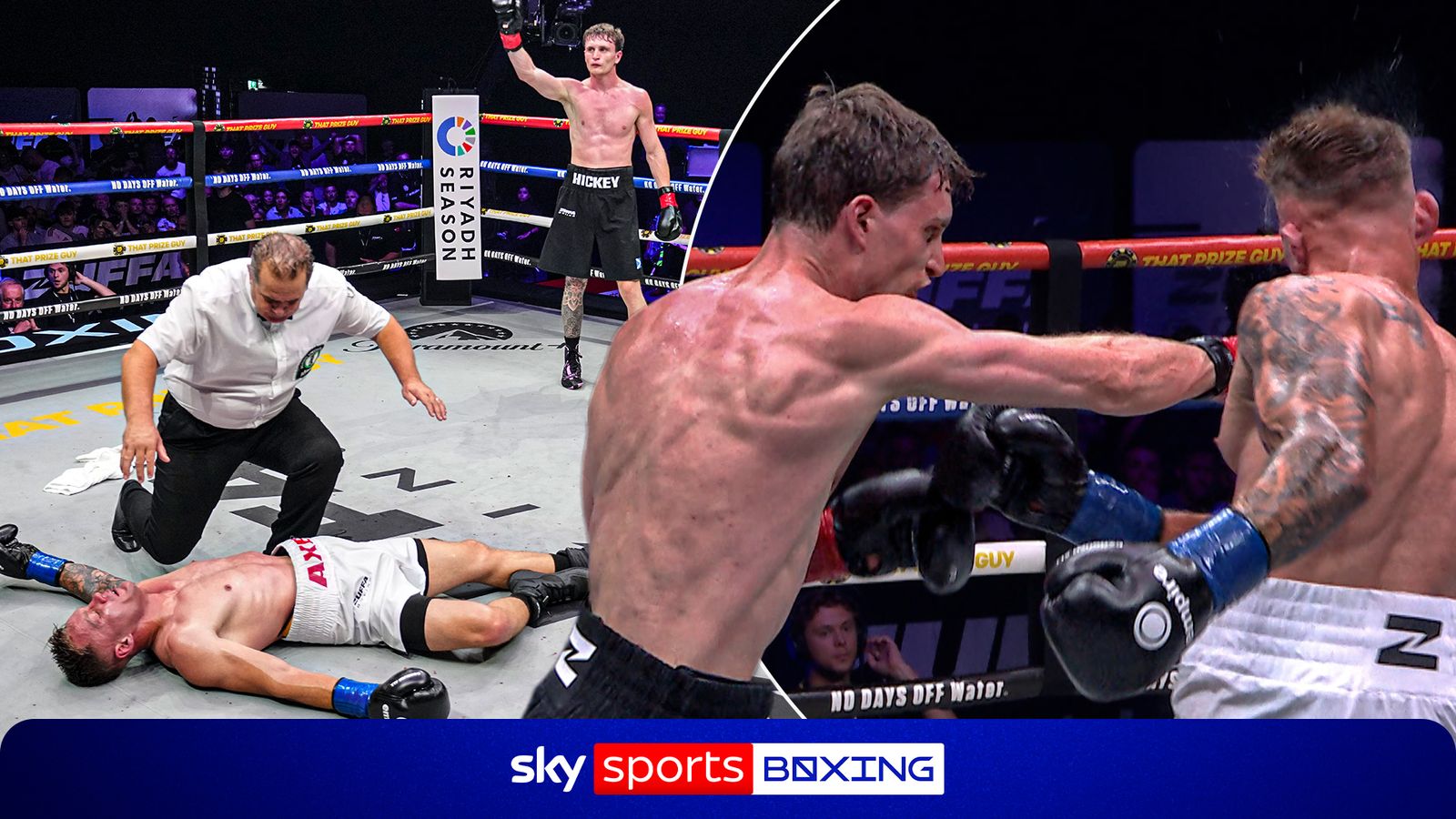
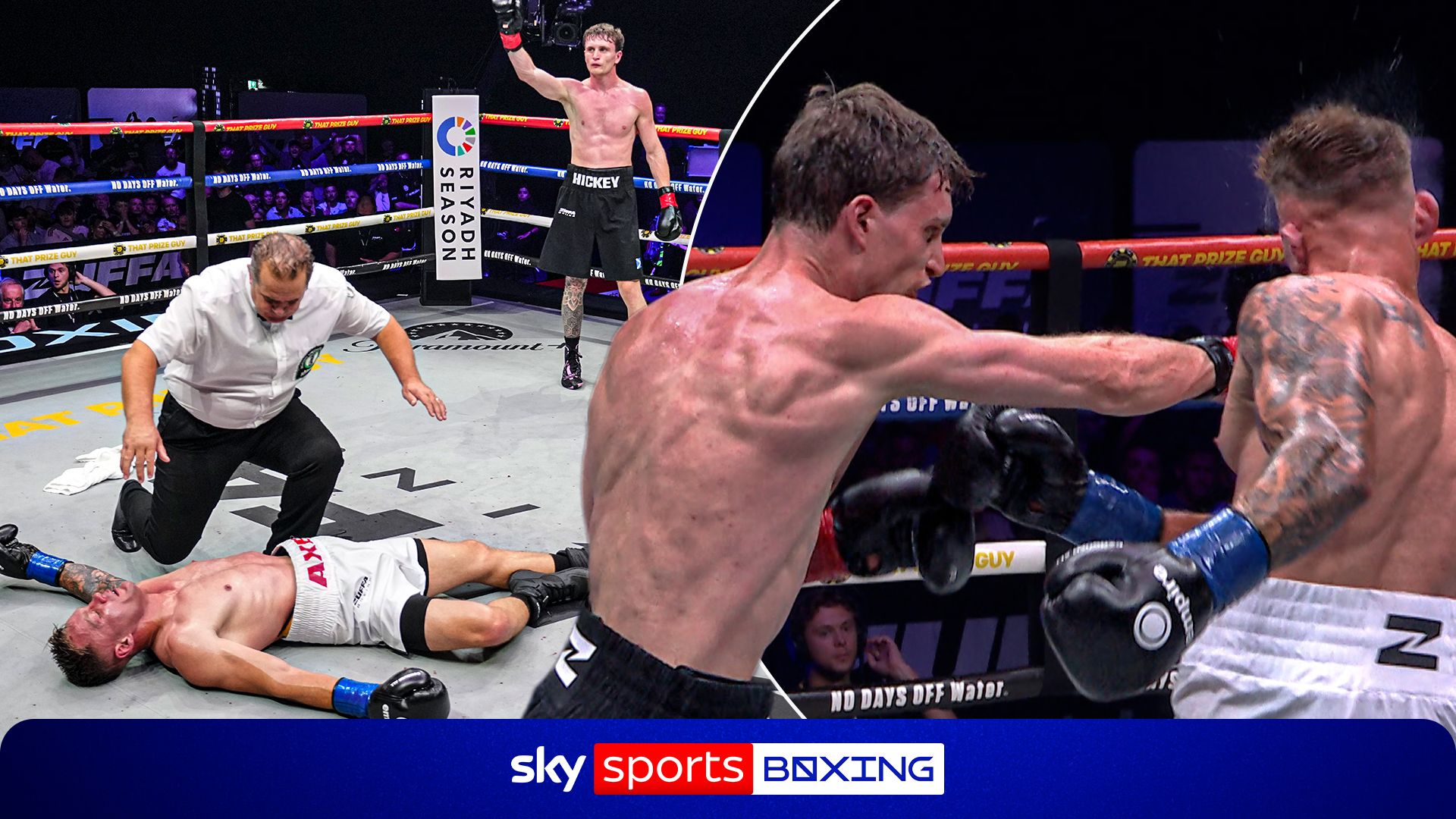
Sam Hickey’s huge right hand knocked out Brad Axe in the seventh round of their contest.
>
Sports
WNBA commissioner stresses integrity, respect on topic of transgender athletes in league-wide memo
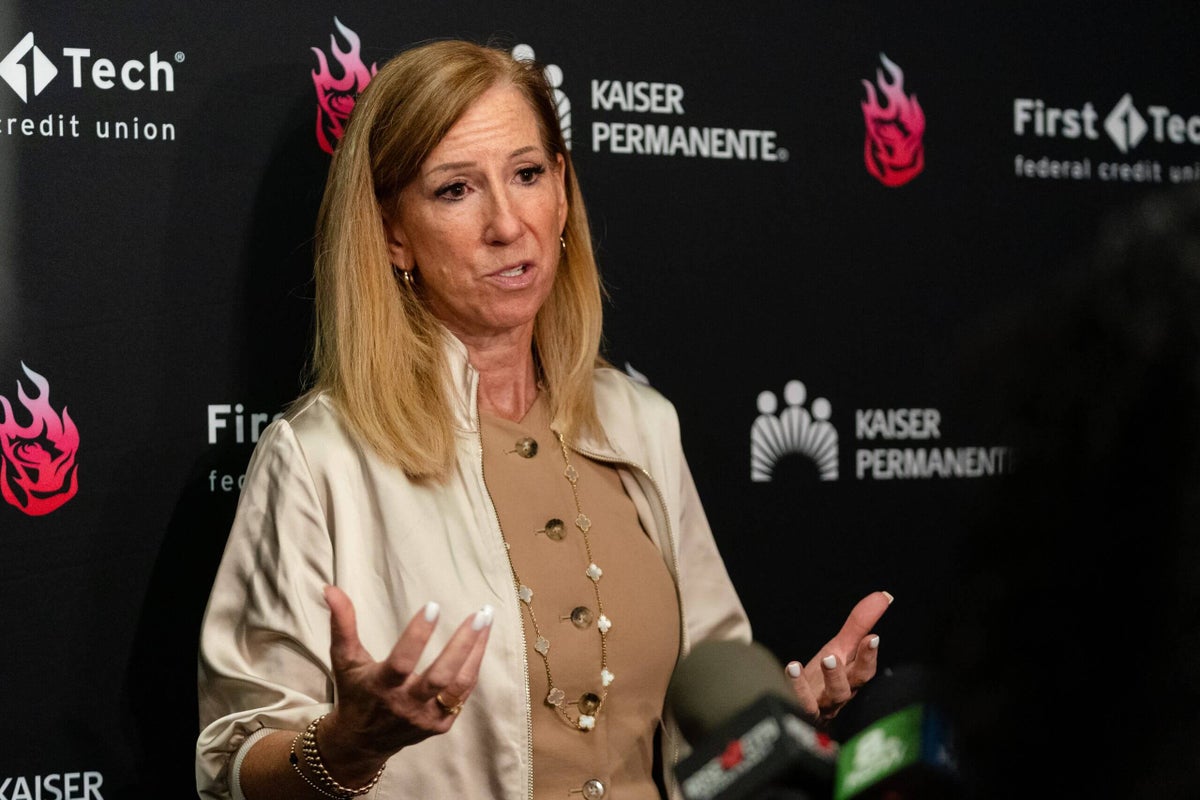
In a memo sent to team presidents, general managers and coaches Friday, WNBA commissioner Cathy Engelbert advised the league’s leaders on their approach to the topic of transgender participation in women’s sports. The commissioner stressed approaching it with integrity and respect, without specifically defining the league’s stance.
The issue has dominated conversation around the WNBA in the wake of Indiana Fever guard Sophie Cunningham’s recent comments in favor of excluding trans athletes from women’s sports.
Engelbert listed three guiding principles for the league in the discussion but did not clarify whether or not trans athletes are allowed to play in the WNBA.
“First, we will always approach this topic thoughtfully, respectfully, and in alignment with the long-standing values of our league,” she wrote in the memo, a copy of which was obtained by The Athletic. “Second, our player eligibility rules, unlike the eligibility rules of some other leagues and governing bodies, are collectively bargained. Lastly, preserving the integrity of our game and ensuring fair competition will always remain among the league’s highest priorities.”
There is no mention of trans athletes in the WNBA’s collective bargaining agreement, although the document does state that “only players who are women are eligible to play in the WNBA.”
Engelbert wrote in the memo that the league has a previously scheduled meeting of a task force of presidents and GMs in the coming week that will address this conversation and other league issues.
In the wake of Cunningham’s comments and the subsequent rallies that have followed the Indiana Fever at road games, the commissioner acknowledged that she expects “this topic will continue to receive significant attention.” She praised team leadership for their response to increasing questions and invited them to continue reaching out to her with questions and perspectives.
Coaches around the league have frequently been asked about the issue since Cunningham first told ESPN she wants to “protect young girls in a locker room” and that “they shouldn’t have to go against biological men.”
Cheryl Reeve has been the loudest voice in favor of inclusion of transgender kids in particular. Golden State Valkyries All-Star Gabby Williams welcomed transgender athletes joining the WNBA, while the Women’s National Basketball Players Association released a statement denouncing “hate, abuse, and demonization” of the transgender community.
>
Sports
Argentina 10-17 South Africa: Springboks win Buenos Aires thriller but Siya Kolisi suffers injury ahead of New Zealand series | Rugby Union News

South Africa scraped past Argentina 17-10 in Test rugby at the possible expense of inspirational captain Siya Kolisi in Buenos Aires on Saturday.
Kolisi, in his first match in seven weeks following a hamstring injury, trudged off in the 25th minute. He may be a doubt to lead the Springboks back home against New Zealand in two weeks in the opening Test of the blockbuster Greatest Rivalry series.
“I hurt my hamstring again unfortunately,” he said. “It’s tough but I can’t be sad about it. There’s nothing I can do but go in for a scan and see how long I’m out for.”
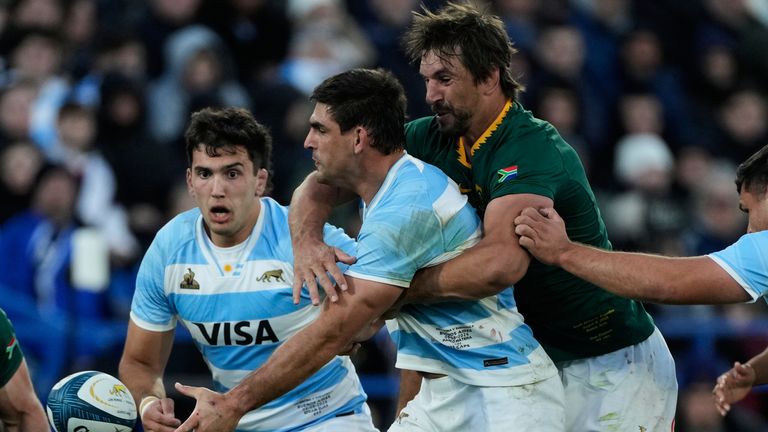
Argentina’s Pablo Matera, left, is tackled by South Africa’s Eben Etzebeth
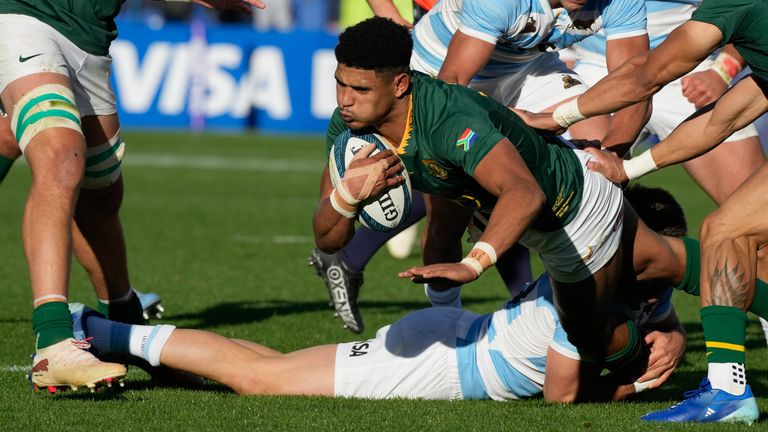
South Africa continue their winning start in the Nations Championship
The skipper was among a core group of Springbok stalwarts given match time in Buenos Aires after missing the Nations Championship in July because of injuries.
Caps record-holder Eben Etzebeth and fly-half Sacha Feinberg-Mngomezulu played every minute and lock Lood de Jager, coming back from a hip injury, lasted until the third quarter.
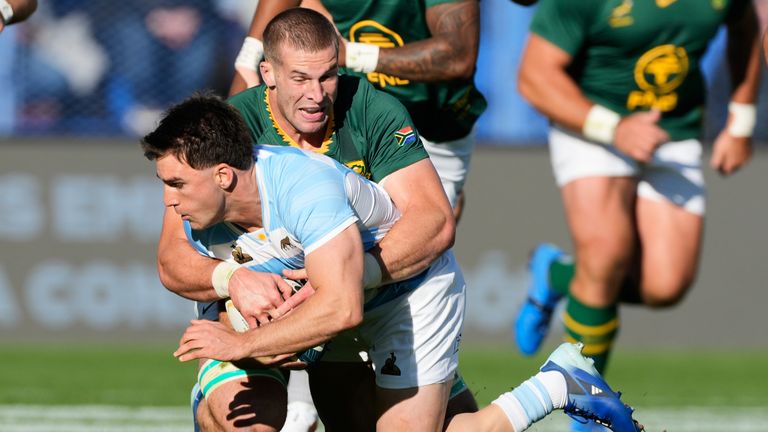
Prisciantelli is tackled by Hanekom
They got to celebrate a 12th straight Test win, but only just.
The depleted Pumas almost snatched a draw after the full-time whistle. From a tap penalty in front of the Springbok posts, they pounded the visitors for 15 phases until the final high pass to an unmarked Matías Moroni was dropped.
Argentina Coach Felipe Contepomi pounded the coaches’ booth and Moroni was in tears.
Watch South Africa’s four-Test series against New Zealand live on Sky Sports. Get Sky Sports or stream rugby with no contract.
>

'That is another crunching finish!' | Hickey lands DEVASTATING knockout

WNBA commissioner stresses integrity, respect on topic of transgender athletes in league-wide memo

Argentina 10-17 South Africa: Springboks win Buenos Aires thriller but Siya Kolisi suffers injury ahead of New Zealand series | Rugby Union News
-

 movies3 months ago
Search For Canadian TV Actor Stewart McLean Now Homicide Investigation
-

 Fashion9 years ago
These ’90s fashion trends are making a comeback in 2017
-
Fashion9 years ago
According to Dior Couture, this taboo fashion accessory is back
-
Fashion9 years ago
Model Jocelyn Chew’s Instagram is the best vacation you’ve ever had
-
Fashion9 years ago
Your comprehensive guide to this fall’s biggest trends
-
Fashion9 years ago
9 Celebrities who have spoken out about being photoshopped
-
Fashion9 years ago
Emily Ratajkowski channels back-to-school style
-
Fashion9 years ago
A photo diary of the nightlife scene from LA To Ibiza