
‘Tear Gas’ film still, courtesy of Locarno Film Festival
Courtesy of Locarno Film Festival


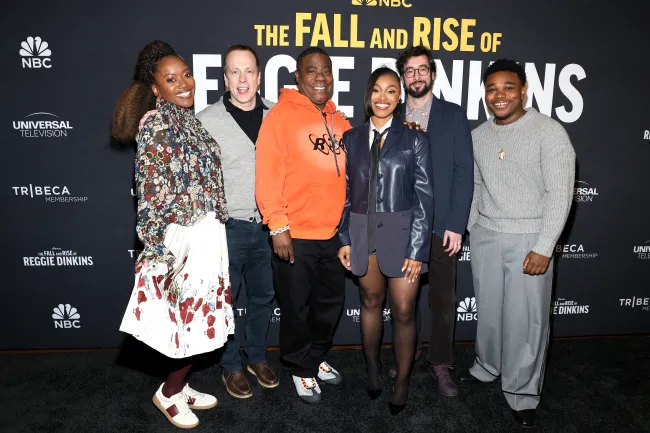

On June 4, the IndieWire Honors Spring 2026 ceremony will celebrate the creators and stars responsible for crafting some of the year’s best television series. Curated and selected by IndieWire’s editorial team, IndieWire Honors is a celebration of the creators, artisans, and performers behind shows well worth toasting. In the days leading up to the Los Angeles event, IndieWire is showcasing their work with new interviews and tributes from their peers.
Ahead, Robert Carlock and Sam Means, the creators and showrunners behind freshman NBC comedy series “The Fall and Rise of Reggie Dinkins,” which was recently renewed for a second season, share with IndieWire what qualities make star and Maverick Award recipient Erika Alexander a legend.


“Legend” is the first word that comes to mind when we think of Erika Alexander, but it also feels past tense, and Erika Alexander is anything but.
When we cast her as Monica Reese-Dinkins in “The Fall and Rise of Reggie Dinkins,” playing opposite Tracy Morgan, Daniel Radcliffe, Bobby Moynihan, Precious Way, and Jalyn Hall, we knew that she had both the comedic chops to stand up to a hilarious, unhinged cast like this, and the dramatic gravitas to ground a hilarious, unhinged cast like this.
We’d seen her wring laughs out of studio audiences on “Living Single“ (among many others), and bring both heart and hope to the screen in “American Fiction“ (among many others). But none of that could have prepared us for the sheer joy that she would bring to every episode and every scene, and the unique mix of high silliness and deep vulnerability with which she would embody Monica Reese-Dinkins.
Erika Alexander is a legend, no question, but she’s not resting on any of her well-deserved laurels; she is continuing to grow and evolve and she is having a goddamn ball doing it.
“The Fall and Rise of Reggie Dinkins” Season 1 is now streaming on Peacock.
>
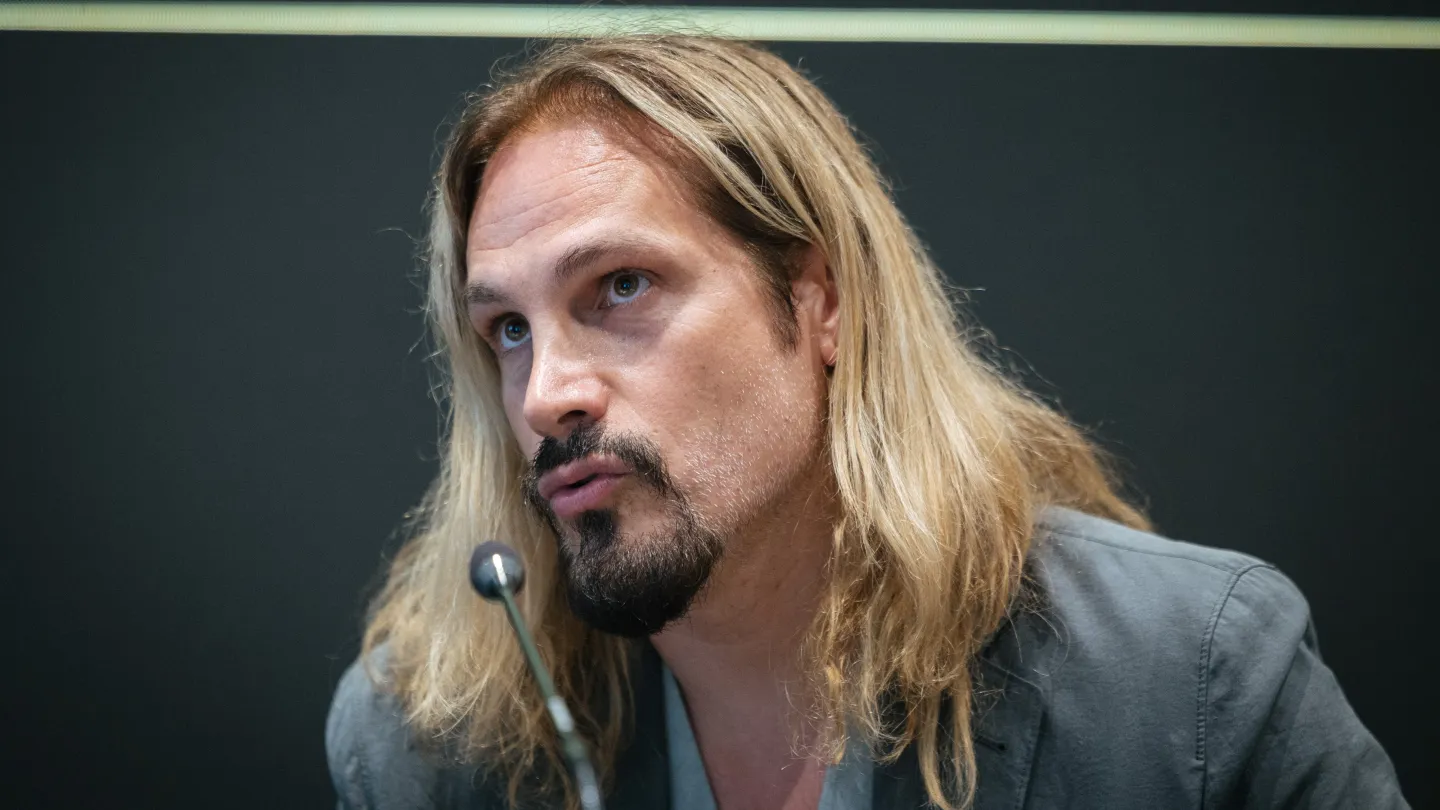
“If you decide to be a producer in the independent world, don’t do it for the money.” Producer Marco Perego didn’t mince words during a Locarno Pro keynote appearance. If money is all you care about, “go [work for] a bank.”
The Italian native, conceptual artist and movie lover made his feature directorial debut in 2023 with The Absence of Eden, starring his wife, Oscar winner Zoe Saldaña. Perego then launched the production company Leaf Entertainment with Michael Cerenzie. Its goal: back the best global auteurs to help them get their projects made.
At Cannes this year, Perego had three competition films: Cristian Mungiu’s Palme d’Or winner Fjord, Andrey Zvyagintsev’s Minotaur, and James Gray’s Paper Tiger.
On Sunday night, he appeared at the 79th edition of the Locarno Film Festival on stage with Gray, who was honored with the Swiss festival’s Career Leopard ahead of a huge Paper Tiger outdoor screening. Just hours before that, he shared his take on the role of a producer at industry strand Locarno Pro in a session that was well-attended despite the busy weekend. Among the people in the audience was Saldaña.
“Independent film is for people who take risk,” Perego emphasized. “It’s about respecting the vision, and the vision is not yours. … Just let [directors] do what they want.” You want to support them, and you may every now and then help with suggestions, but in general, step back and let the creatives do the magic, he said. Emphasizing the significance and importance of ensuring and maintaining artistic integrity, the producer highlighted: “We need to be sure that we really protect the filmmaker.”
Money may talk, but Perego didn’t talk about money details beyond sharing: “I invest quite a lot.” He signaled that he has no strict rules for the size of investments.
“I’m a disruptor. I’m a radical,” Perego also told the Locarno crowd, adding that he wasn’t afraid of slipping up. “I’m going to fail. I’m going to fail so many times, but I promise, I will stand up.”
>
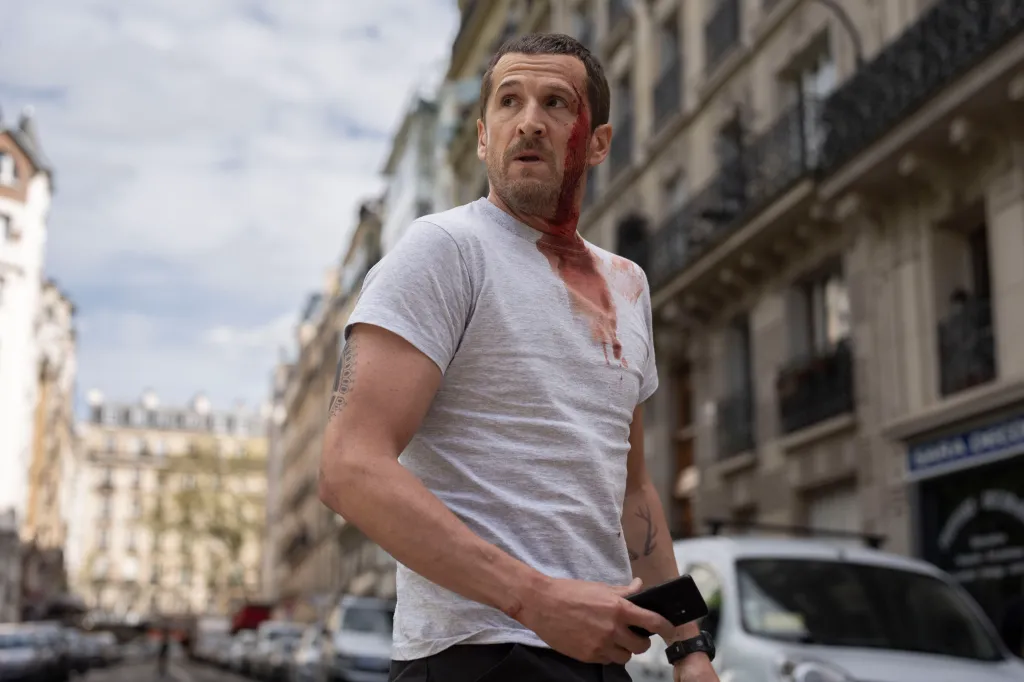
Netflix has announced the start of principal photography on a sequel to 2025 action thriller Ad Vitam, starring Guillaume Canet.
Working titled Ad Vitam Eternam, the new film sees Canet return in the role of ex-elite agent Franck Lazareff who spent the first instalment investigating a deadly conspiracy plot after his pregnant wife was kidnapped by masked men.
Ad Vitam Eternam will pick up from the ending of Ad Vitam in which Canet’s character was released from jail in the final scene after his wife presents evidence clearing his name of trumped up charges related to his personal mission to free her and uncover the instigators of the plot.
The synopsis reads: “After surviving an assassination attempt upon his release from prison, Franck sets out to find out who wants him dead. He goes to hide away with his family in the mountains. But French intelligence services track him down and offer him a deal: a covert mission in exchange for the truth Franck is seeking.”
Ludovic Colbeau-Justin, who enjoyed success with box office language breakout How To Make A Killing starring Franck Dubosc, takes over the director’s seat from Rodolphe Lauga who shot the first film.
Canet co-wrote the screenplay with Maxime Chattam with the collaboration of David Corona.
Further cast returnees include Stéphane Caillard, Nassim Lyes, Zita Hanrot alongside fresh additions Nicolas Duvauchelle, Sophie Marceau and Mathieu Amalric.
The film is produced by Cabanes Productions, Canet’s joint company with Jean Cottin. It will shoot in the Ile-de-France, Normandy, Savoie and Provence-Alpes-Côte d’Azur.
Released on January 10, 2025, Ad Vitam broke into Netflix’s top ten for non-English language films, generating some 54 million views, within the first month of its availability on the platform.
>

Elene, 16, and her war-scarred family are drawn into a mass protest in Tbilisi that transforms the streets of the capital of Georgia into a battleground for freedom. But it also forces them to confront the conflicts that are already threatening to tear them apart.
Does this read like a synopsis for a fiction or a documentary film to you? Well, whatever answer you give, you are kind of right. Because this is not just any film. It is Tear Gas from Georgian writer-director Uta Beria (Negative Numbers). And it is a fiction film shot inside real demonstrations.
The movie will world premiere on Aug. 12 in the Filmmakers of the Present competition program of the 79th edition of the Locarno Film Festival.
At the International Film Festival Rotterdam’s IFFR Pro industry section, the project last year won two awards: the inaugural HBF Empowerment Award, worth €10,000 ($11,000), with the jury highlighting its urgent themes of freedom of expression and political tension, and the Outward Gaze Award, another €10,000 honor, from the PJLF Arts Fund.
Produced by Nino Chichua, Anna Khazaradze and Beria, and co-produced by Guillaume Dreyfus, Delphine Schmit, Daniel Tenné and Junus Baker, Tear Gas features a cast including Taisia Eradze, Mzia Arabuli, Gaga Shishinashvili, Kato Kalatozishvili and Boris Andronikashvili. The cinematographer is Goga Devdariani, while the editor is Nodar Nozadze.
The title has a deeper meaning. “Tear gas is a weapon created to disperse us, tear us apart, make us cry, and restrict our breathing,” highlights Beria. “But in reality, when you inhale it and panic takes over, you instinctively begin fighting for what is most precious to you.”
‘Tear Gas’ film still, courtesy of Locarno Film Festival
Courtesy of Locarno Film Festival
Tear gas is regularly used by police in Tbilisi to break up anti-government demonstrations that have taken place without interruption for more than 600 days. The reason is that protesters fear that the Republic of Georgia will continue following an authoritarian path similar to Russia’s, crushing their hopes and dreams of being another Western-style democracy that is a member of NATO and the EU.
One of the symbols of their fear and anger is the so-called Foreign Agents Law, often simply called “the Russia law” as it is seen as similar to one that Russian President Vladimir Putin had rubber-stamped to allow crackdowns on civil society.
Ahead of the film’s world premiere at Locarno, the filmmaker talked to THR about the genesis of Tear Gas, shooting inside actual anti-government demonstrations, which have now gone on for more than 600 days without interruption, and why the creative team feels the need to stand up for freedom of expression, no matter what the consequences may be.
Tear Gas took five years to make. “I wanted to make it faster, but it was not possible,” Beria tells THR. “The situation in Georgia is so difficult and tough, both when it comes to getting funding and because of stricter rules by the Georgian Film Center not to give money to people who don’t think the same way they do – that even starts feeling like censorship. My colleagues think that maybe my film is one of the last independent projects because the situation is very tough now.”
In fact, Beria shares that there is institutional pressure back home. The film got a contract with the Georgian National Film Center (GNFC) in December 2022, he says. “We delivered the first-stage accounting and audit on time, but the second stage of financing was never paid by the GNFC – we asked three times over 18 months and were never given a reason. Despite their efforts to hinder the production, we managed to complete the film. We cut the budget, raised the remaining funds ourselves and finished the film.”
‘Tear Gas’ behind the scenes of the shoot, courtesy of Giorgi Kolbaia
Courtesy of Giorgi Kolbaia
After the GNFC became aware that the film was set to premiere at Locarno, “we received a threatening letter from them,” Beria tells THR. “They are not consenting to a public screening, and they refer to a financial sanction of 10 percent of the contract value.”
But the Locarno world premiere is on. “Our agreement with all filmmakers submitting work to the festival requires them to confirm that they hold the relevant rights to their film; this agreement was signed by the producer(s) of Tear Gas,” says Olly Osborne, the Locarno Film Festival’s chief communications officer, in a statement shared with THR. “Any dispute regarding financing or contractual obligations between the production and the Georgian National Film Center is a matter between those two parties. The world premiere of Tear Gas will take place as planned on 12, 13, and 14 August in Locarno.”
So, the Tear Gas team did get their film finished, but says it is now facing financial pressures. And shooting amid real-life demonstrations in the capital also proved a huge challenge.
“It was unpredictable,” Beria explains. “You go to shoot with a script for the actors. Usually, you have a plan. But in the demonstrations, we had a plan A, plan B, plan C, plan D. And there were days where we needed to think as the demonstration was going on to follow the flow.”
Asking the filmmaker if he felt a sense of danger is a rhetorical question. “Of course, it was very dangerous, and especially when the police were dispersing people with the use of tear gas, which happened almost every day,” Beria tells THR. “Sometimes they did not announce that they would start using tear gas. We were making sure that when this brutality was starting, the actors were in a safe place. But I, the camera crew, and my DOP would stay and continue shooting.”
‘Tear Gas’ behind the scenes of the shoot, courtesy of Nino Chichua
Courtesy of Nino Chichua
How do you communicate amid the chaos of street protests? “Communication is very difficult in big demonstrations,” Beria shares. “We didn’t want to use walkie-talkies, because the authorities argue that the demonstrations are not spontaneous but are organized, and they have arrested people as organizers. So, we thought if the police see us with walkie-talkies, they will not ask us if we are making a film but assume we are organizers of the protests.”
Mobile phones then? Not really. “Phones were sometimes not working. I don’t know if it was because a lot of people using them overloaded the network or if the police were shutting it down,” the filmmaker says. “So my assistant director came up with a smart idea. We had short and long flags, and we were using these flags to see each other in the sea of people. People who watch the film will notice that we are shooting with a long lens at a great distance, and between the actors and us, there are thousands of people.”
That also affected his guidance for the cast walking around the demonstrations. “I told the actors that they should stay in their role, and they really did so for hours, in the state of the character,” Beria explains. “I told them that sometimes maybe they wouldn’t know when they were in the frame. So, this incredible magic was happening where we would lose the actors, and then we would find them again, and then lose them again. It was so pure, so authentic, so natural. We really fell in love with that.”
Does Beria not fear repercussions for making Tear Gas? “For me, this film was an act of resistance,” he tells THR. “Some of my friends and colleagues are in prison. I can’t free them. But I could put all of myself into this film.”
Asked if he thinks he will end up in prison as well, Beria says: “I don’t know. Let’s see. They don’t need a reason to put you into prison anymore in Georgia. There are so many good and innocent people in prison. I don’t know what to expect. They do what they want. I don’t know. I’m not going to hide so I don’t go to prison.”
‘Tear Gas’ behind the scenes of the shoot, courtesy of Juda Khatia Psuturi
Courtesy of Juda Khatia Psuturi
The creative also emphasizes: “Every member of the crew showed remarkable bravery, and I couldn’t be more grateful for their commitment under such extraordinary circumstances.”
The filmmaker hopes that the film will make more people around the world aware of the situation in Georgia.
And Tear Gas seems like a powerful title to attract attention. “I love the process when you are thinking about a title,” Beria tells THR. “There were different titles before I had this idea for Tear Gas. Tear gas is a strange weapon. It’s created to disperse us, to tear us apart. But in reality, when you inhale it and the panic takes over, you start to instinctively fight for the things that are precious to us and fight to not lose each other.”
Concludes Beria: “This is the main thing that I want to say with this title. In reality, tear gas forces us to fight for each other and brings us together.”
>


Search For Canadian TV Actor Stewart McLean Now Homicide Investigation


These ’90s fashion trends are making a comeback in 2017
According to Dior Couture, this taboo fashion accessory is back
Model Jocelyn Chew’s Instagram is the best vacation you’ve ever had
Your comprehensive guide to this fall’s biggest trends
9 Celebrities who have spoken out about being photoshopped
Emily Ratajkowski channels back-to-school style
A photo diary of the nightlife scene from LA To Ibiza