
Politics
Politics Home Article | The Path to Net Zero: A special report to mark Net Zero Week 2026




The latest issue of The House magazine includes a special report to celebrate Net Zero Week 2026, bringing together the voices of industry experts and policymakers to explore how net-zero can be achieved in a way that is both economically viable and politically deliverable
What was once a broad consensus on the need for climate action has now shifted into a more complex and politicised debate. While legally binding targets remain in place, policymaking is increasingly shaped by debates over affordability and the financial burden placed on consumers, alongside issues of energy security, public support and economic competitiveness.
Government cannot deliver the transition alone. Progress depends on sustained collaboration between policymakers, industry, skills providers and society. Published ahead of Net Zero Week 2026, this supplement brings together policymakers and industry leaders as they aim to move the debate forward, by showing how net-zero can be achieved in a way that is both economically viable and politically deliverable.
From consumer flexibility and fairer electricity pricing to offshore wind, nuclear, hydrogen, clean ports, AI and climate technology, this supplement reflects both the scale of the challenge ahead and the breadth of solutions already taking shape.
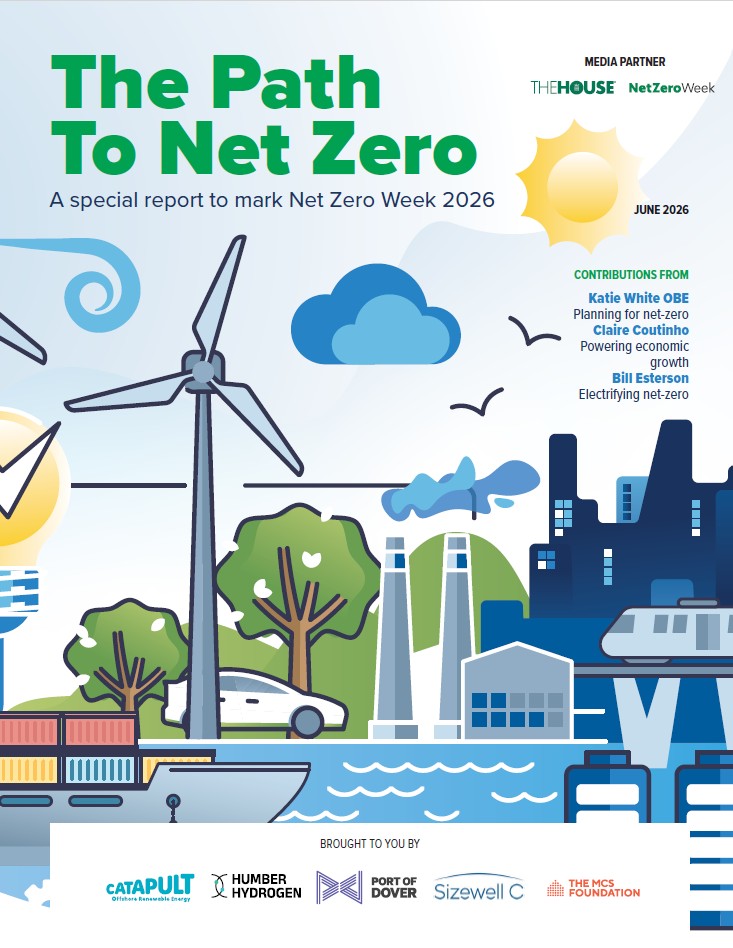 Bill Esterson, Chair of the Energy and Net Zero Committee, makes the case that energy security and electrification are routes to growth and net-zero; Claire Coutinho, Shadow Energy Secretary, argues for a greater shift towards nuclear power, the removal of the carbon tax and continued North Sea development; Kim McGuinness, the Mayor of North East England, calls for a place-based approach that turns net-zero into economic opportunity; and Minister for Climate, Katie White OBE outlines how the government’s Carbon Budget 7 can support a cleaner, more secure and resilient future for Britain.
Together, these contributions offer ideas and highlight practical choices that will help shape Britain’s next chapter. Together, they make the case for an energy transition that is not only necessary, but achievable.
You can read the full report here.
>


Reform UK leader Nigel Farage and party candidate Robert Kenyon before Kenyon casts his vote in the Makerfield by-election (PA Images/Alamy)

8 min read
Reform entered Makerfield expecting a breakthrough. Instead, a crushing defeat exposed the party’s vulnerabilities. Harriet Symonds reports
“No one calls him King of the North here,” said an optimistic Reform UK staffer a day before polls opened in the historic Makerfield by-election.
It was intended as a warning against Westminster assumptions that Andy Burnham’s celebrity status would carry him effortlessly to victory in the Greater Manchester seat. Yet when the votes were counted, Burnham had not merely won – he had crushed Reform by 20 percentage points.
For Nigel Farage’s party, the scale of the defeat was sobering. Pollsters have described the result as Reform’s worst electoral performance since the general election – particularly stark given that voters in Makerfield had elected Reform councillors only a month earlier.
Reform figures have sought to downplay its significance, however, arguing that the result was less an endorsement of Labour than a protest vote against Keir Starmer. Insiders insist that many voters who might otherwise have backed Reform lent their support to Burnham in the belief he represented the strongest vehicle for removing the Prime Minister.
When Reform selected Rob Kenyon, the party believed they had found an ideal candidate. A local plumber and former army reservist, he embodied the anti-establishment credentials considered central to the party’s appeal. Even now, party insiders maintain that their pick was important for the base, showing members that there is a route from the grassroots to Parliament.
Things quickly unravelled when old social media posts by Kenyon resurfaced, leading to accusations of sexism and misogyny. Among the comments highlighted was a suggestion that women rely on abortions so they can “shag anyone they want” and that the majority are for “vanity purposes”. On one account linked to Kenyon, he wrote: “I’m sexist, sorry but I am.”
During the Makerfield Question Time special, a female audience member encapsulated the electoral problem the revelations posed when she declared: “I’d rather have a career politician than a plumber who’s a sexist.”
Incredibly, Reform UK has said it was aware of Kenyon’s social media accounts before selecting him to stand against Andy Burnham in Makerfield.
Reform’s woman problem
A pre-election Survation poll found that Kenyon struggled to win the support of women in Makerfield: Burnham led Kenyon by 21 points among women (53 per cent to 32 per cent), whereas men preferred Kenyon to Burnham by 15 points.
Sophie Stowers, research manager and pollster at More In Common, noticed anti-Reform sentiment among women in focus groups leading up to the by-election. “The Kenyon comments cut through in a more negative way with women than they did with men,” she says.
“What we saw among quite a lot of women, particularly women in their mid-50s, was that they didn’t love Kenyon, they were quite put off by Farage and thought he was a bit arrogant.”
Some Reform figures privately acknowledge concerns about the party’s ability to connect with female voters, telling The House they feel a stronger message is needed to appeal to them. And in a Substack essay, former Reform spinner and current governing board member Gawain Towler admitted the party has a “woman problem”.
Reform insiders concede that the controversy gave Labour an opportunity to attack the party’s pledge to scrap the Equality Act, which critics argued would weaken key protections for women.
Suella Braverman spearheading the launch of the party’s proposed ‘Women and Motherhood Protection Act’ was a last-minute attempt to reassure female voters, committing to bring together “key protections currently scattered across different laws”, including equal pay, sex discrimination, employment rights, unfair dismissal and maternity leave.
According to a well-connected Reform source, Reform MP Sarah Pochin is particularly interested in appealing to more female voters. They admitted, however, that a recent video in which she suggested that England should win more World Cup matches to reduce domestic abuse did not do them any favours.
A Reform spokesperson counters this narrative, saying: “We are leading with women according to the latest More in Common polling.”
More in Common polling conducted days before the Makerfield by-election does indeed suggest Reform has broadened its appeal across the sexes. Among women, the party led Labour by eight points and the Conservatives by six. Among men, Reform’s advantage over Labour was narrower, at six points, though its lead over the Conservatives was nine points.
Trouble on the right flank
Reform concerns that Rupert Lowe’s Restore Britain could siphon off enough support to deny them victory in Makerfield turned out to be somewhat overblown. Restore candidate Rebecca Shepherd finished third, with just under seven per cent of the vote – roughly in line with her party’s national polling position and not enough to change the result given Burnham’s overwhelming victory.
The performance nevertheless underscores a potential long-term threat to Reform. If Restore could replicate similar results across the country it would complicate Farage’s path to No 10 by fragmenting support on the political right. Restore figures have discussed ambitions to contest every seat at the next general election.
Restore’s decision to stand a woman in Makerfield undoubtedly helped them. Directly appealing to female voters in party campaign literature, Shepherd vowed to “give Makerfield women a voice”.
“Restore is what people wanted Reform to be”
In focus groups, Stowers identified that women actually saw Lowe as “quite a nice fella”. “They thought he was quite polite. They quite liked Restore’s canvassers,” she says.
“For those who were looking for an alternative on the right, they were quite taken with Restore. Restore has got this really radical, hyper-online, nativist reputation, but if they’re able to present themselves to some voters as an English countryside, polite, commonsense party for people who are a bit worried about Farage – who I think tend to skew to be women – maybe that is a problem for [Reform].”
Charlie Downes, campaigns director and spokesman for Restore Britain, tells The House the results in Makerfield show the party has established itself as a credible alternative: “There is a huge appetite for the agenda we are offering, and the more people learn about us, the more support we gain.”
Marlon West, a campaigner against child exploitation, is Restore’s candidate for the Greater Manchester mayoral election, where the party hopes to build on the momentum gained in Makerfield.
West is the father of Scarlett West, a victim of grooming gangs in Greater Manchester. The House understands that the focus of Restore’s mayoral campaign will draw on West’s “experiences of institutional failure”.
“We are confident that his story, his priorities and our unmatched digital campaigning machine will deliver a very good result for us – and, even if we don’t win, will be giving a platform to issues that are otherwise often ignored by the establishment media,” says Downes.
On a trip to Makerfield, The House saw many Restore activists wearing Trump-style shirts and caps brandishing the party name as they canvassed the streets. The party’s ground campaign relied on hundreds of activists travelling from all over the country – something that will prove more challenging if the party contests multiple seats or must cover more ground, as in the mayoral race.
“I’m not worried. It was an annoyance [in Makerfield] but there’s no way they’re ready,” says Towler of Restore. “The only thing [Rupert] can do right now is try and save his own seat.”
Rattled by Restore?
Farage hit out at Restore voters in a video on social media: “What do you want? We are the challenger party to the left in the country and I would urge you to think again.” This was taken by many as evidence that Reform is rattled by Lowe’s party.
Reports that Reform could sack Zia Yusuf, who is trying to pull the party closer to the right in response to the growth of Restore, were strongly denied by party spokespeople. A Reform spokesperson dismisses suggestions that the party has been rattled by Restore. “We will keep running our own race – we won’t change strategy for anyone,” they say. “They scored less than the BNP in 2010.”
Yet figures on both sides acknowledge that the contest exposes a fault line on the populist right. For Reform, the danger is that Restore offers a home to disillusioned supporters who increasingly see Farage as part of the political establishment he once railed against.
Reform’s controversial decision to welcome Tory defectors was plastered across Restore’s campaign literature, which blamed Braverman and Robert Jenrick for “betraying our borders” during their time in the Home Office.
“Restore is what people wanted Reform to be,” Andrew Bridgen, a former Tory MP who helped campaign for Lowe’s party in Makerfield, tells The House.
While Restore is still a fledgling movement, with little organisational infrastructure and no electoral breakthrough to its name, Makerfield is a reminder that Reform’s biggest challenge may not come from Labour or the Conservatives.
As Farage seeks to convince voters he is ready for government, he is also having to defend his party from a rival movement that accuses him of becoming precisely the sort of politician he once promised to replace.
>


Andy Burnham and Keir Starmer (Illustrations by Tracy Worrall)

14 min read
Sienna Rodgers reports on how Keir Starmer’s premiership was cut short and whether Labour believes Andy Burnham will fare any better
The mood in the Downing Street Rose Garden that night swung between grief and relief. For two years, they had been careful to avoid parties there, fearing echoes of the infamous lockdown gatherings under Boris Johnson. But it had been a long day in which everyone was on the verge of tears, and it was all going to be over soon anyway. There were crisps and many bottles of wine and lots of emotions. The atmosphere was that of a wake because, hours earlier, Keir Starmer had confirmed the inevitable: this was the end.
The Prime Minister was there for hours and hours, from the afternoon until the late evening, and Lady Starmer and the children joined too. He left “politician mode” behind and told the aides and loyal MPs assembled in the garden that he would never forget their support. “Vic and I made a decision,” a guest recalls him saying, “and you have stood by me, and I’ll never regret it.” Unusually, Victoria Starmer spoke next, thanking everyone for having their backs. The kids played on the trampoline.
Attendees felt bonded. After Taylor Swift and a lot of 90s rock, the compulsory Labour anthem Things Can Only Get Better was blasting, and they jumped and danced around as a group.
Spads distracted themselves from the thought that they could well be jobless in just a few weeks. Having lived in a state of perpetual anxiety for a year, at last they were acknowledging the project was over, though they could not believe they had reached this point so soon after entering government.
As with Starmer’s resignation speech outside No 10, Rachel Reeves did not show up. A source close to the Chancellor cautions against reading too much into her non-attendance on that difficult morning, and says later in the day Reeves was busy doing a bilateral with the new Defence Secretary followed by hosting small businesses.
But in Reeves’ absence, much of the chatter turned to her role in it all: they muttered that Keir had stood by her even as she cried on the frontbench, wondered when she would accept responsibility for her mistakes like he had done, and discussed her part in the “DIP” (Defence Investment Plan) saga that saw John Healey resign as defence secretary.
“People were laying into her,” a guest recalls. “Everyone names the winter fuel allowance thing as the beginning of the end, and she pushed it through. They were saying she made many, many mistakes, and Keir still stuck by her, but the absolute fatal blow at the end was John Healey, and that was Rachel’s fault, because she wouldn’t back down.”
A senior Labour source says: “Rachel was especially badly behaved during that period. Really obnoxious. Going into meetings of government where you have to talk about trade-offs, all in the context of DIP, and instead of looking at, ‘What is an absolute necessity, what can we change?’, she was sounding off and saying, ‘There is no money because of DIP and the PM is forcing me to do it.’”
It is evidence, they claim, that the partnership had broken down: “If you’d had a functioning PM-Chancellor relationship, Rachel would’ve said, ‘We know this is a priority and we’ve got to get it done.’”
Another cutting insider criticises her “terrible political judgement”, concluding: “Blair had Brown, Cameron had Osborne, and unfortunately Starmer had Reeves.”
Not everyone around the PM agrees. Starmer ally Baroness Chapman gets in touch with The House to praise Reeves as “respected on the world stage” and “taken seriously by finance ministers (almost all men), which is pretty impressive”. “Obviously also there’s the stuff she’s done to re-establish our economic credibility, getting interest rates down and good signs on growth before Hormuz. People who know her get to like her pretty quickly,” the peer adds.
Another minister close to Starmer rejects the characterisation of a breakdown in relations, saying: “The two of them have worked unbelievably closely, and over the last few weeks and months especially she’s been very supportive (when others, to put it politely, haven’t!).”
On the DIP, they add: “Those kinds of major decisions will always involve some back and forth from 10 and 11 but from what I saw it was always respectful and people trying to come to the right place on an incredibly difficult issue.”
Reeves did find the process very frustrating at times but the bottom line, allies say, is that she was asked by the PM to find billions outside of a fiscal event and she did so.
Either way, for most insiders, the DIP fiasco was the final straw for Starmer’s premiership.
“There was a feeling that when John stood down, the wheels were coming off,” says a Cabinet source. Some blame Reeves; others Ed Miliband, accusing him of intransigence over capital being taken out of the Desnz budget to fund increased defence spend.
One version of events attributes No 10’s distractedness to Miliband, even though, as a Labour MP puts it: “Why would Keir care about Ed resigning when he had already told him to his face that he should go and was part of the plotting?” The idea that the PM was too focused on Miliband to grasp the Healey danger is rejected by a source close to the Energy Secretary, who says his DIP settlement was finalised almost a week before Healey’s resignation so neither his approach nor fear of him quitting could have played a part. Miliband was not happy about the cuts, they say, but he had accepted them.
Crucially, though, too many thought the blame lay with Starmer himself. One of his key selling points to remaining core supporters was his record on security yet he allowed it to be severely damaged by the row. The lack of political decisiveness became clearer than ever at that moment, and the fight for Starmer to stay juddered to halt, with one loyalist recalling the question that came to mind: “What are we fighting for?”
The political gravity of the situation was not taken seriously: Starmer’s antennae for these things, Morgan McSweeney, was no longer chief of staff. Multiple sources say he did urge Starmer to proactively sack Miliband as well as Shabana Mahmood for disloyalty. But while McSweeney has continued to feed in ideas from a distance, a senior source points out, the intensity of No 10 is such that anyone who is not present day-to-day cannot wield much influence.
While recent events inflicted serious damage on Starmer’s remaining authority, the fundamental problems go back much further. Some say Covid, followed by the Conservative Party’s troubles, meant he faced too little scrutiny as opposition leader. Others point to a lack of preparation for government.
“Everyone thought there was a secret plan and there wasn’t. That had to be pulled together in government, which is what the ‘plan for change’ was. But that meant there was months of drift at the outset,” says James Lyons, who served for almost a year as one of Starmer’s numerous directors of communications.
The PM’s inability to hold onto key staff members – from comms and political directors to chiefs of staff, civil service policy leads and political leads – was another serious factor. He found it difficult, insiders report, to confront people. There was a general lack of discipline: he tended not to make demands of the Cabinet or hold them to account, so everyone was freewheeling with nothing holding the project together at the centre.
When a significant decision was taken that would be difficult for the parliamentary party to swallow, from the winter fuel allowance cut to the welfare cuts, Starmer’s hands-off approach to party management invited trouble. MPs often complained about his refusal to mix with them, until some efforts were made years in to hold more meetings, and even loyal troopers guessed he didn’t know their names let alone how they could contribute to the government’s work.
The rebellion that forced ministers to rip up a bill on the floor of the House was the death knell. “The winter fuel cuts were the government’s original sin, but what cast the Prime Minister into political purgatory was the welfare rebellion. He never reasserted his authority after that,” observes Lyons.
It was not only 2024 intake MPs who were left bruised. “I don’t blame Keir for this personally, but I felt his team at the very beginning made a major mistake in terms of ministerial appointments,” says Starmer ally and neighbouring MP Tulip Siddiq.
Although she was brought into government as a minister, she says of colleagues: “People who had worked their socks off in opposition weren’t made ministers but also were never thanked for their years of service.” New MPs being promoted immediately upon entering Parliament rubbed salt into those wounds.
At the most basic level, it is Starmer’s lack of politics that was widely perceived to be the real problem.
“It’s a horrible way to end your time leading the party,” a sympathetic and loyal MP says of Starmer’s announcement. “But fundamentally he just wasn’t a political politician. He was quite snippy about it all, like being nice to people in the tea rooms. Well, we’ve got a parliamentary democracy – not a presidential one.”
“Blair had Brown, Cameron had Osborne, and unfortunately Starmer had Reeves”
The same Cabinet source quoted earlier sums up the persistent concern Labour people have had throughout the leader’s tenure: “Keir is not really a political animal. In the end, that’s where it’s fallen through. He hasn’t been prepared to say, ‘Enemies are attacking me from within and I’m going to fight back’ – and really mean it.”
Enter Andy Burnham, the King of the North who has arrived in the South to take the crown following an overwhelming victory in a ‘proof of concept’ by-election.
He may project a soft image – all fluttering eyelashes, big smiles and oodles of charm. But his coup has shown a level of ruthless efficiency that is surprising from someone who failed to be selected for the last by-election opportunity in Manchester after barely organising for it. Louise Haigh and Anneliese Midgley as his Westminster enforcers have played a key role in the transformation of his operation.
The prospect of rivals for the top job has faded away. Wes Streeting bowed out immediately upon Burnham’s return. Darren Jones, the ambitious chief secretary to Starmer, ruled himself out of the running after generating some speculation widely assumed to be aimed mostly at securing leverage in job negotiations.
Military man and 2024 intake MP Al Carns is still keeping his name in the mix at the time of writing, but it is hard to find anyone who seriously thinks he could reach the threshold of 81 MP nominations to trigger a full contest. Why would so many choose to be on a “please don’t give me a job” list? And no women are willing to put themselves forward for a challenge that Labour’s history tells us would be both painful and pointless.
The bar some colleagues set for Burnham to clear was high: he needed to not just beat Reform but do better than Reform and Restore combined. In the end, he smashed that target with an absolute majority share of the vote. Those Labour MPs stubbornly sceptical about his talents now compare the Makerfield result to Jeremy Corbyn winning in Islington: it was proof he is popular in Manchester, they argue, not that he can beat Nigel Farage anywhere.
Even so, most have decided a coronation is for the best. As Lyons, formerly of Starmer’s No 10, puts it: “Andy comes in with far more experience than many Labour leaders into Downing Street, and I think a contest would be a catastrophe for the Labour Party that would see all the contenders get dragged to the left with no time to make their way back to the centre by the time they landed in No 10, which is what normally happens.”
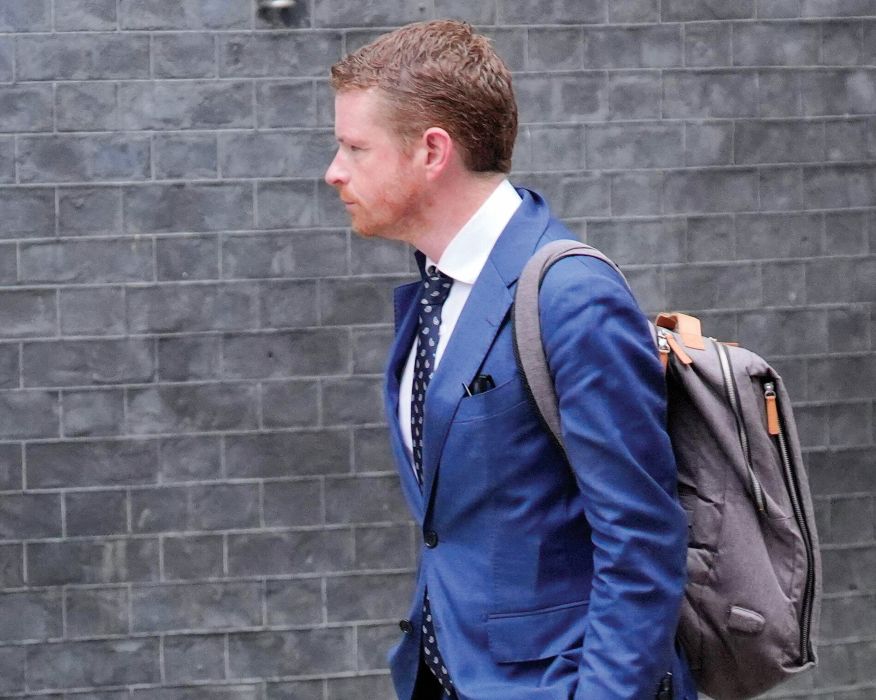
Many Burnham backers are invigorated by his ascent. Worryingly, though, one Labour MP has noticed a “weird acceptance” in other parts of the parliamentary party that regularly changing leaders has become routine. On the day of Burnham’s swearing-in, MPs “were like, ‘Yeah, he won’t last very long. In two years, there’ll be a snap election and he’ll be gone,’” they say.
A proponent of electoral reform, one insider says Burnham is already benefiting from a form of proportional representation in the PLP: for big chunks of it, on the right and left, he is their second-preference candidate. They were too worried about handing the reins to the other side to put forward their ideal pick.
The hope among these slightly or very disgruntled Labour people is that Burnham will lead a “government of all the talents” and put pluralism at the heart of his project – in stark contrast to the Starmer-McSweeney operation.
Luke Hurst is national co-ordinator of the Mainstream group that launched last year, which has brought the soft and harder left together in support of a Burnham leadership. “It fundamentally does not have purpose,” he says of the Starmer government. “It never did, other than some vague platitudes about change. There was only an internal purpose, which was rooting out dissent.”
Hurst trusts Burnham will take lessons from their failure: “The way Keir Starmer has run the party has damaged the output of the government, and I think there’s a cautionary tale there for Andy. He has to learn not just how to be a prime minister but how to be a leader of the Labour Party.
“The centralisation of power and decision-making with, essentially, a boys’ club at the top of the party, the sidelining of the unions, members and socialist societies, and severing of the party from civil society, has just meant that the government hasn’t had the resources to do what it said it wanted to do in a really complex, challenging moment.”
Neal Lawson, director of Compass and an ally of Burnham, puts the same criticism of Starmer’s methods in stronger terms. “It was sold by Morgan as Corbynism without Corbyn.
They were obviously lying through their teeth, and did completely the opposite: junk the people, junk the policy, turn it on a sixpence, refashion the Labour Party from the top down in a narrow, brittle, bloodless way. It was always going to end in catastrophe, which is what’s happened.”
The tensions within the Burnham coalition are already pulling at the seams, however. The Socialist Campaign Group is just happy “the boot is no longer on their throat”, as one source puts it, but the soft left had higher expectations than merely a loosening of the whip.
Confirmation that longtime friend and former Blairite minister James Purnell will be his chief of staff has unnerved parts of the soft left contingent. (Purnell is currently leading staff recruitment for Burnham’s No 10, The House understands.) If the new PM also chooses a figure from the Labour right such as Wes Streeting or Pat McFadden as his chancellor over Miliband, the radicalism they expected appears to be over before it’s all begun.
The argument for Miliband goes like this: Burnham must lead a bolder government that takes bolder action on the economy, and a lot of nonsense is spouted about Miliband considering he spent years in the Treasury and has headed up a successful economic growth department that has shown he knows how to deliver.
The counter-arguments are many: Miliband would destabilise the markets, anger key trade unions who oppose his net-zero agenda, and provide the lobby with endless stories about No 11 being the real centre of power. “It would be creating a monster,” says one detractor.
A senior Labour source in Starmer’s government reckons the proposed ‘kumbaya’ approach will end in tears. “It’s dangerous to have so many factions feeding in because Labour factionalism is toxic,” they say. “You take the lid off it and it’s a nightmare because you can’t get the lid back on. It’s a Pandora’s Box of shit.”
>


Al Carns, former armed forces minister. (Alamy)
3 min read
Labour MPs dismiss Al Carns leadership bid, leaving Andy Burnham on course for coronation as party leader.
The appetite for a contested leadership race has diminished in recent days after Darren Jones, the chief secretary to the Prime Minister, ruled himself out of a contest earlier this week.
Jones had been regarded by many MPs as the only figure capable of mounting a credible challenge to Burnham.
Carns, the former armed forces minister, has fuelled speculation about his own intentions following his resignation last week over a lack of new funding for the military. Since leaving government, he has embarked on a tour of broadcast studios calling for a national conversation about Labour’s future direction — a campaign that some colleagues interpret as an informal pitch for the leadership.
Although Carns has yet to formally declare his candidacy, PoliticsHome understands that he has spent recent weeks sounding out MPs about potential support. He previously signalled his willingness to enter a contest, saying: “If someone fires the starting gun, I’m not afraid of gunfire.”
Yet few of his parliamentary colleagues appear convinced.
“Everyone really likes and respects Al but he is beginning to look a little bit silly,” one Labour MP in favour of a contest said.
Several MPs question whether Carns, who has been in Parliament for less than two years, possesses the political experience required to lead the party into a general election.
His resignation has also angered some supporters of Starmer, who believe Carns and his former cabinet colleague John Healey accelerated the chain of events that led to the former prime minister’s departure.
A minister who had previously supported Carns’ leadership ambitions said they had now “lost trust” in the former Marine.
Another Labour MP was equally dismissive of Carns’ prospects. “He obviously isn’t a credible candidate for PM,” the MP said.
A third described the manoeuvring as a bid for “attention”.
Several close allies of Starmer who had hoped for a leadership contest and backed Jones as a potential challenger have told PoliticsHome they would not transfer their support to the former minister.
“The fundamental difference between Darren’s campaign and Al’s campaign is that Darren could have got the numbers to challenge. Al was never going to get more than a handful of MPs,” said one MP involved in organising support for Jones.
As support for a contest wanes, many MPs increasingly regard Burnham’s victory as a foregone conclusion.
One Labour MP described it as a “fait accompli” and said the party’s priority should now be unity.
“We need a smooth transition that’s as bloodless as possible,” the MP said.
Another points out: “Andy is going to win anyway.”
Even among those willing to consider backing Carns, support appears motivated less by enthusiasm for his candidacy than by broader concerns about Labour’s future economic direction.
One MP said they would consider supporting Carns as a protest against the prospect of Ed Miliband becoming Chancellor, while acknowledging that the former minister was likely “positioning” himself for a future role as defence secretary.
Indeed, for many Labour MPs the real struggle now concerns not who occupies No 10, but who controls economic policy from No 11.
Concerns about the possibility of Miliband becoming chancellor is a key concern among many of Jones’ former supporters. When Jones ruled out a leadership bid earlier this week, he said it was in part because he had received assurances from Burnham, particularly on economic policy.
As one Jones backer put it: “Everyone can see that the real contest is over the occupant of No 11, not No 10.”
Al Carns was contacted for comment.
>

Tekken 8 Game Reveals Bob’s August 19 Early Access Release in Gameplay Trailer – News

Carlos Mendoza lost his job Friday, and Mr. Met couldn’t stop dancing

Politics Home Article | The Path to Net Zero: A special report to mark Net Zero Week 2026
-

 Fashion9 years ago
These ’90s fashion trends are making a comeback in 2017
-
Fashion9 years ago
According to Dior Couture, this taboo fashion accessory is back
-
Fashion9 years ago
Model Jocelyn Chew’s Instagram is the best vacation you’ve ever had
-
Fashion9 years ago
Your comprehensive guide to this fall’s biggest trends
-
Fashion9 years ago
A photo diary of the nightlife scene from LA To Ibiza
-
Fashion9 years ago
Emily Ratajkowski channels back-to-school style
-
Fashion9 years ago
9 Celebrities who have spoken out about being photoshopped
-
Fashion9 years ago
The tremendous importance of owning a perfect piece of clothing