
Politics
The House | Jacqui Smith: “A Million Young People Not Earning Or Learning Is A Moral Outrage”


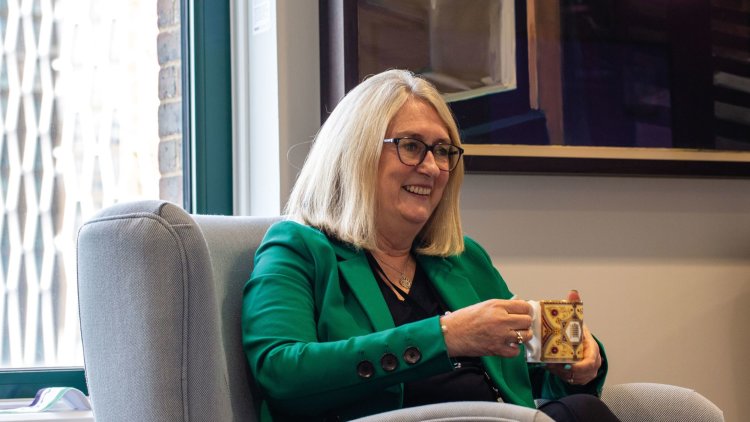
Photography by Louise Haywood-Schiefer
10 min read
Skills minister and Labour veteran Baroness Smith talks to Matilda Martin about her party’s leadership troubles then and now, plus what can be learned from the Milburn review of young people and work
Jacqui Smith was the first serving minister to use the past tense when talking on the record about Keir Starmer’s premiership. “I would have been very happy for him to continue,” she said on that Monday morning before the podium appeared outside No 10. It was the final confirmation, if any were needed, that the Prime Minister would soon be confirming he was on his way out.
This is far from the first time Baroness Smith of Malvern, 63, has borne witness to serious political turbulence. Having first been elected to Parliament in Tony Blair’s 1997 landslide, it fell to her as his chief whip in 2006 to tell the prime minister he had a problem: the party’s demands for a ‘timetable’ were growing.
Sitting down with The House hours before Andy Burnham’s Makerfield victory, the education minister – now forming part of a Labour government from the House of Lords – reflects on this familiar territory.
“I’m now in my 12th year as a minister,” she says, adding up time served under both New Labour and Starmer. “I’ve been around the block a bit, and I have seen turbulence. I understand that governments go through difficult times.
“In those cases, usually the best thing to do is to focus on the change that brought you both into politics and into government, to get on with delivering it, and to spend less time worrying about the personalities involved.”
Perhaps unrealistic but not surprising from a minister described first and foremost as “loyal” by those who have worked with her over the years. She was immediately appointed as Gordon Brown’s home secretary when he took office, for example, despite having been labelled as one of “Blair’s babes”.
Asked what she makes of the recent intervention by her former boss, she shoots back: “Which one of my former bosses?” Tony Blair inspired a summer of essays when in May he published a 5,000-word thesis offering advice to the party he once led.
“Tony’s interventions are always welcome from me. He is, and was, both a phenomenal boss and an era-defining prime minister. But… this is probably a time to buckle down, get on with changing the country and spend less time writing essays.”
Smith left government in 2009 amid the expenses scandal, which included the revelation that she had – in error, she said – claimed back money for two pornographic films bought by her (now former) husband. “I had some high-profile problems in the last government, both personally and politically,” Smith admits at one point, unprompted.
In 2010, she lost her Commons seat to the Conservatives but went on to rebuild her reputation outside the Palace walls, co-hosting a weekly LBC show and – following a path well-trodden by former politicians – competing in Strictly Come Dancing in 2020.
When Smith became skills minister in July 2024, she was returning to the department where her ministerial career first began back in 1999.
She recalls bringing her sons with her, who were tiny at the time, and how the glass-walled offices were a playground of sorts for them. Her boys are now more than six feet tall.
Much has changed over the decades, not least the lives of young people like Smith’s sons. The recently published review of another former New Labour minister, Alan Milburn, exposes the depth of the crisis of Britain’s almost one million young people not in education, employment or training. If these “Neets” were to form a city, he writes, it would be larger than Leeds, Glasgow or Cardiff.
“The fact that we’ve now got a million young people who are not earning or learning is a moral outrage and it’s also an enormous waste of economic talent,” says Smith.
The report observes that the rise of AI is likely to create further pressure at the bottom end of the labour market. What is this government’s plan to protect young people from the harms of the AI revolution?
Smith points to the work of the government’s ‘AI alliance’ and ‘AI champions’ who are looking at entry-level jobs and identifying “where those challenges might be and what more we need to do in order to support young people into them”.
“If you hollow out your entry-level jobs in any area of employment, you’re building up problems for the future, because then you don’t have the pipeline that you need,” she says, adding that this is something employers “get”.
Does it worry her that companies are cutting jobs for young people because of AI? While Smith is careful to point out that there are a range of factors contributing to the changing labour market, she adds: “I know it worries young people, because I talk to them about it…
“That’s why it’s quite important for us to keep saying: whatever the challenge is, your opportunities are likely to be better if you’ve been able to go through high-quality courses, whether higher education, apprenticeships, or other skills routes.”
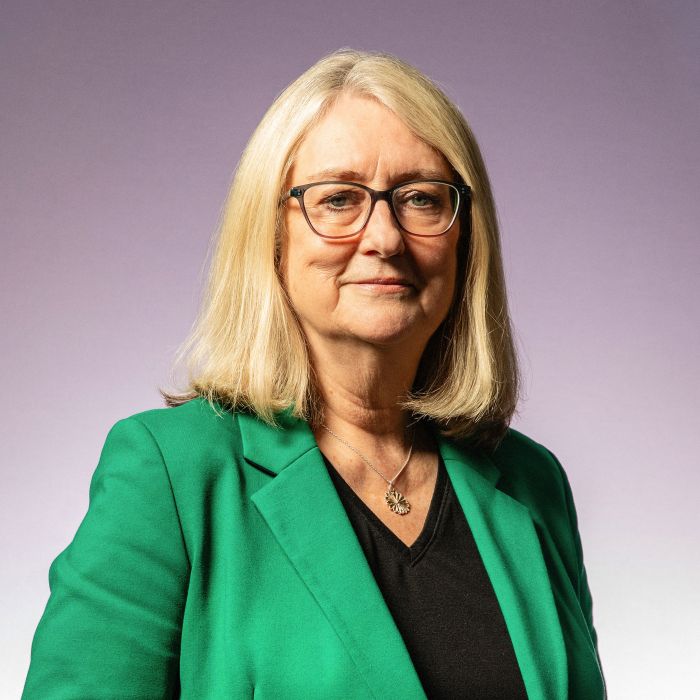
The Neet generation is also, Milburn highlights, generally unhappy. “Young people lead complicated lives,” Smith says. “There is a lot going on in the world with which they have to put up.”
She takes the opportunity to lay the blame at the door of her predecessors: there is less for young people to do and enjoy, she claims, “partly because of the way that some of the things that we previously put around education got hollowed out by the last government”.
When Labour took power in 2024, it was braced for a host of problems. One of those it did not anticipate, or perhaps want to deal with, was the financial crisis inherited in the university sector.
Universities have often found themselves on the front lines since 2024. The proposal of a levy on international students in the immigration white paper blindsided the sector, although sources stress that the alternatives available were far worse.
The narrative that some universities run courses that offer no benefits to their students is also one that has permeated all major parties. At Labour conference in 2025, Starmer announced that the party’s old ambition for half of young people to go to university was being decisively abandoned – “I don’t think that’s right for our times,” he declared – and the government sought to push apprenticeships and other vocational courses.
“I’ve been around the block a bit, and I have seen turbulence. I understand that governments go through difficult times”
The question of apprenticeships versus universities is one that has played out in many governments, and Smith finds herself jostling with a higher education (HE) sector that often questions whether she even likes them. Smith, of course, would contest this characterisation of her approach.
Whitehall has reportedly considered introducing new national minimum standards, such as a pass in GCSE English, to access student loans – a move that would lock some people out of the opportunity to enrol in higher education. Smith refuses to comment directly on the reports but says she wants those accessing higher education to “genuinely benefit from it”.
She also stands by decisions not to tackle the Plan 2 student loan system, taking the party line that there are other priorities within government that had to take precedent. She insists, however, that she has been “continuing to think about what more we can do to make that system of repayment better and fairer for those who are in it”.
Another high-profile story in the HE sector has been the debate around free speech. In April, the University of Sussex won a case against the regulator Office for Students (OfS) in the High Court, overturning a £585,000 fine handed down last year for failing to uphold free speech. Among other things, the judge found that the OfS decision to issue the fine was biased against Sussex.
Two months later, Smith is adamant that she supports the OfS and its operation. She is also clear universities should not interpret the ruling as a sign all is well on the free speech front: “It’s important that that court case isn’t seen as a suggestion that there is nothing that universities need to be thinking about when it comes to freedom of speech.”
When The House speaks to Smith, Starmer has not yet resigned but Labour MPs are already contemplating life under Andy Burnham’s leadership.
“I sat in the cabinet with Andy Burnham,” the minister says. “I’ve known Andy for a long time. I know what a talented politician he is. He’s been on a journey, and I’m glad he’s coming back to Westminster.” She does not approve of him instigating a leadership change, however.
While numerous names have been thrown around as potential successors to Starmer in recent months, none of those considered frontrunners have been women. Infamously, Labour is yet to elect a female leader. Is Smith, the first female home secretary and currently an equalities minister, embarrassed by that?
“No, I’m not embarrassed,” she claims. “We’ve got an enormously strong team, of which, frankly, quite a lot of the best performers are women.”
Many of her female colleagues in the party are embarrassed, and were furious about the Peter Mandelson revelations, which some said typified a deep-rooted misogyny in Labour. Does she believe Starmer did enough to tackle the so-called ‘boys’ club’ in No 10?
Smith pauses before answering. “I don’t think, while we’ve got the sorts of inequality that we have across society and in politics, anybody’s ever taken enough action. A lot of my political life, and one of the elements of my role now, is about how we tackle that in politics. I’ve been around long enough to see quite a lot of improvements in the way that women are treated in politics, but there’s still more that needs to change.”
Predictably, she is clearer when it comes to Reform UK’s shortcomings on women’s rights. Nigel Farage’s party has explicitly pledged to repeal the Equality Act 2010 on “day one”, which Smith says “scares” her.
“It would be a massively backward step but I’m afraid it sums up the approach of Reform, which is to identify a problem and decide who’s to blame for it, rather than to identify a problem and think about how you solve it.”
Does she think working in politics as a woman has become easier over the last two decades? It’s a question Smith seems keen to reflect on: “There are more women in Parliament, far more than when I was first elected in 1997… There are more women doing a wide range of jobs. Those are all really important developments.
“But what I also note is, I had some high-profile jobs in the last government, [but] both personally and politically, I never faced the level of abuse and intimidation that politicians face now, and in the week when we’re remembering…” she breaks off.
“Sorry,” she says, pausing to gather herself. “When we’re remembering the death of Jo Cox, who was a good friend of mine… that is something that worries me about the environment in which, all politicians actually – but the evidence suggests particularly women and particularly women of colour – now have to try and operate in the public sphere and in elected democracy.
“There are women who think twice about coming into a political career,” Smith continues, “and that’s a terrible loss of their talent – but it’s an undermining of our democracy as well.”
>
Politics
Politics Home Article | Public Concern About Climate Change Rises After Summer Of Extreme Heat


This summer has been the driest summer in England and Wales since records began in 1836. (Alamy)

4 min read
There is growing public concern about climate change after weeks of wildfires and drought in the UK, according to polling shared with PoliticsHome.
Around three-quarters of people (74 per cent) told an Ipsos poll they are concerned about climate change, up from 69 per cent before the summer. At the same time, the share of people who say they are unconcerned has fallen from 28 per cent to 24 per cent.
Over half (56 per cent) said recent high temperatures had affected everyday activities like work, exercise and sleep either a great deal or a fair amount.
Eighty-seven per cent said it is likely that the country will face similar summer heatwaves in the future, compared with just 3 per cent who said it is unlikely.
The online poll of 1,085 people was carried out against a backdrop of heatwaves, drought and wildfires across the UK.
July was the driest month in England and Wales since records began nearly two centuries ago, with the Environment Agency warning that the heat was affecting farmers, wildlife and water availability. Large parts of the country are subject to hosepipe bans, while a recent wildfire in Suffolk was described as the size of 210 football pitches.
Major wildfires have also impacted European countries like France, Greece and Spain.
Raquel de Luis, Head of Energy and Environment at Ipsos in the UK, told PoliticsHome: “The intense heat this summer and visible wildfires across Europe have served as a visible focus point around discussions on climate change, which may be driving a clear uptick in immediate concern and leaving nearly nine in ten convinced that these heatwaves are our new normal.”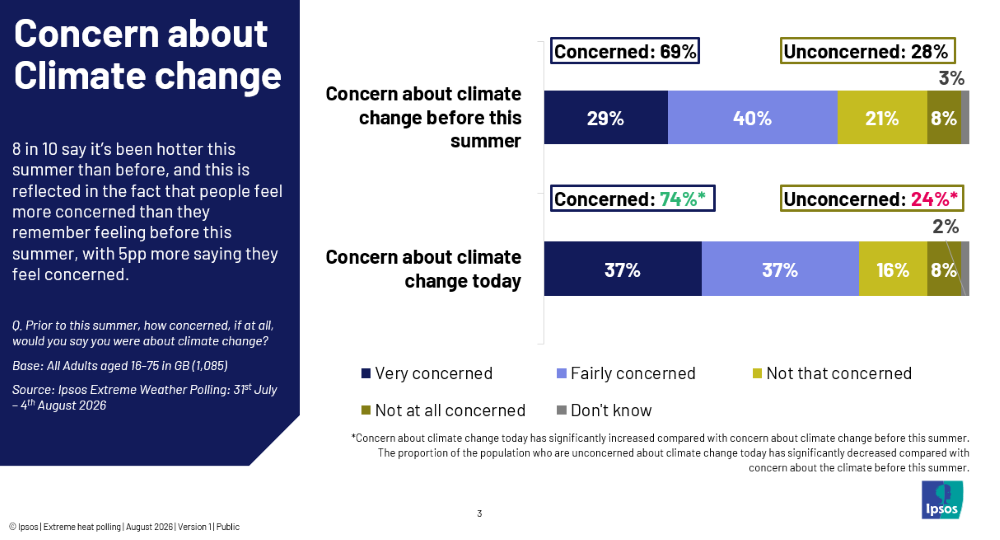
When respondents were asked what measures they planned to install in the next two to three years to help cool their homes, portable air conditioning was the most selected option (29 per cent), followed by a fixed air conditioning unit (23 per cent) and blackout blinds or curtains (19 per cent).
Of those who told Ipsos they do not plan to make changes to their homes to cope with heat, the most common reason was affordability (39 per cent).
“The key challenge for Westminster will be delivering accessible, cost-effective infrastructure and adaptation support that enables households to build resilience against recurring summer heat without adding to their financial burdens,” said de Luis.
Paul McNamee, Director at the Labour Climate and Environment Forum, said the findings show that Labour MPs are right to keep making the case for the UK’s net zero targets at a time when parties on the right are calling for them to be relaxed.
“It has been really good to see Andy Burnham knock some money off energy bills to address people’s concerns [about cost of living],” he added.
“But we also need to keep on rolling out renewables and upgrade our grid to make sure it’s fit for purpose for a future of clean energy, and our main ask is [making] sure that the government makes the absolute most out of the electrification benefits that sit beneath it.”
However, he said there is more that can be done in the short term to boost community resilience in the face of extreme heat, like creating green spaces where people can cool down and better managing land to help avert wildfires.
Managing Director of the Conservative Environment Network, John Flesher, said the government needs to do more on adaptation because the country isn’t “well enough prepared” to deal with the effects of extreme hot weather as things stand.
“We need to think a lot more about preparing for this,” he told PoliticsHome, pointing to water security and agriculture as areas of high importance. “It’s terrible what this [extreme heat] could mean for the cost of food, for farmers’ abilities to conduct their harvest as normal.”
Tom Bradshaw, President of the National Farmers Union, recently told the BBC that the UK has taken its food supply for granted for far too long and called for more resilience planning.
“Those other countries around the world that we currently rely on to produce our food and vegetables, their climates are changing as well,” said Bradshaw.
“It does feel like there is going to be some shortages of [food] products.”
>
Politics
Politics Home | Big Tech Firms Are “Winning In A Big Way” On Online Safety, Warns Jess Phillips

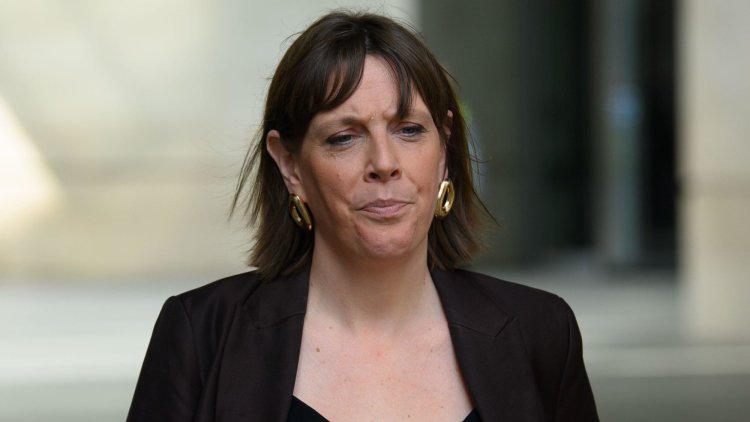
The former safeguarding minister Jess Phillips has warned the big tech firms are winning in the battle over regulation (Alamy)

3 min read
Major tech companies are “winning in a big way” against efforts to make the internet safer for women and children, according to former safeguarding minister Jess Phillips.
Phillips, the Labour MP for Birmingham Yardley, said that during her time in government, parts of Whitehall, including No 10, were reluctant to take action for fear of retaliation by tech giants and the Donald Trump administration.
Speaking on the latest episode of PoliticsHome podcast The Rundown, which will be published on Friday (7 August), Phillips said: “We are too beholden currently in the world to basically five unelected people.”
The Labour MP resigned as a Home Office minister in May, accusing the Keir Starmer administration of not working hard enough to protect women and girls online. Phillips said Starmer was a “decent man” but his reluctance to “have an argument” meant that steps to tackle violence against women and girls (VAWG) were “stalled and delayed”.
In her resignation letter to the then-prime minister, Phillips said that “91 per cent of online child sex abuse is self-generated by children groomed, tricked and exploited into abuse”, and that Google and Apple, the two companies that control the operating systems on almost all smartphones, could quickly and easily install software that would stop them being used by children to take and receive naked pictures.
In June, Starmer gave tech firms a September deadline to make this change, warning that the government would give itself the powers to fine or take criminal action against those that did not comply.
Phillips wants new Prime Minister Andy Burnham to hold them to this, telling the podcast that, as things stand, “tech companies are winning in a big, big way”.
The former minister said there was a divide within Whitehall about how to tackle online safety when she was in government. She described the Home Office as being “hawkish as hell about tech companies”, while No 10 and the now-abolished Department of Science, Innovation and Technology (DSIT) were nervous about being too aggressive.
Phillips recalled “the sense that tech companies and the US would hold us to ransom on all sorts of different things”, adding: “I’ve had it directly said to my face, ‘well, look, they’ll just put trade levies on us if you try and do anything with tech companies’.”
She said Starmer “was always on my side in conversations”, but that she “just started to feel like I was going slowly mad” waiting for the machinery of government to make it happen.
“If you could hear some of the conversations I had to have with people. There are some people who genuinely just think that people taking dick pics is a human right,” Phillips said.
“I had to say to somebody once: ‘You know, you won’t die. It’s not water or shelter’.”
Phillips expressed concern that the government’s Online Safety Act is “woeful for women” in its current form and “20 years behind” where it needs to be to tackle evolving online harms.
“As somebody who was seeking to put down lots of amendments to the Online Safety Act while it was passing through, I’ve never known aggressive lobbying like it,” said the Labour MP. “Every single law firm in the whole of London was basically on retainer to one of the big tech companies so that they couldn’t work for anyone else. That is just anti-democratic.”
The Rundown is presented by Alain Tolhurst, and is produced and edited by Ewan Cameron for Podot
- Click here to listen to the latest episode of The Rundown, or search for ‘PoliticsHome’ wherever you get your podcasts.
>


Prime Minister Andy Burnham has outlined a range of areas he would like to see greater spending in. (Alamy)
4 min read
Andy Burnham has set out some major ambitions for government since entering office. Experts look at how he could pay for them.
The new Prime Minister was keen to hit the ground running when he succeeded Keir Starmer in No 10 last month, promising quick action to help people cope with cost-of-living pressures. He announced that he would take VAT off electricity bills, cap bus fares at £2, and reduce business rates for pubs and restaurants.
When it comes to longer-term policy, Burnham has promised to end rough sleeping and reform adult social care. His vision for the latter, bringing it more in line with NHS provision, is estimated to cost billions of pounds of additional spending every year. The new PM is also under pressure to increase defence spending in response to global security threats.
At the same time, the PM has pledged to stick to the government’s fiscal rules and 2024 manifesto pledges not to raise income tax, national insurance and VAT.
This has raised questions about how Burnham will fund his plans for government.
Many details will not be confirmed until Wednesday, 28 October, when Chancellor John Healey delivers the first Budget of the Burnham Labour government. Healey, who resigned as defence secretary during the final weeks of the Starmer government over defence spending, has said that the Autumn Budget will be “built on fiscal discipline”.
What are Burnham’s options?
Carsten Jung, leader of the economy team at the Institute for Public Policy Research think tank (IPPR), argued that Burnham and Healey have inherited a better economic picture than Starmer and former chancellor Rachel Reeves faced.
“Rachel Reeves, for all of her strategic mistakes, really fixed the public finances,” said Jung.
“What she inherited from Jeremy Hunt [her Tory chancellor predecessor] was unsustainable. It was based on cuts to departmental spending which weren’t sustainable. So she went to the painful exercise of increasing taxes to fix that.
“What Andy Burnham inherits is a much better funded state, and he also has headroom against the fiscal rules he inherited, which makes it less dire.”
However, he said that borrowing money to fund government spending could be riskier for Burnham than it was for Starmer due to “jittery” markets and a more precarious global picture. The Bank of England recently warned that it may be forced to raise interest rates later this year if the US war with Iran escalates, which in turn would make borrowing more expensive.
Jung said that one option available to the government is to increase tax on wealth to bring it closer to tax on earnings, highlighting capital gains tax.
As things stand, people are charged either 18 per cent or 24 per cent on profit they make when selling, gifting or disposing of an asset that has increased in value, such as a second home. Burnham could increase Treasury revenues by aligning capital gains tax rates with income tax bands of 20, 40 and 45 per cent.
Elsewhere, examples of pro-growth policies according to Jung include the Treasury investing more in “leading industries” in the UK as well as “boosting entrepreneurship” while closing tax loopholes.
Isabel Stockton, researcher at the Institute for Fiscal Studies (IFS), said Burnham’s ambitions can be split into two categories: those that are less fiscally challenging, such as the cost-of-living measures he announced in his first few days in office, and policies with greater economic implications, like defence spending and adult social care.
Stockton agreed with Jung that borrowing more money would be “difficult” and “risky” for Burnham as it could push the new government close to breaching its fiscal rules, leaving him with two broad options: raising tax and cutting spending elsewhere.
Burnham has already said that the country must get “really serious” about reducing welfare spending to fund priorities like greater defence spending.
Stockton also suggested that the Labour government explore using the National Wealth Fund as a way of boosting spending power – it was launched under Starmer in 2024 to “mobilise billions of pounds of investment” in UK “clean energy and growth industries”.
By the end of the current parliament, the NWF should be on track to have capitalised with almost £30bn – with government funds directed to “resources to finance economic activity that supports additional private investment”, opening up investment options for the government.
However, NWF is still funded by taxation and borrowing, and is run by the Treasury – meaning the challenges around scrutiny on tax and spend remain.
Stockton told PoliticsHome the limitations Starmer’s government faced on taxation, spending, and spending cuts continue to exist, and remain challenging for Burnham’s government.
“With any new government, it can make different choices, but it is going to be facing essentially the same constraints, especially given that he [Burnham] says he’s committed to the existing fiscal rules,” said Stockton.
“He says he’s committed to the Labour manifesto on tax, so that rules out quite a few things already. That means that the decisions are going to be difficult.”
>

St Mirren 1 – 0 St Johnstone

Shergar Cup: Ryan Moore helps Great Britain and Ireland to Ascot crown | Racing News

'There's no hiding'- IBF champ McKenna puts middleweight division on notice
-

 movies3 months ago
Search For Canadian TV Actor Stewart McLean Now Homicide Investigation
-

 Fashion9 years ago
These ’90s fashion trends are making a comeback in 2017
-
Fashion9 years ago
According to Dior Couture, this taboo fashion accessory is back
-
Fashion9 years ago
Model Jocelyn Chew’s Instagram is the best vacation you’ve ever had
-
Fashion9 years ago
Your comprehensive guide to this fall’s biggest trends
-
Fashion9 years ago
9 Celebrities who have spoken out about being photoshopped
-
Fashion9 years ago
Emily Ratajkowski channels back-to-school style
-
Fashion9 years ago
A photo diary of the nightlife scene from LA To Ibiza