
‘At Night,’ courtesy of Night Films
Courtesy of Night Films Ltd.


No, it’s not that birthright controversy, the one the Supreme Court is supposed to decide this week, despite birthright citizenship being guaranteed in the 14th Amendment of the U.S. Constitution. Playwright Jonathan Spector writes about another birthright in his great, controversial and very funny new play, which opened Monday at the MCC Theater after its 2024 world premiere at Miami New Drama.
“Birthright” easily takes its place as the best new play of the year (so far), and one of its longest. Clocking in at three hours 20 minutes, this sprawling three-act play spans nearly two decades to chart the various fortunes of six twentysomething friends who go to Israel free-of-charge for 10 days under the auspices of Taglit-Birthright Israel, and never fully recover from the experience. The respective acts take place in 2006, 2016 and 2024.
“Birthright” can best be described as a Jewish “Big Chill,” with the third act of Spector’s play being the meeting that brings five of the six friends together to mourn a recent death in their group. It’s as if “Big Chill” director Lawrence Kasdan had also made two prequels that starred Kevin Costner (famously cut from the 1983 film classic). In “The Big Chill,” Glenn Close & Company talk about what went right or wrong, and not just with their dead friend. In “Birthright,” what goes awry is not just talked about, it’s brilliantly dramatized. With the exception of Jeff Goldblum’s Michael Gold journalist in “The Big Chill,” Kasdan’s characters are gentile, if not downright very waspy. Their upper-upper-middle-class problems are not really problems for the vast majority of people.
Since they’re Jewish, Spector’s six friends carry a lot more angst, and adding to all that tsoris is their just having returned from Israel in 2006 as George W. Bush’s war in Iraq continues to roil the world. Their birthright trip to Israel was a fun, expense-free vacation. It featured lots of sightseeing, drinking and sex. One of the six actually managed to lose her virginity to an Israeli soldier who makes a habit of scoring with young Americans in the Taglit program.
In Act 1, the friends meet, ostensibly, to dissuade that former virgin from giving up her doctoral studies in the United States to move to Israel. The birthright trip was amazing, they tell her, but not life-changing. She disagrees. Clearly, the situation is ripe for exploring all sorts of questions about the state of Israel and the state of being a Jew, and Spector is wonderful at writing with both his left and right hand, if not speaking out of both sides of his mouth at once. Long speeches abound, but they are great, often very witty digressions into some of the world’s weightiest topics. It’s an affluent group of friends, but at least these characters realize they’re speaking from a place of privilege.
Along the way, this gang of six drops a lot of Hebrew words, and Spector is thoughtful enough to explain (eventually) what each foreign word means without being too obvious with his explanations and exposition.

Spector sets Act 2 in 2016 on the eve of the Clinton/Trump presidential race, and Act 3 in 2024, just enough time after the Oct. 7 Hamas massacre for the Israel/Gaza crisis to have divided old friends, as well as entire families. Only the sudden, unexpected death of a beloved friend could bring them all back together. How explosive does it get? Spector lets it be known that the late Sheldon Adelman helped fund Taglit-Birthright Israel.
This review hasn’t mentioned any of the actors because a true joy of sitting through all three-plus hours of “Birthright” is witnessing first-hand where Spector takes his characters. That actor-character relationship should first be seen in the theater, not read in a review.
In a couple of cases, it’s possible that Spector has written not female characters but a couple of talking heads: one pro-Israel, the other pro-Palestine. If so, Teddy Bergman’s direction of his cast softens those hard lines. Much more audacious is Spector’s creation of two male characters, both of whom emerge as the play’s most religious characters, if studying to become a rabbi or actually becoming one is a sign of religious devotion. Both men experience the greatest, most wonderfully theatrical changes in personality during the course of “Birthright.” If this is meant as a not-so-subtle critique linking religion to fanaticism, it works.
On the New York stage, Bergman last directed Lauren Yee’s “Mother Russia,” the only new play this year to match the thrill of seeing “Birthright.” Not only is his taste in plays downright flawless, Bergman knows how to bring a comic, wry edge to even the most serious of subjects.
At long last, the enormously talented cast of “Birthright” features Molly Bernard, Eli Gelb, Nate Mann, Molly Ranson, Zoë Winters and the enormously charismatic Hale Appleman as the six friends. Liz Larsen plays the generous Jewish mother whose house (great set by Scott Pask) is the scene of all the drama.

>

Welcome to Rendering, a Deadline column reporting at the intersection of AI and showbiz. Rendering examines how artificial intelligence is disrupting the entertainment industry, taking you inside key battlegrounds and spotlighting change makers wielding the technology for good and ill. Got a story about AI? Rendering wants to hear from you: jkanter@deadline.com.
Want to see Kim Jong Un gatecrashing Dunder Mifflin, or Darth Vader decapitating Ross Geller? Simply head over to X/Twitter, and you will find AI bros hungrily feeding beloved characters into their newest meatgrinder, and posting inanely about Hollywood being “cooked.”
This cycle happens nearly every time a new AI model is released. This week, I was fully expecting Seedance 2.5 to be the story. The ByteDance video generator has been eagerly awaited by people in the AI community following the shock-and-awe of Seedance 2.0, which wowed creators and horrified IP owners in equal measure.
But Seedance 2.5 was not the story. Instead, the AI bros have been marveling at Hailuo 3, released by MiniMax, another player in China’s booming artificial intelligence industry. MiniMax H3 is not available directly to users in the U.S. or the European Union, but this has not stopped it from going viral outside of China through third-party access.
Justine Moore, a partner at tech investor Andreessen Horowitz, generated a clip of Dwight and Jim from The Office using a simple H3 text prompt in Krea, an online studio that gives users access to various generative AI models in one place. Her text prompt still went through MiniMax’s servers, meaning Moore’s video suggests that copyright safeguards are not being properly enforced.
And this is happening at a time when MiniMax is defending a lawsuit from Disney, Universal, and Warner Bros., in which the studios allege that Hailuo “pirates and plunders copyrighted works on a massive scale.” In their suit, they even point to MiniMax promoting the model using AI videos of Deadpool, Wolverine, and The Joker on its official YouTube account. This is not subtle stuff. MiniMax denies the allegations in its defense, but the superhero videos have been quietly scrubbed from its YouTube account.
MiniMax did not respond to a request for comment. When launching H3, a company representative said the full model would not be available in the U.S. because of “ongoing copyright-related legal proceedings specifically concerning generative video AI.”
The fact that Seedance 2.5 has not been used to mine Hollywood gold to the same extent indicates that ByteDance has raised its rail guards following the chaos of Seedance 2.0. You will remember that Seedance 2.0 produced the wildly viral Tom Cruise vs Brad Pitt deepfake fight. Netflix, Disney and others fired off cease and desist letters, and ByteDance (which also owns TikTok) promised to do better.
That’s not to say ByteDance models are clean. VN.ai, a startup that stress tests generative artificial intelligence tools for copyright infringement, was this week able to generate bootleg pictures of Elsa, Shrek, and Buzz Lightyear through ByteDance image creator Seedream 5.0, per research reports seen by Deadline’s Rendering column.

VN.ai did this through a third-party API, meaning the safeguards may not have been as robust as on ByteDance’s own service. VN.ai also found that prompts for high-profile characters were often denied, but that by tweaking requests — such as asking for exact pixel sizes — Seedream 5.0 did then produce a recognizable rendering of Buzz Lightyear. This is known as “red teaming” in the tech industry, where researchers purposefully try to get around a system’s defenses.
ByteDance is by no means alone in having leaky models (just ask Disney about Google), but it does appear to be taking this issue seriously and is not dismissing concerns. In a statement, the company told Rendering: “ByteDance launches models with safeguards designed to prevent unauthorized use of intellectual property, and continually works to expand and strengthen these in collaboration with rightsholders and creative communities.”
We approached U.S. studios and their trade body, the Motion Picture Association, for comment. They’ve made their position pretty clear on IP infringement through legal letters and lawsuits, but MiniMax H3 and Seedream 5.0 are a reminder that policing this stuff is like an endless game of whack-a-mole — and on a global scale.
>

“Power. People. Data.” That is a core theme of this year’s program of Locarno Pro, the industry strand of the Locarno Film Festival, whose 79th edition is currently taking place in the Swiss lakeside city. But in which order should we think about these key concepts and buzzwords? Is it maybe people, power, data?
You may have your own thoughts, and the opening day of the 15th edition of Locarno Pro, led by Markus Duffner in his sixth year, showed that there are very different ways to think about the order of and relationship between the three. After all, a three-person panel shared three different approaches and thoughts.
Moderated by AC Coppers of The Catalysts, the panel featured Yasmine Talli, acquisitions manager at sales agent, producer and distributor mk2 Films, Andrea Occhipinti, president and founder of Italian producer and distributor Lucky Red, in which StudioCanal recently acquired a majority stake, Doris Ruth Eikhof, CEO of the University of Glasgow spin-out company Design Otherwise, which focuses on helping organizations to improve inclusion and diversity in the cultural sector.
Asked about how she thinks about the order of and relationship between the three words in focus of the discussion, Eikhof offered her take: power, data, people. “People will be people. They’ll be more or less wise or more or less flawed,” she explains. “So, we sort out the power structures first and the stories that we tell about ourselves – that’s what data really is. Then we have the best chance at creating a space in which everyone can prosper.”
Occhipinti had a different approach. “I’ll go with people first,” he said. “Judgment, sensitivity and experiences come first. Then comes power. And data is a very important tool that we have to use.”
And Talli shared this thought: people, data, power. “It’s probably true that people need to gather some data in order to keep power,” she explained.
A key topic the industry players were asked about was how much they make decisions about films based on conviction versus data and algorithms. “We don’t use algorithms to choose a film that we want to distribute or produce,” shared Occhipinti. “We go very much on instinct, sensitivity and experience. If there’s something that clicks in that film, in that story, even if data or comparables or whatever says don’t do it, often we have proved the contrary” is true.
He mentioned examples, too. “We saw a film like Ida [by Pawel Pawlikowski] – a Polish film, black-and-white,” Occhipinti noted. “We saw it twice. This cannot work, but we still thought it’s a great movie. Or [Barry Jenkins’] Moonlight.”
His takeaway was that there are clearly “movies that on paper are not going to be successful,” but
conviction can trump data. Not that Lucky Red doesn’t look at data. As a distributor, the firm has a community that responds to films, which is a form of data, he told the panel audience. “We don’t know what they are looking for, but we test what they react to,” Occhipinti concluded.
How does mk2 make its decisions? Talli outlined a similar approach. “When we consider projects, …[we use] emotion, taste and the human aspects, but we also have what we want to believe gives us some more certainty that a film is going to work,” she said. “The things that we mostly pay attention to [include] the track record of a director, checking which festivals he or she attended with his or her previous work. The people around that director also matter. Who is the producer? The cast also gives a pretty big indication for us when we consider the potential in the international market,” mostly for English-language films.
Talli shared that mk2 is also looking at “comparables, films that have premiered in recent years that for some reason feel that they could be compared to the projects we are evaluating, not necessarily because the story is similar.” She explained that it is more of “a market comparison.”
All in all, at mk2, “it’s a process that actually involves a lot of people,” Talli concluded. “We have a pool of readers. If the readers are recommending something, then we go to the next level to people in the acquisitions team. So, it’s very much a group decision.”
The panel session was part of the 2026 StepIn kick-off event session, following a debate-inducing presentation by film industry data analyst Stephen Follows, who raised eyebrows with data points and hard truths in a presentation entitled “Fear, Lies, and the Illusion of Control.” Among the issues he covered were the likes of how many of this century’s 100 top-grossing films have a “nepo baby creative” and what low percentage of indie films generate a profit.
>
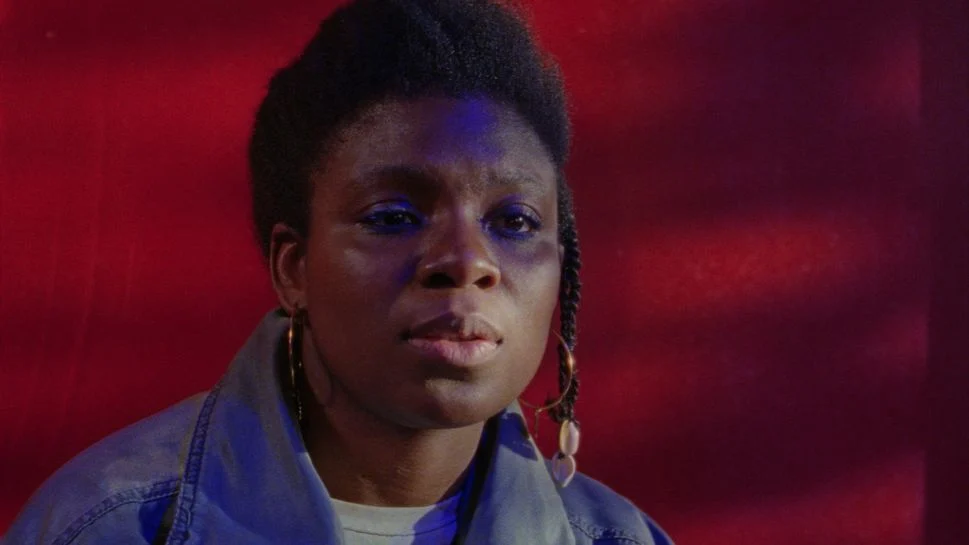
Six women roam the neon-lit city of Paris after dark. Over the course of a single night, their journeys intertwine reality, dreams and fiction. Whether at bus stops or corner shops, in restrooms or in bars, they give voice to their dreams, sexual desires and uncertainties about the future. Welcome to British filmmaker and artist Beatrice Gibson’s full-length feature debut, an experimental and “autofictional” film called, simply, At Night.
The movie will world premiere at the Locarno Film Festival on Saturday, Aug. 8, in the Filmmakers of the Present competition program of the Swiss fest’s 79th edition, which runs Aug. 5-15.
Written and directed by Gibson, At Night features cinematography by her long-time collaborator Ben Rivers and editing by Liyo Gong. The film is produced by Somesuch and Norte Productions.
“A filmmaker struggles to understand the film she is making,” a synopsis says about the women we meet in At Night. “A Black single mother refuses the categories imposed on her. A former sex worker reflects on her past. A poet gives up trying for a child.”
The film features an array of Gibson’s non-professional actor friends and influences as they discuss and explore such topics as sexuality, money, motherhood and mental health. “This isn’t simply a feminist story, but a love letter to friendships, relationships, and the quiet yet poignant stories women share together but rarely to an audience,” the press notes highlight.
A thread that runs through the movie is poetry, with U.S. poet Alice Notley reciting one of her own poems for the film, recorded just months before her death in 2025. Inspired by her writings and the texts of such other cult literary figures as June Jordan and Kathy Acker, Gibson takes us on nocturnal searches for answers.
‘At Night,’ courtesy of Night Films
Courtesy of Night Films Ltd.
“I was interested in the structure of the journey, of a woman just walking through the night,” explains Gibson. The idea for At Night came to her after she read two feminist takes on the epic quest narrative, namely Notley’s book-length poem, The Descent of Alette (1992) and Acker’s gender-flipped knight’s tale, Don Quixote, Which Was a Dream (1986).
But scenes and narratives also emerged from the creative’s thinking about the kinds of encounters and conversations that can only take place at night. “Who really occupies the night? And what kinds of labor take place there?” she wondered. That is why At Night also features “undervalued work done by those who keep the city fed, clean, and moving,” according to the press notes.
“My casting process is one I’ve developed over time and is folded into the writing process. I don’t follow the traditional structure in which I’m writing and then casting,” Gibson explains. Instead, she casts her characters first, thinking about who might produce an interesting performance, and then collaborates with them to develop the material.
“It’s a collectively written film, in many ways,” Gibson emphasizes. “People write their own material for their scenes, depending on what they want to develop.” She concludes: “It’s autofiction really, so generating that material is a delicate and sensitive process, and it takes a lot of time and revision. People need to feel comfortable with what they’ve authored, where it’s placed and with whom it’s in dialogue. It’s quite a deep process.”
No surprise then that it took six years to make At Night.
As with all of Gibson’s work, the film emphasizes a working process that is collaborative and improvisatory. “I’m utopian at heart,” Gibson says. “I wanted to make a film about trying to be together at a time when everyone is divided. Maybe it was a naive and misguided thing to do, although, that said, I would do it again.”
That theme of being together also applies to Gibson appearing in front of the camera in At Night. As for her decision to do so, she says she felt a responsibility to delve into her own sense of privilege: “I didn’t realize the extent to which race and class would play out during the process. That’s why I’m in the film,” she explains. “I wasn’t supposed to be initially, but I felt I had to take responsibility somehow, in relation to my positionality. I come from a deeper place of privilege than most of the characters in the film; there was critical tension in that, and I felt like I had to take responsibility for it and explore it.”
The relationships and shared thoughts, as well as the sights, sounds and rhythm of the film, are what At Night is really all about. You can watch an exclusive clip for the film, which THR can premiere, right here:
>


Search For Canadian TV Actor Stewart McLean Now Homicide Investigation


These ’90s fashion trends are making a comeback in 2017
According to Dior Couture, this taboo fashion accessory is back
Model Jocelyn Chew’s Instagram is the best vacation you’ve ever had
Your comprehensive guide to this fall’s biggest trends
9 Celebrities who have spoken out about being photoshopped
Emily Ratajkowski channels back-to-school style
A photo diary of the nightlife scene from LA To Ibiza