
Tech
New York Imposes One-Year Moratorium on New Hyperscale Data Centers

New York paused new hyperscale data center permits for up to one year while it studies grid, water, ratepayer, and community impacts.
The post New York Imposes One-Year Moratorium on New Hyperscale Data Centers appeared first on TechRepublic.
>

Activewear company Lululemon has invested in the $30 million Series A round raised by Syntetica, a French startup that developed a novel approach to recycling nylon, whose properties make it both too good to give up but hard to reuse.
Syntetica promises to recycle two types of nylon — Nylon 6 and Nylon 6,6 — that can’t easily be sorted out from each other in the textile waste collected from consumers, its CEO Marco Bertone told TechCrunch.
With tons of clothing ending up in landfills each year, one key reason for the fashion industry to invest in more circularity is customer perception, especially for premium apparel brands. Startups like Syntetica also benefit from regulatory tailwinds, and from recent price volatility that unusually affected nylon.
In the last six months, geopolitical turmoil in the oil industry has led to quarterly or weekly nylon price renegotiations, Bertone said. “It’s been a wake-up call to many brands that have been relying on petrol-sourced nylon and petrol-sourced synthetics for pricing and convenience, and which today have seen massive shocks to their system.”
According to Bertone, this is a good fit for Syntetica’s pragmatic approach. “We have built the company with the clarity that there’s no green premium. That if you want to scale real solutions for a sustainable world, it needs to be cost competitive, highly scalable, and you need to build partnerships from the very start.”
The startup’s partners include brands like Lululemon, but also Victoria’s Secret and Etam, with a recycling project that could go to market early next year. Syntetica’s Series A was also backed by a large apparel manufacturer, MAS Holdings — “a recognition of how significant the problem has become,” Bertone said.
It is indeed quite unusual for a supply chain actor to invest in a player that hasn’t scaled yet. But before its Series A, Syntetica had already closed a partnership with Michelin’s Centre for Sustainable Materials to establish a commercial demonstration facility in the industrial company’s French hometown, Clermont-Ferrand.
Unlike other startups in its field, Syntetica won’t produce textile itself, let alone a novel material. The product of its recycling process will be pellets, which can then be used by others to make yarn for the likes of MAS. “It’s a story of pragmatic industrial partnerships with the right players to get buy-in from the whole value chain,” Bertone said.
With a background in fashion and second-hand e-commerce, Bertone is the business guy at Syntetica. But through Entrepreneur First’s matchmaking-style accelerator hosted at Paris campus Station F, he teamed up with chemistry researcher Louis Monsigny. The duo then cemented their collaboration in Reims, where they made use of AgroParisTech’s lab.
Since then, they have also hired a CTO, Ash Ward, who previously worked for failed battery company Northvolt, whose cofounder Peter Carlsson is also one of Syntetica’s advisors. For Bertone, their scars and first-hand experience with the ups and downs of scaling give them experience on when and where to take risks.
“As a startup, we have to be comfortable taking more risks than industrials; otherwise, there would be no innovation. But there’s also a line— when you parallelize too many risks, then it can become complex,” he said. That’s also why Syntetica isn’t diversifying just yet.
Although it could eventually recycle other materials or serve other industries, its focus is on using its funding to demonstrate its ability to produce hundreds of tons of pellets per year and deliver them to clients in the clothing supply chain. After that, Bertone said, “Syntetica will be building facilities around the world, close to waste sources and close to textile production.”
While it has global ambitions, the startup benefits from being based in France. Its Series A was led by the Ecotechnologies 2 fund managed by the Green Venture team at Bpifrance, France’s public investment bank as part of the France 2030 plan. It has also received support from the European Innovation Council (EIC) with equity, grants and via its acceleration program.
For these public backers, startups like Syntetica are part of a broader plan to strengthen Europe’s industrial capabilities while reducing reliance on fossil fuels. But the startup also hopes to generate returns, and is also backed by private investors including EQT Ventures, SWEN Capital Partners and family offices.
Syntetica has competitors, too — some using an enzymatic approach to “eat” plastics, but also chemical giant BASF, which developed recycled nylon. Still, after attending industry events, Bertone hopes they will all grow. “If everyone were to scale to tens of factories, we still wouldn’t solve this problem,” he said. “Everyone needs to succeed for us to succeed as a society.”
Lululemon has also invested in other textiles recycling startups such as Epoch Biodesign and Samsara Eco.
When you purchase through links in our articles, we may earn a small commission. This doesn’t affect our editorial independence.
>

Applied Computing, a London-based startup that’s building a foundation AI model for the oil, gas and petrochemical industry, has raised a $20 million Series A led by engineering giant KBR, with Databricks Ventures participating.
Founded in 2023, the startup targets oil, gas, refining and petrochemical systems, where a single facility can have thousands of sensors measuring everything from temperature and pressure to velocity and viscosity. While there’s a huge market for helping energy companies solve the data tracking problem, the fragmentation that presents a significant hurdle.
Facilities consequently make operating decisions using less than 8% of the data available to them, says Applied Computing’s co-founder and CEO Callum Adamson (pictured above, right). Operators already collect much of this information, he said, but they struggle to combine the sensor readings, engineering documentation, and physics and chemistry quickly enough to analyze and make predictions.
“It’s getting those three data sources to talk to each other in real time. That’s the real key,” he told TechCrunch.
Unlike large language models, which predict the next word, Applied Computing says its foundation model, Orbital, combines a time series model, a physics-based model, and a language model to predict the state of a facility. It does this by analyzing sensor readings, keeping physics and chemistry in mind, and recognizing a facility’s equipment constraints and operator activity. It also allows technicians to run simulations of how a change in one part of a facility could affect the rest of its operations.

Essentially, Applied Computing is pitching speed: It claims Orbital can flag anomalies, investigate what caused them, and model whether a proposed fix could create problems elsewhere in the facility, all within minutes. Adamson claims the product can compress investigations that previously took days or weeks into seconds, helping operators reduce energy use and maintain output.
That promise of speed seems to have found believers. The startup says it has gone from stealth to double-digit millions in annual recurring revenue in under 18 months. Adamson said Orbital is in use at some “large, publicly listed” upstream oil and gas, downstream refining and petrochemicals companies, although he declined to mention how many customers it has.
Its partners include Indian energy company Wipro, and KBR, which has integrated Orbital into its INSITE 3.0 digital platform for energy projects, and is using the product for ammonia production. Adamson said the startup is also working with a “major U.S. upstream operator,” and plans to announce a partnership with a European oil major in the coming weeks.
Still, Applied Computing is entering a market that has entrenched industrial software suppliers as well as more focused AI startups. AspenTech sells simulation and AI-powered modeling software for upstream, refining and chemical operations, while AVEVA offers physics-based process simulation, optimization, and “what-if” modeling for industrial plants. Cognite and Seeq target the data layer, helping facilities analyze industrial data, and apply AI to design workflows.
Adamson argues that the company’s moat is not access to industrial data or process knowledge, but assembling AI researchers to build a model that can compete with Orbital.
“It’s an AI problem. It’s not a data problem, and it’s not an energy problem,” he said. “If you’re a tier-one AI researcher, where are you going to work? … I don’t think Shell’s on that list.”
Adamson also pointed to the data Orbital receives through its deployments. Operational data from refineries and other energy facilities is generally not available publicly, he said, while simulated data cannot fully reproduce what happens inside a working plant.
The KBR partnership may help the company, too. Adamson said the partnership gives Applied Computing access to operational data, industry expertise, and also introductions to more potential customers.
Applied Computing plans to use the $20 million to expand internationally, hire for research and engineering roles, and explore deployments with energy clients.
The company on Thursday said it’s also opened an office in Houston, adding to its headquarters in London and operational hub in Bengaluru. Adamson said the U.S. base puts the startup closer to two existing customers in North America, and an expansion into the Middle East is also in the works.
When you purchase through links in our articles, we may earn a small commission. This doesn’t affect our editorial independence.
>
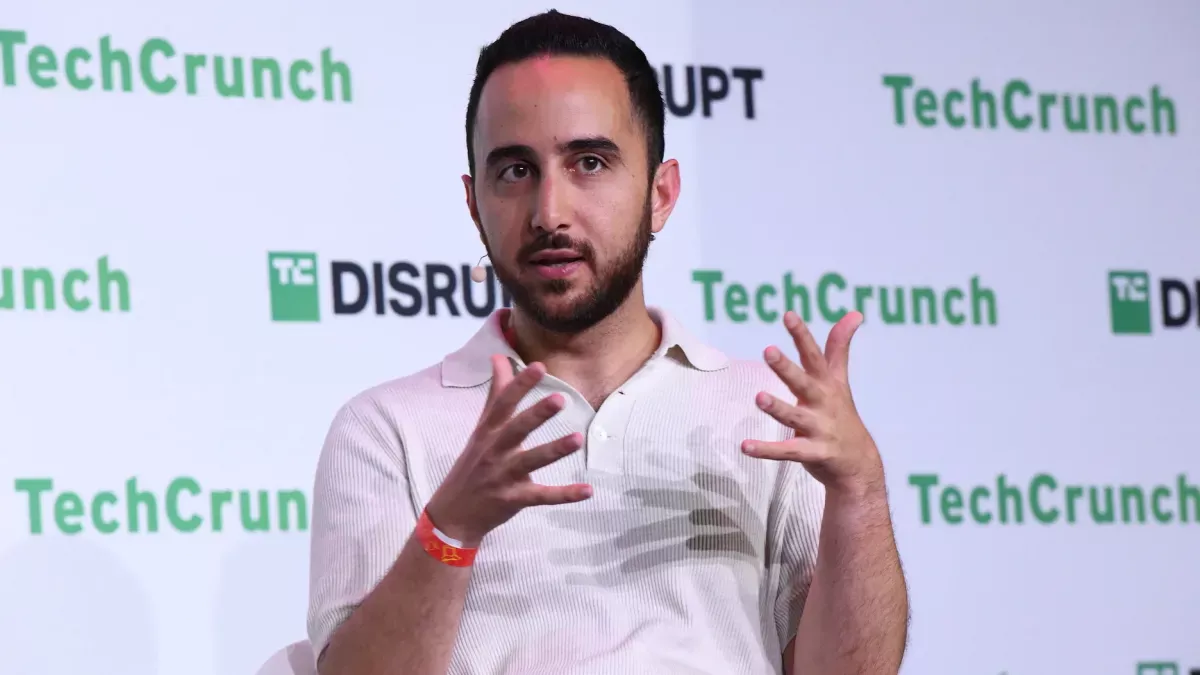
While many top-tier venture firms keep raising massively larger funds, Greylock Ventures, one of the oldest and most prestigious venture firms in Silicon Valley, is intentionally resisting the trend of ballooning fund sizes.
On Tuesday, the 61-year-old firm announced that it had raised a $1.5 billion 18th fund. The number is 50% higher than its previous $1 billion vehicle from 2023 and roughly matches the capital the firm raised across seed and flagship funds during the pandemic. Still, Greylock partner Saam Motamedi told TechCrunch that Greylock could have easily raised a “multiple” of that figure, suggesting the partnership decided restraint was the better path at a time when fund sizes across the industry keep climbing.
“Our mission is to be the most important partner to the most important entrepreneurs,” Motamedi said. The firm prides itself on introducing its portfolio companies to top engineers and potential customers, as it did for Baseten, an AI infrastructure startup that is now valued at $13 billion, after first investing in its Series A in 2022. But Motamedi said Greylock can offer that level of support only by keeping the number of companies it backs small.
The firm’s 10 partners make only one or two new investments each annually, a pace Motamedi said will result in roughly 25 portfolio companies from this fund.
Like its predecessors, the new fund will focus primarily on incubating companies from the earliest stages and leading seed and Series A rounds. This is where Greylock has built its reputation; the firm has a strong track record of starting companies from scratch, most notably security giant Palo Alto Networks, which launched inside Greylock’s offices 21 years ago, and the email security startup Abnormal, which Greylock incubated in 2018 and that was last valued at $5.1 billion.
Even so, Greylock doesn’t stick strictly to early-stage deals. It will also back high-potential, later-stage companies even if it “missed them early on,” Motamedi said. The firm’s 17th fund included three such growth-stage bets: Anthropic, Revolut, and Wiz.
The firm made its first investment into Anthropic when the AI company raised its Series F at a $183 billion valuation. “It’s the largest investment in the firm’s history,” Motamedi said.
Motamedi estimates that roughly 15% of the new fund will be deployed into later-stage startups, but he maintains that Greylock remains fundamentally an early-stage investor.
As proof, Motamedi said that when the partners meet every Monday to review their investment pipeline, the agenda consists primarily of people’s names rather than company names.
“We’re getting to know people even before they start a company. It’s really a bet on the person,” he said. “Often the company doesn’t even exist.’”
When you purchase through links in our articles, we may earn a small commission. This doesn’t affect our editorial independence.
>

Ofcom Investigating TikTok Over Child Safety Concerns

Scot Prem latest: Rangers in advanced talks for Partizan captain Dragojevic

World Cup 2026: Cristian Romero labels Gary Neville ‘stupid’ over criticism

-

 Fashion9 years ago
These ’90s fashion trends are making a comeback in 2017
-
Fashion9 years ago
According to Dior Couture, this taboo fashion accessory is back
-
Fashion9 years ago
Model Jocelyn Chew’s Instagram is the best vacation you’ve ever had
-
Fashion9 years ago
Your comprehensive guide to this fall’s biggest trends
-
Fashion9 years ago
A photo diary of the nightlife scene from LA To Ibiza
-
Fashion9 years ago
9 Celebrities who have spoken out about being photoshopped
-
Fashion9 years ago
Emily Ratajkowski channels back-to-school style
-

 Tech3 months ago
OpenAI CEO apologizes to Tumbler Ridge community

