
Politics
The House Article | Lord Nash: Tories Should Not Rule Out Reform Deal Before Next Election


10 min read
Conservative peer Lord Nash speaks to Matilda Martin about his successful bid to persuade the government to ban social media for children, plus why he thinks the Tories should not rule out an arrangement with Reform before the next general election
Every night at 7pm on the dot, Lord Nash follows his own self-imposed technology ban. The Conservative peer switches off his phone, puts it in a different room “and that’s it”.
Some may see this as an impressive display of self-control but the former education minister thinks it’s a no-brainer: “Well, it’s obvious, isn’t it? It’s just distracting. All the evidence is quite clear if you’re looking at the blue light late, you won’t sleep as well as you would. The best thing you can do in an evening is go out with some friends, have a few drinks.”
“I don’t advertise that,” he adds, quickly offering alternative pastimes for youngsters now denied TikTok, “or read a book, watch some telly, wind down rather than get hyped up looking at the flashing screen.”
Nash not only limits his screen time; he does not have social media and does not use WhatsApp. The peer is credited by many for forcing the government’s hand on banning social media access for under-16s.
Outgoing Prime Minister Keir Starmer may claim the ban as part of his legacy but the 77-year-old Tory was pivotal in forcing the change. It was his cross-party amendment to the Children’s Wellbeing and Schools Bill in January that showed the depth of parliamentary support for a ban. In the face of growing support from Labour MPs, Starmer – initially resistant – announced a consultation, before later fully backing the measure.
Its genesis might be a textbook example of an effective Lords, but the peer presents his success as the culmination of a collaborative effort just at the moment the time had finally come for the cause.
“One of the big triggers was my amendment, yes, but one of them,” he stresses, “and I’ve arrived on this scene later than a lot of other people that had been working away at this for many years. But it came together.”
He adds: “As one of my hereditary colleagues said, ‘John, you seem to have caught the wind’, and it went from there.”
But Nash thinks the tide was already moving in that direction. After co-founding the charity Future with his wife Caroline Nash, in 2008 it was appointed by the Labour government to sponsor Future Academies, a multi-academy trust with 11 schools across London and Hertfordshire.
Like many in Parliament, Nash engaged with Jonathan Haidt’s work on the subject, first attending a talk by the social psychologist. “I bought his book, and then I bought another thousand copies of his book, and gave them to all the staff in my multi-academy trust.”
Thanks to his involvement with schools, Nash says it was obvious to him just how distracting devices can be.
“They’re arriving at school tired, some of them not even turning up, and there’s been a lot of cyberbullying on social media.”
The government’s proposals for a social media ban include restrictions on specific platforms for under-16s, including Snapchat, TikTok, YouTube, Instagram, Facebook and X, but also restrictions on gaming services, live-streaming platforms and stranger communication.
Nash is also confident that likely PM-in-waiting Andy Burnham – one of the first prominent Labour politicians to voice support for a ban – will take this seriously.
Is there anywhere Nash would like to see Burnham go further? The peer is keen that the government ensures any approach is a “level-playing field”, so that tech companies “don’t try and run rings around Ofcom”. Ultimately, Nash would like to see a curfew on the ability of older teenagers to ‘infinite scroll’ at night.
Does the peer see tech companies attempting to ‘run rings’ around government? He thinks these giants can see the direction of travel, pointing to a new Ofcom chair who has indicated a bolder approach, and the hypothetical possibility of advertisers pulling out of the platforms.
What about government’s presence on these platforms? Would he like to see departments taking a stronger line on this?
“People generally, and politicians, spend far too much time in the immediate world of being on Twitter or X. Politics has become too immediate and too playing to the audience, minute by minute, and getting ahead of the story.”
Nash believes this reality has been exacerbated by social media. But does he think politics can function without it?
“Well, there’s politics, and there’s running the country,” Nash observes, “and they’re two totally different things.”
“You can’t run the country if you’re spending your time ‘Twittering’,” he adds.
While Nash’s social media campaign is a good example of the role of the Lords in policymaking, Burnham has radical reform of the Chamber in his sights. The former Manchester mayor told PoliticsHome last month that he would support early change to the House of Lords, including downsizing it.
“Maybe it could be smaller,” Nash says, before reminiscing on the views of his younger self. “I wrote my university entrance paper on reform of the House of Lords, more than 50 years ago.”
He cannot remember his exact argument but thinks it was along the lines of: “It’s absolutely scandalous we have an appointed second Chamber and we should have an elected second Chamber.”
But now Nash thinks that would be a “big mistake”.
“I took five Acts of Parliament through the Lords as a minister, and I saw at close range how forensically they analyse legislation line by line to check that it will actually work, which the Commons don’t do anymore, because they’re all busy sort of Twittering, and it works. It really does.”
Nash also has thoughts on Burnham’s recently announced No 10 North.
The peer believes “bringing more industry and jobs to the regions” is long overdue, but argues that the model of government needs to be redesigned “very fundamentally”. Ultimately, he feels a No 10 North cannot merely be moving civil servants up North or hiring a load of new civil servants in the region.
Whatever proposals Burnham brings to the table, he will be inheriting a Labour government that is floundering in the polls less than three years out from a general election and just two years after winning a massive majority.
“If we get a situation where the Tories and Reform have a majority between them, then we’d be daft not to work together”
The last two years have not been kind to the Conservatives either. The party faced an angry electorate in July 2024, and has struggled to regain popularity since.
However, a renewed optimism in recent months – despite a bruising at the local elections in May – has spoken of a Tory revival.
Nash is one of those more optimistic individuals: “There is a revival happening and Kemi is doing a great job. She’s thoughtful, she has a guiding star, clearly she’s principled, and that’s very important in politics.”
He adds: “You’ve had far too many prime ministers who want to be prime minister because they want to be prime minister, not because they have a great policy agenda they want to deliver for the country.”
The House asks if there is anyone in particular Nash has in mind with that latter statement. “Quite a few,” the peer laughs, “but I won’t name any.”
While Badenoch initially had a tough gig, Nash says, she has managed to “completely change the party and she’s taken time to develop policies thoroughly”.
The peer also has his own ideas about how the running of the state can be transformed. Earlier this year, he announced the Centre for Government Reform alongside Lord Agnew. The organisation will aim to recruit experience from outside politics and prepare them “to reform and run the British state properly”.
Nash describes the work Reform UK has done in reforming the machinery of the state as “good stuff”, noting this is something the Tories are also working on. Does Nash think the Tories are becoming more confident as Reform fails to build on the momentum it enjoyed last year?
“I think so,” Nash begins, before adding: “I mean, I like Farage, and I like a lot of what he’s achieved.” He claims that Tory and Reform policies are “pretty similar”, differing only on a few aspects.
“But whoever’s going to run the country in three years’ time has got to have a good, in my view, bench of people from outside the Whitehall bubble, to help them deliver the change.”
Nash did not take the traditional route to becoming a minister. He has never been an MP and was brought into his ministerial role in 2013 through the House of Lords. He started his working life as a barrister before moving into finance and co-founding a private equity firm.
As schools minister, Nash says he dealt with a lot of MPs, but he was surprised by their experience, or as he sees it, lack thereof.
It is something he also experienced first-hand: “When I became a minister, you’re just chucked in the deep end. It’s like first day at school – sink or swim, see how he does – which is terribly amateur.” He adds that the Centre for Government Reform would be willing to work with any party that wants help.
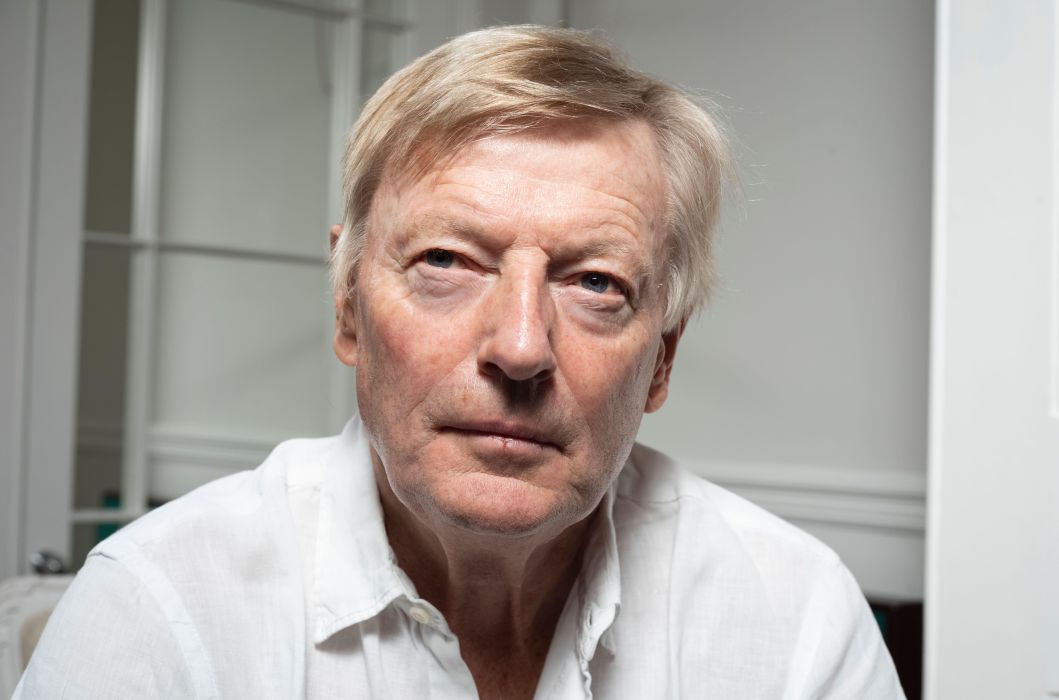
Nash is clearly not averse to Reform UK. Was he ever tempted to defect?
“N-,” he pauses. “Umm, no. I mean, I’m not saying it would never happen, but at the moment I’m…”
He changes tack: “My politics are slightly sort of eclectic. On education, I’d say I was a bit of a socialist, actually, but I’m very happy to help Reform.
“I’m not on any dark agenda, as a sort of Tory Trojan horse. I like a lot of their policies, and I like the fact that they are clearly prepared to be very radical, which is what we need, and I believe the Tories are too, so – as I did with social media – I’m happy to work with all parties to get stuff done.
“I’m not really a politician. I’m a businessman who got asked, because I was involved in academies, to be a schools minister.”
That’s not a firm ‘no’ to ever joining Reform then. What does Nash think about the idea of a Tory-Reform coalition?
“I can understand why at this stage, three years out, they’re going to say no. But when the dog sees the rabbit, let’s see,” he says.
“Certainly, if we get a situation where the Tories and Reform have a majority between them, then we’d be daft not to work together.
“If we have a situation where it becomes crashingly obvious from the voting a while out that some kind of arrangement a year out from the election or whatever… is going to make sure that we have a government, what people call right-wing, what I would call in many cases just common sense, then it’s definitely something that should be considered.”
Nash does not believe this is something that can be done “last minute” as that would see numerous prospective candidates being shafted.
“In certain circumstances, it would be daft to not come together if the alternative is to let in the opposition.”
Nash is speaking to The House the week after an unprecedented heatwave, and a week before another bout of hot weather, when conversations about maximum temperatures in workplaces – including schools – are bound to occur once again.
Does he think schools should have maximum temperatures? “Not really, no… We’ve become a little too risk-averse and protective. A bit of hardship is not a bad thing, and toughens people up a bit.”
>
Politics
Politics Home Article | Bring Back The Minister For London, Labour MPs In Capital Urge Burnham



6 min read
Labour MPs in the capital have called on incoming prime minister Andy Burnham to restore the role of minister for London.
Florence Eshalomi, who was a London Assembly Member before entering the House of Commons, said doing so would help London “work with all the regions to support economic growth”.
Burnham will officially replace Keir Starmer in Downing Street next week after a large majority of Labour MPs nominated the former Greater Manchester mayor to take over. Starmer will answer his final PMQs today (Wednesday) before a formal handover on Monday.
Burnham, who will be the UK’s seventh prime minister in a decade, has pledged to accelerate the devolution of power away from Westminster and Whitehall, “putting it in the hands of the people and places who can use it best, and in so doing creating a new sense of agency, possibility and hope flowing around the country”.
Central to his “Manchesterism” agenda is expanding the Downing Street operation and locating part of it in Manchester. ‘No 10 in the North’ will be the “nerve centre of a rewired Britain”, Burnham, who was elected the MP for Makerfield last month, has said.
The Parliamentary Labour Party broadly supports Burnham’s mission to shift power away from London as it seeks to combat the electoral threats posed by Reform UK and the Greens.
However, there is unease among some Labour MPs that the heavy focus on Manchester risks overlooking other parts of the country facing serious economic and social challenges.
At the same time, Labour MPs in the capital have urged the incoming PM to ensure that a greater focus on the city where he served as mayor does not come at the expense of London and the South East. As well as being crucial to the national economy, the capital has poverty of its own that should not be ignored, they argue.
As part of that push, two Labour MPs in London have told PoliticsHome that Burnham should appoint a minister for London when he assembles his first cabinet.
The role was last held by former Conservative MP Greg Hands in 2024, with Starmer deciding not to carry it forward when he entered power two years ago. The role is traditionally used when the London mayor is of a different political party to the party in government. The former is currently Labour’s Sadiq Khan.
Margaret Mullane, Labour MP for Dagenham and Rainham, said: “London often gets overlooked as it’s the economic hub of the country. But in seats like Dagenham and Rainham there are high levels of deprivation, and there are many other areas in the capital like it.
“When we had a shadow London minister, there was a central voice in Parliament speaking for areas like mine. Bringing this position back can only be a benefit.”
Eshalomi, the Labour MP for Vauxhall and Camberwell Green, added: “Andy is committed to ensuring that London and the rest of the country successfully support the challenge of the new government.
“This will work if we revitalise the important role of the minister for London to work with all the regions to support economic growth.”
Hands, previously a Tory MP in London, was positive about the idea of bringing back the position, arguing that it can “help the communication” between the London mayor and the PM. However, he added: “It would have to be done in a way that Sadiq Khan and the PM thought was helpful; if either are opposed, then they will just ignore that role.”
TheCityUK, which represents the financial services sector, said the incoming Labour government’s wider devolution agenda must include “a lens” focused “on powering up London’s economic strength and reflecting its role in nationwide growth”.
“As the hub for the UK’s world-class international financial centre, London plays a central role in creating jobs, investment and tax revenue. It also connects businesses, talent and capital with regional and national hubs across the UK,” said CEO Miles Celic OBE.
Burnham described London as “the world’s greatest capital city” in a speech late last month.
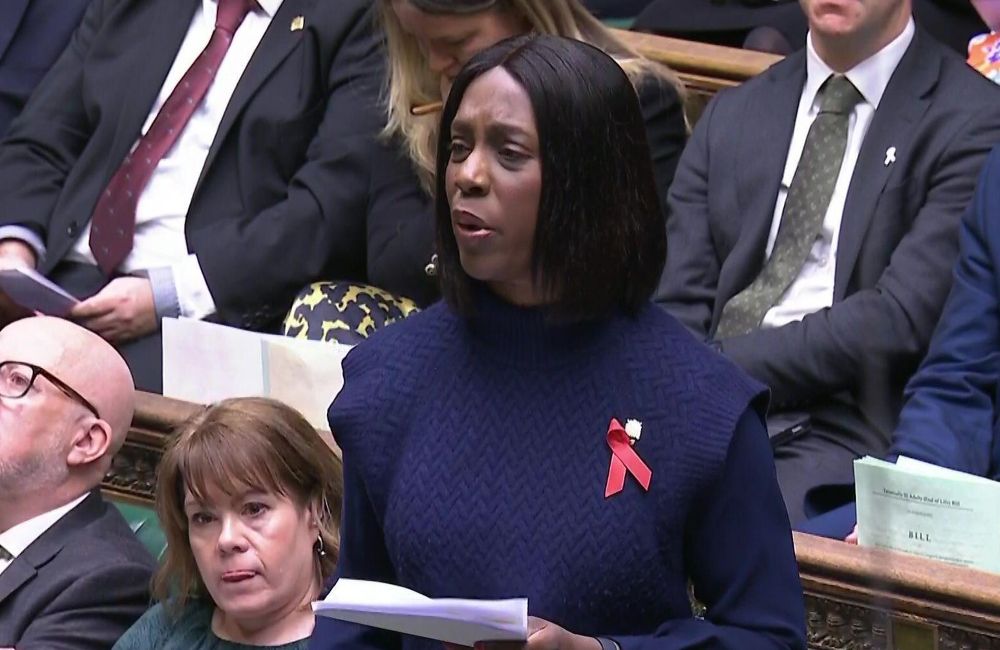
On Monday night, a week before becoming prime minister, Burnham met virtually with Labour MPs to take questions about his plans for power.
According to those present, he sought to reassure Labour backbenchers that his devolution agenda would focus on all parts of the country and hinted at creating a minister for coastal communities.
The Labour Rural Research Group has this week published a report arguing that rural communities have an important role in delivering economic growth, and cautioned Burnham against urban bias in his devolution plans.
Labour MP for Rushcliffe and vice-chair of the group, James Naish, said: “Rural communities shouldn’t be seen as peripheral to national renewal; rather, they are places where growth can be generated, productivity unlocked and national priorities delivered.
“The next phase of Labour in government should, therefore, recognise rural economies not simply as areas requiring support, but as strategic assets capable of driving growth.”
Perran Moon, the Labour MP for the coastal seat of Camborne and Redruth in Cornwall, has issued one of the strongest public warnings to the incoming Burnham administration about the risk of overlooking parts of the country like his.
“We’re at a really delicate moment,” he told PoliticsHome.
“Either we can reignite the north-south debate, or we can have a more sophisticated, nuanced approach to the challenges faced in inner cities vs suburban vs rural vs remote coastal communities.”
He continued: “There are significant challenges and opportunities in each, but they are different. They require separate approaches and in some cases, separate devolution arrangements.
“The concern has to be that the incoming administration has not quite got its collective head around the fact that Labour isn’t an exclusively urban party anymore. In fact, Labour doesn’t get re-elected without our rural and coastal MPs.
“So we need to dial down the regional division and significantly dial up engagement with areas where there may be a preconceived stereotype of what life is really like for those communities.
A Labour MP in a different coastal constituency was more positive about ‘Manchesterism’. They suggested that some of their colleagues were taking the term too literally, telling PoliticsHome it is “just a word for a politics which recognises that growth has to be driven locally, with local and national government making the right interventions to enable it.
“That can apply in areas like mine every bit as much (if not more) as in Manchester.”
>
Politics
The House | Inside Burnham’s ‘No 10 North’ Plans: “It’s Not Just About Creating A Second Westminster”


Illustration by Tracy Worrall

21 min read
Andy Burnham has pledged to create a ‘No 10 North’ in Manchester that would serve as the ‘nerve centre of a rewired Britain’. Will it work? How? Sienna Rodgers reports
Back in 2015, Andy Burnham was on his second attempt at winning the Labour leadership. Although ruthlessly mocked for overemphasising his outsider status as a Northerner, he was the frontrunner at first and Labour’s biggest donor, Unite, was ready to endorse him.
If you want our backing, the union said, you’ve got it – you just need to call us on Monday morning. But Burnham was reluctant to accept their funding. So, Monday came and went. Tuesday came and went, too. The “change candidate” released a statement to make clear he would refuse to be beholden to any one section of the movement. Unite turned to Jeremy Corbyn instead, and the course of history was forever changed.
On his third time trying, Burnham has no opponents – and he has not just stuck with his northern branding but put it at the centre of his forthcoming project as the sole Labour candidate to be our next prime minister.
The King of the North has not yet stepped over the threshold of 10 Downing Street, but already he is clear that fundamental to his government will be bringing power to – where else? – the North, made tangible with a second prime minister’s office in Manchester. “True to the motto of this city,” he declared there, in his first vision-setting speech as prime minister-in-waiting, “I am going to do things differently.”
While Burnham accepts the need to be in London when Parliament is sitting, his team say he wants to spend as little time as possible “closed off” behind that famous high-gloss black door. He hopes instead to show the country that decision-making does not only happen in Westminster – and he fully expects to be in the new ‘No 10 North’ at least one day a week.
The incoming prime minister has promised that this new office in Manchester will act as “the nerve-centre of a rewired Britain”. The plan is not to duplicate the work of London’s No 10 but to task No 10 North specifically with driving Burnham’s “devolution and growth agenda”.
Caroline Simpson, the Greater Manchester Combined Authority’s chief executive who is credited with helping him deliver fast growth in the region, will lead that work and be based there as his deputy chief of staff, while former Blairite minister James Purnell will run No 10 South.
Burnham would like to see No 10 North located at a government hub already under construction, the Manchester Digital Campus in Ancoats, but that is not due to be completed until 2032. Other sites in Greater Manchester fit the bill and interim arrangements are being made to get the new office up and running “as quickly as possible”, The House understands.
One Labour source says part of the thinking behind No 10 North is that, with lobby hacks based in Westminster, rooting part of the operation elsewhere could help limit leaks. Burnham’s team declines to address the claim specifically but stresses that unauthorised briefing and leaking is not an acceptable part of the culture – regardless of where staff might be based – and he is determined to stamp it out.
Some Labour MPs are freely criticising the No 10 North plan, of course. Hardcore Starmerites are particularly dismissive. “Yawn,” says one, who admits they are looking forward to life as a rebellious backbench MP under Burnham. “It sounds performative and seems like a gimmick.” Scottish MPs, meanwhile, like to point out that Burnham should try acknowledging “the real North”. (Plaid Cymru’s Rhun ap Iorwerth, First Minister of Wales, similarly said the proposal “means very little to the people of Wales”.)
Others are more welcoming. “Moving media to Manchester did make a difference for my constituents – the middle-class ones, anyway,” says a Labour MP with a northern seat, citing the BBC’s mass move to Salford as a positive example. “I’m interested to see how it would work in practice, but after years of the North being forgotten and left behind, I welcome anything that puts us firmly on the map and in the minds of No 10,” says another.
Many point out that it is at least evidence that Burnham has a story to tell the country about its future – something they argue Keir Starmer sorely lacked. There are concerns, however, about whether the move is purely symbolic. “What does it actually mean in practice? It will only be meaningful to my constituents if it leads to something real,” says a different northern backbencher.
“He will spend time out of London in a way that other prime ministers don’t, but this idea that it’s two days a week or whatever – it’s almost impossible to see how that will work”
Theo Bertram, director of the Social Market Foundation (SMF) think tank, reckons No 10 North’s symbolic value should not be understated. “That you could go and work in No 10, at the very top of government, without having to move to London, that is a positive symbol – even if that’s all it is,” he says. “The whole circus of Westminster will gear itself more to Manchester. To some degree, it already is.”
He adds: “What makes it not gimmicky is that this is pretty consistent with both his economic narrative and his political message, which are all about place.”
And while some have accused Burnham of unwisely moving a chunk of government to Manchester simply because that is where his family lives and is keen to stay, Bertram does not see this as a problem.
“We expect prime ministers to just up sticks, move their whole family – no matter what stage they’re at with their schooling – down to London and into this weird building that’s not really suitable to be a home, let alone the office of a head of state.
“Actually, if Andy Burnham can lead a more ‘normal life’ by still keeping some connection to where he feels at home, where his family might be able to stay, I think all of those things would be positive.”
Crucially, No 10 North – if done well – could allow the next prime minister to make clear his priorities in government and drive them through more effectively than he otherwise might have.
“If you go back to some of the things that Blair did with his policy unit,” explains Bertram, who advised both Tony Blair and Gordon Brown in No 10, “it was really clear that this wasn’t coming from a secretary of state – it was coming from the PM himself. The person who was working on it – say, Andrew Adonis, working on academy schools – what you knew is, this is the thing that the prime minister cares about and is driving.”
Whether No 10 North staff use email addresses ending in “no10.gov.uk” is one of those details that will be key to determining whether their work is taken seriously and prioritised, a Labour source argues.
Luke Sullivan, who was Starmer’s political director in opposition and previously worked as a spad to the chief whip towards the end of the New Labour government, makes a similar point.
“The most important words in Whitehall still are: ‘The prime minister wants’, or at least should be,” he says. He describes complaints frequently heard during the Starmer era about the obstructive nature of civil servants as “self-defeating” and “not reflective of what’s going on”.
“Where you’ve got really clear political leadership and ministerial direction,” Sullivan says, citing Ed Miliband in Desnz and Shabana Mahmood at the Home Office as examples, “those secretaries of state and those departments were seen to be delivering because they had clear guidance”.
Like Bertram, Sullivan thinks PMs being rooted in their seats is no bad thing. “Gordon and Tony spent significant chunks of time in their constituencies or in their constituency homes, and I think it made them better politicians for it,” he says.
“The geography is less important than the structures and clarity over people’s roles… I think that was probably one of those things under Keir where I’m not sure that was always clear – who had responsibility for what.”
Dave Penman, general secretary of the FDA trade union for civil servants, tells The House he appreciates the symbolic value of No 10 North and its contribution to Burnham’s vision, but raises concerns about the practicalities involved.
“Access to the prime minister – officials fight over it, politicians fight over it, because that’s really important to how you make government work. If you’re on a train or in the wrong location, or there’s some people there but not here, it’s just not going to work,” the union chief warns.
“Think of the amount of time you spend travelling, the demands on a prime minister, the need to be in the room with the prime minister… Him looking people in the eye is how things will actually happen.” Putting limits on this time “because that conversation is had with someone who’s supposed to be in Manchester when they’re in London, or London when they’re in Manchester”, he says, “will cause restrictions”.
“He will spend time out of London in a way that other prime ministers don’t, but this idea that it’s two days a week or whatever – it’s almost impossible to see how that will work, and it’s probably not what he means. I think he just means to demonstrate and show leadership.”
Penman is especially anxious about the impact on civil servants. “It’s a one-way ticket when you move out of London. It’s almost impossible to go back if you move permanently,” he explains, echoing a long-established principle based on the inaccessibility of the capital’s housing market.
“People have got to feel there’s a career for them – it’s not a one-move thing. There’s a potential for that around the M62 corridor, because you’ve got a lot of big conurbations… But it’s got to be thought through.”
He also flags that recruitment will need careful consideration: “If it’s 500 people [working in No 10 North], chances are there aren’t 500 people with the right experience already in and around Manchester.”
It has been suggested that Burnham could staff No 10 North with people already working in combined authorities around the country, who will be experienced in the relevant areas. “You can understand that’s an expertise you want,” says Penman reacting to the idea, but he asks: “Are they going to leave what they’re doing just now? Do they understand how you get government to work?”
Penman is keen not to be seen as too critical, saying: “You can get through all of this – it’s all doable.” But he cautions that Burnham must offer more clarity on the detail, adding: “He’s saying, ‘I want to do things differently.’ That doesn’t mean he’s worked any of that stuff out… You can’t just be on the vision stuff when you become prime minister. You’re a midterm prime minister as well – you’ve not got a lot of time here.”
Asked whether he is hopeful that Burnham will not talk negatively of the Civil Service, after Starmer declared in 2024 that “too many people in Whitehall are comfortable in the tepid bath of managed decline”, Penman warns Burnham: “You can’t have a situation where Whitehall becomes a term of abuse, and I think that’s the danger for him.”

Burnham’s team will not comment on security concerns over the plan to have him working in No 10 North every week. While the train would offer the best optics, it is thought that taking it at such regular times would present a risk. “The prime minister can’t just get on the 3.05 from Euston,” as Penman puts it.
Bertram suggests they would use a variety of transport methods and points out, referencing Blair’s constituency journey, “You’d be surprised how fast you can get from Sedgefield to London if you’ve got a police convoy the whole way.” They tend to drive far over the speed limit, he explains, as that is a sure way of telling whether any other drivers around are hostile.
Then there is the question of whether, as some suggest, the devolution brief would have to be removed from the Ministry of Housing, Communities and Local Government (MHCLG) where it currently lies, to avoid duplication of work. There is no clarity from Burnham’s camp so far on this point.
The relationship between No 10 North and MHCLG will need to be figured out. Hannah Keenan, associate director at the Institute for Government (IfG), says the two could work well together.
“What you have is a bit of the centre that’s holding you to account as a department, but also that’s helping you as MHCLG, who are right behind this devolution agenda, to bash heads around Whitehall: ‘Actually, no DWP, you do have to get on board with this thing that is happening over here, or we’re going to find a way to manage this bit of tension in that relationship,’” she says.
“It is fine and good for No 10 to be big enough to actually support the prime minister’s interest in his top priority, which sounds like it’s devolution,” Keenan adds, comparing this definition to the Starmer era’s ‘mission-led government’, which became less distinct over time. “The clarity of purpose that might have existed at the start of the Starmer premiership dissipated over the course of it,” she says.
In agreement with most of Westminster, Keenan believes “No 10 isn’t working” at present. The IfG strongly advocates reform.
“There are lots of different things you could do to try and get No 10 to work,” she says. “Taking out a bit of it, away from the incredibly fast hustle and daily disruption in Whitehall, putting it in Manchester, for example, and saying, ‘This is exactly what I want you to deliver, and I’m giving you all of my political power to do this thing’, it might work.
“He has to be really clear about why he’s doing it and what those people are doing, and he has to avoid any sort of duplication between No 10 North and No 10 South.”
She explains: “The worst version of this is having special advisers or officials in No 10 North and in 10 Downing Street all claiming to speak for the prime minister and not talking to each other. That is a recipe for disaster.”
“It’s all changed so much since Brexit, and Andy and James are going to have to get their heads around that”
Emphasising the importance of the ‘No 10’ name, as others do, Keenan warns: “In government, if it ends up getting called anything other than ‘No 10’, bad things will happen. The number of times that you would say, ‘No 10 have asked for this’, and if the response to that is, ‘No 10 or No 10 North?’, I worry that starts to get into a slightly dangerous, ‘Who actually has authority in that system?’”
She believes that the risk of second campuses in other departments is that they become a backwater, but here the primary danger is that it has “overlapping power”.
That is not so much of a concern when applied to the Treasury, however, as she acknowledges: “At the moment, there’s a big vacuum in terms of strategic priority setting around the prime minister, and the Treasury comes in and fills that.” Labour MPs who would like to see Burnham abolish the Treasury altogether (along with the Office for Budget Responsibility) say they hope a No 10 North will at least disempower it.
The IfG supports breaking up the Cabinet Office and creating a ‘Department of the Prime Minister and Cabinet’.
“You can stop using No 10 the building as No 10 the office, because that doesn’t work,” Keenan argues, as do many others. “It has been horribly underpowered for too long. Now, this isn’t going to fix it… You need to do much more fundamental reforms to the centre of government.
“You still have an enormous Cabinet Office that is quite amorphous and too large and unfocused and doesn’t really support the prime minister properly – what are you doing with that? But it is fine and good to bolster the power of No 10.”
Reform will not be without its significant challenges. A former senior civil servant highlights that while Burnham may prove to be a “lucky general”, benefiting from tough policy decisions taken by his predecessor, he and his chief of staff will have to adapt quickly to a very different machine from the one they inhabited during their last period in government. “It’s all changed so much since Brexit, and Andy and James are going to have to get their heads around that.”
Notably, Purnell was a member of the expert advisory group that helped guide a paper on how a new Downing Street department would work, published by the Future Governance Forum (FGF) in November last year.
Its proposal for a streamlined ‘Executive Office for the Prime Minister’ would see No 10 configured around four functions: a politics and strategy group; a policy and delivery group; a diplomacy and security group; and a private office. A communications team and political office would also operate across all four.
An Honest Day, the paper by (now outgoing) Labour Growth Group director Mark McVitie earlier this year, similarly recommended the creation of a ‘Department of the Prime Minister’ that would absorb the “useful functions” of the Cabinet Office, leaving No 10 to behave “as a centre of power within the wider department, much like the West Wing within the White House”.
So, could Burnham and Purnell succeed where Dominic Cummings and Morgan McSweeney failed? At a minimum, No 10 North answers FGF’s calls for a greater clarity of purpose and perhaps also clarity of roles and responsibilities. The House understands the Burnham operation is likely to go further than that.
A well-placed source describes as “nailed on” that it will implement at least some of the FGF’s recommendations on a new structure for No 10. The politics and strategy group is the function seen as best-suited to being based out of No 10 North. “I think they want to move a lot of senior people there. It’s real,” the source says.
Those who are cynical about No 10 North – and worried about talent problems – point to the 2007 relocation of Office for National Statistics (ONS) headquarters to Newport, considered by many to be a disaster. An independent review following the move away from London concluded that it had made the recognised national statistical institute’s output worse, due to a significant loss of experienced staff. About 90 per cent of London-based ONS staff chose to leave rather than relocate.
Optimists say the merits of other government hubs offer a better clue to No 10 North’s potential.
The Treasury’s Darlington Economic Campus, the DEC, has benefited from the presence of second permanent secretary Beth Russell. It comprises seven different departments and has open-plan floors, allowing civil servants from all of them to work beside each other, breaking down silos.
The atmosphere is said to be a positive one. Staff are motivated and proud to work there, particularly as equivalent jobs with similar prestige are not easy to find in the area – unlike in London. Above all, it is a modern, functional building, complete with air conditioning. The DEC is also just a short walk from the train station, enabling it to pull in talent from across multiple regions.
Conservative MP James Wild recently highlighted that Chancellor Rachel Reeves has worked from the DEC only twice in the last year, and junior ministers just once each. But others point out that many meetings are held by video call anyway, as it’s more efficient and there aren’t enough big meeting spaces in London.
A former senior No 10 figure calls the No 10 North idea “deeply impractical” because, they say, “No 10 only works with the PM physically present”. The view is shared by others quoted in this piece. One source even says McSweeney’s tendency to work from home on Fridays sometimes slowed down No 10.
But there is also the perspective expressed by IfG’s Keenan: that assuming everyone must be in the same building represents “quite an archaic way of thinking”.
“In some ways, the prime minister not being in Manchester and allowing that bit of No 10 space every week to do some of the thinking and the work that isn’t sucked into the daily crisis comms machine that 10 Downing Street can be is no bad thing,” she says.
“We have a capital city, and our capital city is London, and our ministers and our Parliament exist here, and stuff is going to happen here. That doesn’t mean you can’t ship other bits outside of London, but it’s just being honest about what that looks like, and what the purpose of each bit is.”
No 10 North has given rise to bigger questions over Burnham’s agenda. Devolution has been celebrated across both Labour and the Conservatives for years, yet not all Labour MPs are convinced.
Labour MPs who do not represent constituencies that currently sit in a mayoralty, and especially those in areas with no obvious path to mayoralties, are concerned that their locals will be disadvantaged by Burnham’s plans.
The model of devolution also matters. In a piece for The House, Labour MP Alex Mayer urges Burnham to “look almost anywhere but Greater Manchester” for inspiration. Her area – Bedfordshire, Luton and Milton Keynes – is evenly divided between parties, making disagreement the norm and consensus difficult. The London model, she argues, would be preferable for the next stage of devolution.
There are also those who doubt that Burnham’s priorities of promoting devolution and addressing inequality are, in fact, symbiotic. One Labour MP with a northern seat says they wonder whether his push for devolution could actually entrench inequalities, by giving revenue-raising powers to areas where this capability will be naturally limited by existing deprivation.
Even some in favour of a growth-first approach believe that devolution will work as an incentive structure for places around the country to improve, but means there will be winners and losers. The argument for devolution works best, they say, when framed as a Brexit-style drive for sovereignty and power – not fixing inequality.
Mirte Boot, principal research fellow and interim head at IPPR North, which has offices in Manchester and is seen as close to Burnham, has a different take.
“Right now, if you’re a mayor and you invest in a business park, and that creates higher wages in your area, or higher business rate income, that nearly all goes back to the Treasury. So, you don’t necessarily have an incentive or a reward for investing in growth,” she says.
Boot goes on to acknowledge: “Fiscal devolution does benefit those areas able to create growth. To ensure no area is left behind, what you then need is some kind of mechanism, like an equalisation mechanism, where after you’ve given away tax powers, you do some redistribution.
“Every local area is able to make those investments for growth, then there is a redistribution after a couple of years to make sure that the areas that are left behind aren’t left behind too far. Thirty countries already do this, and we can take examples from Germany and Denmark for how it’s done.”
Like Burnham, she argues that centralisation is at “the core of a lot of our problems in this country”, and highlights that of every £1 we pay in tax, 96p goes straight to the Treasury.
“It’s not just about creating a second Westminster here,” Boot says of No 10 North. “This is about working really closely with local leaders all around the country, but especially here in the North, in a different way.
“I think it will change the way that politics is done, and it may be quite uncomfortable for those used to having everything so concentrated, but it could lead to different decisions and a different style of governing that is probably more connected with the rest of the country.”
As for the potential problems of overlap with other departments, she adds: “Every department is going to have to give up some power. That is the reality of it, with devolution. Not just MHCLG, but also DfE, DBT and others – all of them will have to think about how to make that work, and we will have to overcome resistance to that.”
>

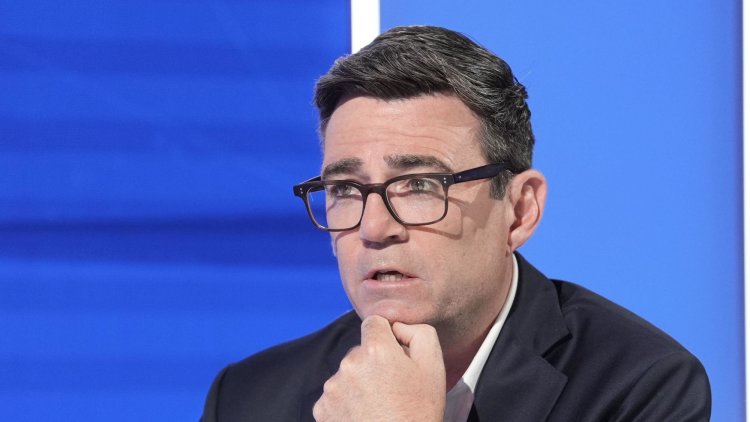
(Stefan Rousseau / PA Images / Alamy)

3 min read
London Labour MPs fighting to stop Heathrow expansion are privately hopeful that incoming prime minister Andy Burnham will cancel the project, with one saying they “wouldn’t put any money on runway three getting any further”.
The MPs, who argue that a third runway at the UK’s largest airport would have unacceptable environmental impacts, told The House that they are reassured by comments made by Burnham on the subject in January last year.
Speaking to Times Radio after Chancellor Rachel Reeves announced government support for the scheme, the then-Greater Manchester mayor said that the project “diverts infrastructure investment away from the North and traps it in London and the South East”.
He added that it was “a model for an ever-overheating UK economy, rather than a more balanced, levelled-up economy, which is what we would argue for”.
One London Labour MP said the remarks “have not passed us by” and that Burnham’s ascendancy brings “an opportunity for a change of conversation” about Heathrow expansion.
“It doesn’t make economic sense – it’s just a financially unviable scheme. I cannot see how it can meet our climate targets, but also I think it would be much better for regional growth [not to build it],” they said.
“If there’s going to be growth in air transport, it’s better to share that out with the regional airports, and I hope to get a good hearing on that from Andy.”
Another London Labour MP said that if Heathrow expands: “Manchester Airport loses out, currently Birmingham Airport loses out even more and therefore the hinterlands, the economies of those regions around those airports… I wouldn’t put any money on runway three getting any further.”
But Steve Race, the Exeter MP who co-convenes the Labour Growth Group, believes the next PM should press ahead with the work started by Reeves.
“As long as we can do it within our carbon budget, as long as we’re forcing airlines and airports to get to [improved] sustainability as quickly as they possibly can, then I think connectivity, trade and infrastructure development is absolutely key to this economy,” he said.
London mayor Sir Sadiq Khan remains resolutely opposed to the project, as he warns it would wipe out the improvements seen in London’s air quality over recent years.
One well-connected source said that as much as Khan and Burnham “don’t particularly get on” with one another, the new PM will not want to “go to war” with London’s mayor “unnecessarily about something he doesn’t really care about”.
But Burnham, they added, may still “take a more economically minded view of this than people might first assume”.
Burnham could, for example, back a rival expansion proposal put forward by the hotel tycoon Surinder Arora. Unlike the airport’s own proposal, Arora’s plan would avoid the M25 motorway needing to be tunnelled under Heathrow, as it would mean building a shorter third runway on the airport’s existing footprint.
“That would be a compromise,” said the source. “Andy is pretty into compromises.”
Heathrow CEO Thomas Woldbye has claimed that the UK “cannot realise its full economic potential without an expanded Heathrow”. The third runway, he added, “is privately funded by some of the largest investors in the world, widely supported by businesses, trade unions and communities across the country and it’s ready to go after years of scrutiny”.
A feature piece on Andy Burnham’s approach to UK infrastructure projects is now available to read in the print edition of The House magazine and will be published online on Thursday 16 July
>
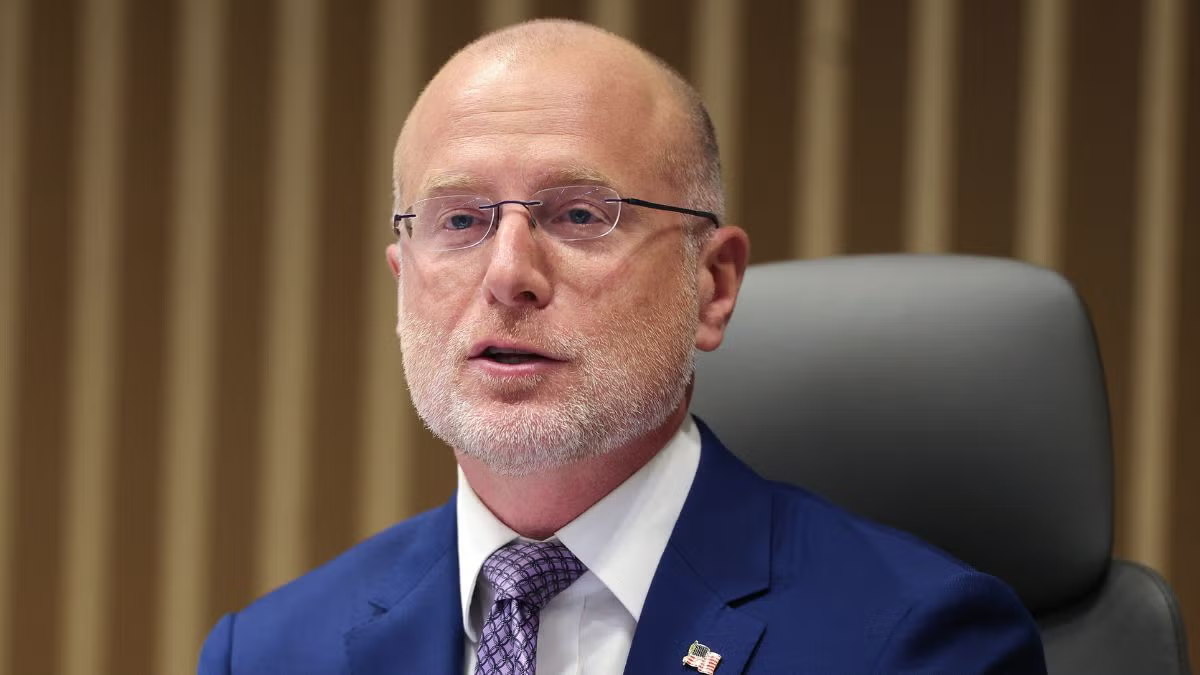
FCC Chair Doubts State AG’s Paramount-WB Lawsuit Will Succeed

Martin Sheen Signs With Paradigm

Natsume & Natsume Volume 2-10 Manga Review – Review

-

 Fashion9 years ago
These ’90s fashion trends are making a comeback in 2017
-
Fashion9 years ago
According to Dior Couture, this taboo fashion accessory is back
-
Fashion9 years ago
Model Jocelyn Chew’s Instagram is the best vacation you’ve ever had
-
Fashion9 years ago
Your comprehensive guide to this fall’s biggest trends
-
Fashion9 years ago
A photo diary of the nightlife scene from LA To Ibiza
-
Fashion9 years ago
9 Celebrities who have spoken out about being photoshopped
-
Fashion9 years ago
Emily Ratajkowski channels back-to-school style
-
 Tech3 months ago
OpenAI CEO apologizes to Tumbler Ridge community

