
Politics
Politics Home Article | The Green Party Is Rethinking Its Strategy For The Burnham Era


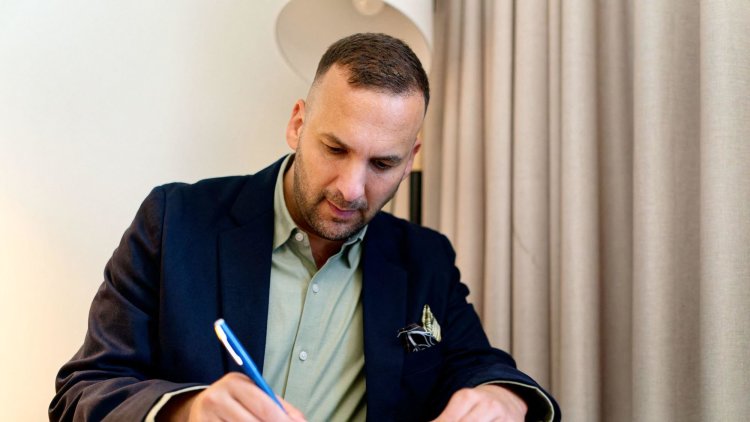
Zack Polanski’s Green Party is at risk of losing voters back to the Labour Party with Andy Burnham as PM (Alamy)

10 min read
As the Green Party embarks on a media blitz to challenge Andy Burnham ahead of his arrival in Downing Street, an internal strategic debate is intensifying over what his premiership means for the party’s future.
After months of benefiting from disillusionment with Keir Starmer’s Labour Party, Green figures are now grappling with a new political landscape. Burnham is viewed as a more formidable communicator who is potentially more capable of winning back progressive voters while also occupying some of the political territory the Greens have started to claim since Zack Polanski became leader last year.
That has prompted a wider discussion inside the party about everything from electoral strategy to political messaging, and even how the Greens define themselves in an increasingly fragmented five-party system.
According to research by Thinks Insight & Strategy for PoliticsHome earlier this month, Burnham will put Labour in a stronger position to win back voters it risks losing to Polanski’s Greens.
Professor Rob Ford, Professor of Political Science at the University of Manchester, agreed that Green voters are some of the “lowest hanging fruit” available to Labour under Burnham.
“They’re the lost Labour voters who are most likely to say they’re still open to voting Labour,” he said.
“They’re most likely to say that the reasons that they shifted away from Labour are that the party’s got too right-wing and they don’t like Keir Starmer, and they also give Andy Burnham very positive approval ratings. If you’re Zack Polanski or a Green activist, that’s bad news for you.”
A senior Green Party source agreed that Burnham presents a new challenge.
“We need to review our political strategy in light of Burnham, and part of the reason for that is we don’t yet know which version of Burnham is going to turn up,” they said.
“If it will be a Blairite prime minister… He’s also had a very different approach as Manchester mayor, and what he will look like in practice is a big question.”
The source added that the Greens could not assume the political conditions that fuelled their recent rise would continue.
“The path and the space the party has been in in the last few months is not necessarily going to be the same as it’s going to be in the next couple of years,” they continued.
One of the biggest questions now facing the party is whether its electoral strategy should evolve.
The Greens’ existing ‘target to win’ approach focuses activists and resources on constituencies where the party believes it has a realistic chance of victory under first-past-the-post, rather than spreading campaign efforts evenly across the country.
The success of that strategy has largely been built around Labour-facing urban seats, but some figures inside the party are questioning whether Reform’s rise means those priorities should change.
The senior Green source said there was an “ongoing discussion” about where the party should focus under Burnham.
“Any party will be recalibrating where it’s at, and there are big decisions for the party to make around where it focuses the next general election,” they said.
“So there’s a debate over whether the party focuses largely on urban seats that would otherwise be Labour, or does it also have a focus on seats that would otherwise be Reform.
“There’s a lot of concern in the party that we have got to play our role in stopping Reform, rather than the target seats that would otherwise be Labour. Otherwise, we’re not part of the solution of avoiding the huge risks of a Farage-led government.”
However, an official Green Party source insisted the debate should not be seen as an either-or choice.
“The Greens are performing well in elections in urban areas and also smaller towns,” they said.
“We are performing well in Reform-facing seats like Hastings and Kettering. Reform and Green voters both want change; both are fed up with the status quo. We are and will be making our case in both Labour and Reform-facing areas on why the Greens’ version of change is the one most likely to deliver real change. Policies such as rent controls, wealth taxes and public ownership are popular with Labour and Reform voters.”
They added that Green and Reform voters had both had enough of the “status quo” and “the super-rich getting ever richer”.
“On the substance of these issues, Burnham looks like he’s more likely to keep things broadly the same, with better comms,” they said.
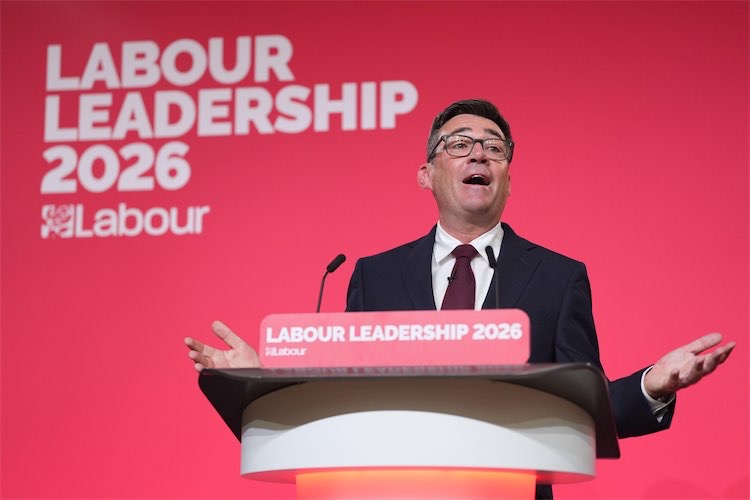
The challenge is not simply deciding which constituencies to target, but whether the party can sustain a national message while fighting very different opponents. Several figures described a tension between emphasising pro-migrant and multicultural politics in Labour-facing cities while leaning more heavily into anti-establishment arguments in seats where Reform is the principal challenger.
Although the national headquarters decides where campaign resources are allocated, local parties retain considerable freedom over campaigning tactics, cross-party deals and power-sharing.
Ford believes prioritising Reform-facing seats alongside Labour-facing target seats would be a “borderline delusional strategy” and an “act of electoral self-harm”.
“The Greens have actually been gifted in 2024, much like the Lib Dems were after the 2019 result, a really obvious electoral map,” he said.
“There are 40 seats where the Greens start in second place, which means there are 40 constituencies where they can start campaigning on day one of a general election campaign, saying if you don’t like the incumbent MP, we’re the most viable local alternative.
“Every single seat is currently held by a Labour MP, and most of them look quite similar to each other. They’re mostly city-centre urban seats. They’re mostly young. They’re mostly ethnically diverse.”
The Greens plan to use Burnham’s first weeks in office to draw political dividing lines with Labour and challenge him over issues including rent controls, wealth taxation, public ownership and arms exports to Israel.
According to an internal Green Party memo seen by The New Statesman, the party plans to specifically target Shabana Mahmood if she is appointed as Burnham’s chancellor next week, accusing her of “fiscal constraint and economic orthodoxy” while also taking aim at her controversial immigration reforms.
Sources close to former Green Party leader Caroline Lucas reject any suggestion that the party has shifted away from its environmentalist roots and more towards the left under Polanski. Instead, they argue that the party has always had a left-wing policy agenda, and its evolution in tone over the years has been strategic.
During Lucas’s most recent stint as party co-leader alongside Jonathan Bartley between 2016 and 2018, the emphasis was on gradually building credibility while Labour under Jeremy Corbyn occupied much of the radical left-wing political space. Under the leadership of Siân Berry, and later Carla Denyer and Ramsay, the focus increasingly shifted towards identifying winnable parliamentary seats and maximising representation at Westminster.
The arrival of former Labour members, campaigners and staff to the Green camp during Starmer’s premiership has accelerated that process. Party sources credit those arrivals with bringing valuable campaign experience that the Greens previously lacked. However, some also worry that Labour’s political culture does not always translate easily to a party that has traditionally built itself from local government upwards.
One senior source warned against narrowing the party’s appeal with more former Corbynites joining the Green Party each month.
“The traditional Green style is one that can have wide appeal, and it’s really important that the party does not create a narrow box for itself that’s just the ex-Corbynites, but that can have an appeal to a wide electorate,” they said.
Another senior Green figure said the debate was not about left versus right, but that the “genuine tension” in the party was about political strategy and to what extent the Greens should be thinking strategically about tactical voting and preparing for a progressive alliance with other left-leaning parties, including Labour.
They said there was a “degree of naivety” in the Green Party when it comes to electoral politics.
“There are a lot of people not understanding that we’re in new territory with a five-party system under first past the post,” they continued.
“People are voting tactically more than ever. People don’t go out and vote simply on the basis of politics and policies; they vote for who they believe can win, or who will keep out the people they really don’t want to see win.”
Party figures distinguish between formal electoral pacts (where parties agree not to run against each other in certain seats), which remain deeply unpopular inside the party, and a broader progressive alliance which could include parties working together after elections in councils, agreeing on common policy goals, or parties signalling they are open to governing together if the numbers allow.
The Greens began exploring electoral pacts with Labour during the Corbyn years, but were refused. They later struck an electoral agreement with the Liberal Democrats in 2019.
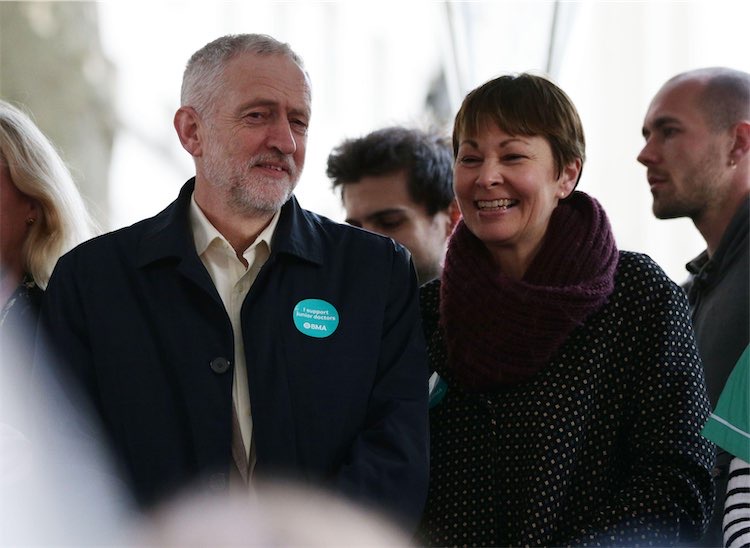
Another Green figure reflected on earlier attempts to work with Labour, saying that if Corbyn had agreed to do a deal with the Greens in 2017, “we might well have seen a Labour-led progressive government” and “wouldn’t have had the 10 years of disaster that we had”.
“But Jeremy just didn’t want to do it, and [then-Lib Dem leader] Tim Farron, at the time, who we met with, didn’t want to do it either, which was heartbreaking.”
There was considerable appetite among Green councillors for cross-party deals following the local elections in May this year.
Green Party councillor James McAsh has become the leader of Southwark Council, with the Greens forming a joint administration with the Lib Dems in the London borough. McAsh, who defected from the Labour Party earlier this year, told PoliticsHome that he and many other Labour-Green defectors were open to the idea of working with Labour going forward.
“Early indications are suggesting [Burnham] would favour a more collaborative approach,” he said.
“We could be in a place where Labour and the Greens are working together more closely in various places across the country.
“Working with the Labour Party is very much still an option in the future, because I think that the progressive bloc is out there, which includes people who are in the Labour Party, and rebuilding the coalition – that 50 years ago existed exclusively within the Labour Party – as a multi-party bloc is in my view the best way to defeat Reform.”
Enthusiasm from the Green leadership for formal national pacts has cooled in recent years, though Polanski has said he would potentially be open to working with Burnham in some capacity.
Former leader Lucas recently told The House she remained sceptical of reviving the idea of a progressive alliance, arguing the Greens’ “fingers have been really burnt by it” in the past.
An official party source said: “The Greens will always have a clear, distinct identity. Zack has made clear that he couldn’t work with Starmer and is open to seeing if there are areas where the Greens can work with Andy Burnham.
“But it is also becoming clearer through his early policy indications and appointments of many people associated with the Blair era that Labour doesn’t look like it’s serious in any way about shifting wealth and power towards working-class people.
“In terms of electoral priorities, it is to challenge everywhere, as a national political party, our message is a broad change message, with appeal across the board, to protect the planet, challenge the power and wealth of the super-rich and give it back to the people.”
Green figures broadly agree that Burnham represents a more serious political challenge than Starmer did. While there is widespread acceptance that the party will need to adapt its strategy, there is far less agreement over what that strategy should look like.
>


James Purnell was VC at UAL for four years (Alamy)
6 min read
A Labour government under Andy Burnham could scrap the student loan system and replace it with a graduate tax or stepped repayment system.
James Purnell, who has been picked as Burnham’s chief of staff and was vice chancellor (VC) at the University of the Arts London for four years, has previously been outspoken about reforming the student loan system.
Just two years ago, while Purnell was still VC, UAL commissioned London Economics to model several alternatives to the student loan repayment system, including scrapping the student loan system and replacing it with “a real graduate tax”. Purnell resigned from his role later in 2024 following months-long student protests against the university’s stance on the war in Gaza.
Nick Hillman, former government adviser and now director of Higher Education Policy Institute (HEPI), told PoliticsHome that Purnell was “the most active vice chancellor on the issue of student finance and graduate repayments” while heading up UAL.
The current student loan system was created under the Conservative government, but the issue exploded onto the headlines earlier this year after Chancellor Rachel Reeves insisted that her decision at the November Budget to freeze the threshold at which ‘Plan Two’ graduates start to pay back their loans was “fair and reasonable”.
In a blog for the HEPI think tank in 2024 titled Fixing higher education funding should start with student loans, Purnell argued that “the whole [higher education] system desperately needs reform to ensure the sector’s long-term sustainability”.
As Purnell wrote in his essay, one option is to “scrap the student loan system entirely and replace it with a real graduate tax”.
“A tax tied to income, which no wealthy graduate would be able to pay their way out of, would be genuinely progressive,” Purnell said.
During his campaign for Labour leader in 2015, Burnham pledged to replace tuition fees with a “graduate tax” if he was elected.
Another option mooted by Purnell that, in his words, “would not require such a major overhaul of the system” is the introduction of a stepped repayment system.
Under the changes, higher earners would make repayments for more of the maximum repayment period, thereby subsidising a shortfall in repayments from low and middle-earning graduates. This would effectively mean that higher-earning graduates would pay back more money for longer.
Both of these methods would, Purnell argued at the time, allow for the reintroduction of maintenance grants, a move the Labour government later committed to in 2025.
Hillman told PoliticsHome: “On paper, the stepped repayment model is very progressive: the better you do from your education, the more you repay.”
“But it’s making the student loan system much more like a tax because it’s much less related to how much we borrow. It’s almost based on the idea of how much money can we squeeze out of the best-paid graduates? And it’s breaking that link with their actual borrowings.”
However, Hillman said that the context now has completely changed from when Purnell was doing this work two years ago.
“All those people who were complaining about the current student loan system earlier this year – and of course there was a Treasury Select Committee report on this just last week – they’re all arguing the loan system should become more like a loan and less like a tax.”
Hillman added: “The stepped repayment model is very similar to graduate tax, but the first six months of this year, the argument was all the opposite. It was ‘we hate the high interest rates. We hate the fact that we’re never going to pay off our loans’.”
Purnell also argued in 2024 that “uprating maintenance loans in line with inflation is something that can and should be done immediately”.
Speaking on a panel in the same year, he said that when he speaks to students, their “biggest” worry is “money now, it is not actually what they’re going to repay in the future”.
“The fact that maintenance support hasn’t kept pace with the cost of living is something that has to be fixed and I am amazed that it hasn’t.”
“In the report, there’s an option which looks at bringing in the living wage for students effectively… so there is an option there.”
In 2025, the government confirmed that maintenance loans for students would rise with inflation from the 2026-27 academic year, but MoneySavingExpert.com founder Martin Lewis warned the move was “still not enough”.
Speaking on a Times Higher Education (THE) podcast in 2024, Purnell insisted: “We need to help students while they are studying. The cost of living has become a really damaging barrier for too many students, particularly in London, and the amount of money that students get has not kept up with the cost of living crisis in the way that other areas of public spending have.”
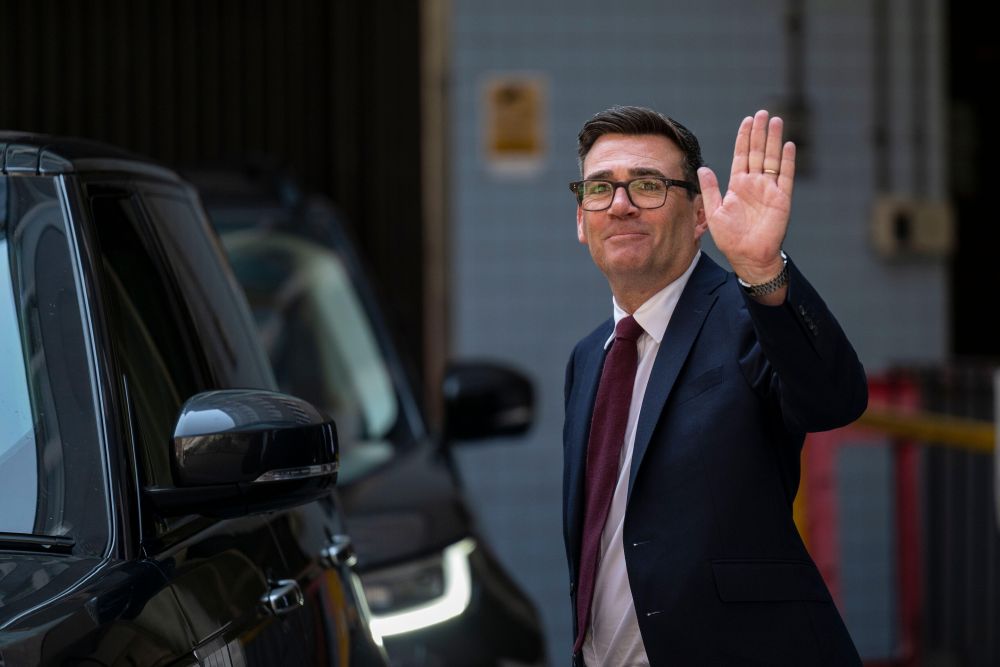
VC of Manchester Metropolitan University Malcolm Press told PoliticsHome that incoming Prime Minister Burnham “is a very very well-known character in all sectors across Greater Manchester” and on campus “frequently”.
Press added that Burnham has “been very interested in student housing and also in student transport”. Press has also worked with Purnell in the past, and told PoliticsHome he believes Burnham’s incoming chief of staff Purnell is “in probably a unique position of having served as both vice chancellor of the university and a government minister”.
“So he’s well placed to understand the sector and well placed to understand the pressures that government ministers are under.”
Purnell’s influence on the higher education system in England stretches back to the last Labour government. In 1999, he co-authored a paper while in the No 10 policy unit for prime minister Tony Blair, recommending an increase in the number attending England’s universities, a recommendation that would later be adopted as government policy with the 50 per cent target.
In 2024, Purnell said that the country had “met the aspiration for a very large number of people to go to university”, but he feared “that that is now at risk partly because some politicians are going off the consequences of those decisions that they were a part of making in the first place when they are faced with the reality of what it means.” He also raised concerns about affordability and the knock-on impact on quality of teaching and class sizes.
Purnell has also previously called for increased investment in the teaching grant, with a more proportionate balance between money coming from the teaching grant and fees.
>
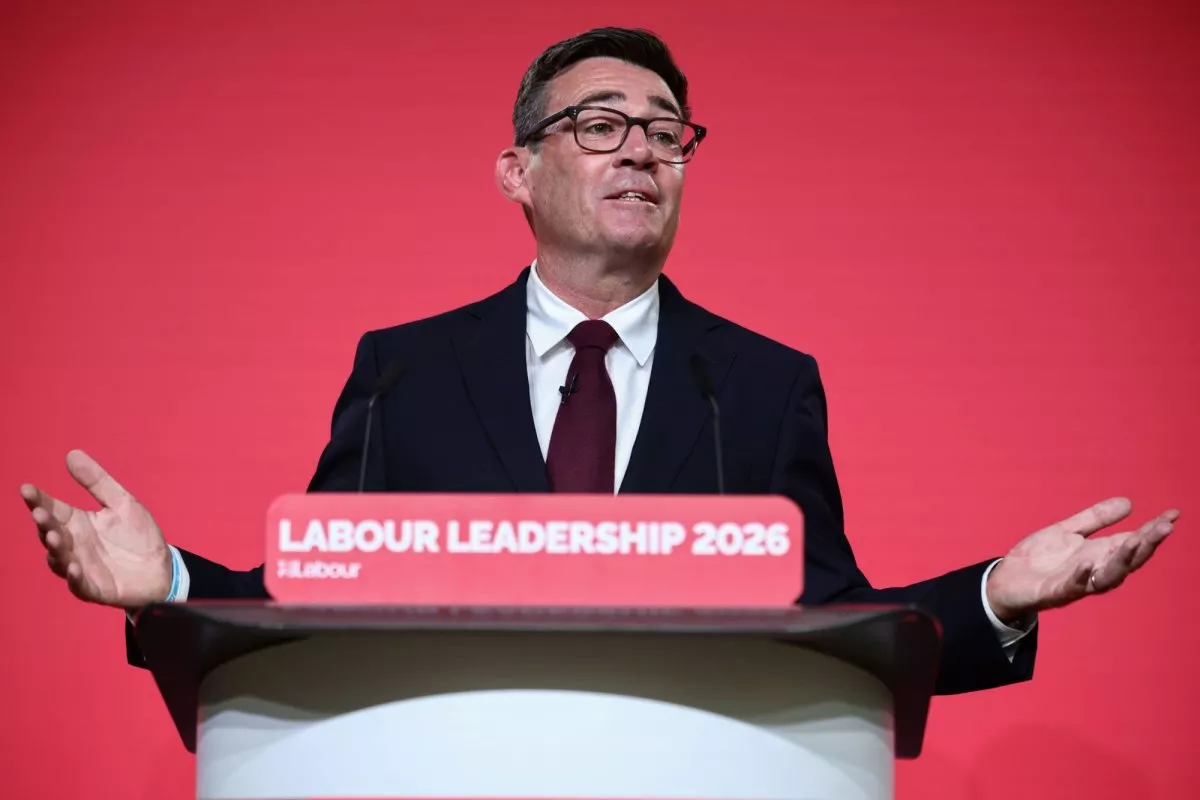
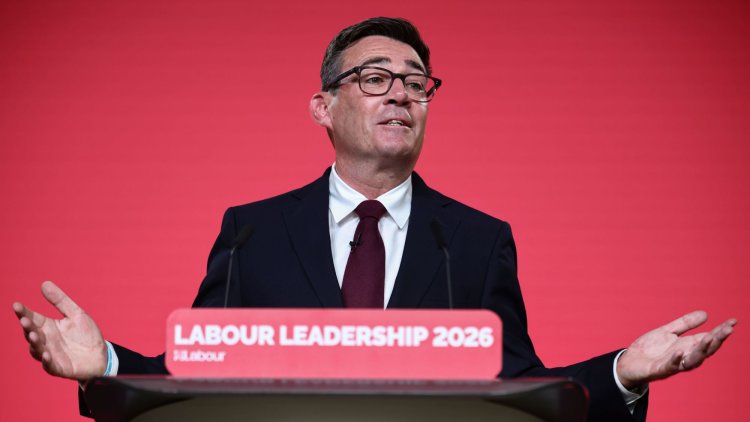
Andy Burnham speaks after being confirmed as the Labour Party’s new leader (Alamy)

4 min read
Andy Burnham has said this is the Labour Party’s “last chance to change” in his first speech as the party’s new leader.
At a special party conference in central London, Burnham said: “I will work to build a new politics. The country is crying out for it. We might enjoy the point scoring against others. The public don’t.”
“How can politicians point fingers when living standards are falling and politics as a whole isn’t working for them? It infuriates them and makes them switch off.”
He added: “Let’s be honest, everybody: this is a last chance to change, and we must take it together, united together.”
After two previous attempts to become Labour leader in 2010 and then 2015, he became Labour leader unopposed after winning nominations from 369 of the party’s 403 MPs. However, he will not become Prime Minister until Monday.
The MP for Makerfield returned to Westminster last month after a by-election victory which led to Keir Starmer’s resignation just days later.
Burnham paid tribute to Keir Starmer for transforming the party after the crushing 2019 general election and said he “put Labour back in a position to change people’s lives”.
The new Labour leader said the only way to beat the “new right” is to end factional in-fighting.
“Fighting to eradicate it and the insidious briefing culture that goes along with it will characterise my leadership,” he promised.
“In future, when a Burnhamite walks into a bar,” he said, joking about a well-worn Westminster gag, that they will say: “Great to see you. We don’t like factional politics here.”
Burnham promised to set an “authentically” clear direction for the party, accusing his Labour predecessors of being too much like the Conservatives.
He said: “As your leader, I will set a direction that is distinctively Labour. We won’t try to out-Green the Greens or out-Reform Reform or doing what we’ve done in the past of wearing too many Tory clothes. Let me tell you, I’m quite happy that Kemi doesn’t approve of my wardrobe choices because I’m not keen on theirs either.
“From here we do it differently. We win by being us, boldly, confidently, authentically us. Labour. That’s how we win. I want people to understand the thinking behind the political direction I set so people can see the decisions we take and the reasons why.”
With mounting speculation about who will be in his Cabinet and who will be Chancellor, the Labour leader says he has made no decisions yet.
“When I have you will see that it reflects all parts of our party, all communities and it will reflect your own place within this great place within this great party of ours,” he said.
“A stronger, more united Labour Party building up a stronger and more united Britain.”
Burnham pledged to “help places that built our party” and accused Margaret Thatcher of stripping power from Labour’s heartlands in the 1980s.
“Change starts with honesty. We must recognise that this generation of politicians, myself included, have failed to challenge a political culture and an economic model that simply doesn’t work well enough for ordinary people.
“Four decades of the neoliberalism that begun in the 1980s have not been kind to the places that built our party, nor to the communities across the UK, nor to the communities across the UK in rural and coastal areas.”
Burnham pledged to be a “pro-business” leader and to “re-industrialise” as he set out his vision for Britain.
“We want to give your area more power to build the council and social homes that you desperately need, more power to improve your high street, backing local businesses such as the pubs and the shops that bring them to life.
“And make no mistake, everybody, I will be a pro-business leader of the Labour Party as I was a pro-business mayor of Greater Manchester… and as part of that more power to re-industrialise.”
Burnham has promised to be a leader for “all places” of the UK as he laid out his devolution agenda.
“We will take power back from Westminster and Whitehall and give it to the place where you live. More power over life’s essentials so you can make them work better, and more affordable for people.”
The new Labour leader said he had made mistakes throughout his political career, but promised to give this new job “his all”.
“I haven’t got everything right, and I’m sorry for when I’ve fallen short. But I’ve always given it my all and I always will.”
He added: “I won’t change. I have a style, it’s my style, I will always stay close to the ground. Close to the people. Hopefully, still in my season ticket when the new season starts.”
>


The use of success profiles will be scrapped under changes to civil service recruitment (Alamy)
2 min read
Exclusive: The Cabinet Secretary is planning to overhaul civil service recruitment, scrapping the use of success profiles.
PoliticsHome understands that there will be a new model introduced that “emphasises skills and expertise”.
The expectation is that the move will more closely align civil service recruitment with the private sector and bring in more talent, PoliticsHome understands.
Currently, the civil service recruits using so-called “success profiles”, made up of “ability”, “technical”, “behaviours”, “strengths”, and “experience”. The civil service also has a set of defined “behaviours”, which “when demonstrated, are associated with job success”.
In an email to staff on Friday, Cabinet Secretary Antonia Romeo said: “We are going to start by scrapping success profiles, instead introducing a new model that emphasises skills and expertise – and will make further changes over the coming months.”
Romeo also said “to deliver for the public, my focus – and that of your Permanent Secretaries – has been to build a world-class civil service that is fit for the future.” The head of the civil service also referenced the Review into the organisation, performance and transformation of the permanent civil service”.
“The Review will define a clear vision for the civil service as a world-class organisation, delivering a onece-in-a-generation transformation.”
Romeo was appointed as the new Cabinet Secretary in February and is the first ever woman to hold the role. She replaced Sir Chris Wormald, who was awarded a peerage by the outgoing Prime Minister Keir Starmer earlier this week.
The civil service’s approach to recruitment has faced criticism in recent years for its rigidity, with the Institute for Government previously recommending the replacement of success profiles in order to test “more robustly whether applicants have the skills they say they do”.
The think tank has also criticised the current approach discouraging external candidates to apply for roles in the civil service.
The Cabinet Office has been contacted for comment.
>

Politics Home Article | The Green Party Is Rethinking Its Strategy For The Burnham Era

York Knights' winning run ends with 30-22 defeat to Toulouse

France 4 – 6 England

-

 Fashion9 years ago
These ’90s fashion trends are making a comeback in 2017
-
Fashion9 years ago
According to Dior Couture, this taboo fashion accessory is back
-
Fashion9 years ago
Model Jocelyn Chew’s Instagram is the best vacation you’ve ever had
-
Fashion9 years ago
Your comprehensive guide to this fall’s biggest trends
-
Fashion9 years ago
9 Celebrities who have spoken out about being photoshopped
-
Fashion9 years ago
A photo diary of the nightlife scene from LA To Ibiza
-
Fashion9 years ago
Emily Ratajkowski channels back-to-school style
-
 Tech3 months ago
OpenAI CEO apologizes to Tumbler Ridge community

