
Sports
Spain can claim global football dominance with unprecedented men’s and women’s World Cup double


As the gleeful mayhem of Spain’s 1-0 victory over Argentina in the men’s World Cup final settled around MetLife Stadium, three-time Ballon d’Or winner and reigning women’s World Cup champion Aitana Bonmatí approached Spain captain Rodri. Bonmatí had taken in this edition of the World Cup as a pundit and approached the midfielder with compliments in mind and a microphone in hand.
“You’re a fundamental pillar of the national football team. I think you’ve grown a lot in the tournament, and your last two matches especially have been spectacular,” Bonmatí told Rodri, who won the Ballon d’Or in 2024 and earned the Golden Ball at this World Cup, an honor given to the best player in the tournament.
“For me, it’s admiration to Aitana for what she’s achieving,” he replied to Bonmatí, stadium bystanders and the DAZN audience watching along. “Trying to replicate, see if I can get to her level.”
The 30-year-old captain called the road to accomplishing what Bonmatí has — three consecutive Ballon d’Ors, four Champions League titles, and a glut of domestic trophies with Barcelona — difficult but impressive.
This moment between Aitana Bonmati and Rodri 🇪🇸#WorldCup pic.twitter.com/DvJIQmuJKQ
— DAZN Football (@DAZNFootball) July 20, 2026
Spain is the only country in the world in which that exchange could happen. For the first time in the history of the World Cup, the reigning champions of the men’s and women’s teams represent the same country. The men’s team doubled its World Cup victories on Sunday, following up on its 2010 World Cup title won in South Africa. The women’s side earned its first star at the 2023 World Cup in Australia and New Zealand, defeating England 1-0.
Both Bonmatí and Rodri having won the Ballon d’Or, an honor given to the player voted best in the world, adds another layer of sheen to Spain’s flex. Both national teams have also reached their respective European championships in their last campaigns, albeit to different results. (The men’s side won and the women’s side lost. Both played England.) The men’s and women’s national teams have had different experiences within their federation, but their emerging epoch is not coincidental. It is the fruit borne from years of dedication to development and a persistent application of a clearly defined playing style that cuts across the ages and genders of Spain’s program.
Brazil, Germany, Argentina, France, and Uruguay have all won more men’s World Cups than Spain. The United States and Germany have won more women’s World Cups than Spain. (In the early 2000s, Germany nearly accomplished the double, but the men’s team placed second in their 2002 World Cup final against Argentina, while the women’s team claimed their first world championship against Sweden in 2003.) True dynasties may have been extinguished by the rapid evolution of modern football, particularly on the women’s side, but a new bar emerges from Spain’s most recent achievement. A footballing nation should be judged by the development and success of its men’s and women’s teams.
Spain women’s victories have at times come despite a lack of support from the Royal Spanish Football Federation, and nowhere was this struggle clearer than La Roja’s 2023 World Cup campaign. It began with 15 players protesting the federation and refusing to be called up to the national team until their demands for structural change were met — namely that the federation dismiss former Spanish national team manager Jorge Vilda.

Ahead of the 2023 World Cup, 15 women’s players protested the federation and refused to be called up to the national team until their demands for structural change were met. (Patricia Pérez Ferraro / Getty Images)
At that World Cup, the women’s team’s triumph was immediately overshadowed when then-federation president Luis Rubiales forcefully kissed forward Jenni Hermoso on stage during the medal ceremony that followed the match, igniting a global protest against Rubiales and a women’s rights movement. Spanish striker Borja Iglesias also joined the protest in support of Hermoso, refusing to report to the men’s national team while Rubiales was still employed as the federation’s president.
Rubiales resigned as president three weeks after the incident and was later found guilty of sexual assault. Similar to the U.S. women’s national team leveraging their 2019 World Cup victory toward their fight for equal pay, so, too, did Spain to secure change and sustainability within their program. They reached the final of the women’s Euros last summer and have already qualified for the 2027 World Cup.
Next year’s tournament in Brazil could be Spain’s first time competing on the global stage with fewer systemic hurdles. They are ranked No. 1 in the world, arguably the team to beat, and the U.S. women’s national team will have a chance to prove themselves worthy opponents in October when they play two friendlies against the reigning World Cup champions.
On the field, Spain have proven that their training methods, philosophy and culture can be applied to anyone and yield results. Part of that philosophy relies on a devotion to repetition; the more experience a player has doing a specific action, the more comfortable they are doing it, including in high-pressure scenarios. The Spanish women have appeared in six U-17 World Cups out of eight total, winning in 2018 and 2022. Players like Salma Paralluelo, Cata Coll, Claudia Pina, and Vicky Lopez, all regular features on Spain’s current senior team, have been on those title-bearing rosters. (Spain men have competed in six out of 20 U-17 World Cups from that age group but are yet to win one.)

Salma Paralluelo has seen success at several levels for Spain’s national team. (Catherine Ivill / Getty Images)
Paralluelo is the only Spanish female footballer to have won a U-17, U-20, and a senior women’s World Cup. This says nothing of youth European championships and the domestic hardware she’s earned with her club, Barcelona, whose renowned La Masia youth academy bolsters not only the club’s developmental pipeline but one for the country, too.
Paralluelo’s rise also illustrates another more recent element of Spain’s approach, employed increasingly across Europe, that has proven successful: recognizing the talent of immigrants, an intentional exploration of which the federation has not historically done.
Paralluelo’s father is from Spain, and her mother is from Guinea-Bissau in West Africa. Lopez’s father is Spanish; her mother Nigerian. Lamine Yamal’s father is from Morocco; his mother is from Equatorial Guinea, both of which once existed under Spanish rule. Forward Nico Williams, who provided the game-winning assist in Spain’s World Cup victory on Sunday, was born to two Ghanaian parents who migrated across Ghana and through the Sahara Desert before settling in Spain. Williams’ older brother, Iñaki, represented Ghana at this World Cup.
However polite Rodri’s response to Bonmatí’s compliment might have been, it was a powerful moment illustrating Spain’s collective — and growing — influence as a global footballing superpower. The women’s side have lit the path in Spain’s modern quest for dominance, from club to country to individual awards. Until another country can challenge them in this arena, it will be extremely difficult to slow them down.
>
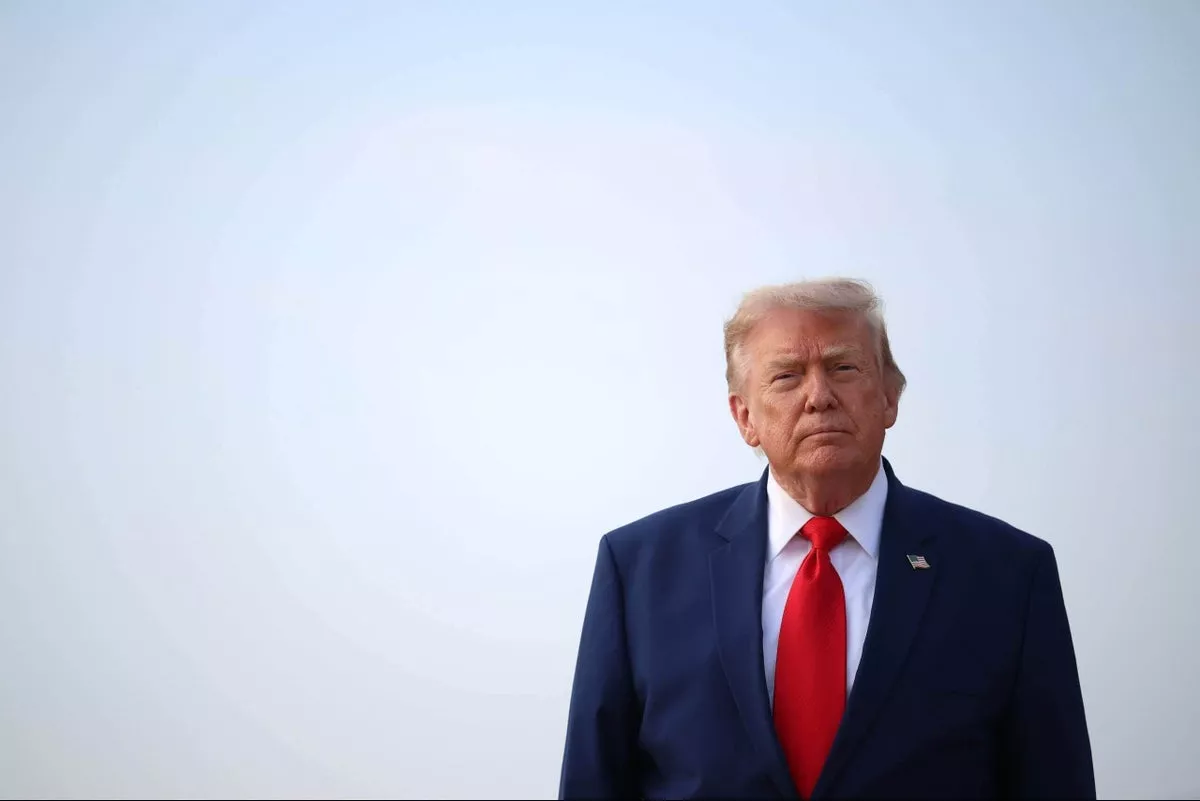
President Donald Trump took a playful jab at the New York Mets’ 2026 woes and praised the Atlanta Braves’ season Wednesday at an event in Marietta, Ga.
Trump was joined onstage by former Braves manager Brian Snitker and Mike Plant, the president and CEO of Braves Development Company.
“So, I like baseball,” Trump said, “but this guy (Plant) has done such a great job. You know, the Mets have the highest salary in baseball, and they lose all the time. And I say, ‘Maybe we can steal this guy.’ …
“You don’t realize how good he is. There are teams like that, where they never go down. Then you have other teams — ‘We’re rebuilding.’ They’ve been rebuilding for years. I don’t want to mention teams cause I know all the owners. They’re all friends of mine. I’ll get myself in trouble. This guy never rebuilds. He just stays at the top. He’s amazing.”
Trump introduces Mike Plant and Brian Snitker: “The Mets have the highest salary in baseball and they lose all the time. And I say, maybe we could steal this guy! But the way the Atlanta Braves have been managed for years — he’s the CEO of the Atlanta Braves.” pic.twitter.com/n8zSTgghHL
— Aaron Rupar (@atrupar) July 22, 2026
Plant operates primarily on the real estate arm of the Braves, overseeing projects like The Battery and the club’s spring training complex. Alex Anthopoulos is Atlanta’s general manager and president of baseball operations.
As the only publicly traded team in Major League Baseball, the Braves, operating as Atlanta Braves Holdings, Inc., have several offshoots, including Braves Development Company.
The trio was serenaded by fans doing the “Tomahawk Chop” gesture, a popular celebration in the region that has been criticized for being insensitive by some Native Americans.
“They say you’re not allowed to do that,” Trump told the crowd. “Do it.”
Trump himself took part in the gesture, if ever so slightly.
In 2021, ahead of Game 1 of the World Series, commissioner Rob Manfred defended the Braves’ name and continued use of “the Chop.” The name and gesture have continued even after other teams, including the Cleveland Guardians and the NFL’s Washington Commanders, changed their names.
“It’s important to understand that we have 30 markets around the country,” Manfred said. “They aren’t all the same. … The Native American community in that region is wholly supportive of the Braves program, including ‘the Chop.’ For me, that’s kind of the end of the story. In that market, we’re taking into account the Native American community.”
Snitker, 70, retired at the end of last season after a lengthy stint as the club’s manager. Over his time, he helped guide the Braves to six consecutive division titles, a National League pennant and a World Series championship in 2021, the organization’s first since 1995.
He remains part of the club in an advisory role. In April, Snitker was inducted into the Braves Hall of Fame. He is not in the Baseball Hall of Fame, as Trump erroneously said.
The duo’s appearance comes one day before the Los Angeles Dodgers are set to visit the White House following their 2025 World Series win. It will be Los Angeles’ second visit under the Trump administration.
Los Angeles also visited the White House in 2021 during the Biden administration.
Trump is a noted baseball fan and recently took a stance in MLB’s labor talks, siding with the owners on the subject of a salary cap, which the MLB Players Association has strongly opposed.
“If you don’t have a salary cap, you don’t have a sport, because they can’t help themselves,” Trump told reporters Friday aboard Air Force One, per audio published online by the White House. “They should have done it a long time ago.”
He added it was “shocking, frankly, that they didn’t put a cap on many years ago.”
>
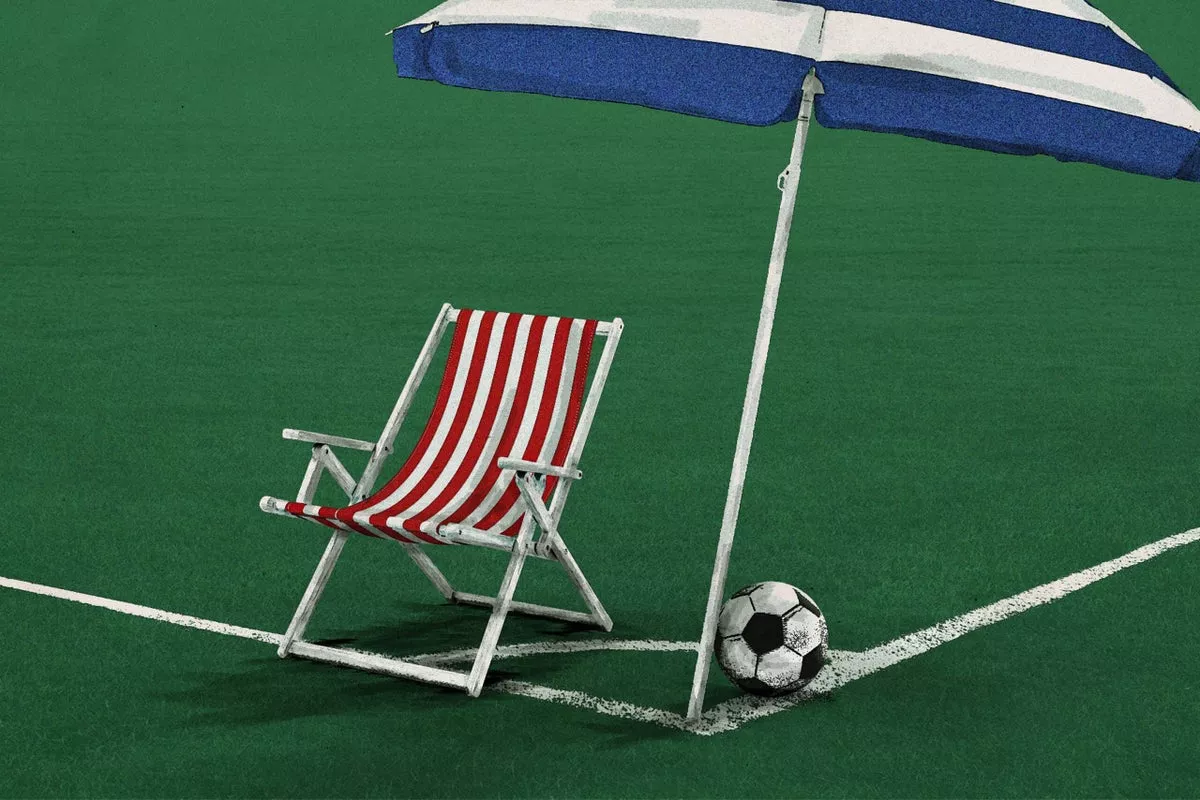
With the World Cup now over, football’s top international players can finally enjoy some much-needed downtime before the new season starts next month.
Yet for the sport’s biggest stars, a chance to unwind properly between one campaign ending and the next one kicking off is becoming increasingly difficult to find.
A packed calendar has put greater demands on the players. The expansion of the World Cup from 32 teams to 48 for this edition is one factor, with the potential for this to become 64 at the 2030 tournament likely to exacerbate the issue. The introduction of a new competition at the end of the European season, FIFA’s greatly expanded Club World Cup (though this is once every four years), is another reason why many players’ time off is more squeezed than ever.
But what are footballers actually entitled to when it comes to annual leave? What does a typical contract say about this issue? When do they tend to take their holiday, and do disputes over them ever arise?
And with the players’ unions calling for a minimum 28-day break before a new season starts, how would that work in an already congested schedule?
The Athletic spoke to legal experts to find out.
What does a footballer’s contract say about annual leave?
“The starting point is players are employees, so they’re technically entitled to the minimum statutory employment annual leave that everyone else is — but they’re obviously in a very unique industry,” Alex Clarke, who leads Onside Law’s employment practice in the UK, tells The Athletic. “So they’ve got a right to five weeks’ holiday — that’s a contractual right.”
Clarke says players could, in theory, ask to take their holiday whenever they wanted — for example, they could ask for two weeks off in the middle of the season.
However, the reality is their club would always reject that — and have the right to turn such requests down.
What happens instead, Clarke says, is that footballers always take all their vacation time in the off-season — the period after a campaign has ended and before they report back for pre-season.
Clarke also explains that a player’s contract gives them the right to at least three consecutive weeks of annual leave, something a club cannot unreasonably refuse — although this is subject to first-team commitments and any international-team duties.
“What generally happens is the players will take at least three weeks of those five weeks in one go over the summer, or more than that if they don’t have international commitments,” he says. “That’s almost always what happens, because we don’t have a winter break in the UK.
“Clubs do generally insist the players do that. So the club basically closes down for the players, other than if they want to go in and use the gym and stuff like that. But they all go off at the same time and keep themselves fit away from the club.”
Dan Chapman, partner and head of sport and employment at legal firm Leathes Prior, explains how the holiday year for footballers runs from July 1 through to June 30. “It’s not calculated on a calendar-year basis, like perhaps most employees are used to having,” he says.
Chapman says most players report for a final day of training at some point in May, perhaps for end-of-season physical testing, and then return to work for pre-season in late June or early July.
“There may be certain days where they might have to go in for fitness tests during that period, or medical treatment, but they will be told, ‘Your contractual holiday is now running from this date through to that date’. And most clubs therefore discharge most, if not all, of the five weeks in one chunk during that period.
“I was talking to a player at a Premier League club the other day. They went back for pre-season training on July 4. They had finished the previous season around mid-May, if not early May. And so when you look at that, actually, I think the players got about seven weeks off. That’s how it is normally satisfied, because of the break between the two seasons.”
Chapman says it is still possible for players to ask for days off during the season.
“That’s quite rare, but I’ve seen instances where it has happened,” he says. “I remember a player last season at a club who wanted to go back to Ireland for some particular family reasons. He asked to take two days’ holiday and to miss some training. The club looked at it and thought there were some compelling circumstances, so they granted the player two days’ holiday. But that’s at the club’s discretion. They could have said, ‘No, you’re having all of your holiday at the end of the season’.”
How does it work for the top players?

Rodri played for Spain in the World Cup final on Sunday, so will not be part of Manchester City’s squad when they leave for a pre-season tour to Hong Kong and South Korea next week (Justin Setterfield/Getty Images)
This is where things get a little more complicated.
FIFPro, the global representative organisation for professional footballers, felt this was where the greatest protection was needed.
In FIFPro’s view, the problem is that a near-continuous calendar featuring major summer tournaments makes it almost impossible for players involved to know when one season has finished and the next begins. It points out that some World Cup players are already back in action for their clubs in qualifying matches for the three European competitions.
The World Cup moments our reporters will never forget
Hannah Vanbiber and more
Clarke says elite players are entitled to three consecutive weeks of annual leave, like any other player, but if they have commitments such as Nations League matches or the Club World Cup, the team involved would not be in breach if individuals are not able to take all that time off.
In that scenario, he says, the player’s post-internationals break should ideally be extended, so they can start pre-season later. However, he adds that the reality is many players generally prefer to train and many won’t take their full holiday entitlement.
“The contract says you can take five weeks, but ultimately if the player decides not to, that’s on the player,” Clarke explains. “So a player could insist on their contractual right to take these five weeks (including three consecutively in the summer). They absolutely have the right to do that, and usually it would be unreasonable for a club to refuse after a long season and then international commitments over the summer. But if the club say, ‘Pre-season starts on X day and we expect everyone to be there’, most players are probably not going to say, ‘I’m not turning up’.
“I suspect some do say, ‘I need a bit of extra time’, but the reality is they’d rather be in the front of the manager’s thinking at pre-season, not giving them a reason not to pick them. Also, a lot of the players are so much driven by performance and fitness that they want to be getting ready for the season anyway.”
FIFPro also highlighted that many players are given intense post-season workout and conditioning plans, making it hard to fully switch off.
Citing Declan Rice as an example, Chapman says Arsenal might try to grant him three weeks’ holiday now, following his return from getting to the final weekend of the World Cup with England.
Has FIFA’s expanded World Cup format worked?
Adam Crafton
“I would imagine he probably got, at most, a week off between the end of the Arsenal season (they played in the Champions League final on May 31) and having to report for England duty, and I doubt he had any holiday during the season,” Chapman says. But combined with the time off Rice will be enjoying now, that could still mean Arsenal get close to fulfilling his annual-leave allowance.
“They might then need to find some more days over the course of the season, but you can do that,” he says. “There are days when you hear managers saying, ‘I’m giving the players Monday off, we’ve won unexpectedly on Saturday’ — all of those days where, at short notice, the club have given the players a day off can count as holiday as well.”
Clarke says clubs do occasionally give players a day off during the week, but with the number of matches elite players have to take part in, they are still often required to show up for team meetings and analysis sessions. That makes it tricky to build up additional days of leave.
Do players ever complain and do disputes occur?
Both Clarke and Chapman agree it is virtually unheard of for players to object to how this process works.
“The only time I’ve seen a player raise it with a club is when he was on the way out as part of a dispute over loads of things after being frozen out as part of the ‘Bomb squad’,” Clarke says. “He just wanted a way out and was arguing it as another thing the club had done wrong, by not letting him take his holiday over a period of years.”
However, Clarke says this is extremely rare, and the main way it gets brought up is by the unions.
Chapman has never seen the issue raised by a player, but has come across it among backroom staff and managers. He says those roles can make it harder to take annual leave, as their work often continues even when there are no more games to play.
“I’ve had a dispute where a manager, once he was dismissed, brought a claim because they said, ‘Well, I didn’t even get an off-season because as soon as the season’s over, I’m into recruitment meetings, the chairman phones me five times a day, and so on, whereas the players get to go to Ibiza and do nothing’. Managers and coaches actually find it more difficult to take holiday.”
What have the players’ unions said?
Players’ unions, including FIFPro, have long called for a statutory minimum break of 28 consecutive days, followed by a minimum 28-day retraining period. They argue that football currently has no specific safeguards in place for the players.
That issue came to light last year, during the first edition of the expanded 32-team Club World Cup in June and July, when concerns were raised around players’ welfare.
Shortly after that tournament, FIFPro released its annual Player Workload Monitoring report. This revealed Chelsea and Paris Saint-Germain, the two eventual finalists in that competition in the United States, gave their players only 20 and 22 days off respectively. They had then just 13 and seven days of pre-season training before the two clubs’ 2025-26 campaigns got up and running.
As previously reported by The Athletic, the report showed how that contrasted unfavourably with other sports. For example, an NBA finalist was given 14 weeks in the basketball league’s off-season, while a baseball player involved in the World Series got 15.
“For us, as players, it’s vitally important that we have the recovery period to allow the body to adapt and go again,” Nottingham Forest and New Zealand striker Chris Wood, who is a member of FIFPro’s global player council, previously told reporters, including The Athletic.
Chapman says there are concerns over player burnout and the increased risk of injury. “So you can see why the union would want a mandatory 28-day break,” he says.
He explains how other sports have adopted such measures.
“In Formula 1, for example, they introduced a compulsory summer shutdown (halfway through the season) because of the gruelling nature of the grid — not just for the drivers but for all the support staff. It’s illegal to do any work during that period. You have to literally close your factories, and everyone has to have a break. It’s only two weeks, but it’s a mandatory shutdown.”
He says F1 brought in the measure because its off-season had become shorter, with the final race of a campaign taking place in mid-December and pre-season testing beginning in early January.
“I could see something, in theory, would make sense in football,” Chapman says. “But, obviously, money talks.”
>
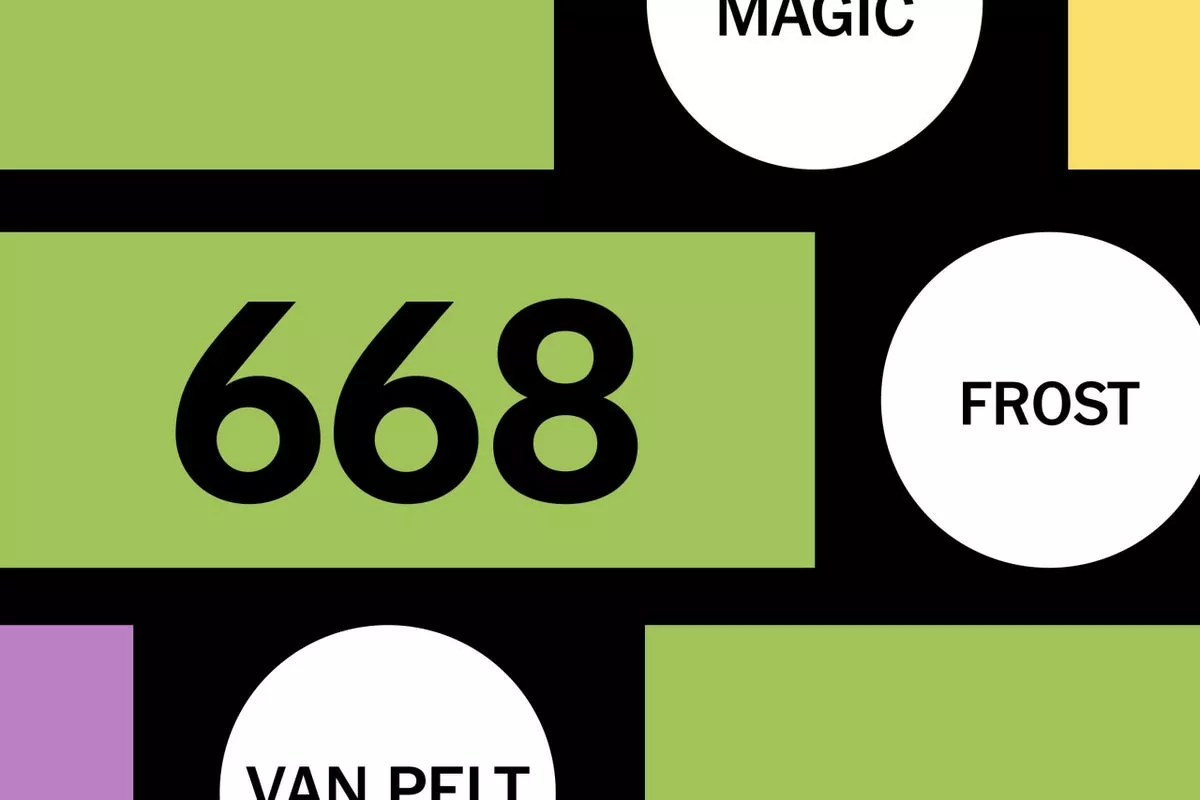
Need help with today’s Connections: Sports Edition puzzle? You’ve come to the right place.
Welcome to Connections: Sports Edition Coach — a spot to gather clues and discuss (and share) scores.
A quick public service announcement before we continue: The bottom of this article includes the answers — and hints — for the four categories. So if you want to solve the board hint-free, we recommend you play before continuing.
You can access today’s game here. And when you’re done, try out our limited-edition Connections: Soccer Edition — special for this summer’s World Cup — for an extra challenge.
Today’s difficulty
Game No. 668’s difficulty: 2.5 out of 5
Connections: Sports Edition hints for July 23, 2026

Scroll below for one answer in each of the four categories.
.
.
.
.
.
.
.
.
.
.
.
.
.
.
.
.
.
.
.
.
Yellow: MAGIC
Green: FROST
Blue: ROLEN
Purple: AND ONE
Connections: Sports Edition answers for July 23, 2026
Scroll below for the full answers to each of the four categories.
.
.
.
.
.
.
.
.
.
.
.
.
.
.
.
.
.
.
.
.
Yellow
Eastern Conference NBA teams: HAWKS, MAGIC, NETS, PISTONS
Green
Minnesota teams: FROST, TIMBERWOLVES, TWINS, WILD
Blue
Scotts: MCTOMINAY, NIEDERMAYER, ROLEN, VAN PELT
Purple
Box _____: AND ONE, JUMP, LACROSSE, SCORE
What is Connections: Sports Edition?
Connections: Sports Edition is The Athletic’s first-ever game, a daily puzzle designed for players to find connections between 16 words on the game board.
The game’s objective is to group words or objects into four groups of four based on commonalities within each group as quickly as possible. Find the groups without making four mistakes. Each puzzle has exactly one solution, so watch out for words or items that seem to belong to multiple categories!
Category examples:
Sports ____ : Fan, Car, Bar, Radio
U.S. Summer Olympians: Biles, Phelps, Ledecky, Lyles
Each category group is assigned a color, revealed as you solve, ranging from straightforward (yellow) to medium (green) to challenging (blue) to tricky (purple).
Who creates the puzzles for Connections: Sports Edition?
That’s me! My name is Mark Cooper, and I create Connections: Sports Edition and work as a managing editor for college sports here at The Athletic. I was previously The Athletic’s managing editor for breaking news.
The next puzzle will be available at midnight in your time zone. Thanks for playing — and share your scores in the comments!
>

Trump praises Braves, jabs Mets at event with former Atlanta manager Brian Snitker

How does annual leave work in football, and what are players entitled to?

Connections: Sports Edition today: Hints and answers for July 23, 2026, puzzle No. 668

-

 Fashion9 years ago
These ’90s fashion trends are making a comeback in 2017
-
Fashion9 years ago
According to Dior Couture, this taboo fashion accessory is back
-
Fashion9 years ago
Model Jocelyn Chew’s Instagram is the best vacation you’ve ever had
-
Fashion9 years ago
Your comprehensive guide to this fall’s biggest trends
-
Fashion9 years ago
9 Celebrities who have spoken out about being photoshopped
-
Fashion9 years ago
Emily Ratajkowski channels back-to-school style
-
Fashion9 years ago
A photo diary of the nightlife scene from LA To Ibiza
-
 Tech3 months ago
OpenAI CEO apologizes to Tumbler Ridge community

