
Politics
Politics Home Article | Why Is Social Care Such A Thorny Issue For UK Prime Ministers?


Andy Burnham said he wants to bring in “substantial change” to reform social care (Alamy)

7 min read
With Andy Burnham expected to make a major speech on social care this week, PoliticsHome looks at why it has been such a difficult issue for successive governments to grip.
The Prime Minister told the BBC’s Laura Kuenssberg on Sunday that he will put “whatever political capital” he has into fixing social care and doesn’t want to leave office without bringing in “substantial change.” He said the NHS will “collapse” without social care reform.
Successive governments have pledged to fix the social care crisis, but have failed. So why is it such a difficult problem to solve?
Why is social care such a big problem?
The term social care describes support for adults with care and support needs. In England, it is arranged by local authorities, and some people receive state support to help pay for it.
Pressure has been building on the UK adult social care system for decades.
The UK’s population is ageing steadily, with around 19 per cent of people – approximately 12.7m – now aged 65 or over, driven by rising life expectancy and lower birth rates. As the population ages, demand for adult social care continues to grow, increasing pressure on local councils, which are responsible for providing state-funded care.
According to the King’s Fund, care home provider fees paid by councils rose in real terms by an average of 3.6 per cent to £1,823 a week for working-age adults in 2024/25 compared to 2023/24, while fees for care for older people and homecare fees also rose by more than three per cent. An additional 30,000 people received publicly funded long-term care in 2024/25 than in the previous year, amounting to a 3 per cent rise. Total spending on social care by local authorities increased by 4.1 per cent to reach £34.5bn.
The UK adult social care sector also faces a chronic workforce crisis driven by tens of thousands of unfilled vacancies, uncompetitive pay, high staff burnout, and tightening international recruitment rules. Care England figures show that social care workers earn significantly less than equivalent roles in the NHS, averaging roughly £7,617 less per year.
This has also led to increased pressure on NHS hospitals and services, with patients taking up hospital bed space when it is impossible to secure social care for them.
The Times reported on Saturday that Burnham’s pledge to overhaul care so it “operates on the NHS principle” is unlikely to cover the daily living costs of a care home such as food and accommodation. According to the Health Foundation think tank, a comprehensive care system which could cover food and accommodation would cost £18.5bn a year by 2035-36.
Even avid supporters of reforming the care system accept that it would be very expensive, particularly at a time when departments already face limited budgets, adding to the difficult nature of the issue.
How have governments attempted to fix social care?
Many previous government attempts to reform social care have been abandoned.
Economist Andrew Dilnot was commissioned by the coalition government in 2010 to look at how to protect the public from the risk of sky-high care bills. Dilnot proposed capping individuals’ lifetime care costs. While accepting the principle, the government went on to repeatedly delay implementation of the proposal before it was eventually abandoned.
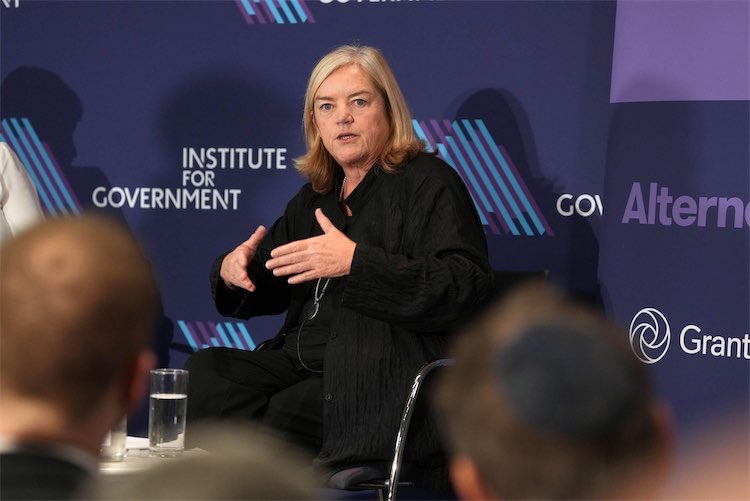
Former Tory prime minister Theresa May included in her manifesto a proposal to raise the asset threshold – the amount of personal wealth protected from paying for care – from £23,250 to £100,000. Under her proposal, the value of your home would also count when working out whether you could afford to pay for care if you were receiving it at home, which meant many more homeowners could end up paying for their own care, with money recovered from the sale of their house after they died if they couldn’t pay immediately.
It was quickly criticised by her political opponents and labelled the ‘dementia tax’ as it was seen to disproportionately affect people with conditions like Alzheimer’s disease. It was dropped by May in the run-up to the 2017 general election.
In July 2019, May’s predecessor, Boris Johnson, stated on the steps of Downing Street that he had a clear plan to fix the social care crisis “once and for all”. He proposed introducing the Health and Social Care Levy through higher National Insurance, before later abandoning both the levy and much of the wider reform package. However, when a Health and Social Care Levy was introduced in September 2021, a large proportion went towards tackling the massive NHS backlog caused by the COVID-19 pandemic rather than fundamental reform of the social care system.
The Keir Starmer Labour government commissioned Baroness Louise Casey in 2025 to review how adult social care should operate and how it should be funded. In a speech earlier this year, Casey called for a national “moment of reckoning” similar to the 1948 Beveridge reforms which established the NHS.
The longer-term final report is expected in 2028, but Burnham has indicated he wants recommendations much sooner. Former health secretary Wes Streeting also suggested on Sunday morning that it could be brought forward to report earlier.
What could Burnham do to reform social care?
The most ambitious proposal to fundamentally reform social care would be establishing a National Care Service to operate much more like the NHS, with care becoming progressively free at the point of need.
While it does not have a dedicated National Care Service, Scotland has already implemented a free-at-the-point-of-need system for some forms of social care, but it does not include accommodation, food and everyday living costs, which are still subject to means testing. The Health Foundation estimates that implementing a similar system in England would cost £7.5bn a year by 2036.
A more incremental approach would focus first on improving workforce pay and conditions, integrating health and social care more closely, expanding short-term care to speed hospital discharge, and increasing support for local authorities while delaying the biggest funding decisions.
A cap on individuals’ lifetime care costs, as proposed by Dilnot, could be another solution.
The government could also raise the threshold for means-tested social care support. At the moment, people in England can be eligible for local authority financial support in a residential care home if the value of all their assets is less than £23,250.
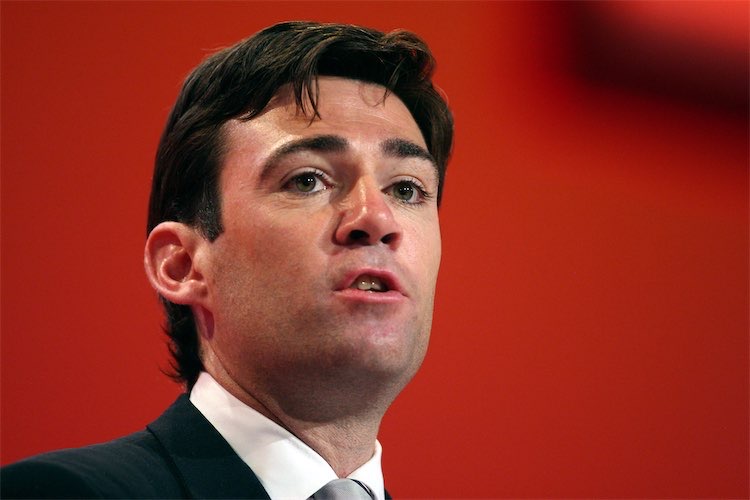
As health secretary under Gordon Brown in 2010, Burnham previously argued that dedicated funding may ultimately be needed and backed the introduction of a 10 per cent levy on estates to pay for a universal National Care Service. Downing Street confirmed on Monday that such a tax was among the options Burnham is now considering to fund his plans.
What have the other parties said?
Conservative Party leader Kemi Badenoch has said she agrees that the care system needs reform, but warned that it cannot be funded through tax cuts. She has written to Burnham urging the new PM to look at spending cuts elsewhere to pay for his plans.
Reform UK Treasury spokesman Robert Jenrick said the party would fiercely oppose any form of what he described as a ‘death tax’ via a levy on estates, arguing it would unfairly raid people’s life savings and far exceed current inheritance tax thresholds.
Lib Dem leader Ed Davey has long described social care reform as one of his top priorities, having been a carer himself for many years. He recently reaffirmed his support for cross-party talks on the issue, and ahead of the 2024 general election, the Lib Dems said they would deliver free personal care through an additional £2.7bn invested in social care by 2028-29 above existing social care plans.
The Green Party pledged an extra £20bn per year into adult social care, paid for through taxes on the super-wealthy, including a one per cent wealth tax on assets over £10m and two per cent on assets over £1bn.
>

3 min read
The government spent around £15m on developing digital ID before the scheme was scrapped by the new Prime Minister Andy Burnham.
Of that £15m, £800,000 was spent on the “People’s Panel”, which randomly selected 100 people from across the country to contribute to the government’s consultation on the policy. The rest was spent on staff, consultants, design, research and legal advice, internal data seen by PoliticsHome shows.
Burnham announced this week that he was ditching the Keir Starmer policy and rediverting money that would have been spent on it to funding the removal of VAT from energy bills.
The government declined to comment on the figures.
The Starmer ministry had hoped that digital ID would help modernise the state and make public services more efficient.
However, the policy polled poorly when first announced in September, with the then-government’s communications strategy partly blamed for the rough landing. Ministers initially focused on how digital ID could help tackle illegal migration, before later pivoting to how it could make everyday tasks easier for the average person. It was hoped internally that the “People’s Panel” would help get the public back on side.
The Starmer government then ditched the mandatory element of the scheme, as revealed by PoliticsHome in January, amid concerns that voters would not support the policy in that form.
The new PM’s claim that ending digital ID will fund his cost-of-living measure has been questioned by think tanks like the Institute for Fiscal Studies (IFS) and Institute for Government (IfG).
Speaking to PoliticsHome this week, the IfG’s Heloise Dunlop said it was “not clear how the government was going to fund digital ID: the policy was not yet fully finalised, there was no clear idea what online services would be included in the join-up, and the OBR had said no specific funding had been allocated for digital ID in the spending review”.
Burnham has also been criticised from his own side, with Labour MP Darren Jones, who Burnham sacked from Cabinet after entering office, publicly describing the policy as unfunded.
PoliticsHome reported earlier this week that the Permanent Secretary in the Cabinet Office, Cat Little, had apologised to department officials who had been working on digital ID for not being told about the decision to get rid of it before it was announced.
The Office for Budget Responsibility (OBR) previously estimated that the overall cost of introducing the digital ID scheme would be £1.8bn.
PoliticsHome understands that departments were previously asked to find savings to fund the programme.
Julia Lopez, Conservative MP for Hornchurch and Upminster and shadow technology secretary, told PoliticsHome: “Labour blew up work to improve the government’s online services for the sake of Keir Starmer’s mandatory digital ID plan, in the process landing the taxpayer with a £15m bill.
“The Conservatives fought Labour’s uncosted and wrong-headed ID plan every step of the way and got it stopped. Now Andy Burnham rides in to claim the credit and to recycle savings that were never banked in the first place.”
>



2 min read
This week, The Rundown features an interview with the Shadow Chancellor Mel Stride, giving his views on his new opposite number in the Treasury, John Healey, what the new government should be doing to get growth going, and how the Tories plan to take on Reform.
Host Alain Tolhurst also takes a look at Andy Burnham’s first few days in Number 10, how his Cabinet picks and his initial policy blitz are going down with his Labour colleagues, as well as the voters, and what else we can expect from our latest Prime Minister alongside two colleagues: deputy editor of our sister title The House magazine, Sienna Rodgers, and editor at PoliticsHome, Adam Payne.
The trio discusses the thinking behind the ministerial appointments, as well as what was going on behind the scenes in Westminster this week, plus how the Burnham government is keen to avoid the mistakes of the Keir Starmer administration in its first weeks in office.
They also look at what the new Prime Minister might have planned for the summer, with the government already facing questions about how it will fund its cost-of-living package.
As well as trying to oppose the new Labour government, the Conservatives are looking to close the gap on Reform UK in the polls. Stride was in bullish form, saying he thinks Nigel Farage’s party has been on a “steady decline” since last autumn.
“And it’s quite conceivable that decline will continue,” he told the podcast.
“What has underpinned that souffléing down of Reform is the fact that the firework display, the shimmy of the sequin dress, the music, the razzmatazz, it can’t last forever before people say I’ve heard that before, play me another song.”
The Rundown is presented by Alain Tolhurst, and is produced and edited by Ewan Cameron for Podot
- Click here to listen to the latest episode of The Rundown, or search for ‘PoliticsHome’ wherever you get your podcasts.
>
Politics
Politics Home | Labour MP Says Her Colleagues Are “On A Journey” To Support Her Summer Of Sex Campaign
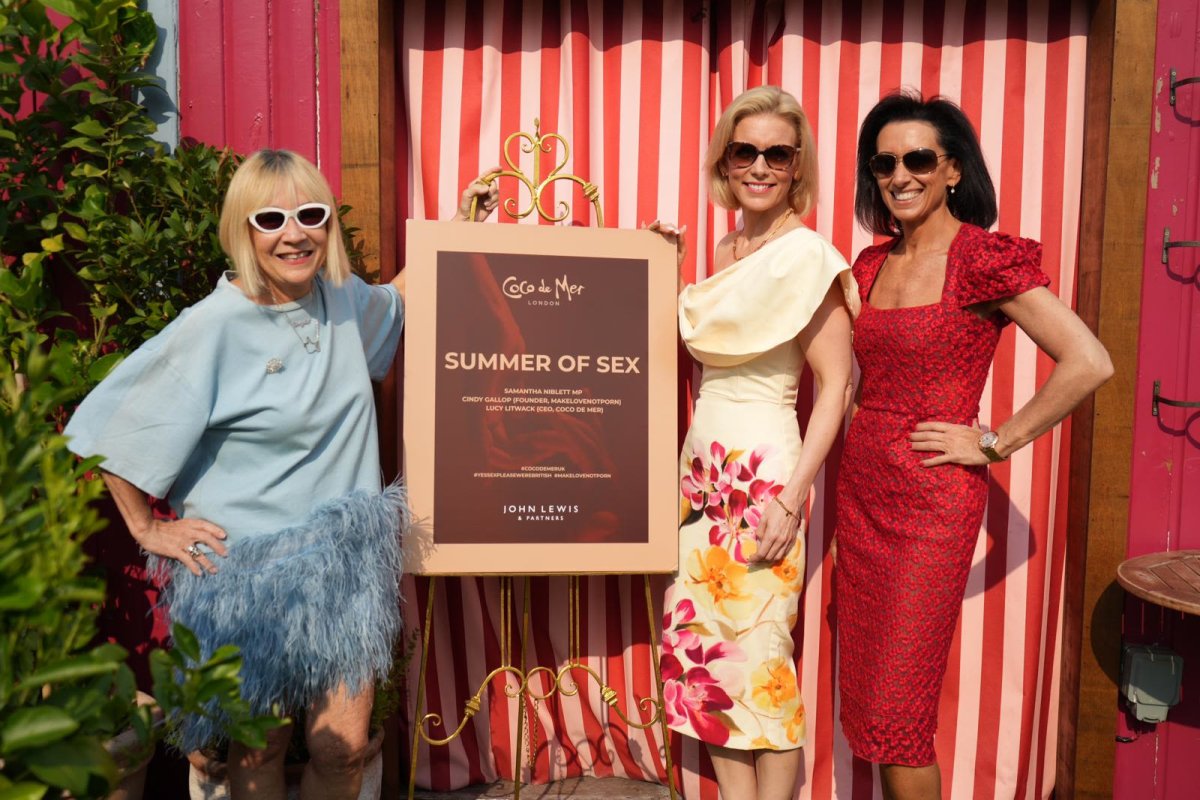

Make Love Not Porn founder Cindy Gallop, Labour MP Samantha Niblett and Coco de Mer CEO Lucy Litwack at the ‘Summer of Sex’ campaign launch party (Coco de Mer/John Lewis)
7 min read
Labour’s Samantha Niblett said she believes some of her MP colleagues are starting to come round to her campaign for lifelong sex education, which sparked fierce debate across Westminster earlier this year.
Three months on from kicking off her campaign for lifelong sex education via an exclusive interview with PoliticsHome, Niblett partnered with major retailer John Lewis and luxury lingerie and sexual wellness brand Coco de Mer to host an event on Wednesday evening to officially launch the ‘Summer of Sex’.
Speaking at the event with Coco de Mer CEO Lucy Litwack and Make Love Not Porn founder Cindy Gallop – who has partnered with Niblett for her campaign – Niblett laid out how the campaign has progressed over the last few months.
“If I get known as Samantha the sex MP, I just start making it easier for other MPs to start to talk about it. Many of them have gone ‘my god, good on you, this is amazing’.”
She said some supportive MPs have told her that some of the “original doubters” have started to see the point of the campaign.
“Some MPs that were critical of the way that I went about it, they don’t like the sex toys, they think it’s diminishing the campaign.
“But it’s not. I grabbed the mic. It did get the attention, and I am absolutely going to do a sex toys event in Parliament because I want it to not be shocking. I want it to not be pearl-clutchy.
“Some colleagues are going on a journey. I honestly believe it: the more that the country gets behind this campaign, the more that Parliament will, because it will be led by what is palatable. We are as basic as that, seriously. People are interested in sex. Everybody wants to talk about sex.”

Niblett said she aims to pull together a briefing document by the end of summer recess to send to fellow MPs and promote the purpose of the campaign.
In her interview with PoliticsHome in April, Niblett said she wanted to push for more open, inclusive lifelong sex education by securing a debate in Parliament on the topic in the autumn. Niblett said she wanted to promote wider awareness of consent, prevent abuse and violence, and raise awareness of how childbirth, the menopause, stress and other health conditions can impact sexual satisfaction.
Niblett shared that she watched porn herself like “lots of other people” and that it was a “turn on”. She said she will host an event in Parliament where she brings in sex toys, which has since been confirmed to be allowed by the parliamentary authorities.
The campaign took Westminster by storm, generating discussion in the chamber, in which Tory leader Kemi Badenoch accused Labour of “fiddling while Rome burns”, and heated debate within the women’s Parliamentary Labour Party WhatsApp group, in which other MPs accused Niblett of trivialising a serious topic.
“I certainly found myself posting less in MP WhatsApp chats because there were slightly terse comments that went flying by in the women’s PLP chat,” Niblett said.
“So I extricated myself from it, which is horrible because you think you’ve got comrades, but it didn’t feel like that. So that was a bit sad, but it’s politics.”
The interview generated many TV interviews and opinion columns, including an LBC interview with Labour deputy leader Lucy Powell in which she said: “I personally don’t own any sex toys, but each to their own”.
Niblett has since become the chair of the All-Party Parliamentary Group for sexual and reproductive health.
The campaign launch event on Wednesday evening was attended by sponsoring brands John Lewis and Coco de Mer, sex education content creators, sexual intimacy coaches, charity campaigners and journalists. It was an exclusive affair, with the vast majority of the around 50 attendees being women.
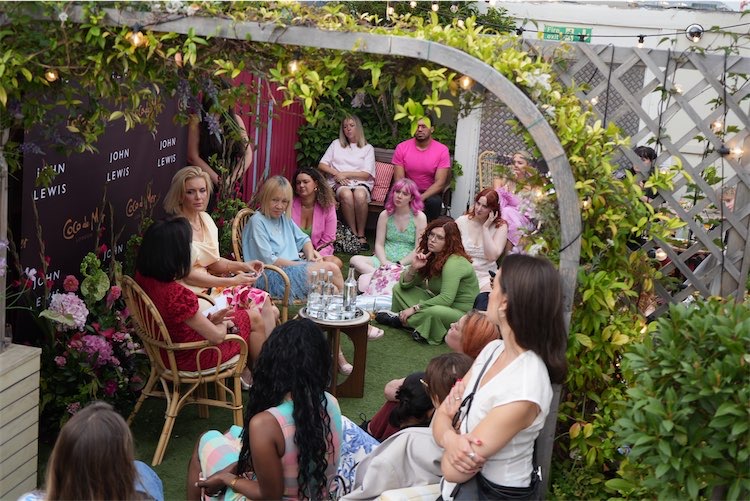
The event was located at the rooftop bar of John Lewis in central London, with servings of canapés and glasses of Aperol spritz, flowery decor and luxury goodie bags for attendees that contained biscuits, canned cocktails and intimate bodycare products.
The ‘Yes sex please, we’re British’ campaign has a broad scope: covering lifelong sex education which Niblett describes as needing buy-in from government, the NHS and education systems, parents, and businesses.
Pressed on what specific demands she hopes to bring to government ministers, Niblett said she is continuing to speak to stakeholders and charities throughout the summer to learn as much as possible, before delivering a speech at the debate she has secured in Parliament, which is set to be held in the autumn.
Talked about what she wants to systemic change and for positive sexual wellness should be “promoted” across the health and education systems.
“I have spoken to doctors and sexologists and people working within the NHS and educators that are just so grateful someone is taking this seriously within Parliament, that’s prepared to put their head above the parapet,” Niblett told PoliticsHome.
“We need to be talking about sexual wellness within the NHS, not just sexual health. Talking about the benefits of sex, not just let’s fix you when you’re broken.”
Niblett spoke of concerns raised by people working in the NHS that support is “patchy” for patients whose health conditions affect their sex lives: “Some doctors are embarrassed to talk about it; there isn’t a standard of sex education in GP training even.”
The MP also wants to start work on determining the economic value benefit of improving lifelong sex education, as a way of getting the Treasury on board by saving money for the NHS.
“How is it preventing other illnesses from happening? How is it making people better?”
Niblett also recently hosted a roundtable with Meta to express her opposition to the banning of accounts that share ‘positive’ sex education content.

The MP hopes that the sponsorship from John Lewis for the launch event will help to legitimise the campaign. John Lewis has seen a 22 per cent increase in demand for their sexual wellness products in the last year, which has been growing since the Covid-19 pandemic. John Lewis and Coco de Mer representatives told PoliticsHome at the event that both companies wanted to help take the “stigma” out of sex.
Niblett has already won the support of Emma Thompson, who recorded a video with Niblett last month, saying that the campaign was “not party political, but it was critical”.
The MP has her sights on further celebrity endorsements: She is in conversation with LGBTQ dating app Grindr to get her an introduction to pop star Madonna, and with American media company Condé Nast to connect her with singer Harry Styles, who launched his own sex toy range last year.
“We’re trying to get the nation behind the campaign, because when you do that, MPs will fall in line,” Niblett said.
“If it looks like a vote winner, people don’t want to look like the idiot who looks like the one who’s on the side.”
>

Rangers: Is Derek McInnes era giving fans fewer fears of failure?
Sky Sports | Snooker News

John Stones transfer news: England international verbally agrees deal to join Inter Milan amid interest from Arsenal and Chelsea | Football News
-

 Fashion9 years ago
These ’90s fashion trends are making a comeback in 2017
-
Fashion9 years ago
According to Dior Couture, this taboo fashion accessory is back
-
Fashion9 years ago
Model Jocelyn Chew’s Instagram is the best vacation you’ve ever had
-
Fashion9 years ago
Your comprehensive guide to this fall’s biggest trends
-
Fashion9 years ago
9 Celebrities who have spoken out about being photoshopped
-
Fashion9 years ago
Emily Ratajkowski channels back-to-school style
-
Fashion9 years ago
A photo diary of the nightlife scene from LA To Ibiza
-

 movies2 months ago
Search For Canadian TV Actor Stewart McLean Now Homicide Investigation