
‘Ketticè’
Courtesy of Locarno Film Festival


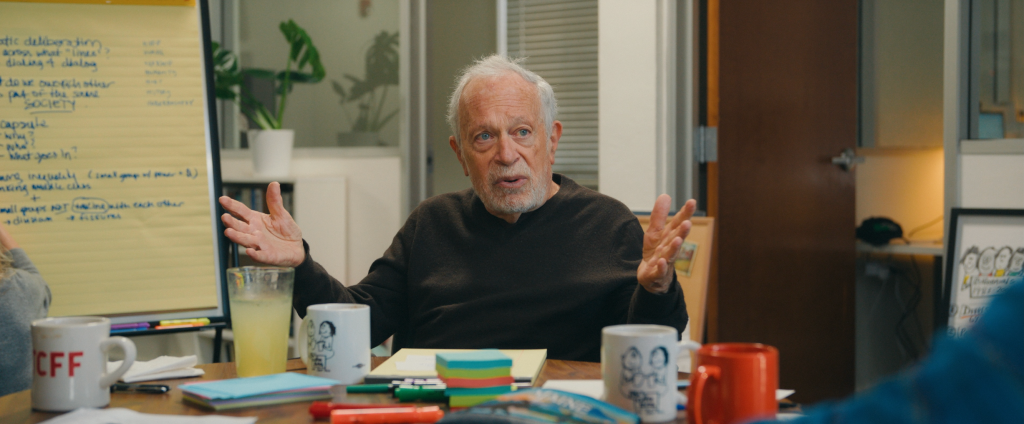
Former Labor Secretary Robert Reich has become a force in the documentary space. The 2025 film about him, The Last Class, ranks as one of the top-grossing nonfiction films of last year, earning more than $1 million at the box office.
Reich returns to the documentary form as executive producer of the new film The Work in Progress, directed by Ian Cheney (The Most Unknown, Picture a Scientist, The Arc of Oblivion), a film that aims to address political polarization by bringing together “Americans who have never met to do something increasingly rare: truly talk, and truly listen… The Work in Progress explores how dialogue and human connection can help bridge America’s deepest divides.”

Abramorama in partnership with Wicked Delicate Films, CoffeeKlatch Productions and Inequality Media, announced the documentary will open theatrically beginning September 4 at the Quad in New York City. It opens later in September at Rialto Elmwood in Berkeley, CA and Rialto Sebastopol in Sebastopol, CA, with more locations to follow.
The Work in Progress is expected to contend for Oscar consideration this year. Watch the trailer above.
“At a time when cultural, political, economic, and generational divisions continue to deepen, The Work in Progress offers a hopeful outlook on society,” according to a release. “Filmed over the course of six months, the documentary captures over 100 Americans, strangers across seven states as they step outside their comfort zones to engage in candid, face-to-face conversations guided by questions from executive producer Robert Reich about the country they live in, and the one they still believe is possible.”

In a statement, Reich commented, “To heal the country, Americans need to have these sorts of conversations – especially now, when algorithms are shaping so much of our discussions and sharpening our divisions. My hope is that this film helps us people talk with one another again – igniting our curiosity about each other, rekindling our compassion, enabling us to listen and truly hear, and begin rebuilding the respect and trust we need as a country.”
The Work in Progress is produced by Elliot Kirschner (The Last Class, Human Nature, The Most Unknown), CoffeeKlatch Productions founder Heather Kinlaw Lofthouse, and Emmy-nominated producer Meredith DeSalazar (Observer, Human Nature, Dan Rather Reports).

Director Ian Cheney is a two-time Emmy nominee and winner of awards at festivals across the U.S. Regarding The Work in Progress, Cheney said, “This film is built around the simple act of looking closely and listening carefully. At a time when so much of our national life feels abstracted into argument, we return to the texture of actual lives: people at work, people in conversation and people trying to make sense of the country they share.”
In the trailer, a deck of cards – inscribed not with clubs, hearts, spades, and diamonds but with questions – helps Americans open an important dialogue. Watch it above.
>
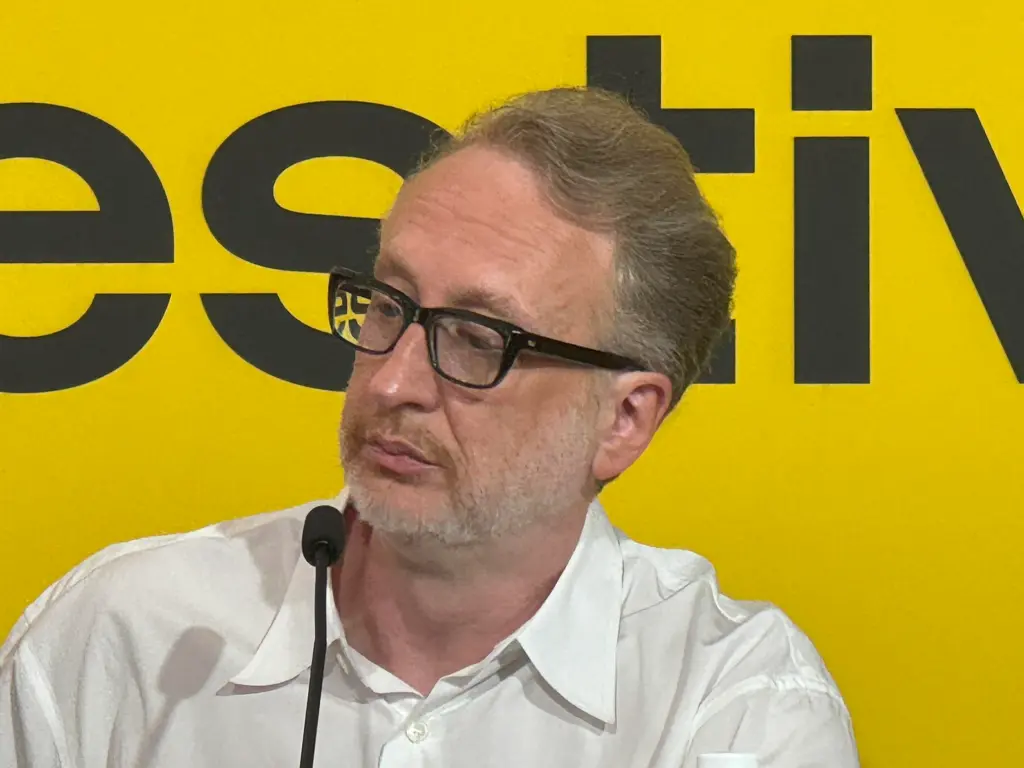
James Gray continued his festival tour with Paper Tiger this weekend setting down in the Locarno Film Festival to receive an honorary award ahead of the film’s Swiss premiere on its landmark Piazza Grande.
Meeting the press ahead of the screening on Sunday evening, Gray gave an insight into his vision for cinema and how that in turn shapes his filmmaking.
“To me, movies are the most beautiful art form because it’s the closest thing we have to a dream… ? Your REM sleep is one and a half to two hours per night, if you’re lucky,” he said.
He pointed to how quickly cinema had evolved as artform relative to fine art or music.
“The first full-length sound film is I think 1928. Between 1920 and 1933, you have in the first five years of the art form… as we know it now, you have an ocean of masterpieces. M is what? a year and a half after the first full length sound film,” he said referring to Fritz Lang’s Berlin-set mystery thriller.
“What does that tell you? What’s the gap between the cave paintings of Lascaux and perspective in 1482 or whatever it is?… In music, it takes a thousand years for the scale to develop the way it does. Why cinema so quickly?
“Because when you look at Bosch’s cryptics or when you hear Des Nibelungen by Wagner, you see artists trying to get past that art form. They’re trying to get to cinema. So what does that mean? It’s like a dream.”
“My view of cinema is, I understand that there is a commercial context in which we all have to work. I understand that it is for, I like to say, an audience, not the audience, but but for me, what makes it beautiful is that it is the clearest window into somebody else’s consciousness, somebody else’s dream.”
He added that this meant he had to oscillate between being “very narcissistic” to get his films off the ground and being “vulnerable” on set.
“I try to show you a version of my own dream, my intimacy,” he said.
Gray returns to his old home stomping ground of New York for Paper Tiger, starring Adam Driver and Miles Teller, with support from Scarlett Johansson, as two brothers whose pursuit of the American Dream puts them on the wrong side of the Russian mafia.
In answer to a question on how he works with actors, Gray suggested his approach was to leave his cast space to build their performances, contrasting it to the old school representational acting method of the likes of Alfred Hitchcock.
“When I go to the set, I let the actor always tell me what they want to do. I have in mind exactly the way I want to shoot. But I have the actor tell me what they want to do, what’s comfortable to them,” he said. “Then I try to make sure that my original idea of what needs to be communicated in the story is in line with how they’re moving in the scene. I want to make sure they’re comfortable. That’s the first thing,” he said.
“The second thing is I want to make sure they’re listening to the other actors. I always shoot the rehearsal because messiness is always interesting. I’m either using take one or take 25 is usually, and I just try to make sure that they are totally comfortable to be excellent. I have no acting talent. I’m not a good director of actors. It is all about how good they are and letting them have the freedom to be themselves in the scene and to listen to each other. That is the key and the core to acting.”
Alongside showing Paper Tiger to a 8,000 capacity crowd on Locarno’s Piazza Grande, Gray will also give a masterclass on Monday, while the festival has also shown two classic titles from his filmography: We Own the Night (2007) and Two Lovers (2008).
The Locarno Film Festival runs to August 15.
>
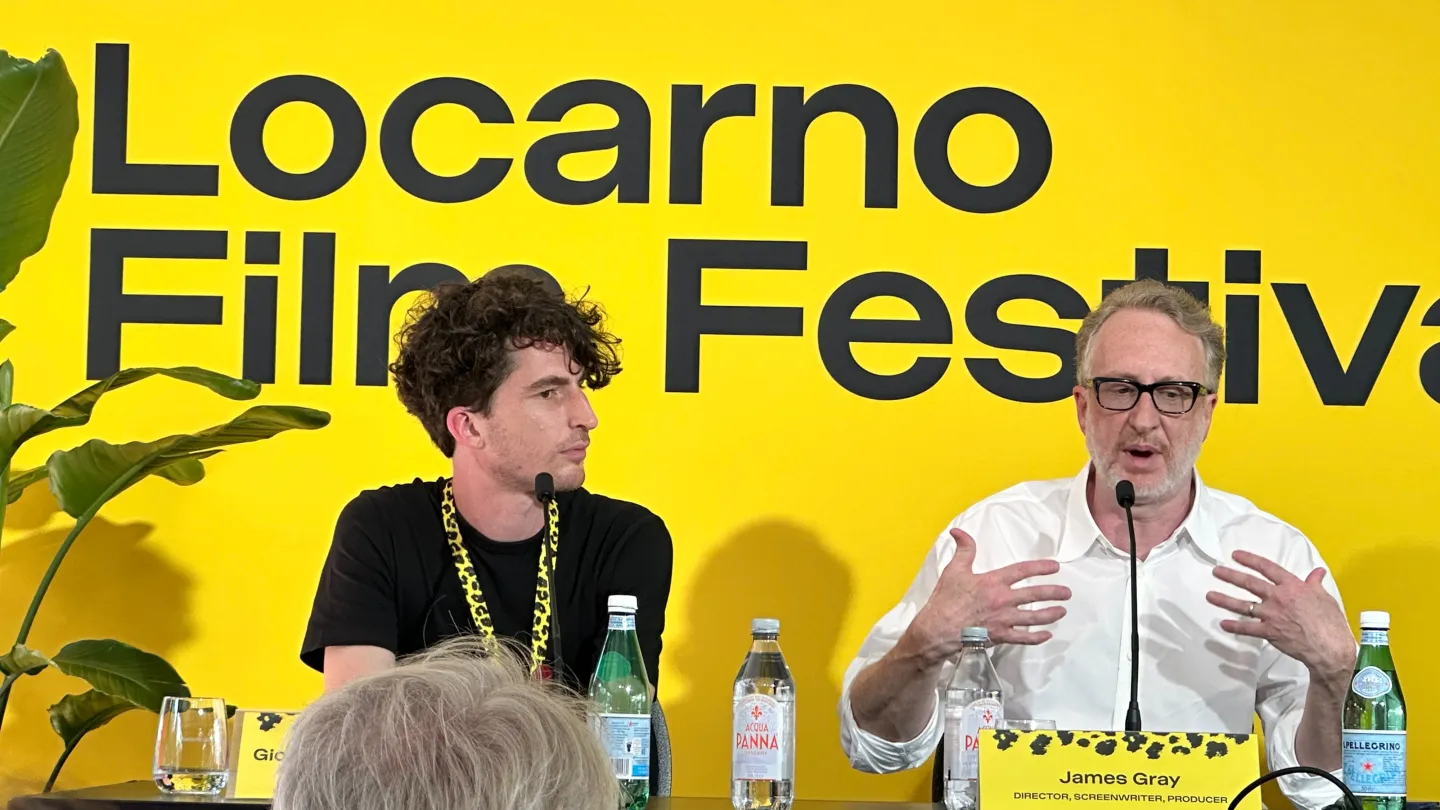
“I’m always shocked when an actor says they want to work with me,” filmmaker James Gray told a Sunday press conference at the 79th edition of the Locarno Film Festival. Shocked, or surprised, was also the reaction in the room. After all, the U.S. auteur is in town to receive the Career Leopard honor at the Swiss festival.
“Actors dictate the style of the film much more than I think is talked about,” Gray also shared when asked about how he works with performers. “I just try to make sure that they are totally comfortable to be excellent. I have no acting talent. I’m not a good director of actors. It is all about how good they are and letting them have the freedom to be themselves in the scene and to listen to each other.”
Does he write films with specific actors in mind? “I try to write the movie not with actors in mind because you’re always going to be disappointed,” Gray offered. “You write it for some actor, and then you find out that guy is not available for two years, and then they can’t do it. And then, instead of the 6’2″ guy, you have to cast the 5’1″ guy and rethink it. So I’ve learned never to do that.”
Asked about Italian and other film history, Gray on Sunday told the press: “If I had to pick cinema 1945 to 1980, I would say Italian cinema is everything to me, and I’m not just saying this to play for your sense of self, but it’s absolutely true. The number of Italian directors in that period is an ocean of brilliance – it’s unparalleled.”
And the filmmaker shared: “To me, movies are the most beautiful art form because it’s the closest thing we have to a dream.”
That also affects how he approaches his own cinematic creations. “I try to show you a version of my own dream, my intimacy,” Gray explained. “It’s why people say, ‘I hate that movie’ or ‘I love that movie.’ … That’s why when somebody talks behind you in the movie theater, you want to kill them. It’s something interrupting your dream.”
>
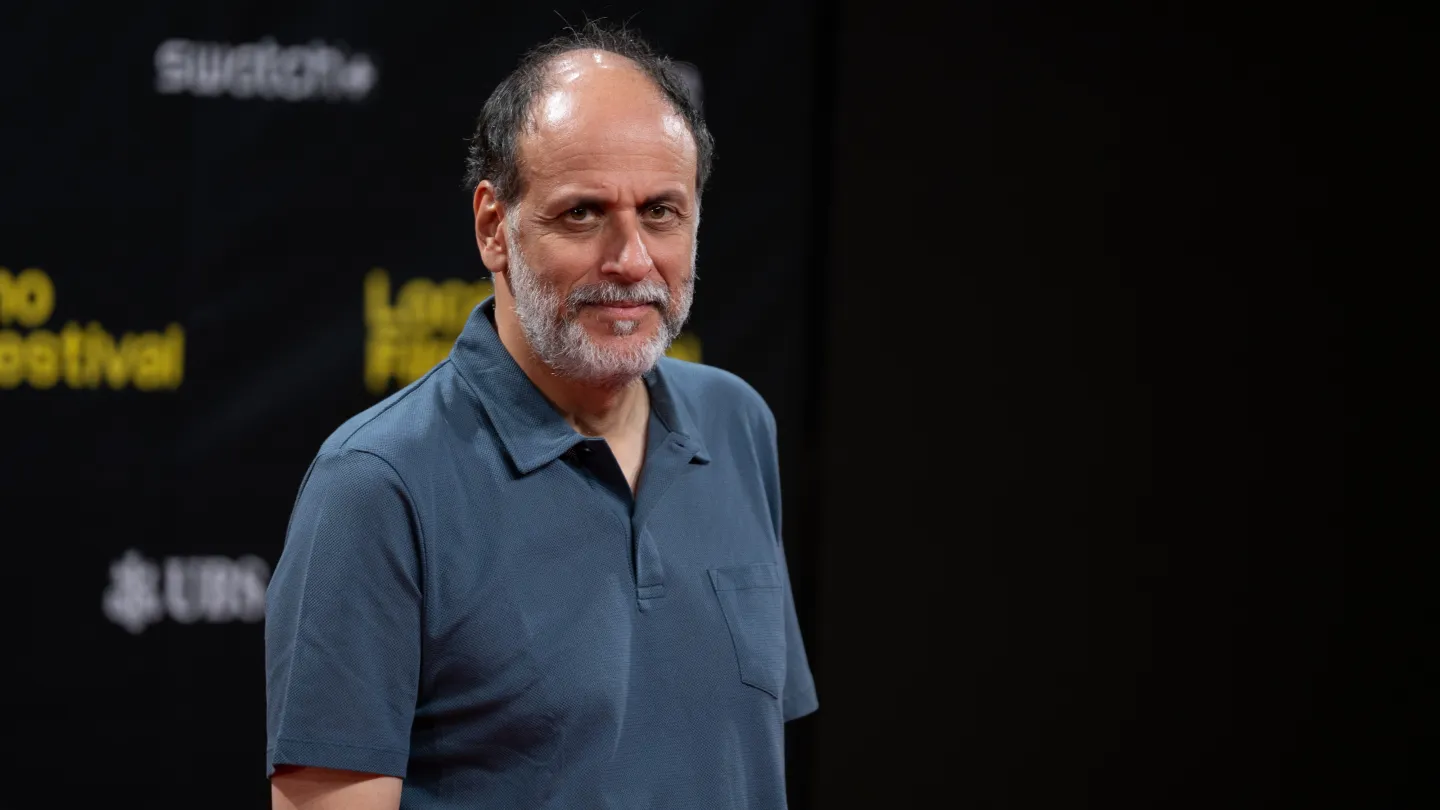
Luca Guadagnino didn’t come to Switzerland to share updates on the drama surrounding his OpenAI movie, Artificial, during a meeting with reporters at the 79th edition of the Locarno Film Festival. No, he was in town to sing the praises of a protégé.
To be precise, Guadagnino came to Locarno, in Italian-speaking Switzerland, to discuss Ketticè, the sophomore feature of his former assistant, writer-director Giovanni Tortorici (Diciannove). The coming-of-age drama stars Salvatore Gallina, Rachele Testagrossa and Monica Bellucci. And yes, the movie’s list of producers includes Guadagnino.
Set in Palermo, Sicily in 2012, the era of media mogul-turned-politician Silvio Berlusconi, the movie revolves around Giulio, a listless and dissatisfied 16-year-old who drifts through his days without any enthusiasm for school and no real future prospects. But his encounter with Ketty, a more self-assured peer, offers him an escape from the monotony. The two form a close friendship, which a synopsis describes as “a shared refuge in their search for freedom, far from the judgmental gaze of the adult world.”
The film’s title refers to Ketty’s nickname in the Sicilian dialect. Bellucci plays Giulio’s mother in an aristocratic Sicilian family that leaves her feeling oppressed. The cinematography is by Camilla Cattabriga, with editing by Marco Costa. PiperPlay is handling international sales.
Guadagnino was asked by reporters about Italy’s rich cinematic history and if his decision to produce Tortorici’s movie was his way of keeping that tradition alive. “Most definitely,” he replied. “I think that we can agree that historically, Italian cinema, from the silent times until the ’70s, generated some of the most important personalities in the history of cinema, but also as an industry, had created a system that was the envy of many other countries. There were many different kind of films being made.”
‘Ketticè’
Courtesy of Locarno Film Festival
But then, something happened with “the advent of private TV and the Berlusconi empire,” Guadagnino offered. “It dried [up], and most of what was produced for cinema became TV. Genre was killed. A pretension on authorship became such that the great idea of cinema as authorship became basically people writing scripts and shooting their own scripts so that they could define themselves as authors.” In the end, “the movie industry shrunk and the perspective shrunk and the cinema of Italy became sterile and totally devoid of an idea of language and of an idea of life.”
That’s where Tortorici comes in. “So when you meet a personality like Giovanni, who, of course, is an Italian filmmaker working in Italy, but I like to think that he’s a filmmaker, period, when you meet someone that is a complete rarity in the landscape of Italian cinema, you must protect it,” Guadagnino concluded. “You must make sure that every stone is not left unturned in order to give him the means to express himself. For me, introducing films such as Giovanni’s movies is a way to … set up a pavement into the future.”
And he emphasized: “It’s about the mindset. The mindset means how you do your stuff, what stories you want to tell, how you understand reality, how you interpret reality. How you run away from falseness is intoxicating for all its truth, all its incredible, vivid reality.”
As a producer, Guadagnino shared that he likes to watch a movie and experience it like anyone else in a movie theater. His audience take on Ketticè: “As an audience member, I feel the movie really speaks in a very universal way.”
‘Ketticè’
Courtesy of Locarno Film Festival
Tortorici said his film explores how institutions, such as school, family and the state, fail kids. “I think the guilty ones are the adults,” he told reporters. “I think they just live in a cultural context of the ultra-capitalist contest and a mediatic world.”
Does Tortorici have any vision for his cinematic future after two autobiographically inspired films? “In my next movie, I’m going to explore something that is very far from me,” he offered. “Shooting this movie, I met a lot of people in Palermo, even coming from difficult neighborhoods with difficult life experiences. I find in these stories the possibility to continuing to explore this struggle of young people with authorities.”
Continued Tortorici: “I think the big problem of society is the structure of, for example, the family. I think family is the structure that [creates] the next repressed person. So I would very much like to explore these different experiences in all parts of society, family in particular.”
>


Search For Canadian TV Actor Stewart McLean Now Homicide Investigation


These ’90s fashion trends are making a comeback in 2017
According to Dior Couture, this taboo fashion accessory is back
Model Jocelyn Chew’s Instagram is the best vacation you’ve ever had
Your comprehensive guide to this fall’s biggest trends
9 Celebrities who have spoken out about being photoshopped
Emily Ratajkowski channels back-to-school style
A photo diary of the nightlife scene from LA To Ibiza