
Sports
‘We invented a VAR system in 1998… but couldn’t afford to build it’

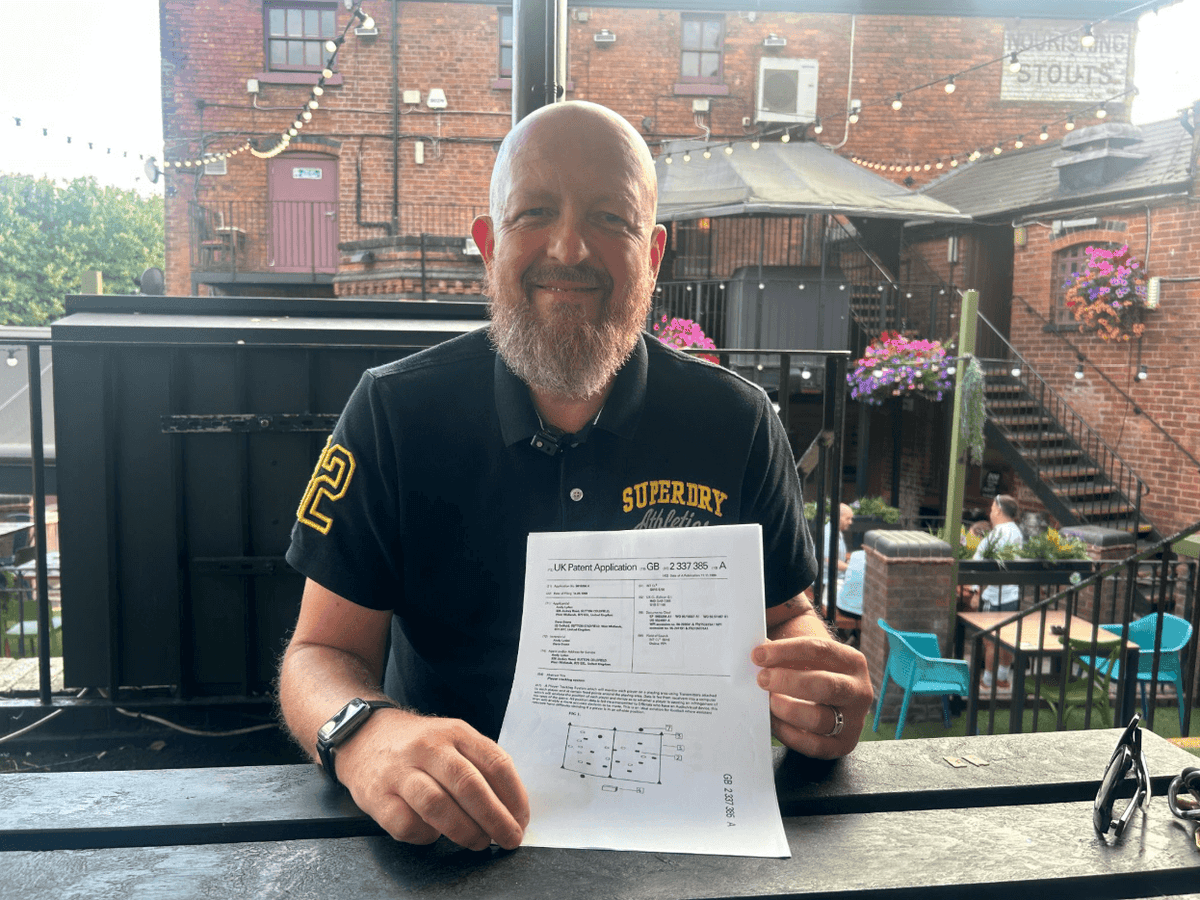
At a train station pub six miles north east of Birmingham, England, Andy Lyden looks over a patent application he had almost forgotten existed for a concept that later changed football.
The West Bromwich Albion supporter and his Aston Villa-supporting friend Dave Evans filed it from Evans’ kitchen table in their hometown of Sutton Coldfield in May 1998. Their system would track players, detect possible offsides and alert referees almost instantly, which they hoped would make football decisions more accurate.
While football would not approve goal-line technology until 2012, conduct its first official semi-live video assistant referee (VAR) trial until 2016 or introduce semi-automated offside at a World Cup until 2022, Lyden and Evans had imagined elements of all three. Not only that, but they also warned that frame-by-frame video reviews would slow the sport down, damaging its tempo and atmosphere.
“We were hoping to make ourselves millionaires, as I suppose quite a lot of young people are,” Lyden says.
It was not their only attempt at invention. Evans, now 69, says the pair were always discussing ideas and that he had previously spent thousands of pounds trying to protect a couple of his own.

Dave Evans (Michelle Evans)
Lyden was 31 and Evans 40 when they submitted the application. They had met a few years earlier through Sutton Coldfield Baptist Church, where their families attended and their children, who were of similar ages, grew up together.
The two men lived less than a mile apart and regularly met at Evans’ house, either around the kitchen table or in the office upstairs.
“It was literally just thinking, ‘What do we think is going to happen in the future?’,” Lyden says. “It was around the time I was still getting my head around emails.”
The late 1990s felt like the beginning of a technological transformation. Mobile phones were enormous, and the internet remained a novelty in many British homes. Lyden had a job with electronics company Philips and now works in programme and project management for Rolls-Royce and Jaguar Land Rover. He admits Evans was the more technically minded half of the partnership.
Evans, who now lives in Ramsgate, Kent, worked in the insurance industry as a programmer in C++, a language for building software, and was involved in early methods through which insurers could collect and share information. Nevertheless, he credits Lyden with starting the conversation.
“He was the one who said to me, ‘I’ve been thinking about this’,” Evans says. “We sat down and fleshed out the details.”
“One night, this just came out,” Lyden says. “Football will all be electronically tagged, linesmen will become defunct because you will know when the ball is out and you will know when it has crossed the line.
“Me and Dave would have spent hours and hours talking about how it would be, how it could be and how we saw it in the future.”
Why are there so many people in the VAR room?
Tifo Football
They eventually decided to protect the idea, but a patent application is a request for legal rights over an invention and filing one does not mean the technology has been built, tested or approved.
Their application, titled Player Tracking System, was submitted on May 14, 1998. It proposed placing transmitters at fixed points around the pitch, along with fitting each player with a miniature version.
The signals would be sent to a central receiver connected to a computer. For an offside decision, the system would identify when an attacking player had moved beyond the relevant defender and send the information to the official responsible for that half of the pitch.

Picture 1, above: from the patent application showing the transmitters attached to the players and the officials for the game represented by black circles. Picture 2, below: how the system would work. (Credit: Andy Lyden)

The patent said officials would carry an “audio/visual device”, although it did not explain exactly what it would look like. Lyden says he and Evans imagined something resembling a modern smartwatch worn on the referee’s wrist that could buzz to alert the official and display information or a replay of the incident.
The system was designed to assist with objective decisions across the pitch, not only goals and offsides. By continuously tracking the ball and every player, it could establish whether the ball had crossed a boundary line and alert officials to possible position-based infringements. Decisions involving judgement, such as whether a challenge constituted a foul, would remain with the referee.
“We knew the technology was there because of all the things that were happening with GPS and maps in cars,” Evans says.
The idea came years before the arrival of recognisable smartwatches as Microsoft launched its SPOT watch platform in 2004, while the first Apple Watch was released in 2015.
Cricket had already begun using replay officials — a ‘third umpire’ was first deployed in Test cricket during South Africa’s series against India in 1992 — while rugby league introduced a video referee when Super League began in 1996. Those systems required another official away from the field to review television pictures and communicate a decision.
Lyden and Evans’ patent warned against lengthy frame-by-frame reviews, describing the process as “completely unacceptable” for a high-tempo sport and proposing “split-second analysis” instead.
“Our idea was that it was totally electronic,” Lyden says. “This would give you the decision.
“We tried to think of a system that took humans out of it, and the way they have implemented VAR is that they have added another step, but you still come back to a human decision.
“VAR was introduced to take ambiguity out of decision-making but it actually adds more. They are looking at video evidence 20 times instead of the referee having one moment.”
Evans believes technology has prevented obvious errors, but remains frustrated by marginal offsides and lengthy checks.
“As a football fan, you do get really cheesed off when it takes three minutes to make a decision,” he says. “It can spoil the game.”
The application was published in November 1999, meaning its description and drawings became publicly available, but it never became a granted patent as the application was withdrawn in August 2000 as Lyden and Evans stopped progressing it before securing enforceable rights over the invention.
“It’s always the same thing with ideas like these,” Evans says. “It’s the costs.”
Lyden remembers paying several hundred pounds to submit the application before discovering that the next stage would require a further payment of around £2,000. Neither had the resources to manufacture the equipment or build a working version of the system.
“You could imagine that you’d have spent £20,000 just to set up a demonstration,” Evans says.
“You can have a great idea, but these things are difficult to get off the ground unless you’ve got money that you’re not afraid to lose.”
“We were stupid enough to put a patent in that we couldn’t afford to carry forward,” Lyden says.
Both men had young families and neither could risk losing that amount of money on an idea football might ignore. They also had no contacts in the sport who could help them develop a prototype or place it in front of the Football Association.
The application was left behind, although its publication meant the idea remained publicly available and later patent applications concerning offside detection, player positioning and referee-assistance technology cited Lyden and Evans’ work.

The VAR system has been embedded in matches across the world (Alex Pantling/Getty Images)
The arrival of similar technology was gradual enough that Evans cannot remember one moment when he realised football had caught up with their discussions.
“It came in slowly,” he says. “It was talked about for a few years before it was actually implemented.”
“We talked about that 20 years ago,” he says. “Why has it taken so long for these people to see the usefulness of it?”
FIFA conducted its first official semi-live VAR test during France’s 3-1 friendly victory over Italy in Bari in September 2016, before using the system at the Club World Cup three months later.
Hawk-Eye Innovations, which is owned by Sony, was appointed as FIFA’s VAR technology provider in 2017 and now supplies the system to competitions including the Premier League, Serie A and Ligue 1.
The values of its FIFA and Premier League contracts have not been made public, but the scale of the industry is considerable. Germany’s Bundesliga spent €1.8million introducing a VAR system in 2017, while Hawk-Eye — which now operates in 25 sports — recorded revenues of £81.7million and pre-tax profits of £14.8million in the year to March 2025.
Evans jokes that life might have looked rather different had football adopted their system. “I’d be sitting on a beach somewhere,” he says. “Not having to go to work.”
Players are now electronically tracked, offsides are calculated by computers and referees receive signals on wearable devices when the ball crosses the goal line and the delays caused by frame-by-frame video reviews, which Lyden and Evans warned about in 1998, arrived too.
Lyden looks down again at the printouts on the pub table and offers his explanation for why their own system never reached a football pitch.
“We were too early and too skint.”
>
Sports
The Hundred: Sunrisers Leeds dominate Welsh Fire at Headingley to remain in eliminator contention | Cricket News
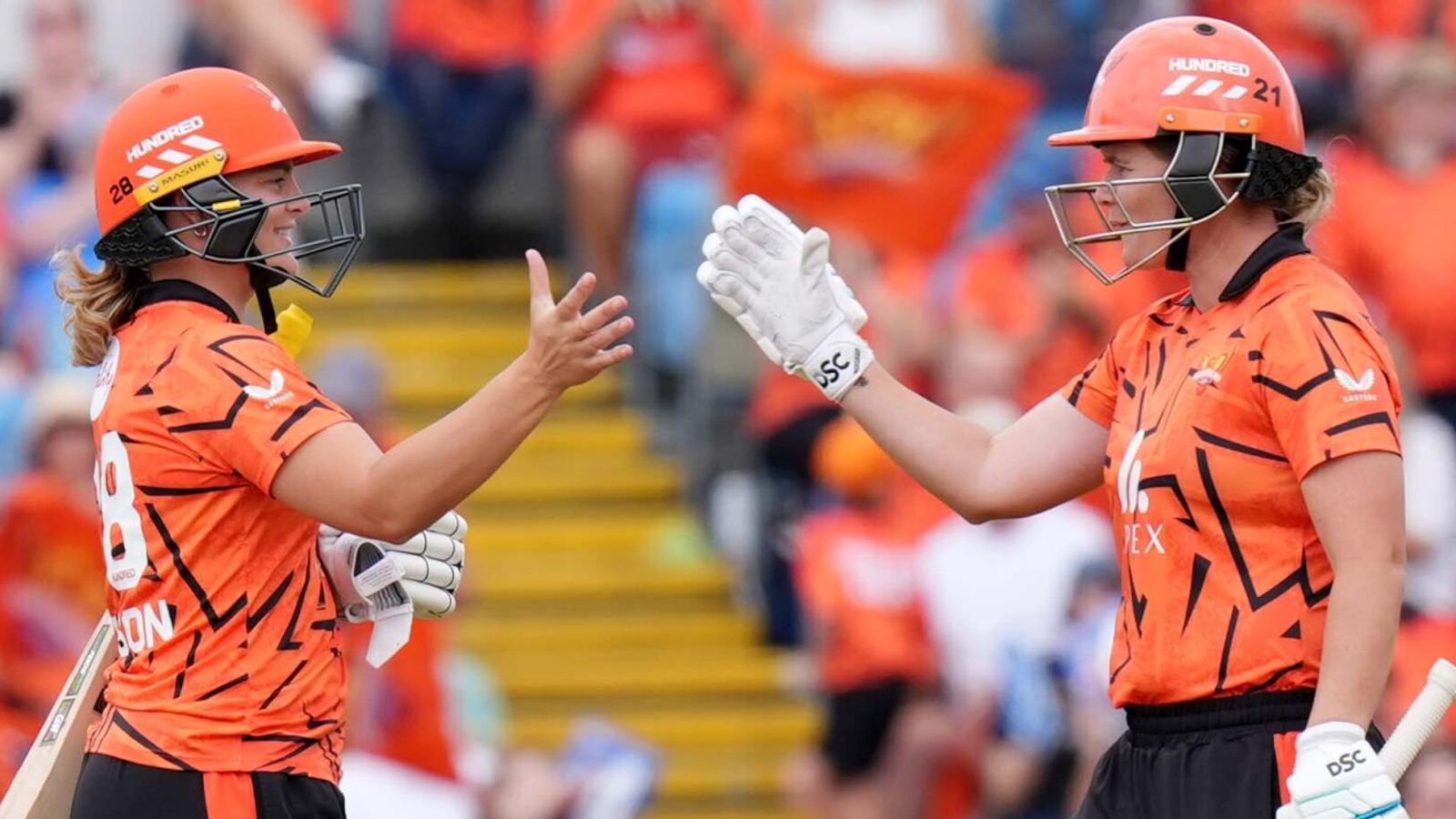
Sunrisers Leeds kept themselves in contention for The Hundred eliminator while dumping Welsh Fire out of the women’s competition in a one-sided contest at Headingley.
The victory sets up a virtual quarter-final with Manchester Super Giants, who sit in third two points ahead of Sunrisers on 18, at Emirates Old Trafford on Tuesday afternoon.
With both sides coming off the back of two wins, Sunrisers won the toss and surprised nobody by electing to bowl. A nervy start saw Cassidy McCarthy deliver four wides in five balls before Kate Cross got rid of Sarah Bryce lbw.
Freya Kemp then joined Georgia Voll and was fluent from the off in what turned out to be a standout innings.
The economical Deepti Sharma trapped Voll in front to leave the game nicely poised at 61-2 at the halfway mark.
Hannah Baker then broke the game wide open with two quick wickets, an excellent catch by Phoebe Litchfield dismissing her compatriot Georgia Wareham, followed by a peach to bowl Orla Prendergast, both for ducks.
Annabel Sutherland, who had earlier dropped Kemp, then immediately put her down again off Baker to give the Fire a lifeline.
But two more wickets in six balls saw Fire’s run-rate plummet as they aimed just to survive the 100 balls, Baker finishing with 2-15.
Kemp, however, had other ideas. She upped the ante with a six off Jess Jonassen and then blitzed her way to an unbeaten 72 off 45, but a total of 121-8 felt underpowered against the in-form Super Giants line-up.
And so it proved as the remarkable Litchfield continued where she left off against Birmingham Phoenix on Friday.
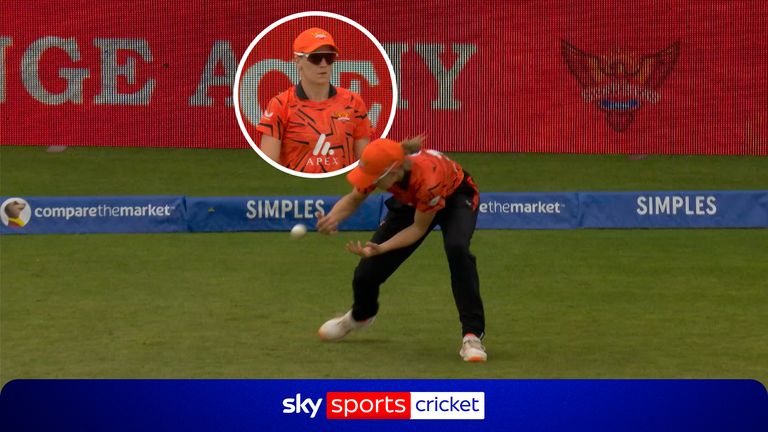
Annabel Sutherland dropped two catches that could have proved costly for Sunrisers Leeds
Shots all around the ground, including three sixes, saw her to a 23-ball 55 and when she went, the score was 92 off 52 and the game as good as done.
Bryony Smith had gone without scoring but Lauren Winfield-Hill reprised her support role from Friday and Sutherland was in imposing form, hitting an 18-ball 28.
It was left to skipper Dani Gibson and Jonassen to finish it off, winning with 26 balls to spare and enabling the Sunrisers to live to fight another day.
Dean inspires Spirit past Phoenix
Charlie Dean took 3-17 as London Spirit sealed their second win of the season by beating Birmingham Phoenix by 32 runs at Lord’s.
Spirit captain Dean helped restrict Phoenix to 108-8 – Nadine de Klerk chipped in with 2-21 – as the visitors fell way short of their run chase after the home side had posted 140-4.
After Phoenix opener Jemima Spence fell to Marizanne Kapp with 10 on the board, Dean dismissed skipper Ellyse Perry and Davina Perrin as the visitors slipped to 47-3.
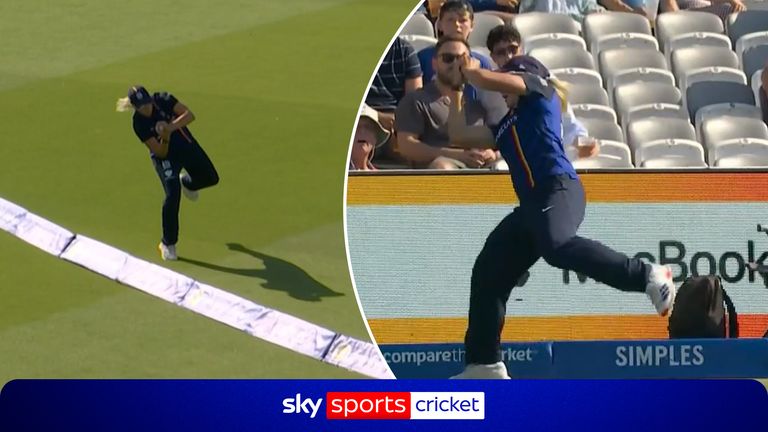
Katie George made an incredible catch during The Hundred match between London Spirit and Birmingham Phoenix.
When Dean had Tammy Beaumont caught behind, Phoenix were 79-6 off 77 deliveries and the writing was on the wall.
Spirit’s South African all-rounder Kapp had earlier clubbed six sixes and two fours in an unbeaten 28-ball 57 to lift the home side’s score after wicketkeeper Jones had made 39 off 30 deliveries.
With one game remaining, Spirit sit sixth in the table on 10 points, four above bottom side Phoenix, who have lost five of their seven matches.
Watch every match of The Hundred through to the finals on Sunday August 16. Watch The Hundred and more contract-free on NOW
>


Hogh runs rampant with first-half hat-trick for Celtic.
>
Sports
PIF London Championship: Anna Huang secures victory after late Charley Hull double-bogey | Golf News

Charley Hull surrendered the lead with a double-bogey on the 17th as Anna Huang stormed to a two-shot victory at the PIF London Championship at Centurion Club.
Hull set up her final-round charge with a course-record 62 in the second round and a six-under 67 in the third, and looked on course to claim a sixth Ladies European Tour title after making five birdies to lead by one shot with two holes remaining.
The 30-year-old’s final round included six birdies, but she dropped two shots by four-putting on the penultimate hole and although she birdied the 18th, she had to settle for a four-under 69 as Huang eagled the last to finish two shots ahead on 22-under.
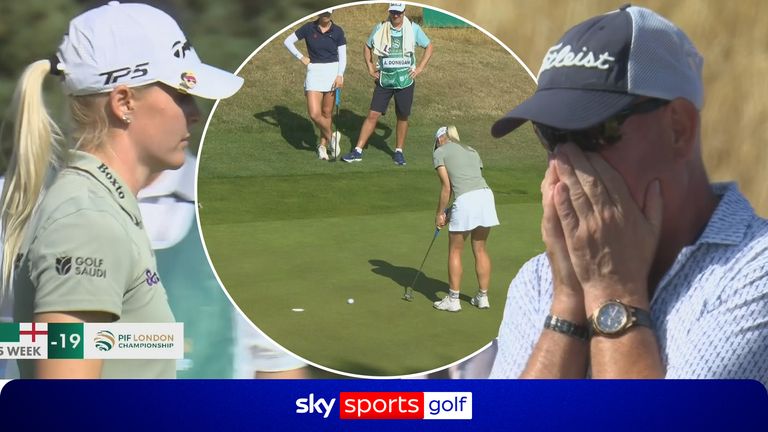
The crowd was stunned to silence as Charley Hull four-putted on the 17th hole moments after taking the lead
Hull hit birdies at the sixth, ninth, 13th, 15th and 16th without dropping a shot before her struggles on the 17th green.
Huang made three birdies and two bogeys in her final-round 70 and sank an eagle-putt on the 18th to secure victory.

Get the best prices and book a round at one of 1,700 courses across the UK & Ireland
Who will win the Solheim Cup? Watch Team Europe’s bid to regain the trophy exclusively live on Sky Sports, with all three days live from September 11-13 on Sky Sports Golf. Get Sky Sports or stream golf and more with no contract.
>

The Hundred: Sunrisers Leeds dominate Welsh Fire at Headingley to remain in eliminator contention | Cricket News

'He can't miss!' | Hogh running rampant with first-half hat-trick

PIF London Championship: Anna Huang secures victory after late Charley Hull double-bogey | Golf News
-

 movies3 months ago
Search For Canadian TV Actor Stewart McLean Now Homicide Investigation
-

 Fashion9 years ago
These ’90s fashion trends are making a comeback in 2017
-
Fashion9 years ago
According to Dior Couture, this taboo fashion accessory is back
-
Fashion9 years ago
Model Jocelyn Chew’s Instagram is the best vacation you’ve ever had
-
Fashion9 years ago
Your comprehensive guide to this fall’s biggest trends
-
Fashion9 years ago
9 Celebrities who have spoken out about being photoshopped
-
Fashion9 years ago
Emily Ratajkowski channels back-to-school style
-
Fashion9 years ago
A photo diary of the nightlife scene from LA To Ibiza