Connect with us

Sports

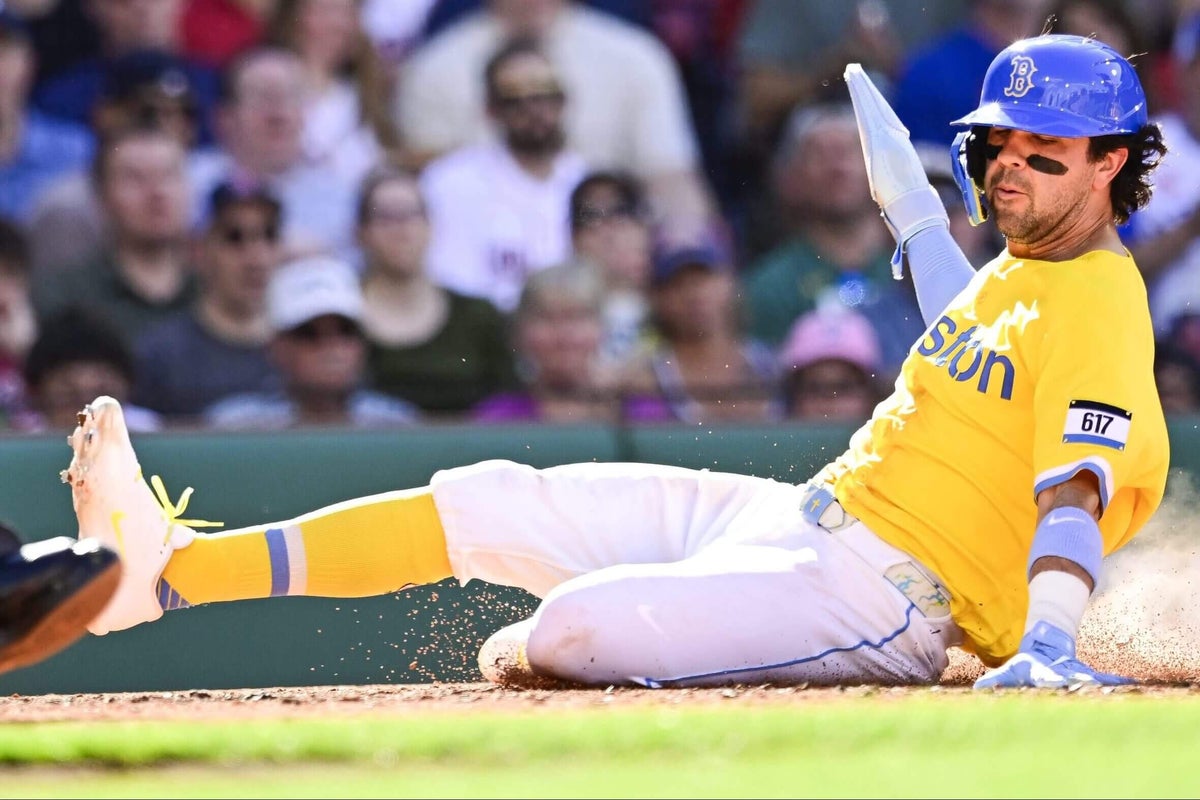
Former Red Sox prospect Marcelo Mayer ‘super excited’ for fresh start with Giants

Published

on

SAN FRANCISCO — Marcelo Mayer still has plenty of baseball ahead of him this season. The 23-year-old infielder, who was one of the game’s most heralded prospects less than a year ago with the Boston Red Sox, hopes to finish his rehab from a stress reaction in his forearm and make his debut with the San Francisco Giants on the team’s upcoming road trip.

But the Chula Vista, Calif., native is also getting a head start on a typical offseason.

“It’s been, like, six months since I had a burger from In-N-Out, so had to go back,” said Mayer, whom the Giants acquired from Boston at the Aug. 3 trade deadline. “That’s usually the first thing I do when I get home in the offseason. So I was able to get one two months early.”

The Giants have an appetite, too. They are undermanned on the infield now that Casey Schmitt has undergone season-ending left knee surgery, third baseman Matt Chapman is likely headed for season-ending sports hernia surgery and All-Star second baseman Luis Arraez is winning new fans in Philadelphia.

Even if the Giants have to ride out choppy weather for the remainder of the season with a reduced roster, it might feel a bit smoother to watch potential stars like Bryce Eldridge and Mayer offer promise of better days ahead.

Multiple injuries kept Mayer from making the impact that Red Sox fans expected after the team drafted him with the No. 4 pick in 2021. But he hasn’t done anything to be a disappointment in San Francisco. Standing in front of his new locker in the Giants clubhouse Saturday morning, Mayer agreed that a change of scenery might benefit him as he seeks to reach his potential.

“I’m just super excited for the opportunity that I have here,” said Mayer, whose last name is pronounced MY-er. “Obviously, being back on the West Coast, being comfortable, close to family, I’m just super excited. The guys have welcomed me with open arms. I’m excited to get going.”

Mayer was drafted out of Eastlake High School in Chula Vista, and barely missed playing with Schmitt, who graduated when Mayer was in the ninth grade.

“It’s a small community where we live, and there’s a lot of great baseball talent,” Mayer said. “So we all know each other, and the baseball world is pretty small. I’ve known Casey pretty much my whole life. I mean, he was on the best Eastlake baseball team that’s ever played. So he’s pretty much (a) legend over there.”

Mayer also knows Rafael Devers, whom the Giants acquired from the Red Sox last year.

“He’s one of the best hitters I’ve ever been around,” Mayer said. “To have him here as a resource and as a teammate, I’m super excited for that.”

Mayer was Boston’s opening day second baseman and struggled to a .594 OPS before he was shut down in late June with the forearm injury, which he chalked up to overswinging in the cage. He began taking swings against high velocity over the past few days and will join Triple-A Sacramento in Las Vegas next week to start a rehab assignment.

“I feel way better,” Mayer said. “I feel like I’ve turned the corner.”

Mayer started drills with renowned infield coach Ron Washington on Friday and was at it again on Saturday, kneeling in the grass and using a pancake-shaped training glove to pick throws. He can play shortstop, but his best positions are third and second, where he is likely to see the most time.

And yes, he noticed that the Giants’ next trip, which begins in Cleveland, will finish with a three-game series at Fenway Park. The Aug. 21-23 series has been circled on the calendar for months because it will be Devers’ first games in Boston as a visiting player. Now it’s set up to be a double feature.

“Definitely thought about it,” Mayer said. “That would be for sure a good experience. But before that, I’ve just got to make sure that I’m ready to play and healthy and doing whatever I can to help the team win.”

Giants manager Tony Vitello described Mayer as “on a mission,” and said the team “will be here to pull the potential out of him because … he can do a lot of dynamic things on the field, but I think (the goal is) adding consistency to that, and increasing those moments that make him a standout player.”

Mayer described his process as “getting back to doing things that I was doing in the minors that made me successful, doing stuff that I know that worked for me, that worked for me my whole life. Then it’s talking to hitting coaches, getting to understand the philosophy here, and growing that relationship with them, and going from there.”

>

Continue Reading

Sports

Giants aren’t rebuilding just because they sold at the trade deadline

Published

on

Nuance is dead. If you look closely at some of the details behind this claim, I’m not so sure, but it’s what they keep telling us. It’s a binary world. No time for shades of gray. If a baseball team isn’t contending, it’s rebuilding. These are the only two states of existence for a franchise, and never the twain shall meet. The 2026 San Francisco Giants aren’t contending, and they made moves at the trade deadline that weakened their chances of winning next year. Which means …

Hold on, there. The Giants aren’t rebuilding, and you shouldn’t let anyone talk you into the idea they are. Note that this is separate from any argument about whether they should or should not undertake such a project. Save that stuff for the comments. Of other websites. No, this is just about identifying what the franchise is doing right now and labeling it properly.

Here’s the spectrum that I tend to use in my writing, then. If you go back and read my earlier work, possibly as a dare or court-mandated punishment, you’ll notice it’s very deliberate: rebuilding, reloading and contending. Teams can be between two of the states at the same time, and most are, but they’re also typically much closer to one of the three.

Start with the one that we know doesn’t describe the 2026-27 Giants.

Rebuilding

Part of the problem with the term “rebuilding” is that it means something different in the other North American sports, where draft picks can be stockpiled and draftees are expected to contribute right away. Baseball is different. Some of the prospects are literal teenagers, and all of it requires patience on a seemingly geologic timeline.

A rebuilding team is a team without hope. It doesn’t have a chance to make the postseason in a league where 40 percent of the teams make it, and it’s hard to express just how bad a rebuilding team has to be. There is absolutely no reason for a rebuilding team to have young and talented players in their arbitration years. They won’t be around for the next contending team, and they can be traded for younger and cheaper players.

The only question a rebuilding team needs to ask: How does this make us better in two or three years?

Every team asks a version of this, but read that again. This is the only question a rebuilding team asks. Every position needs to be filled with a veteran with trade value, a minor-league free-agent type who might break out with regular playing time, a rookie who can produce right away or a rookie with a chance to produce in three years, even if he stinks the entire time until then.

Forget having a merely competent veteran on a modest free-agent deal. You can’t trade those guys, and even if they’re worth a couple of extra wins, they’re costing you looks at younger, cheaper players who might be around for the next phase. Evaluating these players might be the most important job of every season, at least at the major-league level.

Everything is done for a team that’s at least two years away, maybe three. The solid 27-year-old hitter on a rebuilding team will be 30 and more expensive in three years. Get him out. The starting pitcher having success with a 97 mph fastball might be throwing 94 with an extra 400 innings on his shoulder. Trade him, too. These kinds of players don’t belong on a rebuilding team.

When a rebuilding team collects enough prospects and other quality young major leaguers, it starts to expect a few more wins. Then it gets to join the clubs in the next tier. It’s where almost all the rest of them are, after all.

Reloading

A reloading team looks at every spot on the 26-man roster and wonders how to make it better. It will use an overpaid veteran, a rookie, a 52-year-old from Triple A if the knuckler’s really dancing — better players at every position, whenever it can. It’s really not more complicated than that.

This isn’t to say that there aren’t some longer-term considerations for the typical team in the typical situation, like a team’s decision about a rookie’s struggles in the service of his development. A team will have to decide whether it’s time to trade a veteran to make room for a younger player, even if the veteran is likelier to be better in the short term. Not everything is win now, and this is where the definitions start to blur a bit.

There’s enough talent on a reloading team, though, where it’s absolutely plausible for it to be a wild-card team. It doesn’t need to be a fluke season or an all-time underdog story, either. A few players live up to or exceed expectations, a pitcher starts locating his fastball better, and bingo bongo, you’re 10 games over .500 at the deadline and looking to buy.

That’s not the likeliest scenario, perhaps, but it’s plausible. The reloading team is neither as hopeless as the rebuilding teams nor as frantic as the older contending teams with a closing window. Reloading teams want to make every spot on the roster better for that season, and they’ll figure out how frantic they need to be once they start winning.

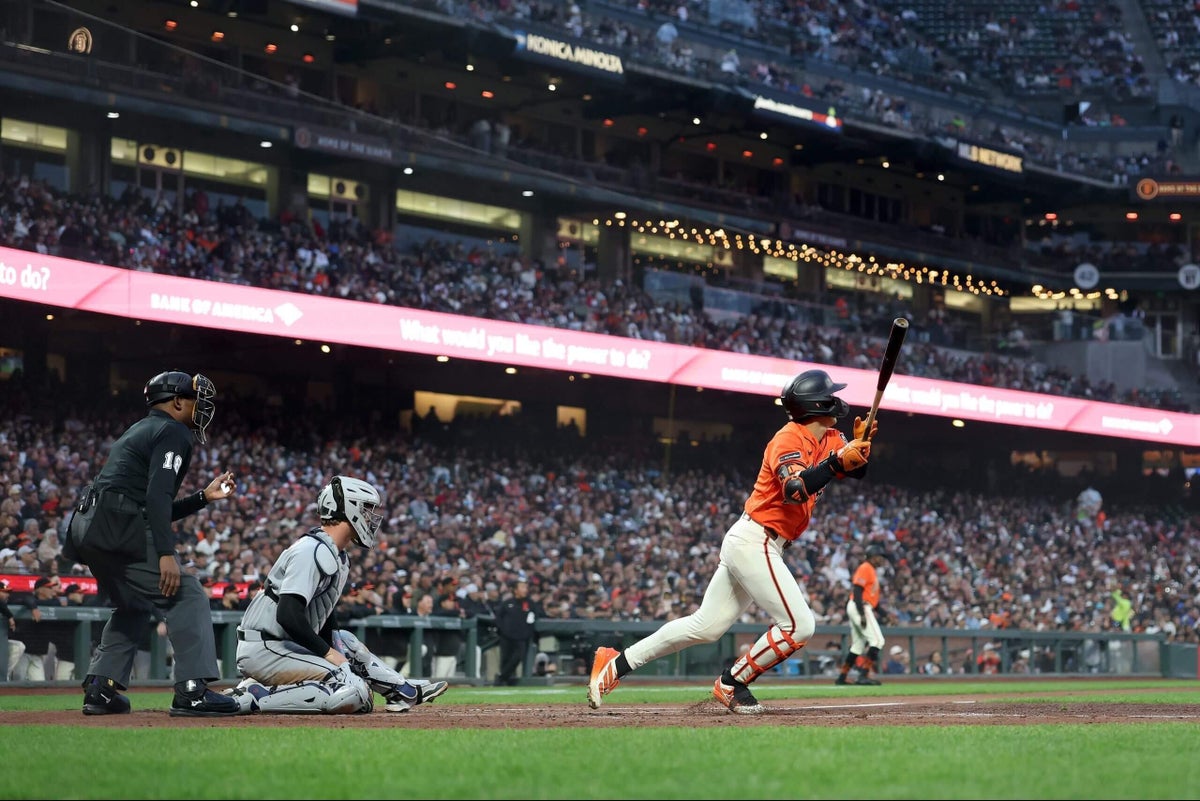
A general view of Oracle Park

Willy Adames, Rafael Devers, Matt Chapman and Logan Webb all fit with a reloading team. So do Jung Hoo Lee, Daniel Susac and Grant McCray. (Thearon W. Henderson / Getty Images)

Reloading teams aren’t typically interested in paying down the salaries of higher-paid, still-useful veterans. They need production, so there’s no sense in paying down a player’s salary just to have him be worth a couple of wins on another team. This is especially true when there’s nobody in the organization who’s as likely to be as good right away.

Consider Willy Adames: There’s nobody in the Giants’ organization who is likelier to be a better major-league shortstop in 2027 than Adames, and this isn’t controversial. The Giants are awash with impressive shortstop prospects, and they have players such as Osleivis Basabe, Buddy Kennedy and Christian Koss who might have enough talent to transcend a utility role one day. But if we’re talking next year, it’s not close. You can use nerd stats to come to this conclusion, or you can use a folksy truism, such as, “The guy who’s done it before is likelier to do it again.”

Now, there are questions about Adames’ defensive value this year, and his swing-first philosophy isn’t likely to age well, and it’s likely that the younger prospects will start pushing their way into the conversation soon … but we’re just talking about next season. A reloading team goes with the best player and worries about other positions instead.

Adames, Rafael Devers, Matt Chapman and Logan Webb all fit with a reloading team. So do Jung Hoo Lee, Daniel Susac, Grant McCray. … Look, it’s an open audition right now. If you can play and make next year’s team better, grab a mitt and a bat and make your case. When the offseason hits, though, the Giants will know how roughly two-thirds to three-fourths of their lineup will shake out, and they’ll feel pretty good about it. They’ll attempt to make the lineup better around them. They’ll build their rotation around the idea that there should be enough hitting to contend.

And if they roll into the 2027 trade deadline looking pretty smart, they’ll become …

Contending

I need a better term for this, to be honest, because it doesn’t convey the urgency it needs to. Contenders are win-now teams that will be radioactive disappointments if they don’t win the World Series. This might be because they keep winning them (Dodgers), because they won so many of them in the past (Yankees), or if they’ve never won one at all and the guy in charge is a mad scientist (Padres). They might have a team of aging and disintegrating veterans who still have the talent for an “Expendables 2”-kind of run (Phillies).

These teams all hope that the minor leagues keep spitting out prospects, but they can’t really worry about that now. It would be a risk trading six years of an underpaid All-Star for three months of a half-decent starting pitcher, but it’s a risk they’re willing to take.

You know what a contender is. They’re a lot of fun.

Therefore …

The Giants are reloading. Almost every team is reloading, at least the ones with half-decent owners. They’re balancing the present with the future, waiting for their opening. When they gather enough talent, they become contenders and start doing delightfully stupid things at the deadline.

The last time the Giants were in a rebuild was after Barry Bonds retired, and it lasted, like, 18 months. Every at-bat that went to Omar Vizquel, Rich Aurilia and Randy Winn in 2008 was an at-bat that didn’t go to a player who was going to be around for the next contender. It worked out, anyway.

That might have been the only true rebuild in franchise history, depending on your definition, and you’ll hopefully never see a Giants team stink badly enough to need one again.

Until that happens, though, it’s not complicated: Is this player helping the Giants more than anyone else they have access to? Is it worth their while to make a large investment in a player who is better at the same position? Is there a younger player who is better? Will another team give us prospects for this veteran, which helps the farm and opens a spot for a younger, potentially better player?

These are the questions of a reloading team. The questions of almost every team. Some teams will be disappointed if they don’t win the 2026 World Series. Some teams will be happy if they avoid 100 losses. In between is a big ol’ bell curve. That’s where the Giants are, have been and are likely to stay.

>

Continue Reading

Sports

How to watch Braves vs. Yankees: TV channel and streaming options for August 9

Published

on

The New York Yankees have a 2-0 series lead, hoping to sweep the Atlanta Braves on Sunday at Yankee Stadium, at 1:35 p.m. ET. Cam Schlittler (10-6, 2.26 ERA) will start for the Yankees, who are 66-51 this season and second in the AL East. Grant Holmes (7-4, 3.67 ERA) is starting for the Braves, who are 70-47 and first in the NL East.

How to watch Atlanta Braves vs. New York Yankees

Braves vs. Yankees odds

  • Favorite Moneyline: Yankees -143
  • Underdog Moneyline: Braves +120
  • Total: 8.5
  • Total Over Odds: -110
  • Total Under Odds: -110

Injury reports

Yankees

Giancarlo Stanton: 10 Day IL (Leg), Cody Bellinger: 10 Day IL (Leg), Carlos Rodon: 15 Day IL (Elbow), Aaron Judge: 60 Day IL (Rib), Clarke Schmidt: 60 Day IL (Elbow)

Braves

Reynaldo López: 15 Day IL (Knee), Robert Suarez: 15 Day IL (Elbow), Spencer Strider: 60 Day IL (Elbow), Spencer Schwellenbach: 60 Day IL (Elbow), Joey Wentz: 60 Day IL (Knee), Joe Jimenez: 60 Day IL (Knee)

Stats to know

  • Ben Rice is hitting for a .260 BA, .353 OBP and .550 SLG with a 25.1% strikeout rate and a 12.1% walk rate. His OPS is .903, which ranks 8th in MLB, and he has scored 72 runs. In 479 plate appearances, he has hit 32 home runs (6th in MLB) and driven in 75 runs (8th in MLB).
  • In 391 plate appearances, Luis Garcia has hit 24 long balls (18th in MLB), tallied 78 RBIs (6th in MLB) and scored 50 runs. He is batting .282/.315/.556 and has posted a 15.6% strikeout rate and a 4.6% walk rate.
  • Matt Olson has hit 33 home runs this season, which ranks 2nd in MLB. He has also tallied 71 RBIs (14th in MLB) and has scored 82 runs. In 512 plate appearances, he has recorded a .267 BA, .344 OBP and .548 SLG with a 10.2% walk rate and a 24.6% strikeout rate.
  • In 502 plate appearances, Ozzie Albies has posted a 14.3% strikeout rate and a 6.8% walk rate while slashing .259/.311/.434 with 19 home runs, 63 RBIs and 71 runs scored.

This watch guide was created using technology provided by Data Skrive.

Betting/odds, ticketing and streaming links in this article are provided by partners of The Athletic. Restrictions may apply. The Athletic maintains full editorial independence. Partners have no control over or input into the reporting or editing process and do not review stories before publication.

Photo: Jamie Squire, Ishika Samant, Scott Taetsch, Alika Jenner / Getty Images

Connections: Sports Edition Logo

Connections: Sports Edition Logo

Connections: Sports Edition

Spot the pattern. Connect the terms

Find the hidden link between sports terms

>

Continue Reading

Sports

How to watch Cubs vs. Royals: TV channel and streaming options for August 9

Published

on

The Chicago Cubs and Kansas City Royals play on Sunday at 2:10 p.m. ET at Kauffman Stadium, attempting to break a 1-1 series tie. Matthew Boyd (7-1, 3.59 ERA) gets the start for the Cubs, who are 68-50 this season and second in the NL Central. Randy Dobnak (2-0, 1.16 ERA) is the expected starter for the Royals, who are 49-69 and fifth in the AL Central.

How to watch Chicago Cubs vs. Kansas City Royals

Cubs vs. Royals odds

  • Favorite Moneyline: Cubs -167
  • Underdog Moneyline: Royals +135
  • Total: 10
  • Total Over Odds: -115
  • Total Under Odds: -105

Injury reports

Cubs

Matt Shaw: 10 Day IL (Hand), Daniel Palencia: 15 Day IL (Elbow), Hoby Milner: 15 Day IL (Appendicitis), Gavin Hollowell: 15 Day IL (Shoulder), Phil Maton: 15 Day IL (Knee), Ethan Roberts: 15 Day IL (Forearm), Edward Cabrera: 15 Day IL (Hamstring), Riley Martin: 60 Day IL (Elbow), Porter Hodge: 60 Day IL (Elbow), Justin Steele: 60 Day IL (Elbow), Shelby Miller: 60 Day IL (Elbow), Hunter Harvey: 60 Day IL (Tricep), Cade Horton: 60 Day IL (Forearm), Christopher Austin: 60 Day IL (Knee), Ben Brown: 60 Day IL (Neck)

Royals

Vinnie Pasquantino: 10 Day IL (Wrist), Maikel Garcia: 10 Day IL (Hand), Beck Way: 15 Day IL (Back), Jonathan India: 60 Day IL (Shoulder), Cole Ragans: 60 Day IL (Elbow), Luinder Avila: 60 Day IL (Forearm), Alec Marsh: 60 Day IL (Shoulder), Carlos Estévez: 60 Day IL (Foot), Nick Mears: 60 Day IL (Shoulder), Stephen Kolek: 60 Day IL (Flexor), Connor Seabold: 60 Day IL (Lat), James McArthur: 60 Day IL (Elbow)

Stats to know

  • Pete Crow-Armstrong is hitting for a .287 BA, .388 OBP and .545 SLG with a 26.7% strikeout rate and a 12.3% walk rate. His OPS is .934, which ranks 3rd in MLB, and he has scored 82 runs. In 521 plate appearances, he has hit 26 home runs (9th in MLB) and driven in 70 runs (19th in MLB). Crow-Armstrong has been crafty on the base paths, recording 30 steals on 37 attempts.
  • In 511 plate appearances, Nico Hoerner has hit seven long balls, tallied 54 RBIs and scored 49 runs. He is batting .257/.317/.359 and has posted a 9% strikeout rate and a 7.4% walk rate. Hoerner has recorded 17 steals on 20 attempts.
  • Bobby Witt Jr. has hit 13 home runs this season. He has also tallied 42 RBIs and has scored 57 runs. In 435 plate appearances, he has recorded a .286 BA, .356 OBP and .454 SLG with a 9.9% walk rate and a 17% strikeout rate. He has been effective on the base paths, recording 31 steals on 36 attempts.
  • In 422 plate appearances, Jac Caglianone has posted a 26.5% strikeout rate and a 6.4% walk rate while slashing .264/.318/.482 with 20 home runs, 49 RBIs and 51 runs scored.

This watch guide was created using technology provided by Data Skrive.

Betting/odds, ticketing and streaming links in this article are provided by partners of The Athletic. Restrictions may apply. The Athletic maintains full editorial independence. Partners have no control over or input into the reporting or editing process and do not review stories before publication.

Photo: Jamie Squire, Ishika Samant, Scott Taetsch, Alika Jenner / Getty Images

>

Continue Reading

Trending

Copyright © 2017 Zox News Theme. Theme by MVP Themes, powered by WordPress.