
Anime
Episode 6 – Goodbye, Lara


How would you rate episode 6 of
Goodbye, Lara ?
Community score: 4.4

© Kinema Citrus/Goodbye Lara PARTNERS
The Little Mermaid is not the only mute heroine in all of Andersen. She is joined by Elisa, the heroine of The Wild Swans, who, to save her brothers, transformed into swans by evil magic, must not utter a sound until she has finished handweaving them shirts from nettles. Like the Mermaid, Elisa is burdened with unspeakable pain throughout her journey – if you’ve ever brushed a stinging nettle, you can imagine how horrible it must have been for her to pick, spin, and weave with them. You may also notice that Elisa’s name is remarkably similar to that of Lara’s sister, Lisa – both, in fact, come from the root name Elizabeth. I do not think this similarity is a coincidence.
This week we finally learn Lisa’s story, and while Lara’s hasn’t been sweetness and light – her time in the 18th century was a tragedy, after all – Lisa’s has been worse. Lara was already gone when the undersea kingdom began to fall, but Lisa had to witness it. In her attempt to save herself and her family, she was separated from them, captured by humans, and spent at least one hundred years as a circus freak, doubtless a reference to the infamous Fiji (or Feejee) Mermaid. Lara’s encounter with the worst of humanity was personalized, a bad ending to a story. Lisa’s was enduring, a century of torment as she was kept in a tank and treated like an object, gawked at and made fun of for someone else’s profit. We see Lisa grow more and more despondent the longer she is imprisoned, watching her turn into Elisa before our eyes. Her voice is silenced, and her hope of saving her family slips away.
Lara’s original story is sad. Lisa’s is desperate, and unlike her youngest sister, she’s never gotten the chance to stop moving forward. Lara spent two hundred years resting before returning to life, but Lisa has been fighting for the entire time. This, too, is symbolic of the difference between the Mermaid and Elisa: yes, the Mermaid feels she’s walking on knives with every step, but she can sit down. She can make the pain stop. Elisa can never stop her work if she wants to save her six brothers, and so her pain is constant, and she can’t even complain about it, because if she opens her mouth, it will all be for naught. If Lisa has come across as cruel, sending Kota (thankfully not dead) to kill Mari and her family, it’s because she’s been forced into that role. If you’re in pain long enough, the pain overwhelms you until it becomes all that you can think about. If not for Kota’s presence, it would be all that Lisa has.
It’s at this point that I begin to wonder about Grace’s directives to Lara. According to the Sea Witch, Lara must find true love to save herself and her family. This is the same warning she was given in the late 18th century, and we saw her turn to sea foam when she failed. But is that different for each merperson or fishfolk who drinks the potion? Because I’d argue that Lisa already knows true love, as does Kota. Their feelings for each other, whether platonic, familial, or romantic, are clearly true love. Kota would never have come to find Lisa if they weren’t. Arguably, Lisa’s drive to save her family is also true love, because she’s putting it above everything else in her life, and not because she feels she must – it’s because she wants to. Yes, rage at Grace is also a motivating factor, but does the existence of anger invalidate feelings of love? I suppose it’s possible, because both Kota and Lisa begin to bubble foam upon their skin multiple times in this episode. And after all, even if Lisa is Andersen’s third mermaid, the most adventurous of the Little Mermaid’s sisters, she’s more properly Elisa of The Wild Swans, and the parameters of her quest are different from the Mermaid’s.
Both do, however, involve true love. And both Elisa and the Mermaid are rewarded (the latter in very Andersenian fashion). But I’m beginning to wonder if Goodbye, Lara is asking us whether the pain is worth the price.
Grace has never stopped watching Lisa through her mirrors, equating her with not only the witches of both The Little Mermaid and The Wild Swans, but also the Snow Queen herself. Mirrors feature prominently in many cultures’ folklore (Japan’s absolutely included), and they play a variety of roles, from granting wishes to reflecting what you least want to see to transformation. What does Lisa see in the mirror? What does a reflection do to Grace’s perception of Lisa’s actions? And will the mirrors ever just reflect the light the merfolk so desperately need?
Maybe. But the prince has just returned to the story, and if anyone’s going to throw things for a loop, it’s him.
Rating:
Recommended Reading: The Wild Swans by Peg Kerr. Alternating between 17th-century Europe and 1981 New York City, Kerr’s fantasy novel uses Andersen’s fairy tale to explore themes of love, loss, and the AIDS crisis. This book still haunts me.
Goodbye, Lara is currently streaming on
Crunchyroll.
The views and opinions expressed in this article are solely those of the author(s) and do not necessarily represent the views of Anime News Network, its employees, owners, or sponsors.
>

13th volume ships on September 30

© Satsuki Nakamura, Ichijinsha
The official X/Twitter account for Ichijinsha‘s Ichijin Novels light novel label revealed on June 15 that Satsuki Nakamura‘s Though I Am an Inept Villainess (Futsutsuka na Akujo de wa Gozaimasu ga – Sūgū Chōso Torikae Den) light novel series will enter its final arc “Hoshi ni Negai o” (Wish Upon a Star) with the series’ 13th light novel volume on September 30.
Seven Seas publishes both the light novels and manga under the title Though I Am an Inept Villainess: Tale of the Butterfly-Rat Body Swap in the Maiden Court, and describes the story:
In a kingdom inspired by historical China, five clans put forth their maidens as imperial consorts–but only one will be crowned empress. The frail and beautiful Kou Reirin, the so-called “butterfly” of the imperial court, is a shoo-in to marry the crown prince. But when “court rat” Shu Keigetsu lashes out at her during the glittering Lantern Festival, it’s Reirin who wakes up in the dungeons! Body-swapped by her assailant to steal her position at court, Reirin’s plight seems dire…to everyone else! Now that she’s got a robust new body, not even the looming threat of execution can stop her!
Ichijinsha launched Nakamura’s light novel series with illustrations by YukiKana in December 2020. The novels’ manga adaptation by Ei Ohitsuji simultaneously launched in Ichijinsha‘s Monthly Comic Zero-Sum magazine. Ichijinsha published the light novels’ 12th volume on March 31. Seven Seas will release the light novels’ 11th volume in English on September 22, and it released the manga’s ninth volume on August 4.
The novels are inspiring a television anime that debuted on July 12, and is ongoing. Netflix is streaming the anime in Asia. Crunchyroll is streaming the anime as it airs in North America, Central America, South America, Europe, Africa, Oceania, the Middle East, CIS, and the Indian Subcontinent. Hulu is also streaming the series.
The anime’s premiere was delayed to July due to delays in production progress. The anime was initially announced to premiere in April.
Source: Ichijin Novels’ X/Twitter account
>

Series debuted in October 2023
Comic PASH! published the final chapter of Ichiho Katsura‘s manga adaptation of Sametarō Fukada‘s I’m Giving the Disgraced Noble Lady I Rescued a Crash Course in Naughtiness light novels last Thursday. Katsura drew an illustration to celebrate the conclusion. The 12th and final compiled book volume ships on September 4.
Kodansha USA Publishing is releasing Katsura’s manga adaptation of the novels in English, and it describes the story:
What does a young noblewoman freshly betrayed by her betrothed need most? A crash course in everything naughty! And who better to teach her than the feared hermit sorcerer who for some reason can’t help but pamper her to no end?
Fukada launched the story on the Shōsetsuka ni Narō (Let’s Become Novelists) website in August 2019. Shufu to Seikatsu Sha published the first print novel volume of the story in March 2020, with illustrations by Sakura Miwabe.
Ichiho Katsura launched the manga adaptation on Shufu to Seikatsu Sha‘s Pash Up! manga website in 2020. Shufu to Seikatsu Sha shipped the 11th compiled book volume on April 3. Kodansha USA Publishing released the ninth volume on December 30.
The television anime premiered in October 2023 on TOKYO MX and AT-X. Crunchyroll streamed the anime as it aired.
Sources: Comic Pash, Ichiho Katsura‘s X/Twitter account
>

©トマトスープ(秋田書店)/天幕のジャードゥーガル製作委員会
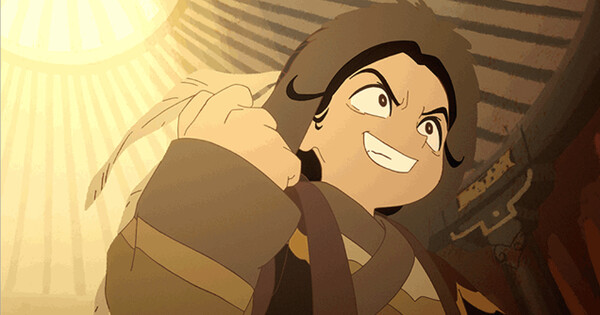
Thank you, everyone, for your patience while I was gone on vacation. It’s now time to delve into the increasingly complicated politics of Mongolia circa the 13th century now that Sitara has gotten herself firmly placed at the side of Töregene in the hopes of working together to undermine the Mongolian Empire. While I could recount a play-by-play of the last three episodes, I think it’s far more interesting to look at the larger conflict present within Jaadugar.
Sitara and Töregene are subjugated people. They were pulled, violently, from their homes to be placed into the service of the Mongolian khan family. Their attributes: attractiveness, cleverness, and education put them into more favorable positions, at least in proximity to power. However, this did not heal their hearts. In a less layered narrative, this point of view and the bloody violence that fuels their quest for retribution would be enough for a satisfying story. However, history is not so simple. Between Sitara and Töregene’s discussions are moments with Ögedei Khan, with traveling merchants, and other visitors to the Mongolian settlements. The audience is presented with the ancient conundrum centered on any nation bent on conquest and colonization: no cultural unification exists without cultural loss. A larger “benefit” for all, such as safety (as explained by the merchants about the trade routes), is not the result of mutual bargaining and pacts; it was wrought through aggressive and deadly tactics.
We see this in Töregene’s story as a Merkit tribesmember. As one of the major tribes during the period, they had ongoing skirmishes with the Mongolian Empire before mutual betrayal led to their dissolution, absorption, and subjugation. Töregene is just another victim, originally little more than a political bargaining chip between the Naiman tribe and the Merkits. Her anger feels twofold: she resents her status as a woman, a person to be bartered with and sent as a sacrifice to appease an intruding enemy, and as the wife to the man who killed her husband.
Sitara, who previously questioned her dedication to revenge after otherwise eking out a pleasant life at camp, is now all in.
The two women, two captives, plan to use their combined cunning and access to information to orchestrate the dissolution of the Mongolian Empire entirely. They don’t seem to consider the great picture: what will the fall of the empire look like for everyone tied to it, but that doesn’t seem to be their concern. At the forefront is to show the ruling family, be it the conquest-hungry Tolui or the money-minded Ögedei, that their aspirations have a price and they’ve been untouchable for too long. The best way to achieve this is from within, but Sitara has her own thoughts as they’ll have to allow Tolui to pull off a successful campaign against the century-old Jin dynasty. A success that spells the starvation and slaughter of millions of people.
Casting turmoil between the three brothers, who all likely have their own aspirations to be the Great Khan, is a sound one. If any of my rudimentary knowledge of medieval and ancient civilizations is correct: the moment you become the ruler is the moment someone is trying to kill you. This could be father to son, uncle to nephew, brother to brother, or any other combination you can imagine. Rome was rife with familialcide and, despite more than a thousand years into the future, Mongolia seems no different.
The audience will have to decide for themselves where the pieces fall on the moral spectrum and if anyone can wholly be a hero in a time like this.
Jaadugar: A Witch in Mongolia is currently streaming on
Crunchyroll.
The views and opinions expressed in this article are solely those of the author(s) and do not necessarily represent the views of Anime News Network, its employees, owners, or sponsors.
>

J.J. Abrams on ‘The End of Oak Street,’ Daughter Gracie’s Acting Debut

USA Swimming CFO Cory Hilliard arrested for allegedly embezzling Colorado athletics money

Telemundo’s ‘Operación Triunfo’ Carries On With Final Live Show Following Devastating 7.4 Magnitude Quake In Colombia
-

 movies3 months ago
Search For Canadian TV Actor Stewart McLean Now Homicide Investigation
-

 Fashion9 years ago
These ’90s fashion trends are making a comeback in 2017
-
Fashion9 years ago
According to Dior Couture, this taboo fashion accessory is back
-
Fashion9 years ago
Model Jocelyn Chew’s Instagram is the best vacation you’ve ever had
-
Fashion9 years ago
Your comprehensive guide to this fall’s biggest trends
-
Fashion9 years ago
9 Celebrities who have spoken out about being photoshopped
-
Fashion9 years ago
Emily Ratajkowski channels back-to-school style
-
Fashion9 years ago
A photo diary of the nightlife scene from LA To Ibiza