
Sports
Arsenal have looked defensively weak in pre-season – can they cope without William Saliba as Premier League campaign nears? | Football News

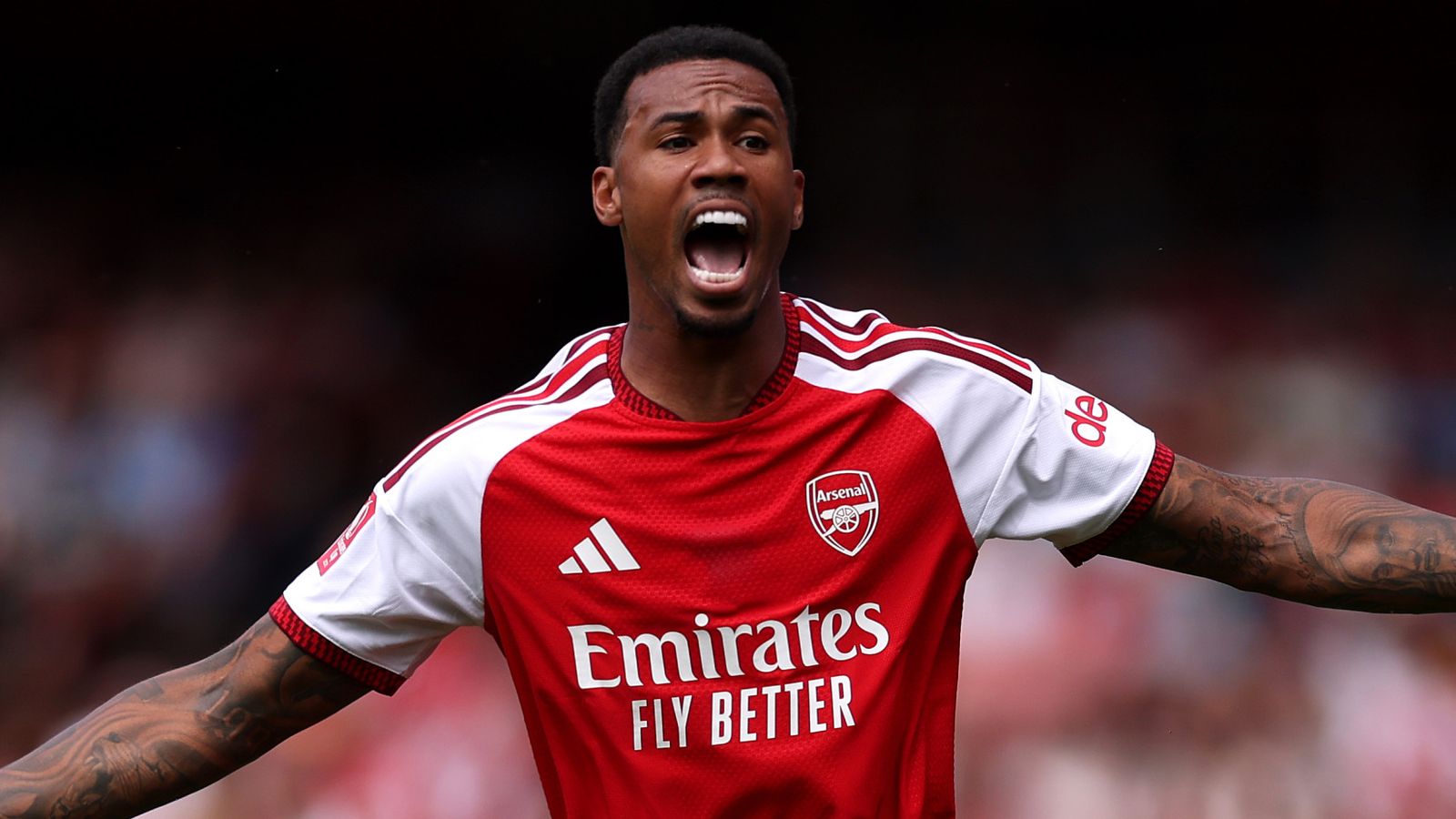
Arsenal have been conceding goals at an alarming rate in pre-season. Seven across three games. Has their greatest strength, one that contributed hugely to their Premier League title success last season, become a surprise source of frailty on the eve of the next?
The Gunners face Manchester City in the Community Shield on Sunday, worryingly light on defensive cover. William Saliba has been sidelined with a significant back injury that is expected to keep him out for an extended period, while Jurrien Timber is still weeks away from his injury return.
Meanwhile, Mikel Arteta’s pre-season preparations have hit the buffers. Arsenal have shipped an average of 2.3 goals in their three friendlies played since the start of August, six in their last two, a figure ominously higher than the 1.4 goals per Premier League outing last term.
In fact, it’s been over three years since Arsenal conceded three plus goals in consecutive games of any nature.
Arteta will of course point to the obvious caveats. Pre-season is where mistake are meant to be made, with players easing out of test mode and closer to flow state as the campaign nears. Sharpness improves along the way.
Friday 21st August 6:30pm
Kick off 8:00pm


The Spaniard has plenty of first-team regulars to welcome back to the fold, too, as well as newest signing Bruno Guimaraes to integrate. He, alongside Declan Rice, will act as an important second line of defence.
But still, Arteta cannot hide from how open his side were in defeat to Borussia Dortmund on Sunday having fielded a first-choice back four (of those currently available). Gabriel returned for the first time to replace Piero Hincapie at the heart of it, but the defending did not improve. Rather, it deteriorated, as both Gabriel and Cristhian Mosquera were caught out of position.
Saliba sorely missed, then.
And it’s likely that same defensive quartet will be chosen to play Man City on Sunday after a final friendly test against Como on Wednesday, which should offer greater clarity of where work should be concentrated. Arteta will know his tools need sharpening before stepping out at Wembley for this season’s pilot.
Any such meeting, Community Shield or otherwise, is meaningful, and a means to exert first agency over a direct rival. Arteta, currently the Premier League’s longest-serving boss, will not be afforded the same latitude as Enzo Maresca will be in his first official act. This is competitive game 353 for Arteta, after all.
Defeat of any kind still pains the former midfielder, even six years into the job. He said Sunday’s Dortmund loss “hurt” despite the relatively minor jeopardy. “We conceded some poor goals the other day, some poor goals today, in the way we competed, especially,” he added. A recognition that Arsenal are currently operating below his expected level of intensity.
The problem is perhaps more conspicuous than it appears. Of the six conceded to Real Betis and Dortmund, three arrived from shots outside the box, two from defensive corners. Arsenal’s out-of-possession shape is unusually out-of-sync.
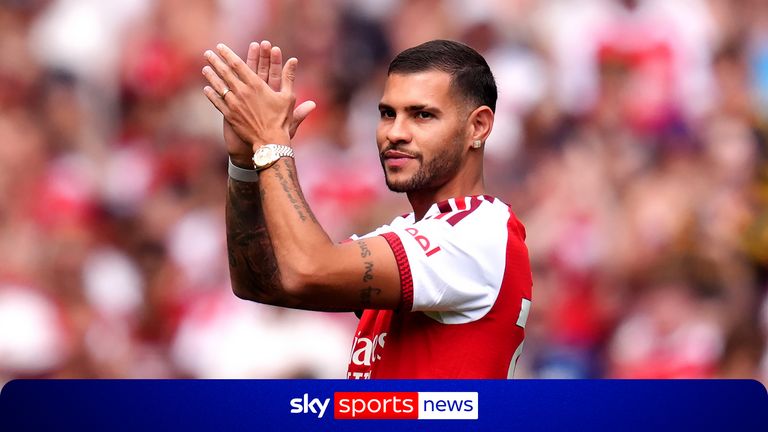
Arsenal’s new number 39! Bruno Guimaraes is revealed to the Gunners fans
In midfield it’s particularly noticeable. Roles and responsibilities should stabilise, though, once Rice returns, aided by the assertiveness of Guimaraes and leadership of Martin Odegaard.
It is also apparent that Arteta has spent time coaxing more creativity out of his architects – perhaps at an initial cost to the team’s defensive structure and security. Arsenal were criticised consistently last season for relying on set-piece effectiveness to get them over the line in tight games, while open-play efficiency often fell short.
That balance of favour needed tweaking to aid Arteta’s options entering a season with the status of champions. He has also been given greater means to shuffle his pack regularly without compromising quality.
The promise of continued improvement under him surely now relies on better, more exciting possessional play – and their chance creation across recent friendlies suggests that is happening.
Starting this week, Arteta gets his first chance to work with a full complement of players as his side’s World Cup winners and England representatives rejoin the fold. His foremost concern will be addressing the new chink in Arsenal’s defensive armour – doing so without the insurance of Saliba.
>
Sports
Enzo Maresca: Why Haaland can’t be Man City captain and how his ‘impossible job’ is a privilege
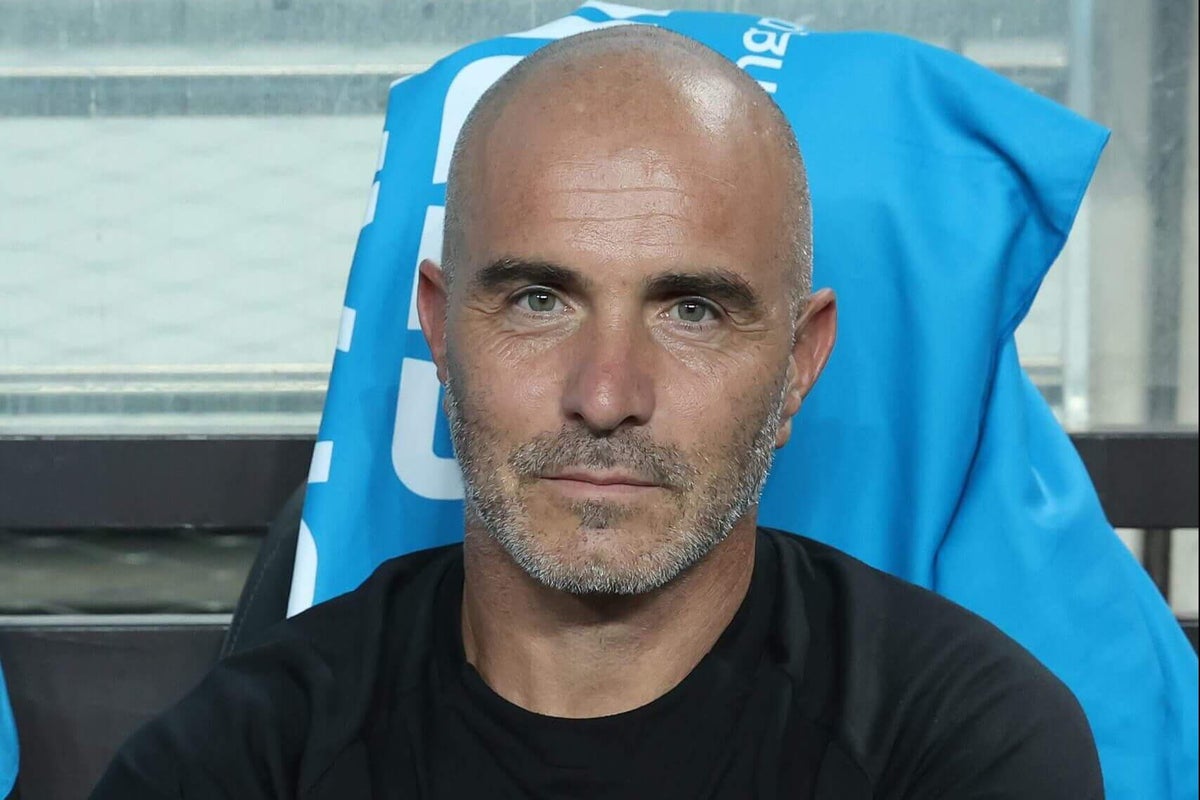
Enzo Maresca sits back in his chair at the Four Seasons hotel in Seoul, South Korea, pondering who he will choose as Manchester City captain for next season. Erling Haaland’s name comes up as an option.
“That is a good one,” he says. “At Leicester and Chelsea, I had a rule that when we scored, the captain had to come to the bench, not to celebrate, for instructions. But if the captain scores, then he can celebrate. If Erling is the captain, f***ing hell! We have a problem, can you imagine?
“Even if it is two or three minutes, there is always something to adjust. We have three or four (captains) and we are missing one. In the case of Rodri, see what happens.”
Across an hour with the journalists who have followed the team to the Far East, Maresca sits and discusses various topics around the job he has on his hands at City, the aesthetic merits of the modern Premier League, his chats with Pep Guardiola and, to some extent, transfers.
Less serious subjects are on the agenda, too, such as the initiation songs that started spontaneously one night in the team’s Rosewood hotel in Hong Kong.
“I don’t sing,” he says. “They all sing, the manager doesn’t sing.”
Seven of his backroom staff took the mic to help break the ice, but few impressed the boss. “They were all s***,” Maresca laughs. “Javi, the analyst — it was a disaster. He was singing My Way, Frank Sinatra — you are already bad, go for an easy one.”
It may come as some surprise to those who have followed Maresca’s public media interactions at Leicester City and Chelsea, and in his first few weeks at City, but he is a warm, funny character.
For whatever reason, he appears to keep that side of himself hidden when he speaks to the press, but behind the scenes he comes across very differently. On his first day at City he introduced himself to staff at the club’s first-team centre and the main takeaway was how relaxed and friendly he is.
Sources around the first team on City’s tour of Hong Kong and South Korea say that the vibe on the trip was the best it had been for years. It was a more relaxed environment, largely due to some of the stricter elements of the Guardiola era leaving with him.
Guardiola has been one of football’s great characters, and is particularly beloved at City not just because of his winning record but also because of how he transmitted his personality to the world, especially in times of strife.
Maresca seems intent on letting his team’s football do the talking, but perhaps one day that will change.
To the football, then.
The Premier League has become more physical in recent seasons and the players at Maresca’s disposal have been recruited with that in mind. Even had Guardiola stayed on, City would probably be playing a more direct brand of football next season, with players more suited to beating a man and covering ground than playing a thousand million passes.
“Compared to three years ago, the big difference is the set pieces,” Maresca says of English football, and you can tell he is not a huge fan of this development. “Back then you could not say that it wasn’t a physical league. It was still strong. Set pieces is the big change, and now everyone goes man-to-man.”
That was the theme of last season. Former Newcastle United winger Anthony Gordon spelt it out perfectly before a Champions League game, saying that European teams “try to play” while English football had become “more physical than I’ve ever known it to be”. One experienced Premier League manager privately described the league as “brutal”.
Maresca is in his element when discussing playing styles. After leaving Chelsea in January, he watched many football matches specifically with an eye on man-to-man marking. He spent time doing online masterclasses in technical and tactical approaches to football and another in artificial intelligence due to its boom in popularity.
“You need your players creating overloads against the man who is marking him,” he says, going back to the football. “For instance, if you see PSG — why are PSG so good? Because all teams go man-to-man and they have Achraf Hakimi at full-back — good one against one. Nuno Mendes at full-back — good one against one. The wingers, the midfielders, most of their players are not physically strong — you don’t see Nuno Mendes or Hakimi or Desire Doue or Bradley Barcola as beasts, but they are good because they can beat their man and are free to carry the ball.”
An espresso arrives as he speaks. He has already had three americanos in the morning, as he regularly does. Like most of the players and staff, he struggled to sleep in Asia, though he does not fare much better back home, kept up at night by thoughts about tactics and team dynamics.

(Yu Chun Christopher Wong/Eurasia Sport Images/Getty Images)
“That’s why PSG in the last two or three years have been the best team because they have players who beat their man one against one,” he continues.
“It’s not just one position — against a team that goes man-to-man, you need the full-backs and players who can beat their man.”
For all that, though, Maresca does not believe that man marking will be so prevalent for much longer. The Italian, who was hired as City’s under-23s manager in 2020 partly due to the way he studied football tactics and trends across the globe, believes the best teams have already started to adapt to it and exploit it.
“I’m not sure it’s going to continue like that,” he says. “For instance, if you see last season when Newcastle played Barcelona and it was 6-1. Atalanta and Bayern Munich was 6-1. Chelsea tried to go man-to-man with PSG when I left and they destroyed them.
“Usually the team that was defending found the solution by going man-to-man. Now the teams that try to build up are trying to find solutions against man-to-man. I don’t know when but there is going to be a bit of change.”
He notes how Chelsea recruited set-piece coach Austin MacPhee from Aston Villa this summer as teams look to leverage set pieces, in the way that propelled Arsenal to the title last season — they scored a record 19 goals from corners.
“Probably Arsenal rely on set pieces a lot,” he says. “They use different strategies to win games. We are going to try to improve, even the set-piece numbers, because you can win or lose with them.”

Kai Havertz scores a header for Arsenal against Burnley at the end of their title-winning season (Julian Finney/Getty Images)
Maresca, though, does not appear to have much taste for the Premier League’s lurch towards balls into the box. He hopes the World Cup’s five-second rule on throw-ins will stop teams taking half a minute or more to restart matches while they bring their centre-backs forwards.
Before he left Chelsea, he saw Antoine Semenyo launch two long throw-ins into the penalty area to earn Bournemouth a 2-2 draw at Stamford Bridge but, like Guardiola, he has no intention of harnessing that weapon now that Semenyo is at City. Rather than it being a question of height, Maresca believes City would be lacking the battling qualities of midfielders to maximise second balls in the box.
Besides, spending time on set pieces in training steals the focus from other areas, particularly as he is trying to get his ideas across in the first weeks of his tenure.
The focus in the Far East was on playing out from the back — he acknowledges that Gianluigi Donnarumma struggles with intricate build-up play and needs to keep things simple and avoid easy mistakes — as well as getting the ball wide and generating dribbling situations for the wingers. Semenyo seems set to thrive in that sense.
Before arriving in Manchester, Maresca flew to Barcelona to meet Guardiola. The Catalan told City he was going to leave the club around the Carabao Cup final at the end of March, formalising plans to put Maresca in place. The two men were very close during Maresca’s time in charge of the under-23s and then as assistant manager in the 2022-23 campaign, and planned to meet before the end of last season, then during the summer, but could not find the time.
“He was here for 10 years, so it was useful for me,” he says. “I like to go in empty sometimes to see things for myself, but he was here so long, he has his opinions. But also you have to arrive and see things for yourself, see the whole picture.”
Guardiola told Maresca not to worry if he says something that is misconstrued by the press as criticism of his predecessor, and gave him an insight into the character of his players, which ones are ‘good guys’ and which ones react badly to being left out.
Maresca is not hiding from the size of the challenge he faces — though this summer he said he has no concerns about the outcome of the 115 charges levelled against City by the Premier League. At his official unveiling, he discussed the need to avoid the mistakes made by Manchester United and Arsenal when they replaced iconic figures Sir Alex Ferguson and Arsene Wenger and accepts that comparisons to his illustrious predecessor are inevitable.
“It’s something that I know — after 10 games, if we’ve got 10 points, 20 points, 30 points, people will be comparing it to Pep after 10 games,” he says. “But it is what it is.
“It doesn’t put pressure on me. I’ve said many times while I was at Leicester or Chelsea, he’s the best manager in the world over the last 15 or 20 years. When he started in Spain, everyone wanted to play like Barcelona. He moved to Germany and everyone wanted to play like Bayern. He comes to England and everyone wants to play like City.
“Someone asked me if it’s the impossible job to follow him — maybe, but at the same time it’s a privilege.”
Maresca knows that some players need a fresh start for various reasons, which is why James Trafford moved on, despite his close relationship with the Italian from their time together in the under-23s. In his post-match press conference after City beat Atletico Madrid 3-1 on Sunday, Maresca revealed that Omar Marmoush is in a similar position.

Omar Marmoush celebrates after scoring against Atletico Madrid on Sunday (Chung Sung-Jun/Getty Images)
He also acknowledges that Phil Foden needs to turn over a new leaf, and he planned to bring Jack Grealish on tour, only for the winger to get injured beforehand. It sounds unlikely that Grealish will be welcomed back into the fold fully, though, after two difficult seasons at City and an up-and-down loan spell at Everton.
Then there is Rodri. Maresca’s line, in public and in private, is that he will ‘wait and see’ what happens, but he acknowledges that the club have been well aware that the Spain midfielder could leave this summer, with just one year left on his contract.
Barcelona are trying to sign him, having persuaded him to reject Real Madrid’s advances, and if he leaves then the group of players that Maresca worked with when he was Guardiola’s assistant shrinks even further.
“Erling was one of the first to send a message when I joined the club,” he says. “Now there is Phil, Ruben Dias, Erling, Rodri and Rico Lewis from the treble. These five. I was still in contact with them, with Erling, with Jack also, Rodri at the beginning.
“The squad has completely changed. It’s been very quick.”
It provides Maresca with an opportunity for as close to a clean slate as you can get for somebody who is familiar with the club’s set-up. He has moved into Pep’s office, but not the one you may expect — he has taken over Pep Lijnders’ space, who served as Guardiola’s No 2 last season. Guardiola’s old office has been turned into a meeting room, with his successor not wanting players to retrace their old steps.
Maresca arrived with a fully formed backroom staff, including former City goalkeeper Willy Caballero as an assistant. He also brings Danny Walker back to City. Walker was his assistant for the under-23s, a hire imposed upon him by former director of football Txiki Begiristain, and he impressed so much that the Italian wanted to take him with him to Parma in 2021.

Pep Guardiola’s assistants in 2022, Carlos Vicens, Enzo Maresca and Rodolfo Borrell (Lindsey Parnaby/AFP via Getty Images)
City blocked that, though, as they also rated him highly, so Maresca promised to take him to his next job. That turned out to be as Guardiola’s assistant at City, so another path was blocked. When Maresca went to Leicester in 2023, he stuck to his word, and Walker is now an important part of the Italian’s setup.
“F***ing hell, Danny Walker! He is the Englishman in my staff. We go for breakfast and it is beans on toast. We go for dinner — it is a beer! When I joined the under-23s, I had a guy working for me (Denis Silva), but speaking with Txiki, he said we don’t allow the under-23s coach to have staff. He was a Catalan guy from Barcelona and now he is working with me.
“Even the Catalan (Txiki) said no! So when I joined the under-23s, Danny was there, he was previously under-16 coach and they moved him to become my assistant. Since then, we are always together, he knows Nico O’Reilly and Rico Lewis, he had them from under-six to under-12. He knows all of them.
“He is very good. He is good at extra work at the end when we keep players doing something extra. I have six, seven people with me and not one of them is there because I feel they are just a friend. It is demanding. If we don’t win games, we are all going home. That is good.”
Maresca knows he has taken on one of the biggest challenges in football and he is ready to do it his own way.
>

Welcome to our Who am I? game.
The rules are simple. Each day there’s a new footballer and the challenge is to guess who they are in as few attempts as possible.
After each wrong guess you unlock a new clue. The fewer clues you need to get the right answer, the more points you score.
Three is a good score, four or five points is exceptional.
So take part and return for more tomorrow.
Today’s player and clues set by BBC Sport’s Flora Snelson.
After more quizzes? Go to our dedicated Football Quizzes and Sports Quizzes pages and sign up for notifications to get the latest quizzes sent straight to your device.
>
Sports
Rangers meeting Q&A: Derek McInnes-Jurgen Klopp comparison, ‘club became used to finishing second’ admission and new signings update | Football News
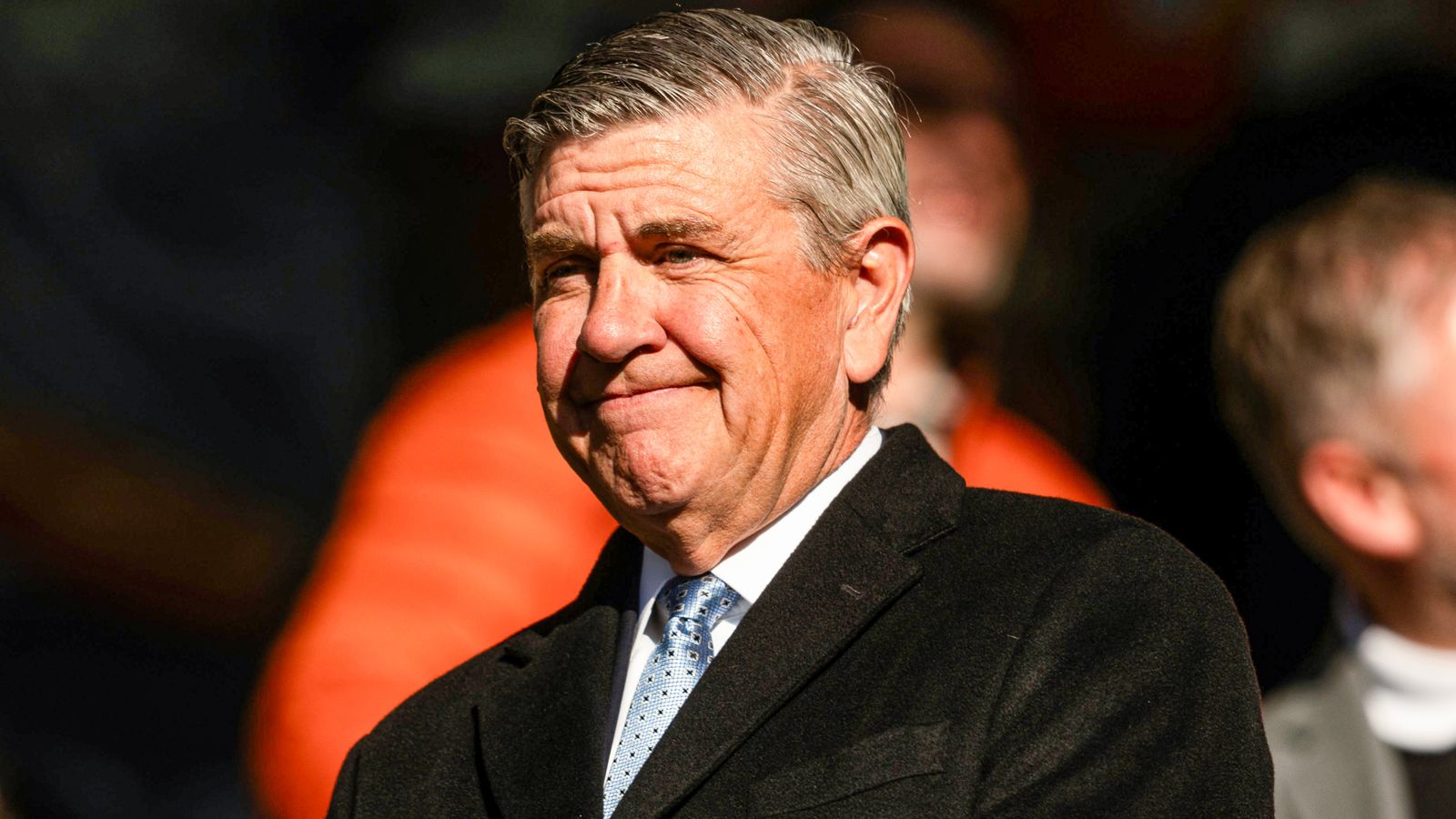
Rangers chairman Andrew Cavanagh believes the Ibrox side have become used to finishing second or worse over the last 15 years, and admits that failure had begun to “seep through” every corner of the club.
He was speaking at the club’s shareholders’ meeting, where it was also revealed they expect to add three to five more players this window, while Derek McInnes’ appointment was compared to that of former Liverpool boss Jurgen Klopp.
It was also confirmed that Rangers have asked for an explanation over Hibernian’s penalty in Sunday’s 2-1 defeat as refereeing concerns were raised.
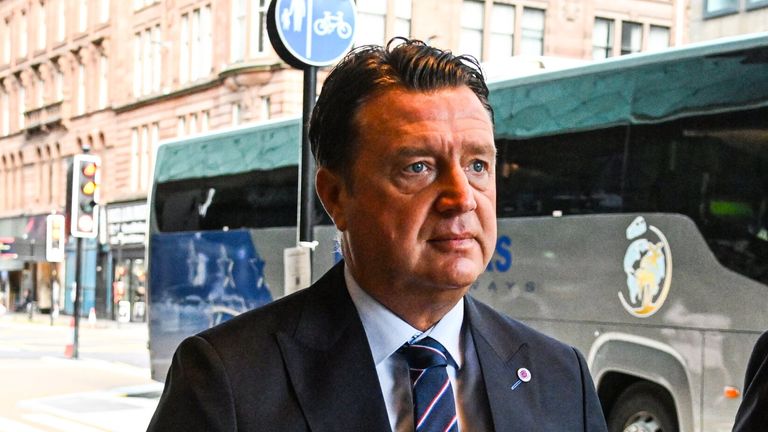
Jim Gillespie was appointed Rangers chief executive in January
Chairman Andrew Cavenagh, Paraag Marathe of the San Francisco 49ers [who are part of the US consortium who took over the club], executive director Fraser Thornton and chief executive officer Jim Gillespie addressed a number of club issues and answered questions from the floor.
Here are some of the key takeaways…
On Derek McInnes
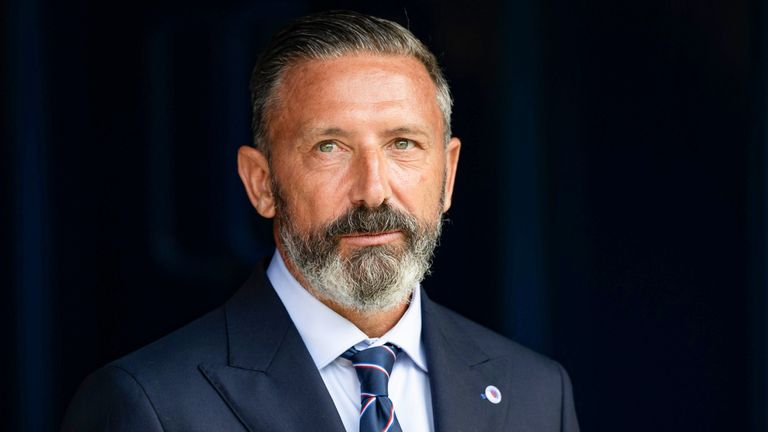
Derek McInnes left Hearts to take charge of Rangers this summer
- During the meeting, one shareholder asked why Derek McInnes, the man they wanted to ask questions to after a winless start to the season, was absent. Andrew Cavenagh explained that the panel had been arranged months ago and that McInnes’ focus was at the training ground to help prepare the team.
- When asked later about the process behind hiring McInnes, Jim Gillespie said you can either hire a ‘Klopp’ or a ‘Guardiola’ type. He said McInnes fitted the ‘Klopp’ type of being a manager who wants his teams to be agressive, on the front foot and attack the opposition.
- During the summer when McInnes was appointed, Sky Sports News revealed he was the only candidate who was spoken to, and Gillespie defended that by adding he was the only option Ibrox chiefs felt “ticked all the boxes”.
- Cavenagh reminded shareholders that “culture eats strategy for breakfast”, and when speaking about standards, revealed people had been late to training and not eating well. He went on to say he believed McInnes was the right man to address this.
On Recruitment
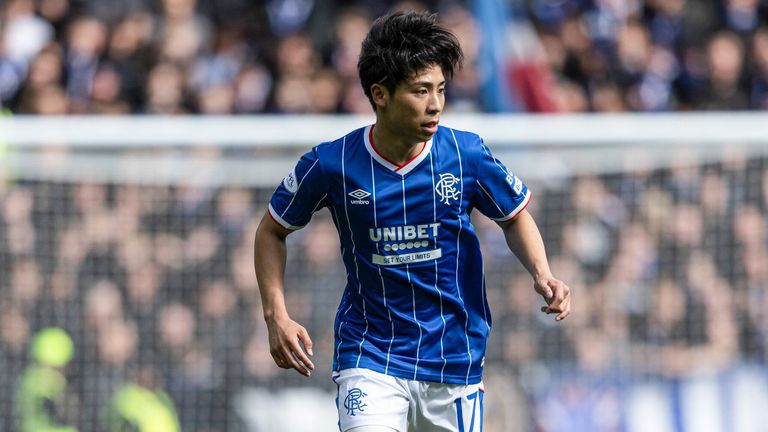
Daisuke Yokota is one of nine summer signings at Rangers so far
- Multiple shareholders raised concerns about player recruitment. However, Cavenagh defended the work in that department, adding he believes the squad is better than it was 12 months ago.
- He admitted the team still requires between three and five more players before the end of the transfer window.
- The meeting was called following a £16m share issue. Cavenagh confirmed that was needed to get the club through this “significant” summer transfer window. He added the club “will need more capital going forward”.
- Marathe insisted that they were “building something special” and referenced Youssef Chermiti’s performances in the second half of last season, after initially struggling with the pressure of his price tag and playing for Rangers.
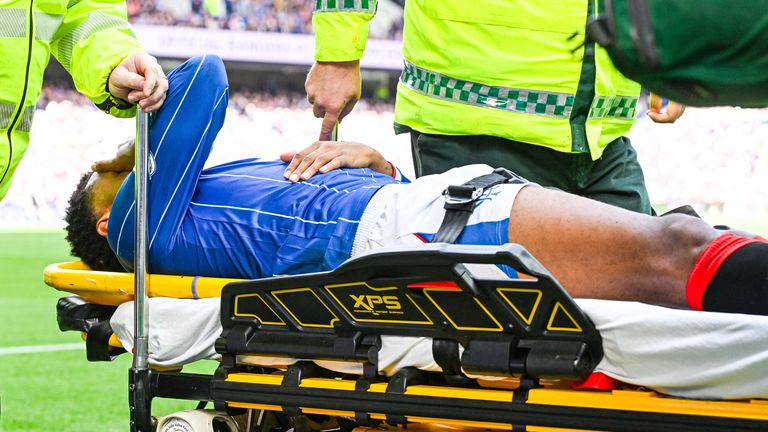
Youssef Chermiti was injured in Sunday’s defeat to Hibs, hours after it was revealed a bid had been rejected for the striker
- On Chermiti, the club hierarchy were asked why he was selected for Sunday’s match against Hibernian despite being the subject of a bid from Galatasaray. The striker was subsequently stretched off injured in the first half of that defeat.
- It was explained that to accept a bid, Rangers need their value of the player to be met, and for sufficient time to reinvest those funds in the squad to make it equal or better. They reiterated there is no pressure to sell.
On Refereeing standards
Hibernian were awarded a first-half penalty in their 2-1 win at Rangers
- Gillespie said that Rangers should be a leading club and want to have a constructive relationship with the Scottish FA and SPFL, while also holding both to account.
- He was interrupted by a shareholder who said: “It’s not working. It’s been going on for years, nothing happens.”
- Marathe replied: “You’re not wrong” but backed up Gillespie by saying, “we can’t make it worse, we can’t be in any more of what feels like a disadvantage”.
- Marathe added “he couldn’t believe” the decision to award Hibernian a penalty in the first half of Sunday’s match at Ibrox. Gillespie confirmed that Rangers have made contact with the Scottish FA to seek an explanation.
On Ibrox stadium
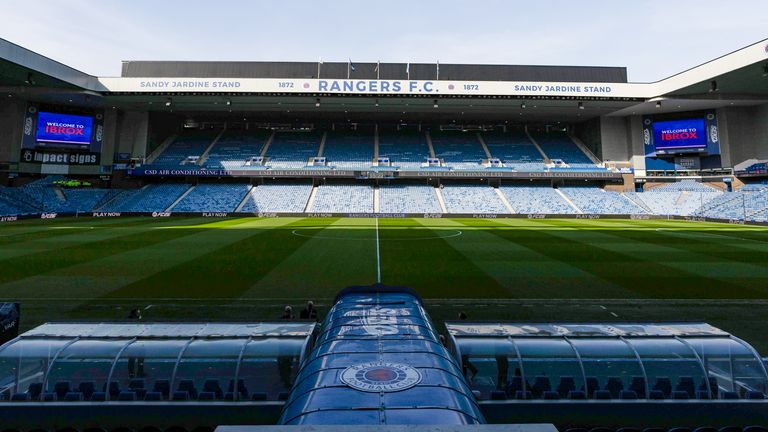
Ibrox could be redeveloped with several proposals being considered
- Marathe – who has overseen stadium expansion at Leeds United and the 49ers – discussed possible changes at Ibrox.
- He said there would be news on that soon, while revealing one proposal is to lower the pitch at Ibrox, adding 5,000 to 6,000 seats.
- It was also revealed, following fan surveys, a number of other ideas have been through a feasibility group and seen by architects.
Call for unity
- Cavenagh, who was personally thanked for his communication and commitment by multiple shareholders while asking questions, closed the meeting by saying: “We need unity, we’re in this together, please remember that.”
- This came just after Marathe asked the audience for their support. “We need them [the team] to believe that you believe in them. Give them a chance, give these boys a chance.”
>

Enzo Maresca: Why Haaland can’t be Man City captain and how his ‘impossible job’ is a privilege

Arsenal have looked defensively weak in pre-season – can they cope without William Saliba as Premier League campaign nears? | Football News

BBC Sport quiz: Who am I? Guess Premier League footballer No 22
-

 movies3 months ago
Search For Canadian TV Actor Stewart McLean Now Homicide Investigation
-

 Fashion9 years ago
These ’90s fashion trends are making a comeback in 2017
-
Fashion9 years ago
According to Dior Couture, this taboo fashion accessory is back
-
Fashion9 years ago
Model Jocelyn Chew’s Instagram is the best vacation you’ve ever had
-
Fashion9 years ago
Your comprehensive guide to this fall’s biggest trends
-
Fashion9 years ago
Emily Ratajkowski channels back-to-school style
-
Fashion9 years ago
9 Celebrities who have spoken out about being photoshopped
-
Fashion9 years ago
A photo diary of the nightlife scene from LA To Ibiza