
Denée Benton in Dreams in Nightmares.


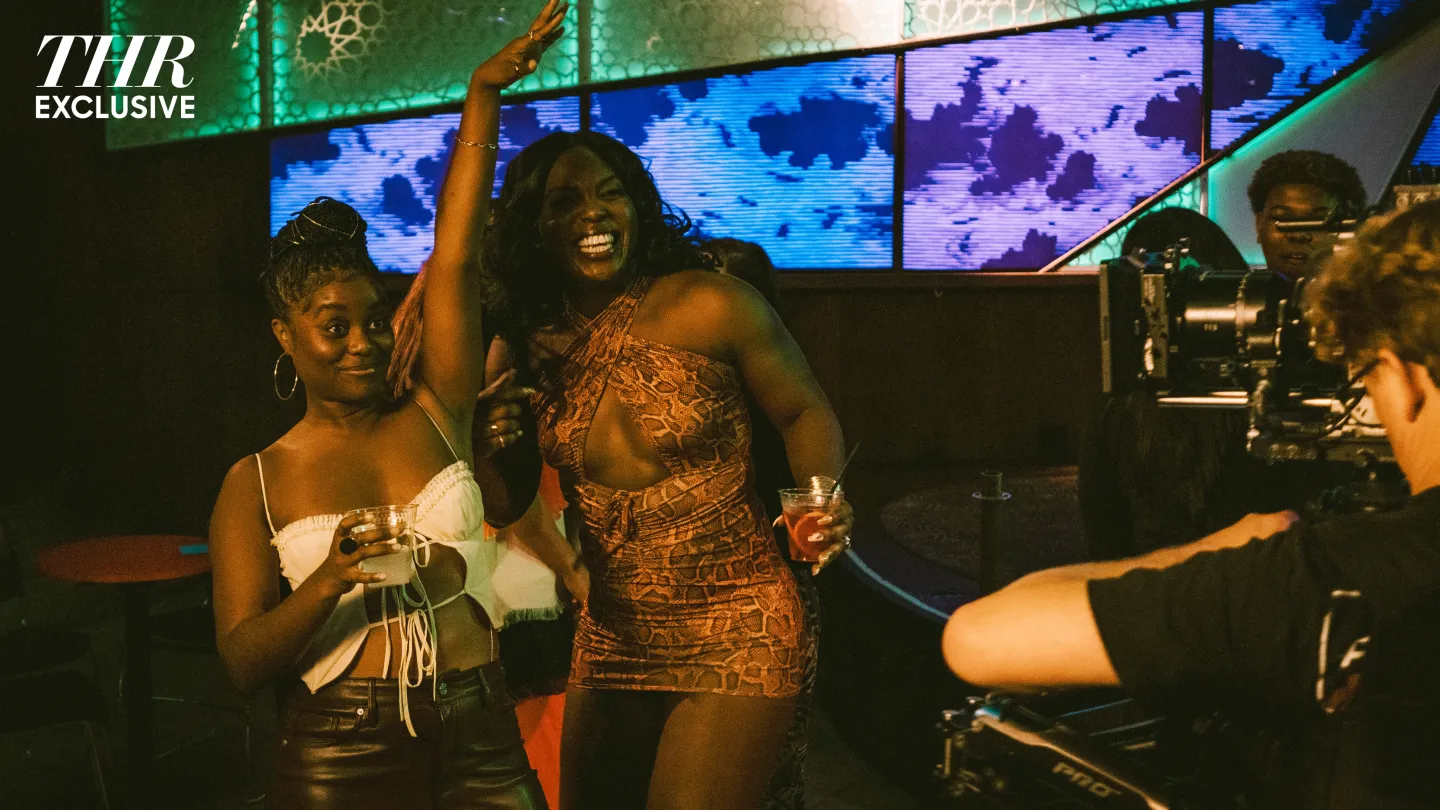
Shatara Michelle Ford’s Dreams in Nightmares made its world premiere nearly two years ago, at the BlackStar Film Festival in Philadelphia. Reviews coming out of the screening were strong; Ford had clearly built on the success of their celebrated debut, Test Pattern, which was nominated for the Gotham Award for Best Feature and three Indie Spirits. The cast featured such recognizable names as Denée Benton (The Gilded Age), Jasmine Savoy Brown (Yellowjackets) and Charlie Barnett (Russian Doll), to say nothing of its superb breakout performances. It felt like nothing else out there.
Yet getting Dreams in Nightmares into theaters two years later, via the nascent small distributor Lunette Films, was no easy task. “I had made my own kind of peace with, ‘Okay, this was one of those experiences where the art already fed me creatively, and maybe we won’t get to have the visibility return of what it means for it to be really seen in a widespread way,’” says Benton, who gives a bracing performance in the lead role. “I didn’t think we were going to get to have this moment.”
Denée Benton in Dreams in Nightmares.
The moment, fortunately, is here, with the release set for Aug. 21. Ford acknowledges it has been a difficult path. But the filmmaker sees it as somewhat inevitable for making the kinds of movies they make — singular, uncompromising and utterly independent. “Anytime you’re doing something slightly unconventional, anytime you’re engaging with stuff from a less established vantage point, the routes that you have to take to come back into the masses, if you will, are always going to be windy and arduous — and that’s okay,” they say. “Doing new things or unusual things is hard.”
In one sense, Dreams in Nightmares feels like a vibrant blast from the past. Its building blocks were rooted in longstanding, slightly forgotten traditions of American cinema. Whereas Test Pattern was focused on one couple and set in Austin, Texas, Ford’s follow-up takes on the expansive shape of a classic road movie, with a group of friends traversing the country — indeed, the continent — and seeing both themselves and each other anew in the process. Ford did not have much money to work with, but whether in Iowa City or Oaxaca, Kansas City or New York, they were physically on location. Ford mapped out the characters’ journey based on cities where they had friends and connections, and could figure out how to shoot within their means.
Each space in Dreams in Nightmares is then brought to vivid, specific life. “It was kind of the point of the exercise. Something that I love and miss is a mise-en-scène — and something that I need is movies that are about people in places that aren’t the place that I live in, and have that be vast and layered. Something happened in the early 2000s where we kind of started eliminating place — or place was just, New York City or Los Angeles,” Ford says. “It’s like location disappeared from how we understood characters and story…. I love going to a new place, understanding how people interact with the place, and I wanted to translate that into a type of film that did that very well, especially in the ‘90s — I wanted that again.”
Dezi Bing, Benton and Mars Rucker in Dreams in Nightmares.
It’s in who populates Dreams in Nightmares that the project starts feeling radical — the kind of movie that, as Ford puts it, “was going to require a much more strategic and considered approach” when it came to actually putting it out into the world.
Benton plays Z, the focal point of the film, who’s just been laid off from an adjunct-teaching position at a Los Angeles arts college. She informs her best friends Tasha (Sasha Compère) and Lauren (Dezi Bing) of the news; she also tries catching up with her other ride-or-die, Kel (Mars Rucker), who’s been unreachable for days. Scattered communication, we glean, is not especially unusual for Kel. But as the trio hit the road to manifest a reunion with Kel, the absence starts to feel more disconcerting, thereby accelerating their search. Along the way, the group confronts the state of their own lives, their relationships and their futures.
It’s a familiar formula, but enlivened and complicated by having Black queer characters at the center of virtually every frame. Ford, who is nonbinary, also delves into the surreal and mystical at the narrative’s edges. They cannily open the movie with archival footage that links these very modern characters to their ancestors — to the ways in which the world has and hasn’t changed at a particularly fraught political moment.
“Being an African American…there are questions of what free movement and passage looks and feels like to people who come from my history,” Ford says. “I wanted to think about and call into the history of my own people who’ve been here for a very long time and have managed to be joyful and thrive and find community and grow families. There are other ways to be resilient and joyful even when things are so utterly shitty.”
Shatara Michelle Ford, Bing, Benton, Sasha Compère and Jasmine Savoy Brown in Dreams in Nightmares.
**
“I feel like this project found me,” Benton says of Dreams in Nightmares. “I had just lived through all of the experiences that were the themes of this film, from realizing my queerness later in life to having to end a 10-year partnership with my favorite person because I was like, ‘Oh God, I’m a little too gay to stay married to a man who knew, and I didn’t.’ My last four years of chaotically crashing out led to really getting to alchemize it into art, which is kind of at its core, the best and rarest way we get to make art.”
A Carnegie Mellon graduate, Benton has made her name on Broadway, receiving a Tony nom for her breakout in Natasha, Pierre & The Great Comet of 1812, and in hit TV shows like Lifetime’s UnREAL and HBO’s The Gilded Age. Dreams in Nightmares showcases what she can do in a true lead role on screen. “To get to work with such high-quality cinematography, such high-quality directing and art direction, we just aren’t often given the same access to quality,” Benton says. “We are all talented enough to deserve that access. For myself as an actress, to just get to take up that kind of space was like, ‘Oh yeah, let me really get to play and show what I can do and carry a film in that way.’”
It’s certainly evident in Benton’s tender, nuanced turn. And this goes for the whole cast. Jasmine Savoy Brown, a scene-stealer in one section of the film as Kel’s estranged girlfriend, similarly came into Dreams in Nightmares known for working in relatively commercial projects — and felt changed by what Ford’s set offered.
Charlie Barnett, who plays Z’s boyfriend, and Benton in Dreams in Nightmares.
“I’ve been fortunate to work on some incredible projects and they all are quite white, and as a mixed-race person, I wanted to make more Black art, to put it quite simply,” Brown says. “I wanted to make more art with and by Black people and queer people. I was feeling uncomfortable in the industry, wondering if I’ve been pigeonholed into just playing in white spaces — and again, I’m honored to be a part of all those projects. I’m grateful for the checks, but it’s not all about the checks. So Shatara approached me at just the right moment — it felt like an answer to a prayer.”
A student of Mike Leigh’s films and methods, Ford adopted the great British filmmaker’s collaborative process of scripting through casting, as they did on Test Pattern. “I picked folks to have conversations with,” Ford says. “I was looking for people who genuinely had questions about what I was doing and wanted to talk about it from a more philosophical or experiential place.” It’s a system of co-creation, with the characters developed on the page out of the actors’ input, well before production begins.
One scene that took Ford by surprise, based on how their actors approached the material, found Z and friends visiting Kel’s parents (played by Robert Wisdom and Regina Taylor) while on their search. Generational tensions smack up against one another; there are awkward silences and impassioned outbursts. The actors found it all in the moment.
“It was me, Denée, Sasha and Dezi as millennial representatives who have this much more nuanced experience with gender and sexuality, and then we have people who are effectively stand-ins for our parents, our uncles, our aunts,” Ford says. “They’re challenging what’s actually happening in the scene because they can’t fully understand it for themselves. It was really beautiful to take a step back and just watch this conversation happen. There’s no right or wrong in my mind. It’s more about recognizing what was right for each character in that room and accepting their edges and messiness and nuances.”
Bing in ‘Dreams in Nightmares.’
**
Despite — perhaps because of — the anxious economic times for indie directors, Ford says it’s no unusual step that they’d put in their own money to push the project forward. “You sacrifice yourself a little bit to make that thing happen,” they say. Over our conversation, it’s something Ford clearly wrestles with, nearing the other side of the years-long effort to get Dreams in Nightmares in theaters in the right way. “I’m more stressed and more tired than maybe I would have been if it wasn’t coming out of my own pocket,” they say later. “I’m constantly trying to understand a path where filmmakers are directly more supported to be able to do the work and experiment.” Indeed, it’s a larger problem, reflective of a national landscape of financial instability.
And yet as they look ahead, Ford conveys optimism: “I remain hopeful that I’ll be able to make the types of movies that I like to make because of the really wonderful, supportive team of people that I’ve managed to make things with and put things out with in the past.”
Dreams in Nightmares asks many probing questions of its audience, but its grammar resides in the patient, empathic language of cinema — in generous close-ups, in lingering scenes of friends shooting the shit, in the ambiguity of simply being alive. There’s a reason Ford cites Leigh classics like Another Year and Happy-Go-Lucky as inspirations for their film. There’s a reason why they turned to the behind-the-scenes tinkering of everyone from Steven Soderbergh to John Cassavetes to Ava DuVernay when it came to reframing thinking about distribution. “This is not new,” they say. “None of this is new.”
Compère in ‘Dreams in Nightmares.’
Dreams in Nightmares can still feel very new, however. “It made me really uncomfortable when I first watched this movie — that’s a good piece of art,” Brown says. “It’ll get you to ask yourself some questions. I feel like this movie has shaken up some relationships a little bit; it shook up mine a little bit!” Benton adds, “You have to face yourself when you watch this movie and face the values you’re building your life around and what you feel limited by.”
This should all be music to Ford’s ears. “As an audience, we have a tolerance for something that we don’t fully understand immediately, and I think that Hollywood has veered away from allowing that as much as they used to. But it doesn’t mean that an audience can’t handle it,” the director says. “If I can do something that’s a little weird, that’s a little off, that’s a little obtuse, and you walk away asking why I did that? If you’re having a conversation about how it made you feel, or what was experientially going on for you? I’ve done my job.”
Benton, Ford and Rucker on the set of ‘Dreams in Nightmares.’
>
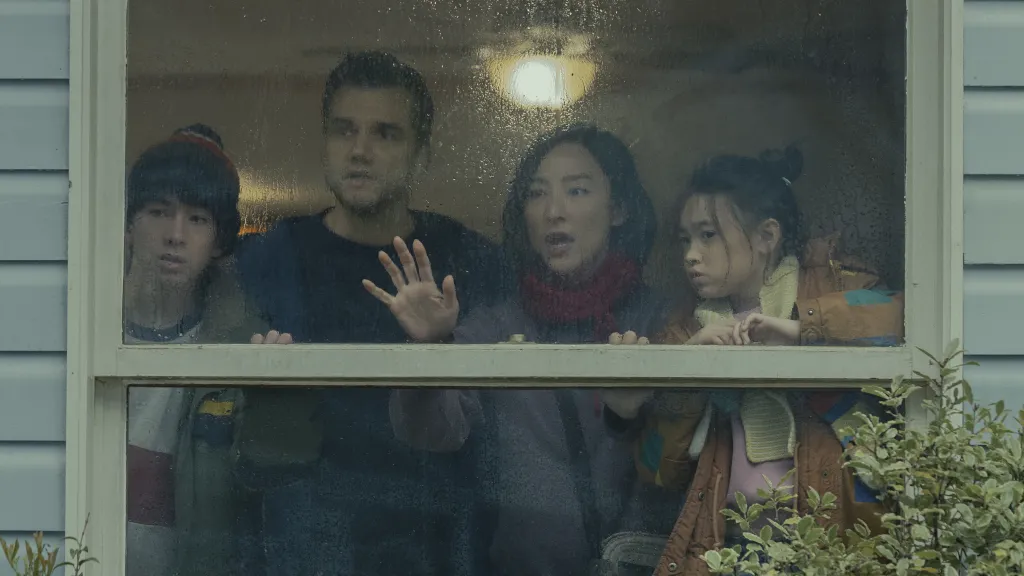
After bowing on the platform last week, the Netflix and Chernin thriller The Last House has landed at number one on the Netflix Top Ten with 27.1 million views. That number comes as the fifth best opening for a Netflix original movie in 2026, Chernin now has two of the top original films to release this year on the platform, with Apex opening with 38.2 million views when it bowed in April.
Starring Greta Lee and Wagner Moura and directed by Louis Leterrier, the film follows a family of four are suddenly sealed inside their home with no way out, and must work together to survive against both their dwindling resources and the mysterious, looming threat that is keeping them trapped.
The film caught headlines last week following its viral marketing campaign leading up to the films premiere where the streamer had a man living in a billboard on Sunset Blvd. August 6 through Saturday, August 8. The stunt drew the eyes of not just the West Hollywoood residents and commuters, but social media as well just as the film was opening over the weekend.
As for Chernin, the film joins not only Apex but the company’s hit Man on Fire series starrring Yahya Abdul-Mateen III, which also debuted at number one when it bowed this past April.
>

The Jonas Brothers are going back to their Disney roots, both executive producing and reprising their Camp Rock roles in the franchise’s third film.
Camp Rock 3 sees the brothers’ band Connect 3 returning to the camp to look for a new opening act for their tour. This means a whole new cast of campers — led by Malachi Barton and Liamani Segura — are introduced, along with a cameo appearance from fellow O.G. star Demi Lovato (who also serves as an EP).
Speaking to The Hollywood Reporter at the film’s L.A. premiere on Monday, Joe Jonas said that in shooting scenes with Lovato, they “both were looking at these new campers kind of pinching ourselves like wow, this is a pretty wild full circle moment. We’ve all lived so much life and to be where we are today and to create something like this, Camp Rock 3, as producers, wearing the producer hat, I think we were like, ‘This is kind of wild.’”
Walking the carpet alongside Nick Jonas and Kevin Jonas, Joe also weighed in on getting to know the next generation of Disney stars, and how different it is now than when the brothers were first getting famous.
“I don’t envy anybody that’s doing this now, there’s probably a lot more scrutiny,” Joe noted. “Things happen a lot faster, and with that you also have an opportunity to kind of explain yourself quicker; when we were starting, we didn’t have a lot of options — just kind of hope that the article isn’t about you. Now you can at least go on your TikTok and say, ‘Hey guys, I didn’t say that’ or whatever it is.”
Joe Jonas also emphasized that there are more resources now to speak to professionals and get support from the studio, and “we also wanted to make sure that we were running a safe space on set. That was one of our priorities when we signed up to do this, we were like, ‘We want these kids to feel comfortable,’ because ultimately we remember what it was like and it can be a lot of pressure. They’re about to be shot out of a cannon into stardom, so we wish them the best and we hope they’re surrounded by love and care.”
Lovato said she also offered the new stars plenty of advice, telling them that “this is going to be a whirlwind and make sure to take breaks if you need them; it’s so important to protect your mental health, and to soak it up and to have fun. That’s the most important part.”
The pop star explained that returning to Camp Rock almost two decades after the sequel was “really healing for me,” as “Camp Rock has meant so much to so many people and it’s meant so much to me; this was the beginning of my journey in this industry and [my character] Mitchie will always have a huge, special place in my heart.”
Camp Rock 3 premieres Thursday on Disney Channel and the next day on Disney+.
Tiffany Taylor contributed to this report.
>

Cats: The Jellicle Ball and Death of a Salesman ended their Broadway runs on very high notes, posting the biggest grosses of their engagements.
Jellicle, closing five months earlier than planned and prompting considerable discussion (and lamentation) within the industry about production costs and the dim odds of scoring a big musical hit these days, grossed $1,828,306 for its final week at the Broadhurst, a jump of $422,597 over the previous week (which, at the time, was its best-ever number). The show was standing room only, with an average ticket price of $193.92, a strong number if still noticeably lower than the $239.61 average for Salesman, the $211.37 for Hamilton or the $220.10 for Ragtime. (Overall average ticket price on Broadway was $130.95.)
Death of a Salesman, starring Nathan Lane and Laurie Metcalf, sold out the Winter Garden yet again, and grossed a whopping $2,509,387. That’s an increase of $286,937 and by far the biggest gross of its big-grossing run.
Also up considerably was Every Brilliant Thing, taking in a strong $886,815 for its final week, a jump of $229,364 over the previous week. The show, starring Tracee Ellis Ross, was a virtual sell-out at 99.6% of capacity at the Hudson. The final gross was the best showing for Ross’ tenure, though short of the $1 million+ grosses that were routine during the runs starring Daniel Radcliffe and Mariska Hargitay. The show peaked at $2,296,473 with Radcliffe’s final week at the end of May.
Despite the big upturns for the closers, most Broadway productions saw at least some dips last week, perhaps due to the competition with the three departing shows, or maybe just some summer wilting. The Lost Boys and Schmigadoon! took the most significant drops, with the former sliding $161,077 to $1,354,926 and the latter down $118,950 to $1,034,918. Dips notwithstanding, decent numbers for the August dog days.
In addition to Jellicle, Salesman and Brilliant Thing, the week’s sell-outs were Hadestown, Hamilton, Oh, Mary! and Ragtime. Coming in just short of sell-out, with at least 95% of seats filled, were Harry Potter and the Cursed Child, Just in Time, MJ, Operation Mincemeat, Schmidagoon!, The Lion King and The Outsiders.
In addition to Salesman, two productions grossed in excess of $2 million: Hamilton ($2,268,037) and The Lion King ($2,241,283).
At 80% of capacity or less were Two Strangers (Carry a Cake Across New York), 69%, for a gross of $527,150; Titanique, 79%, $759,367; Stranger Things: The First Shadow, 77%, $854,835; Six, 71%, $576,816; and
Chicago, 78%, $742,764.
In all, Broadway’s 29 productions grossed $33,716,025, about even with the previous week’s total and up 9% from last season at this time. Total attendance was 257,464, down 2% from the previous week and up 2% year-to-year.
In the 11th week of the 2026-27 season, Broadway has grossed $385,441,582, down about 4% from last year at this time, with total attendance of 3,121,255 holding steady.
All figures courtesy of The Broadway League. For more box office information visit the League’s website.
>


Search For Canadian TV Actor Stewart McLean Now Homicide Investigation


These ’90s fashion trends are making a comeback in 2017
According to Dior Couture, this taboo fashion accessory is back
Model Jocelyn Chew’s Instagram is the best vacation you’ve ever had
Your comprehensive guide to this fall’s biggest trends
9 Celebrities who have spoken out about being photoshopped
Emily Ratajkowski channels back-to-school style
A photo diary of the nightlife scene from LA To Ibiza
