
Sports
Is this the greatest throw-in? The sideline somersault that became a spectacular assist

Club football is only just back underway after the World Cup and summer break, yet we might have already seen the assist of the season.
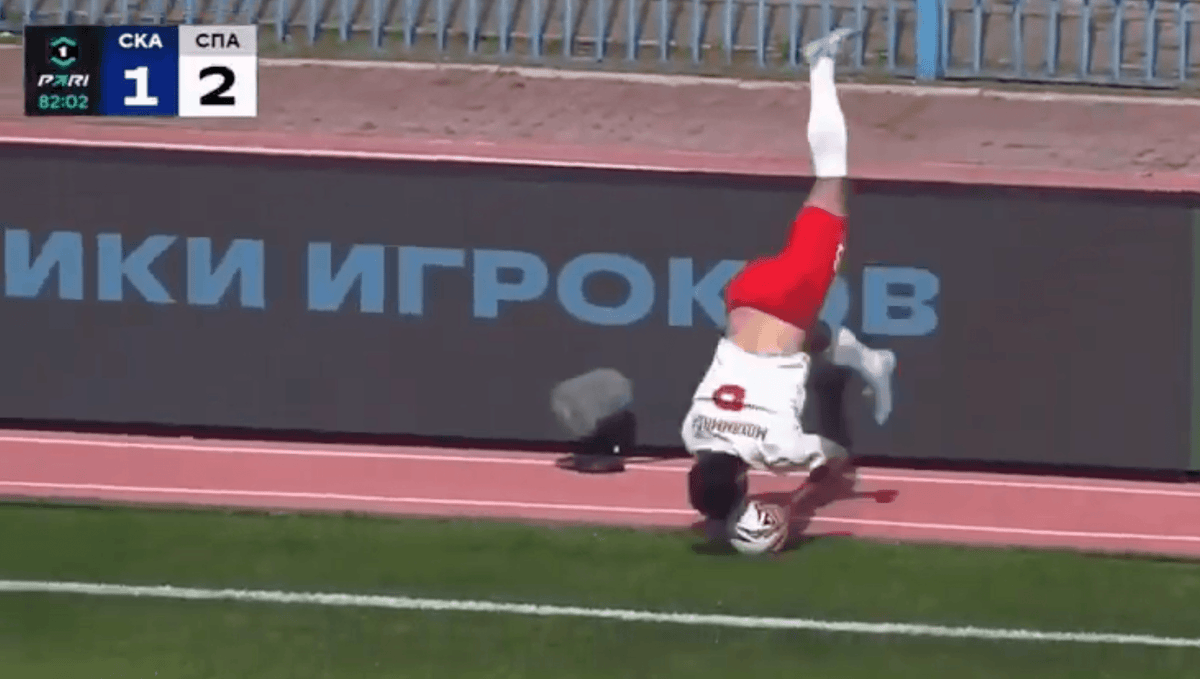
In a largely empty stadium during a match in the Russian second tier, 29-year-old centre-back Nader Mohammadi performed a move that wouldn’t look out of place in a gymnastics competition.
In just his second appearance for his new club, the Iranian defender, known back home for his somersault throw-ins, set up a team-mate on Sunday with his speciality move.
🇮🇷🇷🇺Iranian defender Nader Mohammadi produced a spectacular assist for Spartak Kostroma against SKA-Khabarovsk — using a somersault throw-in to launch the ball into the box. 🤸♂️⚽
The flip throw was famously used by Estonia’s Risto Kallaste and Newcastle’s Steve Watson in the… pic.twitter.com/kPUrT6OJNa
— EF (@EURASIAFOOTBALL) August 9, 2026
Front-flip throw-ins are not new, but are rarely seen — and even less frequently lead to goals.
Voga Wallace, a soccer player at the University of Virginia, was one of the first proponents in 1982. In English football, Newcastle United’s Steve Watson used the technique in the early 1990s, while Estonia’s Risto Kallaste took it to the international stage.
While the flip provides greater momentum to fling the ball further, it is a high-risk, high-reward manoeuvre — great when it works, but slightly embarrassing when it doesn’t. Cue Iran’s Milad Mohammadi, who did the roll but didn’t release the ball in added time during a 1-0 loss to Spain in the group stages of the 2018 World Cup.
But Nader Mohammadi has showed it can still be an effective skill. He even scored from one of his throw-ins in the Iran top tier in 2020 when a goalkeeper tipped the ball into his own net.
So how does he do it?
Mohammadi had spent his entire career in Iran’s top division, the Persian Gulf Pro League, before moving to second-tier Russian team Spartak Kostroma in July.
On Sunday, Spartak, who are third after five games, played bottom-of-the-league team SKA-Khabarovsk. Mohammadi came off the bench in the 67th minute with his team 2-1 up after coming back from going a goal behind.
When the ball goes out for a throw-in, the defender takes the ball and backs up as far as possible.

He puts his right leg forward and falls onto the ball head-first, using it to spring back up as his head narrowly avoids contact with the ground.

After he’s flipped, he swings the ball from behind his head and releases it when his arms straighten, using the momentum of the flip.

It does appear that, when he lands, one of his feet is close to being over the touchline and entering the field of play.
It’s worth remembering that for a throw-in to be legal, each foot should be on the ground either on the touchline or behind it when the ball is released. So, if the officials had taken a closer look, it could have been ruled out.
Lucky for Mohammadi, there is no use of VAR in the Russian second tier.

The ball flies about 40 yards (36 metres) into the opposition’s box.
Mohammadi’s jersey ends up over his head, adding a comical touch, but the effectiveness was not a laughing matter for the SKA defenders as Sergey Bugriev was left with a free header and glanced it past the keeper to extend Spartak’s lead to 3-1 in the 83rd minute.

The SKA defenders don’t cover themselves in glory. They outnumbered the attackers two to one in their box, but their non-existent marking meant Bugriev was first to the ball.
Front-flip throw-ins have been, and still are, probably too risky to be used more routinely, even with the recent rise in set-piece importance.
But Mohammadi can consider himself an expert in what is one of football’s hardest skills.
>
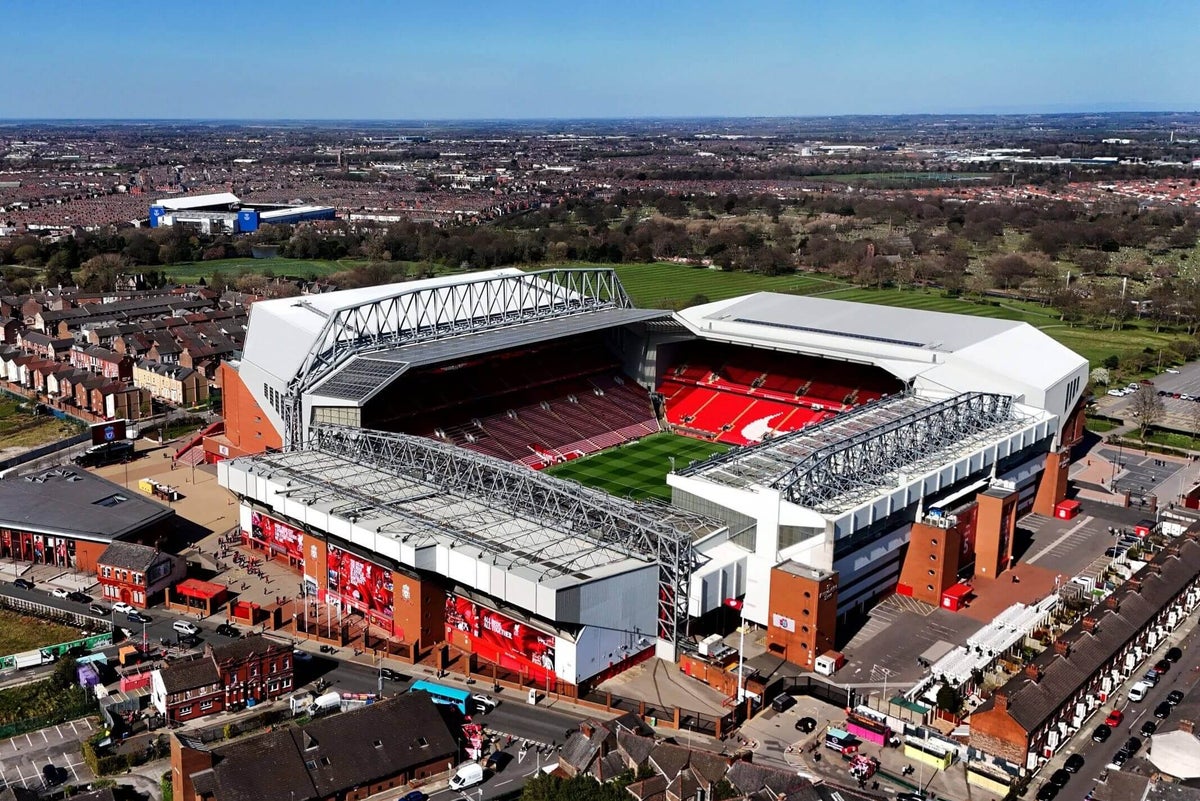
Talks are progressing between Liverpool owners Fenway Sports Group (FSG) and a consortium led by Amit Bhatia over a potential significant minority investment in the club.
Bhatia, a former co-owner of Championship side Queens Park Rangers, is joined by Amazon founder Jeff Bezos and co-founder of Facebook Eduardo Saverin as part of the group interested in purchasing a stake in the English Premier League side.
The Athletic reported on July 23 that discussions had begun regarding a deal for a stake in the club.
Who are the potential investors? How wealthy are they? And what would it mean for Liverpool?
Who are Bhatia, Bezos and Saverin?
Bezos, 62, is one of the richest people in the world, best known as being the founder of the largest e-commerce company, Amazon.
Bezos launched Amazon from his own garage in 1994 after he had left his role at New York Investment Bank D.E. Shaw, where he had risen to senior vice-president. It was initially an online merchant of books before growing into the global technology company it has become today. He stepped down as the company’s chief executive officer in 2021. Bezos is also the owner of the Washington Post and founder of space technology company Blue Origin.
Saverin is best known for co-founding social network site Facebook alongside Mark Zuckerberg, whom he met when attending Harvard. Born in Brazil, his family emigrated to the United States in 1993.
The 44-year-old moved to Singapore in 2009, renouncing his citizenship in the U.S. prior to the initial public offering of Facebook. Since then, alongside Raj Ganguly, Saverin launched venture fund B Capital in 2015 and the fund has more than $12billion (£9bn) in assets under management.
Bringing all of these resources together is British-Indian millionaire Bhatia. The 46-year-old is a former investment banker who worked for Morgan Stanley, before becoming an entrepreneur. He is chairman of British construction firm Breedon Group, managing director of AyBe Capital Advisors and a founding partner of property investment firm Summix Capital.
He married Vanisha Mittal Bhatia, the daughter of Indian steel magnate Lakshmi Mittal, in 2004. Lakshmi Mittal once ranked as high as third in Forbes’ global ranking of billionaires, but most recently sat 73rd with an estimated worth of $31.1bn.
Bhatia announced on July 21 that he was stepping down from the Queens Park Rangers board and transferring his shares in the Championship club to majority owner Ruben Gnanalingam.
Why do Liverpool appeal to already ultra-wealthy buyers?
On the face of it, spending big money on a football club, even one in England, might seem silly. Scarcely any clubs pay dividends; most lose a relative fortune, year after year. Liverpool are an outlier in the latter due in large part to FSG’s savvy financial management, but roughly breaking even hardly sets investor pulses racing.
Yet focusing on the microeconomics of individual club finances when trying to understand the thinking of ultra-high-net-worth individuals (UHNWIs) like those now seeking to buy into Liverpool might rather miss the point.
Arjun Nagarkatti, head of private bank, U.S. and Europe international at Deutsche Bank, highlights four unique attributes that are attracting UHNWIs to sports teams.
Sport is, says Nagarkatti, “one of the few asset classes that has a moat against AI (artificial intelligence). For pretty much everything else (UHNWIs) invest in, they are going to have to think about how AI is going to completely disrupt the sector.” AI will have its place in football, particularly in data and analysis, but “in the end, you need people to get onto the field”.
Beyond that, football clubs, and particularly those playing in the high-profile competitions Liverpool compete in, appeal because live sport is one of the only remaining media offerings whereby “people will tune in at a particular time to watch a particular event”. In a world of on-demand television and film, the ability to court so many eyeballs at once is extremely valuable.
So too is a football team’s outlier status in an investment portfolio (and yes, we’re still talking about football clubs here). Nagarkatti highlights how sports teams are “uncorrelated with almost every other asset class you can think of”. If other sectors experience a nosedive, there’s no correlation to the valuation of a sports team — and so no attendant value drop.
Nagarkatti’s fourth and related appealing factor is that the only real correlation seen with sports team valuations is in global growth and wealth: “As we’ve seen wealth grow, you have seen the valuation of these assets grow.” If wider wealth keeps growing, so, says recent history, will the value of sports teams.
A final point, not so widely attributable to sports teams but certainly to a select few, is the scarcity value attached to “blue-chip” teams. As one of the highest-earning and most avidly supported clubs in football, Liverpool fall firmly into that bucket.
Put like that, it is easy to see why even the already wealthy fancy their chances of making money out of an investment like this.
Why is FSG willing to sell a third of Liverpool?

Liverpool owner John W Henry and his wife Linda Pizzuti Henry with the Premier League trophy in 2025 (Michael Regan/Getty Images for The Premier League)
“John Henry (Liverpool’s principal owner) has been very up front about the fact that if there ever was an opportunity for investment that would help the club, then they would seriously consider it,” Liverpool’s chief executive Billy Hogan told The Athletic last month.
It remained consistent with an FSG statement in November 2022 which said “under the right terms and conditions, we would consider new shareholders, if it was in the best interests of Liverpool as a club”.
FSG has shown in recent years it will welcome outside investment either in the parent company or Liverpool. In March 2021, RedBird Capital Partners invested around $735m to acquire an 11.5 per cent stake in FSG, helping stabilise finances after the Covid pandemic.
Over two years later, Dynasty Equity acquired a roughly three per cent stake in the club, based on how much of the money flowed directly into Liverpool’s coffers, for just under $150m. The investment was used to cover costs of the Anfield Road Stand redevelopment and the repurchasing of Melwood training ground, which became the home of the club’s women’s team, as well as repaying a tranche of bank debt.
Even if the potential percentage stake is significantly higher and close to the 30 per cent that has been reported, it would still leave FSG in control, but it would now have more people to potentially carry the burden of continuing to grow the business.
There is the point, too, that every investment has its own lifespan.
Deutsche Bank’s Nagarkatti, while not speaking about the specifics of this deal or on what FSG’s overriding motive in selling a stake might be, highlights that any investor has to choose when is “a good time to monetise their asset”. It is a consideration which spans all asset classes including, given its continually increasing wealth, football.
In this case, FSG has been at Anfield for a decade and a half, overseen significant on-field success and huge value appreciation off it. Selling a large minority stake now will generate a huge return for the group.
Would this bolster them financially going forward?
Since purchasing Liverpool in October 2010, FSG has used a self-sustaining model to run the club. All of the money generated is reinvested. While it has been a point of frustration at times when supporters have felt the owners have failed to capitalise on Liverpool being in a position of strength, it is a model that has worked, with the club returning to the top of the domestic game and competing for the biggest trophies.
Having a consortium full of very wealthy people investing in the club should, in theory, strengthen Liverpool’s financial position further.
It could open up new sponsorship avenues which would further enhance the significant revenues the club is generating season upon season. Last summer they showed a willingness to invest heavily in the playing squad, and under the new squad cost ratio rules that are replacing profit and sustainability rules, it could enhance their power in the transfer market.
As outlined above, the investment by Dynasty conferred direct funding from Liverpool’s shareholders for the first time in almost a decade, with £146.5m of cash flowing in across the 2023-24 and 2024-25 seasons.
Much of that was used to pay for infrastructure works, and it is extremely unlikely that whatever sum a large minority stake brings would be ploughed directly into the club, not least because football’s financial rules have reduced the efficacy of owners pouring big sums in. But the arrival of a well-backed minority partner may see a shift in owner funding for a business model that has, for the most part, been self-sustaining under FSG.
Does it mean a majority sale to this consortium makes sense in the future?
It is understandable that this development raises questions about the long-term future of FSG as Liverpool’s owners.
The club are in a strong financial position, announcing record revenues of over £700m and ranking fifth in the Deloitte Football Money League — the highest-placed Premier League team — so new investment is not a necessity.
It would be slightly odd, though, if this consortium would invest so heavily and in such a large minority stake that they would not want to have some say in how the club is being run.
Liverpool are at something of a crossroads, too. Nobody would have envisaged that would be the case when Arne Slot led them to their 20th league title in 2025, before the club spent close to £450m in the following summer transfer window, their biggest single-season investment in players.
Since then, the club have regressed on the pitch. A new head coach, Andoni Iraola, is in the dugout and some of the key senior figures at the club have or are departing. It was announced in July that Michael Edwards had stepped away from his role as FSG’s CEO of football, while Liverpool’s sporting director Richard Hughes is set to join Saudi club Al Hilal following the end of this transfer window.
Just how wealthy are Bhatia, Bezos and Saverin?

Jeff Bezos founded Amazon from his garage in 1994 (Julien De Rosa/AFP via Getty Images)
According to Forbes’ ‘Real Time Net Worth’, Bezos sits third behind Elon Musk and one of the co-founders of Google, Larry Page. It says the 62-year-old has a net worth of $280.6bn.
At 65th on the list is Bhatia’s father-in-law Lakshmi Mittal — the head of the Mittal family — with a net worth of $33.6bn, while two places below him is Saverin with a net worth of $33bn.
Have any of them been involved in sport before?
Bhatia is leading the consortium and has been the most involved in sport of any of the three, having only ended his near 19-year tenure with Queens Park Rangers last month. Bhatia’s association with the London club began in 2007 as the representative of his father-in-law, after he bought a shareholding alongside co-owners Bernie Ecclestone and Flavio Briatore. He served as vice-chairman until 2018, before becoming chairman, a role he held until 2023.
Bhatia’s brother-in-law Aditya Mittal is now the CEO of the family steel business. He recently invested $1bn in private-equity firm boss Bill Chisholm’s takeover of basketball’s Boston Celtics. Earlier this year the family also ventured into the cricket scene when they purchased 75 per cent of Indian Premier League side Rajasthan Royals for $1.65bn.
For Saverin, this would not be his first attempt to venture into football ownership, as he was part of the consortium that backed former Boston Celtics co-owner Steve Pagliuca’s bid to buy Chelsea in 2022 from Roman Abramovich. The Russian billionaire sold the club after being put under pressure to do so from the UK government following Russia’s invasion of Ukraine.
Bezos has yet to step into the sports investment world either, but he has looked at the possibility of buying NFL franchises, having explored making an offer for the Washington Commanders and the Seattle Seahawks.
>
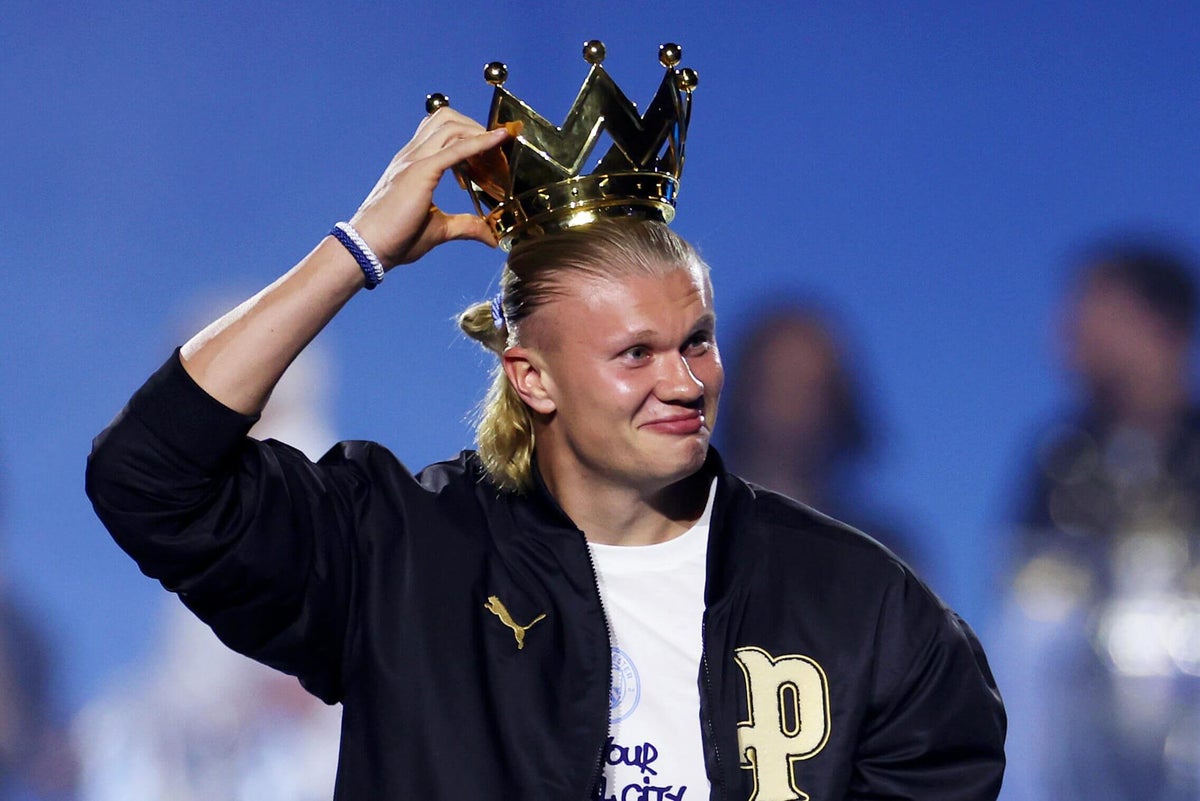
The pricing in Fantasy Premier League this season is more varied than ever, with just two players coming in priced over £10million.
Manchester City forward Erling Haaland (£15.5m) is the game’s most expensive player ever, while Manchester United midfielder Bruno Fernandes (£12.0m) has been hit by a £3m hike from the relatively affordable £9m cost he had this time last year.
With the next-cheapest forward and midfielder this season priced at £9million and £9.5m respectively, how should we be splurging our £100million budget in the premium price-point category?
These are the top 10 players in that group to go for.
10. Morgan Gibbs-White (£8.0m)
The Nottingham Forest playmaker has been handed a half-a-million price rise for 2026-27, having finished the previous campaign with 19 goal involvements: scoring 15 times, with four assists.
Over half of those returns came in the final 10 gameweeks, and Gibbs-White has had a full summer off to recharge and prepare after failing to make Thomas Tuchel’s England squad.
It will be a fresh season at the City Ground with yet another new head coach in Oliver Glasner and freedom from the added European demands of a year ago, but the departure of fellow midfielder Elliot Anderson to Manchester City leaves me with a few questions.
9. Alexander Isak (£9.0m)
Isak never really got going in his debut season for Liverpool, playing just 694 Premier League minutes and producing three goals and one assist.
It was an underwhelming campaign following his big-money move from Newcastle United, where he surpassed the 20-goal mark in both of his previous two top-flight campaigns.
He’s a form player, and I’d like to see evidence of that before investing. A long-term injury to fellow striker Hugo Ekitike (£7.5m) should help Isak’s early-season minutes, and with Mohamed Salah having left Anfield this summer, there’s a chance he’ll be taking their penalties.
8. Ollie Watkins (£8.0m)
Unlike Gibbs-White, Watkins was with England as they got to the final weekend of the World Cup, so we have yet to see him in pre-season action for Aston Villa.
He’s at his lowest initial price for four seasons and having averaged 16.5 Premier League goals across the past four years, we shouldn’t write off his consistency. However, I expect Villa to have a quiet start to their campaign, as they face Brighton & Hove Albion, Arsenal and Forest over the first four gameweeks.
7. Antoine Semenyo (£8.5m)
Semenyo had a sensational 2025-26 season, delivering 17 goals and six assists while playing for Bournemouth and then Manchester City, following an early January transfer, earning him a £1.5million price rise from a year ago.
We don’t know what to expect from the post-Pep Guardiola era, but it’s hard to write off Semenyo as an option from City’s midfield, even if team-mate Phil Foden is £1.5million cheaper and City’s new signing Anderson comes in at just £6.5m.

Antoine Semenyo’s superb form continued last season after his move from Bournemouth to Manchester City (Dan Mullan/Getty Images)
6. Bukayo Saka (£9.5m)
Saka and Cole Palmer are the joint-third most expensive players in the game, but the Chelsea midfielder, who missed large periods of last season due to injury, has been hampered by another knock during pre-season, so (spoiler alert!) fails to make our premium-player power ranking altogether.
Arsenal may be able to play with a bit less pressure after their historic title win, to end a 22-year wait, with Saka producing 17 or more Premier League goal involvements for a fifth season in a row.
He is perhaps the safest way into the north Londoners’ attack, with plenty of routes to points given his involvement in set pieces, including penalties.
5. Gabriel (£8.0m)
Sticking with Arsenal, Gabriel is up in price by £2million this season, and is close to being the joint-most-expensive defender in FPL ever (Liverpool full-back John Arne Riise and Chelsea captain John Terry cost £8.5m each in 2003-04 and 2004-05 respectively).
Mikel Arteta’s team kept a remarkable 19 clean sheets on the way to the title in May, so it’s hard to back against their defensive consistency going into this campaign.
Gabriel’s routes to points are sensational, with eight goal involvements last season, plus earning defensive contribution points on 11 occasions and 30 bonus points.
However, fellow centre-back William Saliba (£6.0m) looks set to miss the start of the season with an injury suffered at the World Cup. Their defensive colleagues Riccardo Calafiori, Piero Hincapie, Ben White and Cristhian Mosquera (all £5.5m) are £2.5million cheaper than the Brazilian.

Gabriel is very expensive this season – but has many routes to points (Justin Setterfield/Getty Images)
4. Igor Thiago (£8.0m)
It feels to me like Thiago is going under the radar, sitting in just 16 per cent of sides at the time of writing, despite a remarkable 22 goals for Brentford last season.
Penalties certainly helped the Brazil forward get to that tally, plus the majority of the 22 came against weaker opposition, and 13 of them were in home matches, but it feels like Brentford are one of the most settled sides going into the 2026-27 Premier League.
Head coach Keith Andrews’ team also have an excellent-looking start from an attacking perspective, with games against Tottenham Hotspur, Leeds United, Sunderland, Bournemouth and Chelsea taking them to the September international break.
3. Bryan Mbeumo (£8.0m)
Maybe it is my Manchester United bias but I couldn’t put Mbeumo any lower than third in this list after the winger produced 14 goal involvements in 31 starts in his 2025-26 debut season at the club.
Designated as a midfielder in FPL, the former Brentford man is a versatile player, sometimes occupying the No 9 role, sometimes playing off the right flank, and is also on some set pieces, which gives him the edge over team-mate Matheus Cunha, who comes in at the same price point.
United have one of the best fixture lists for the season’s opening three gameweeks, facing promoted side Hull City and Ipswich Town in their opening two games, before going to Everton.

Bryan Mbeumo is a more attractive option than Manchester United team-mate Matheus Cunha (David Lidstrom/Getty Images)
2. Bruno Fernandes (£12.0m)
I’m fully invested in doubling up on the United attack, with Fernandes being one of the first names on my team sheet. The United captain is on penalties, while almost dominating set pieces.
He had a remarkable 2025-26 season, with nine goals and 24 fantasy assists, as he broke the Premier League assists record (21).
In 18 appearances after Michael Carrick became head coach in January, Fernandes produced 21 goal involvements and became essential. I expect him to pick up for the new campaign right where he left off.
1. Erling Haaland (£15.5m)
The FOMO with Haaland is real.
He has been the most consistent goalscorer in the Premier League since his arrival four years ago, with 112 in 132 appearances. He is also known for making red-hot starts to seasons, so it would take a braver manager than me to back against him when City host Bournemouth in Gameweek 1.
A wildcard would be essential to get Haaland in if you don’t initially set up with him.
There are a few more question marks than in previous years, given his exploits with Norway at the World Cup, so there’s potential that he doesn’t begin the campaign with the same energy we’re used to. It’s also difficult to know just what to expect from City now manager Pep Guardiola is gone and Enzo Maresca’s in charge.
However, I can’t envisage not having Haaland in my team come opening weekend.
>
A hallmark of longevity in football management is seeing seasons come and go and familiar faces move on.
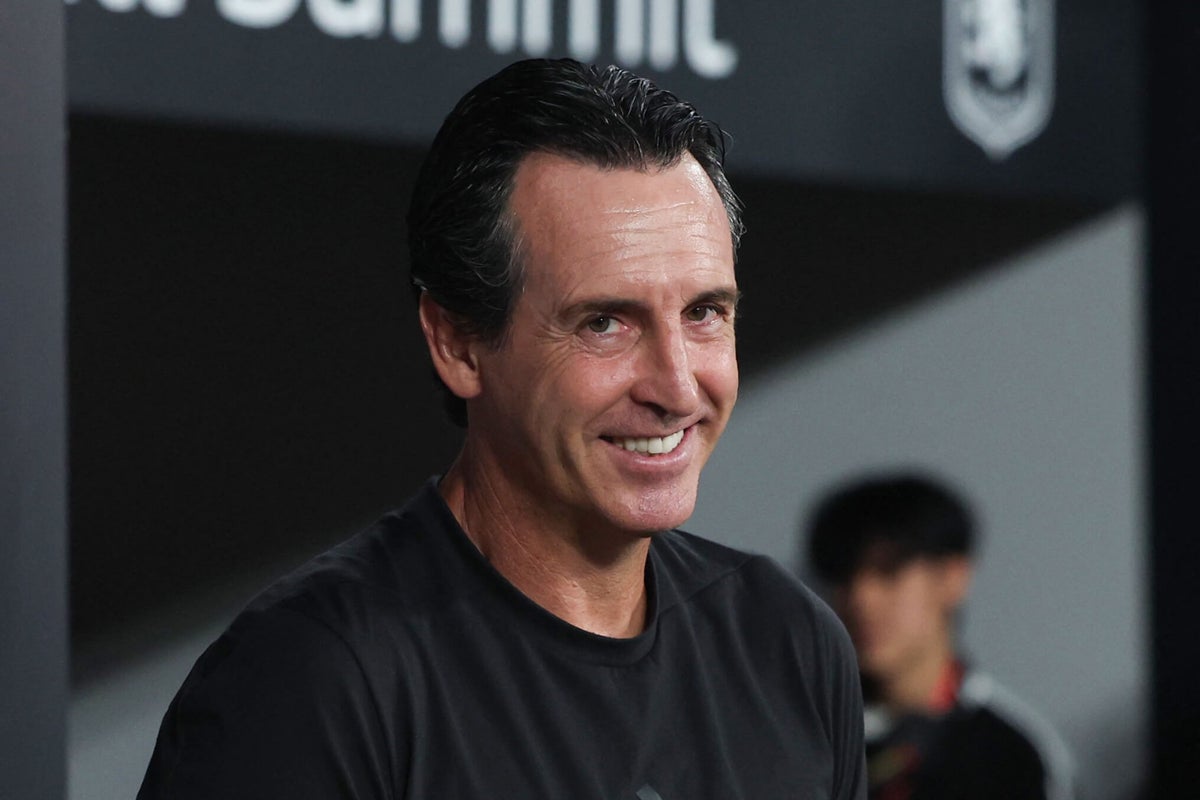
Unai Emery is now the second-longest-serving manager in the Premier League. This will be his fourth full season, following Aston Villa’s most successful, which ended with a second Champions League qualification within three years and, most gloriously, Europa League triumph.
Emery joined in October 2022, revolutionising Villa’s standing. He achieved this through solid foundations, a sound structure and a nucleus of a squad that remained the same. Even last season, Emery would field starting XIs comprising eight or nine players who predated his arrival.
For nearly four years, Villa have represented reliability, emphasised by what has come of direct rivals who have floundered under the weight of change.
This squad broke records for fielding the oldest average team in their Premier League era last season. Age is not just the reason behind change in football, but also the necessity to refresh and find a new stimulus. If you do not evolve, you stand still.
Wednesday evening marks the second iteration of Emery’s Villa. This summer has seen great change in playing personnel and within his staff, with the Super Cup final in Salzburg the first competitive match of the campaign.
Against Emery’s past employers, Paris Saint-Germain, the two teams sit at contrasting ends of the scale in relation to squad evolution. Whereas PSG can proactively revitalise nearly any time they like, financial regulations tend to compel Villa into doing so.
Ideally, Villa would not have sold Morgan Rogers or Youri Tielemans, yet they received a record fee for a British player with the former and, as a consequence of signing the latter as a free agent, reluctantly included a release clause which Manchester United met.
This is one aspect of Villa’s squad evolution. They had to sell some key players, but they also had to know the right time to move others on. It was why several sources close to Villa, speaking at the start of the summer on the condition of anonymity, believed the most imperative part of their transfer business had to be the ability to sell well and in timely fashion.

Youri Tielemans and Morgan Rogers have been sold (Stu Forster/Getty Images)
Despite Villa reaching their zenith under Emery in May, there was a growing argument to undergo a stable transitional phase, providing youthful impetus and appearing proactive, rather than reactive, in lowering the age of the squad.
The acquisitions of Johan Manzambi, 20, Joao Gomes, 25 — and potentially Matteo Ruggeri, 24, who is set to replace Lucas Digne, 33 — are examples of preferred renewal.
Manzambi’s club-record transfer was viewed as a significant coup. The attacking midfielder offers youth, dynamism and drive. It is hoped that Manzambi, during a transitional period as Villa reshape their squad, will serve as the paragon of how to spend the money they do have in the right way.
Villa endeavour to move others on, including Leon Bailey, 29, who remains in a prolonged period of negotiation with his current club and Hull City, who have long agreed a fee for the winger. While Arsenal and Villa remain apart on valuation for Ezri Konsa, who has entered the final two years of his contract, he serves as another case of a long-standing core figure who could end up departing.
Previously, Villa have missed the market peak of some of their players, including Emiliano Martinez and Ollie Watkins. If either or both had left this summer, Villa would not have received the level of fee they would have got 18 months to two years ago. However, Villa would rightly say that in keeping Martinez and Watkins last season, they proved instrumental in the defining stage of their campaign, critical in finishing fourth and winning European silverware.

Ollie Watkins proved critical at times last season (Darren Staples/AFP via Getty Images)
Their respective value, therefore, cannot be judged on transfer fee, with their presence in the squad far outweighing that. It is why they wanted to keep Martinez from the outset this summer and batted away small, incremental offers from Juventus.
Too much change would increase the risk of instability, particularly running through the core of the team which has already seen Tielemans and Rogers leave. If Watkins was to go, for example, that would overhaul an attacking system which was built around him and Rogers.
Tielemans, Rogers and Digne were three of Emery’s most trusted players, in performance and professionalism. Tielemans called Emery out of respect to his manager before beginning negotiations with United. Rogers gave Emery one more season after they sat down last summer and maintained a close relationship, with the England international regarded as one of his favourite sons.
Digne, who lived in London throughout his time at Villa, would return from scheduled days off following international duty early, stay overnight at the training ground and apply himself to every aspect of Emery’s training to convince the Spaniard that he was worthy of staying. Instilling those same principles in their replacements are fundamental in the new era.
Villa’s squad is not yet fully constructed, with more incomings expected. But the match against PSG both symbolises past achievements — winning the Europa League in May meant they played in this — as well as an insight into the future.
>

I Became a Legend After My 10 Year-Long Last Stand Anime Casts Naoto Kobayashi – News

Explained: Who are Liverpool’s potential investors and what does it mean for the club?

Ann Hui to Receive 2026 Busan Film Festival’s Camellia Award
-

 movies3 months ago
Search For Canadian TV Actor Stewart McLean Now Homicide Investigation
-

 Fashion9 years ago
These ’90s fashion trends are making a comeback in 2017
-
Fashion9 years ago
According to Dior Couture, this taboo fashion accessory is back
-
Fashion9 years ago
Model Jocelyn Chew’s Instagram is the best vacation you’ve ever had
-
Fashion9 years ago
Your comprehensive guide to this fall’s biggest trends
-
Fashion9 years ago
9 Celebrities who have spoken out about being photoshopped
-
Fashion9 years ago
Emily Ratajkowski channels back-to-school style
-
Fashion9 years ago
A photo diary of the nightlife scene from LA To Ibiza