
Anime
Nippon Ichi Software’s Gobble Side-Scrolling Game Heads West in 2027 – News

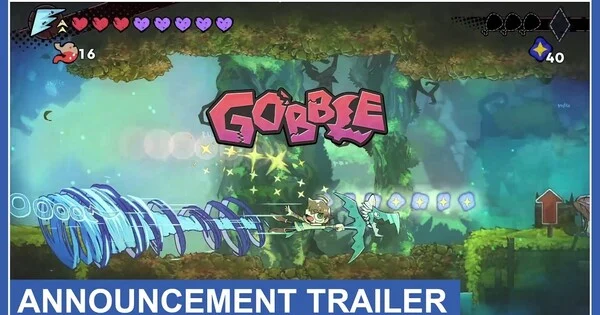
Action platformer about monster-eating scythe launches for Switch, Switch 2, PS5, PC
NIS America announced on Tuesday that it will release Nippon Ichi Software‘s GOBBLE, a new side-scrolling game, in the West in 2027 for Nintendo Switch, Nintendo Switch 2, PlayStation 5, and PC via Steam. The company streamed an announcement trailer:
The action platformer’s story is set in a world filled with terrifying monsters as people’s lives are threatened by the vicious Demon King. A young hero named Root sets out to wipe out all the monsters and defeat the Demon King. Root wields the demonic bird Scythariel as a monster-eating scythe while searching for his missing family. The game features collectibles and hand-painted 2D visuals.
The game will launch on September 24 in Japan.
Source: Press release
>
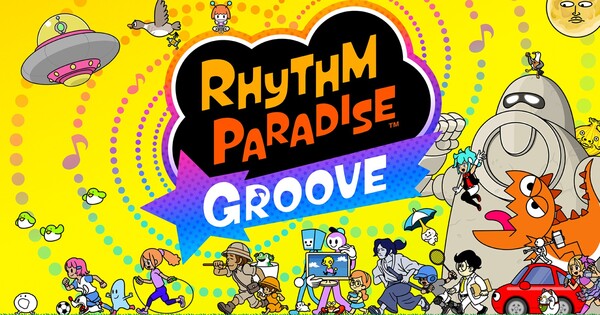
Rhythm Heaven Groove is a return to the Rhythm Heaven games of old—i.e., Rhythm Tengoku, Rhythm Heaven, and Rhythm Heaven Fever. Gone is the attempt at story in Rhythm Heaven Megamix, and instead you simply work your way up columns of mini-games, clearing each to unlock the next.
Rhythm Heaven Groove is massive compared to the previous games (excluding Megamix as the majority of its mini-games were ported directly from previous titles). In the main single player mode, it has 30 brand new mini-games which you play twice each. The first time is a simple, bare-bones version of the mini-game, while the second adds new mechanics on top of the previous ones. On top of this, the game comes with a staggering 20 remix stages that combine previously learned mini-games to make new songs.

© Nintendo © Tsunku♂
That said, there is a bit of a caveat which needs to be addressed. Calling all the mini-games in Rhythm Heaven Groove “brand new” is a bit of an exaggeration. While some are exactly that, for others, the “newness” feels skin deep. The visuals, songs, and rhythm patterns may be new, but the underlying rhythm game mechanics are straight out of previous games in the series. For example, Germ Aerobics is basically just Micro-Row from Rhythm Heaven Fever and Slice N Dice Kitchen is nearly identical to Karate Man from the very first stage of the original Rhythm Tengoku on the rhythm side of things.
Out of the 30 mini-games, there were only two that I didn’t enjoy: Spirit Slasher and Soda Hop. For the first, I had issues picking out the beat in the background music—which, admittedly, may have been a non-issue had I been using headphones. For the second, I’m just generally terrible at switching from beat to off-beat and back again.

© Nintendo © Tsunku♂
Moreover, these two mini-game types made me feel certain about something lacking in the back of my head as I played through the game: Rhythm Heaven Groove is dramatically easier than past titles—or rather, the grading system is exponentially more forgiving. While I may be an old hat at the Rhythm Heaven games, the idea that I cleared 28 stages straight on my first try before encountering even one I needed to work on a few times feels crazy. And I’m still shocked I got a passing grade on either of the Soda Hop levels considering how many mistakes I still made.
However, this change in the grading method might be for the best. It allows people who are weak at one mini-game or type of rhythmic expression to have a chance to play all the subsequent mini-games that would be blocked off if they were unable to clear a single level. I mean, there are some seriously fun mini-games in the back half of Rhythm Heaven Groove—especially considering that the last 6 levels are all remixes.

© Nintendo © Tsunku♂
Beyond the main single-player mode, there are several other rhythm-based mini-games included—from one that turns rhythm into an RPG battle system to a variety of multiplayer levels to enjoy with your friends or family. There’s even a set of mini-games that teach real-life drumming patterns. When it comes to bang for your buck, there’s a ton of content to keep you playing even outside of the main game mode.
Of course, the mini-games themselves are only half the story when it comes to Rhythm Heaven—the actual music is also a major selling point. It’s on this front that I was left disappointed—if only slightly. Though many of the songs are simple, instrumental beats, some of the songs kick things up a notch with vocals. These songs are easily the highlights of these games. On the plus side, instead of localizing these songs for each language this time around, we get songs in Japanese, English, French, Italian, and Spanish (with Japanese songs being the most numerous).
While these vocal songs range from forgettable to fantastic—with Ado‘s “Love Me Forever” taking the top slot—the issue I have is with the placement of these songs. Of the twelve of them, only four are in the back half of the game—and none of those are remix stages. It really makes the game feel like it’s ending anticlimaxically when you do six remixes in a row without a single vocal line between them.
Visually, the cute animation style from past Rhythm Heaven (not to mention WarioWare) games is back and full of charm. In this game, the visuals are decidedly a double-edged sword. They are both designed to help you with your timing in general and mess you up at key moments in specific. The only thing I disliked about the visual presentation of the game is the real-world photos that appear in some mini-games—namely A for Effort and High-Five Fever 2. It just felt so cheap and in contrast with the rest of the game’s visual style.

© Nintendo © Tsunku♂
All in all, Rhythm Heaven Groove is an above-competent Rhythm Heaven game. Do I think it’s the best in the series? No. (That would be Rhythm Heaven Fever.) However, I’d have no issue giving it the runner-up spot. With a main mode nearly double the size of the classic games in the series—and none of the mini-games directly ported over—Rhythm Heaven Groove is a breath of fresh air. In the end, any complaints I have are minor gripes in comparison to all that this game does well. It leaves me with the lingering hope that we won’t have to wait another decade before seeing Rhythm Heaven again.
>
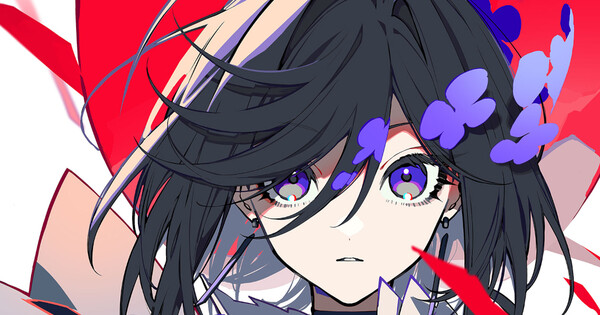
It’s hard to overstate the lasting influence of Osamu Tezuka‘s The Princess Knight. With the manga published between 1953–56 and an anime that aired from 1967–68, it’s widely considered a foundational title for all things shojo, magical girl, and capital-g Gender. This is, obviously, nothing new for the storied Tezuka. Even so, Princess Knight still stands out in Tezuka’s immortal library as one of his most iconic and beloved works. So it’s hardly a surprise then that, not unlike a number of his other works, it would be loosely reimagined in the modern day as The Ribbon Hero.
The Ribbon Hero follows Princess Sapphire after her home kingdom, Silver Land, is destroyed by a creature called the Nergal. Almost completely alone, maimed, and homeless, she wanders for seven years before eventually finding herself in Gold Land. But just as soon as she’s able to find a life for herself there, the Nergal appears once more. But this time, Sapphire can do something about it—she discovers she has some kind of power that lets her transform into a much more powerful version of herself, the Ribbon Knight, who has the potential to defeat the Nergal once and for all.
If you read that and thought that sounds absolutely nothing like the classic Princess Knight you remember, you’re correct. Fans of the classic series will, of course, recognize some details, and pick up on a handful of Tezuka-isms, but only to a certain—and frankly, very limited—extent. In many ways, this is a total, from-the-ground-up reimagining of Tezuka’s classic series, far more divorced from its source material than, say, Naoki Urasawa‘s Pluto is from Astro Boy. This might disappoint some longtime fans, although admittedly, it makes it feel easier for new fans to dive right in without worry or hesitation. This accessibility allows it to take influence from other anime and manga that themselves were so obviously influenced by the original Princess Knight. Revolutionary Girl Utena (especially the Adolescence movie), Puella Magi Madoka Magica, Rose of Versailles, and Sailor Moon‘s influence are all over the DNA of this movie. It feels like a full-circle moment.
The movie itself is action-packed and visually stunning; the overall production value and look are simply unmatched. Stylish, well-choreographed, and featuring some excellent new character designs by Kei Mochizuki, there’s nothing out there that looks quite like this film—certainly not, for example, Princess Knight. The coloration alone feels like a feat of design, let alone bringing it together with the new environments, character designs, costumes, and more. The CGI (in particular, the CGI used for the Nergal) is admittedly nowhere near as impressive as the 2D visuals, but its presence in the film is pretty minimal. If unique visuals are enough to get you on board for a movie, you won’t want to miss this one in all its lusciously-colored glory. For that matter, while it doesn’t necessarily hit you as hard on the head with how unique it is, the soundtrack is still excellent all the same. As far as voice acting goes, whether you prefer dub or sub for this one is likely to come down to personal preference, as both were quite good but neither seemed particularly better than the other.
Beautiful as this movie’s exterior may be, its story can’t even come close to matching that energy. Calling the pacing “rushed” is underselling just how fast things move in this movie. The audience rarely gets time to breathe, let alone really soak in and make sense of what’s going on. New conflicts keep happening, in rapid succession, until they simply… don’t. The theatrical structure is a cool idea in theory, but in practice, it does little to help the story along because of the pacing. This is also probably why a lot of the themes and messages of the movie can often come off as incoherent as well. This is especially the case for the messy way it handles classism—if it can be said to handle it at all. A breadcrumb trail is left for the audience to follow, but the movie isn’t able to follow through on it in a meaningful or satisfying way. Without getting too into the spoiler-y weeds, the movie just isn’t able to reckon with rules it itself established, making for a frustrating watch—as though the movie could either be a massive visual success or a massive storytelling success, but it can’t be bothered to be both.
Although this movie has stellar production value, its contents just can’t rise to meet that same level of quality. A textbook example of form over function, this incredibly stylish movie’s story absolutely faceplants into the gorgeously animated dirt. Still, I hope this movie can provide a good launchpad for Mochizuki and all those who worked on animating it. For all its shortcomings in the writing department, it’s impossible to deny that the look and feel of this movie is simply unmatched.
>
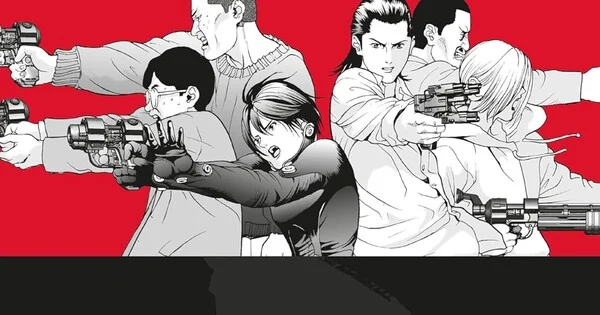
Oku: “To be honest, I just don’t have the energy to keep drawing anymore.”

© Hiroya Oku, Dark Horse
Manga creator Hiroya Oku (Gantz, Inuyashiki, GIGANT) revealed in an interview with Courrier Japon published on Tuesday that he plans to retire after he finishes his latest manga Kanrekihime (The Sweet Sixty Princess). In his interview, he said:
“No, this is it. I’ve made up my mind. To be honest, I just don’t have the energy to keep drawing anymore.
The desire to create is still there. But coming up with a story, drawing it, and keeping that process going — all of it takes an enormous amount of energy and stamina. I just don’t have the energy to do that anymore.”
He also referred to his latest manga Kanrekihime as his shūkatsu (end-of-life preparation), and stated that the old men in the story reflect him and his production team.
Oku launched the Kanrekihime (The Sweet Sixty Princess) manga in Shogakukan‘s Big Comic Superior magazine in December 2025. Shogakukan published the manga’s first compiled book volume on May 29.
Oku’s Gantz manga ran from 2000 to 2013. The manga inspired a television anime, a CG anime film, two Japanese live-action films, and two spinoff manga. Dark Horse Comics released the manga in North America. Oku launched the GANTZ:E historical spinoff manga with artist Jin Kagetsu in January 2020. Shueisha‘s Jump TOON vertical-scrolling manga service launched a new vertical-scrolling full-color edition of the manga titled GANTZ: T in July 2025. A Hollywood live-action adaptation of the manga was announced in November 2021.
Oku ended his Inuyashiki manga series in its 10th volume in September 2017. Kodansha USA Publishing releases the manga in North America in print, and Crunchyroll released the series digitally. The manga’s anime adaptation premiered in October 2017, and it streamed on Amazon‘s Anime Strike service. A live-action film adaptation opened in Japan in April 2018.
Oku launched the GIGANT manga in Big Comic Superior in December 2017, and it ended in 2021.
Source: Courrier Japon (Kozumo Nagahashi)
>

Possession Remake: Callum Turner, Margaret Qualley Movie Sets Release

Rhythm Heaven Groove Game Review – Game Review

The Hundred Women: Manchester Super Giants vs Sunrisers Leeds Highlights
-

 movies3 months ago
Search For Canadian TV Actor Stewart McLean Now Homicide Investigation
-

 Fashion9 years ago
These ’90s fashion trends are making a comeback in 2017
-
Fashion9 years ago
According to Dior Couture, this taboo fashion accessory is back
-
Fashion9 years ago
Model Jocelyn Chew’s Instagram is the best vacation you’ve ever had
-
Fashion9 years ago
Your comprehensive guide to this fall’s biggest trends
-
Fashion9 years ago
9 Celebrities who have spoken out about being photoshopped
-
Fashion9 years ago
Emily Ratajkowski channels back-to-school style
-
Fashion9 years ago
A photo diary of the nightlife scene from LA To Ibiza