
Entertainment
‘Coyote vs. Acme’ Review: Timely Looney Tunes Legal Comedy Gets the Last Laugh

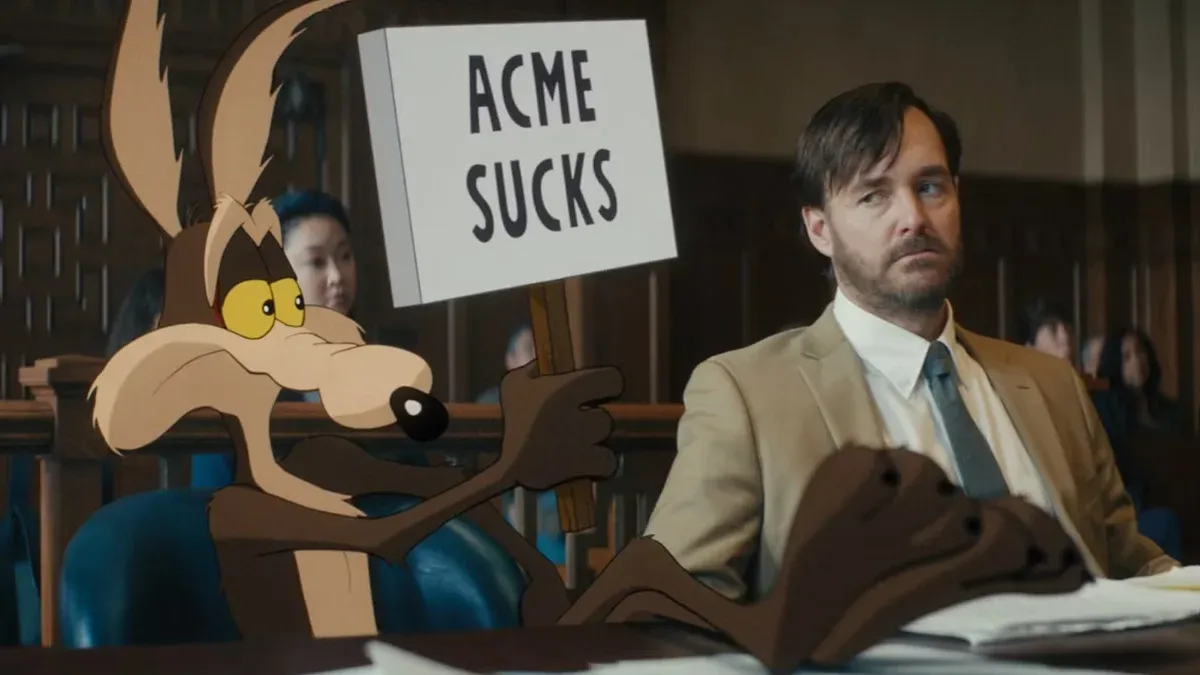
If the Looney Tunes aren’t the hardest working entertainers in show business, I don’t know who is.
In the last 96 years, Bugs Bunny, Daffy Duck and all their wacky friends have starred in a dozen feature films, 14 original TV shows and more than a thousand cartoon shorts. They won Oscars. They played basketball to amuse the orgy nuns from Ken Russell’s “The Devils.” And, more to the point, they’ve spoofed just about everything there is to spoof. After chucking dynamite at Superman, Robin Hood, the Barber of Seville, “Fantasy Island,” “Ghostbusters,” “Flash Gordon” and “The Rover Boys,” what else could they possibly lampoon? French philosopher Albert Camus’ contemplation of absurdity and self-slaughter, “The Myth of Sisyphus?”
Anyway, “Coyote vs. Acme” is the Looney Tunes version of Albert Camus’ contemplation of absurdity and self-slaughter, “The Myth of Sisyphus.” The film stars Wile E. Coyote as a tragic stand-in for the human condition — which, in fairness, he always was. Every day, he tries to capture the Road Runner, and every day, he fails, in part because the Road Runner is the fastest creature on two legs, but mostly because Wile E. relies on Acme mail-order products, which are always defective and literally blow up in his face. And yet, like the figure in the ancient Greek legend, he never stops rolling that proverbial boulder uphill, no matter how many times it rolls back down and squashes him like a pancake. What’s worse, he has to keep buying from Acme because it’s a monopoly. And its products will always hurt him because monopolies are evil.
In “Coyote vs. Acme,” Wile E. tries something new. He hires a lawyer, Kevin Avery (Will Forte), to sue the Acme Corporation. Avery gave up on his own boulder decades ago. Now he settles every case without a fight. Besides, what’s the point in fighting the Acme Corporation? They own everything. They own the judges. They write the laws. They’re the boulder, and the boulder always wins.
But you can’t keep a Wile E. down. The voiceless cartoon canine forces Avery to fight the ultimate uphill battle, and the movie won’t stop until he defeats [checks notes] Warner Bros.

Literally. Warner Bros. is canonically a subsidiary of the Acme Corporation. The revelation makes so much sense that, after the studio fought tooth and nail to keep “Coyote vs. Acme” from ever being released — shelving the all-but-finished film for a tax write-off in 2023 — it almost plays like a marketing stunt. Then again, what’s easier to believe: that monopolistic corporations don’t care about anything but money, or that they care so much about telling stories about the little guy that they manufactured a controversy that made them look like garbage for years before finally letting Ketchup Entertainment release their movie instead?
“Coyote vs. Acme” is a film about the futility of nobility and the nobility of futility. It’s the Looney Tunes version of classic courtroom dramas like “The Verdict” and “Erin Brockovich,” and although it parodies those films it also tries, successfully, to make us feel the way those other great underdog stories make us feel. The filmmakers know how hard a person has to fight just to make a corporate entity flinch. They also know that the flinch is, by itself, important. Even if you don’t win. Especially if you don’t win. Nobody can roll a boulder up a hill but if everyone tries, maybe we’ll finally get somewhere.
It’s all very intelligent and moving, but is “Coyote vs. Acme” funny? Yes. “Coyote vs. Acme” is gut-bustlingly hilarious. Dave Green knows these Tunes by heart, and the comic timing on this film’s countless sight gags is on par with some of the best Looney Tunes shorts. That level of hilarity is impossible to sustain uninterrupted for 103 minutes but that’s not objectionable. That’s why the original shorts were short in the first place. Audiences can’t live on madcap wackiness forever.
The shrewd screenplay by Samy Burch (“May December”) — based on a story by Burch, James Gunn and Jeremy Slater and inspired by a 1990 New Yorker article by Ian Frazier — takes the “story” part of its story seriously, which periodically resets the joke-o-meter. All the dramatic beats set up future lunacies while also working consistently as satisfying, albeit ludicrous, drama.

Will Forte lives at the center of these two extremes, adorably sad-sacking his way through “Coyote vs. Acme,” a perfect foil for the world’s most motivated carnivore. Forte ambles from one plot point to another, pre-defeated, eager only to crawl back into his hole. He’s not an antihero because he’s morally conflicted. He’s an antihero because he doesn’t believe in heroism. After all, heroes don’t save the world from corporations. That’s not how heroes work. That’s not how corporations work. (Then again, shelving ingenious, crowd-pleasing movies isn’t how corporations are supposed to work either.)
Jean Luc-Godard said every film is a documentary about its own actors. Somehow, “Coyote vs. Acme” is a documentary about its own, unpredictable future. Green’s film dramatizes all the awful things that were about to happen to itself, and the fact that it’s finally out — and that it was brilliant all along — is an ironically cheerful conclusion to a film about constant struggle.
The fight is always worth fighting. The boulder is always worth pushing. And although Wile E. Coyote will never catch that Roadrunner, his chase inspires us all. Even when he falls off a cliff. Especially when he falls off a cliff.

>

Sophie Birenbaum is a good kid. She’s close with her parents, doting on her wild younger brothers, tight with her best pal, a good student, and a hell of rising star in the high school musical realm. She’s learning how to drive (cautiously) and auditioning for this season’s big production (“Waitress,” which apparently high schools do put on, and God love ’em for that). She doesn’t cause much trouble and is focused on the future, but she’s not a geek or a scold or a tattletale. She’s a nice kid, from a nice family.
And, in Julia Hart’s winning and wise “Don’t Say Good Luck,” we watch that nice kid and her nice family take on the kind of everyday tragedy too many people are forced to endure. As upsetting as that might sound, Hart’s deft handling of tough material is on full display here, as is a pair of truly lovely performances from Sunny Sandler (Sophie herself) and the unimpeachable Melanie Lynskey as her mother Elizabeth. (Not for nothing, these two are wonderful together, and just heartbreaking.)


Hart’s film drops us into the world of the Birenbaums with ease. The five-person clan (including a charming Max Greenfield as patriarch Ted, and Eitan Friedman and Matan Friedman as those wild brothers) live in relative domestic tranquility in Small Town Anywhere, USA. Ted owns a local bagel shop, where he’s gently trying to introduce a handful of healthier options, and he’s got a real problem with his phone, which tends to butt dial the family at random.
Typically, it’s Sophie who gets those calls, dealing with them in classic teenage fashion (sigh, eyeroll, hang up). It’s one of those butt dials that clues Sophie in to what’s really going on with her parents, who have been a little cagey as of late. At just 95 minutes, Hart’s film is all about storytelling economy, but the choice to simply reveal that Elizabeth’s cancer has returned is handled in a way that’s both matter-of-fact and true-to-life. “It came back,” Sophie tells her best friend Carolyn (Scarlett Estevez). Whole worlds are contained in that phrase. (Other storylines suffer a bit from the tight nature of the script, particularly when it comes to other familial bonds.)

But Elizabeth’s cancer is not the only thing happening in “Don’t Say Good Luck,” which isn’t so much about how life is what happens when you’re busy making other plans, but when all those plans (good, bad, ugly) converge on each other. Just as Sophie is dealing with the news that her mom might not make it this time, something great happens: she lands the lead role in “Waitress,” a twist that allows Sandler the chance to sing, dance, act, and act even more (acting on top of acting?) in one tidy package. She’s up for all of it.
The musical elements injects some often necessary and occasionally over-the-top humor into the film — if you know theater kids, you can guess some of the fun diversions on offer here, like ahem, not saying “good luck” — while also hammering home the idea that life doesn’t stop even when, well, life itself might be stopping. There are heady ideas here, but they’re handled with grace.
And when Elizabeth’s parents (Bebe Neuwirth and Steve Buscemi!) arrive on the scene, they also help us get to know her better, as the elders simply cannot understand why Elizabeth and Ted are letting Sophie sing and dance around during this terrible time. Shouldn’t she be at home? Shouldn’t she be helping her mom? Shouldn’t (insert any other similar bold decree that woefully misunderstands what it means to embrace life, no matter the timing)?!

Hart and her husband and producer Jordan Horowitz co-wrote the script alongside Laura Hankin, who was inspired by her own experiences with similar material. Like Sophie, a young Hankin nabbed a major part in her high school musical, just as her mother was grappling with a cancer diagnosis. Most audience members won’t need to be told that the film is inspired by true events to feel it in the details, like a small moment at a local restaurant in which a local friend wails over Elizabeth’s diagnosis, somehow making her own pain the main event. If you’ve ever been through something like the Birenbaums, these honest and lived-in touches will stand out.
That relatability is what appeals most about “Don’t Say Good Luck,” the kind of nuance that isn’t always so readily available in straight-to-streaming movies that partially hinge on an audience’s interest in the ascendency of a (sorry, sorry) nepo baby who clearly has her own, quite wide skill set. This is complex material, handled with love, and that care could only come from a truly talented and tuned-in array of creatives. This is, then, a great compliment: this is a nice film, about a nice kid and a nice family and some terrifyingly common issues. More of that, please.
Grade: B
“Don’t Say Good Luck” will start streaming on Netflix on Friday, August 14.
>
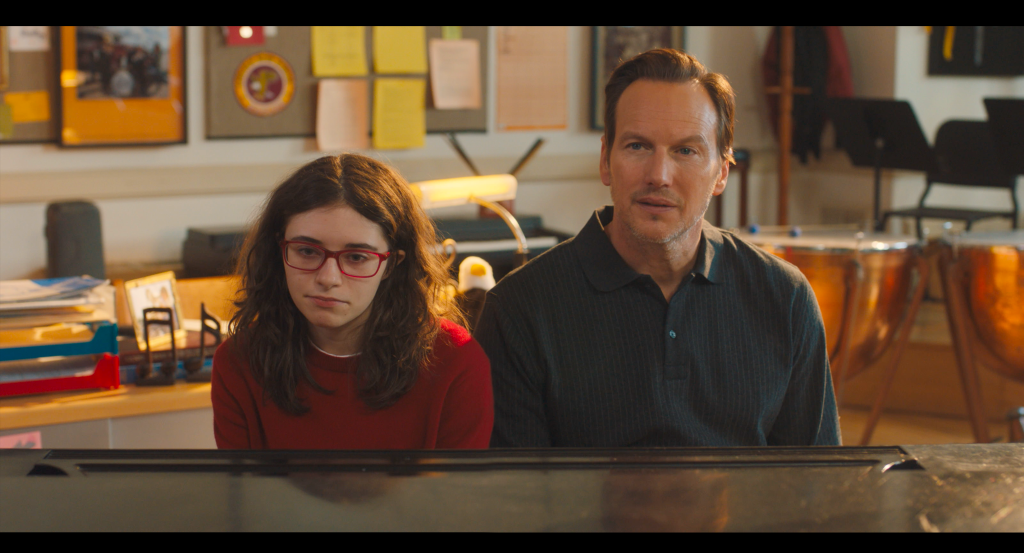
EXCLUSIVE: Greenwich Entertainment has acquired North American distribution rights to Sundance dramedy Run Amok, the feature directorial debut of NB Mager.
The Tandem Pictures and Greenmachine production stars Alyssa Marvin, Margaret Cho, Sophia Torres, Elizabeth Marvel, Bill Camp, Yul Vazquez, Grace Reiter, Jim Kaplan, Nuha Jes, Pilot Bunch, Molly Ringwald, and Patrick Wilson.
Greenwich plans to release the film in theaters early next year after the company’s Andy Bohn negotiated the deal with CAA Media Finance on behalf of the filmmakers.
In Run Amok, “a” teenage girl stages an elaborate musical about the one day her high school wishes it could forget, a school shooting. Her artistic endeavor brings her into conflict with the adults in her community, whose platitudes and empty promises obscure the genuine needs of the students.”
Pic was produced by Tandem Pictures’ Julie Christeas and Greenmachine’s Frank Hall Green with executive producers Patrick Wilson, Allison Franco, Tom Franco, Tad Selby, Derek Strum, Joav Bally, Allison Stockel, Jon Stockel, Lela Meadow-Conner, Jaykant R. Patel, Rajesh Penta, Rama Penta, Andy Bruer, Elia Petridis, Jay Rittberg, Ken Hayes, Brian Troy and Ahish Bansal.
“Run Amok is a modern coming-of-age story that unflinchingly mirrors the times we live in— so it always had to walk a fine line between humor and pain, absurdity and heartbreak,” said director NB Mager. “Greenwich felt like the ideal partner from our first conversation— they have the sort of vision, daring, and authenticity that perfectly encapsulates Run Amok‘s fearless young protagonists.”
>
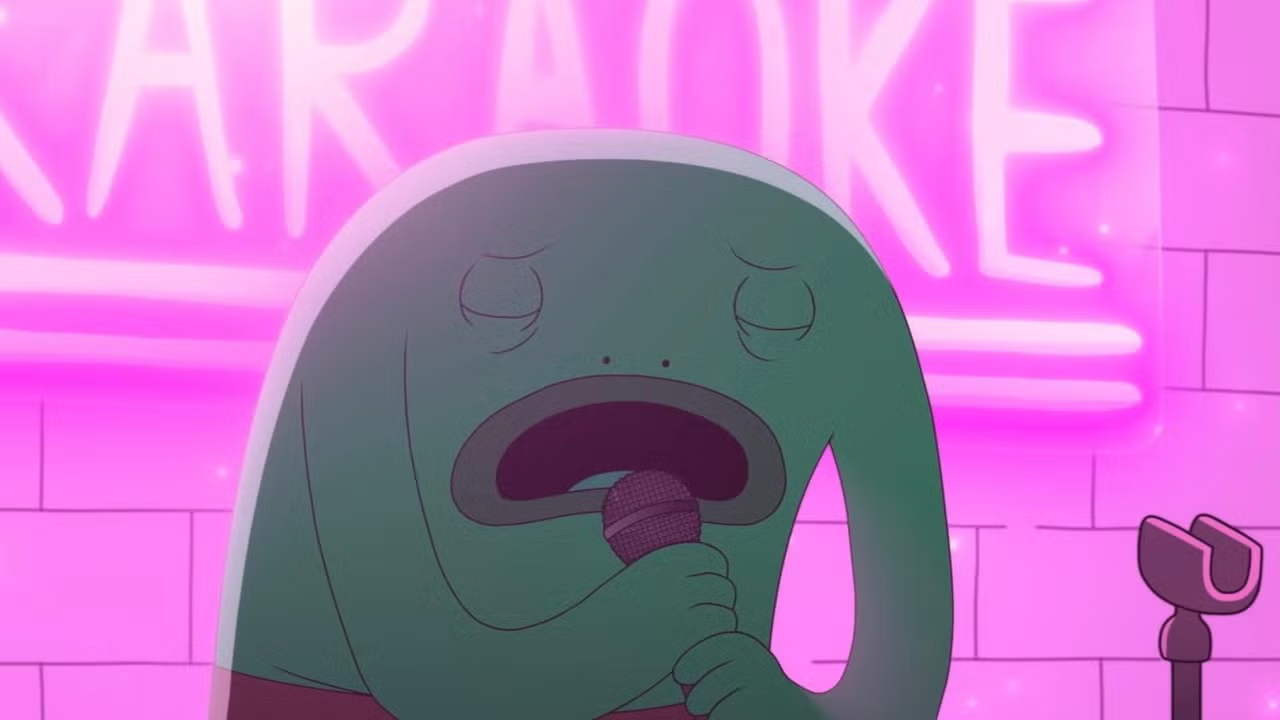
“‘Smiling Friends’ is over!”
This line, uttered in the latest season of Zach Hadel and Michael Cusack’s mixed-media animated Adult Swim comedy “Smiling Friends,” became an unintentional premonition. The duo took to YouTube in February, months after Season 3 concluded, to announce that the show would not be coming back. Though it had previously been renewed for fourth and fifth seasons, the creators, citing burnout after years of hard work, shared that they’d release only two more already-completed bonus episodes in April.

But the show, which had a meteoric rise in popularity after humble beginnings, scored its first Emmy nomination this year, finding itself among animated giants like “The Simpsons” and “South Park.” In the nominated episode, “Le Voyage Incroyable de Monsieur Grenouille,” “Smiling Friends’” agent of chaos, Mr. Frog, goes on a journey of enlightenment that reunites him with his father, played completely straight by a live-action Creed Bratton (“The Office”), shirtless and painted green, composited into an animated environment.

“Seeing our names up there with all those gigantic monoliths is kind of weird,” Hadel admitted. “We’re this little rinky-dinky tiny little thing, so that’s very cool.”
“It was completely unexpected, genuinely,” Cusack added. “I can’t speak for Zach, but I’ve never won anything. Like, even at school. Even to be nominated for something like this is very strange.”
You’ve done one Mr. Frog episode in each season, but this season’s is much more emotionally direct than most.
MICHAEL CUSACK: The motivation going into the episode was to play on the prestigious-television kind of tone. The joke behind it was that it was cinematic when Mr. Frog meets his father, and it’s emotional and, contrary to most of Smiling Friends, which is really quick and fast-paced, it gets really slow. That’s the joke, to us. I guess you could say it’s accidental Emmy bait.
ZACH HADEL: The very early stages of the show, we had it basically mapped out. It would be cool to see Mr. Frog go from a celebrity to gaining power, then becoming the president. So originally the third [Mr. Frog] episode was going to be him accruing power. But we’re like, what do you really do? We started talking about his family. That went through a few iterations. Once we hit on that dad scene with Creed, it was like, OK, this is interesting. We can sink our teeth into this. The way we storyboarded that scene was a whole different language. It was just fun to do a “Better Call Saul,” “Succession” prestige-TV thing.

This is an episode about Mr. Frog facing burnout, being on top of the mountain and saying, “I need to step away” — obviously in a much different way than how you did it. But was there a part of you that recognized this as a real feeling?
CUSACK: Definitely not consciously. If we were feeling burnout, it was probably just subconsciously going into the character, but I could also see that happening for Mr. Frog even if we were continuing. That wasn’t planned, but I could see subconscious elements maybe leaking through.
HADEL: I would say the most is we were thinking about it in terms of a trilogy. We had a Mr. Frog episode in Season 1, we had one in Season 2 and this felt like, OK, this is a nice wrap-up arc to the character. Even if we thought we were going to go on, there’s something about trilogies. For whatever reason, things work in threes.

Was there a moment when you guys really felt the show catching on? Was it when “The Simpsons” made a “Smiling Friends” joke?
HADEL: To be perfectly honest, of all the other adult shows that could have referenced us or taken a fun shot, I was surprised it was “The Simpsons.” I thought it was fake when I first saw it.
CUSACK: We were hoping for “Family Guy” at first because they seemed more likely. They always attack shows. And we were so ready to nuke them back.
HADEL: We were ready for “Family Guy.” We had a whole … in good fun, in good fun.
CUSACK: Oh no, I mean real nukes.
HADEL: [We’d] drop a real nuke on Seth MacFarlane’s house, the actual coordinates, the GPS.” [Laughs] But yeah, it was all of that. It’s just weird because it doesn’t happen all at once. I mean, even this Emmy thing is another element of that, where we’re still kind of like, oh my God. It still feels like this little intimate project that nobody should know about, as weird as that is to say.

Has it been rewarding to use this show to give other creators a platform for their voices on television?
CUSACK: We grew up watching that stuff, like YouTube. Obviously, we watched TV, too, but all these talented people didn’t have shows or anything. It worked perfectly to our benefit to be able to slot different people in for their different styles. I’m so proud of it looking back on it that we could have all those people involved.
Now that the show has ended, are you still looking to work with or help establish some of those creators?
HADEL: We’ll always be collaborative to some degree, but one of the reasons “Smiling Friends” is so intense is it’s doing a lot of things at once. It’s trying to be a mixed-media thing, it’s trying to be a fully frame-by-frame animated thing, it’s trying to work with multiple different creators, multiple different art styles. If we ever came back to that, I think it would just be “Smiling Friends.”
A version of this story first ran in the Down to the Wire Comedy issue of TheWrap’s awards magazine.

>

‘Don’t Say Good Luck’ Review: Melanie Lynskey & Sunny Sandler Star

Sundance Film ‘Run Amok’ Gets US Distribution With Greenwich

Everton’s Martin Sherif charged with alleged breach of FA rules over 61 bets
-

 movies3 months ago
Search For Canadian TV Actor Stewart McLean Now Homicide Investigation
-

 Fashion9 years ago
These ’90s fashion trends are making a comeback in 2017
-
Fashion9 years ago
According to Dior Couture, this taboo fashion accessory is back
-
Fashion9 years ago
Model Jocelyn Chew’s Instagram is the best vacation you’ve ever had
-
Fashion9 years ago
Your comprehensive guide to this fall’s biggest trends
-
Fashion9 years ago
9 Celebrities who have spoken out about being photoshopped
-
Fashion9 years ago
Emily Ratajkowski channels back-to-school style
-
Fashion9 years ago
A photo diary of the nightlife scene from LA To Ibiza