
Tech
Google takes on AirTag with the new $29 Pixel Tag


Alongside its announcement of a new lineup of Pixel 11 smartphones, Google on Wednesday introduced its answer to Apple’s AirTag. At its livestreamed “Made by Google ’26” event, the company unveiled a new product designed for keeping track of your valuable items: the $29 Google Pixel Tag.
Similar to how Apple’s AirTag leverages its network of iPhones to find lost devices, the new Pixel Tag taps uses Google’s Find Hub network, which taps into Android devices around the world. Android users can add the tag to their phone’s built-in Android Find Hub, which is already used to help users find their lost Android smartphones and other devices, similar to Apple’s Find My.
Helpfully, you can locate and ring your Pixel Tag directly from your Pixel Watch, too, not just your phone.

Where the Pixel Tag differs from AirTag is in its look and feel.
Apple’s lost-item finder is small, round, and engravable; Google opted for a slimmer, elongated device instead. Spec-by-spec, the Pixel Tag is 1.1 inches wide, compared to the AirTag’s 1.26 inches. As the Pixel Tag is oval-shaped, it’s 1.8 inches high from top to bottom. Thickness-wise, the Pixel Tag clocks in at a depth of 0.2 inches, compared with the AirTag’s 0.31 inches (which Apple calls its height).
By weight, the two competitors are comparable, as the Pixel Tag weighs 0.4 ounces with the battery, and the AirTag comes in at 0.39 oz.
Both are also rated IP67 for splash, water, and dust resistance, meaning they can withstand submersion in a maximum depth of 1 meter for up to 30 minutes.

Taking other cues from AirTag, the Pixel Tag offers connectivity via Bluetooth and Ultra Wideband for precision finding; however, it doesn’t include NFC. Pixel Tag has a built-in speaker to help you find the lost device when nearby, and it’s powered by the user-replaceable CR2032 coin cell battery — the same used by the AirTag. This allows the Pixel Tag to work for roughly a year before the battery needs to be replaced.
Designed to be attached to items like keychains and bags, the Pixel Tag will cost $29 for a one-pack and $99 for a four-pack when it becomes available for purchase on November 11, 2026.
When you purchase through links in our articles, we may earn a small commission. This doesn’t affect our editorial independence.
>
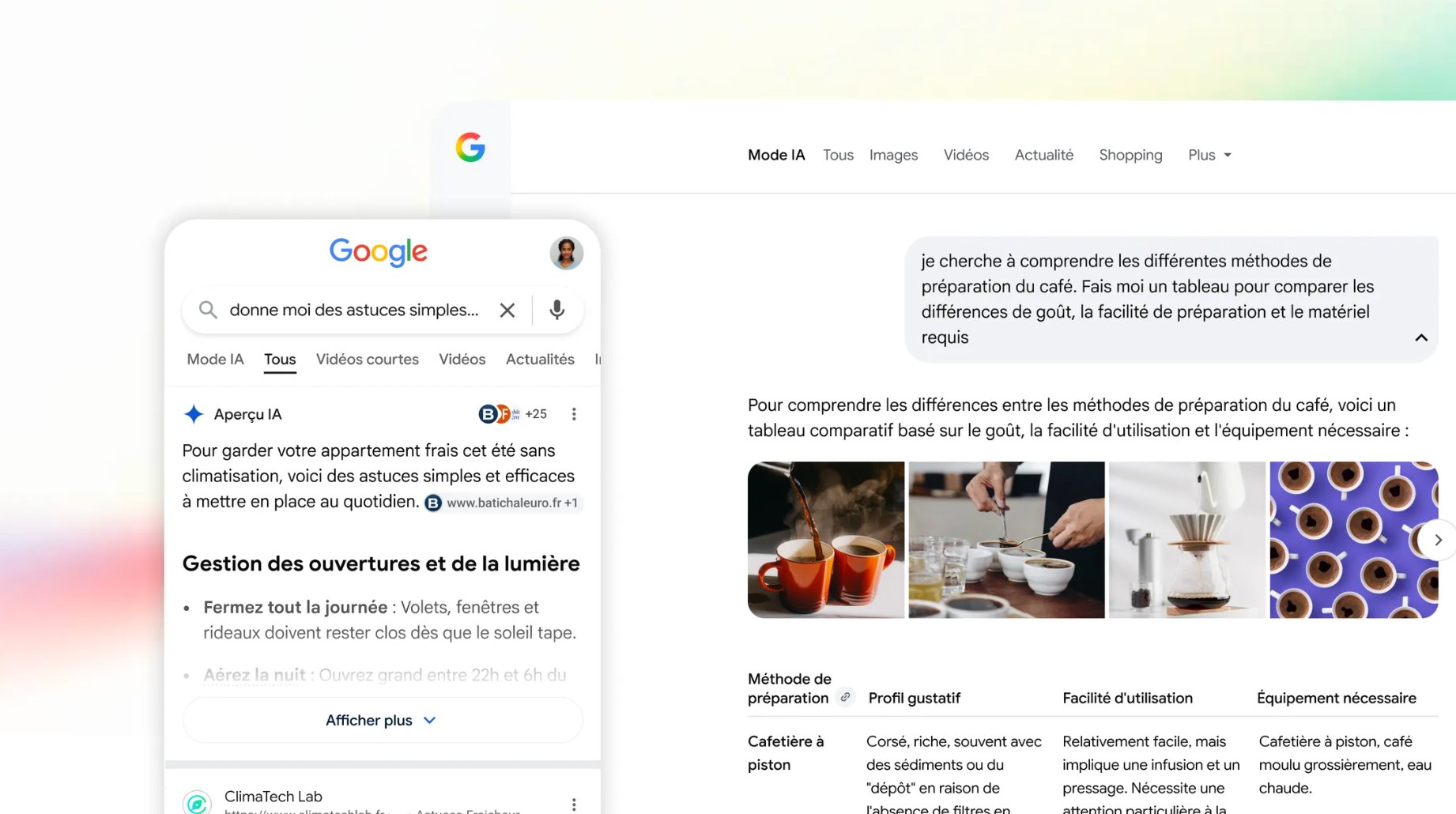
French publishers have escalated their dispute with Google over AI search, asking France’s competition watchdog to decide whether AI Overviews and AI Mode require separate licensing negotiations. The Alliance de la Presse d’Information Générale, or APIG, filed the complaint on Aug. 11.
Google launched both features in France on July 22. APIG argues the rollout conflicts with commitments requiring Google to negotiate separately over new services, putting the treatment of publisher content in generative search back before French regulators.
The complaint joins other legal and regulatory challenges surrounding AI Overviews, including disputes over publisher compensation and responsibility for generated answers. Google says AI Overviews and AI Mode help users explore complex questions while continuing to provide links to websites.
Google’s publisher commitments face an AI test
France adopted a related-rights law in 2019 that gave press publishers and news agencies protections over certain digital uses of their content. The Competition Authority ordered Google in 2020 to negotiate with publishers in good faith and fined it €500 million the following year for failing to comply with those interim measures.
In June 2022, the Authority made Google’s publisher commitments legally binding. They require good-faith negotiations based on transparent, objective and nondiscriminatory criteria, with a remuneration proposal due within three months of the start of negotiations.
The commitments also require separate negotiations over Google Showcase or any other new Google service, apart from existing uses of protected press content. APIG argues AI Overviews and AI Mode fall under that provision.
Generative AI has already figured into enforcement of the agreement. In March 2024, the Authority fined Google €250 million after finding, among other violations, that Bard, now Gemini, had used publisher and news-agency content to train its foundation model without adequately informing them. The regulator also said it had not determined whether AI uses of press publications fall within France’s related-rights protections.
Publisher controls remain disputed
APIG says Google introduced its AI search features without first opening a separate negotiation with publishers. The complaint follows concern that Google’s AI search expansion could reduce publisher visibility as generated answers occupy more of the search experience.
Google says a Search Console control available in France lets site owners exclude content from generative AI search features without using that decision as a ranking signal for conventional search results.
Pressure over AI content use extends beyond France. The European Commission opened a formal antitrust investigation in December 2025 into whether Google imposes unfair terms on publishers whose content is used for AI Overviews and AI Mode. Separately, publishers have sued Google over Gemini training, alleging existing agreements did not authorize the use of copyrighted works to train its AI models.
The French authority has not announced how it will respond to APIG’s complaint. Any eventual ruling could help determine whether generative search becomes a separate licensing channel or remains part of the long-standing exchange of publisher content for search visibility and traffic.
Read more: Similar tensions are emerging outside traditional news publishing as Reddit reportedly reconsiders parts of its Google AI partnership while AI search changes how users reach source websites.
>

A typhoon gave China’s AI weather models a real-world test — and one system reportedly narrowed down the storm’s landfall days in advance.
Chinese researchers are using AI models to respond to the country’s current weather conditions proactively.
According to Reuters, Shanghai AI Lab’s Fengwu predicted the typhoon’s landfall location and timing five days ahead to within about 30 kilometers and 30 minutes. The result highlights how AI-based forecasting systems could complement conventional weather models by producing useful predictions quickly and with less computing power.
Fengwu is one of several AI weather systems being developed in China, alongside Huawei’s Pangu and Fudan University’s Fuxi, as meteorologists test whether machine-learning models can improve forecasting without replacing traditional physics-based systems or human expertise.
According to The Independent, its developers reported it outperformed Google’s GraphCast on 80% of evaluated weather variables in tests, extending skillful global medium-range forecasting beyond 10 days. That does not mean Fengwu is 80% more accurate overall. The figure refers specifically to the proportion of evaluated variables where it performed better.
Huawei has developed Pangu, while Fudan University has developed Fuxi, giving Chinese meteorologists multiple AI-based systems for forecasting atmospheric conditions.
The models work differently from traditional numerical weather prediction. Conventional systems use supercomputers to solve mathematical equations that represent atmospheric physics. AI models, on the other hand, are trained on vast datasets of historical weather data, enabling them to learn patterns and predict how atmospheric conditions will change.
Once trained, these models can produce forecasts with far less computation.
Why AI weather models are getting attention
The bigger story is not that AI can forecast weather; it is that prediction itself is becoming one of AI’s most practical uses.
The same basic approach can also be applied to problems such as wildfire risk and industrial equipment failures, where identifying a likely future event early can be more valuable than simply describing what is happening now.
Beyond these, there’s also the use of AI in prediction markets like sports and stocks.
Taken together, these give predictive AI a different role from the generative systems that have dominated public attention. Instead of asking an AI to create something, the user is effectively asking it to assess the available evidence and estimate the future.
AI systems aren’t replacing human experts
AI systems can be very good at learning atmospheric patterns from historical data, but weather is a chaotic physical system. Some events are difficult to predict because small differences in atmospheric conditions can produce markedly different outcomes, making it hard for AI models to forecast every weather event accurately.
Besides, AI systems tend to have certain weaknesses, particularly when dealing with edge cases, which are very common in weather forecasting. An unusual combination of weather conditions or a rapidly developing storm can create situations the model may not have encountered often enough during training to make an accurate prediction.
That means AI systems are not replacing the human experts who interpret forecasts. These human experts bring the unique human touch with years of experience to assess uncertainty and identify when an AI prediction may not tell the full story.
What this means for everyone
The clearest advantage of AI forecasting may be speed. Once trained, models such as Fengwu can produce forecasts with much less computation than conventional numerical systems.
If those systems can also maintain useful accuracy farther in advance, that could give emergency officials more time to issue warnings, prepare infrastructure and move people out of harm’s way. For now, the likely future is not AI replacing conventional forecasting, but AI becoming another increasingly important tool alongside physics-based models and human meteorologists.
Other News: Japan is planning a new AI data center in Akita, highlighting the push to expand computing infrastructure beyond the country’s traditional technology hubs.
>
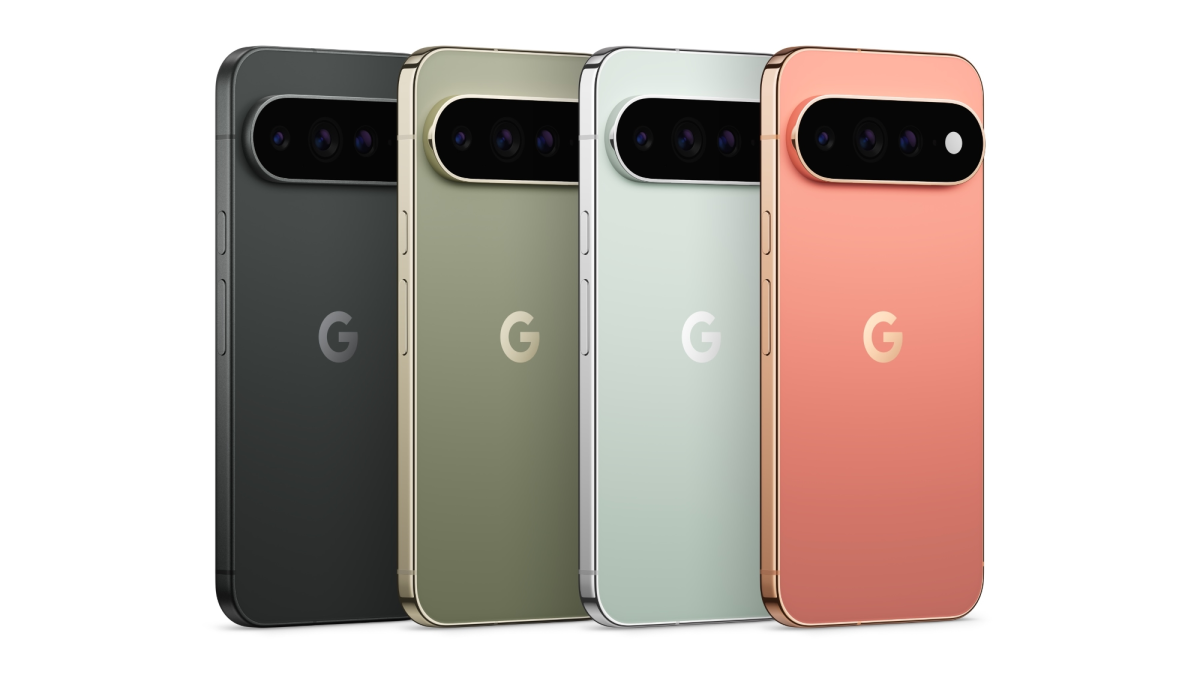
For the last few years, Google’s Pixel has been a showcase of new AI features, with few hardware changes from the previous year’s devices. Similarly, the Pixel 11 series isn’t too different in design and internals from its predecessor.
However, this year’s devices have more Gemini features to complete tasks in the background, including a new Wispr Flow-like transcription feature, a live translation feature that works across content, and a new camera feature that captures the right frames.

AI advances on the Pixel 11
With this year’s Pixel 11 series launch, Google is thinking more agentic AI to complete your tasks. With Gemini, U.S.-based users will be able to order groceries, book rides, or get coffee, for instance. Plus, Gemini can call businesses on users’ behalf for table reservations or appointments. Google said that users can take over or stop tasks at any point in time and also review transcripts for AI-operated calls.
Over the next few weeks, a new slate of connected apps will be able to work with Gemini to get things done, including Granola, Otter.ai, Wix, Fever, Get Your Guide, Localiza, OpenTable (UK), Ticketmaster, iHeartRadio, Pandora, Angi, Thumbtack, and Zocdoc.
The company has also evolved the “Magic Cue” feature from last year to use Gemini, which proactively surfaces contextual information, to now display information from across your apps to help you find suggestions for things like a dinner spot or show.
In May, Google announced a dictation product called Rambler to take on competitors like Wispr Flow and Aqua. Now, that product is making its way to the Pixel phones.
The new Pixel series phones have some other helpful features that might be handy for daily usage, too. First, the device can translate videos, podcasts, and voice messages in the target language. The company is also making its “Circle to Search” gesture-based feature available directly in the camera, something that Apple also did in iOS 27 by making Siri available in the camera.
What’s more, Google is adding an accessibility feature to the camera, which uses Gemini to translate sign language into text to help people communicate with others who have hearing impairments. And the company has redesigned the live transcribe interface for improved communication.
Camera features
Google also added a few AI tricks embedded into its camera. One feature is called “Magic Capture,” which picks the best frames out of hundreds of frames it captures between when users press start and end. The idea is to take a video and get photos as a byproduct. Google said that the feature also auto-crops and unblurs the frames to make them ready for sharing.
The company has upgraded its super zoom from 100x to 120x for Pro phones, and from 20x to 30x for the base Pixel 11. With the new devices, users will be able to create custom looks for the camera, which are specialized filters that appear when users are snapping images.

The Pro phones are also getting faster capture with a feature called “Instant Night Sight,” which takes 4.5x less time than the previous-gen phone’s Night Sight. Google enhanced video shooting, too, with support for 8K resolution with video boost and better stability.
For creators, Google added a “creator suite” mode in video settings, which lets you use Pixel 11 devices as a teleprompter while shooting clips. When you are done shooting, the clip is saved in a dedicated folder, making it easier to find for editing.
Hardware upgrades
All the Pixel phones now run the latest Tensor G6 processor, which has 20% better power efficiency and
allows for 25% faster browsing, as per Google. Plus, it lets users take faster low-light photos with Night Sight Instant.
The new image signal processing on the chip also enables 120x magic zoom on the Pixel 11 Pro XL. The company said that the new processors run the latest models with lower latency, but didn’t offer any specific metrics.
The display size on all phones is the same, but the Pro models get a slightly brighter display, which could be helpful in the daylight.

Google said Pro models get an updated main camera sensor that takes higher-quality photos than the previous generation without specifying any numbers. It also said the new telephoto sensor allows for 32% more light while capturing an image.

London-based startup Nothing made its phones recognizable by Glyph bars and then a Glyph interface. Google is not that extravagant, but it has now placed an LED light on the back, which is built around the flashlight. This acts as an indicator for calls or messages from favorite contacts when Gemini is thinking or listening.
All these devices are available to pre-order starting today and will start with a base storage of 256GB.
The Pixel 11 starts at $899, the 11 Pro starts at $1,099, and the 11 Pro XL starts at $1,299. (The prices of the Pixel 11 and the Pixel 11 Pro are the same as last year’s 256GB models, but you could buy a 128 GB model at that time with a $100 lower price tag.)
With the rising prices of components, the company has bumped the price of the top model by $100 compared to the Pixel 10 XL.
A new lineup of Pixel 11 accessories is also arriving alongside the phones, including new Pixelsnap cases (which now include clear) and Pixelsnap Ring Stand colors.
When you purchase through links in our articles, we may earn a small commission. This doesn’t affect our editorial independence.
>

Djed Spence: Inter Milan in talks for Tottenham full-back

French Publishers Challenge Google AI Search Over Content Licensing

Fox News Crew Denied Access to Francesca Hong’s Election Watch Party
-

 movies3 months ago
Search For Canadian TV Actor Stewart McLean Now Homicide Investigation
-

 Fashion9 years ago
These ’90s fashion trends are making a comeback in 2017
-
Fashion9 years ago
According to Dior Couture, this taboo fashion accessory is back
-
Fashion9 years ago
Model Jocelyn Chew’s Instagram is the best vacation you’ve ever had
-
Fashion9 years ago
Your comprehensive guide to this fall’s biggest trends
-
Fashion9 years ago
9 Celebrities who have spoken out about being photoshopped
-
Fashion9 years ago
Emily Ratajkowski channels back-to-school style
-
Fashion9 years ago
A photo diary of the nightlife scene from LA To Ibiza