
Quentin Tarantino at his Vista Theater in Hollywood in late 2025
Frazer Harrison/Getty Images for Epic Games


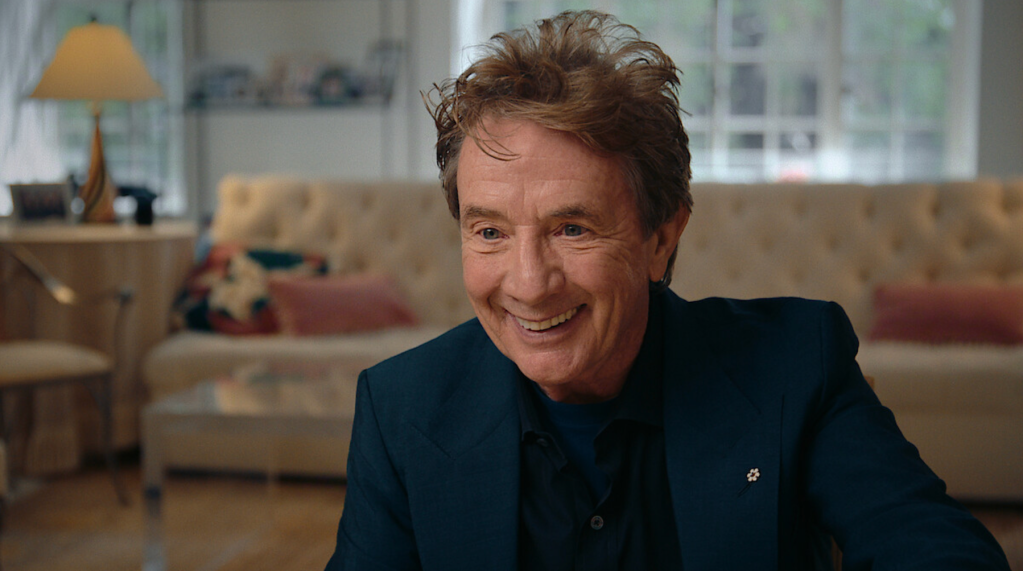
Actor Martin Short is hotter than ever – literally. He has been sweltering in London this summer where the temperatures have soared to extraordinary levels: Thursday’s forecast calls for a high of 97°F (36°C), the latest furnace blast in a succession of UK heat waves.
“What’s amazing is that London is not used to it,” Short says of the brutal temps. “We’re working with the biggest stars and they’ll say, ‘We don’t have air conditioning.’”
Short has been in the British capital shooting season 6 of Only Murders in the Building, the hit Hulu series that recently earned him two more Emmy nominations – one for Outstanding Comedy Series, where he’s recognized as part of the show’s producing team, and another for Outstanding Lead Actor in a Comedy Series, for his role as Oliver Putnam. One more measure of just how molten his career has become — he also scored a nomination as Outstanding Host for a Game Show for his emcee role on Match Game.

And the Emmy love doesn’t end there: Marty, Life Is Short, the Netflix documentary about him directed by the actor’s close friend Lawrence Kasdan, has earned three Primetime Emmy nominations including Outstanding Documentary or Nonfiction Special and Outstanding Directing for Kasdan’s work. For director and subject, their match game began decades ago.

“We made a film together, Cross My Heart, in 1987 that he executive produced, but he was very hands-on. It wasn’t like one of those things where you just sign a deal and walk away. He was on the set every day,” Short explains. “Sometimes when you work with people, you kind of go, ‘I don’t want to lose that person. I like that person.’ So, we continued a friendship all these years.”
Fortunately for Kasdan the filmmaker, Short has been compiling a sort of archive of his life, going back to childhood.

“I always recorded things. My brother Michael used to say — this is in the days of the cassette tape recorders – ‘Marty will record the first half of his life and the second half he’ll just listen to it,’” he tells Deadline. “My father was a steel executive, and I remember he brought home an early tape recorder and I was just fascinated. I was like 9 or something… I recorded everything.”
Later, he graduated to video cameras. “I was someone who always picked up a camcorder and filmed everything. And I never looked at it. You just transferred to a DVD, put it on a shelf. So I had 30 years of that. And then my close friend Steven Spielberg kind of does the same thing. And because I trusted Larry [Kasdan], I gave him everything and Steven sent over everything he had on me, which was a lot. And so, Larry had lots to work from.”

The film examines Short’s upbringing in Hamilton, Ontario as the youngest of five siblings, showered with love and attention from his earliest days (perhaps the only dark cloud in those blue skies being his father’s alcohol problem). He gravitated towards performing from a young age and by his teen years could credibly imitate the singing voice of Frank Sinatra. Short got his big break in show business – as so many other future greats did – in the 1972 Toronto production of Godspell (explored in-depth in the 2025 documentary You Had to Be There). His big break in TV, of course, came when he joined the cast of SCTV, where he satirized Jerry Lewis, played a pugilistic Mister Rogers boxing Julia Child, and introduced the world to Ed Grimley, the teeth-baring, triangle-striking manchild with irrepressible energy and an oddly endearing awkwardness.

On SCTV, he co-starred with John Candy (coincidentally, the focus of another Emmy-nominated documentary this year, John Candy: I Like Me), his pal Eugene Levy, Dave Thomas, Rick Moranis, Andrea Martin, and Catherine O’Hara. Short and O’Hara shot an interview together for Marty, Life Is Short, not long before her passing earlier this year.

“That’s the thing that’s so moving is to see that brilliant, perfect person,” Short says of O’Hara. “There was no one funnier and there was no one sweeter.”
The way he expresses his affection for his friends – like O’Hara, Kasdan, Spielberg and many others who appear in the film – says something about the man and his capacity for love. Short and his wife, actress and singer Nancy Dolman, became devoted parents to three adoptive children. And the sheer delight Dolman and Short shared in each other’s company – they met while working on the Godspell production – became an object of admiration in Hollywood (especially among people who perhaps couldn’t say the same of their own marriages).

But as if fate wished to balance all the joy, love and laughter Short has experienced in his 76 years, he has faced recurrent losses and tragedies – his eldest brother dying in an auto accident when Martin was just 12, his parents dying by the time he was 20, his wife Nancy taken by cancer in 2010 at the age of 58. Earlier this year, Short’s daughter Katherine took her own life.
Kasdan finds a way to acknowledge painful moments in Short’s life while emphasizing his incredible vitality and resilience.
“I’m glad that people react emotionally to [the documentary] because it is emotional material and he’s a good guy, so you’re really invested in him,” Kasdan tells us. “The thing that amazed me about him, that made me do this film, was that spirit that goes through anything.”
Short seems blessed with an unusual degree of equanimity, which has helped him keep going amid devastating loss. The level head has also served him well in handling fame. After making an appearance on a late-night talk show, for instance, he studies clips online, not to bask in his own image but to analyze how bits went over.
“Because sometimes you’ll love these jokes that you did, but for time they’ve trimmed them. So you look at the last Kimmel and say, ‘Oh, what did I…?’ And then you’re seduced by the comments below. And you’ll read, ‘He’s great. Oh, I love that guy.’ Then there’s, ‘I’ve hated that guy my whole life. He’s desperate and needy. He pushes. I don’t find it funny.’ And all I think is comedy is subjective. But what I do know is that if I had dinner with you, the hater, I would be bored to death. So, I don’t really worry. That’s not what fueled me. I’ve always had a joyful experience. I’ve never worked with nightmare people. I think if I did work with a prick director, I think I’d be fired because I’d tell him he was an asshole and I’d be fired. And there goes me. But I could never hold it in. I’m very easygoing except my Achilles heel is rudeness and mean people.”

Those values, it seems, carry over to the filming of Only Murders in the Building. “I’m proud of lots of things about Only Murders. But one of the things I’m proudest of is the perception of it,” he says. “It’s one of the loosest, happiest sets that any guest star guests on. And we get these reviews from all these famous people endlessly like, ‘Oh my God, I had the best time.’”
Short gave us a scoop on some of the big names joining the London-based season of Only Murders in the Building, including an Oscar winner.
“What’s crazy is the level of the British actors we’re working with. It’s insane. I mean, one day it’s Olivia Colman,” he shares, “and then David Tennant, and then it’s Martin Freeman, and then it’s Jennifer Saunders. It’s just, as Harry Shearer once said, ‘The crème de la cream.’”
The runaway success of Only Murders has propelled his career to new heights. But even that he appears to keep in perspective.
“I would say my career has been 80 percent failure,” Short observes in the documentary. “And I would say those are pretty good odds.”

“I use that word tongue-in-cheek,” he explains during our conversation, “because I do think failure is not if the critics don’t like it or if the box office doesn’t like it. I think failure is you don’t like it, this is not the piece of quote unquote ‘art’ you wanted to create… When I call failure, I am talking about commercial failure. But I consider real failure is if your film could make a hundred million dollars and the critics love it, but you go, ‘I don’t think it’s very good.’ That’s real failure.”
By that standard, his success rate is much closer to 100 percent. Characters he’s created, from the petite (the boy Clifford) to the XXL (Jiminy Glick), have become signatures along with Ed Grimley, Father of the Bride’s Franck Eggelhoffer, and Ned Nederlander — one of Three Amigos – and now Only Murders in the Building’s Oliver Putnam. And that’s just in comedy on screen — there’s also his dramatic roles and Tony Award-winning work on Broadway. Again, he keeps it in perspective.
“I’m 76. I am not on social media. I’ve never been on social media. I will say honestly, I’ve never done this for the admiration of strangers. I never have,” he insists. “I just do this because I love doing it.”
>
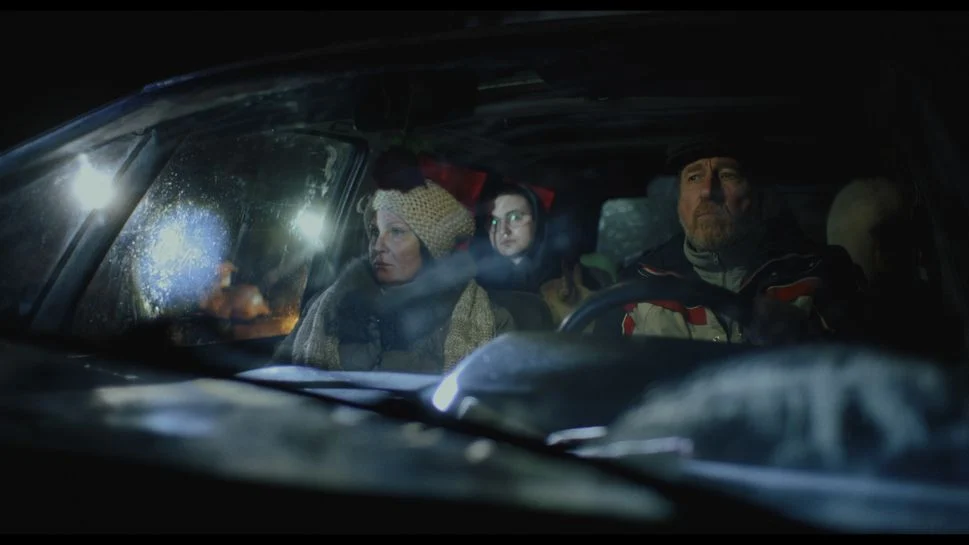
A Ukrainian queer couple face challenges unimaginable for most Western LGBTQI+ folk in I Rarely Wake Up Dreaming, a nuanced, finely lined drama that premiered in Locarno’s main competition. Produced by Tom Tykwer and Uwe Schott, this represents a second feature collaboration, after Grand Jeté, for married couple Anna Melikova, a Ukrainian writer, and German director Isabelle Stever, who were inspired by friends’ experiences back in Ukraine after the Russian invasion of 2022.
Dreaming explores what happens when 21st-century gender fluidity collides with the more rigid identity categories enforced by the state in a time of war. The core dramatic dilemma is thrust on fully transitioned trans man Oleh (Markus Bright), who suddenly faces military conscription along with the majority of Ukraine’s cis male population. Or, to paraphrase two cis female soldiers who turn Oleh back at the border, if he wants to be a man then he’ll have to fight for his country.
I Rarely Wake Up Dreaming
The Bottom Line
Love in a time of war.
Venue: Locarno Film Festival
Cast: Markus Bright, Tania Myronyshena, Iryna Mak, Viktor Zhdanov, Maiia Sobolevska, Maria Myronyshena, Oleksandr Rudynskyi
Director: Isabelle Stever
Screenwriter: Anna Melikova
1 hour 40 minutes
This horrifies his wife Olya (Tania Myronyshena), who wants them to emigrate to the safety of the EU as soon as possible, even if that means Oleh transitioning back to a female presentation. The film succeeds not only as an examination of the extraordinary quandary facing the couple but also simply as a compelling wartime drama featuring excellent performances from the two leads, who are, like most of the cast, non-professional actors. The film will cross continents next for the 64th edition of the New York Film Festival.
Smartly, Melikova’s script and Stever’s direction don’t obviously take either side, a neutrality that’s embedded even in the way Stever sets up the film’s opening scene, a flash-forward to a massive argument between the couple, observed as if by a neighbor through a window. Oleh has just received a conscription notice and seems inclined to report for service; Olya lets rip with what sounds like years of frustration, pointing out that she also didn’t sign up to be in a heterosexual relationship in the first place (evidently, the two were a lesbian couple before Oleh transitioned), and once again Oleh has made a decision without consulting her.
With the stakes thus established, the action rolls back to a happier time. On New Year’s Eve, 2021, Olya and Oleh are partying with other queer friends in a club, seemingly without a care in the world. During a phone call to Olya’s parents, she reveals that she’s getting married to a guy, an indirect way of proposing to her lover, who joyfully accepts.
A subsequent sex scene, discreetly shot but still pretty steamy, establishes the intense physical bond between the couple but also gives the film a chance to show that while Oleh has had top surgery, he’s not had visible bottom surgery like phalloplasty and metoidioplasty. Indeed, later in the film when the couple try to cross the border, Oleh reaches as if to unbutton his trousers in order to show the aforementioned female soldiers that he’s biologically female. They don’t care. What gender he has on his passport is the only thing that matters to the Ukrainian state.
In fact, thanks to regular testosterone injections, his natural height and the way his body has reacted to the “t”, he presents quite convincingly as male, with a hairy chest and a deep voice. In fact, as the film goes on, it’s implied that Olya’s parents — or at least her conventional Russophone mother Maryna (Iryna Mak) — think Oleh is a cis man, albeit one with some “effeminate” habits like not eating meat. (Maryna thinks vegetarianism is fine for women but men are healthier on a carnivore diet.)
Ultimately, however, the lifestyle differences between queer people like Olya and Oleh and straights like their extended family and neighbors end up mattering less than their shared identity as Ukrainians. As the movie goes on, and the invasion which was expected to be over after a few days drags into months and years, the horror of war solidifies the couple’s commitment both to each other and the country. They take in a young woman, a neighbor of Olya’s parents, who was brutalized in an unspecified way in her hometown of Bucha while they were away staying on the other side of the country, alluding to an actual atrocity in that municipality.
Snatches of real newscasts and YouTube videos provide a steady update on where the conflict has gotten as time passes, and even reveal that the options may not be so black and white for Oleh. It turns out there is a squadron in the army specifically for queer Ukrainians, for example, showing that being trans in the armed forces might not be as frightening as the couple first assumed.
And there sure isn’t an equivalent unit in the Russian Army under that country’s hideously homophobic regime, while the American armed forces are currently being forced by the Trump administration to push out trans and queer people from the enlisted population, while also cutting back on people of color and women in the higher ranks. If nothing else, this film could help bolster financial and military support for Ukraine in the EU and North America at a time when they’re badly in need of fresh funds and arms.
>

The Trump-controlled Kennedy Center board voted once again to close the arts institution for renovations, after a judge rejected a previous move to shutter the complex because it did not fully consider the scope of options and their impacts.
At a meeting on Thursday, the board approved a plan in which the main complex would be shuttered but a newer extension, called the Reach, would still offer limited programming and as a memorial to John F. Kennedy, according to a source familiar with the deliberations.
The board will still have to submit its action to U.S. District Judge Christopher Cooper, who previously ruled that the closure plan needed to consider other factors, including programming. Cooper wrote that the board was “derelict” and “based its decision on an insufficient, one-sided presentation of information and neglected to consider the full range of its statutory obligations and potential adverse consequences of closure on programming and memorial functions.”
In the same ruling, the judge ruled that the board overstepped its authority by adding Trump’s name to the center, ordering that it be taken down from its facade, website and other materials. A crew removed the lettering from the front of the complex in an overnight operation in June, but left up a tarp that now conceals much of the original name, The John F. Kennedy Memorial Center for the Performing Arts.
The center is appealing the judge’s ruling.
The New York Times first reported on the board vote.
Congress appropriated $257 million in the One Big Beautiful Bill Act for Kennedy Center repairs and renovations. In February, Trump announced the plan to close the complex during the overhaul, and the board, in which he leads as chairman, endorsed the proposal the next month. But Rep. Joyce Beatty (D-OH) sued the center over the name change and the closure, arguing that it failed to fully account for the impact on programming, among other things. The plan also was approved amid declining attendance and a number of artists pulling out of shows after the name change.
More to come.
>

Glendale’s historic Alex theater is back in the picture business. For 35 years, since Terminator 2: Judgment Day debuted in 1991, the venue — where Walt Disney liked to test his cartoons — hadn’t screened first-run films. Then the Alex’s artistic director, Miles Williams, invested $500,000 in time for its centennial last year so that it could host state-of-the-art screenings. Now, the 900-seat house has been holding three screenings a day of Christopher Nolan’s The Odyssey on 70mm, becoming the epic’s highest-grossing venue in the country on the film format.
“This is a reclamation,” says Williams, a veteran live show curator and promoter who programmed the Ace and Orpheum theaters in downtown Los Angeles, collaborating with the L.A. Conservancy on its popular classic film series Last Remaining Seats. He brought in Taylor Umphenour — an in-demand projectionist who has worked with Imax as well as Nolan on his dailies — to help upgrade the Alex, including by guiding the construction of a new ground-floor projection booth that features windows: “You’re looking at the last performer to be part of the making of the film,” he explains.
The Alex’s packed performance calendar will now feature regular film screenings, including special-engagement runs of large-format studio productions. “I have people who are so moved to see a movie in this place again,” says Williams. Adds Umphenour: “Culturally, it’s an incredible thing to see. Somebody came in the other night and she was just crying with happiness.”
Quentin Tarantino at his Vista Theater in Hollywood in late 2025
Frazer Harrison/Getty Images for Epic Games
What’s happening at the Alex is part of a broader revival of L.A.’s cinema landscape in recent years, encompassing blockbuster altars to art houses. It runs counter to the relentless declinist narrative about the film industry since the pandemic — one that may be outdated anyway, given 2026’s roaring box office run, with the first weekend in August the most commercially successful in history thanks to The Odyssey and Spider-Man: Brand New Day.
This renaissance includes, among studios, Sony’s announced restoration of the Cinerama Dome and rehabilitation of the adjacent ArcLight Hollywood with its theatrical exhibition chain Alamo Drafthouse, as well as Amazon’s lease of the Culver Theatre and Netflix’s purchase of the Egyptian in Hollywood and its partnership operation of the Bay in the Pacific Palisades. (The latter is returning this month, after the January 2025 wildfire prompted its closure — and in time for the upcoming Netflix wide release of Greta Gerwig’s Narnia: The Magician’s Nephew.) Then there are the independent efforts, such as the Jason Reitman-led return of the Village in Westwood, Quentin Tarantino’s takeover of the Vista in Los Feliz and Kristen Stewart’s in-progress effort to resuscitate the Highland Theatre and cult rental nonprofit Vidiots’ pivot to exhibition in Eagle Rock.
“Every time a movie theater opens — or reopens — an angel gets its wings,” says Vidiots executive director Maggie Mackay. “Audiences never stopped loving the theatrical experience, an inherently social and fun art form for the masses. The pandemic only amplified their passion and interest.”
The Alex has been screening The Odyssey three times daily
Taylor Umphenour/Film Leader Co
Sony Pictures chief Tom Rothman agrees: “It’s a simple thing. It’s fun to be entertained in the company of other people — it’s why Broadway is fun, it’s why Taylor Swift sells out stadiums. Human beings are communal beings.” To him, investing in the resurrection of the Dome (“the Eiffel Tower of movie theaters“) signifies his studio’s sustained commitment to prioritizing theatrical releases.
Escott O. Norton, executive director of the Los Angeles Historic Theatre Foundation, observes that the region’s Hollywood workers provide a core of support for these venues. “What we have here in this part of the country is unique with this audience of cinephiles,” he says.
But the current efflorescence can perhaps most be credited to the zeal of online communities whose social dynamics encourage avid, savvy viewership. “Letterboxd helps a lot,” explains independent exhibitor Rui Pereira, who will soon bring back the Bruin Theater to Westwood.
Workers at the Alex theater moved the projectors in anticipation of its reopening.
Bill Steele/Film Leader Co
K.J. Relth-Miller, who heads the 5-year-old David Geffen Theatre as director of film programs at the Academy Museum of Motion Pictures, notes that “boutique streamers like Criterion and Mubi drive a curiosity to explore,” generating a positive feedback loop for diversified screenings. “We are selling out several times a week, the gamut from classics to underseen gems to brand-new restorations of forgotten movies from 30 years ago,” she says.
At the Alex, too, its stewards are witnessing the boom among their eager new crowd. “People often ask me when they get here, ‘Is it haunted?’ ” muses Williams as he stands at the apron of his theater, gazing up at its classic revival architecture. “I tell them, ‘Well, it’s haunted by the memories of all the people who spent time here.’ ” Beside him, Umphenour gestures out at the rows while the first patrons of the day take their seats for The Odyssey, its overture unfurling from the new sound system: “This is their haunt now. They’re keeping it haunted.”
The concession stand at Vidiots’ Eagle Theatre in Los Angeles.
Celi Mitidieri
The marquee at Vidiots’ Eagle Theatre in Los Angeles.
Celi Mitidieri
This story appeared in the Aug. 12 issue of The Hollywood Reporter magazine. Click here to subscribe.
>


Search For Canadian TV Actor Stewart McLean Now Homicide Investigation


These ’90s fashion trends are making a comeback in 2017
According to Dior Couture, this taboo fashion accessory is back
Model Jocelyn Chew’s Instagram is the best vacation you’ve ever had
Your comprehensive guide to this fall’s biggest trends
Emily Ratajkowski channels back-to-school style
9 Celebrities who have spoken out about being photoshopped
A photo diary of the nightlife scene from LA To Ibiza