
Anthony Avellano for Deadline


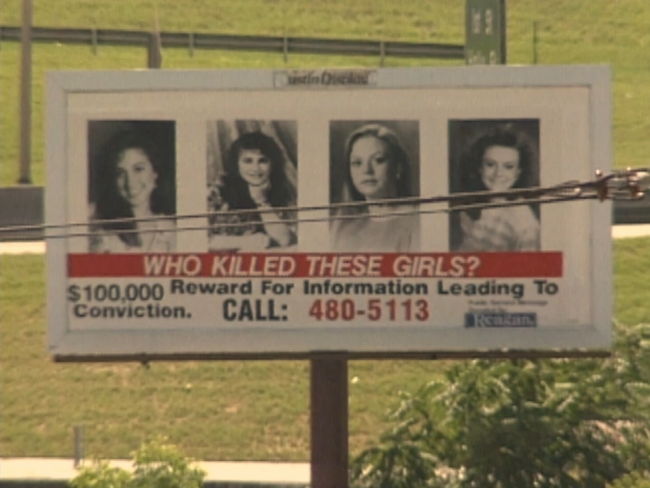

When HBO Documentary Films approached veteran non-fiction filmmaker Margaret Brown (“Descendant”) with the twice-Emmy nominated four-part series “The Yogurt Shop Murders” (A24, HBO), she was happy to stay home for once. The brutal unsolved murders of four teenage girls in December 1991 had been a subject of discussion in her own hometown of Austin, Texas for 34 years. Everyone had a theory about who was guilty. “People were obsessed with this crime,” said Brown on Zoom. “I cannot explain to you just how much it lived in the city.”
But Brown was also compelled by the years-long impact of this mystery on the grieving families of the victims, the frustrated detectives trying to solve the crime, and the four unfortunate men (Forrest Welborn, Robert Springsteen, Michael Scott, and Maurice Pierce) who were accused of murder. Three served prison sentences from three to ten years.


They were given a real reprieve, finally, when advances in DNA technology allowed Detective Dan Jackson to find a DNA match from under the nail of one of the victims. Serial killer Robert Eugene Brashers was long dead (and never appears in the first four episodes), but the DNA findings exonerated the falsely accused. When Brown’s pal Jackson confirmed the news, she was in Mobile, Alabama. She dropped her dog and car with her parents and flew to Austin. Two days later, she jumped into a follow-up fifth episode, catching up with all the players.
The first four episodes develop a strong non-fiction narrative about an unsolved crime. But the fifth episode changes the whole story. Brown and HBO had two days to decide what to do. “They pretty much were, ‘Let’s just go,’” said Brown. Jackson had already spoken in the fourth episode about hoping DNA would unlock the killer.
“There was the families, and then there’s the boys, who I’ve never talked to before,” said Brown. “I didn’t think they did it in the first place. Still, some people still thought they did it, and policemen were still harassing Forrest. We were shooting, and they were still harassing him. At one point, I had to say to Detective Dan, ‘People are harassing Forrest’ after the series had come out.”

One of the disturbing elements of the story is how little the victims’ families seem to care about the imprisoned men whose lives were destroyed. “I had to interview [the families] in the days after this happened,” said Brown. “They’ve been told for years that these boys did it. They were so in shock. This was the first time where we know who did it. Like their brain hasn’t adapted yet. Shawn Ayers says, ‘I didn’t have room for that yet.’ Like he’s still processing. His fucking sister was killed by a serial killer. People should have a lot more compassion for that.”
One reason the DNA match took so long was that the yogurt shop crime scene was set on fire and then doused with water. There was almost no DNA to collect. “They had microscopic amounts of DNA,” said Brown. “They had enough to do this, having the DNA from Brashers. That was the only way they could test it against what was under the fingernails. If they hadn’t had his DNA to test it against, they wouldn’t have had enough DNA. Because every time you test DNA, you use it up, you can’t retest.”
Another disturbing aspect of the case was its impact on the people trying to solve it. One homicide investigator, John Jones, gets so worked up at one point that he broke down in tears on camera. His life is in shreds. On the other hand, detective Paul Johnson, who wrung out false confessions from the four boys, never expresses any remorse.
“Also the jury is responsible,” said Brown. “Also the whole court system is responsible. Also the defense was given some faulty information. It’s systemic. It’s not just Paul Johnson. He doesn’t cop to it because if he admits that, he is responsible, so he’s not going to admit it. He wants to think of himself as a good person.”
The series is informed by a rich trove of archive material. The production had given her some material, but no one had really looked at it. Claire Huey is a documentary filmmaker who conducted interviews with the families soon after the murders, but never finished her own film. The first thing editor Mike Bloch found was when Huey asks one of the parents: “Can you talk about when your daughters were murdered?” And the woman answers.

“Not everyone wanted that to be the end of the first episode,” said Brown, “But I’ve never seen anything like this on TV before, and it’s so powerful, and the way she goes through it in real time and with humor and grace, and you are with her while she’s talking about it. It was incredible. We fought to have that because it’s not like your normal cliffhanger. Are people even going to tune back in again? It’s so mesmerizing. But it’s also pretty dark.”
While crime series have taken over the documentary field, films and series like “The Yogurt Shop Murders” or “The Perfect Neighbor” do provide positive outlets for the victims. “It’s complicated,” said Brown. “The whole time we were making it: ‘Can we somehow subvert the genre?’ I started listening to true crime podcasts when I was going to make this and two women said, ‘Raise a toast to murder,’ and I was like, ‘Fuck you! What is wrong with you?’ The bit that I did listen to felt like peering at it as an outsider and not acknowledging that we all can’t avoid pain, can’t avoid suffering. I did think at a certain point, ‘Should we even be making this, or is this just disgusting? Are we taking advantage of people to have a show on HBO?’ I don’t want to do that. That’s not why I make movies.”
Brown is clearly an empath who can read people in an astute way. Over four years, that was a lot to absorb. At a certain point, the filmmaker called HBO and requested therapy for herself and her crew, who she works with on all her films. “I do need to protect myself more,” she said. “My DP Justin [Zweifach] and I are kind of porous, and that’s what makes people trust us. At a certain point in the story, everyone working on it was calling me, like, ‘We have to quit. This is too much.’ My editor’s having nightmares. It’s seeping in, it was affecting people on the crew. And on the other hand, everyone has had trauma in their lives. There were people working on this project purposefully to work through some of their own stuff. The therapy helped a lot.”
Brown would do long, emotional interviews. On the fifth episode after she spoke to Brasher’s daughter Deborah, “I had to go and walk around the block in the middle. I felt for her so much, I thought I was going to throw up. I had to take a break.”
It was no surprise that Brashers wanted to talk. “Sometimes talking to an empathetic person is a way to work through things,” said Brown. “She wants the families to know that someone in that family cares, and it’s beautiful.”
As for the surviving murder suspects, Brown didn’t get to all of them. Springsteen, who served ten years, abstained. Pierce served three. “They’ve all been dragged through so much, and it’s overwhelming. I saw them being so traumatized and overwhelmed,” she said.
While he was arrested and detained, Forrest Welborn emerged more intact. Two juries refused to indict him. His bar in Austin is a place for people who don’t have anywhere to go on Thanksgiving or Christmas. “I love Forrest,” Brown said. “His mother makes food for everybody. He’s the nicest guy. He’s so kind. He’s so scarred.”
>
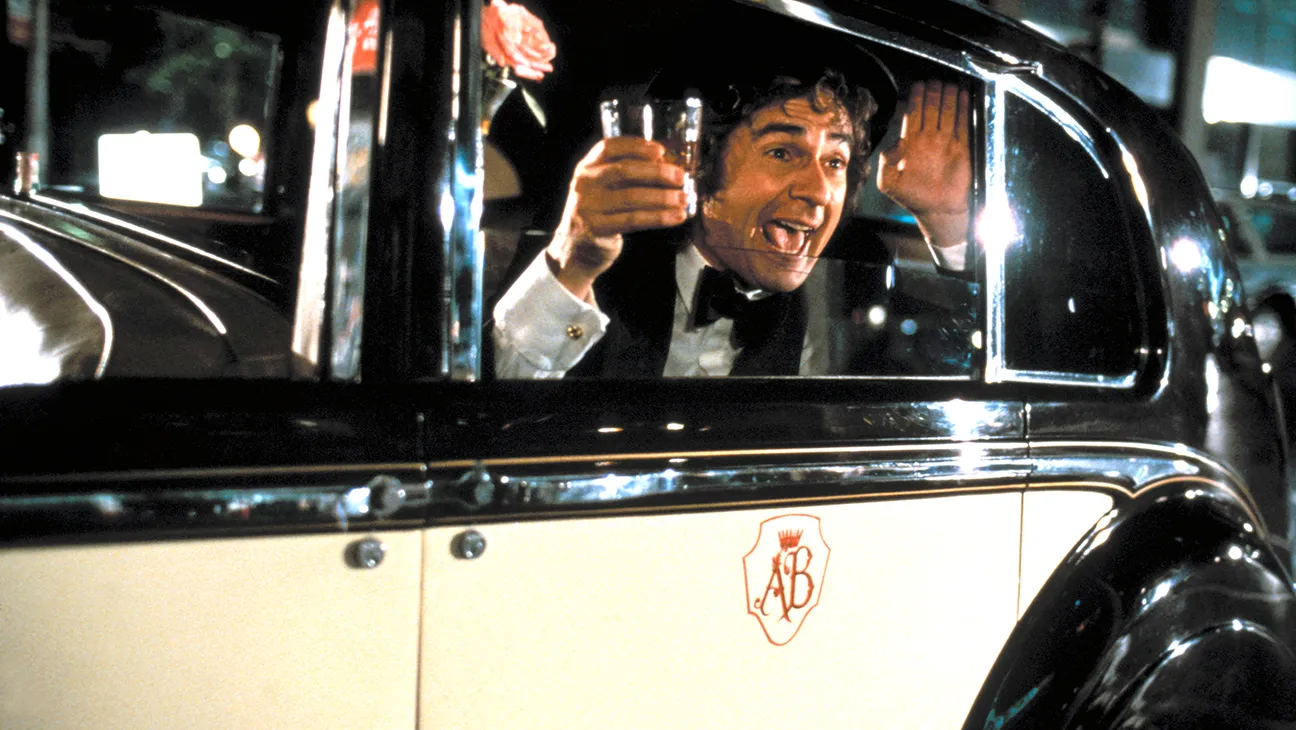
A toast is in order for Arthur, which became a comedy classic despite a quiet release 45 years ago. After penning Carl Reiner’s 1978 comedy The One and Only starring Henry Winkler, Steve Gordon was hired to direct his own Arthur script for Orion. Gordon initially considered George Segal and John Belushi for the title role before casting Dudley Moore off the success of 10, in which the actor starred opposite Bo Derek.
Arthur centers on alcoholic playboy Arthur Bach, who will be cut off from his family fortune unless he marries a woman he doesn’t love, which becomes complicated when he falls for working-class Linda, played by Liza Minnelli. At the time, Moore praised the script for its barrage of jokes: “Ten laughs a page, instead of one laugh every 10 pages.” Actress Anne DeSalvo, who played sex worker Gloria, tells THR that Moore, a classically trained pianist, would warmly greet her on set. “Dudley would be playing the piano, and he’d say, ‘Good morning, Anne,’ ” she recalls. “He was such a gentleman.”
The lead character was written as American, but Moore convinced Gordon to let him keep his British accent: “Steve kept phoning me up and saying, ‘Are you sure you can’t do an American accent?’ I told him if I tried, it would be the most distorted performance.”
Arthur hit theaters on July 17, 1981, with THR‘s review extolling the “hilarious comedy” and Moore’s “impeccable timing.” The film got off to a slow box office start amid marketing challenges, but word of mouth drew crowds for weeks to come, as Arthur became the year’s fourth-highest-grossing title. The film earned four Oscar nominations, winning for best supporting actor for John Gielgud as butler Hobson, plus Christopher Cross’ main theme song, “Best That You Can Do,” co-written by Burt Bacharach and Carole Bayer Sager.
Gordon died suddenly of a heart attack a year later at age 44, making Arthur his only feature. Moore and Minnelli returned for a 1988 sequel, while a 2011 remake starred Russell Brand, Jennifer Garner, Greta Gerwig and Helen Mirren, but neither matched the success of the original, which was named one of AFI’s top 100 comedies.
Moore, who died in 2002 at age 66 after battling progressive supranuclear palsy, once called Arthur his favorite role: “I love the character.”
This story appeared in the Aug. 12 issue of The Hollywood Reporter magazine. Click here to subscribe.
>

As the cost of groceries continues to rise, cooking in restaurants and at home has become more expensive. Kristen Kish, host of Top Chef, is well aware of this squeeze and wants the winners of the Bravo reality cooking show to be awarded more prize money for triumphing in the kitchen.
“I was just talking with some folks from Bravo, and I was like, ‘We need to increase the prize money.’ On my season, Season 10, it was $125,000. Now it’s $250,000, but with inflation, we should be creeping up near a million,” she said during a conversation at Deadline’s Contenders Television: The Nominees Studio. “Eggs are expensive these days. We need to like up the ante a little bit, but I do understand that it’s far more complicated than just saying give us a million bucks.”
Kish landed an Emmy nomination in the Outstanding Host for a Reality or Reality Competition Program category for a third year in a row, one for each year she has been hosting the long-running series, having replaced Padma Lakshmi in Season 21.
She is, once again, up against The Traitors’ Alan Cumming in the category, ironic given that she brought her kitchen star power to the Peacock mystery competition series this year too.
Check out the Contenders conversation with Kish below and scroll down for photos from the event.
Kish said that every year she is nominated it feels “surreal” and “exciting.” “I feel really proud for myself, but there is no show if there are no chefs. I am so proud for everyone involved in making the show. It changes so many people’s lives in our industry,” she said.
This season, set in the Carolinas, it changed the life of Rhoda Magbitang, who grew up in the Philippines and worked in kitchens including Michelin-starred Mélisse, Suzanne Goin’s A.O.C., République and Bazaar by José Andrés before winning Season 23.
Much like Kish, when she was a contestant (and winner) on Season 10 of Top Chef, Magbitang had to go through Last Chance Kitchen to win.
“Coming out of Last Chance Kitchen, a lot of the chefs will say if you’ve been through it, you are reignited. You have a little extra. There is some kind of mental load reset. The worst thing has happened, which is [they] got already got kicked off. So, you relieve yourself of that pressure,” Kish said.
Anthony Avellano for Deadline
Anthony Avellano for Deadline
Anthony Avellano for Deadline
Kish has a more comforting style than many reality TV hosts. This season it showed when she comforted a distraught chef, Nana Araba Wilmot, who didn’t have time to plate her dish, and also dealt with an injured contestant.
“I feel like an older sister or a peer that maybe has been in that particular restaurant for a little bit of extra time where… I can make people feel a little bit more calm and hopefully more confident, while also still giving feedback that holds them accountable,” she said.
Top Chef, produced by Magical Elves, has already been renewed for Season 24. Kish wouldn’t give much away as to where it will be set. “I have heard rumblings. I have a general idea of where we’re going, and all I can say is I’m very, very excited for the entire plan,” she said.
>
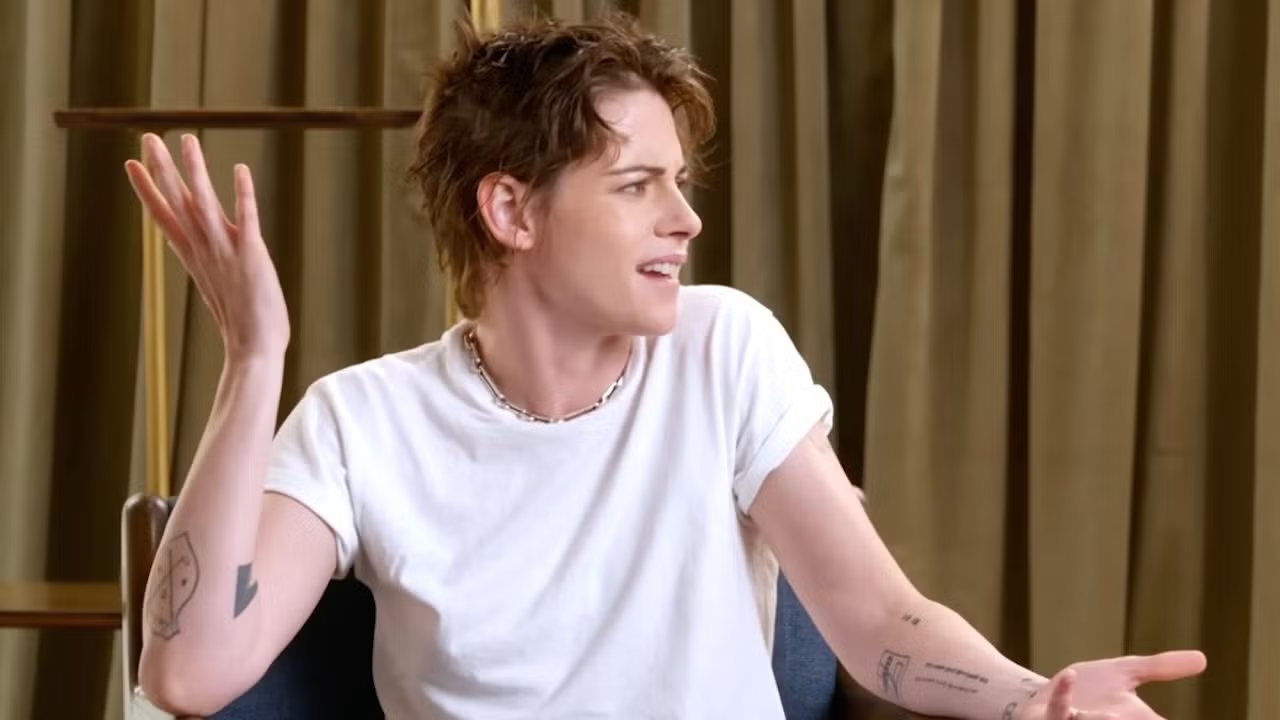
Kristen Stewart recalled a less than desirable experience she had while filming one of the “Twilight” movies, comparing it to the sinking of the RMS Titanic.
The actress, who was promoting her new movie “The Wrong Girls” alongside co-star Alia Shawkat, was tasked with guessing the iconic filming locations from her past. At the start of the video, Stewart was presented with a photo of a beach locale, correctly guessing it was Brazil, where Stewart’s character Bella Swan went on her honeymoon with Edward Cullen (Robert Pattinson) in 2011’s “The Twilight Saga: Breaking Dawn – Part 1.”
While the filming location looked picturesque, Stewart revealed production became a bit of a nightmare due to a massive storm that trapped the cast and crew.
“Everyone got stuck in this house actually and couldn’t leave,” she recalled. “Yes, the whole crew was truly, like rubbing two peanuts together and like being really infuriated and pissed that like production couldn’t get them out of there.”

Stewart shared that she was offered a way out, much like how women and children were given preference on lifeboats aboard the Titanic.
“And there was like, one little boat and they were like, ‘We can get the cast out just for the night,’” Stewart went on. “And I was like, ‘This is the Titanic.’”
She added: “I’m like, ‘I’m not gonna get on that, right?’ … They’re like playing violins and I’m like, ‘I love you guys so much. I consider myself like a blue-collar actress. So, I’m like, super with you, but I’m out of here.’”
Watch Stewart’s comments below.
Stewart is not the first member of the cast to reflect on that chaotic filming experience. Back in 2011, Pattinson discussed filming in the town of Paraty, telling MTV at the time: “[Brazil] was really amazing the day we got there, and really beautiful and warm and everything you’d expect … Then it suddenly, for the remainder of the shoot, was not only raining but like hurricane storms.”
He added: “It was kind of like having a honeymoon in England. We were playing board games instead of, like, making love on the beach.”

>


Search For Canadian TV Actor Stewart McLean Now Homicide Investigation


These ’90s fashion trends are making a comeback in 2017
According to Dior Couture, this taboo fashion accessory is back
Model Jocelyn Chew’s Instagram is the best vacation you’ve ever had
Emily Ratajkowski channels back-to-school style
Your comprehensive guide to this fall’s biggest trends
9 Celebrities who have spoken out about being photoshopped
A photo diary of the nightlife scene from LA To Ibiza