
Entertainment
How the ‘Ang Tanging Ina’ Movie Franchise Molded Filipino Comedy

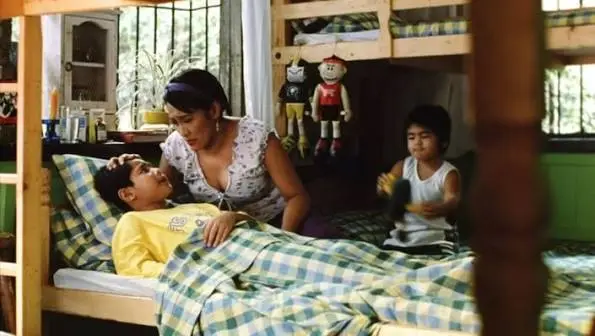

A cultural tentpole and one of the blockbuster film franchises in the Philippines, “Ang Tanging Ina” gave then-unknown lead star Ai Ai delas Alas her shot at onscreen immortality just as it propelled filmmaker Wenn V. Deramas, years after directing melodramatic soaps and romance movies, to the highest echelons of Filipino comedy.
An early-2000s demand for a different type of comedy led to “Ang Tanging Ina,” a high-risk and rare champion at the tills that did away with male-centric slapstick comedies and crystallized the political temperament among popular culture at the time. Written by Mel Mendoza-del Rosario, the film eventually became the quintessential example of the modern Filipino family comedy satire. Elevating the careers of delas Alas and Eugene Domingo as comedic giants, it likewise anticipated the shift of mainstream studios away from the hyper-masculine action and slasher movies of the prior decade.


The Deramas blueprint undeniably influenced other comedy directors such as Chris Martinez and Jun Robles Lana. And yet, only two years away from its 25-year milestone, no Filipino comedy film franchise could rival the star-making power and cultural resonance of “Ang Tanging Ina” as a populist masterwork, one that still makes headlines in the current political moment and whose music soundtracks a viral TikTok trend — an itinerant digital artifact reproduced and passed on via memes and clips, sometimes even out of context.
This resurgence is also thanks to the film restoration arm of ABS-CBN, the largest media conglomerate in the Philippines that has gone digital since 2020, after ex-President Rodrigo Duterte’s shutdown of its traditional free-to-air broadcasting franchise. But beyond virality and online ubiquity, “Ang Tanging Ina” is a classic worthy of rediscovery, even as some modern viewers have derisively, unjustly described it as “lowbrow.” In this way, the franchise still animates the country’s relationship with mainstream fare.
After the eponymous first film debuted in 2003 as then the highest-grossing Filipino film ever made, a distinction it kept until 2006, the franchise went on to produce a television spinoff of the same title (2003-2005). It was followed by two direct movie sequels, namely “Ang Tanging Ina N’yong Lahat” (2008) and “Ang Tanging Ina Mo (Last na ‘To!)” (2010), the crossover film “Enteng ng Ina Mo” (2011), and the tangential spinoff “Ang Cute ng Ina Mo!” (2007) — all of which became theatrical hits.
Box-office success aside, the series found its staying power in the manic inventiveness with which Deramas commanded a kind of comedy whose legacy, especially for its devoted fanbase, persists beyond a good laugh. In delas Alas’ Ina Montecillo, a solo parent who will stop at nothing to provide for her 12 children, Deramas found one of his most iconic and beloved protagonists. The premise takes its cue from lived truths, particularly those of Deramas’s single mother Lydia Deramas, as well as Mendoza-del Rosario’s brother, who raised nine children.
The comedy series was produced by Star Cinema, the Philippines’ top film production and distribution company under ABS-CBN. Upon its inception in 1993, Star Cinema quickly built itself as serious competition of major studios like Viva Films and Regal Entertainment, becoming so prolific that it either produced or co-produced the majority of blockbuster Filipino movies of all time. The studio wasn’t exactly silent about its business: It strategically invested in commercial genre films and hired writers to work on concepts they already had in mind, typically following a classic three-act structure, and with big names readily attached to them.
“Ang Tanging Ina” came at a time when the commercial studio was about to enter its glory years, beginning in the mid-2000s through the 2010s, driven by romantic comedies and romantic dramas that made the most of another time-tested Star Cinema formula: the sweeping power of love teams, which extends beyond the reel, and the cultural context in which they rise to stardom. Whereas the Deramas series lacked the appeal of onscreen romantic pairings, at least as headliners, it had a particular sensibility established among Filipino households to build on: their undying predilection for family comedies, whether in cinema or television, whose protagonists are almost always underdogs and therefore impossible to root against.
Yet unlike other crowd-pleasing family comedy movie series that riffed on existing television sitcoms, such as the Dolphy-starrer “Home Along Da Riles” (1993-2026) and the Vic Sotto-led “Enteng Kabisote” (1991-2016), the other film series in the crossover sequel, “Ang Tanging Ina” produced a comedy landmark without the benefit of an existing franchise.
Deramas was acutely well-aware of such play of principles, which allowed him to sequelize a megahit while bending the rules of studio moviemaking. For the most part, the franchise’s subversion works twofold: first as a feminist tragicomedy tipped in the direction of metacinema, then as a cultural commentary. Throughout, it highlights the importance of the family unit, whether such a recurring thematic fixation is considered in the context of the domestic or the national.
The first installment, “Ang Tanging Ina,” finds the heroine desperately trying to make ends meet for her dozen kids, as her three husbands, one after the other, succumb to ludicrous deaths. With debts racking up, Ina loses the family’s bus company, forcing her to shift between jobs, from construction to becoming a bar entertainer, therefore forging an identity through toil.
In the film’s most emotional moment, Ina delivers a monologue about the taxing ordeal of being a solo, thrice-widowed parent. But just as emotions threaten to erupt further, she pivots to a popular Vilma Santos line from “Anak” (2000), at which point her daughters Tudis (Nikki Valdez) and Por (Heart Evangelista) turn to each other, recognizing the punchline and therefore orienting the audience. The full-bodied physicality with which delas Alas imbues her performance turns such punishingly poignant bits into the stuff of boisterous spectacle. Not to mention that her scenes with the superb Domingo, who plays her best friend Rowena, are an experience to relish through their off-the-charts chemistry.
Through rapid-fire verbal repartee, constant close-ups, and frantic cuts, Deramas treads a careful line between tragedy and comedy, the latter a psychological weapon against the former.
But because Deramas repeats such winking gestures throughout the film while breaking the fourth wall, “Ang Tanging Ina” likewise makes for a metamovie whose humor would surely speak differently to a Filipino spectator than to a non-Filipino one. Its title alone, courtesy of then ABS-CBN president Freddie M. Garcia, is a triple entendre, something foreign viewers may not readily point out, for “Ang Tanging Ina,” meaning “the only mother” in Filipino, is also a play on the Tagalog profanity “putang ina” (“whore mother”) and the colloquial slang “tangeng ina” (“dummy mother”). The target audience could not be any clearer. Deramas also justifies all the cinematic allusions on the story level, establishing the characters as devoted cinephiles who are particularly acquainted with Philippine cinema. The secret to his comedy, then, is referential specificity and how he hones it tenfold.
Deramas was, of course, not the first director to make use of local pop culture in cinema, but he did so with a lexicon and rhythm all his own. In his mix of melodrama and theatricality without resorting to nonsensical mock violence, a staple of Filipino comedy at the time, emerges a kind of queering, an insistence on an elsewhere, to such an extent that he popularized this absurdly campy ethos of processing hardship through hilarity in local cinema. Indeed, “Ang Tanging Ina” is a form-breaking smash.

The use of local pop culture would similarly manifest in “Ang Tanging Ina N’yong Lahat” not just by invoking movie references but by inverting common Filipino maxims and incorporating them in the dialogue. “Ang Tanging Ina N’yong Lahat” likewise allows Deramas to take the cultural commentary up a notch. Whereas the first film is more concerned with the working-class reality of raising 12 kids as a single mother in the early aughts, the 2008 follow-up examines motherhood in the context of electoral politics, proving that Deramas can locate personal truths in a national moment. In doing so, he crafted the best film in the franchise in terms of novelty and profundity.
Released as an official entry to the Metro Manila Film Festival, like much of the franchise, “Ang Tanging Ina N’yong Lahat” sees Ina figuring out how to regain her position as the family’s primary provider, until she and Rowena land a job at the Malacañan Palace, the presidential residence, as chambermaids. There, she learns about an assassination plot that eventually results in her running for president in a snap election and winning by a landslide. The parallels to Filipino politician Cory Aquino’s rise to power during the 1986 People Power Revolution are there for those who choose to see it.
Similarly, Gloria Macapagal Arroyo was then running the country as its second female president. The comedy of errors that follows as Ina attempts to solve the nation’s problems, from traffic congestion to energy crisis, doubles as a critique of the despotic regime and the tumult of living in such hellish times. The political inflection, Mendoza-del Rosario told IndieWire, was a conscious effort. “Because we were repulsed by the government then.”
But beyond this, what “Ang Tanging Ina N’yong Lahat” fundamentally captures is this idea of electoral herd mentality, which arises from the ways we’re all so besotted by political leaders who position themselves as charismatic maternal or paternal figures — the kind of politics delas Alas would adhere to in real life, given her right-wing disposition.
Of the three main installments in the comedy series, “Ang Tanging Ina Mo: Last Na ‘To!” is admittedly the weakest and most consistent with Star Cinema’s formula films. Its raison d’être is pretty predictable from the jump: reunion movie masked as a vision of existential dislocation. After vacating her post as president, Ina is diagnosed with a terminal illness, allowing her to relearn the familial value of sticking together despite the odds.
Most actors in the original film reprise their roles, save for Evangelista and Edu Manzano, who plays one of Ina’s husbands. Even Deramas himself makes an appearance near the film’s coda, in which the director bristles at Ina for interrupting his shooting set. The result is popcorn entertainment with some footage from the previous rollouts thrown in. But while the movie keeps the tonal textures of its predecessors, it lacks their subversive pleasures. Its thematic concerns, for one, just offer the audience more of the same — a classic case of resting on one’s laurels. And yet, luckily, it’s not as chintzy an affair as the crossover sequel.
Though no longer directed by Deramas or co-written by Mendoza-del Rosario, the franchise fatigue would crystallize beyond rescue in “Enteng ng Ina Mo.” It blends the meta elements of “Ang Tanging Ina” and the fantastical bits of “Enteng Kabisote” to tedious ends, completely dulling the magic of the original Deramas trilogy. Terrible visual effects and product placements aside, what makes the crossover feel like a complete overkill is that the interspersed storylines largely rely upon pure coincidence.
Even so, it’s not hard to fathom why the Filipino filmgoing public is so enamored with “Ang Tanging Ina.” In fact, when the pilot picture premiered during a level 3 storm in 2003, the producers were already bracing for it to bomb at the tills, but spectators still found their way to the film, an organic bond that even the greatest publicity work could not easily replicate. Deramas was hardly the first to raise that our families can make or break us, but he extracted such tension with a witty tongue and an inimitable sensibility that was never more potent than in the first two installments of the franchise.
There is a pervasive notion that Star Cinema movies, or mainstream movies for that matter, are never in the business of being smart or deep, partly because they don’t have to and still be commercially rewarded for it. Deramas has proven otherwise — that comedy can be a thinking genre. By sequelizing “Ang Tanging Ina,” he demonstrated what it’s like and what it takes to service and then subvert the limits of mainstream moviemaking. He would go on to direct more big-budget hits, including his legendary team-ups with Filipino superstar Vice Ganda, until his death in early 2016. And when Wenn V. Deramas died, that idiosyncratic mainstream magic died with him.
>

Creed Bratton’s commitment to his art was on full display on the set of Smiling Friends.
Painting himself fully green for “Le Voyage Incroyable de Monsieur Grenouille,” an episode in the adult animated sitcom’s third and final season that brought the show its first Emmy nomination, The Office alum must have hoped to get the paint off by the end of his guest star appearance.
Per the show’s co-creators Zach Hadel and Michael Cusack, though, that’s not what happened.
“He was so good and really fun to work with. He was painted green fully all over the body,” Hadel recalls during an appearance for Deadline’s Contenders Television: The Nominees Studio. “He had to go film a movie the next day and apparently still had some green on him. So the green lasted many weeks.”
Watch the conversation with Hadel and Cusack here.
The film Bratton was going to shoot, we’ve confirmed, was Primetime, A24’s crime thriller starring Robert Pattinson as To Catch a Predator‘s Chris Hansen, which we scooped in 2024.
Incredibly, the paint hadn’t completely come off even by the time Bratton was done with that project.
Cusack said, “He told our friend, the one that hired him, he said he went to the doctor a month later and they’re just doing a basic checkup. And he’s like, ‘Why is your skin slightly tinged green?’ And he’s like, ‘No, it’s not a health problem. I just painted myself with paint that never comes off, so it’s totally fine.’”
Smiling Friends is an absurdist, mixed-media comedy starring Cusack and Hadel as Pim and Charlie, employees at a company whose job is to help make unhappy people smile.
Bratton painted himself green for a live-action appearance as the father of Mr. Frog, a character Hadel describes as “the dumbest” in the show, which the creators conceived early in the design process on Smiling Friends. Over the course of the show’s Emmy-nominated episode, we follow this supporting character — a “hollowed out” TV star,” in Hadel’s words — from his leap to President and then ruler of the world. The episode then goes as deep as is possible, in the span of just 11 minutes, into what makes Mr. Frog tick.
The intention, Cusack says, was to see what would happen in devoting “a cinematic, prestigious TV episode” to “the stupidest character in all of animation.”
Of the show’s Emmy nomination for Outstanding Animated Program along long-running and beloved series like The Simpsons, Cusack said, “We feel very honored. Obviously, we grew up with all the shows that we’re against and respect them very much. We would’ve never thought in a million years that our little quarter-hour show that we did for Adult Swim would be in this league, so we feel very honored by it and it’s a very nice feeling.”
In the conversation with Deadline, Cusack and Hadel underscored that it’s easy to underestimate the rigors of crafting a 2D animated series, frame by frame, in 2026, putting the ambition of their process in context.
>

Selena Gomez’s legal representation says a new lawsuit alleging the star defrauded investors in her mental health star-up Wondermind is “completely meritless, both factually and legally.”
Lawyer Mathew S. Rosengart issued a statement to People on Saturday: “The allegations that Selena Gomez engaged in any way whatsoever in any purported ‘fraud’ or other wrongdoing are completely meritless, both factually and legally. We will vigorously defend these false allegations and indeed are filing a motion to dismiss the baseless claims against her.”
In a lawsuit filed Thursday by two companies, Wondermind SRS 44 LLC and Bespoke Wondermind LLC, Gomez, her mother Mandy Teefey and Wondermind co-founder Daniella Pierson were accused of defrauding investors in the mental health startup, alleging the trio made false representations of the business to stakeholders, including a plan that Gomez would be “intimately involved” in the business’s operations. The suit claims damages of around $1.2 million.

“Gomez purported to sign a contract obligating her to perform and then ignored it,” the lawsuit read. “The partnerships did not exist. The initiatives never materialized. The app was never built. And for three years, while the Company quietly collapsed around them, not one of its founders, officers or directors said a word to the investors whose money was funding the collapse.”
Gomez, Teefey and Pierson first launched Wondermind in 2021 as “a space to work it all out every day with candid conversations, physical tools, daily content, and a supportive community.” In the lawsuit, investors claim that they did not learn about alleged management issues or struggles at the company – like employees not being paid on time – until The Cut reported on the startup’s working conditions last year.
Along with the statement from Gomez’s lawyer, Teefey too denied the allegations contained in the lawsuit, giving a statement Friday to the New York Times.

>

Dave Marsh, the influential and widely read rock critic for Creem, The Village Voice and Rolling Stone and the author of the foundational Bruce Springsteen 1979 biography Born to Run, died Friday, August 14, at his home in Connecticut. He was 76.
His death, reported by Deadline sister publication Billboard and confirmed on Facebook by Marsh’s friend Jim Rotolo, followed an extended period of declining health, although a cause has not been disclosed.
“Dave wrote several books about Bruce as part of a remarkable body of work spanning some 25 titles,” Rotolo, host of the radio show The Wild & The Innocent with Jim Rotolo. “A longtime rock critic for Creem and Rolling Stone, he was also one of the creators of E Street Radio and hosted Kick Out the Jams on SiriusXM for 19 years. Rest easy, Dave. Thank you for everything, my friend. You will be missed.
Marsh, alongside a coterie that included his friend and mentor Lester Bangs, launched his career as a critic and founding editor and writer of the highly influential Creem rock magazine in the late 1960s. An early champion of such ’50s and ’60s musical styles as soul, girl groups and what was starting to become known as garage rock, Marsh would later lend his considerable support to punk rock. Indeed, he is widely credited with coining the phrase, having first used it in a 1971 article about ? and the Mysterians, the band behind the 1966 hit “96 Tears.”
A native of Pontiac, Michigan, and a devotee of Detroit’s Motown as well as Motor City scenesters Iggy Pop and the Stooges, Marsh was instrumental in launching the Detroit-based Creem, and wrote for the magazine through the early 1970s. By the middle of the decade he began a multi-year tenure as an editor and critic at Rolling Stone, and shepherded the first edition of the Rolling Stone Record Guide in 1979.
A prolific author, Marsh wrote two books about Springsteen: In addition to Born to Run, which chronicled the singer-songwriter’s early career and initial fame, Marsh authored the 1987’s Glory Days, continuing the Springsteen life story through the peak MTV era. In 2003, Marsh combined the two biographies into the single-volume Bruce Springsteen: Two Hearts, adding an addition chapter to update the story.
Marsh also wrote 1983’s Before I Get Old, the biography of rock band The Who, and 1989’s The Heart of Rock & Soul in which he named the 1,001 greatest singles ever. (His #1 choice was Marvin Gaye’s “I Heard It Through the Grapevine.”)
In addition to the biographies, Marsh collected his reviews and essays in a number of volumes, including Fortunate Son and Kick Out the Jams. His 1993 book Louie Louie: The History and Mythology of the World’s Most Famous Rock ‘n’ Roll Song chronicled the cultural impact of that 1963 hit song.
Along with his old Rolling Stone boss and colleague Jann Wenner, Marsh helped found and maintain the Rock and Roll Hall of Fame in Cleveland, Ohio.
Marsh joined SiriusXM in 2004, and for 19 years hosted the weekly Kick Out the Jams show. He also launched the Springsteen-centric programs Live from E Street Nation and Live From the Land of Hopes and Dreams.
According to Billboard, Marsh is survived by his wife Barbara Carr, a longtime Springsteen co-manager as a partner in Jon Landau Management. He was predeceased by daughters Kristen Ann Carr and Sasha Carr. A complete list of his survivors was not immediately available.
>

Joel Piroe wants Leeds exit but representatives believe club pricing him out of move

‘Smiling Friends’ Creators Zach Hadel & Michael Cusack Interview

Rangers need ‘wee bit of help’ and Derek McInnes says money is there to get it
-

 movies3 months ago
Search For Canadian TV Actor Stewart McLean Now Homicide Investigation
-

 Fashion9 years ago
These ’90s fashion trends are making a comeback in 2017
-
Fashion9 years ago
According to Dior Couture, this taboo fashion accessory is back
-
Fashion9 years ago
Model Jocelyn Chew’s Instagram is the best vacation you’ve ever had
-
Fashion9 years ago
Emily Ratajkowski channels back-to-school style
-
Fashion9 years ago
Your comprehensive guide to this fall’s biggest trends
-
Fashion9 years ago
9 Celebrities who have spoken out about being photoshopped
-
Fashion9 years ago
A photo diary of the nightlife scene from LA To Ibiza