
Sports
Ranking all 72 stadiums in the Football League: From homely grounds to imposing arenas

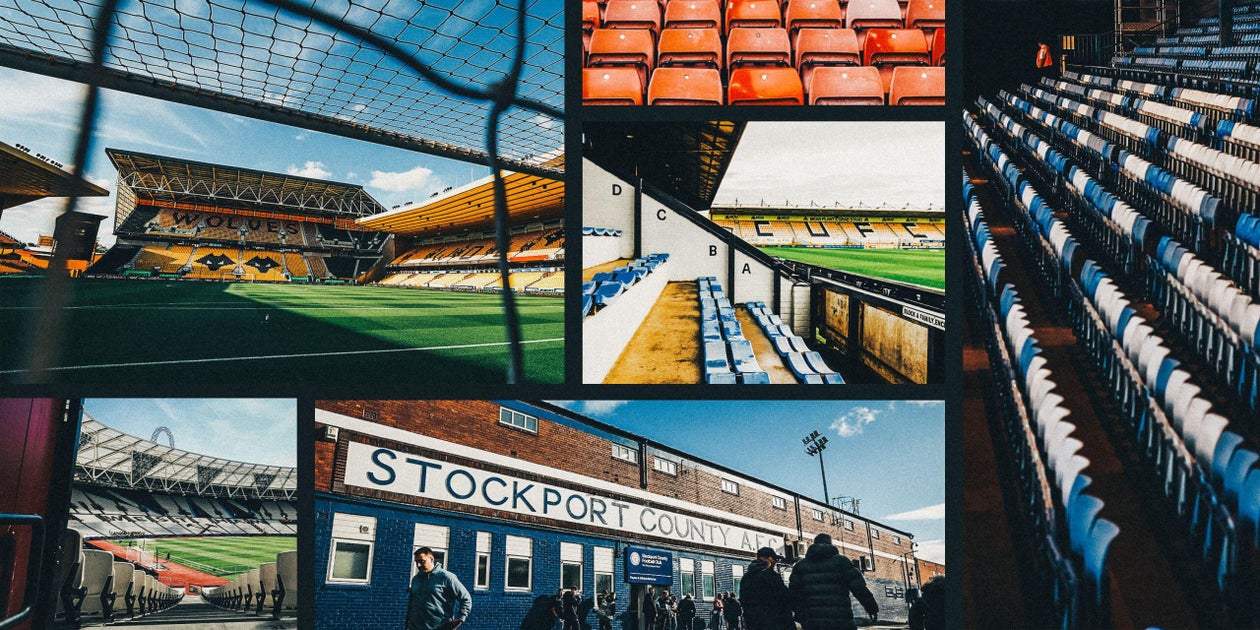
It’s a big welcome back to the English Football League, comfortably the oldest league competition in the world game and home to a rich tapestry of grounds and stadiums that carry a little something for everyone.
Crave the sleek lines of a gleaming, bowl-style stadium? Then, look no further than Milton Keynes, Leicester and, as of this weekend, east London for your fix.
Prefer to watch your football in more homely surroundings at a venue that might be a little imperfect but offers a bit more character? Then, again, you’re well catered for in a 72-club, three-tier league where some stands can be more than a century old and have a thousand stories to tell.
This is a purely subjective list. There are no right or wrong answers, no agenda for or against certain parts of England and Wales, and certainly no bias towards any particular team, just the opinion of a self-confessed grounds nerd and member of the Ninety-Two Club on what constitutes an enjoyable place to take in 90 minutes of EFL action…
72. Crawley Town
Broadfield Stadium
Capacity: 6,134
Opened: 1997
Someone had to come last. A sad fact of life that may or may not console supporters of Crawley Town.
Like several grounds to have arrived in the EFL in the past couple of decades, Broadfield Stadium retains a distinct non-League feel. In some cases, this can be charming. The mish-mash of different stands, for instance, at Harrogate Town’s Wetherby Road — now no longer part of the ’92’, following their relegation in May— gave the place a certain appeal, even though the National League felt a more natural home.
Crawley’s stadium, however, lacks even this. It’s neat and tidy enough but rather uniform, with only the East Stand sticking out, for all the wrong reasons, thanks to the line of thin pillars at the front, holding up an awkward-looking canvas-style roof.
Broadfield also suffers from a location that sits on the fringes of the town, a regular affliction of grounds built in the last 30 years that can leave a club feeling slightly apart from their community.

(Pete Norton/Getty Images)
71. Barnet
The Hive
Capacity: 6,500
Opened: 2013
Barnet know a thing or two about a sense of detachment, The Hive being located away from the club’s traditional heartland in the suburbs of north London. Moves are afoot to try to bring the club back to the borough of Barnet and a site not far from their former home, Underhill, but, for now, fans must trek across the border into neighbouring Harrow.
Once there, the view of the action is decent enough, especially when watching from the away section behind one of the goals. But there’s a soulless feel to proceedings, not helped by the opposite end being just a grassy bank.
Also sitting empty are all four corners, allowing those in the main stand to watch the Underground trains trundle along the Jubilee Line on their way to final stop Stanmore and back. A pleasant diversion if the football isn’t up to much but not really what any ground’s standout feature ought to be.
70. Oxford United
Kassam Stadium
Capacity: 12,500
Opened: 2001
A club whose supporters have never taken to a three-sided ground are Oxford United. With good cause, too, as the Kassam really does encapsulate so much of what English football lost amid the rush for new-builds that followed the Taylor Report into the 1989 disaster at Hillsborough, which claimed 97 lives.
Not only is this replacement for the rather ramshackle Manor Ground and its multitude of different stands totally devoid of character and located on an anonymous retail park, miles from the city centre. But, thanks to the promised fourth stand never materialising, this can be a very cold place to watch football in the depths of winter.
The sooner Oxford relocate, the better.

(Alex Burstow/Getty Images)
69. York City
LNER Stadium
Capacity: 8,500
Opened: 2021
Like Oxford, York is a beautiful city. Such a shame, then, that anyone visiting the EFL’s newest venue in the coming season are likely to see very little of it, thanks to the LNER Stadium being yet another ground pushed to the outskirts, where it must share floorspace — and car parking — with shops.
Such a contrast to the wonderful Bootham Crescent, York’s home until 2020 and within stumbling distance of not only the famous Minster but all the city’s many other attractions.
A decent atmosphere can be generated at York, as The Athletic discovered when attending the 2022 National League North play-off final. But, already, that capacity feels to be inadequate for a club with 5,000 season-ticket holders.
68. Colchester United
JobServe Community Stadium
Capacity: 10,105
Opened: 2008
As has no doubt become evident even at this early stage of our article, identikit stadiums of the flat-pack variety located in retail parks are something of a no-no for this writer. So, perhaps there should be little surprise over the next three venues on the list.
Like the current homes of Northampton Town and Shrewsbury Town, the snappily titled JobServe Community Stadium is eminently forgettable, save for how a failure to fill in any of the corners means noise generated by the crowd can escape just as easily as the wind can get in. It’s clean, it’s functional, it’s totally lacking in character.

(Pete Norton/Getty Images)
67. Northampton Town
Sixfields Stadium
Capacity: 8,203
Opened: 1994
Among the first wave of clubs to leave behind the centre of their hometown, Northampton swapped a far from ideal existence sharing The County Ground with Northamptonshire county cricket club (who still play there) for a far from ideal existence at a stadium surrounded by a wide array of food outlets and not a lot else.
The opening of the East Stand, after a protracted saga that wouldn’t have looked out of place in the pages of a whodunnit? novel, has helped boost capacity but a visit here still feels a soulless experience, even allowing for the entertainment sometimes provided by fans watching for free from the big hill behind one end, with footage of one bloke struggling to stay on his feet during a game against Doncaster Rovers last April going viral.
66. Shrewsbury Town
Croud Meadow Stadium
Capacity: 9,875
Opened: 2007
All the same shortcomings as at Colchester and Northampton but perhaps made more glaring here by what was lost in the name of progress, namely the riverside location that made Shrewsbury’s former home Gay Meadow one of the jewels in the EFL crown.
Also, I can’t recall ever being colder at a match in the UK than when attending their FA Cup victory over Sheffield Wednesday in January 2016. Bone-chilling.

(Jan Kruger/Getty Images)
65. Stevenage
Broadhall Way
Capacity: 7,318
Opened: 1961
With League One this season featuring no less than nine former Premier League venues among its 24 clubs, Stevenage’s modestly-sized home may suffer by comparison, despite them consistently punching above their weight as a team.
There’s nothing intrinsically wrong with Broadhall Way, the club’s home that required extensive redevelopment in the late 1990s and early 2000s to pave the way for their 2010 promotion to the EFL after the club had previously been blocked as Conference winners due to facilities not meeting minimum standards.
It’s neat, tidy and the welcome is usually a warm one. But, like many relatively recent arrivals to the league, it’s functional and not a lot more, even allowing for the nice touch that is the gable, featuring a clock, astride the East Terrace roof.
64. Bromley
Copperjax Community Stadium
Capacity: 5,160
Opened: 1938
A trip to Bromley is likely to offer even more of a culture-shock in the coming season for those travelling fans in League One more used to living the high life (we’re looking at you, Leicester City).
Hayes Lane has lost its artificial pitch following Bromley’s 2024 promotion from the National League and a new covered terrace has been built down one side of the pitch, but this venue in the suburbs of south-east London remains very much a work-in-progress as an EFL venue — as illustrated by the awkward-looking stand squeezed onto half of what used to be the away terrace behind one of the goals.
No doubt, further improvements will follow, though it is to be hoped the Dave Roberts Tea Hut — named after lifelong fan and author of the excellent book Bromley Boys, who died in 2021 — is preserved.

(Andrew Redington/Getty Images)
63. Fleetwood Town
Highbury
Capacity: 5,327
Opened: 1939
Compared to Bromley, Fleetwood are approaching elder-statesmen status as members of the EFL. This coming season will be their 15th since winning promotion from the Conference (today’s National League).
Despite that, Highbury remains a modest affair, with one stand ending abruptly halfway down the touchline, and the rest of that space taken up by a social club. The away terrace behind one goal is similarly shortened, leaving only the sweeping main stand to provide any kind of architectural merit.
So many shortcomings but a visit to this coastal outpost in Lancashire, just north of Blackpool, is still enjoyable, with the Irish Sea just a few minutes’ stroll away and a plethora of excellent fish and chip shops nearby.
62. Salford City
AIG Stadium
Capacity: 5,108
Opened: 1908
Had things worked out differently, Salford City could today be playing home matches 10 miles up the road at the 12,000-capacity CorpArq Stadium that currently houses Salford Red Devils (league) and Sale Sharks (union) rugby teams.
Instead, the football club owned by members of neighbours Manchester United academy’s famed Class of ’92 remain at Moor Lane, another venue on our list recently renovated — and re-named, following a 2025 takeover — that can hold a little over 5,000 fans and feels eminently more suitable to their needs.
There’s a homely feel here, helped by a variety of murals and personal touches applied throughout. United great Paul Scholes, Salford’s chief football advisor, made clear just last week that the club are still chasing something bigger but, for now, the current setup seems just right.
61. Accrington Stanley
Wham Stadium
Capacity: 5,450
Opened: 1968
Accrington Stanley have put plenty of effort into giving the Crown Ground a distinct identity amid a wide-ranging and necessary upgrade to facilities. Nevertheless, the away terrace remains open to the elements, which in the depths of winter can be a problem.
The locals are at least friendly, while the ground’s location among a warren of tightly-packed Lancashire streets means plenty of options for those who fancy a pre-match pint or some food before heading through the turnstiles.

(Lewis Storey/Getty Images)
60. Cheltenham Town
EV Charger Points Stadium
Capacity: 7,066
Opened: 1927
Cheltenham will always have a special place in my affections, as the place where I finally completed the ’92’ for the first time a little under four years ago.
I like Whaddon Road, to use its unsponsored name. It is very much a ground, an important distinction in that a venue develops, stand by stand, over the years, unlike new-build stadiums with their uniform four sides. Grounds also have a charm many of their modern brethren lack, and the main stand here certainly delivers on that score.
Built in 1963, it sits behind a terraced paddock, straddling either side of halfway and leaving sufficient space for a small terrace at one end and a watchtower-type structure that wouldn’t have looked out of place next to the Berlin Wall during the Cold War at the other. Wonderful.
59. Burton Albion
Pirelli Stadium
Capacity: 6,912
Opened: 2005
There’s precious little character to be found at the home of Burton Albion. This, though, hasn’t held back a team who consistently punch above their weight, with the past seven seasons having all been spent in League One (and the two before that a tier higher in the Championship).
A stadium that boasts terracing on three sides has played a part, but the atmosphere generated in this patch of central England is far superior to other all-seater stadiums built at a similar time.
58. Chesterfield
SMH Group Stadium
Capacity: 10,504
Opened: 2010
When the production team behind The Damned United, the 2009 film covering Brian Clough’s controversial tenure at Leeds United, were casting around for a suitable ‘double’ for a 1960s Elland Road, Chesterfield’s former home must have felt like a Godsend.
Saltergate, to use its actual name, had seen better days; the facilities, certainly in the wooden main stand, belonging to an era that the rest of football had left behind years earlier. Hence the switch, a year or so after the film’s release, to a stadium now named after the latest in a long line of sponsors that, for all the vital money brought in, have slightly eroded identity.
Still, this is a neat ground, perfectly suited to Chesterfield’s needs and capable of creating a decent atmosphere, even if it lacks Saltergate’s town-centre location.

(Matthew Lewis/Getty Images)
57. Doncaster Rovers
Club Doncaster Sports Village
Capacity: 15,231
Opened: 2007
Doncaster are another club well catered for following a move in the past couple of decades, their bowl-like home possessing the ability to retain any sound generated, rather than letting it escape via open corners as happens at Shrewsbury, for example.
Less appealing is the stadium’s location. It’s another on a generic retail park, containing all the usual shopping and eatery suspects, that sits a good half-hour walk from Doncaster’s railway station.
Here, though, a bit of local knowledge can go a long way. Park in the right spot and the approach is transformed into a pleasant stroll around the shores of the lake that gives the aforementioned shopping centre its name.
Rovers’ old Belle Vue base, which is now housing, featuring a couple of nods to the site’s heritage, isn’t far away, either, just across from Doncaster Racecourse.
56. Newport County
Rodney Parade
Capacity: 7,850
Opened: 1877
Enough of England’s grounds, what’s going on in Wales? On so many levels, Rodney Parade, home to both Newport County and the city’s Dragons rugby union club, shouldn’t work as a modern sports venue.
For a start, both ends are open to the elements. Worse, away fans are housed in a temporary stand behind one goal, while the front of the terrace behind the other is 30 to 40 yards from that goal line.
But there’s an exhilarating feel to watching sport here, thanks in part to the tremendous atmosphere generated in the cramped main stand and terrace — my two visits coincided with notable victories over Leeds United and Wrexham, so the place was bouncing.
Rodney Parade, County’s home since 2012, is also entrenched firmly in the heart of Newport, located on the east bank of the River Usk and hemmed in by terraced housing.
55. Gillingham
Priestfield Stadium
Capacity: 11,582
Opened: 1893
Another historic venue where community and club have grown together. My first visit to Gillingham in the late 1980s revealed a very bitty ground, featuring all manner of styles that did little for the aesthetic.
The Gordon Road Stand, the oldest in the EFL and barely 30 yards wide, was still standing, albeit slowly rotting away after being closed in the wake of the Bradford City fire disaster that claimed 56 lives in 1985.
Priestfield has come a long way since those days, with the view from the upper tier of the main stand as good as you’ll find in the lower divisions. Less impressive is the so-called ‘temporary’ stand behind one goal that, on a subsequent 2004 trip as an away fan, already looked ready for the knackers’ yard yet is still in use today and still offering its occupants zero protection from the weather.

(Richard Pelham/Getty Images)
54. Rochdale
Crown Oil Arena
Capacity: 10,249
Opened: 1878
Making a return to the EFL this season after three years away are Rochdale. Another ground that has effectively been rebuilt since my first visit in the 1980s, the stadium most still call Spotland offers not only a warm welcome but arguably the best pre-match playlist in the country, featuring a host of bands from nearby Manchester.
All four stands are modest affairs, though each offers a good view of play to go with the lively atmosphere that helped provide the backdrop to surely the most dramatic finish to a title race in English football history just a few months ago.
The statue of superfan David Clough, paid for by fellow supporters following his death in 2020, in the seat he occupied for many years is a lovely touch, too, at a ground that has been Rochdale’s home since they were first formed in 1907.
53. Crewe Alexandra
Mornflake Stadium
Capacity: 10,153
Opened: 1906
The main stand at Crewe makes for an incongruous sight, surrounded as it is by three very modest all-seater structures. From the back few rows, it also offers a wonderful view of not only the match but also the town and the train tracks that gave the club their ‘Railwaymen’ nickname.
Again, things have improved hugely at Gresty Road since discovering on my first visit a packed away ‘terrace’ (effectively a cinder path with a couple of wooden steps at the back) so shallow that I only discovered the identity of the night’s only goalscorer — future England midfielder David Platt, if you’re interested — when reading the following morning’s newspaper.

(Nathan Stirk/Getty Images)
52. Tranmere Rovers
Prenton Park
Capacity: 16,587
Opened: 1912
No such problems with following the play existed at Tranmere, where, even in the 1980s, their long-term home afforded a decent view from behind both goals.
Only the main stand remains from back then, at a ground where two sides are squeezed up so close to the roads behind that one is barely half the size of its neighbours while the other falls away dramatically at the rear, in a similar fashion to the old chocolate box at the Milton Road End of The Dell, Southampton.
With sightlines excellent and the Kop acting as a beacon for the area of Merseyside it towers over, Prenton Park is an integral part of the community and all the better for it.
51. Wycombe Wanderers
Adams Park
Capacity: 10,446
Opened: 1990
Wycombe Wanderers enjoy one of the league’s lovelier locations, surrounded as they are on three sides by wide expanses of greenery. It lends a genteel air to proceedings that is backed up in the friendly welcome offered by the locals.
There’s also a hugely impressive stand that sets Adams Park apart from most of the other clubs who have come into the EFL over the past three or so decades. Access, however, is poor, with just one road in and one road out, while the nearest train station is a brisk 50-to-55-minute walk away. Still a pleasant day out, mind.

(Alex Burstow/Getty Images)
50. Walsall
Pallet-Track Bescot Stadium
Capacity: 11,300
Opened: 1990
Easily visible from the M6 motorway just a couple of hundred yards away, the Bescot was something of an accidental trailblazer in that it was the first new Football League venue to be opened in the wake of the Hillsborough disaster, even though it had been commissioned before that awful day.
Initially a rudimentary, box-like affair, things have improved since, thanks mainly to the addition of a second tier behind the goal. Access is decent, thanks to both that nearby motorway and the fact Bescot train station is just a few minutes’ walk, though those hoping to find a decent pub nearby may be disappointed.
49. Wrexham
Racecourse Ground
Capacity: 10,771
Opened: 1807
Another journey across the border into Wales. Thirsty visitors to Wrexham are well served by The Turf, once the location of the club’s dressing rooms and now one of the most recognisable football pubs in the country thanks to the Welcome to Wrexham documentary series.
The past five years under celebrity owners Ryan Reynolds and Rob Mac have transformed Wrexham’s fortunes, the north Wales club having soared from non-League to the Championship via three consecutive promotions. Only from next year, however, will the world’s oldest international football ground still in use start to catch up with the on-pitch progress.
A new Kop stand costing £69.1million will be open for the 2027-28 season, a game-changer for a ground where two of the three existing ones were built in the 1970s.
Until then, though, a cracking atmosphere is about the best the Racecourse can offer visitors, along with a decent pint in The Turf and a quick getaway via nearby Wrexham General rail station.
48. Reading
Select Car Leasing Stadium
Capacity: 24,161
Opened: 1998
Among the first rush of clubs intent on moving out-of-town to satisfy the all-seater requirements laid out by the Taylor Report into the Hillsborough disaster, Reading decamped to an old landfill site near the M4 motorway that passes its southern edge.
What sprang up there was this soulless bowl, totally lacking in the character and atmosphere of the club’s old Elm Park home.
Sure, the concourses are wider and the food offerings more plentiful. The views are decent too, regardless of where you sit. But Reading serve as a lesson as to just what can be lost in the name of progress, with little to differentiate a visit to what fans quickly dubbed the ‘Mad Stad’, after the club’s then owner John Madejski, from many other identikit stadiums built around the same time, including the next entry on our list.

(Ryan Pierse/Getty Images)
47. Stoke City
Bet365 Stadium
Capacity: 30,089
Opened: 1997
I’ve attended at least a dozen games here, starting with Bradford City’s visit on a frozen Friday night in 1998 that involved filing so much copy over the phone for my then newspaper (no laptops back then…) that I ended up getting locked inside the place.
With rising panic, a lone light was spotted in what turned out to be the groundstaff’s working area, so I made my escape from there.
That this remains the most vivid memory of visiting this outpost next to the A50 road route all these years on says everything about what a grim place it can be to watch football thanks to the exposed location.
The atmosphere generated during Tony Pulis’ time as manager does at least elevate it above Reading, but not by much.
46. Luton Town
Kenilworth Road
Capacity: 12,056
Opened: 1905
Thankfully, the lessons from that hasty dash towards the fringes of our towns and cities in the 1990s and early 2000s seem to have been learned. Luton, for instance, will move in the next couple of years to a site that couldn’t be any more central, right next to the train station.
For now, though, Kenilworth Road remains their home. It’s antiquated and something of a throwback in terms of how basic the facilities for supporters can be. The view, particularly from the away seats, is also awful but the atmosphere here has always been decent.
It’s to be hoped Luton can transfer some of this to that new stadium at Power Court.

(Richard Heathcote/Getty Images)
45. Oldham Athletic
Boundary Park
Capacity: 13,560
Opened: 1896
The cold is what first springs to mind when thinking of Oldham’s home.
Boundary Park isn’t the highest ground in the UK (West Bromwich Albion’s Hawthorns holds that particular honour) but it always felt like it was, particularly in the 1980s, when away fans stood on an open terrace that seemed continually at the mercy of biting winds off the Lancashire moors.
Today, there is at least protection from the elements at a ground that feels truly embedded in its community. But it’s still wise to wrap up warm, even if you’re not going in the winter.
44. Stockport County
Edgeley Park
Capacity: 10,852
Opened: 1891
Plans are afoot for a £50million redevelopment of a ground fast approaching its 125th anniversary as Stockport’s home, their first game being played there in 1902. It’s long overdue, though that’s not to say an afternoon at Edgeley Park cannot be an enjoyable one.
There’s character aplenty, particularly in a main stand that announces proudly in its brickwork frontage just who are the home team here. The temporary roof installed last year over the Railway End looks a bit tinpot but it’s still a nice touch, in that fans located there didn’t have to wait until the wider redevelopment scheme gets underway for much-needed protection from the rain.
43. Lincoln City
ProAmpac Stadium
Capacity: 10,669
Opened: 1895
In terms of clubs listening to supporters, Lincoln City, newly promoted to the Championship, deserve a pat on the back for restoring a unique quirk to a matchday at what fans know as Sincil Bank.
Namely, the playing of the Dam Busters theme tune ahead of kick-off as a nod to how the nearby RAF Scampton was the base during the Second World War of 617 Squadron, as immortalised in the 1955 film of the same name.
The practice had been shelved soon after war broke out in Ukraine a few years back but revived following consultation with fans. It only adds to the sense of community at a ground where one stand is named in honour of two Lincoln fans who died in the fire at Bradford City in 1985.

(Oli Scarff/Getty Images)
42. Mansfield Town
One Call Stadium
Capacity: 9,186
Opened: 1850
The reopening of a stand that had been closed for a little over 21 years has given Field Mill, to use its unsponsored name, a welcome fresh polish that will only gleam further in the coming years.
Plans are in place to extend the reopened Bishop Street Stand, complete with a new roof and slick steel arch that will improve the aesthetic of an otherwise rather functional ground featuring two small all-seater stands at either end, and a bigger two-tier structure complete with popular social club underneath.
41. Swindon Town
Nigel Eady County Ground
Capacity: 15,547
Opened: 1892
Another club benefiting from a town centre location are Swindon, even allowing for how most visitors must negotiate the Magic Roundabout, an iconic local landmark that is effectively five mini-roundabouts lumped into one confusing mess.
The County Ground is showing its age these days. One end has no roof, while the stand opposite feels a tad cramped. But this remains a proper place to watch football, full of character and warmth, even when the away support is so small in number that the open end remains closed.
Also, this is the only place where I’ve had to check with a colleague in the press box if I was keeping up with the scoring, during a 5-5 draw with Sheffield United in 2015.

(Pete Norton/Getty Images)
40. Wigan Athletic
Brick Community Stadium
Capacity: 25,138
Opened: 1999
Into the top 40 we go, and here come a batch of new stadiums opened around the turn of the millennium so lacking in identity that, at times, it feels the only decipherable difference between them is the colour of the seats.
Let’s start with the home of Wigan Athletic.
It’s a perfectly adequate venue that has hosted both Premier League football and umpteen rugby league internationals since opening in 1999. But the featureless interior and location, yet again amid a series of retail estates, mean it really could be anywhere in the country.
Wigan’s slide down the divisions from their Premier League status of the early 2010s has also lent a forlorn air to a venue that started life as the JJB Stadium, with its two changes of name since having, like many new-builds around the country such as those in Chesterfield and Bolton (more on them later), rather eroded any sense of identity.
39. Millwall
The Den
Capacity: 20,146
Opened: 1993
This new Den has proven a worthy successor to the original as arguably the most intimidating football ground in the country, particularly when one of Millwall’s big rivals come to this part of south-east London and the atmosphere can approach menacing.
The stadium itself, however, is rather bland, saved only by the playing over the PA system of the club’s music hall-style anthem ‘Let ’em Come’, which includes the delightful line, “We’ve had our jellied eels, and our glass of beer…”
In contrast to that distinctive ditty, all four stands at Millwall are mirror images of one another and, but for the multitude of surrounding railway arches, once again, a visiting fan could be anywhere in the UK.

(Richard Pelham/Getty Images)
38. Derby County
Pride Park
Capacity: 32,944
Opened: 1997
English football really did miss a trick during its 1990s building boom. Here was an opportunity to be bold and imaginative but only a few clubs, such as Huddersfield Town (again, more on them later), took up the challenge.
The rest erred on the side of caution, like a line of indecisive schoolboys queuing up for lunch and merely asking the dinner ladies for whatever their mate just ordered. Hence several EFL clubs playing today in stadiums that are effectively interchangeable, other than the colour of the seats in the stands.
Had such a uniform approach been adopted back in the Victorian era, chances are we’d never have got to enjoy the Kop, the Holte End or any of those other swaying banks of passion that helped bring the older grounds to life.
Amid Pride Park’s sea of black seats, there’s no real sense of where one stand ends and the next starts. That’s not to say the facilities aren’t good and the sightlines excellent. They are. Nevertheless, everything just merges into one, even at times of high drama, such as when Derby are chasing promotion in front of packed houses.
=34. Middlesbrough
Riverside Stadium
Capacity: 34,742
Opened: 1995
The location of Middlesbrough’s home these past 31 years on the banks of the River Tees, not far from the town’s iconic Transporter Bridge, is a big positive, offering a link to the area’s industrial heritage.
But, amid the Riverside’s sea of red seating, there’s again no real sense of where one stand ends and the next begins. That’s not to say the facilities aren’t good and the sightlines excellent. They are. Nevertheless, everything just merges into one, even at times of high drama, such as Middlesbrough’s stirring run to the 2006 UEFA Cup final.

(Naomi Baker/Getty Images)
=34. Leicester City
King Power Stadium
Capacity: 32,259
Opened: 2002
Built slightly later than Pride Park and the Riverside, Leicester’s home, complete with swathes of blue seats, unfortunately still suffers from the same shortcomings, with no real sense of where one stand ends and the next one starts. That’s not to say the facilities aren’t good and the sightlines excellent. They are.
Nevertheless, everything just merges into one, even at times of high drama such as … ah, you’ve surely got the message by now.
=34. Southampton
St Mary’s Stadium
Capacity: 32,384
Opened: 2001
Still on familiar ground here, via another perfectly adequate new build where sightlines are good. There’s a nice localised touch via a railway footbridge on the approach depicting the highs of Southampton’s football history and the delights of the city centre, particularly Oxford Street, can be enjoyed before strolling on to the match.
But, again, there’s still a sense of a big opportunity having been missed when Southampton decamped from the quaint but challenging surrounds of The Dell, where there was precious little scope for the type of expansion required to keep pace with the Premier League.
=34. Swansea City
Swansea.com Stadium
Capacity: 21,008
Opened: 2005
Across into Wales we go again. Afforded a slightly more intimate feel than Southampton, Leicester et al due to its smaller size, Swansea fans can generate a lively atmosphere here, helped by what feels to be a good proximity to the action.
There has been, though, a repeat of mistakes made elsewhere, including a homogenous design that leaves Swansea’s home boasting precious little of what made their old Vetch Field such a pleasure to visit.
It’s a fair trek from the city’s railway station, too, and even further from Wind Street, where many of Swansea’s bars and restaurants can be found.

(Cameron Howard/Getty Images)
33. Milton Keynes Dons
Stadium MK
Capacity: 30,530
Opened: 2007
The legroom here is generous, while the padded seats offer far more comfort than can usually be found in the EFL. There’s also more of a ‘big venue’ feel than is apparent in Middlesbrough, Southampton et al, perhaps thanks to the two-tier design.
That size, however, is the major problem. This stadium is simply too big for Milton Keynes Dons’ modest needs, with the thousands of empty seats at every home game making the atmosphere tepid at best.
Even the large allocation of tickets handed to away sides cannot save matters, the huge unoccupied areas either side of the visiting hordes merely serving to dampen proceedings.
32. Bristol Rovers
Memorial Stadium
Capacity: 12,500
Opened: 1921
Bristol Rovers’ home since 1996 suffers from none of the problems listed above. A venue they initially rented from Bristol’s rugby union club before buying it outright a few years later is a hotchpotch of different styles, the highlight of which is the West Stand and a roof that looks more suited to a cricket ground such as The Oval in south London.
Somehow, though, it works, albeit with the rider that those away fans standing on the side should bring an umbrella, as there’s no cover.
Sufficient pubs between here and the city centre to keep even the thirstiest of drinkers happy, too.

(Harry Trump/Getty Images)
31. Port Vale
Vale Park
Capacity: 16,800
Opened: 1950
Hard as it may be to imagine today, supporters were once promised their very own ‘Wembley of the North’ via a grandiose scheme to turn Vale Park into a 70,000-capacity venue.
Instead, what they got was a much-better-proportioned home, built in piecemeal fashion and to contrasting designs. Again, though, it works, with Vale Park sufficiently sized to create a big-game atmosphere on certain occasions but still retain that intimate feel.
Moving the away fans out of the stand with the best acoustics in 2023 and letting the locals take their place only helped in this respect.
30. Blackpool
Bloomfield Road
Capacity: 16,332
Opened: 1899
A visit to surely the UK’s most famous seaside resort is always eagerly anticipated, not least because of the history oozing from the pores of Bloomfield Road despite a redevelopment programme in the 2000s that saw much of the old ground’s character lost via a rush for uniformity on three sides.
Stand names paying homage to three of the English game’s greats in Sir Stanley Matthews, Jimmy Armfield and Stan Mortensen help, as does the nearby statue of Armfield, a 1966 World Cup winner with England whose tally of 568 league appearances for the club is unlikely to be beaten.
So, while the 21st century version might be unable to hold a candle to what Bloomfield Road was like in its heyday, with those rooftop adverts easily visible from Blackpool Tower just a mile down the road, this remains a pilgrimage worth making.

(Ben Roberts Photo/Getty Images)
29. Peterborough United
Weston Homes Stadium
Capacity: 13,511
Opened: 1913
Peterborough are another club who opted to redevelop what they had rather than pack up and go elsewhere. Pleasingly, they’ve done so by merging the new with the old at what fans know as London Road.
This mix of modernity and tradition works well, both inside and out, where a stroll around the ground’s perimeter switches quickly from feeling gloriously old-school to being brought right up to date.
Also handily located for the railway station and the busy East Coast line that runs from London to Scotland.
28. Leyton Orient
BetWright Stadium
Capacity: 9,241
Opened: 1937
Brisbane Road, to use its unsponsored name, is another ground where contrasts between old and new co-exist well.
There’s been extensive development here over the past 25 years, funded partly by the building of blocks of flats, whose residents can watch home matches for free from the corners of a venue now into its 13th decade.
No doubt, though, about what remains the standout feature: the historic East Stand, complete with the sort of gable that used to be a familiar sight across the country’s grounds.
Here, the club’s name is picked out in red, leaving no one in any doubt as to whose lair this is. Such a shame others didn’t take note, as Orient’s east London home retains levels of character and charm that have been sadly lost elsewhere.
27. Notts County
Meadow Lane
Capacity: 20,229
Opened: 1910
There may be few frills to go with a location that isn’t a patch on Premier League neighbours Forest’s setting by the river, despite the two clubs being just 300 yards apart, but Meadow Lane is still an embodiment of what makes the EFL experience special, with plenty of nods to the club’s rich past to go with four stands that feel to amplify any noise made.
There’s also an impressive indoor fan zone behind the main stand, to go with a statue of Jimmy Sirrel and Jack Wheeler, considered to be Notts’ greatest management team, that can be found on a bench just a few yards along from the main entrance.

(Pete Norton/Getty Images)
26. Watford
Vicarage Road
Capacity: 22,200
Opened: 1922
Sir Elton John and Graham Taylor are rightly honoured at Watford with a stand each named in their honour.
Without that duo’s two spells in situ together as chairman and manager, Vicarage Road would no doubt look very different to how it does today. The facilities are modern and the views excellent, yet there’s an intimacy that belies the 20,000-plus capacity.
Renaming the alleyway that runs behind the main stand as The Yellow Brick Road, in a further homage to their former chairman, is another touch that sets Watford’s home apart.
25. Cambridge United
Cledara Abbey Stadium
Capacity: 7,916
Opened: 1932
The Abbey Stadium is something of a misnomer in that the nearest abbey to where Cambridge United play their home matches is miles away. Nor is this place a stadium. But there is one major feature that has sadly been lost elsewhere. Floodlight pylons. Decent ones at that.
I love a good floodlight. The bigger and more imposing-looking, the better. Cambridge’s lights might not be on a par with my personal favourites at Russian club Zenit’s old Petrovsky Stadium in Saint Petersburg, four wonderful Soviet-era lattice-style affairs that are still standing, along with a stadium used by the city’s smaller teams following Zenit’s 2017 switch to the Gazprom Arena.
But they still tower over Cambridge’s well-appointed, if modest, home, acting as a welcome beacon to visitors unfamiliar with the area. Decent food options available behind the main stand, too.
24. Bolton Wanderers
Toughsheet Community Stadium
Capacity: 28,723
Opened: 1997
A rarity among the wave of 1990s new builds in that some original thinking went into the bold design of Bolton’s replacement for Burnden Park.
The curves work well, giving the stadium a dynamic feel that is sorely lacking at Derby, Leicester and their ilk. Views are also good at what has become something of a local landmark, particularly to drivers on the nearby M61 motorway who can’t fail to notice the sweeping roof and angled floodlight poles when lit up at night.
Being so far out-of-town — the stadium is located in Horwich, six miles from the centre of Bolton — is a negative, mind, along with the post-match scramble to get out of the main car park.

(Michael Steele/Getty Images)
23. Barnsley
Oakwell
Capacity: 23,287
Opened: 1888
Stand on Grove Street, outside Barnsley’s home, and you’re immediately transported back in time.
Poking over a brick wall painted the same bright red as the club’s shirts is the West Stand, first opened in 1904 and updated by renowned architect Archibald Leitch six years later.
Its corrugated-iron roof has seen better days, while the broken glass sprinkled and then cemented on top of the outside wall as a deterrent to potential interlopers has had a gritty, rather than shiny, look for a long time. But, still, there’s something wonderfully evocative about a scene that has welcomed generations of fans to this place.
The other three sides of Oakwell consist of modern, well-proportioned stands and the ticket allocation for away teams can run into thousands — another plus, along with its town-centre location.
22. Bradford City
Mbanq Valley Parade
Capacity: 24,840
Opened: 1886
Bradford City went a couple of steps further than most by totally rebuilding Valley Parade not once but twice inside 15 or so years.
The first came through tragic necessity after the old wooden main stand had been destroyed and 56 lives lost in the 1985 fire.
The second rebuild came amid rapidly improving on-field fortunes in the 1990s.
What started with the construction of an extremely basic two-tier stand at the Bradford End costing just £600,000 in 1991 culminated in a multi-million-pound two-tier main stand that opened during the season City were relegated from the Premier League a decade later.
It makes for a jarring sight today, with two sides of the ground towering over the rest, but Bradford remains a fine place to watch football, especially with the team again on the up in recent seasons and the atmosphere bouncing.
The fire memorial located behind the main stand is well worth a visit.
21. West Ham United
London Stadium
Capacity: 61,500
Opened: 2012
“You sold your soul for this s***hole…” is a chant you’ll often hear coming from the away sections on a West Ham matchday. And, yes, the London Stadium is not a patch on Upton Park, the club’s former home, where fans were so close to the pitch that the players couldn’t help but hear the locals’ often, er, blunt verdicts.
But this is still an iconic venue, thanks to its original purpose — being the main venue for the 2012 Olympic Games, a job it did brilliantly. With that 61,500 capacity, it’s also the biggest ground the second tier has seen since Manchester United’s brief spell outside the top flight in the mid-1970s.
I’d hazard a guess that when the Championship fixtures were released in June, most fans of West Ham’s peers checked first when they would be heading to this part of east London.
Many may well be disappointed once they get there, especially those whose tickets are for the upper tier behind the goal, where the distance to the pitch is ridiculously long. Nevertheless, the London Stadium should be on the ‘To-do’ list.

(Richard Pelham/Getty Images)
20. Rotherham United
New York Stadium
Capacity: 12,021
Opened: 2012
A single-tier stadium featuring many design ideas familiar from elsewhere, and yet somehow Rotherham pulled off something special when building the New York Stadium.
Let’s start with that distinctive name. The stadium occupies the site where a foundry once made New York’s distinctive fire hydrants, meaning the locals have for generations known this corner of the Yorkshire town as ‘New York’.
Thanks to the steep rake of the stands, views inside are excellent. Add in how Rotherham’s new home is a few hundred yards closer to the town centre than their former base Millmoor — which today remains in exactly the same state as it was when the club moved out in 2008 following a rent dispute — and it’s a winning combination.
19. Blackburn Rovers
Ewood Park
Capacity: 31,367
Opened: 1882
The glory days for Blackburn, when Jack Walker’s millions and Kenny Dalglish’s managerial nous combined to land the 1994-95 Premier League title, are long gone. But Ewood Park remains an embodiment of those halcyon days when success on the pitch went hand in hand with extensive redevelopment off it.
The stands behind each goal are mirror images of each other, with the Darwen End affording visiting sides one of the EFL’s bigger away allocations at 7,000, so a guarantee of a good atmosphere if a well-supported club are the opposition.
The main stand, named after the club’s late owner Walker, is equally impressive, leaving only the single-tier Riverside Stand opposite to suffer by comparison.
A proper place to watch football, even if Rovers’ fortunes have dwindled.

(Lewis Storey/Getty Images)
18. Cardiff City
Cardiff City Stadium
Capacity: 33,280
Opened: 2009
Cardiff didn’t travel far when moving to their new stadium, located just over the road from where Ninian Park once stood. In terms of facilities, however, the two are light years apart.
The concourses are wide, nobody has to queue for long to use the toilet or grab a bite to eat and there’s plenty of legroom for those who want to remain seated. The atmosphere can be good, too, particularly if Wales are playing a big international here and Dafydd Iwan’s Yma o Hyd is filling the air.
Aesthetically, it is nothing to write home about — from the outside, it looks no more glamorous than a giant leisure centre — but there’s something special about watching football in the Welsh capital, and it should be bouncing this season for the visits of Wrexham and big rivals Swansea.
17. Birmingham City
St Andrew’s @ Knighthead Park
Capacity: 29,409
Opened: 1906
Birmingham City hope to be on the move in the not-too-distant future, to a new 60,000 stadium planned for the nearby Sports Quarter district, complete with a strikingly bold design.
For now, though, St Andrew’s remains their home. It’s another enticing mix of old and new, while the atmosphere generated by the passionate locals is impressive, especially at night under the lights.
Three sides of it have been extensively rebuilt since the mid-1990s, giving St Andrew’s a much more enclosed feel than when the sweeping Kop terrace ran down one wing.
The Main Stand brings its own charm, including a warren of corridors and wooden staircases underneath that have caused more than one unsuspecting visitor to wander into the wrong room by mistake when trying to find the toilet or even a way out after a match.

( Harriet Massey/Getty Images)
16. Norwich City
Carrow Road
Capacity: 27,359
Opened: 1935
Normally, a retail estate sitting across the road from a football ground is a red flag. But Norwich City were here long before the by-now-familiar array of bargain stores, DIY merchants and shoe shops that can be found a couple of hundred yards away.
Carrow Road is pleasing on the eyes, the club’s green and yellow livery leaving visitors in no doubt as to where they are. It’s also only a short stroll from the railway station, but perhaps the best feature is the warmth of the stewards and police.
I learned this last February, when travelling by coach with a group of Sheffield Wednesday supporters for a feature on what it’s like to follow the worst team in Britain’s professional game. On arrival, our driver was directed towards the drop-off point about half a mile away that would have left a couple of the party struggling to complete the walk.
Pointing this out at some grounds, I was told by those on board, would make little difference. But, at Norwich, they couldn’t have been more helpful, clearing the way for the driver to pull up directly outside the away turnstiles before then heading off to his allotted parking area.
15. Sheffield Wednesday
Hillsborough
Capacity: 34,835
Opened: 1899
Hillsborough will always be synonymous with disaster after the appalling events of April 15, 1989, that ultimately cost 97 lives and changed forever countless more.
All these years on, it’s quite frankly staggering that the Leppings Lane End still stands, not least because safety issues remain, as was shown when Newcastle United visited in 2024. The rest of Wednesday’s home has also been showing its age in recent years, the North Stand even briefly being the subject of a prohibition notice in 2025 by the local council.
Despite all this, Hillsborough retains a vibrancy and passion that helped keep the club going through the nadir of finishing on zero points in the Championship last season after being deducted 18 for financial wrongdoings.
If the new owners who came in at the end of that miserable campaign can get things going again, expect the old place to be bouncing.

14. Exeter City
St James Park
Capacity: 8,720
Opened: 1904
Exeter City are at the very heart of the local community. So much so that a giant red heart has been painted on the back 20 or so steps of the Big Bank terrace behind one goal, symbolising more than two decades of fan ownership at St James Park (no apostrophe, unlike Newcastle United’s home).
Those supporters have done their club proud, a point embodied by the gradual improvements made to a ground Exeter were once threatened with eviction from under previous owners.
The patchwork stands include one ending abruptly a little over halfway down the touchline due to the houses just behind making further construction impossible. But there’s a clear pride in how a roll-your-sleeves-up work ethic and a successful youth system have helped pay for what is a hugely welcoming lower-division ground.
Worth sampling is a Devon pasty, though don’t emulate my blunder by asking for a Cornish one, as the reply you get will be short and to the point.
13. Charlton Athletic
The Valley
Capacity: 27,111
Opened: 1919
Another ground that owes its survival to the fans. After Charlton had moved out to groundshare with, first, Crystal Palace in 1985 and then later West Ham, a supporters-led campaign was launched to bring them ‘home’ to this corner of south-east London.
Eventually, after seven long years, they got their wish and the legacy today is one of the EFL’s more appealing grounds, nestled as it is among rows of terraced houses.
The away end is the only section to pre-date Charlton’s seven-year absence and facilities in there are basic. But the low roof and decent acoustics also make for a lively atmosphere that can help spark the locals into life.

(Jasper Wax/Getty Images)
12. AFC Wimbledon
Cherry Red Records Stadium
Capacity: 9,300
Opened: 2020
AFC Wimbledon’s route ‘home’ was even more tortuous than Charlton’s, with the gap between the old, pre-Milton Keynes-debacle, club leaving ramshackle Plough Lane in 1991, to be Crystal Palace’s tenants at Selhurst Park, and the Cherry Red Records Stadium opening 500 yards down the road standing at a mammoth 10,776 days.
The wait was worth it.
Not only does their new home boast some charmingly quaint features, such as the wood-carved statue of the club’s FA Cup and FA Amateur Cup-winning captains Dave Beasant and Roy Law outside. But it also feels designed with fans in mind, including several areas perfect for getting together over a pint or a cuppa.
11. Preston North End
Deepdale
Capacity: 23,404
Opened: 1878
Deepdale is where it all began for yours truly.
I don’t remember much about that first visit in 1978, to be honest, but subsequent trips over the next decade or so revealed a ground littered with idiosyncratic features, such as the archaic Grand Stand, complete with a row of iron supports at the front that made a clear view of the (then plastic) pitch impossible and two separate pavilion stands opposite covering just two-thirds of the touchline.
Today, none of that 1980s Deepdale survives, replaced by four distinct stands joined together by corner trusses in a style similar to the venue built in Genoa for the Italy-hosted 1990 World Cup. The faces of club legends Sir Tom Finney, Bill Shankly and Alan Kelly are picked out using different colour seats in three of the stands, while there cannot be a finer statue in football than the one outside honouring Finney, aptly titled ‘Splash’.
10. Grimsby Town
Blundell Park
Capacity: 9,546
Opened: 1899
A match at Grimsby Town might not be on everyone’s ‘To-do’ list. But it should be. From the abundance of excellent fish and chip shops nearby to the sense of stepping back in time when entering what is commonly regarded as the oldest stand still in use in the EFL, Blundell Park feels strangely life-affirming.
And that’s without factoring in what had, until my most recent visit to this bit of the Lincolnshire coast in 2024, been a hidden gem. Scotties Bar is tucked away in the Osmond Stand, usually the preserve of away fans.
We’re talking here of a proper pub, only accessible once you’re through the turnstiles. Snug and homely, with walls festooned in scarves, shirts and flags donated by previous visiting fans, it’s a world away from the soulless concourse ‘bars’ that populate much of the EFL.

(Shaun Botterill/Getty Images)
9. Huddersfield Town
Accu Stadium
Capacity: 24,121
Opened: 1994
As others followed the herd towards the functional and the frills-free during the English game’s 1990s building boom, the team behind what was originally Kirklees Stadium, now owned solely by Huddersfield Town after previously sharing with the local Giants rugby league club, went in another direction.
The upshot was an arena with genuine architectural merit — it won the coveted Building of the Year from the Royal Institute of British Architects in 1995, a first for UK sport — that looks as striking now as when it first opened.
Built partly to fit the curve of the Kilner Bank behind, much of the noise generated inside is retained despite all four corners being open. The four banana-shape trusses that lend the stadium the look of a rollercoaster could be incongruous up against the surrounding greenery but, again, it works.
8. Bristol City
Ashton Gate
Capacity: 26,462
Opened: 1887
Unlike many of their peers, Bristol City opted to stay put and develop what they had. As a result, Ashton Gate’s oldest stand opened in 1994, with the other three following in the last 20 years.
A fine job has been done, with the various stands carrying their own distinct character, culminating in the two-tier Lansdown Stand that towers over the rest of the ground.
For fans of the classic sitcom Only Fools and Horses, there’s the bonus of the block of flats that ‘played’ Nelson Mandela House — the fictional home of Del Boy and the rest of the Trotter family in Peckham, south London — peering over the top of one stand, thanks to location filming from series six onwards taking place in Bristol. Lovely jubbly!

(Henry Nicholls/Getty Images)
7. West Bromwich Albion
The Hawthorns
Capacity: 26,804
Opened: 1900
The TV theme continues at West Bromwich Albion, where the old Halfords Lane Stand (now West Stand) was once immortalised in the BBC crime drama New Tricks by the naming of three of the show’s main characters — Jack Halford (played by James Bolam), Brian Lane (Alun Armstrong) and Gerry Standing (Denis Waterman).
Another ground that’s been totally rebuilt over the last 30 or so years, The Hawthorns carries a grandeur to go with an atmosphere that always makes a visit feel like an event.
West Brom’s fortunes may ebb and flow but the highest ground in the EFL, at 542 feet above sea level, rarely fails to deliver.
6. Plymouth Argyle
Home Park
Capacity: 17,900
Opened: 1893
Plymouth is home to one of the most characterful stands in the whole 72-club league. The Mayflower Stand, refurbished in 2019, looks out over a modern, if otherwise rather visually ordinary, stadium, with the three uniform sides joined together at both corners.
The sightlines are good and the atmosphere lively, confirming the potential of Plymouth, the biggest city in the country never to have hosted a top-flight football club.
What makes Home Park truly stand out, however, is the Mayflower. It’s a beautiful piece of architecture that’s been tastefully restored after years of decline. Work included converting the paddock terrace into seating and, crucially, extending the roof towards the touchline.
Adding to the pleasure of a visit here is the location, the walk to Home Park from the station being one of the more pleasant, through the city’s Central Park.

(Dan Mullan/Getty Images)
5. Queens Park Rangers
MATRADE Loftus Road Stadium
Capacity: 18,439
Opened: 1904
The concourses may be too cramped and the design easily dismissed as being akin to a shoebox but I love visiting Loftus Road, with its steep stands and spikiness making for a winning combination.
It’s one of those grounds where fans feel to be on top of the action, even when sitting in the one-tier Stanley Bowles Stand that runs down the Ellerslie Road side. Several underground stations to choose from, too, to ensure getting there and away is not a problem.
There’s precious little room here for expansion, something that has led to chatter from time to time about a possible move away from west London’s Shepherd’s Bush district. I hope that never comes to pass, as football would lose something very special.

(Jasper Wax/Getty Images)
4. Portsmouth
Fratton Park
Capacity: 20,899
Opened: 1899
When built, the main stand at Portsmouth was a routine commission for Archibald Leitch, the architect whose extensive work in the early 20th century helped shape the football grounds of England and Scotland.
A two-tier affair with almost 4,000 seats above a paddock terrace able to hold 6,685 fans, the stand featured the trademark Leitch balcony, complete with criss-cross, diamond-patterned steelwork.
More than a century on, it’s one of only a few surviving Leitch structures still going strong (Plymouth’s Mayflower is another, along with the main stand at Rangers’ Ibrox home in Glasgow) following an extensive refurbishment in 2021-22, which included a welcome refresh for the club’s iconic mock Tudor-style entrance.
These lend Fratton Park the feel of a grand institution; somewhere where you should wipe your feet on the way in.

(Mike Hewitt/Getty Images)
3. Burnley
Turf Moor
Capacity: 21,944
Opened: 1883
If any ground epitomises how well the old and new can exist side-by-side, it is surely Turf Moor.
Sitting opposite the two modern stands built in the mid-1990s to replace the L-shaped Longside and Bee Hole End terraces that for generations had swept around half of this historic venue are the Cricket Field Stand and the Bob Lord Stand, opened in 1969 and 1974 respectively.
The contrast is marked, particularly because of how the two more recent additions tower over the steeply-raked, 4,000-capacity all-seater stand named after former club chairman Lord. But it works well, with fans housed in the back few rows of the James Hargreaves Stand afforded one of the best views in football, as rows and rows of terraced houses stretch into the distance like something from an LS Lowry painting.
A town-centre location and bouncing atmosphere make Turf Moor a welcome returnee to the EFL after a solitary season away in the Premier League.

(Stu Forster/Getty Images)
2. Sheffield United
Bramall Lane
Capacity: 32,050
Opened: 1855
Another club used to bobbing between the top two divisions in recent years are Sheffield United, promoted and relegated twice each since 2019.
Unlike Turf Moor, which dominates the Burnley landscape for miles around, Bramall Lane rather creeps up on the visitor upon arrival, nestled as it is between tightly-packed streets and only really opening up in the car park that leads to the main entrance. Even then, it sits in the bottom of a dip in the ground.
Once inside, however, a venue that staged both football and cricket matches for the first 119 years (Yorkshire’s cricketers played their last game here in 1973) comes to life. There’s a symmetry despite all four stands having a different design, ranging from the concrete pillars of the Bramall Lane end to the much smoother lines seen along the John Street Stand.

(Harriet Massey/Getty Images)
There’s been talk for years of removing the pillars that obstruct the view from the Kop, and it would be nice if that promise could be fulfilled.
Regardless, the Lane boasts both a modern and traditional feel, and there are few better sights or sounds in football than the locals launching into their pre-match rendition of the Greasy Chip Butty song.
1. Wolverhampton Wanderers
Molineux
Capacity: 31,750
Opened: 1889
Molineux made for a depressing sight on my first visit in September 1986.
Three consecutive relegations in as many years had dumped a once-proud club in the Fourth Division, today’s League Two. Worse still, two sides of Wolves’ home had been closed to the public on safety grounds while a third served as a reminder of how badly things had gone awry.
Today, this stand is named in honour of Wolves’ legendary goalscorer Steve Bull and dovetails neatly with the rest of an impressive venue that spent the past nine years in the Premier League.

(David Rogers/Getty Images)
Back then, though, that stand, built in 1979 at a ruinous cost of £2million, stood apart, a full 60 yards from the nearest touchline, following the abandonment of a scheme designed to shift the pitch to the east and open up the cramped Waterloo Road side.
Bull’s signing from neighbours and bitter rivals West Bromwich Albion — his 306 goals would change the course of Wolves’ history — was still a couple of months away on that first visit, and a sorry 1-0 home defeat watched from the cavernous, if largely empty, South Bank terrace made for a sad sight.
Almost 40 years on, though, Molineux thrives.
There’s a rich sense of history here, too, from the naming of all four stands after club legends and former owner Sir Jack Hayward to the statue of England great Billy Wright that sits outside the main entrance on Waterloo Road.
It’s what happens these days, though, that makes Wolves’ home the best across the 72 for me, with a crackling atmosphere inside a ground that feels to be just about the right size. Throw in another town-centre location along with the ‘Hi-ho, Wolverhampton’ battle cry of the locals shortly before kick-off and I can’t think of anywhere I’d rather watch a match in the EFL.
>
Sports
Real Madrid’s midfield headache: Missing out on Rodri, signing Bernardo – and who should they target?

In a summer in which Real Madrid have spent €240million ($277m) on six new signings, one of the players they missed out on could end up defining their season.
After The Athletic reported that Madrid were working on a deal to sign Rodri from Manchester City last month, it then became clear the 30-year-old prefers a move to their fierce rivals Barcelona. They have not yet secured a deal for the World Cup-winning Spain captain, but he will not be moving to the Bernabeu anytime soon.
For Madrid, it is a blow in a position which has caused them a headache since Toni Kroos’ retirement in 2024. So, should we expect any other midfield signings? And what is being said behind the scenes?
Why is midfield a problem position for Real Madrid?
On the face of it, it is unclear: Real Madrid have seven midfielders vying for three positions in the 4-2-3-1 formation returning manager Jose Mourinho will be using. Those three roles are the two in holding midfield and one playmaker.
Real Madrid’s senior midfielders
| Midfielder | Year they joined club | Appearances |
|---|---|---|
|
2022 |
195 |
|
|
2018 |
373 |
|
|
2021 |
223 |
|
|
2023 |
140 |
|
|
2023 |
112 |
|
|
2023 (academy) |
16 |
In certain moments during Madrid’s pre-season matches, Mourinho has deployed Trent Alexander-Arnold in midfield when the team have possession — the right-back is no stranger to that role after his time at Liverpool. But it seems unlikely he will be used there as his primary position.
The board have pointed to the team having so many midfielders and the variety of profiles on offer, from the box-crashing Jude Bellingham to the versatile new signing Bernardo Silva.
But, going back to the exits of Kroos two years ago and Luka Modric in 2025, it is clear Madrid have lacked a midfielder who can consistently dictate the tempo of matches.

Real Madrid have missed a tempo-setting midfielder since Toni Kroos’ retirement in 2024 (Angel Martinez/Getty Images)
During those past two seasons, Madrid have failed to win any major title and an increasing number of voices within the club have highlighted the need to sign a player capable of dominating the centre of the park.
The most notable figures to call for that have been two of the previous three coaches before Mourinho, Carlo Ancelotti and Xabi Alonso. Both the Italian and the now-Chelsea manager highlighted the need to strengthen midfield, which did not happen.
Alonso’s replacement Alvaro Arbeloa, now in charge of Fulham, was a different case — he was promoted from the reserve team Castilla in January and had to adapt to the squad he had until the end of the campaign.
But the idea remained on the table after Mourinho’s appointment in June. From the very first meetings to plan the season with the club’s sporting direction, the Portuguese made clear he wanted a “creative” midfielder.
The club fulfilled that request, just not exactly how he wanted…
What has the club done about it this summer?
In June, Madrid announced the signing of Bernardo until 2028, with the Portugal international joining on a free transfer after not renewing his deal with Manchester City. He is a midfielder but often plays further forward or even on the wing — and is certainly not a No 6 in the Rodri mould.
The club beat competition from suitors such as Barcelona and Atletico Madrid thanks to a change of stance on his signing. Bernardo had previously been offered to Real by his agent, Jorge Mendes — who also represents Mourinho — but Madrid had ruled him out.

Bernardo Silva is a versatile midfielder but not one in the Rodri mould (David Balogh/Getty Images)
That suggests Madrid did not see the 32-year-old as the solution to their recurring problems in midfield, given they had rejected his signing, even without a transfer fee. Mourinho personally requested his arrival but continued to ask for another midfielder after he signed.
It all takes on greater significance in light of the failed attempt to sign Rodri from City.
How big a blow was missing out on Rodri?
In terms of the image and excitement among supporters, it was a big blow in a window which had otherwise drawn rave reviews from Madridistas.
You only needed to see the reactions on social media to Madrid’s announcements last Thursday around the signing of Yan Diomande from RB Leipzig — expected to become the club’s record arrival in a deal worth up to €140million — and Vinicius Junior’s extension until 2032 in the face of interest from Arsenal, to see that positivity.
After Rodri’s starring performances at the World Cup, where he won the award for best player at the tournament, the fanbase insisted the board should try to sign him. When they entered the race for him, their hopes soared.
There was widespread expectation that the deal could be finalised and a unanimous view that Rodri was the missing piece for this new project — until Barcelona scuppered it all.
Many at Madrid’s Valdebebas training ground were closely following the saga and were delighted at the prospect of Rodri’s arrival because of the influence he was expected to have on the dressing room and on the pitch. The same was true of several senior players in the squad, according to voices close to them.

There was excitement over Rodri’s possible arrival after his World Cup performances (Odd Andersen/AFP via Getty Images)
Mourinho, however, did not see Rodri as a priority. The 63-year-old preferred a different type of midfielder with greater mobility and a wider range of possible roles, even if signing Rodri would still have been seen as a positive step.
The blow of potentially losing him to Barca and not signing anyone else in that position — as is the message from the club at present — is likely to be the biggest disappointment.
Should we expect another signing?
The club’s stance is there will be no signings in that position unless players leave, arguing that the 25-man squad is complete and that there are at least two players in each position.
That is the message being mentioned in internal discussions and was what the club were saying in July — until The Athletic revealed the club were working on signing Diomande. Shortly afterwards, news of their Rodri pursuit also emerged.
Some behind the scenes have also pointed to the fact that nobody of the current squad wants to leave.
Why Barcelona is a better fit than Real Madrid for Rodri
Thom Harris
What does our data say about who they should target?
By data writer Thom Harris
If Real Madrid were to delve into the market for another midfielder, it would make sense to target a profile similar to Rodri, a player who can control the flow of games with his composure on the ball, and help bolster their defensive shape with his sense of anticipation without it.
The Athletic’s player roles analysis uses nearly 40 metrics to analyse players across Europe’s top five leagues, identifying patterns that can help to bucket those who perform similarly in their style. As we can see, Rodri is classified as the ‘Tempo Controller’ that Madrid so desperately need.

According to the model, Bayern Munich’s Alexander Pavlovic is the most similar in style, blending assured passing with athleticism and physicality without the ball, but he would be tough to prise away from the German champions at 22.
Rodri’s City team-mate Nico Gonzalez is another player who combines long-strided recovery running with considered work on the ball, although whether he would make the move to Madrid after rising from La Masia to Barcelona’s first team from 2013 to 2023 is another question altogether.
Bayer Leverkusen’s Aleix Garcia is an interesting option and was one of La Liga’s standout performers as Girona mounted an unlikely title charge in 2023-24. He would bring some of the expansive distribution that Madrid have missed since Kroos’ departure, as a player who loves to sweep the ball from side to side and who has gained some experience of the more frenetic, end-to-end Bundesliga.
The list also throws up some familiar names — Stuttgart’s Angelo Stiller has long been touted as the next great tempo-setter at the base of midfield, while Exequiel Palacios of Bayer Leverkusen combines combative defensive work with the ability to fizz the ball through the lines with his passing.
>
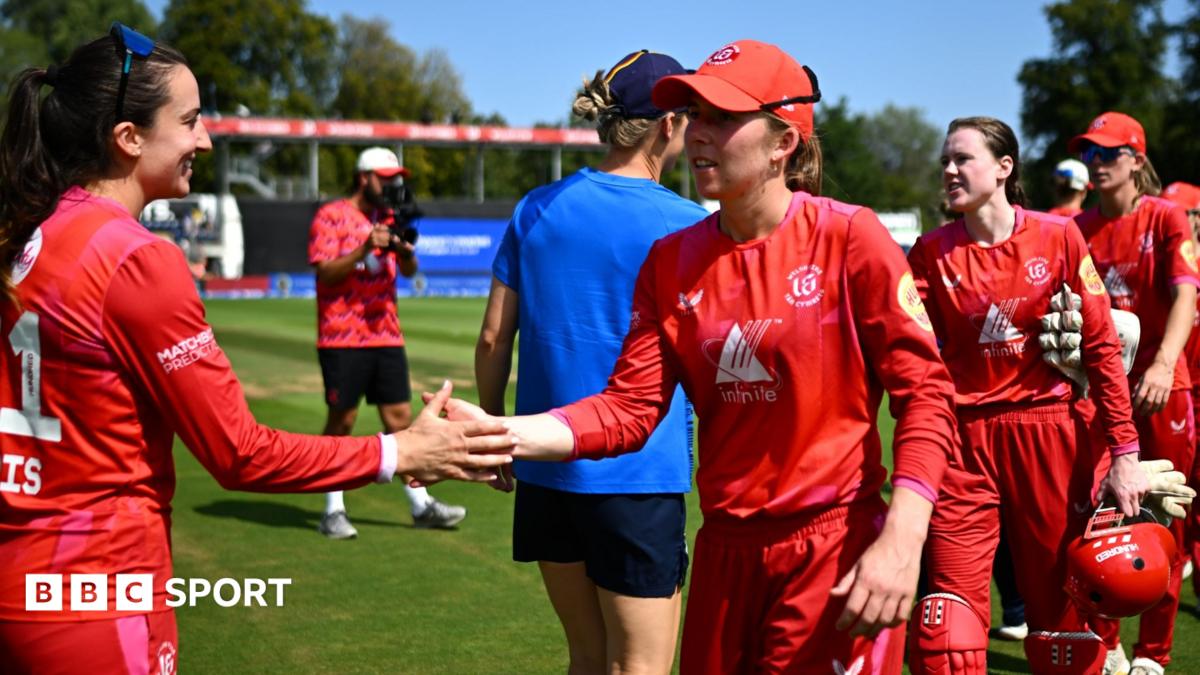
After a comfortable 15-run win against London Spirit at Sophia Gardens, Michael Klinger’s side finished fifth in the women’s overall standings.
They looked a much improved outfit compared to last season but three defeats in their first four games – alongside the loss of captain Sophie Devine, The Hundred’s joint most expensive signing – extinguished any hopes of a spot in Friday’s knockout match.
Replacement skipper Georgia Wareham led the side to three wins from four as they finished on a high and insists she has enjoyed her time in the Welsh capital, despite the ultimate lack of success.
“I’ve really enjoyed Cardiff, I’ve loved it here,” Wareham said.
“I’ve loved every minute with the team and the support staff. It’s been incredible.
“The fans, they’ve been awesome as well, they’ve been turning out every game. Even on the final game, despite us being out of the competition, they’ve showed up.
“It’s been really cool.”
Australian international Wareham and Lancashire bowler Grace Potts were the heroes on a scorching day in Cardiff.
A remarkable half century off just 34 balls for the Aussie batter set the tone, before Potts – who finished with three wickets – went agonisingly close to a hat-trick ball before closing out the victory, to the delight of her captain.
“Like most games here in Cardiff, we just had to keep the stumps in play as much as we could and sort of make them try and force something from us,” said Wareham.
“Potsy (Potts) did an amazing job at that and just doing what she does best, swinging the ball at the top.
“Orla [Prendergast] came on and did her thing as well, hitting a really hard length and forcing them to make some tricky shots. Our blueprint is pretty simple and it’s sort of worked for us today.”
>

Tottenham Hotspur starting the transfer window as the Premier League’s most liberal and audacious spenders feels like a long time ago.
Spurs have not done any business since closing the club-record £100million ($135m) deal to sign Sandro Tonali from Newcastle United on July 6. Manchester City’s Savinho remains at the top of their list of prospective attacking reinforcements.
Spurs are working on a deal for another forward in the background, with Cody Gakpo among their targets, but the lack of movement at Hotspur Way is beginning to make fans feel a little antsy heading into the opening game of the season against Brentford on August 22.
While sporting director Johan Lange, chief executive Vinai Venkatesham and director of football operations Rafi Moersen continue to wait for priority targets to become available, Roberto De Zerbi has to maximise a group of forwards who underwhelmed last term.
Mohammed Kudus’ return to training after suffering a left hamstring injury that has sidelined him since early January is a tremendous positive. But with Xavi Simons and Wilson Odobert still many months away as they recover from ruptured anterior cruciate ligament injuries, Tottenham are currently weaker in attack than they were on September 1 last year.
Randal Kolo Muani was Tottenham’s final signing of last season’s summer window, and while few Spurs fans were calling for his return to north London, he is now a Juventus player. Brennan Johnson, newly of Everton, scored in both of Tottenham’s opening two Premier League fixtures last term, but has since moved twice, following his £35m transfer to Crystal Palace in January.
Without any attacking additions and injuries to Simons and Odobert, and with no public timeline for Dejan Kulusevski’s return — though the club are keen to preach patience having not played for over 400 days — options are slim in attack.

Savinho is top of Tottenham’s list of prospective attacking reinforcements (Yu Chun Christopher Wong/Eurasia Sport Images/Getty Images)
Despite Spurs prioritising the left wing, Mathys Tel appears the most nailed-on forward to start against Brentford, provided there are no additions between now and then. It marks the first time Tel has entered a new season as the first-choice player in any position, having started behind Johnson at the start of last term and various players at his previous club Bayern Munich.
Though just 21, Tel is highly motivated to start at the top level, but he has lacked consistency at Tottenham. He can infuriate and mesmerise in equal measure, perhaps best encapsulated by his performance against Leeds United in the final weeks of last term.
He scored the brilliant opening goal either side of an ill-advised pass across his box, which Kevin Danso headed clear, and an attempted overhead kick clearance which was anticipated by Ethan Ampadu and resulted in Leeds’ equaliser from the penalty spot.
He impressed on Tottenham’s pre-season tour of Sydney and Auckland, scoring an excellent free kick in their 1-1 draw (4-2 win on penalties) against Sydney FC in their penultimate game, showing signs that his game continues to develop under the Italian.
His shoot-first mindset adds a useful dimension to Tottenham’s attack, particularly when lining up alongside Dominic Solanke, a natural facilitator, and Kudus, who was Tottenham’s primary creative outlet in the frontline before his injury.
However, with James Maddison recovering from a minor injury of his own after a long rehabilitation process from his ACL rupture on tour in South Korea last summer, Conor Gallagher appears primed to open the season in the No 10 slot, and his box-crashing style may result in a lack of creativity in the final third.
Would Arsenal really sign Cristian Romero from Spurs?
Jay Harris, Adam Leventhal and more
This issue will be exacerbated if Kudus is not fit to start the season. De Zerbi predicted he would be fit to join the group upon the resumption of their pre-season training at Hotspur Way, but after missing half a season after surgery, the club are being particularly careful with his return (as they have been for many players in pre-season).
Without Odobert, who was Kudus’ natural replacement on the right, or Kolo Muani, who filled in at that position for De Zerbi last term, there is no clear candidate to start at right wing should the Ghanaian not return in time for Brentford.
Manor Solomon was De Zerbi’s choice on the right of the forward three on tour, playing the second-most minutes of any Spurs player behind only Archie Gray, but he has since moved to West Ham United.
Mikey Moore is still at the club despite serious interest from Koln on a season-long loan, but if he departs before the opening day and no reinforcements arrive, De Zerbi may be forced into selecting Richarlison, Gallagher, Lucas Bergvall, or even Djed Spence to deputise as a right winger, none of whom are accomplished or particularly suited.
There are question marks over the central striker, too. Solanke is expected to be first choice, but was absent from the squad for the weekend’s 1-1 draw with Getafe after seeing his minutes managed in Auckland and Sydney.
De Zerbi and performance director Dan Lewindon are monitoring players ahead of the new season to try to avoid another injury crisis. Their plan may be to ensure there is no undue strain on Solanke’s body before the season starts after two injury-hit campaigns in north London.
His patchy injury record and absence at the weekend may open the door for Richarlison to start the season, as he did last term.

Richarlison started last season (Saeed Khan/AFP via Getty Images)
The Brazilian got off to a flyer last season with a brace in the 3-0 win over Burnley and finished as Tottenham’s top scorer, but there are doubts over his future and his fit under De Zerbi.
The Italian stressed his desire to keep Richarlison should he want to stay, describing him as an “important player” but admitted: “sometimes he (wants to) leave”. The 29-year-old is probably Spurs’ most threatening player in the box, but is not as accomplished as Solanke in link-up play, a concern given De Zerbi places so much emphasis on contribution to build-up and playmaking.
He lined up as the central striker for Spurs’ draw with Getafe (with Tel and Moore either side of him), perhaps giving an inkling of the three De Zerbi may lead with in the season opener.
That said, this attack does not line up with Tottenham’s ambitions to fight for a European spot again this term. While Tottenham have made ample progress in developing their build-up in the first and second phases over pre-season, and look far more comfortable and assured in possession than they did at any point last season, their lack of firepower in attack continues to hold them back.
It is an alarming issue for a squad that has come together nicely elsewhere over the summer window.
Patience may prove the all-important virtue that sees De Zerbi land Savinho and Gakpo, after which Spurs’ attack will be far more convincing. But as the start of the season draws nearer, many fans are beginning to lose patience with a strategy that may lead to a panicked, Supermarket Sweep-style rush for attacking reinforcements, a tactic they were accustomed to and grew to resent under former executive chairman Daniel Levy.
>

Ranking all 72 stadiums in the Football League: From homely grounds to imposing arenas

Villains Are Destined to Die Webtoon Gets TV Anime – News

Real Madrid’s midfield headache: Missing out on Rodri, signing Bernardo – and who should they target?
-

 movies3 months ago
Search For Canadian TV Actor Stewart McLean Now Homicide Investigation
-

 Fashion9 years ago
These ’90s fashion trends are making a comeback in 2017
-
Fashion9 years ago
According to Dior Couture, this taboo fashion accessory is back
-
Fashion9 years ago
Model Jocelyn Chew’s Instagram is the best vacation you’ve ever had
-
Fashion9 years ago
Your comprehensive guide to this fall’s biggest trends
-
Fashion9 years ago
9 Celebrities who have spoken out about being photoshopped
-
Fashion9 years ago
Emily Ratajkowski channels back-to-school style
-
Fashion9 years ago
A photo diary of the nightlife scene from LA To Ibiza