
Sports
Filled with self-doubt, Wayde van Niekerk cried before breaking the men’s 400m world record

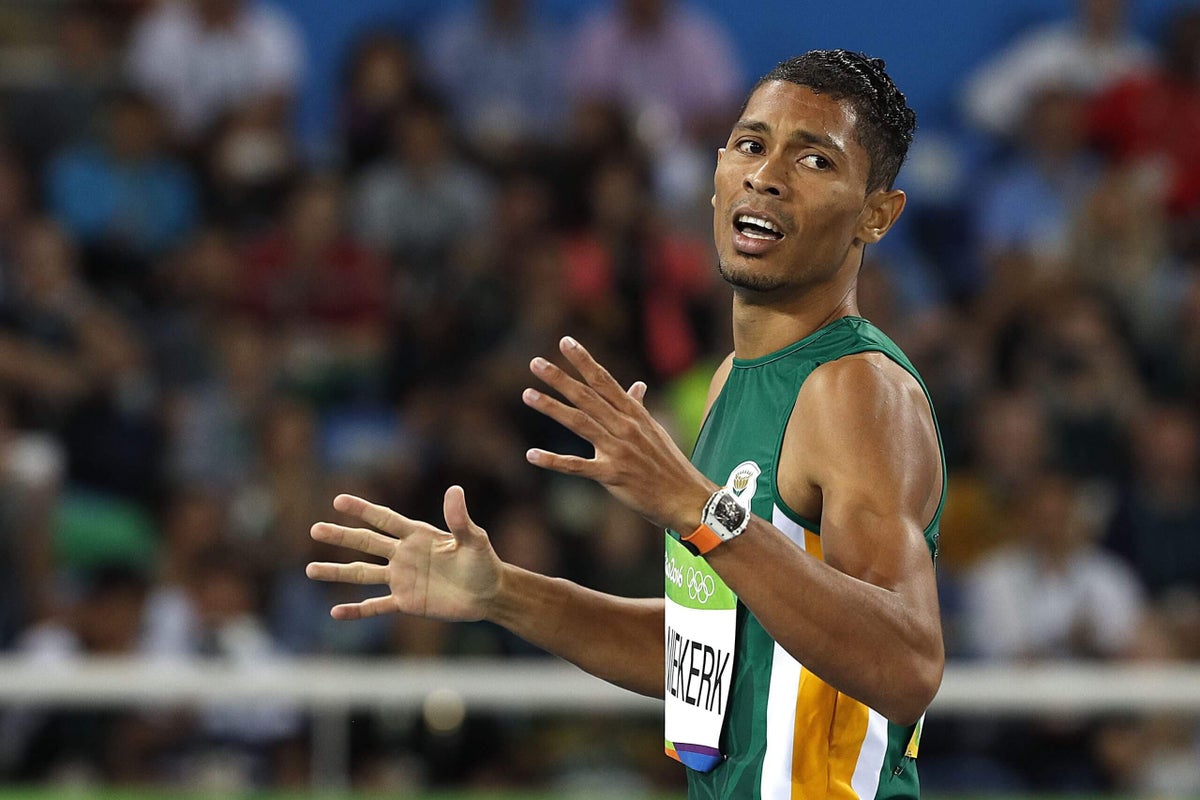
“I’ve always been a low-confidence athlete. Somewhat insecure.”
On August 14, at the 2016 Rio Olympic Games, Wayde van Niekerk ran the final of the men’s 400m in 43.03 seconds to not only become Olympic champion but also break Michael Johnson’s world record.
It is a record that still stands today.
But the hours and minutes leading up to his historic run was a battle between body and mind. Ten years on, the South African talks about the perfectionist mindset he has struggled with across his career.
“There was a moment — in the warm-up area, as doubts and fears crept in — where I had to wipe my tears and shake the emotion off,” he recalls.
“I said to myself, ‘Hey, the race is going to happen with or without you. Are you going to be ready for it?’”
Van Niekerk, now 34, was never an overly positive athlete, but this was the first time he had cried before a race.
Perhaps it was because he knew what the expectations were, and, despite being 24 and a part-time athlete still studying marketing at the University of Free State in Bloemfontein, South Africa, there was no better time to etch his name into the history books.

Wayde van Niekerk leading Kirani James of Grenada and Lashawn Merritt of the United States in the men’s 400 meter Olympic final in Rio. (Patrick Smith / Getty Images)
The year previous, he had won the 400m at the World Championships in Beijing for his first senior international gold medal.
And just five months before his Olympic final, he broke the 10-second barrier in the 100m, becoming the first athlete in history to run a sub-44-second 400m, a sub 20-second 200m and a sub 10-second 100m.
He had every statistical reason to believe he could win Olympic gold.
Van Niekerk remembers his confidence was “so high” in the semifinal, despite only qualifying in second place.
But those doubts he felt in the call room followed him to the line in the final, where he felt sensitivity in his right hamstring — something that caused him to ease off in his heat and semifinal.
“I got to the blocks and lowered my standards more and more,” he says. “You start telling yourself, ‘You know what? Silver is good. I can still call myself the second fastest in the world.’
“Then, ‘Hey, bronze is so good. You still stand on the podium. The country will still be proud of you.’
“Then, ‘Hey, I’m top eight in the world. I’m sure that being called the top eight in the world is also a massive achievement.’”
Once the gun went, Van Niekerk could no longer think about the what-ifs. His body did what it was trained to do, his mind locked into race mode.
He set out from lane eight, traditionally unfavored in the 400m because it is harder to judge pace from the outside lane.
“In that moment, many people did not believe in lane eight that much, and I didn’t really care,” he remembers. “I knew that everyone was about to chase me, and my goal was to make sure I opened up a substantial gap. It is very much you versus you.”
Van Niekerk bolted into an early lead, but faced competition from Grenada’s Kirani James, the 2012 Olympic gold medalist, and U.S. sprinter LaShawn Merritt, athletes the South African saw as “big inspirations.”
He crossed the 200m mark in 20.54s. He was still “very much in my own head, but after that, I put my head down and went for the finish.”

Wayde van Niekerk (R) crosses the line way ahead of his rivals in Rio. (Richard Heathcote / Getty Images)
As he emerged onto the home straight, it was clear something special was on. He was half a metre ahead of Merritt and James. He unlocked a gear his competitors could not match, and pulled a metre ahead with 70m to go. Once he reached the line, the gap was over 5m.
“I felt a sneak of lactic acid entering my body at the 50-metre mark, but I shook that off and God carried me to the finish,” he says.
“When I looked up, the first thing I saw was the world record. It did not click then and it is all very much a blurred experience, because I was focused in the moment on my mentality.”
It was not just any world record. Van Niekerk had taken 15 hundredths off Johnson’s effort from 1999, and it remains one of only three current track world records to have been set in Olympic finals.
Van Niekerk now understands the doubts he felt pre-race differently.
“I have realized that the negativity was just the perfectionist in me, wanting to get everything to a tee,” he explains. “I did not feel like I could win the race, but you look back and realize everybody has a niggle going on somewhere.
“That was probably the highlight of my mindset. If you are not perfect, you can still achieve something that nobody else has.”

Wayde van Niekerk (L) embraces celebrates Kirani James after breaking the world record. (Olivier Morin / AFP via Getty Images)
Post-Rio, van Niekerk’s return to university prompted the thinking that now was the time to take up track full-time. He was unable to keep up with his studies alongside the travel demands of being an international athlete, and the attention he received on campus further restricted him.
“I would enter my classes, as a world-record holder, 20 or 30 minutes late because people would be asking for photos and conversations with me,” he says.
“In a lot of European countries, the moment an athlete shows potential, they are supported. The only time African athletes can call it Plan A is when they win a gold medal, and that still largely stands now.”
Quickest Men’s 400m Times
| Rank | Athlete | Time | Date |
|---|---|---|---|
|
1 |
Wayde van Niekerk |
43.03 |
14 Aug 2016 |
|
2 |
Michael Johnson |
43.18 |
26 Aug 1999 |
|
3 |
Butch Reynolds |
43.29 |
17 Aug 1988 |
|
4 |
Samuel Ogazi |
43.38 |
12 June 2026 |
|
5 |
Michael Johnson |
43.39 |
9 Aug 1995 |
|
6 |
Quincy Hall |
43.4 |
7 Aug 2024 |
|
7 |
Michael Johnson |
43.44 |
19 June 1996 |
|
7 |
Matthew Hudson-Smith |
43.44 |
7 Aug 2024 |
|
10 |
Jeremy Wariner |
43.45 |
31 Aug 2007 |
|
10 |
Michael Norman |
43.45 |
20 Apr 2019 |
|
12 |
Wayde van Niekerk |
43.48 |
26 Aug 2015 |
|
12 |
Steven Gardiner |
43.48 |
4 Oct 2019 |
(source: World Athletics)
In the 2017 season, Van Niekerk reverted to his broader sprinting approach, targeting the 400m and 200m events at the World Championships in London.
Despite feeling “in great shape” to better his 400m record and break sub-43, the cold weather made it an uncomfortable race and he had to settle for a time of 43.98, though he did defend his world title and, two days later, picked up a silver medal in the 200m final.
He was the athlete he once “dreamed of being.”
Then things came crashing down overnight.
He was participating in a celebrity tag rugby match in October 2017 when he tore the anterior cruciate ligament (ACL) in his right knee, leaving him out of action for the entirety of the 2018 season.
“There were a lot of consequences,” he says. “I lost a load of sponsors and had a mental dip, but it was always in my mind to bounce back again.”
The journey back was long, but Van Niekerk still had plenty he wanted to achieve. He pulled out of the 2019 World Championships in Doha, but the following year, operating from his training base in Italy, Van Niekerk’s biggest obstacle was not his own fitness but the Covid pandemic. Italy was hit worse than most nations and that stalled his track return, just when he felt it was imminent.
“I was getting close to my Rio fitness again,” he says, “but Covid took all that away from me.
“I could not get out for 26 days, even though I had already had the virus, which saw me lose so much motivation to continue. It gave me a knock because you need that momentum to continue, especially when you are fighting back.”
The question, then, was no longer whether van Niekerk could return to the athlete he was, but whether he wanted to be one at all.
“I had been struggling to convince myself to stay in the sport more than I had been telling myself not to quit,” he says, “but I chose to do it with a smile rather than annoyance.
“Every day the quitting was there, and that’s where I adopted the mentality of trying to take things day by day.”
Van Niekerk describes “puzzling everything back together” since 2020, reverting back to the 400m event initially for “comfort.”
In the year-delayed Tokyo Olympics, he was knocked out of the 400m after placing fifth in the semifinal (running 45.14), and a year later finished fifth overall in the Worlds final in 44.97.
The old Van Niekerk was not returning.

Wayde Van Niekerk competes in the men’s 400m semifinal at the 2023 World Athletics Championships in Budapest. (Patrick Smith / Getty Images)
Ahead of Paris 2024, he remembers “wrestling” with the thought of reverting back to the 200m for the first time post-injury, describing how he entered a “good and happy place mentally” once he chose to focus on the shorter events. He placed last in the 200m semifinals.
He has recently moved further down the sprinting spectrum, running 9.83s in a wind-assisted 100m race at the Austrian Open on July 1, 2026 in yet another summer curtailed early by injury.
“(Injury) happens so much I do not even get annoyed anymore,” Van Niekerk says, revealing that he plans to retire after the 2027 season, barring any surprise improvement ahead of the 2028 Olympics in Los Angeles. “But it does give me hope that my body can still move that fast.”
Beyond life on the track, Van Niekerk has begun coaching and set up an academy, aiming to “get together the best talents in South Africa and push them to a space where we can challenge for world records.”
It is still astonishing to Van Niekerk that young 400m runners are training to meet his benchmark.
“Every great athlete you see today is most likely thinking of you, and pushing themselves to be better than what you were,” he says.
“That does sometimes hit deep because who would have thought? Not me.”
>

The Tampa Bay Rays host the Baltimore Orioles at 12:15 p.m. ET on Sunday, featuring two top-10 sluggers. Junior Caminero has 35 homers (third in league) for the Rays, and Pete Alonso ranks ninth with 27 round-trippers for the Orioles. Freddy Peralta (5-9, 5.33 ERA) gets the start for the Rays, who are 74-48 this season and first in the AL East. Trevor Rogers (7-8, 4.21 ERA) is the expected starter for the Orioles, who are 60-63 and fifth in the AL East.
How to watch Baltimore Orioles vs. Tampa Bay Rays
Orioles vs. Rays odds
- Favorite Moneyline: Rays -143
- Underdog Moneyline: Orioles +118
- Total: 7.5
- Total Over Odds: +105
- Total Under Odds: -125
Injury reports
Rays
Ben Williamson: 10 Day IL (Hamstring), Cole Sulser: 15 Day IL (Back), Shane McClanahan: 15 Day IL (Back), Griffin Jax: 15 Day IL (Elbow), Jake Fraley: 60 Day IL (Groin), Manuel Rodriguez: 60 Day IL (Elbow), Ryan Pepiot: 60 Day IL (Hip), Gavin Lux: 60 Day IL (Shoulder), Jon Heasley: 60 Day IL (Elbow), Edwin Uceta: 60 Day IL (Shoulder), Victor Mesa Jr.: day-to-day (Hamstring)
Orioles
Samuel Basallo: 10 Day IL (Shoulder), Blaze Alexander: 10 Day IL (Hand), Zach Eflin: 60 Day IL (Elbow), Felix Bautista: 60 Day IL (Shoulder), Keegan Akin: 60 Day IL (Elbow), Ryan Helsley: 60 Day IL (Elbow), Ryan Mountcastle: 60 Day IL (Foot), Jordan Westburg: 60 Day IL (Ucl), Colin Selby: 60 Day IL (Shoulder)
Stats to know
- Caminero is hitting for a .275 BA, .366 OBP and .544 SLG with an 18.5% strikeout rate and a 12.3% walk rate. His OPS is .910, which ranks 5th in MLB, and he has scored 77 runs. In 535 plate appearances, he has hit 35 home runs (3rd in MLB) and driven in 79 runs (7th in MLB).
- In 520 plate appearances, Yandy Diaz is hitting .303/.371/.463 with a .834 OPS. He has hit 17 long balls, driven in 69 runs and scored 68 times.
- Alonso has hit 27 home runs this season, which ranks 9th in MLB. He has also tallied 78 RBIs (8th in MLB) and has scored 75 runs. In 534 plate appearances, he has recorded a .264 BA, .356 OBP and .487 SLG with an 11.4% walk rate and a 24.2% strikeout rate.
- In 554 plate appearances, Gunnar Henderson has hit 20 long balls, tallied 51 RBIs and scored 74 runs. He is batting .221/.303/.402 and has posted a 22.4% strikeout rate and a 9% walk rate. Henderson has recorded nine steals on 14 attempts.
This watch guide was created using technology provided by Data Skrive.
Betting/odds, ticketing and streaming links in this article are provided by partners of The Athletic. Restrictions may apply. The Athletic maintains full editorial independence. Partners have no control over or input into the reporting or editing process and do not review stories before publication.
Photo: Jamie Squire, Ishika Samant, Scott Taetsch, Alika Jenner / Getty Images
>
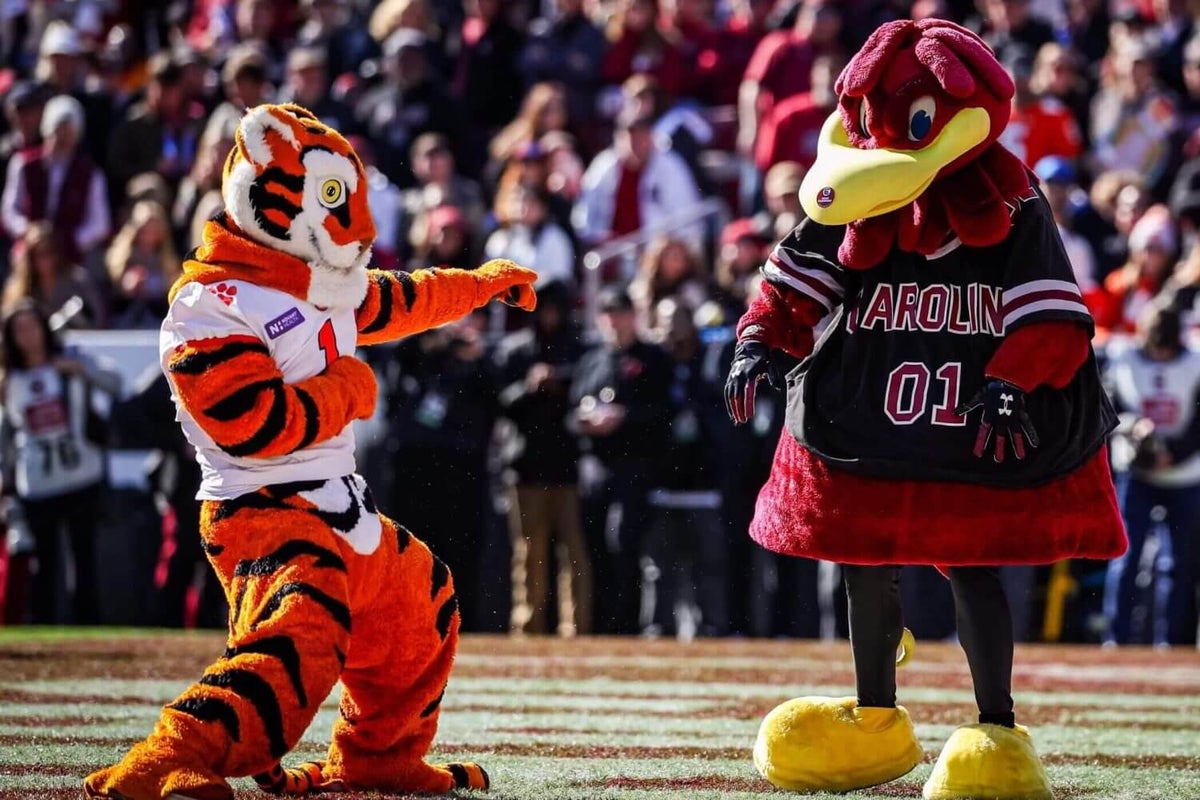
I recently had my yearly performance review at The Athletic. I’m still here, so I guess it went fine.
Part of that process is a self-review. Always tricky. Like most people, my first inclination is to be critical. As coaches and athletes often say: You remember the losses more than the wins.
Ultimately, though, it’s helpful to self-evaluate.
As I head into my second year voting in the Associated Press Top 25 after years of overseeing the poll, I thought it would be a good idea to look back at last year’s preseason ballot and see where things went right and wrong.
I don’t look at my preseason Top 25 as a straight-up prediction. There is some of that in there, but I try to lean into the knowns, things I can quantify (at least a little), such as returning production and coaching continuity.
No matter how much I’d like to make it a science — we have the analytics folks like Austin Mock for that — it is every bit as much art; an educated guess, at best.
I went through last year’s preseason ballot and graded each slot on how my evaluation/projection played out. I used letter grades with no pluses or minuses and no set criteria. Generally, the closer my preseason ranking came to a team’s final ranking in the actual Top 25, the better the grade.
Something to point out: I have notes and remember my thought process for most of my votes. If I felt like I had a good process but poor results — or vice versa — my grade will reflect that.
Which college fan base travels the best?
Sam Khan Jr., Justin Williams and more
No. 1 Texas
2025 record: 10-3
Final AP Top 25 ranking: No. 12
Grade: B
I fell for the Longhorns, and no doubt they were a disappointment, but by the time the season ended, they probably were better than a couple of SEC teams that made the College Football Playoff. (To be clear, Texas did not have a compelling case to make the Playoff.) I had the Longhorns in my final top 10. When your preseason No. 1 team doesn’t make a 12-team Playoff, it feels like a big miss, but not as bad as it feels.
No. 2 Penn State
2025 record: 7-6
Final AP Top 25 ranking: Unranked
Grade: D
Maybe being off about Texas doesn’t feel so bad because of what happened with Penn State? I definitely had some skepticism about following the crowd on the Nittany Lions hype at this time last year. Still, I took the plunge and got burned. Why is this not an F? Penn State had maybe the most bizarre season in the country. The Nittany Lions performed more like a top-25 team than their record indicates, with five losses by one score.
No. 3 Alabama
2025 record: 11-4
Final AP Top 25 ranking: No. 9
Grade: B
I was bullish on the Crimson Tide and remained so for most of the season. I rode that elephant for far too long, finally adjusting in my own final rankings, where I had Alabama at No. 12. This felt more wrong to me than it looks on paper.
No. 4 Ohio State
2025 record: 12-2
Final AP Top 25 ranking: No. 5
Grade: A
Nailed it.
No. 5 Georgia
2025 record: 12-2
Final AP Top 25 ranking: No. 6
Grade: A
Nice.
No. 6 Clemson
2025 record: 7-6
Final AP Top 25 ranking: Unranked
Grade: F
What made this an especially galling failure was that I didn’t trust myself. Now, would I have had Clemson unranked in the preseason? No, I would not have. My first instinct was placing Clemson in the 10 to 12 range, but I instead succumbed to the offseason buzz built on a good second half in a Playoff loss to Texas. And that made the miss even worse.
No. 7 Notre Dame
2025 record: 10-2
Final AP Top 25 ranking: No. 10
Grade: A
As a bonus, I also predicted Notre Dame would not make the CFP on The Audible.
No. 8 LSU
2025 record: 7-6
Final AP Top 25 ranking: Unranked
Grade: F
I think this qualifies as my worst preseason ranking and an extension of another very wrong assessment. I had way too much faith in Brian Kelly’s ability to click as the Tigers’ coach.
No. 9 Oregon
2025 record: 13-2
Final AP Top 25 ranking: No. 4
Grade: B
This could be an A, but I had more doubts last offseason about the Ducks than I should have. Still, solid work.
No. 10 Texas A&M
2025 record: 11-2
Final AP Top 25 ranking: No. 8
Grade: A
Bang!
No. 11 Michigan
2025 record: 9-4
Final AP Top 25 ranking: No. 21
Grade: B
While I’m grading myself a little more harshly than the result suggests with Oregon, I’m giving myself some grace with this Big Ten team. I spotted Michigan’s manageable schedule and was confident that it could stay on the fringes of the CFP race all season. In the end, I was overly bullish, but the Wolverines’ season played out pretty much as I thought.
No. 12 Oklahoma
2025 record: 10-3
Final AP Top 25 ranking: No. 13
Grade: A
Had it all the way.
No. 13 Kansas State
2025 record: 6-6
Final AP Top 25 ranking: Unranked
Grade: F
I’m addicted to being wrong about Avery Johnson.
No. 14 Florida
2025 record: 4-8
Final AP Top 25 ranking: Unranked
Grade: F
A good example of me getting too bogged down in being formulaic. While the Gators checked some boxes in terms of returning talent and metrics, I went into last season convinced Florida was more likely to fire coach Billy Napier than make the CFP. Yet, I still voted for the best-case scenario.
No. 15 Miami
2025 record: 13-3
Final AP Top 25 ranking: No. 2
Grade: C
I was lower on the Hurricanes than consensus going into the season, and it burned me. Now, I did end up on the right side of history because I never ranked Miami below Notre Dame at any point during last season. Good recovery.
No. 16 Arizona State
2025 record: 8-5
Final AP Top 25 ranking: Unranked
Grade: C
The Sun Devils were in a bucket of four teams that broke through in 2024 and had various levels of high hopes for an encore in 2025. Shorting the overachievers’ encore performance is generally a solid strategy in college football. I didn’t lean hard enough into that skepticism when assessing ASU and a few of the other teams in that bucket.
No. 17 Indiana
2025 record: 16-0
Final AP Top 25 ranking: No. 1
Grade: C
I’m sorry I didn’t forecast the greatest turnaround story in the history of major American sports.
No. 18 Illinois
2025 record: 9-4
Final AP Top 25 ranking: Unranked
Grade: B
I correctly ignored the Illinois-is-this-year’s-Indiana offseason narrative and took a more measured approach to the Illini. Worked out well. Illinois was the first team out of the final Top 25, but I voted the Illini No. 21 in my final ballot. I could have given myself an A.
No. 19 Utah
2025 record: 11-2
Final AP Top 25 ranking: No. 14
Grade: A
I was ahead of the curve on the Utes, who started last season unranked in the actual poll.
No. 20 Texas Tech
2025 record: 12-2
Final AP Top 25 ranking: No. 7
Grade: B
I thought I was bullish on the Red Raiders heading into last season, but not nearly enough — which is frustrating because when it came time to predict a CFP field during the preseason, I had them in.
No. 21 South Carolina
2025 record: 4-8
Final AP Top 25 ranking: Unranked
Grade: F
I so badly wanted to leave the Gamecocks out of my preseason rankings last year but was peer-pressured into squeezing them into the bottom five. Believe in yourself, kids.
No. 22 Louisville
2025 record: 9-4
Final AP Top 25 ranking: Unranked
Grade: B
I was absolutely on the right track with Louisville, but pegging the Cardinals as a CFP dark horse was ultimately too optimistic.
No. 23 Ole Miss
2025 record: 12-2
Final AP Top 25 ranking: No. 3
Grade: D
No, I didn’t see Trinidad Chambliss coming.
No. 24 SMU
2025 record: 9-4
Final AP Top 25 ranking: Unranked
Grade: B
This was fine.
No. 25 Boise State
2025 record: 9-5
Final AP Top 25 ranking: Unranked
Grade: C
The Broncos had a weird season, and this preseason ranking wasn’t all that far off from how they finished. Still, I looked at No. 25 as more of a floor than a ceiling.
Some thoughts on the teams that finished ranked after I left them unranked in the preseason:
No. 11 BYU: Like many, I nudged the Cougars out of preseason top 25 contention after quarterback Jake Retzlaff left the team in the summer. It was a mistake, but I hadn’t totally dismissed the possibility BYU would be good.
No. 15 Vanderbilt: Remember what I said about being skeptical of the encore? Yeah, I never saw 10-win Vandy coming.
No. 16 Virginia: Another team I never even considered last preseason.
No. 17 Iowa: The Hawkeyes were among the others I considered. This was no surprise to me.
No. 18 Tulane and No. 19 James Madison: Non-power conference teams generally have to prove it to get ranked. The Green Wave and Dukes did. I regret nothing.
No. 20 USC: The Trojans were the flip side of Florida. They absolutely should have been in my preseason rankings by the criteria I had used, but I made the conscious decision to hold them out and make them prove they could avoid some of the mind-numbing losses they suffered in 2024. And they did.
No. 22 Houston: I had circled the Cougars as a possible sleeper in the Big 12 heading into the season, and they exceeded those expectations.
No. 23 Navy: Definitely did not see an 11-win season coming.
No. 24 North Texas: Figured the Mean Green had a chance to be in the American Conference mix, but never expected the huge jump.
No. 25 TCU: The Horned Frogs were among the last of about 40 teams I gave at least a little thought to ranking in the last preseason.
>
ORCHARD PARK, N.Y. — These aren’t the types of chunk plays the Buffalo Bills are looking for.
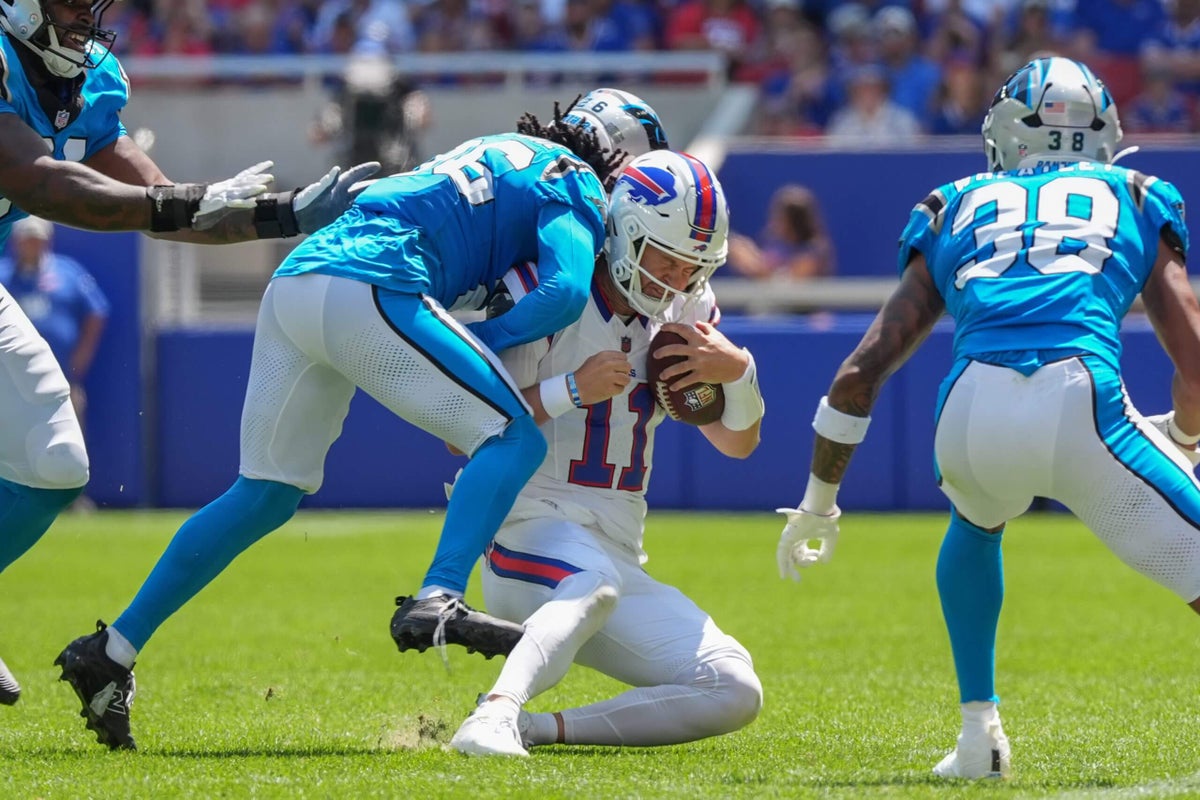
On the final play of the first quarter of Saturday’s preseason opener, backup quarterback Kyle Allen scrambled left and got pinched off near the sideline. He slid as Carolina Panthers cornerback Chau Smith-Wade delivered a crushing blow.
The force of Allen being driven into the ground sent a massive clump of Highmark Stadium’s fresh grass into the air — roots, dirt and all. The rut was so deep that four Bills went onto the field to repair it. Done playing for the day, quarterback Josh Allen, receiver DJ Moore and tackles Dion Dawkins and Spencer Brown turned to gardening. They retrieved the parcel and took turns stomping it back into place.
“The field is ass right now,” said one player who didn’t want to be identified. “But it’s early.”
Players were mostly diplomatic after Buffalo’s 29-14 preseason victory in the $2.2 billion stadium’s first game.
Highmark Stadium has absorbed heavy criticism the past week. The Bills unveiled their home to the public with an Aug. 8 open practice that allowed season ticket holders, all of whom had to pay the first personal seat licenses in Western New York sports history, to finally check out their seats.
A new era in Buffalo as Bills unveil their new stadium
Tim Graham and Madison Eades
Photos of obstructed views went viral. A downpour left some fans disappointed that their seats weren’t sheltered by the canopy. Fans also complained about traffic, the size of the scoreboards and the audio.
Although announced long ago, a new 6 percent Erie County sales tax delivered sticker shock on concession and souvenir receipts.
The Bills are proud of their new grass system. Pointing out lawn flaws might feel like piling on.
“The grass looked good,” Bills linebacker Dorian Williams said. “It was cool. A couple spots kind of chunked up a little bit, but it’s better than playing on (artificial) turf.
“The kinks will keep getting worked out. You can see some of the grass kind of mound up and guys knocking it back down, but I’ve had no traction problems so far.”
Highmark Stadium’s field is Kentucky bluegrass grown at Tuckahoe Turf Farms in New Jersey — the company also has handled Acrisure Stadium, Lincoln Financial Field, Fenway Park and Citi Field — and installed here in October 2025. A system of heating coils under Highmark Stadium keeps the ground from freezing. Millions of dollars in agricultural equipment are stored beneath the lower seating bowl.
Two hours after the game, 16 groundskeepers were still examining every inch of the field and making repairs. Sprinklers turned on at 6:30 p.m.

Before and after Saturday’s preseason opener, stadium workers tended to new Highmark Stadium’s grass field. (Joe Buscaglia / The Athletic)
The field looked worn to the dirt before the Bills and Panthers emerged for pregame warmups. Bills tight end Dalton Kincaid summoned a staffer to repair a troubling divot, while linebacker Terrel Bernard supervised. As receivers ran route drills over damaged ground, a Bills staffer eventually stood at the pothole like a traffic cop.
Another Bills player who didn’t want to be identified said the field was “soft, but not in a good way.” At the public practice, though, Brown joked to reporters he wanted to sleep on the grass. Saturday, running back James Cook said the field felt “smooth.” The NFL’s rushing king didn’t seem to miss a step. He carried five times for 21 yards, gliding for 13 yards on one play.
Highmark Stadium’s grass wore out as the game wore on. Officials had to reset Buffalo’s play clock in the first quarter so umpire Tab Slaughter could smash down loose soil in the backfield. By halftime, baldness crept between the hashmarks, especially on Highmark Stadium’s south end (to the right if sitting behind the Bills bench).
Midway through the fourth quarter, several small craters pockmarked the same area between the 14- and 21-yard lines. Long snapper Reid Ferguson had to stomp one down when he went out for an extra point. Tyler Bass missed a 46-yard field goal attempt but said he was too quick with his mechanics and didn’t blame the conditions.
Buffalo last played a game on real grass — sparse as it was — in December 1972 at War Memorial Stadium, aka The Rockpile.
“It was actually pretty good,” Panthers running back Jonathon Brooks said. “It was a little lumpy out there, but it wasn’t bad. The grass felt good.”
Carolina is one of 16 teams that play on synthetic turf. The NFL Players Association has campaigned to switch exclusively to grass for safety purposes. The NFLPA says 92 percent of its players prefer grass. Stars have posted their feelings on social media with the hashtag #WorthTheCost.
Buffalo’s synthetic turf earned an F grade from Bills players in the NFLPA’s annual report card last year.
The real-over-fake issue mushroomed when the FIFA World Cup was held in 11 NFL stadiums, forcing the seven synthetic-surfaced stadiums to install natural grass, but they’ve flipped back for the NFL season. Gillette Stadium, home of the New England Patriots, was forced to roll out a second artificial surface after the World Cup because its first attempt didn’t pass an independent lab test as required by the NFL and NFLPA.
“I think everybody in here loves playing on grass,” Williams said. “The body loves playing on grass. Hitting feels a lot better. I think it’s been great.”
>

How to watch Orioles vs. Rays: TV channel and streaming options for August 16

Grading my preseason AP Top 25 ballot: What I learned from Clemson, Indiana and other misses

‘The field is ass right now’: New Highmark Stadium’s grass has rough start
-

 movies3 months ago
Search For Canadian TV Actor Stewart McLean Now Homicide Investigation
-

 Fashion9 years ago
These ’90s fashion trends are making a comeback in 2017
-
Fashion9 years ago
According to Dior Couture, this taboo fashion accessory is back
-
Fashion9 years ago
Model Jocelyn Chew’s Instagram is the best vacation you’ve ever had
-
Fashion9 years ago
Emily Ratajkowski channels back-to-school style
-
Fashion9 years ago
9 Celebrities who have spoken out about being photoshopped
-
Fashion9 years ago
Your comprehensive guide to this fall’s biggest trends
-
Fashion9 years ago
A photo diary of the nightlife scene from LA To Ibiza