
Entertainment
Paramount-WBD Merger Has Documentary Filmmakers Over Archival Footage

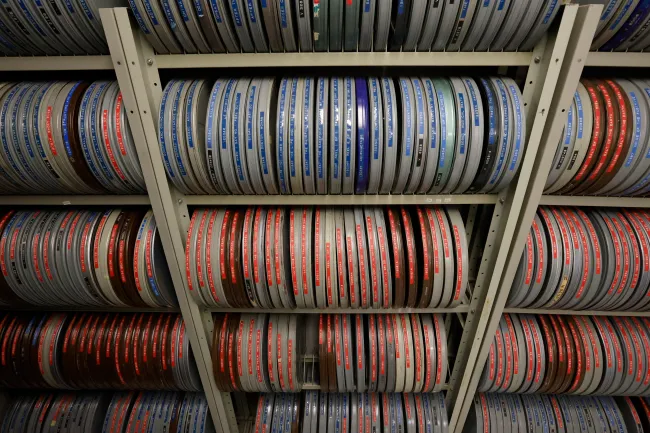
The documentary film community has faced its fair share of hardship over the last few years, as securing funding and distribution for social issue and/or political docs — see “No Other Land,” “The Bibi Files,” “Mr. Nobody Against Putin,” “Zurawsksi v Texas” — has become a grueling, formidable undertaking. Now, the impending Paramount–Warner Bros. Discovery merger has the doc community concerned about the future of another essential subgenre: archival docs.
If Paramount Skydance CEO’s David Ellison’s $111 billion bid for Warners is successful, Paramount would gain control of not only 85 years of CBS News footage, but also CNN’s vast archive of some 4 million assets. That library alone encompasses more than 45 years of broadcast coverage of global news, wars, elections, and major political events.


Given Ellison’s October 2025 appointment of Bari Weiss as editor-in-chief of CBS News, which critics have argued has coincided with a more conservative shift in the network’s coverage, documentary filmmakers are increasingly concerned that access to archival footage from CBS News and CNN could become more difficult. They believe that holds particularly true for projects that might be perceived as critical of President Donald Trump or his administration.
“Anytime an organization starts to put under their umbrella a bunch of organizations, it’s going to have an impact,” veteran doc editor/producer/director Sam Pollard (“MLK/FBI”) told IndieWire. “The fact that Paramount is going to have CNN and Warner Bros., which includes HBO, with whom I’ve done a lot of work, is going to have an impact both financially, socially, and politically, particularly with who David Ellison is.”
In addition to anticipated censorship and increased licensing fees, there is widespread concern over access to the CNN archives. In April, according to the Archival Producers Alliance, CNN Collection, the content licensing arm of CNN Worldwide, laid off seven of its eight licensing staff members.

In an email obtained by IndieWire from CNN to a concerned archival producer, network brass wrote, “Bottom line is that CNN is fully committed to its comprehensive and historic collection of content, which continues to grow with our award-winning journalism and video from around the world. And as the media landscape continues to evolve, we are aligning our workflows to better serve our clients with CNN’s world-class rights-cleared clips archive.”
Archival producer Christine Fall, who has worked on documentaries — including Michael Moore’s “Fahrenheit 9/11,” Susan Lacy’s “Jane Fonda in Five Acts,” and Jesse Short Bull and Laura Tomaselli’s “Lakota Nation vs. United States” — said that, when the merger was announced in December, she was just beginning a new project. “I was just like, ‘We are not using CNN,’” Fall said, who worries that the merger will cause a disruption to access. “I’m avoiding them as a source already, preemptively.”
While she is steering clear of CNN for the moment, Fall said that the network’s archival collection is “special and important.” “What people don’t realize is the CNN collection started in 1980, and it’s the first around-the-clock, 24-hour news channel,” Fall said. “so if you are trying to do a story that is set in the 1980s, CNN is going to be invaluable to you, because they are probably going to have something when nobody else does. All the other networks at the time were still only doing their half-hour evening news, which only covers so much.”
In a statement to IndieWire, a CNN spokesperson said, “The CNN archive continues to add assets, it continues to work with filmmakers, and it continues to license world-class rights-cleared clips. It continues to generate revenue, and it remains a strong part of our business. We have aligned our internal workflows in a different manner, and the operation of licensing clips remains the same for clients.”
The archives of CNN, CBS, ABC, and NBC News are not open repositories; they are controlled by commercial licensing systems. Access to footage requires a sizable payment, disclosure of the project’s editorial purpose, legal review, and approval before material can be released. That process gives rights holders — including Disney for ABC, Getty for NBC, and Warner Bros. Discovery for CNN — discretion over how their archival material is licensed and, in some cases, the context in which it may appear in a documentary.

In June, the APA, an organization that represents over 650 producers worldwide who specialize in finding and licensing archival footage, warned that bringing the archival holdings of CBS News and CNN under a single corporate umbrella could not only result in restricted access to some of the world’s most important news footage, but also raise questions about editorial control and who ultimately decides which images and clips documentary filmmakers are able to license.
“If Paramount and Warner merge, we believe there is potential of restrictions on use of historic materials,” said APA co-founder Stephanie Jenkins. “Whether that be by higher pricing, limits on usage due to where a film is being exhibited, or the as a result of a political bent of a film,”
Rachel Antell, also an APA co-founder, added, “The four networks who have documented our history over the last many decades — ABC, CBS, NBC, and CNN — are typically where one would go if you want to tell stories about the last 50 to 75 years. This merger would put two of those four under one decision-making tree potentially, and that’s scary. It’s a significant diminishment of possibilities.”
Antell has seen it before, as past corporate consolidation has reduced and politicized access to archival news footage. She pointed to 2019, when The Walt Disney Company, which owns ABC News, instituted a new policy restricting the licensing of its aired stories, as well as footage featuring its reporters and anchors, to only Disney-owned outlets.
“If an independent documentary about September 11 had wanted to use a clip of Peter Jennings on that day, this policy would have prevented them from doing so, unless the film were to air on a channel like Disney+, ABC, or Hulu,” said Antell. “Suddenly, in 2019, we couldn’t get screeners of branded material if the doc we were working on was not confirmed to be airing on a Disney-owned station. Somewhere around 2022, we started to notice that there was more wiggle room, and it opened back up from there. We’ve been puzzling the pieces together ourselves ever since. While the policy was ultimately reversed, dozens of documentaries were denied access to national stories in the meantime.”
Jenkins said that CBS, ABC, and NBC have always had the power to say no a licensing deal with an outside source. “It’s not like they historically wielded that power willy-nilly,” said Jenkins. But in the current climate, I think filmmakers are concerned about how that’s going to play out. If the networks are nervous and are experiencing new control over the editorial use of their content, it’s going to give filmmakers pause about what stories they can tell.”
Jenkins pointed to an Archival Producers Alliance member who, during a war the U.S. was involved in, was told by a news archive that they could not license historical footage of a previous war because it “showed American soldiers in a bad light,” despite having licensed the same exact footage for a previous project.
“Quietly, swaths of American broadcast history are becoming accessible only to those who already own them,” APA members stated in an op-ed for Poynter. “With these shifts, the future of stories being told — that powerful institutions would prefer remain untold — dims. The harms that this consolidation could cause would take decades to remedy. If audiovisual material is destroyed or lost under the new management, the damage is irreversible.”
Writer and producer P.G. Morgan, who worked on the CNN “Decades” series, said, “It’s not just potential censorship. It’s the loss of a certain way of seeing and understanding the world around us.”

In recent years, Fall said that archive houses have been “taking a closer look before they license certain things” and asking more questions about how the material will be used. “It has intensified because of all these lawsuits with the Trump administration,” said Fall. “So, if you are working on something that is going to be considered critical of Donald Trump and his administration or in any way controversial, that’s going to be an issue, and you are probably going to approach that with a really good fair use lawyer from the get-go.”
Fair use makes it clear that copyright cannot become a form of private censorship by promoting freedom of expression and permitting the unlicensed — i.e., the unauthorized, free use — of copyright-protected works in certain circumstances. Filmmakers, news gatherers, critics, or educators can use copyrighted works (news clips, audiobooks, movies, music, photographs, etc.) without permission if the asset adds context to a project. Creators can only invoke what is “reasonably appropriate” of the copyrighted material, in terms of length, to illustrate or sufficiently support the point being made. There are no stated time minimums or maximums.
To avoid the hassle of fair use, independent production teams often spend three, sometimes four times as much money on license fees for the same image or clip as high-budget projects commissioned by high-volume licensees like Netflix, HBO or Apple. As other archives have consolidated under fewer owners, higher prices are being demanded for the use of footage. The APA said that media conglomerates, such as Tegna, which operates 64 local television stations in 51 U.S. markets, are known to charge tens of thousands of dollars per minute for usage by outside companies, making certain stories financially unfeasible to independent filmmakers.
“The reality is, they [the networks] are not here to help you; they are here to make money,” Pollard said. His most recent films — “Tutu,” about the life and legacy of the Nobel Prize-winning anti-apartheid activist Desmond Tutu, and “The Lorraine,” about the motel that served as a safe haven for African Americans traveling during segregation and Jim Crow in the United States — were reliant on archival materials.
While licensing archives to outside sources is lucrative, Bell questions how important archive houses are to media conglomerates. “My guess is that it is profitable for them, but it’s not a huge moneymaker,” said Bell.
Juan Andrés Bello, a documentary researcher and producer who has worked on historical docs commissioned by A&E, The Biography Channel, and HBO Latin America, said that the consolidation of archival houses is a concern not just for U.S. documentary filmmakers. “These American news archives have an essential significance in terms of understanding global affairs,” Bello said. “Any limitations of access will have an impact in terms of research and dissemination of knowledge, not just for American citizens, journalists, scholars, creators, and producers based in the U.S., but also people around the world.”
The APA has endorsed the Future Film Coalition’s Block the Merger Campaign, which is working to make lawmakers and the public aware of the adverse impacts of the merger. In July, the organization urged UK Culture Secretary Lisa Nandy to issue a Public Interest Intervention Notice regarding the proposed Paramount-Skydance takeover of Warner Bros. Discovery. On August 6, Nandy decided not to block the merger.
Stateside, Paramount has agreed to delay closing the deal until as late as June 1, 2027, as a federal antitrust trial is scheduled to begin on March 2, 2027, following a lawsuit filed by 12 state attorneys general.
“I’ve been doing this for many years and the trend since I started is closing access, minimizing access, and adding gatekeepers for all archives,” said Fall. “It has become much more controlled, and they now have moved to ‘this is for our projects’ because now these news media companies are part of a big huge company. So, they want to keep that exclusive for themselves. It’s very concerning.”
>
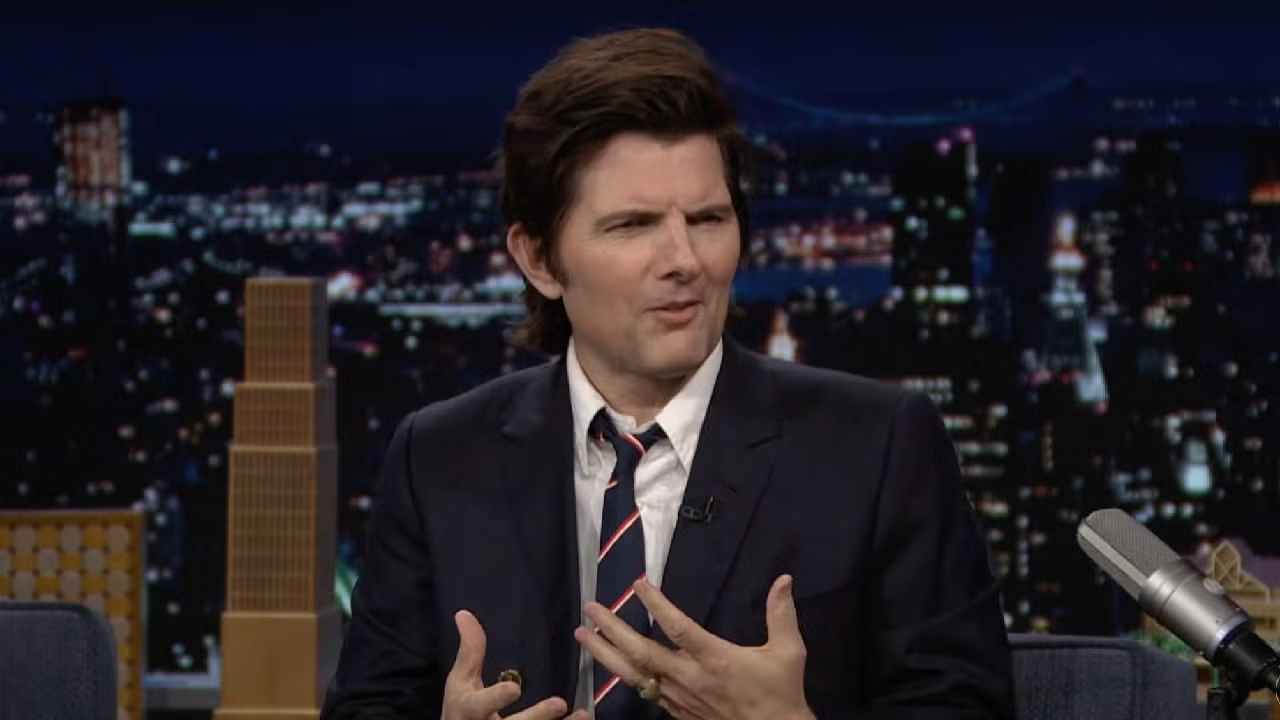
Adam Scott may be an incredibly successful actor, but that doesn’t mean he can’t be criticized in an acting class. In fact, on Thursday night, the “Severance” star revealed that he was actually a “what not to do” example in an acting class — one that his own daughter took.
Scott stopped by “The Tonight Show,” as he’s currently in New York filming season 3 of “Severance,” and noted that his family was with him for awhile. According to Scott, his teenage daughter was taking acting classes over the summer and, on the first day of one of them, he was part of the lesson.
“Her teacher kind of gathered everybody, and he put up a screen, and he was like ‘Okay!’ And he showed video of my audition for ‘The Office,’ and then he showed video of John Krasinski’s audition for ‘The Office,’ and then he put it to the class. He’s like ‘Okay, let’s discuss why he got the job, and he didn’t.’”
“I’m just happy to know that, like, in a prestigious acting class, I’m the subject of, like, what not to do,” Scott joked.
Apparently, the instructor had “no idea” that Scott’s daughter was part of the class, and thus confused by her “mortified” reaction. So, as she was exiting the class, Scott said, the teacher pulled her aside to ask if she knew one of the actors.
“And then he kind of put two and two together with her last name, and he felt terrible,” Scott said. “It was kind of great.”
You can watch Adam Scott’s full appearance on “The Tonight Show” in the video above.
>
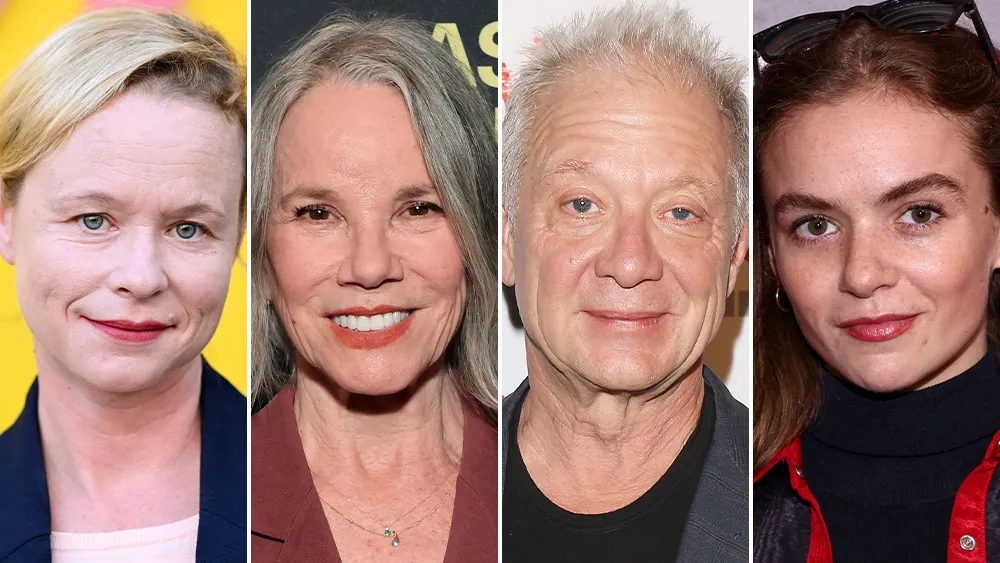
EXCLUSIVE: BAFTA nominee Thora Birch (American Beauty), Oscar nominee Barbara Hershey (Black Swan), Jeff Perry (Scandal), Alysia Reiner (Orange Is the New Black), Abigail Rose Solomon (Mouse) and Morgan Saylor (Homeland) are starring in indie feature The Last Seder.
Production has wrapped in LA on the Rosalind Productions, which is an adaptation of Jennifer Maisel’s play of the same name. Arlene Nelson (Angel City) directs the family dramedy.
The synopsis reads: “The Price daughters return to their Long Island childhood home for what their mother, Lily, secretly knows will be their last Passover Seder — the house is sold, their father’s Alzheimer’s is accelerating, and Lily is planning the next chapter of her life. Over one hilarious, heartbreaking, and all too real night, everything they’ve never admitted finally comes out — and a family discovers that saying goodbye to everything at once might be the only way to finally tell the truth about themselves.”
Rosalind Productions spent several years developing the screenplay with Maisel. Produced include Abigail Rose Solomon, Jennifer Kranz, Julie R. Snyder, and Ryan Brown.
Additional cast includes Briana Venskus-Vazquez, Damon J. Gillespie, Griff Furst, Joseph Kamal, and Kristian Bruun. Casting is by Daryl Eisenberg.
Jennifer Maisel is represented by Evoke Entertainment, Susan Schulman Literary Agency and Jackoway Austen. Arlene Nelson is represented by UTA. Thora Birch is represented by Buchwald, Luber Roklin Entertainment, and Brecheen Feldman. Barbara Hershey is represented by Paradigm and Impression Entertainment. Jeff Perry is represented by Innovative Artists and Principal Entertainment. Alysia Reiner is represented by Paradigm, Fusion Entertainment, and Schreck, Rose.
Abigail Rose Solomon is represented by The Price Group. Morgan Saylor is represented by Paradigm and MGMT Entertainment. Briana Venskus-Vazquez is represented by TalentWorks and Main Title Entertainment. Damon J. Gillespie is represented by Vision Entertainment. Griff Furst is represented by The Savage Agency and Jeff Goldberg Management. Joseph Kamal is represented by Eris Talent Agency and Endorse Management Group. Kristian Bruun is represented by Play Management.
>

The California Public Utilities Commission (CPUC) signed off on Charter Communications and Cox’s $34.5 billion merger on Thursday after the companies agreed to make concessions.
In order to clear the deal, Charter-Cox committed to invest $30 million in digital inclusion initiatives, including broadband adoption, digital literacy training, community outreach and device access for underserved communities; at least $275 million to upgrade the company’s California network, completing symmetrical one-gigabit service capability across legacy service areas within three years; and $5 million in Community Development Financial Institutions to expand access to capital for underserved California small businesses.
The combined company also agreed to new affordable broadband offerings for low-income Californians, including multiple CaliforniaLifeLine service tiers and standalone broadband plans available for five years, as well as five years of free broadband and Wi-Fi service for 50 eligible “community anchor institutions,” such as schools, libraries and community centers.
Charter-Cox will also expand outreach and enrollment assistance to help eligible households access affordable broadband services, expand workforce development through the VetConnect program and strengthen supplier diversity commitments.

The approval follows an extensive public review process and incorporates two settlement agreements negotiated with the Public Advocates Office and the California Emerging Technology Fund (CETF), together with additional mitigation measures adopted by CPUC.
Those additional protections include automatic bill credits for qualifying service outages lasting two hours or longer, continued honoring of eligible residential “price for life” service agreements, elimination of equipment exchange fees when customers upgrade or downgrade qualifying residential cable television service or return rented equipment in-person, enhanced battery backup options and annual customer notices for residential wireline voice service and new reporting and accountability requirements to monitor compliance with CPUC-ordered conditions.
“This decision secures significant commitments that will benefit Californians through expanded affordable broadband options, major infrastructure investments, improved customer protections, and meaningful support for digital inclusion,” CPUC Commissioner Matthew Baker said in a statement. “The CPUC’s approval reflects a careful review of the proposed transaction and ensures public interest benefits are backed by enforceable conditions.”

California was the final regulatory hurdle after the other 44 states where the companies do business approved the deal. The deal, will create the nation’s largest internet and video provider by subscriber base, also received approval from the FCC in February.
“This transformative deal will benefit millions of consumers who will soon have access to greater value and opportunities to save, including our fully converged mobile-broadband bundle savings guarantee, combined with our industry-leading Customer Commitment and the 100% U.S.-based sales and service employees Spectrum is known for,” Charter said in a statement.
The Charter-Cox deal is expected to close later this month. The combined entity will take the Cox name and use the Spectrum brand name within a year after closing.

>

How to watch Nationals vs. Mets: TV channel and streaming options for August 14

Gemini Becomes Google’s 14th Product to Reach 1B Monthly Users

Adam Scott Was a ‘What Not to Do’ Example in Daughter’s Acting Class
-

 movies3 months ago
Search For Canadian TV Actor Stewart McLean Now Homicide Investigation
-

 Fashion9 years ago
These ’90s fashion trends are making a comeback in 2017
-
Fashion9 years ago
According to Dior Couture, this taboo fashion accessory is back
-
Fashion9 years ago
Model Jocelyn Chew’s Instagram is the best vacation you’ve ever had
-
Fashion9 years ago
Your comprehensive guide to this fall’s biggest trends
-
Fashion9 years ago
9 Celebrities who have spoken out about being photoshopped
-
Fashion9 years ago
Emily Ratajkowski channels back-to-school style
-
Fashion9 years ago
A photo diary of the nightlife scene from LA To Ibiza