
Tech
Nvidia investing $1.5B in SoftBank data center developer behind OpenAI project

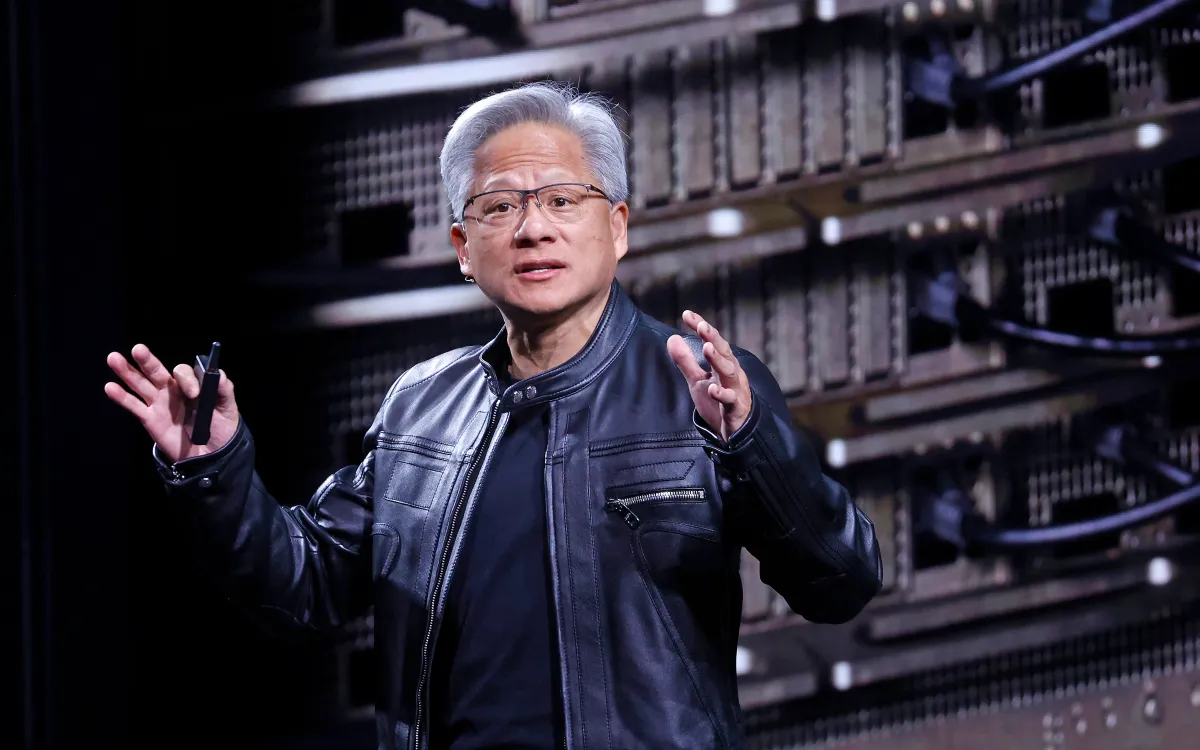
Nvidia said on Monday that it will invest $1.5 billion in SB Energy, a data center linked to SoftBank and OpenAI.
The investment ensures that Nvidia will be the sole supplier of compute infrastructure at OpenAI’s Ports-Pike data center near Cincinnati, Ohio. Nvidia will also provide up to $105 billion in credit to help build the facility, which could scale from an initial 4.25 gigawatts to 8 gigawatts in size, according to documents the company filed with the SEC.
SB Energy’s existing investors include SoftBank and OpenAI. SoftBank had previously held $5.8 billion worth of Nvidia stock, which it sold in November to help fund other AI investments.
The data center and power developer will build a 9.2 gigawatt natural gas power plant on the site, which is land owned by the U.S. Department of Energy. The site previously enriched uranium for the U.S. nuclear arsenal and for U.S. Navy submarines.
The power plant is expected to cost $33 billion. The steep sum reflects the skyrocketing costs of building natural gas power plants, which have risen 66% in the last two years, according to BloombergNEF.
By the time SB Energy’s power plant and others are completed, they’ll be competing for natural gas with export markets, a confluence that could triple natural gas prices in some parts of the country.
>
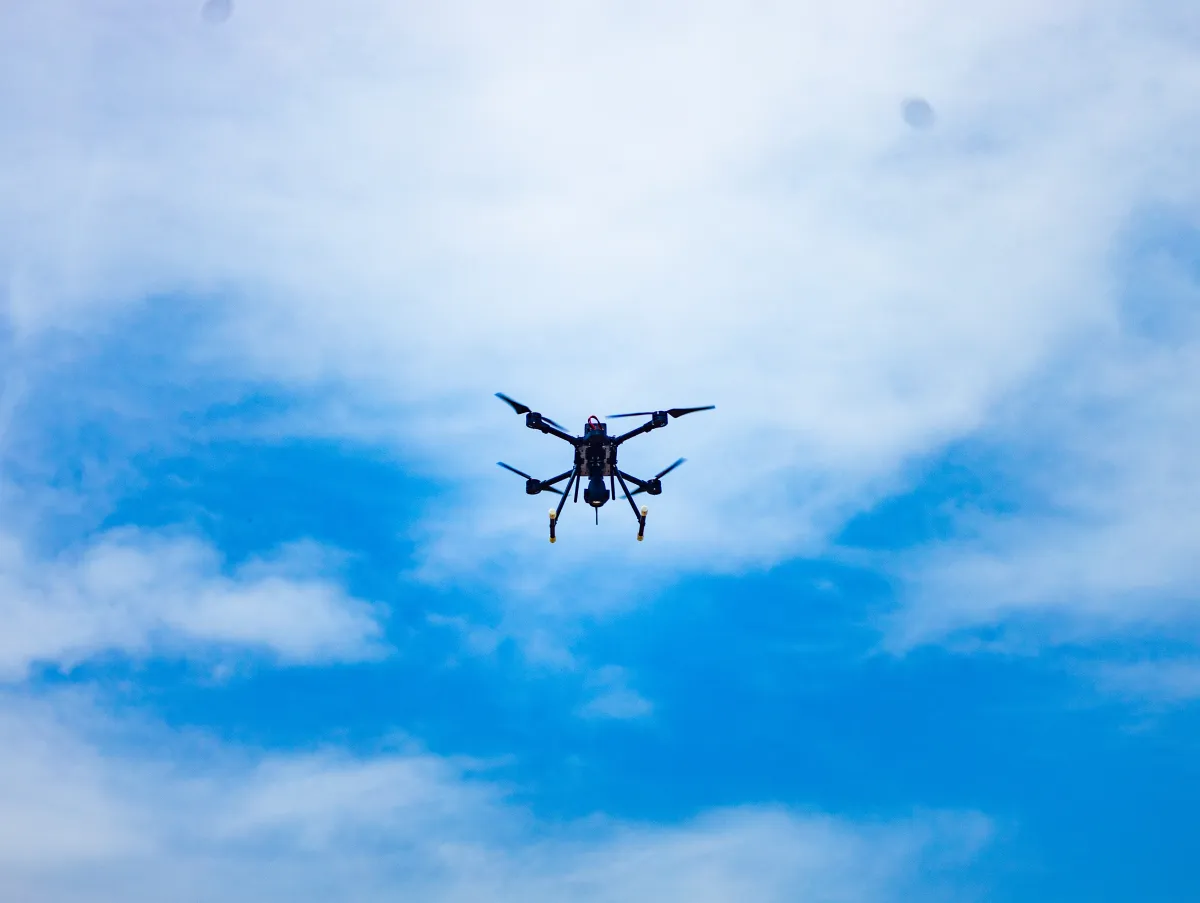
African defense tech company Terra Industries on Monday announced an additional $18 million in funding, bringing its seed round to $52 million. Investors in the round include Joe Lonsdale’s 8VC, Silent Ventures, and Nova Global.
Since its launch back in 2024, Terra has become one of the hottest names in the African defense tech space, with plans to build autonomous systems and other infrastructure like drones and mine-detecting combat vehicles. The company says it’s on track to book $100 million in contracts — including at least one federal contract — and generate revenue in the tens of millions of dollars by the year’s end.
Earlier this year, Terra announced back-to-back funding rounds of $11.75 million and $22 million, respectively. 8VC is also a backer of U.S. defense heavyweight Anduril, which is said to be in talks to raise funding at a $100 billion valuation, as well as Shield AI.
Terra said its competition right now is any defense company that has won government contracts, especially suppliers from Turkey, China, and the West.
As TechCrunch previously reported, although terrorism remains one of Africa’s biggest threats, many of the countries in the continent depend on the West, Russia or China for security intelligence. Countries in this region often work with numerous international contractors, meaning their defense supply chains are fragmented and therefore easily destabilized.
Terra says it wants to solve that by becoming the biggest player in the ecosystem for equipping countries with military and critical defense infrastructure.
The startup will use the fresh capital to expand manufacturing across the Global South, open a London office, hire more, and accelerate product deployment. It also hopes to open an office in San Francisco and build a presence in Washington, D.C. to better access capital and U.S. partnerships.
>

WordPress.com maker Automattic is expanding into education with a new, free product designed for teachers and their classes called WordPress.com Education. The suite for classrooms includes a full WordPress.com domain for each student, plus free domain names (on the .blog or .art domains) and plug-in support.
Teachers can provide students with access to the program for free for the first year, without having to put a credit card down or enter a trial.
This allows teachers to use the technology in courses that teach students how to build websites, or for other classroom needs such as group projects that incorporate website-building.
Unveiling the product at its annual WordCamp US conference on Monday, the company noted that the new Student plan isn’t a stripped-down version of its product. It includes 6 GB of storage, backups, staging sites, and other tools, as well as support for plugins, SFTP/SSH, phpMyAdmin, and Studio Sync.

Automattic’s best known for its website and blog hosting service, WordPress.com, which runs the open-source WordPress software that powers about 43% of all sites on the Internet. Despite its ubiquity, though, WordPress is not necessarily the go-to platform of choice these days for young people establishing their web presence for the first time. Instead, those users often opt to simply set up social media profiles.
More importantly for Automattic, the student plan will let WordPress be integrated into the classroom to train the next generation of website professionals. And, because it’s free, it can make inroads in underfunded schools as well.
When the first year of use has ended, students can choose to subscribe to the service for $2 per month ($24/year). If they don’t, their work won’t disappear; their site will just drop down to a free WordPress.com site on a free domain. All their web pages, posts, comments, and uploaded media will stay intact.
The company says it piloted the program with 5,000 students across 27 countries, and the majority of educators (88.9%) said access to the program improved their students’ employability. A further 81.5% apparently said the program improved students’ entrepreneurial capacity.
When you purchase through links in our articles, we may earn a small commission. This doesn’t affect our editorial independence.
>


Bede Liu, a digital signal processing pioneer, died on 7 May. He was 91.
Liu was widely regarded as one of the founders of modern digital signal processing, a field that applies mathematical algorithms to analyze, modify, and transmit signals including sound, images, and video.
The IEEE Life Fellow taught electrical engineering at Princeton for more than 50 years. From 1994 to 1997, he chaired the university’s electrical and computer engineering department.
Liu’s research aided the transition from analog to digital processing of sound, images, and video. His work helped establish many of the mathematical and engineering techniques that underpin modern communications, multimedia systems, and consumer electronics.
Although little known outside engineering circles, his work is embedded in technologies used by billions of people. The low-power digital signal processors that make cellphone calls, streaming video, and Internet communications possible can be traced to research he conducted in the 1970s and ‘80s.
Liu received the 2018 IEEE Jack S. Kilby Signal Processing Medal for “sustained contributions to the analysis and the development of low-complexity realizations of digital signal processing algorithms.”
“We stream music and video. We take photos with our phones, and we send them around. We don’t even think about it,” IEEE Life Fellow H. Vincent Poor said in an obituary for Liu. “But it’s all because of the signal processing, image processing, and video processing that’s been developed over the years, as well as other technologies that have grown up beside it and enabled it, like semiconductors. The development of these processing advances was exactly what Bede was a major part of.” Poor is a professor of electrical and computer engineering at Princeton.
An impactful scholar and teacher
Liu was born in Shanghai in 1934. During his childhood, his family relocated to Taiwan amid the upheaval of the Chinese Civil War. His father, Henry Liu Sr., was an electrical engineer.
Liu earned his bachelor’s degree in electrical engineering in 1954 from the National Taiwan University, in Taipei. After graduating, he and his family moved to the United States. Liu and his father attended the Polytechnic Institute of Brooklyn (now the New York University Tandon School of Engineering) together. They earned their master’s degrees in electrical engineering in 1956. Liu continued his studies at the school, earning a doctoral degree in electrical engineering four years later.
In 1959 he was awarded a Bell Labs fellowship and worked at the company’s Murray Hill, N.J., location until he joined Princeton in 1962.
“Liu was a highly impactful scholar and teacher—always thinking ahead of future needs and changing technologies,” said IEEE Life Fellow Peter J. Ramadge, a Princeton professor emeritus of engineering.
Cellphones make use of a considerable amount of digital signal processing, Liu once noted. Many of the field’s advances, he added, involved making sophisticated processing practical on devices with limited computing power—which is the challenge that confronted generations of engineers designing portable electronics.
Liu’s research contributions helped shape both the theory and practice of digital signal processing. With Abe Peled, a former graduate student, he authored the 1976 textbook Digital Signal Processing: Theory, Design, and Implementation, which is a standard reference for engineers. Published before digital signal processing had fully emerged as a distinct discipline, it helped define the subject for practitioners and students around the world.
Liu also published 250 technical papers and was granted 12 U.S. patents. His papers are available to read on the IEEE Xplore Digital Library.
The first patent granted to him and Peled was in 1976 for a hardware design that processed bits in parallel, rather than in sequence. The innovation greatly increased computing efficiency for data including sound and communication signals.
Peled says Liu “demonstrated an openness to new ideas and a willingness to challenge the orthodoxy of the EE department at that time—which leaned heavily toward more theoretical information theory.”
A mentor to well-known engineers
Liu’s influence extended beyond his own research. He advised 53 doctoral students, many of whom went on to distinguished careers in academia and industry, including leadership positions at Google and IBM. One former student, computer scientist Robert Kahn, helped create the architecture of the modern Internet. Kahn, an IEEE Life Fellow, received the 2024 IEEE Medal of Honor.
“His former students were very successful,” Poor said of Liu, “and I think that’s a testament to his skill as a mentor.”
“Liu was a highly impactful scholar and teacher—always thinking ahead of future needs and changing technologies.”—Peter J. Ramadge
Together with several Ph.D. students, Liu developed methods of filtering and compressing digital signals to mitigate errors and dramatically reduce the computation needed for signal processing.
As digital signal processing moved from laboratories into commercial products, the impact of Liu’s ideas spread across industries. His research helped spawn the development of lower-cost and lower-power electronics and contributed to advances in mobile communications, multimedia technology, industrial automation, and biomedical imaging.
A focus on media integrity and copyrights
In the 2000s, Liu turned his attention to media integrity and copyright issues.
“With the increasing accessibility of digital media source material, the protection of ownership and the prevention of unauthorized alteration has become an important concern,” he wrote in his 2002 book, Multimedia Data Hiding. The book, which he co-wrote with his former doctoral student IEEE Fellow Min Wu, discussed the theory, techniques, applications, and security of digital watermarking—hidden signals that could identify a genuine copy of a song, image or video to prevent unauthorized distribution or tampering.
A Princeton team that included Liu, Wu, and another of his doctoral students uncovered serious vulnerabilities in watermarking technologies being considered by an industry consortium. They found that the standardization efforts were immature and would not protect against digital piracy.
“Now nearly every copy of a Hollywood film given to a critic or theater carries a unique digital forensic watermark to prevent unauthorized redistribution,” said Wu.
A force in the community
Liu, an active IEEE volunteer, served on the IEEE Board of Directors in 1984 and 1985. He was the 1982 president of the IEEE Circuits and Systems Society.
He was a member of the U.S. National Academy of Engineering, an academician of China’s Academia Sinica, and a foreign member of the Chinese Academy of Sciences.
Outside the classroom, he was recognized for his humility, humor, enthusiasm, and generosity. When thinking of Liu, IEEE Life Fellow Kenneth Steiglitz says, cheer is the first word that comes to mind.
Liu was “always ready with a positive remark, a quick smile or, maybe, some tips on the right way to cook a duck,” says Steiglitz, professor emeritus of computer science at Princeton.
Liu encouraged his students to take on ambitious, unconventional projects, and he inspired students and colleagues with his adventurous spirit.
From Your Site Articles
Related Articles Around the Web
>

How to watch Diamondbacks vs. Red Sox: TV channel and streaming options for August 17

Nvidia investing $1.5B in SoftBank data center developer behind OpenAI project

‘Dreams in Nightmares’ Review: Staggering New American Road Trip Film
-

 movies3 months ago
Search For Canadian TV Actor Stewart McLean Now Homicide Investigation
-

 Fashion9 years ago
These ’90s fashion trends are making a comeback in 2017
-
Fashion9 years ago
According to Dior Couture, this taboo fashion accessory is back
-
Fashion9 years ago
Model Jocelyn Chew’s Instagram is the best vacation you’ve ever had
-
Fashion9 years ago
Emily Ratajkowski channels back-to-school style
-
Fashion9 years ago
9 Celebrities who have spoken out about being photoshopped
-
Fashion9 years ago
Your comprehensive guide to this fall’s biggest trends
-
Fashion9 years ago
A photo diary of the nightlife scene from LA To Ibiza