
Peggy Webber in 1958’s ‘The Screaming Skull.’
Courtesy Everett Collection


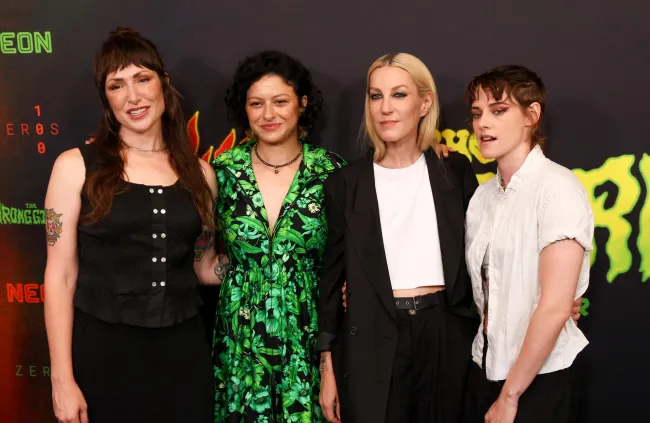
“The Wrong Girls” operates on a very specific frequency, and director Dylan Meyer knows it.
“It’s not for everybody, but the people it’s for, it’s really, really for,” the filmmaker told IndieWire during an impressively cozy Zoom call that saw not one, not two, but three stoner women beaming in from their respective L.A. living rooms. (Of course, there were cats offscreen.)
“I remember sitting in our old back house, broke as shit, when we were 24, 25 years old, just talking about this movie for the first time,” said producer Maggie McLean. “The amount of times I’ve just been on the phone with Dylan where I’m like, ‘Dylan, dude, we’ve got to keep going. We’re going to manifest “The Wrong Girls.” The world needs this movie.’”


In its opening weekend, Meyer and McLean’s proudly imperfect stoner comedy earned just over $406,000 from 520 theaters through distributor Neon. It also received a decidedly mixed critical reception, with 56 percent on Rotten Tomatoes and 59 on Metacritic. But its warmer 3.3-star Letterboxd average suggests the film is already finding the niche audience it was made for.
IndieWire, for its part, hailed “The Wrong Girls” as proof the great American stoner comedy could be saved. Starring Kristen Stewart and Alia Shawkat as best slacker friends Frankie and Molly — two stoner chicks whose hazy corner of Los Angeles isn’t so much a place to hide from adulthood as an alternative vision for surviving it — “The Wrong Girls” took a whopping 14 years to make.
Meyer began developing the concept when she and McLean were living the exact kind of paycheck-to-paycheck existence depicted in their movie. She’d later build an impressive screenwriting career across projects like “XOXO,” “An American Pickle,” and “Moxie,” while McLean worked her way through physical production.
The friends also co-founded Nevermind Pictures with Stewart, creating the independent infrastructure that would eventually help bring Frankie and Molly’s world to the screen. Even still, “The Wrong Girls” repeatedly came together and fell apart.
“We had the money, we lost the money, we had the money, we lost the money,” Meyer said. “We were on such a rollercoaster for such a long time. I was starting to hit a zen acceptance of, ‘Maybe this just isn’t the right thing.’ I did not give up ever, which is very unlike me. I actually love to give up.”
At one point, Shawkat was unavailable after becoming pregnant, leaving Meyer convinced there was no one else who could play Molly. “I cried through the entire TreePeople park,” she said. “I was on a hike with my family weeping because there was no other Molly for me, and there never has been.”
But when that incarnation of the project lost its financing, the delay unexpectedly allowed Meyer to reassemble the team she wanted. Shawkat returned, as did cinematographer Todd Banhazl and costume designer Heidi Bivens, along with other longtime collaborators who might not have been available before.

At another stage, Meyer and McLean scouted New Jersey in search of isolated street corners that might pass for Southern California. The possibility was bleak but financially plausible. They were prepared to fake Los Angeles one carefully restricted camera angle at a time.
Instead, “The Wrong Girls” ultimately began production in L.A. shortly after the January 2025 wildfires. It was among the first projects to start shooting as the local industry attempted to resume work, and the production employed Angelenos displaced by the fires, including crew members who had lost their homes. Those circumstances intensified the communal vibe already embedded in Meyer’s screenplay.
The certainty that someone out there would really want this movie came from recognizing a Los Angeles that mainstream Hollywood rarely puts onscreen. Meyer and McLean are both SoCal natives, and “The Wrong Girls” rejects the glossy mythology of transplants arriving to conquer the entertainment industry. Its heroines aren’t frantically networking at film festivals or plotting their next career moves. They just want enough money to make rent, some weed to maintain their altitude, and the freedom to retreat into the Chill Zone while waiting for another of the modern world’s endless catastrophes to blow over.
“We didn’t come here for anything,” McLean said. “We have no expectations of this city at all. We just love it for exactly what it is.”
Making that Los Angeles legible required more than shooting within city limits. Meyer assembled department heads who recognized themselves as wrong girls and encouraged her people to preserve the film’s tactile, scotch-taped spirit. Production designer Katie Hickman filled Casa de Chill Zone with objects taken from Meyer and McLean’s actual homes, and the pair estimate that at least half of Frankie and Molly’s living room belonged to one of them. Even the cardboard Celine Dion presiding over their kitchen was inspired by a Roy Orbison cutout Meyer and McLean once regarded as a kind of third roommate.
Amid a wild press tour that’s seen Stewart, Shawkat, Meyer, and McLean toking up on both coasts, the two longtime friends and “The Wrong Girls” creative leads spoke with IndieWire about female deadbeats, small-scale dreams, the cinematic value of imperfection, and why the Los Angeles that asks for nothing might have the most to offer.
The following interview has been edited and condensed for clarity and length.
IndieWire: You guys made my whole summer. I had such a good time, and it gave me so much hope to see my living room onscreen. What has this whole process been like for you? It seems like a dream.
Dylan Meyer: Making it rocked. Being allowed to be our weird selves felt like a real gift, and it wasn’t easy to do that. But I think we got there because I made it with all of my favorite people.
My whole crew is girls who are… wrong. I made it with all wrong girls. Even Ty Segall is a wrong girl a little bit. I just distilled everything I really love into one place, and in that sense, it was a total dream. Getting to tour the movie with all the people I love is such a dream.
Putting it into the world is vulnerable and intense, but even that’s pretty fun.
This is such an L.A. movie, and L.A. needs this movie right now.
Maggie McLean: Dylan writing a love letter to L.A. is the dream for me as a producer. We started shooting right after the fires, and it was an honor to make a movie about Los Angeles in Los Angeles while allowing our community to come together and employing a bunch of L.A. locals.
This is the most special city in the world. We got to watch everyone come together in this really unique way after the fires. We’re so much more than people think we are. We all grew up watching L.A. movies, and to be able to add to that — especially with a movie about two best friends and being an L.A. girl — is the dream.
Meyer: It’s a shaggy city in a way people don’t really understand. The perceptions of Los Angeles are glossy, fast-paced, and ambitious. For me, L.A. is a woolly city full of people doing lots of stuff that has nothing to do with the entertainment industry. Because we’re townies, most of our deadbeat friends from growing up don’t have anything to do with that stuff either.
Some movies get underneath that, and I think they’re all weed movies. “The Big Lebowski” is the best movie about L.A. because it isn’t really a movie about L.A. It’s a townie movie. Cheech and Chong made townie L.A. movies. “Repo Man” is a townie L.A. movie.
Those wayward, stoned drifter types seem to congregate here. That isn’t part of the version you see in “I Love LA,” “Entourage,” “The Player,” or “Sunset Boulevard.” Those stories celebrate the dreamer element — the people who came here to do something. Ironically, the people who were already here seem to want to do nothing. I think there’s something beautiful about that.
McLean: Most of our friends are in industries outside entertainment. Those are the depths and layers of this city that are important to remember. All the references Dylan just made are transplant movies and shows. We want nothing except good times and good vibes.
Meyer: I wanted to play the B-sides. We’re a record-crate-digging family. We’re all little treasure hunters, and there are so many treasures here that aren’t ignored so much as hard to find. It’s a city that only works for people who truly have a sense of adventure. I think that’s why it alienates a lot of other people.
There’s something refreshing about seeing people be this comfortably themselves and react to everything authentically. How much came from the script, and how much was group imagination?
Meyer: We were going pretty fast, so we had to lean on the script a good amount. Comedic actors are used to improv being a big part of their lives. We expect comedians to digest new material quickly and spit out jokes as they’re inventing or elaborating on them.
Kristen isn’t really that kind of performer. She addresses the character, world, and scenes in a holistic way. Pushing her to invent new stuff isn’t necessarily how you’re going to get the most out of having her in your movie. But Kristen and Alia have a natural chemistry from being two Southern California people who are kindred spirits. There was such comfort between them that it created room for improvisation in the physical dynamics.
Sometimes people would come in and slam out something much funnier than anything I wrote, and I’d say, “Definitely, let’s go with that.” Other things were born from not having enough money or days and asking, “What can we do to solve this problem quickly?”
I didn’t let myself get bogged down with, “What is the tightest movie I can make?” That wasn’t the goal. I was trying to make something that felt like being high in the world. Things pop out at you and you’re like, “Why is this happening? How did I get here?”
You wouldn’t teach it in a screenwriting class, except that its woolly shagginess is what’s right for it. It sells the girls’ freewheeling, loosey-goosey feeling through the form as well as the content.

Tell me about creating that living room. Nothing about it feels engineered, but everything is so specific. How did you get that level of natural presentation onscreen?
McLean: Katie Hickman, our production designer, absolutely knocked it out of the park. Dylan created all sorts of reference books for her. Then Katie came to my house and pulled things out of my living room, and she went to Dylan’s house and pulled things out of Dylan’s house.
Meyer: There’s a really fucked-up cat pillow next to them the whole time that my mother-in-law gave me. There’s stuff from the house Maggie and I lived in together and the houses we’ve lived in individually.
McLean: It’s very organic to who we are. I have a piece from the set hanging in my office now: the wallpaper, the girls, and Oasis. It belongs in my house. Katie nailed it.
This movie also gets around some fundamental problems facing the stoner genre right now. Legalization makes that imagery easy to flatten, but Frankie lighting a joint in that guy’s driveway still feels like a radical act. What remains transgressive about being a stoner — particularly a female stoner — when weed itself is mainstream?
Meyer: There’s something about being a girl smoking weed in public that still feels really fun. It isn’t illegal and there isn’t as much fear. Now it’s more like a long-haired hippie versus the corporate man.
In the fight for the right to be yourself, there are a lot of barriers to being accepted as a female deadbeat. That isn’t an area we have encouraged. Even now, watching people react to the movie, I’m like, “Oh yeah, some people really don’t fuck with that. For some people, it’s not right.”
I once watched Kristen walk into a restaurant with a lit joint in her mouth by accident. We were standing with the hostess while she stared at us, and I was like, “Oh yeah, totally. Sorry about that.” I also watched Kristen’s best friend Susie offer her a hair from her own head to floss chicken wing out of her teeth.
Writing is patchworking. You’re trying to say something honest. When I reflect on all the squints, stares, and scowls I’ve gotten from more polished individuals because my weed smoke wafted toward them, I’m reminded that this isn’t for everybody. In California, you can get lost in feeling that something is natural or not a big deal. Then you encounter people who really don’t feel that way. The contrast is pretty funny.
Do you think that extends to the tired idea that women can’t be funny? All my stoner-chick friends are the funniest fucking people I know, and there’s still this resistance to allowing women to subvert almost any situation.
Meyer: We don’t let women wear clothes that are comfortable and right for them. We don’t let them be fuck-ups. We don’t let them be dirty or messy. Even when we try to do that in movies, we aren’t really doing it. You can still feel the machine behind the execution.
It was important to commit to those things in this movie. That’s what the movie is about: allowing women to be themselves in a way that, even when we think we are, we often aren’t.

As a woman who reads way too much news, I’m holding very close to my heart the line, “Maybe let’s just go back to the Chill Zone and wait until this whole Kock problem blows over.” In this political moment, do you see it as radical to simply manage being yourself and existing?
Meyer: Being able to chill is something America doesn’t value highly. With social media and the internet, there’s an intense rat-race experience going on all the time. It’s fast-paced, competitive, and intense, and women are always being pitted against each other in that race.
The idea that your house is an oasis where you can hide from the darkness and take a break is kind of radical. They don’t have high-stakes dreams or great financial ambitions. They barely want to run toward anything. They’re fighting for their right to kick it in a chill way and to have their primary partner be their best friend.
We structure adult life around nuclear families, romantic partners, or our regular families. For women, friendships are some of the strongest and most powerful tools we have to survive life and continue. Carving out the way you want to live is important.
McLean: Those are also the women we know. My mom lives with her best friend. They’re in their sixties and seventies, living a very happy platonic life together in Santa Monica. None of us bats an eye at that.
The movie makes you want to believe people will be drawn to Frankie and Molly’s world precisely because they aren’t trying too hard. What’s your take on L.A. being misunderstood? Is that a good thing, a bad thing, or just something the city doesn’t have to worry about?
McLean: There are so many people who come here expecting to achieve their dreams quickly and easily. That has snowballed in the last couple of years with social media and influencers coming here.
When you grow up in this city, you can live with a sense of ease instead of only a sense of ambition. Don’t get me wrong: Dylan and I are both ambitious. But we aren’t sitting here feeling entitled to anyone else’s position. It’s why we started a company together. We decided, “We don’t need any of that. We’re going to carve our own lane, make movies our way, and make the movies we want — not necessarily the movies everyone else wants us to make.”
L.A. is also a very rich, layered city. I live on the east side in Highland Park, and I don’t really leave my neighborhood. I’ve built a community, and that’s what we do in this city. That’s a really misunderstood element of L.A. It isn’t just West Hollywood or the West Side. Go on a food tour in the San Gabriel Valley and you’ll have a really cool time and learn a lot.
Meyer: The girls’ dream is so small-scale. Their dream is just to have this one environment where they get to be in charge, do it together, and have a contained existence.
As a company and as filmmakers, we have a similar philosophy. I’m not trying to make a Marvel movie. That isn’t me. I wouldn’t be good at it, and I wouldn’t have a good time. My dreams are under $15 million so we can achieve creativity and freedom. That’s what the girls are pursuing in their small-scale dreams: the freedom to design your life how you want.
If you aren’t trying to become a billionaire, you can make your life all kinds of ways and be happy and successful on your own terms.
We keep circling this idea of misconceptions. Is there anything about the film itself that you want to clarify or talk about?
Meyer: We’re living in a moment when movies are very shiny and perfect. Some of that is digital, and some is the committee-based, risk-averse mentality that goes into their creation.
I wanted something woolly, textural, tactile, and dirty. I wanted that smoggy L.A. film over it. There are ways you could interpret that as unintentional, and I suppose that’s one way the movie might be misunderstood.
But it’s a celebration of imperfections and an extension of the girls. The best example is the big dance sequence at the end. It isn’t choreographed. It’s the dance that is right for them and feels true to them. If the movie is an extension of the girls, it has to pick up threads and drop them haphazardly because that is their experience and how they navigate the world.
Maybe that gets misunderstood, but it’s the same reason Tony Hale misunderstands Kristen in the driveway. Squares are going to square. There’s nothing you can do about that.
McLean: None of that slick shit was ever the goal. We never wanted this to be one of the slick comedies you see today. No hate on any of those, but this is a different movie.
Meyer: It really is about having a spirit of zen acceptance about dysfunction, a joyful sense of misadventure, and the idea that no experience is wasted on you.
Every bad thing that happens to me still feels useful. I’m like, “This didn’t feel good, but it was interesting.” A lot of wrong girls share that: “God, I didn’t mean to get here. This isn’t what I imagined or wanted, but I feel like I could still have fun under the right circumstances.”
If I can find the right perspective, I can enjoy whatever is weird and fucked up here. That’s absolutely in the DNA of the movie.
>
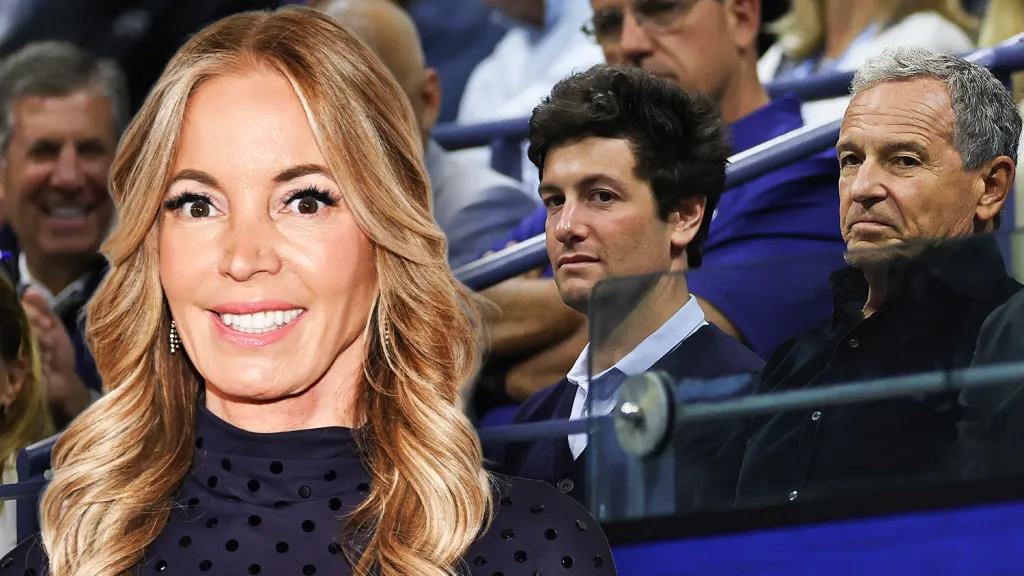
Bob Iger was feted like a Disney Prince at D23 this past weekend, but the ex-CEO real starturn looks to be scoring an even greater stake in the L.A. Lakers today.
With longtime owners the Buss family voting to tag along with Iger and Josh Kushner’s $12.5 billion purchase last week of the NBA team from Mark Walter, the former House of Mouse boss and brother of Donald Trump‘s number #1 son-in-law now own 83% of the Lakers.
That’s a 17.8% rise over the 65% or so the duo had last week when the purchase off Dodgers shareholder Walter was made public after a frantic 72-hours of bartering.
Kushner’s Thrive Capital did not respond to Deadline’s request for comment on enlarged ownership. However, the Buss family were court side with a statement of their own Monday.
“We have decided as a family to sell the remaining Buss Family Trust shares to the Bob Iger group as part of the ongoing transaction,” the Buss’ said today to ESPN (which Iger used to lord over) after four out of the six siblings voted for the sale. “We love the Lakers, Laker fans and will continue to support Los Angeles; but it is time to use this opportunity to move on and exit gracefully while we still can.”
As viewers of HBO‘s two-season Winning Time: The Rise of the Lakers Dynasty know, Dr. Jerry Buss bought the team (plus the L.A. Kings and the Forum itself) in 1979 and brought some Tinseltown magic (+ Magic Johnson) to the NBA. Under the Buss family, with patriarch Jerry passing away in 2013, the Lakers snagged 11 NBA Championships. Last year, the family sold control of the organization to Walter for $10 billion. Under investigation for alleged dodgy finances, Walter flipped the team to franchise seeking Iger and Kushner almost as fast as a Kobe lay-up.
Under both Walter and it seemed Iger and Kushner, Jeanie Buss remained a governor of the team. “We have enormous respect and appreciation for Jeanie, her father and what they’ve contributed to this franchise,” Iger told Rupert Murdoch’s The California Post on August “And we have every intention to honor the agreement that was made between Mark and Jeanie. If things change, they’ll change, but we’re going into this with enormous respect and appreciation for who she is and what she represents in the organization.”
That era comes to an end now as NBA rules demand a governor has to own at least 15% of a team.
>
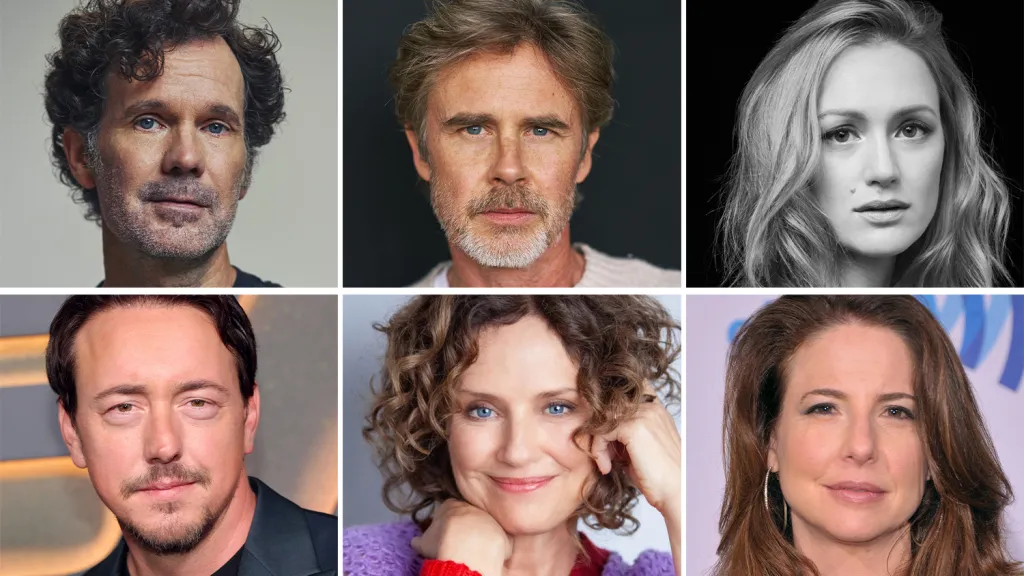
EXCLUSIVE: Sam Trammell (True Blood), Sean Bridgers (Deadwood), Chris Coy (Black Rabbit), Kerry Bishé (Halt and Catch Fire), Robin Weigert (Deadwood) and Jean Louisa Kelly (Uncle Buck) are set for recurring roles in Prison Break, Hulu‘s upcoming series reboot from Elgin James (Mayans M.C., The Outlaws).
They join previously announced series stars Emily Browning (Cassidy), Drake Rodger (Tommy), Lukas Gage (Jackson), Clayton Cardenas (Michael “Ghost”), JR Bourne (Junior), Georgie Flores (Andrea), Kelli Berglund (Cheyenne) and Myles Bullock (Darius “Red”).
In the new series, an ex-soldier turned corrections officer takes a job at one of the deadliest prisons in America to prove just how far she’ll go for someone she loves.
Trammell plays Jarrod Boggs, a powerful figure with deep roots in West Virginia.
Bridgers portrays Hollis, a devoted family man trying to rebuild his life.
Bishé is Mary Smith, a mysterious and dangerous female inmate.
Weigert plays Chaplain Bannon, the prison chaplain who counsels inmates in need.
Kelly portrays Margaret, the new matriarch of a power-brokering political family.
Coy is Mule, a dangerous and unpredictable inmate.
James serves as showrunner, executive producer, and director of the pilot. Dawn Olmstead, who executive produced the original series, returns as executive producer. Paul Scheuring, Marty Adelstein, and Neal Moritz also executive produce. 20th Television is the studio.
Trammell is best known for his seven-season starring role in HBO’s True Blood. He recently recurred in the final season of HBO’s Euphoria and he has a lead role in Prime Video’s Civil War–set limited series The Gray House. He’s repped by Innovative Artists and Trademark Talent.
Emmy-nominated Weigert is best known for playing Calamity Jane in Deadwood the series and the recent movie revival, and Ally Lowen in Sons of Anarchy. She’ll soon be seen in The Altruists for Netflix. She’s repped by Thruline Entertainment and Innovative Artists.
Coy will next be seen in Jaume Collet-Serra’s Netflix feature, An Innocent Girl opposite Colman Domingo and James Marsden. He can most recently be seen as a series regular on Netflix’s limited series Black Rabbit opposite Jason Bateman and Jude Law. He’s repped by Verve and Main Title Entertainment.
Bridgers recently recurred in Apple TV’s Government Cheese starring David Oyelowo and he previously starred opposite Renée Zellweger in NBC’s The Thing About Pam and in ABC’s Women of the Movement. He’s repped by Innovative Artists and Trademark Talent.
Best known for her starring role in AMC’s Halt and Catch Fire, Bishé’s additional television credits include Narcos, Scrubs, Penny Dreadful: City of Angels and The Romanoffs. In film, she appeared in Oscar-winning Argo and most recently in Marvel’s Madame Web. She’s repped by Gersh and Untitled Entertainment.
Kelly appeared opposite John Candy in Uncle Buck and Richard Dreyfuss in Mr. Holland’s Opus and starred as Kim Warner on CBS comedy Yes, Dear. Her recent film credits include Top Gun: Maverick and James Wan’s Malignant. She will next be seen in Angel and the Badman opposite Tommy Lee Jones. She’s repped by Artists & Representatives and Amplified.
>
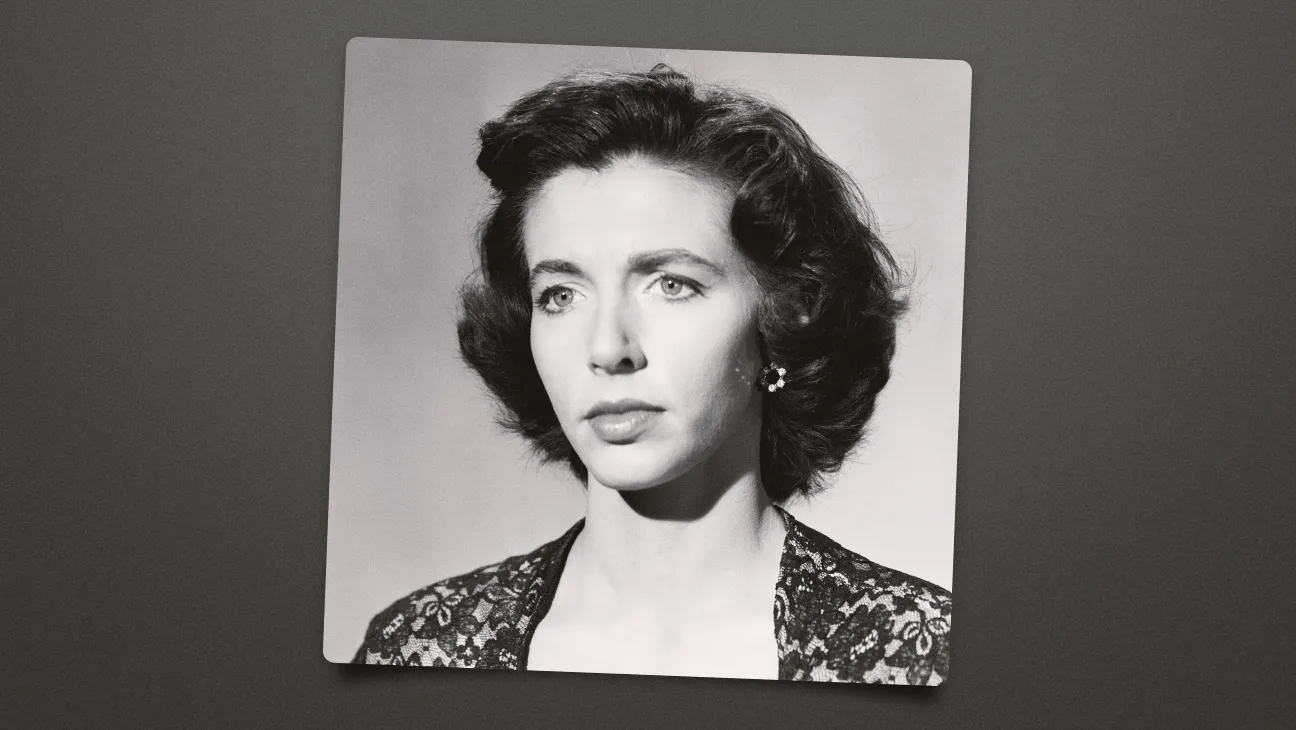
Peggy Webber, the prolific radio actress who portrayed the mother of Jack Webb’s Joe Friday on the original version of Dragnet before appearing for Orson Welles in Macbeth and Alfred Hitchcock in The Wrong Man, has died. She was 100.
Webber died Saturday of natural causes at an independent living facility in Napa, California, her son, Rob Sinskey, told The Hollywood Reporter. She had moved north from Los Angeles after she had to be evacuated from her home amid the fires in January 2025.
Webber worked on thousands of episodes of radio shows, among them The Adventures of Sherlock Holmes, starring Basil Rathbone and Nigel Bruce; The Story of Dr. Kildare, starring Lionel Barrymore and Lew Ayres; The Man Called X, starring Herbert Marshall; and Escape, starring William Conrad.
She played Ingrid Bergman’s role of Ilsa in a 1944 serialized version of Casablanca for the NBC Radio anthology program Star Playhouse and frequently had “four soap operas going at the same time,” she told historian Kliph Nesteroff in 2023. “I’d be running from one studio to the other, never eating. It was a very wearing thing.”
She had worked with Webb on radio shows including Escape and This Is Your FBI when he asked her to voice a role on his 1949 pilot for Dragnet, his new procedural crime show for NBC Radio. She then portrayed Ma Friday, the mother of Webb’s Sgt. Joe Friday, over the years.
The versatile Webber also had done radio with Welles when he approached her about playing Lady Macduff in his 1948 film adaptation of Macbeth.
“He told me, ‘Now, I don’t want you to do the traditional Lady Macduff. I want you to do a glamorous kind of young person. I want her to be maybe 21 or something like that,’” she recalled. “I did it with a Scottish accent as he wanted and he said, ‘That’s it. That’s it.’ And I got the part.”
She said she worked on the film for about three years, dubbing voices of other characters in the film, including Jeanette Nolan’s Lady Macbeth.
In The Wrong Man (1956), Webber sets the story in motion as Miss Dennerly, an insurance clerk who mistakenly identifies musician Manny Balestrero (Henry Fonda) as a man who had robbed her office. The movie is the only Hitchcock film based on real events.
She also is known for her turn as the newlywed who moves into a mansion where her husband’s (John Hudson) first wife died under suspicious circumstances in the cult horror classic The Screaming Skull (1958). American International Pictures promised a free burial to anyone who died of fright watching the movie, a thinly veiled remake of Hitchcock’s Rebecca.
Peggy Webber in 1958’s ‘The Screaming Skull.’
Courtesy Everett Collection
The daughter of a wildcat oil driller, Margaret Webber was born on Sept. 15, 1925, in Laredo, Texas. She performed at intermissions during silent movies when she was a toddler and started working on the radio in San Antonio when she was 11.
She and her folks moved to Arizona, where her father, Matthew, had a gold mine, and she graduated at age 16 from Tucson High School (she also had her own radio show in town) in 1942.
With the death of her dad, who had lost all the family’s money, Webber came to Hollywood with her mother, also named Margaret. She walked unannounced into CBS on the day she arrived and met a page boy, future I Love Lucy writer Bob Carroll, who helped her sign up for an audition.
During her tryout a few days later, she did impressions of Martha Raye, Shirley Temple, Stepin Fetchit and others in “a little story about [actress] ZaSu Pitts coming in on a train and not being able to find her hotel, and each person she would stop would be some famous person and I would do them talking to each other.”
She was hired on the spot, and her first gigs would include The Adventures of Sherlock Holmes and stepping in as the voice of Bergman on commercials.
Her radio credits also included the lead in The Girl of the Limberlost, work in front of a live audience for the Harold Lloyd Comedy Theatre, lots of shows for writer-producer Norman Corwin and episodes of The Adventures of the Saint, Lux Radio Theatre, The Life of Riley, Strange Wills, Broadway Is My Beat, Fibber McGee and Molly and Have Gun, Will Travel.
“In three years, her latex voice has supplied radio with 150 different characters on some 2,500 broadcasts,” Time magazine noted in a story about her in August 1946.
In the mid-1940s, Webber created a sitcom about a teacher, Oh, Miss Tubbs, for the experimental TV station W6XAO in Los Angeles. After she sent her scripts to CBS in New York, she said the network used them to create a similar radio comedy, Our Miss Brooks. (She wanted to sue, but her attorney, Roy Cohn, told her that if she did, she would never work for CBS again.)
She also wrote and produced Treasure of Literature, bringing classic literary works to life for the L.A. station KFI-TV, and she received a nomination at the inaugural Emmy Awards, held in 1949 at the Hollywood Athletic Club.
When Dragnet made it to television in 1952, Webber guest-starred on several episodes, then appeared on the series after it returned in 1967 and on installments of two other Webb-produced dramas, Adam-12 and Emergency!
Over the years, she also showed up on TV in Kings Row, Cheyenne, M Squad — that series starred Lee Marvin, her next-door neighbor in Rustic Canyon — Climax!, The Millionaire, Gunsmoke, Wanted: Dead or Alive, I Spy, Night Gallery and The Waltons and in films including Her Adventurous Night (1946), John Farrow’s Submarine Command (1952) and The Space Children (1958).
She and Addams Family actor Ted Cassidy owned The New Hope Inn, a restaurant and performance space in Santa Monica, and she ran a theater company with members including Gilligan’s Island star Bob Denver.
Webber also worked on productions for Sears Radio Theatre starting in the late ’70s and in 1984 founded the California Artists Radio Theatre, which revived radio dramas from Shakespeare, Lewis Carroll, George Bernard Shaw, Oscar Wilde and others and adapted contemporary pieces that she produced and directed. (CART repertory players included Michael York, Samantha Eggar, Roddy McDowall, Ed Asner, William Shatner and David Warner.)
In addition to her son — Marvin was his godfather — survivors include her daughters, Patricia and Teresa (their godfather was actor Paul Fix); grandchildren Ella, Leo, Kaia, Rikki, Aviva, Ian and Whitney; and three great-grandchildren.
Webber was married to Robert Sinskey from 1951 until their 1967 divorce — they moved in 1952 to Japan so he could work as a researcher for the Atomic Bomb Casualty Commission, and he would become a wine grower and pioneering eye surgeon — and to Irish actor Sean McClory (The Quiet Man, The Californians) from 1983 until his 2003 death.
“I’ve had a certain kind of dedication since I was young,” Webber told L.A. Weekly in 2015 about still working in radio as she was approaching 90, “and that dedication is what keeps me going. It’s like when you have a child. You’ve been given the trust to take care of this creature, and I’ve always felt the same way about the opportunities that have been given to me — it’s a responsibility.”
>


Search For Canadian TV Actor Stewart McLean Now Homicide Investigation


These ’90s fashion trends are making a comeback in 2017
According to Dior Couture, this taboo fashion accessory is back
Model Jocelyn Chew’s Instagram is the best vacation you’ve ever had
Emily Ratajkowski channels back-to-school style
9 Celebrities who have spoken out about being photoshopped
Your comprehensive guide to this fall’s biggest trends
A photo diary of the nightlife scene from LA To Ibiza