
Sports
Walter and Boehly are selling up at Chelsea. Why now, for how much and what does it mean for the club?

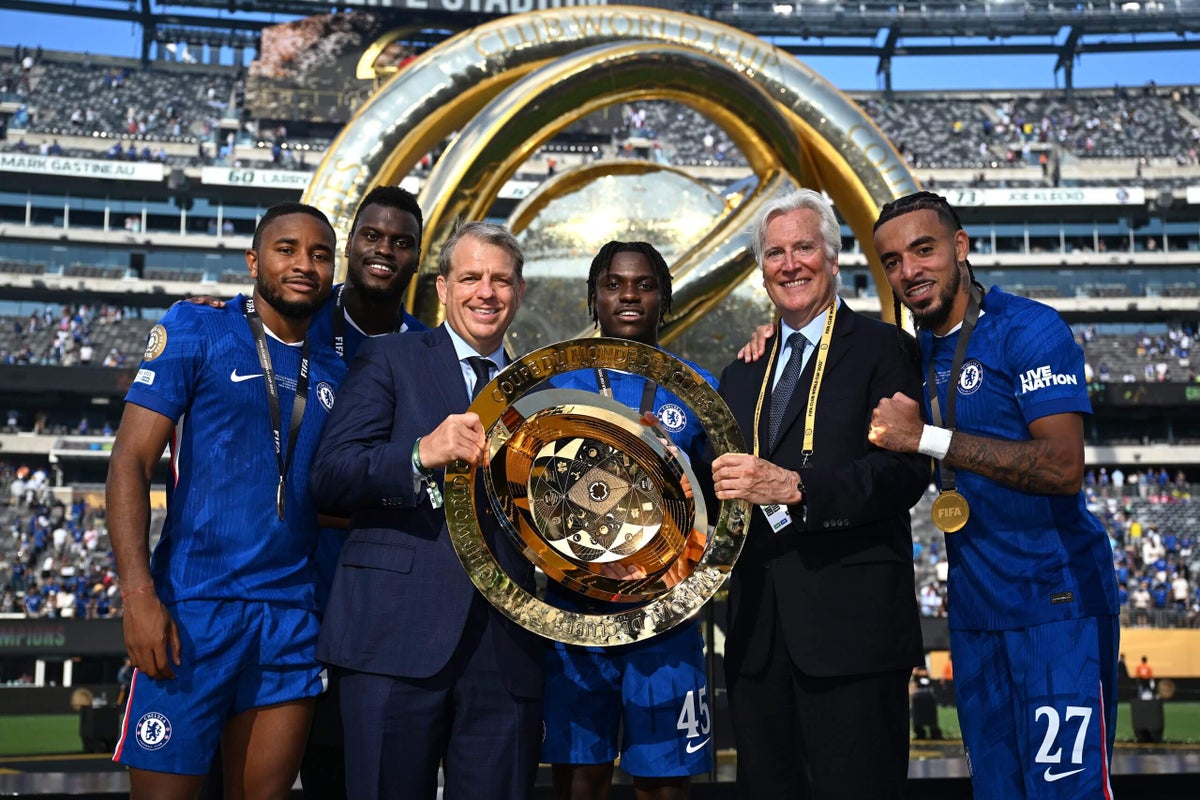
The tumultuous BlueCo era at Chelsea has delivered another momentous twist with the news that Todd Boehly and Mark Walter are in talks to sell their shares in the club to majority owner Clearlake Capital.
No agreement is believed to be imminent, but the sale would provide a form of resolution to long-standing tensions within Chelsea’s ownership group while also potentially easing the regulatory pressure that Walter is facing in the United States.
Here is a look at the key questions surrounding this situation and what it all means for Chelsea, as well as the implications for Walter and Boehly’s flagship sports investment, the Los Angeles Dodgers.
Why is this happening now?
None of the principal parties are commenting, but it is very difficult to view this development as unrelated to Walter’s unexpected sale of the Los Angeles Lakers to Josh Kushner and Bob Iger in a deal that valued the NBA franchise at $12.5billion (£9.2bn) last week.
That news — just 14 months after Walter had bought a controlling interest in the Lakers from the Buss family at a then-record $10billion valuation — broke against the backdrop of an investigation by the U.S. Department of Justice into the 66-year-old billionaire’s business dealings.
Bloomberg reported last week that Walter’s sudden sale of the Lakers was sparked by the need to raise cash to pay down loans on the books of his insurance firms at the centre of the federal probe. How much more could be raised by offloading his assumed 12.7 per cent stake in Chelsea?
Boehly was one of Walter’s partners in his brief Lakers venture, as well as in their hugely successful ownership of the Los Angeles Dodgers. From Boehly’s perspective, this could simply present a good opportunity to exit from Chelsea, an investment that has not panned out as he envisaged when he publicly fronted the BlueCo consortium which purchased the club from a sanctioned Roman Abramovich in June 2022.

Todd Boehly, left, with Chelsea’s sporting director Paul Winstanley and Clearlake co-founder Behdad Eghbali in 2025 (Robin Jones/Getty Images)
Despite maintaining a public profile with appearances at Stamford Bridge and on stage at various business conferences, Boehly has not enjoyed functional operational control over Chelsea since 2022, with majority shareholder Clearlake Capital directing the club’s strategy and the firm’s co-founder Behdad Eghbali actively involved in all major decisions.
Boehly’s four-year stint as chairman is also set to conclude next year with Clearlake empowered to pick his successor, potentially making it a natural endpoint for his presence at the club.
Liam Twomey
Who is Mark Walter and what is being investigated?
For a man who built a portfolio of some of the world’s most famous sports teams, Mark Walter has spent most of his 66 years on this planet flying well under the radar.
But then he sold one of those teams, the Los Angeles Lakers, in a stunning deal that took 48 hours to agree, without any of the usual armies of banks and brokers involved, and his name has not stopped popping up on screens since.

Walter at a Lakers game this year (Allen Berezovsky/Getty Images)
An Iowa native, Walter got degrees in business and law before starting a career in a relatively sleepy part of the financial services industry in Chicago in the 1990s.
His big break, although nobody noticed at the time, came in 1999, when he met a member of the uber-wealthy Guggenheim clan and co-founded Guggenheim Partners, a global investment and financial advisory firm based in New York.
There, he was among the first to spot the huge, steady but unsexy amounts of money being kicked out every month by America’s massive insurance market, particularly after the 2008 financial crash, when the valuations of state-based insurance firms plummeted.
Walter and his Guggenheim protege Todd Boehly also realised that you could borrow large sums of money, secured against the dependable flow of policyholder premiums, and then invest that cash in cooler, sexier assets, such as media companies, real estate and sports teams.
The first sports team came in 2012, when, in trademark fashion, he took advantage of then-owner Frank McCourt’s financial difficulties to buy baseball’s Los Angeles Dodgers for $2.15billion. And in another move that he later repeated, he did this as the lead investor in a large syndicate of big names, including Boehly, Earvin “Magic” Johnson and tennis star Billie Jean King.

Stan Kasten, Mark Walter, Magic Johnson, Peter Guber, and Todd Boehly at the Dodger Stadium in 2012 (Chris Williams/Icon SMI/Corbis/Icon Sportswire via Getty Images)
Two years later, Walter led another all-star syndicate in a failed bid for the NBA’s Los Angeles Clippers, losing out to Microsoft boss Steve Ballmer.
But he was not to be kept out of basketball for long, as he led a group that bought the WNBA’s Los Angeles Sparks later in 2014 and then, in 2021, he bought just over a quarter of the Lakers.
A year later, he teamed up with his buddy Boehly to buy into Chelsea, another distressed asset, and in 2025, he bought majority control of the Lakers in a deal that valued the team at $10billion.
At this point, the quiet man from America’s Midwest owned stakes in three of the most famous teams in the world’s biggest leagues, plus the Sparks and North America’s professional women’s ice hockey league, the PWHL. And he had barely given a single media interview in his 40-year career.
He still hasn’t but everyone wants to talk to him now because the whispers about his complex web of insurance companies, secured loans and high-profile investments, which have always been there for those who were listening closely, have become blaring sirens.
Bloomberg and the Financial Times reported that last year the Federal Bureau of Investigation seized Walter’s phone and laptop as part of a probe into his empire. A spokesperson for the FBI declined to comment.
In February, two of his insurance firms received subpoenas from the U.S. Attorney’s Office for the Southern District of New York, which specialises in white-collar crime. The firms had to confirm this news in regulatory filings in March, when they also revealed they were under a parallel investigation by the Securities and Exchange Commission.
The issue Walter faces, and has already acknowledged by his actions, is that the money that regular folk pay to insurance companies is meant to be safe, which is why the sector is more highly regulated than others. There have been too many examples in the past of disreputable types just stealing people’s premiums.
So, insurance firms are not meant to put too much of their money in any single pot — they must diversify their own risks. Likewise, they must declare if any of their investments are with affiliated companies, as that would increase the risk of a problem elsewhere in the wider group impacting the insurance firm.

Walter with President Trump at the White House after the Dodgers won the 2024 World Series (Kevin Dietsch/Getty Images)
Delaware Life, one of Walter’s companies, has already been forced to reclassify nearly $17billion of its investments as they were clearly with “affiliated” businesses in his empire, most notably a $4.1billion loan to the Dodgers’ ticketing subsidiary.
All in all, it is estimated that Walter has needed to reclassify about $20billion worth of affiliated deals, mostly loans he has secured through his insurance businesses to invest in his sports properties.
The various investigations are looking into whether he did this illegally.
In the meantime, whether he acted illegally or not, he is in a race to refinance those loans and maintain the credit ratings of his companies. As there are not many buyers for loans under investigation, he has only one real option. He needs cash and fast.
So, he has already sold the Lakers and his 12.7 per cent stake in Chelsea will be next. The big question is whether that will be enough. Nobody that The Athletic has spoken to in American sports finance circles believes it will be, so, at the very least, a stake in the Dodgers is almost certainly available, too.
Walter did not respond to messages from The Athletic seeking comment for their reporting around the story, and federal officials at the agencies conducting the probe declined to comment.
Matt Slater
Who owns what at Chelsea?
Chelsea went from a one-man kitchen to a many-cheffed banquet in early 2022, when the Russian oligarch Abramovich was jettisoned and a merry band of private equity folk took up the reins.
The £2.5billion takeover which completed in May of that year granted a majority shareholding to Eghbali and Jose E Feliciano’s Clearlake Capital which, today, owns 61.85 per cent of the shares in 22 Holdco Limited, the UK-based holding company which oversees both Chelsea and Ligue 1 side Strasbourg.
The remaining 38.15 per cent is held by Blueco 22 Holdings LP, a UK-registered limited partnership. Six partners make up that partnership: CFCB, LLC, controlled by Boehly; SME FC Holdings, LLC, controlled by Walter; Hansjorg Wyss as an individual, and two further entities affiliated with him; and Greenelite CFC, LLC, a Delaware-registered business whose controlling owner is unknown.
That 38.15 per cent is not split evenly, with only Boehly and Walter, along with Eghbali and Feliciano on the Clearlake side, listed as having a ‘significant interest’ in Chelsea under Premier League rules. It means each of Boehly and Walter beneficially own at least 10 per cent of the club, while Wyss and whomever heads Greenelite split the rest.
On the assumption Boehly and Walter own a third each of Blueco 22 Holdings LP, each would own a 12.7 per cent beneficial stake in Chelsea. In other words, a little over a quarter of the club might be about to change hands.
Chris Weatherspoon
How much might Walter and Boehly’s shares be worth?
Beauty is in the eye of the beholder and never more so than at Chelsea, where that £2.5billion purchase of four years ago has been followed up with enormous spending, most of it on players.
In total, as previously reported by The Athletic, funding of the BlueCo project hit £4.2billion by the end of June 2025, and more has gone in since. That June 2025 figure was split £2.9bn in equity and £1.3bn in external borrowings, including a payment-in-kind loan which is accumulating interest at heady rates.
Reporting from The Telegraph on Monday evening stated Boehly and Walter were searching for a stake sale that would value Chelsea overall at north of £5billion, a sum which seems fanciful given how things have regressed on the field in recent years and the massive costs that have been incurred in the process. Several industry valuers have recently pegged Chelsea’s worth at a little over £3bn, or not much more than the to-date equity commitment of the current owners.
There’s naturally an incentive on behalf of the sellers to pump up the price, but so, perversely, might Clearlake be reluctant to snaffle up more shares at too low a cost. Doing so would signal to the market that Chelsea aren’t worth anywhere near what the current owners hoped they would be, even just over four years into their premiership. Clearlake have no immediate desire to sell but there is a need for Chelsea’s value to appreciate sooner rather than later.

Chelsea fans protesting against the owners before a Premier League match against Southampton last year (Justin Setterfield/Getty Images)
What is clear is that today Chelsea are worth nowhere close to what Clearlake and other prospective buyers were told they soon might be when the club was up for sale back in spring 2022. Then, Joe Ravitch, co-founder of Raine Group, the merchant bank tasked with selling the club, said: “My guess is that Chelsea and all of the top Premier League clubs will probably be worth in excess of $10billion (£7.7bn then, £7.4bn today) in five years.”
Short of oil spurting out of the Stamford Bridge centre circle inside the next 12 months, that guess will be falling some distance south of accurate.
Chris Weatherspoon
What’s the relationship been like between Clearlake and Boehly and Walter?
The Athletic went into great detail two years ago on how both sides (Boehly and Clearlake) were looking to buy each other out as disagreements over how to run Chelsea increased tensions behind the scenes.
This just feels like an inevitable conclusion as Clearlake have always maintained they were not going to cash in and they are the majority shareholder.
Walter has always been more of an investor than someone heavily involved, albeit his connection is with Boehly due to their time together with the LfA Dodgers and investment firm Guggenheim Partners.
Another member of the board representing the Clearlake side is Feliciano, but he is rarely seen at Chelsea now and he has headed the investor group which has just bought MLB side San Diego Padres.

Jose E Feliciano watching the San Diego Padres earlier this year (Meg McLaughlin / The San Diego Union-Tribune via Getty Images)
It has been made clear that the relationship between Clearlake and Boehly has remained a professional one despite any difference of opinion. However, when Boehly and Eghbali attend matches at Stamford Bridge, it is noticed by observers how they do not watch them together and stay in their own boxes in the West Stand.
Simon Johnson
Hasn’t Walter just sold the LA Lakers? What does this mean for the LA Dodgers?
The news that the Lakers were being sold shocked several within the Los Angeles Dodgers organization – after all, Walter was in the process of integrating the two iconic franchises and even having two notable figures in the baseball side’s rise to dominance (president of baseball operations Andrew Friedman and special assistant Farhan Zaidi) consult on the overhaul of the basketball operation.
Dodgers president and CEO Stan Kasten addressed the sale on Wednesday, saying, “This is a Lakers story. It’s not really a Dodgers story.” The executive said nothing is expected to change with the Dodgers and that there are no plans for the organization to sell. In that same conversation with reporters, however, Kasten said he didn’t have any information about the status of the ongoing federal investigations into Walter’s insurance companies. That can change things.
Major League Baseball’s labor strife, which likely will culminate in a lockout this winter, could be another factor as the league’s owners seek to implement a salary cap. The Dodgers are the target for much of the league’s marketing push heading into negotiations, with MLB arguing that the organization’s extreme spending and more than $1billion in deferred contracts disrupted the league’s competitive balance.

Walter welcomes Shohei Ohtani to the Dodgers in 2023 (Meg Oliphant/Getty Images)
The Dodgers have been successful in Walter’s tenure but have hit new peaks on the field (with back-to-back World Series titles) and financially (earning an estimated $1billion in revenue in 2025) since the arrival of Japanese two-way superstar Shohei Ohtani. For what it’s worth, Ohtani – whose contract contains a rare “key man clause” tying him to Walter and Friedman – is not expected to go anywhere even if Walter does wind up selling the club.
Fabian Ardaya, LA Dodgers writer
What does this mean for how Chelsea operate?
Not a great deal will change to be honest. While Boehly has had a sign-off on all decisions, his input into how things are run has reduced dramatically over the years.
Boehly had a big influence on the first transfer window following the takeover in May 2022 when he was interim sporting director. But he has taken much more of a back seat since full-time sporting directors were put in place. There are five now in Paul Winstanley, Laurence Stewart, Joe Shields, Sam Jewell and Dave Fallows. They run the sporting side of the club while Jason Gannon heads the business aspect as the president and chief operating officer.
Out of all members of the consortium, it is Eghbali that you will see at most games and is often seen heading to the dressing room after matches at Stamford Bridge. He is a fairly regular visitor at the training ground, too.
On buying the club, clauses were put in place that shares could not be sold to those outside the consortium for 10 years. This means only Clearlake and Wyss can buy Boehly’s or Walter’s stake. Should Clearlake increase their share from its current 61.85 per cent, it will just further cement the fact that they are the ones running the show.
Simon Johnson
>
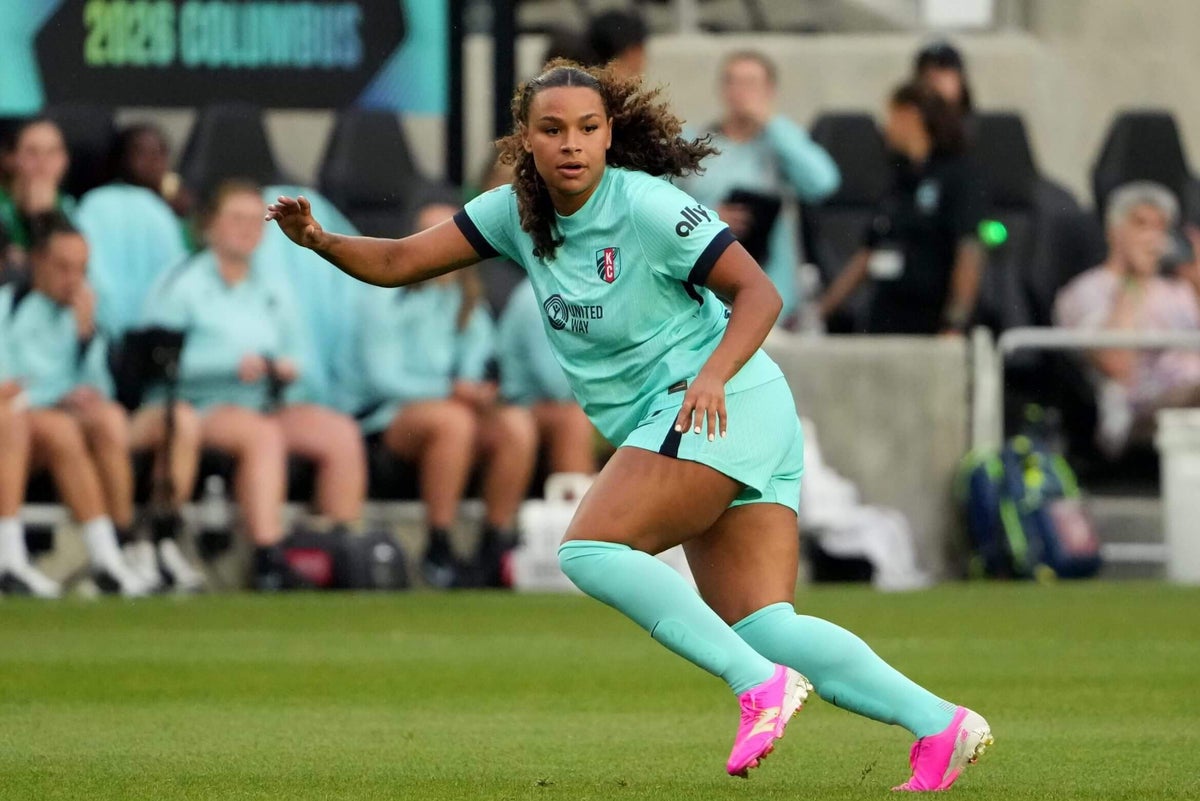
Kansas City Current forward Michelle Cooper chose an unusual way to respond to being fined by the National Women’s Soccer League (NWSL) for wearing her New Balance cleats: advertise them.
Cooper posted the fine notice she received from the league this week after wearing her New Balance Furon Elite V9 cleats during Current’s game against Gotham FC in New York last weekend. Her first Instagram story post showed the league’s letter, via email, to announce she had been fined, then followed it with another linking directly to the white and alkaline green boots.
“Sooooo shop New Balance (we can have matching cleats),” the United States international wrote.
With these posts, Cooper becomes the first player to come forward criticizing the league’s new footwear policy. The 23-year-old, who is under contract with the Current through 2028, is among several players caught between the league’s new footwear exposure policy and complying with their existing cleat deals.
The league’s footwear clause has been around since the NWSL launched in 2013, though it has historically been enforced sparingly. The NWSL began enforcing a long-standing provision connected to its league-wide Nike apparel agreement that limits brand visibility to those who sign deals with the league, The Athletic previously reported. Under the program, footwear companies outside the league’s existing arrangement must enter into an agreement with the NWSL if they want their logos displayed by players.
The league has sought approximately $100,000 from participating footwear brands, according to people familiar with the program, while requiring those brands to have endorsement agreements worth at least $5,000 with individual players. Adidas and Puma, the two companies with the largest share of non-Nike-sponsored NWSL players, opted into the program this summer. New Balance has not.
The idea, according to the league, is to ensure that both the NWSL and its players benefit commercially when footwear companies receive exposure during league matches. The league has also argued that the program incentivizes brands to sign players to individual endorsement contracts rather than receiving valuable television and social-media exposure for free.
The alternative for players whose footwear companies don’t participate is to cover the logo.
“The player can cover the branding if they’re going to wear unauthorized footwear, which they’re allowed to do. They just can’t promote the brand,” NWSL commissioner Jessica Berman told The Athletic earlier this month when asked about the policy. The commissioner also said the league has instructed club equipment managers on methods for obscuring non-participating brands while allowing players to continue wearing their preferred footwear.
Cooper is among a handful of players who have existing cleat deals with companies that have not opted in to the policy and has been fined after the league imposed its policy in July multiple times, according to the NWSL Players Association. Her first fine came after scoring a brace against the Denver Summit FC on July 3rd. She was fined $500 for that game, after receiving a warning for wearing her cleats at Challenge Cup against Gotham a week prior.
Current teammate Kayla Sharples has also received a fine notice related to footwear branding. Chicago Stars forward Jordyn Huitema, who wears New Balance, and Seattle Reign defender Sofia Huerta, who has a deal with Lotto, are among the players who have received fines under the policy, as The Athletic previously reported.
The NWSLPA has challenged the league’s enforcement of the policy and filed grievances on behalf of players who have received fines. Under the collective bargaining agreement, disputed fines cannot simply be deducted from a player’s paycheck while a grievance remains unresolved.
>
Sports
New York City marathon 2026: Conner Mantz, Sifan Hassan make comebacks, defending champions return
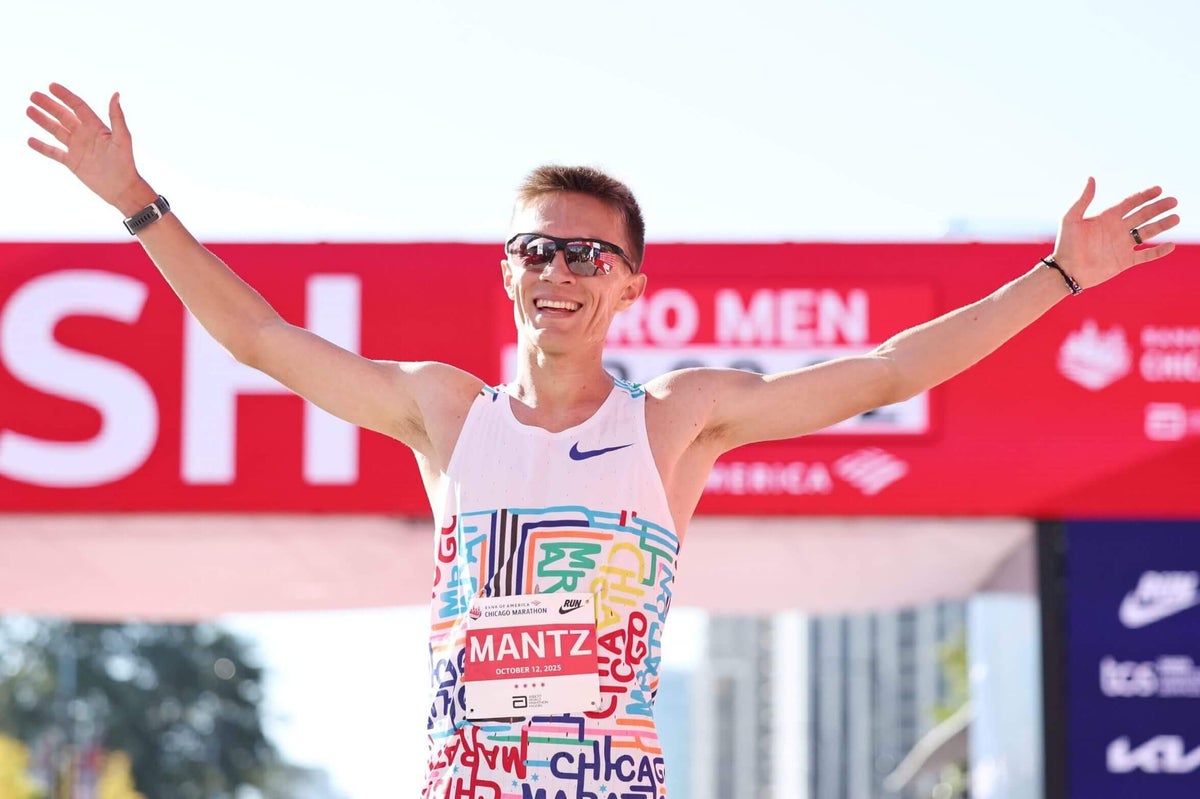
The elite fields for the 2026 New York City marathon have been announced.
American record-holder Conner Mantz set to make his injury comeback in the men’s event, while the women’s field is headlined by Olympic champion Sifan Hassan.
Last year’s men’s winner Benson Kipruto and women’s champion Hellen Obiri will also attempt to retain their respective titles.
The November 1 race will be Mantz’s first over the distance since running 2:04:43 for fourth place in Chicago last October, when he became the first U.S. man to break two hours and five minutes, bettering Khalid Khannouchi’s mark from 2002.
Mantz, 29, was forced to withdraw from the Boston marathon in April because of a sacral stress fracture (at the base of the spine). The Brigham Young University graduate missed out on favourable conditions that led to John Korir breaking the course record with a 2:01:52 run.
“The injuries have definitely changed how I’m heading into this,” Mantz told reporters. “We’re trying to be more cautious. It’s more (about) executing a race (strategy) and staying healthy than it is pushing all these workouts and mileage. The goal is to get to the start line 100 per cent healthy and see what happens.”
Mantz has the ninth-fastest PR of the 42-strong men’s field, which features four more national-record holders and nine other men with sub-2:05 bests. He is vying for a first major marathon podium at his seventh attempt.
In the 31-strong women’s field, versatile distance athlete Hassan, 33, returns having not raced since this marathon last year. The Ethiopian-born Dutch runner is the fourth-fastest marathoner of all-time with a best of 2:13:44, but pulled out of London in April because of an achilles problem.

Hassan won three medals at Paris 2024 (Franck Fife/AFP via Getty Images)
“The course was very hard, and the positive part was (that) the crowd was very loud,” she said of her 2:24:43 run for sixth, which left her four minutes off the podium. “Next time I don’t need that much caffeine because it will get more crazy. New York last year really tested me. I pushed so hard and I was really suffering a lot. This year I will prepare better.”
The wheelchair divisions include Swiss athletes Marcel Hug and Catherine Debrunner, winners of the men’s and women’s races in London this year. Hug, a seven-time Olympic champion, has won in New York seven times, including four of the last five years.
Debrunner, the world-record holder and fastest ever in New York (1:39:32 in 2023), will have to contend with home favourite Tatyana McFadden, the 2025 runner-up and a five-time winner. McFadden holds the quickest PR in the division (1:31:30) and has won 24 major marathons.
The defending champions
The 2025 men’s champion Kipruto, a four-time major winner and ninth on the all-time list (2:02:16), is attempting to become the first man since Geoffrey Mutai in 2013 to claim consecutive New York titles. “I’m coming well prepared for the last kick,” the 35-year-old said, having beaten fellow Kenyan Alexander Mutiso in a photo finish last time.

Kipruto (left) beat Mutiso by only centimeters in the last edition of the race (Ishika Samant/Getty Images)
Women’s champion Obiri, meanwhile debuted in New York in 2022 and is a two-time winner, including last year when she broke the course record (2:19:51). The Kenyan, 36, ran her personal best in London in April (2:15:53s), losing out to Tigst Assefa, who beat her in a sprint finish to set a women’s-only world-record.
“I am happy because New York has been like my home, I know everything about the course,” Obiri said. She added that her training is closely replicating the elevation profile of the course, with its hills.
Ones to watch
U.S. runner Zouhair Talbi will also race in New York. It will be his second marathon of the year after a fifth-place run in Boston. His 2:03:45 Boston time stands as the fastest by a U.S. man in all conditions (Boston is not record-eligible because of its elevation profile and point-to-point course).
He will be joined by Great Britain’s Patrick Dever, who came fourth last year on his marathon debut, and was upgraded to the podium when Kenya’s Albert Korir subsequently tested positive for a performance-enhancing drug.
European 10,000m gold medallist Andreas Almgren is also one to watch, having broken a championship record which had stood since 1978 this month. He holds the European half-marathon record (58:41 in Valencia).
Jess McClain is the leading American woman among the field. The Stanford graduate, 34, holds a PR of 2:20:49. She made her major marathon debut at New York in 2024, and said: “I was just overwhelmed by the greatness and didn’t really know what my ceiling was.”
Having finished fifth at Boston as the top U.S. athlete, McClain says she’s “thinking bigger than that. How can I get on the podium?”
The wildcard in the women’s field is Weini Kelati, 29, who is making her marathon debut. “This is the right moment and the right place to do it,” the Eritrean-born American said, stepping up following a track career which included a national 10,000m title at the 2024 Olympic trials, and an eighth-place finish at the Games in Paris. Kelati broke the U.S. half marathon record in Barcelona this February, running 1:06:04 for second place.
>
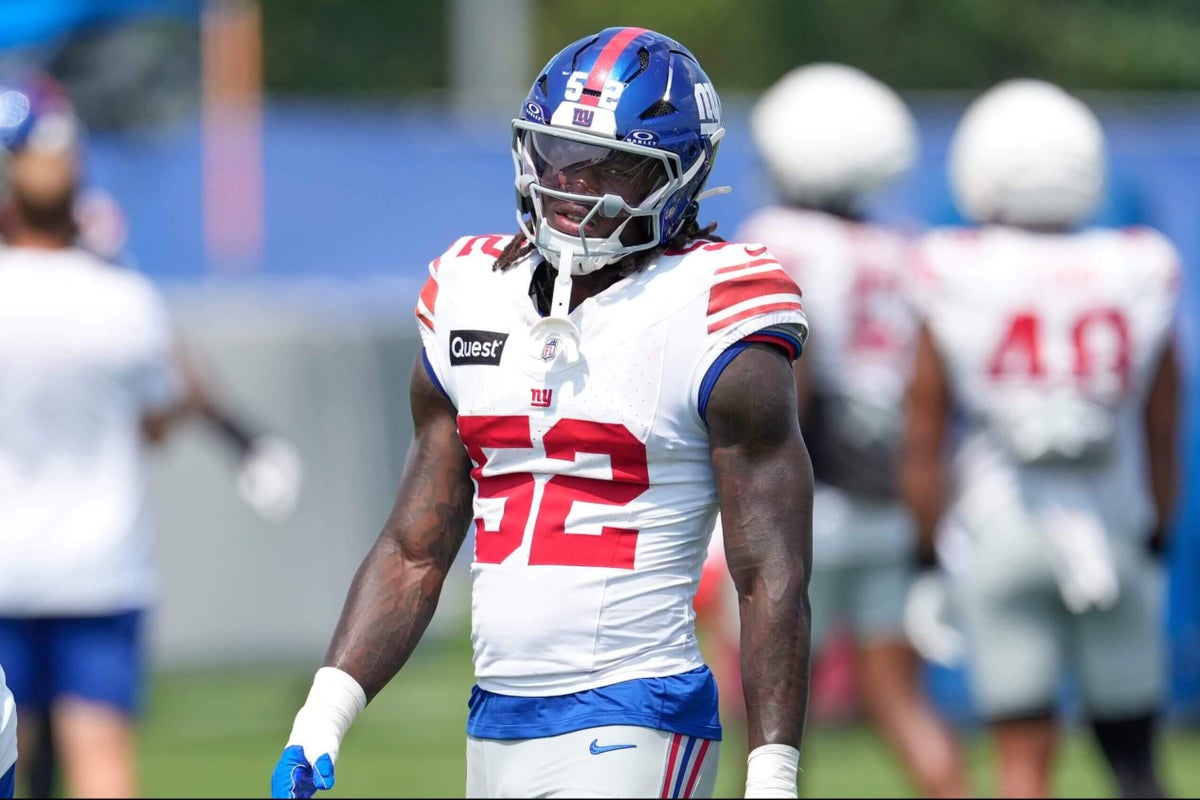
EAST RUTHERFORD, N.J. — When New York Giants outside linebacker Brian Burns was asked what he’d want from rookie linebacker Arvell Reese’s game, the veteran didn’t hesitate.
“That violence,” Burns said in a CBS Sports interview.
Reese’s punishing play style has been on display from the moment the Giants selected the Ohio State product with the fifth pick in this year’s draft. The most recent example came early in Tuesday’s practice when the Giants ran a nine-on-seven drill. The inside run period isn’t for the faint of heart, as evidenced by the collision between Reese and running back Tyrone Tracy Jr. on the second rep of the period.
Reese made the stop in the hole and stayed on the field for the first-team defense’s final two reps of the period. When he left the field as the second-team defense took over, Reese required an equipment change.
“(Tracy’s) helmet was able to get in mine, and then the top of my face mask pulled down,” Reese said. “It was a big collision. They just switched my face mask. It wasn’t nothing.”
With his swollen nose better protected by bars on the side of the new face mask, Reese didn’t miss a rep in a practice that was shorter than the typical session conducted by coach John Harbaugh during a grueling training camp.
With Reese making a strong first impression on teammates and coaches, I focused on him throughout Tuesday’s practice. Here’s a minute-by-minute account of my observations:
1:23 p.m.: Reese walks onto the practice field and starts to warm up on his own, as players are scattered in various groups. Harbaugh has adopted afternoon practices in recent years because he believes it best allows players to be prepared to perform at their highest level.
Reese arrived at the facility at 6:30 a.m. and had breakfast — eggs and chicken sausage — before an hour-long weight-lifting session that started at 7:30. From there was a team meeting, a position meeting and a walk-through. There’s an hour break before practice that Reese uses to activate his body by doing something like spending time in a red light therapy bed.
1:28 p.m.: The majority of players assemble on one field for a special teams period to open practice. Reese is a starter on the punt team, which is the unit special teams coordinator Chris Horton is focusing on during this practice.
Reese is aligned on the right side of the formation between safety Jason Pinnock and linebacker Micah McFadden. They repeatedly drill the transition from blocking to covering a punt. After a few minutes, Reese switches to the other side and provides a scout-team rush for the second-string punt team.
1:49 p.m.: After the extensive special teams period ends, the entire defense retreats to the back field at the Giants’ practice facility. Players gather around as newly signed linebacker Chandler Martin completes his initiation to the defense: 25 up-downs.
1:51 p.m.: The position groups spread out to designated areas around the Giants’ three practice fields for individual drills. Reese follows immediately after veteran Tremaine Edmunds at every station, as the linebackers go through a series of drills that mimic the duties of their position.
2:09 p.m.: The linebackers are joined by the defensive backs during a jog-through install period, while the defensive linemen and outside linebackers work separately. The linebackers and defensive backs go through the paces on their responsibilities in coverage before the offense and defense merge.
2:19 p.m.: The nine-on-seven period kicks off the intrasquad segment of practice. Reese takes four reps in a period he calls “super physical.”
2:25 p.m.: The entire team comes together for the first 11-on-11 period. The first-team offense is pitted against the second-team defense initially, so Reese watches for three minutes before the starting defense takes the field to face the second-string offense. Reese is joined by Edmunds, Burns and outside linebacker Abdul Carter on the second level. DJ Reader, Shelby Harris and Chauncey Golston are the defensive linemen in the base 3-4 defense. Greg Newsome, Deonte Banks, Jevon Holland and Tyler Nubin are in the secondary.
This is an instructional period with the offense running plays at full speed and twice repeating the same play at a walk-through pace so coaching points can be made.
Why did the Giants sign Najee Harris?
Charlotte Carroll
2:33 p.m.: The first live 11-on-11 period features the starting offense against the starting defense. Banks has been replaced by Paulson Adebo in the only lineup change from the first period.
Reese plays four uneventful reps before the second-stringers come in. The starters finish the period with three reps, highlighted by a deep post from quarterback Jaxson Dart to wide receiver Malik Nabers. Holland and Nubin prudently don’t try to break up the pass to Nabers, who is wearing a red non-contact jersey as he continues his recovery from a major knee injury.
2:48 p.m.: The starters square off in an 11-on-11 red zone period. On the first play, defensive tackle Leki Fotu and safety Ar’Darius Washington tackle running back Cam Skattebo to the ground. That’s a major breach of practice etiquette, where defensive players are charged with not taking offensive players to the ground.
Reese, who unintentionally knocked Skattebo to the ground on a play earlier in camp, understands the fine line defenders walk in practice.
“Being a defensive player, we want to make it known on film that I was making this play,” Reese said. “So, sometimes we’ll slip up and do too much and actually tackle somebody. I’ve accidentally tackled him trying to make a play. Obviously we can’t do that. We’re pros, we have to stay off the ground. But as long as you don’t gator roll somebody and do too much, it happens sometimes. It’s football.”
After one rep against the starting offense, the backups come in to finish the period against the first-team defense. Backup quarterback Jameis Winston keeps the ball on a designed run while Reese gets sealed outside by left tackle JC Davis.
“That’s tricky because you can’t thud (Winston),” Reese said. “They say Dart is tough, and he can take it, but then you still don’t want to thud a QB. It’s weird. You’ve got to just tag off. But you know the QBs, they like to overdo it. You’ve just got to tag off and be smart with the QBs. Can’t hurt the QBs.”
2:52 p.m.: The starting units again square off in a red-zone period. Banks and Newsome are back as the first-team corner combo. Reese makes his best play of the day on the first rep, as he sinks into coverage and breaks up a corner route intended for tight end Isaiah Likely. Reese made an interception on a similar play earlier in camp, but he could only knock this pass away.
“I was running up under it so much, he threw it right to where I could catch it, but I got my head around last minute and only got one hand on it,” Reese said. “It’s a good play because I ran up under and that’s where they were trying to get the ball, but I’m supposed to pick that.”
Demonstrating the wide range of responsibilities in his role, Reese shifts from covering Likely to taking on 300-pound fullback Pat Ricard on a trap block on the next play. The two most physically imposing players on the roster meet with a thud that Reese welcomes.
“It’s always fun seeing Pat in there,” Reese said. “Literally, almost every day I’m seeing him in the hole somewhere and having to put my pads on him, and we’re having a collision. It’s basically like I’m taking on a defensive tackle. He played D-tackle. That’s fun. I like that. We can keep doing that every day. I’m not tripping going into games because I’m doing it with a D-tackle every day.”
Watching the force Reese plays with can make it easy to forget that the 6-foot-4, 243-pounder is only 20 years old. His power has seamlessly transitioned to the NFL.
“My strength translates, for sure,” Reese said. “Just having that same approach — that’s what I did in high school. When I got to college, that’s what I was looking forward to doing. I was like, ‘I’m going to have to keep this up.’ Now that I’m here, I’m looking forward to still being able to do that. I wasn’t looking to get here and be like, ‘I can’t do this anymore.’ I’m trying to keep doing it.”
3:02 p.m.: A field goal period provides Reese’s only true break of practice. He watches from the sideline as kickers Dominic Zvada and Ben Sauls each go 3-of-5 in the period.
3:08 p.m.: The linebackers and defensive backs head to one end of the field for a seven-on-seven period against the QBs and skill players while the offensive linemen square off against the defensive linemen in one-on-ones at the other end.
Reese and Edmunds are joined by Banks, Newsome, Holland, Nubin and Dru Phillips in the secondary against the starting offense. On the third rep, Reese plays man coverage against Likely, who splits out wide. Likely goes deep, but Dart’s pass is overthrown with Reese in tight coverage.
“When you’re pressing to the boundary like that, you know you’re getting the work,” Reese said. “I was just trying to stay square as long as possible. Wasn’t supposed to let him get outside; he ended up getting outside me, but just stick with him, play through his hands.”
Covering a dynamic tight end like Likely in practice will benefit Reese in the regular season.
“It’s the same way I look at it with Pat. It’s a great fullback,” Reese said. “I look at Likely the same way. It’s a great receiving tight end. This is probably one of the best looks I’m going to get at it in the league.”
Later in the period, Reese drifts toward the left flat as Dart fires an incomplete pass over his head intended for Nabers running a skinny post. Reese approaches Dart for a quick chat after the period.
“He was looking one way and threw it the other way,” Reese said. “With his visor, I just wanted to ask him, ‘Where were you looking?’ He was looking to the flat, but he ended up throwing it to the goal post. I was like, ‘Were you looking me off?’ He was like, ‘Yeah.’ He was just laughing. I’m the rat dropper (on that play), so I’m just reading the QB. I’ve got to read where the QB is going, so wherever he was going, that’s where I was going. But then he ended up throwing it back where I left from. So just asking him, just getting little tips on that.”

From taking on fullback Pat Ricard in the hole to chasing tight end Isiah Likely around the field, Reese is learning to do it all in Giants camp and is confident all those reps will make him better on game day. (Mike Stobe / Getty Images)
3:19 p.m.: The final 11-on-11 period pits the starting offense against the starting defense. It’s the same lineup as most of the practice, with Banks, Newsome, Phillips, Holland and Nubin in the secondary.
On the second rep, Reese lines up as an edge rusher for the only time during practice. His rush off the left edge is picked up by Skattebo. For all of Reese’s potential versatility, he has been used almost exclusively as a traditional inside linebacker during camp.
On the next snap, Reese blitzes through the B gap on the right side of the line and beats Tracy with an inside move. Touching the quarterback is forbidden, but Reese is in Dart’s lap, forcing an errant throw.
On his final rep of practice, Reese displays his explosiveness by closing downhill on a pass to Tracy in the flat on third-and-long. Focusing on Reese reveals the running commentary with Edmunds, a first-round pick in 2018 who is entering his ninth season.
“We’re always talking, no matter what it is,” Reese said. “There’s never a play where we just line up, and then we just go through the play and then talk after the play. We always say something before the play; we damn near say something during the play.”
3:29 p.m.: Practice wraps up one minute shy of the two-hour mark.
3:34 p.m.: Reese enters the Giants’ indoor practice facility and is happy to take a seat on the back of an equipment cart to conduct this interview. He has made a point of not being overly vocal as a rookie, but he is engaging during a 13-minute interview.
“Everybody is always going to say I keep to myself, so me just keeping to myself, that’s just who I am,” Reese said. “I don’t just come in some place and automatically just be talking to everybody. I don’t really know everybody. I don’t really know you to really know what we’re even talking about. That’s just who I am. Over time, I guess you could say I could come out of the shell.”
Yup… Arvell Reese is going to be must watch film every week pic.twitter.com/pvxQjShT19
— Ted Nguyen (@FB_FilmAnalysis) August 16, 2026
4:01 p.m.: After conducting a second interview, Reese walks across the practice fields back to the makeshift locker room erected in a parking lot while the Giants’ facility undergoes major renovations. There’s a team meeting at 5 p.m. followed by “more meetings, more meetings and rookie meetings.”
Reese is done at 7 p.m. He’ll retreat to his new home with a view of the Manhattan skyline. He hasn’t even set up his video game system yet, so he’ll usually just a watch movie and fall asleep, ready to do it all again the next day.
>

USWNT’s Michelle Cooper flouts NWSL’s Nike cleats policy: ‘Shop New Balance’

Sachin Bansal’s fintech Navi raises first outside capital with $100M Prosus investment

Jordana Brewster on ‘The Fast and the Furious’ 25th Anniversary
-

 movies3 months ago
Search For Canadian TV Actor Stewart McLean Now Homicide Investigation
-

 Fashion9 years ago
These ’90s fashion trends are making a comeback in 2017
-
Fashion9 years ago
According to Dior Couture, this taboo fashion accessory is back
-
Fashion9 years ago
Model Jocelyn Chew’s Instagram is the best vacation you’ve ever had
-
Fashion9 years ago
Emily Ratajkowski channels back-to-school style
-
Fashion9 years ago
9 Celebrities who have spoken out about being photoshopped
-
Fashion9 years ago
Your comprehensive guide to this fall’s biggest trends
-
Fashion9 years ago
A photo diary of the nightlife scene from LA To Ibiza