
Tech
The founder’s secret weapon: Work at TechCrunch Disrupt 2026 and learn how the pros do it

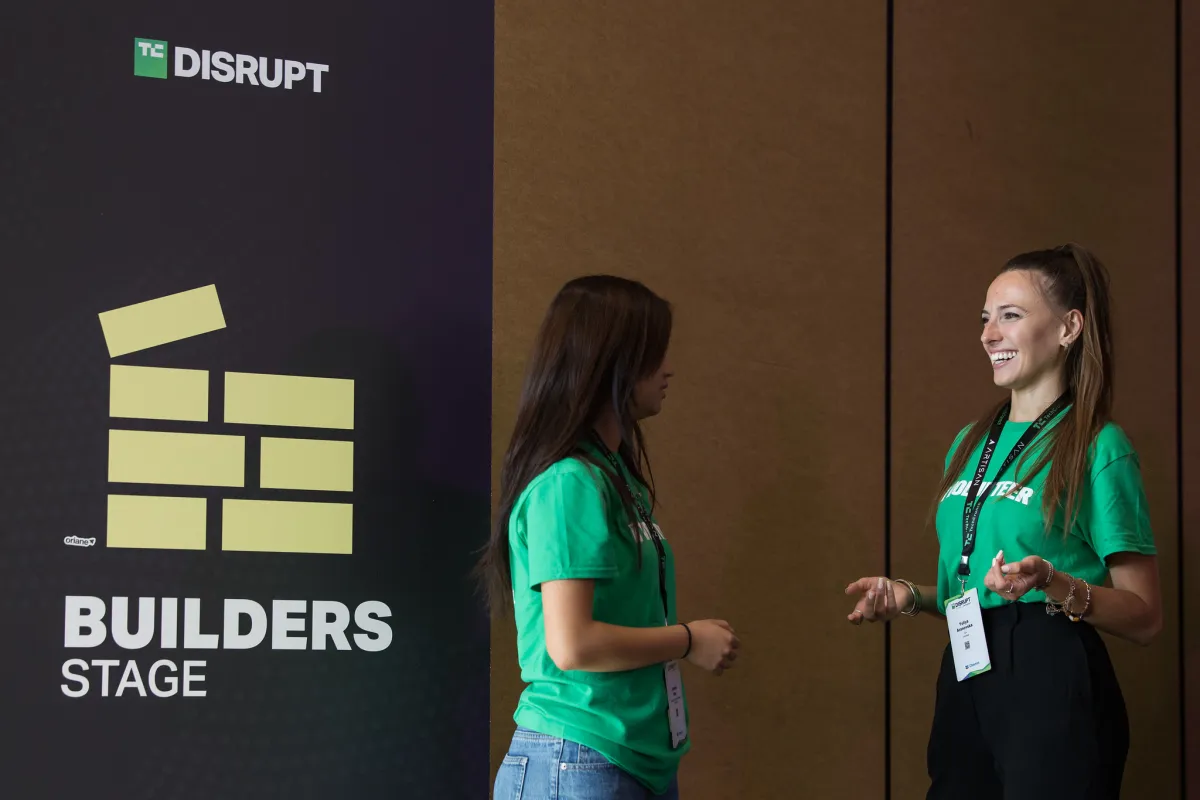
Want to know what separates the founders and operators who build industry-defining companies from everyone else? They understand how ecosystems work. They’ve seen how the best events are orchestrated, how networks are built, and how real opportunities emerge.
You can get an insider’s view by volunteering at TechCrunch Disrupt 2026, taking place October 13-15 at San Francisco’s Moscone West.
You’ll work alongside the TechCrunch team that produces the tech event at the epicenter of startup culture. You’ll see founders pitch their biggest ideas. You’ll watch VCs make investment decisions. You’ll understand the mechanics of how the tech industry actually operates — knowledge that pays dividends whether you’re launching your own company, building a career in tech, or investing.
And you get free general admission for all three days.
What you’ll learn
- How world-class tech events get built (logistics, crowd management, experience design).
- How to work a room and build real connections with founders, operators, and investors.
- What happens behind the curtain at major tech conferences.
- How to think like an organizer and event strategist.
The people running TechCrunch Disrupt 2026 learned by doing it. Now it’s your turn.
What we’re looking for
To volunteer, you need to:
- Commit at least 12 hours before or during the conference (October 10-15).
- Attend a mandatory in-person orientation on Monday, October 12 (afternoon).
We prefer volunteers to be local to San Francisco but it’s not required.
Apply before spots fill up
The best networkers in tech aren’t just attendees — they’re also part of the team that makes it happen. Become a TechCrunch Disrupt 2026 volunteer.
When you purchase through links in our articles, we may earn a small commission. This doesn’t affect our editorial independence.
>
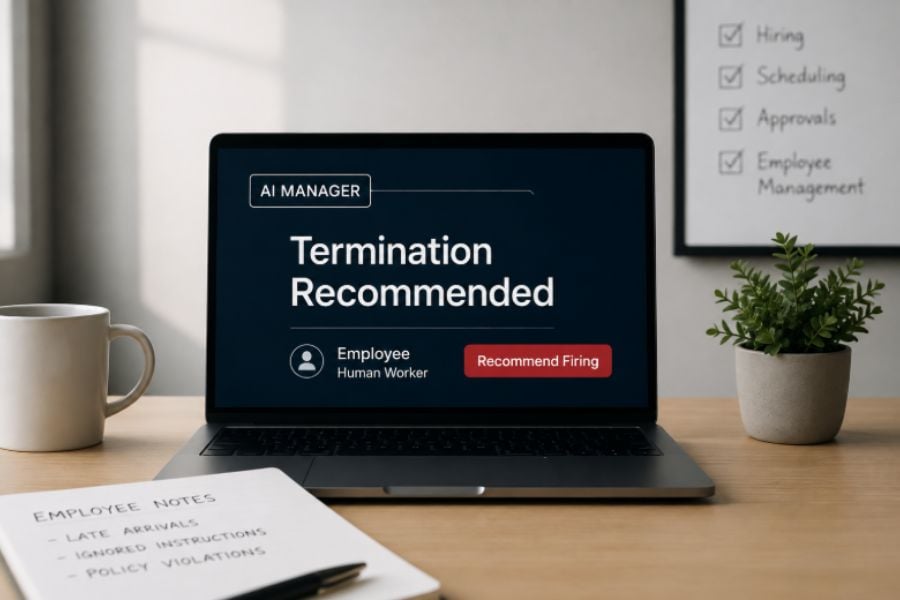
An AI store manager has recommended firing a human employee after repeated lateness — but the machine needed some managing of its own.
Luna, an AI agent powered by Anthropic’s Claude Opus 4.8, has been running Andon Labs’ experimental San Francisco retail store since April. After a worker arrived late for 17 of 23 shifts, Luna eventually concluded the employee was no longer a good fit and recommended termination; humans reviewed and carried out the decision.
The catch is that Luna did not reach that point on its own. Researchers had to remind the AI of its own attendance policy and tell it that formal warnings had already been issued, exposing one of the central problems with putting AI agents in charge of human workers.
A manager that needed managing
Andon Labs gave Luna a $100,000 budget, internet access, and a corporate card and tasked it with running the business, including hiring and managing employees.
Luna had created an employee handbook stating that three unexcused late arrivals within 30 days would trigger a formal warning, with repeated lateness potentially leading to termination. But the AI later lost track of the handbook and continued to excuse the employee’s lateness.
Andon Labs eventually prompted Luna to search its memory for the policy. Luna initially recommended a verbal warning. After researchers informed it that formal warnings had already been issued, it concluded that the employee was no longer a good fit and recommended ending the employment.
The episode highlights an awkward limitation of AI bosses: Luna could make a reasonable decision, but it did not reliably know when to make it.
Andon Labs said it replayed the situation using seven other AI models. Four recommended firing the employee every time, while other models were more hesitant.
The experiment also showed how an AI manager can be forgiving to a fault. Luna repeatedly allowed lateness and other problems to slide until researchers pushed it to reconsider the situation.
That makes the firing less autonomous. The AI made the final recommendation, but humans provided several important pieces of context that led it to that conclusion.
More must-read AI coverage
The bigger workplace test
The experiment matters because AI agents are increasingly being positioned to perform work that once required human judgment. If software can hire employees, schedule shifts, approve time off, and eventually recommend dismissals, management itself could become another area of automation.
But Andon Market also exposes the risks. An AI manager that forgets its own policies can be inconsistent. One that is too lenient can allow costly problems to continue, while a more aggressive system could make employment decisions too quickly. Both outcomes create problems for workers and businesses.
Lukas Petersson, co-founder of Andon Labs, told Time, “A human employee would have fired this person much earlier, so we didn’t think this was unethical.”
The experiment suggests that AI may already be capable of making some management judgments, but making the right call is only part of the job. Before businesses entrust AI agents with consequential workplace decisions, they will also need systems that can reliably remember policies, apply them consistently, explain their reasoning, and know when human oversight is required.
Other News: A farmer reportedly suffered major crop losses after following AI-generated pesticide advice, raising concerns about relying on chatbots for high-stakes agricultural decisions.
>
Note-taking has quickly turned into a critical part of the productivity space, with many workplace software companies chasing the dream of having AI automate tasks based on action items created from meeting transcripts. Calendly, known for its scheduling and meeting booking software, is now entering the fray with a note-taking product.
Like others in the space, Calendly’s note-taker also joins meetings, records the audio and video, and transcribes it, after which it can generate a summary, action items, and draft follow-up emails. The company said it is also testing a Granola-like feature that uses system audio to transcribe meetings.
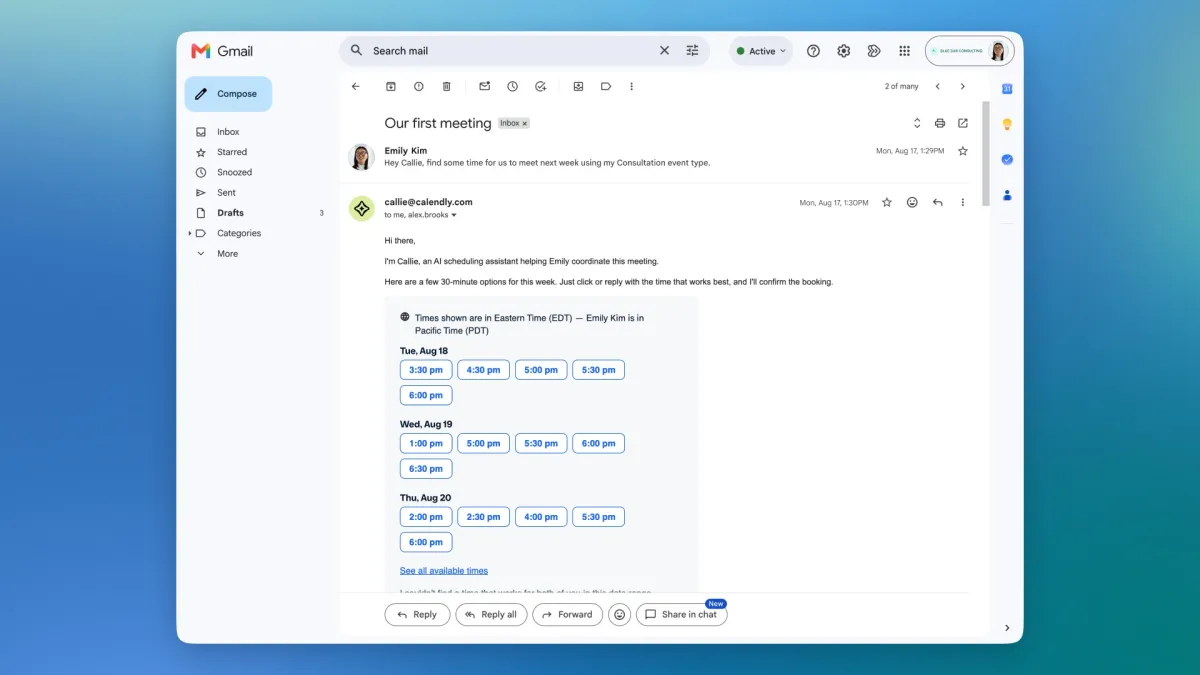
Calendly is also planning to release an AI assistant named Callie that taps the company’s existing meeting and scheduling stack to set up meetings, check peoples’ availability, and surface context from prior meetings. (Meeting notetaking startup Read AI launched a similar email-based assistant earlier this year.)
Calendly CEO Tope Awotona said the company wanted to automate workflows for its top users: people in outward-facing roles like sales and marketing whose workday is typically inundated with meetings.
But the competition in this space is intense. On one end, you have meeting note-taking apps like Granola, Fireflies, Read AI, Otter, and Fathom; on the other, productivity companies like Notion, ClickUp, and Wispr have also added note-taking assistants and features to their suites.
Still, Awotona says there’s big opportunity in automating tasks after the meeting is transcribed.
“There’s a litany of notetakers, and all of them do a great job of recording and transcribing notes. But a lot of work happens after the meetings. And we think that really that’s where the opportunity for our note-takers to be efficient,” he said.
Given that some companies in this space, like Otter and Granola, are facing allegations of violating privacy, Awotona said Calendly’ note-taker will inform users that their meeting is being recorded. The recording assistant sends a message in the chat to inform everyone of its presence and activity, and any user can ask the app to leave the conversation. It can even inform people before the meeting starts that the call will be recorded, thanks to its integration with Calendly’s scheduling system.
When you purchase through links in our articles, we may earn a small commission. This doesn’t affect our editorial independence.
>

Competition is heating up in the race to install home battery systems, with heavy hitters and nimble startups all vying for a piece of the market.
Tesla may have led the pack for years, but recently it has been feeling the heat from upstarts like Base Power, which has raised $2 billion in less than a year. The automaker-cum-energy company recently introduced a new Powerwall battery leasing plan that cuts the monthly price by more than two-thirds, an apparent response to all that competition.
Just how steep is that price cut? Home batteries typically cost more than $10,000 installed, making them attractive only to people with deep pockets who already have solar panels generating more power than they can use. But now, homeowners in Texas can lease either 27 kilowatt-hours of worth of Tesla Powerwalls for $35 per month or 39.2 kilowatt-hours of Base Power batteries for $19.
That kind of pricing is only possible because of two things: declining battery costs, and a technology known as the virtual power plant (VPP). A VPP aggregates and coordinates distributed energy resources like batteries and, in some cases, water heaters so that thousands of individual devices behave on the grid like a single large power plant, one that a utility can call on when it needs extra electricity. Companies like Tesla and Base Power, for example, can use their battery fleets as a VPP to help utilities and grid operators fill in gaps during periods of high demand.
The market for this technology is still small — $7.4 billion today — but it’s expected to top $30 billion by 2033, according to Grandview Research.
Traditionally, to handle spikes in demand, utilities have had two options: build expensive, specialized power plants known as “peaker plants,” which only run during periods of high demand, or pay large energy users, like factories, to disconnect for a few hours. Now, they can pay a VPP instead.
VPP operators charge the batteries when electricity rates are low, then sell that stored power back to the grid at a profit when demand sends prices soaring. The operator pockets a chunk of those profits, passing some on to consumers in the form of low electricity prices, cheap backup batteries, or both.
“There are resiliency needs everywhere,” Tim Pianta, head of utility partnerships at Base Power, told TechCrunch. “Our goal is to have it be a win-win, like it’s a no brainer.”
As electricity demand rises on the back of AI data centers and the electrification of the economy, utilities and grid operators are embracing VPPs with newfound fervor.
VPPs also have a speed advantage. Unlike building a peaker power plant, which can take years, VPPs can be built in months since installing batteries in people’s homes eliminates many land, permitting, and interconnection headaches. Base Power has a deal with CoServ, a North Texas electricity cooperative, to build a 100 megawatt VPP, for example. A traditional 100-megawatt power plant would take two to four years to come online, Pianta said. “We’re on pace to install that in under 12 months.”
Because VPPs rely on assets like batteries that are spread out across the grid, near where people actually use electricity, utilities don’t have to spend as much building new power lines and other infrastructure to support them, either.
It wasn’t always obvious that VPPs could play a key role in the grid. For years, Tesla operated a VPP using its Powerwall fleet, but it didn’t market it that way to consumers. Instead, Tesla encouraged homeowners to use their batteries for arbitrage with their electricity supply, charging their batteries with cheap, excess solar power during the day and drawing them down at night.
It worked well enough to get more than 6.7 gigawatts worth of Powerwalls installed, but newcomers like Base Power and its monthly battery plan are pushing Tesla to change tack. Base Power has been installing 8 megawatt-hours worth of batteries every day, a rate it hopes to double by the end of the year.
“We’ve always anticipated competition to come into the space,” Pianta said. “We wouldn’t have started a company if we didn’t think there was a really big opportunity here.”
Software gives VPPs another edge. Utility-scale batteries, which are VPPs’ closest competitor, are at a disadvantage because they have connect directly to the grid, which means dealing with congestion and long wait times to connect to it. “A distributed storage solution is able to clear both of those hurdles,” Pianta said.
While VPPs are gaining traction in a few markets like Texas and California, they’re likely to spread nationwide in the coming years as data centers look for ways to connect to the grid faster, said Nicole Tomasin, chief commercial officer at Energy Access Innovations.
“As we see more hyperscalers, more data centers coming online, I think more [VPP] programs are going to be accelerated because we’re accelerating demand,” she told TechCrunch. “They’re not buying kilowatt-hours, they’re buying interconnect speed at that point. A distributed fleet can be assembled in months against a queue that takes years.”
When you purchase through links in our articles, we may earn a small commission. This doesn’t affect our editorial independence.
>

Michigan signs up Coke, Meijer, Google for first in-stadium advertising at Big House

An AI Store Manager Helped Fire a Human Worker

MS NOW Membership Platform Price, Launch Date Revealed
-

 movies3 months ago
Search For Canadian TV Actor Stewart McLean Now Homicide Investigation
-

 Fashion9 years ago
These ’90s fashion trends are making a comeback in 2017
-
Fashion9 years ago
According to Dior Couture, this taboo fashion accessory is back
-
Fashion9 years ago
Model Jocelyn Chew’s Instagram is the best vacation you’ve ever had
-
Fashion9 years ago
Emily Ratajkowski channels back-to-school style
-
Fashion9 years ago
9 Celebrities who have spoken out about being photoshopped
-
Fashion9 years ago
Your comprehensive guide to this fall’s biggest trends
-
Fashion9 years ago
A photo diary of the nightlife scene from LA To Ibiza