
Sports
Giants trade guard Daniel Faalele to the Jaguars for late 2027 pick: Source

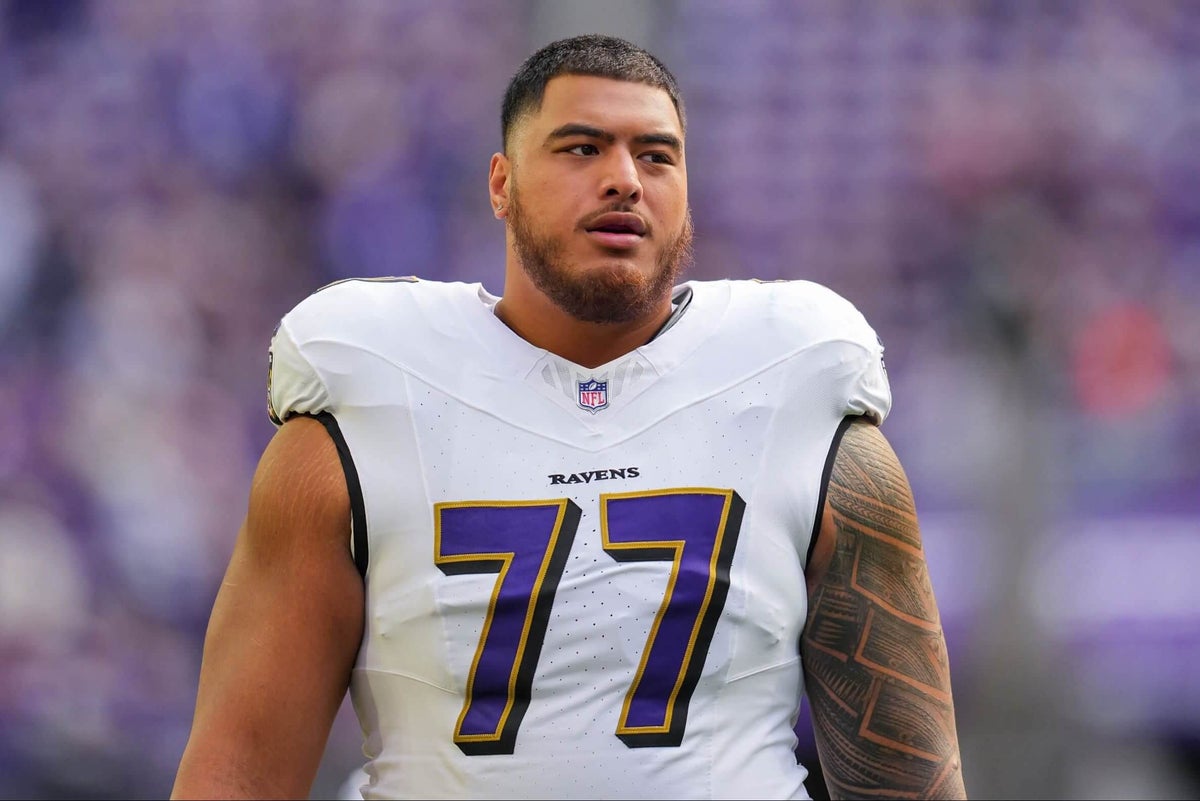
The New York Giants agreed Wednesday to trade backup offensive lineman Daniel Faalele to the Jacksonville Jaguars for a late-round 2027 NFL Draft pick, according to a league source with knowledge of the deal but not authorized to speak publicly.
Just a couple of months ago, a trade like this would have been tough to predict. There was a moment during the spring when it looked like Faalele was in line to start at right guard for the Giants. That wasn’t a particularly appealing scenario based on Faalele’s shaky play while starting every game over the past two seasons for coach John Harbaugh’s former team, the Baltimore Ravens.
Well, things can change fast in the NFL. A week after signing Faalele, the Giants traded nose tackle Dexter Lawrence to the Bengals for the 10th pick in the 2026 NFL Draft, which they used on Miami offensive lineman Francis Mauigoa.
Mauigoa was instantly inserted into the starting lineup at right guard, pushing Faalele down the depth chart. Faalele fell so far that he became expendable, culminating in Wednesday’s trade. Jaguars starting right guard Patrick Mekari, another ex-Raven, will miss time after undergoing back surgery, so they had a need for an experienced option like Faalele.
Why did the Giants sign Najee Harris?
Charlotte Carroll
Faalele has been a favorite of Harbaugh’s, following the coach to New York after four years together in Baltimore. Faalele was locked into the second-team offensive line for the first two weeks of training camp before the Giants bumped up rookie left tackle JC Davis to the second team. That shifted Marcus Mbow to second-team right tackle and slid Josh Ezeudu from tackle to guard. Faalele also ceded some second-team reps to Evan Neal in recent practices.
The biggest winner from this trade will likely be ninth-year veteran Aaron Stinnie, who is the only proven backup guard on the roster. With Mbow, Davis and a backup center (Lucas Patrick or Bryan Hudson) all locks to make the roster, Neal or Ezeudu would need to outplay Stinnie to earn a roster spot unless the Giants carry 10 offensive linemen. Ezeudu has played far more second-team reps than Neal in camp, and his guard/tackle flexibility offers more value as a backup.
The Giants signed Faalele to a one-year, $1.4 million minimum contract with $687,5000 guaranteed. The Giants will be left with only $187,500 in dead money from his signing bonus, since the Jaguars inherit the $500,000 of his base salary that was guaranteed.
The Giants only had five picks in the 2027 draft before this trade because they dealt their fourth-round pick to move up for wide receiver Malachi Fields this year, and they traded their seventh-round pick as part of the deal that sent tight end Darren Waller to the Dolphins last offseason.
>
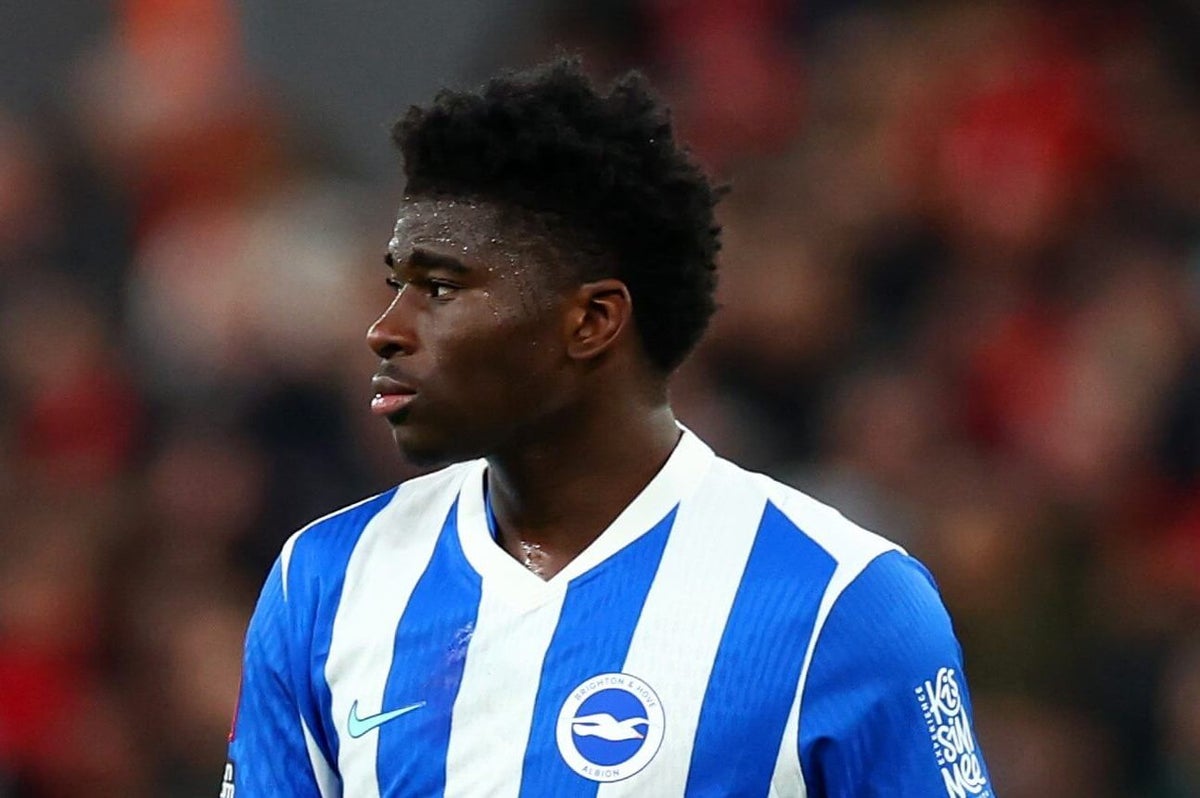
Manchester United’s midfield rebuild has taken another positive step with The Athletic revealing that the club are closing in on a deal for Carlos Baleba.
The fee is still to be decided, with discussions taking place after United made an offer of about £60million (€70m, $81m) plus £5m in add-ons.
United’s interest in Baleba has been long-standing. In August 2025, the club explored a move for the Cameroon international but decided the cost at that point was too high. Baleba endured a patchy 2025-26 season with Brighton. Fabian Hurzeler substituted him in eight times in eight games to open the season and alluded to transfer speculation affecting his form.
His performances improved for the second half of the season, with Baleba looking reinvigorated after a solid AFCON campaign in which Cameroon reached the quarter-finals. In April, The Athletic reported United still retained an interest in the midfielder.
So if a fee can be agreed for the 22-year-old, what effect could Baleba have on Michael Carrick’s new-look United? It’s time for another cheat sheet.
The good news: Baleba is a clever midfield enforcer
Three seasons ago, Brighton turned to Baleba to anchor the team’s midfield after Moises Caicedo’s £115million move to Chelsea. Baleba may have had difficulties last season, but he remains one of the best Premier League players outside of the traditional Big Six.
He is an athletic and courageous midfielder who helps bring out the best from those around him.

Baleba’s efficiency, aggression, and decisiveness in his defensive actions would make him a suitable successor to Casemiro at United. The midfielder is a clever front-foot defender, capable of an early tackle or interception to halt opposition momentum.
Sometimes this manifests high up the pitch with Baleba patrolling the space just outside the opposition’s penalty area before looking to snatch any loose balls. Brighton’s final game of 2025-26 – against United – saw him first to snap up a loose ball after Kobbie Mainoo cleared a cross from Yankuba Minteh.

An encouraging aspect of Baleba’s play comes in the controlled and consistent manner in which he approaches his standing and sliding tackles. He combines timing and technique to maximise his chances of regaining possession for his team.
Below, Baleba’s pace allows him to beat Patrick Dorgu to the loose ball, but his tackle is clean enough that he doesn’t give away a foul, and ensures Brighton remain in control.


Baleba isn’t the tallest of defensive midfielders (about 1.78m/5ft 10in) but combines balance and excellent body intelligence when looking to protect the ball. Sometimes tackles come with an improvisational flourish, like with this quick shift of feet to stop Fulham from mounting a counter-attack…


Sometimes, he’ll use his shoulders to nudge an opposition player off the ball…


Baleba’s acceleration and aggression make him a formidable presence when working closer to his own goal, too. He regularly fills in defensive gaps to prevent easy crosses or cutbacks into the box, and he’s clever when looking to delay or deny easy passes through the centre.
Couple this with his ability to carry the ball through midfield and a deceptively capable passing range (head here for a look at his attempts when passing long), and we have a player who would immediately improve United’s ability to protect the middle of the pitch, with the potential to help them progress the ball through the centre too.

In short: Baleba is tough, talented and should make for a worthy enforcer within Carrick’s side.
The not-so-good news: he may take a while to warm up
Baleba suffered an injury to his ankle ligaments during pre-season training, and while the midfielder is hoping to return within the next few weeks, the nature of the injury means it will take some time for him to reach match sharpness.
Once Baleba does regain his usual rhythm, there will be questions as to how he might fit into a United side that has looked to dominate possession for longer stretches under Carrick.
Baleba’s appetite for tackles and ball regains make him well suited for games played at a more chaotic pace, but he may take some time to adjust to new tactical demands at United.
The club’s pre-season tour has seen Carrick’s side look to progress the ball quickly through midfield with quick one-pass combinations. Baleba is left-footed and has the potential to slot in well next to figures such as Bruno Fernandes and Youri Tielemans, but there may be some early teething problems as he gets used to his new in-possession responsibilities.
What’s most appealing about Baleba is his tactical fit
If Baleba joins United, he is most likely to slot into the midfield position on the right of Carrick’s 4-2-3-1. His midfield capabilities are so stretchy that he should — in theory — pair well with Tielemans. Baleba will offer the Belgian international some of the defensive security he previously enjoyed at Leicester City with Wilfred Ndidi, before later having fruitful partnerships with Boubacar Kamara and Amadou Onana at Aston Villa.
Working with Tielemans may also see Baleba further refine his long-passing skills, giving another important tool to a United side most dangerous on the counter-attack.
If Carrick elects to pair Baleba with Mainoo, the former can take on the role of hard-running physical enforcer for the academy graduate, allowing Mainoo to focus on ball-progression duties. A potential pairing with Andrey Santos would be the most tactically intriguing combination, with Santos serving as the defensive midfielder, giving Baleba greater freedom to roam central midfield in a box-to-box capacity.
All three combinations would help improve United’s defensive discipline. That is the true appeal of Baleba to United: a player with the athleticism and defensive acumen to become a cornerstone of whatever side Carrick is looking to build.
At a time when many top European sides look to have one athletic midfielder capable of stopping opposition counter-attacks, Baleba brings an intensity and wherewithal to stand up against the very best.
He’s not quite a “plug-and-play” individual for United, but he would better equip the club for the physical gauntlet that lies ahead in 2026-27.
>
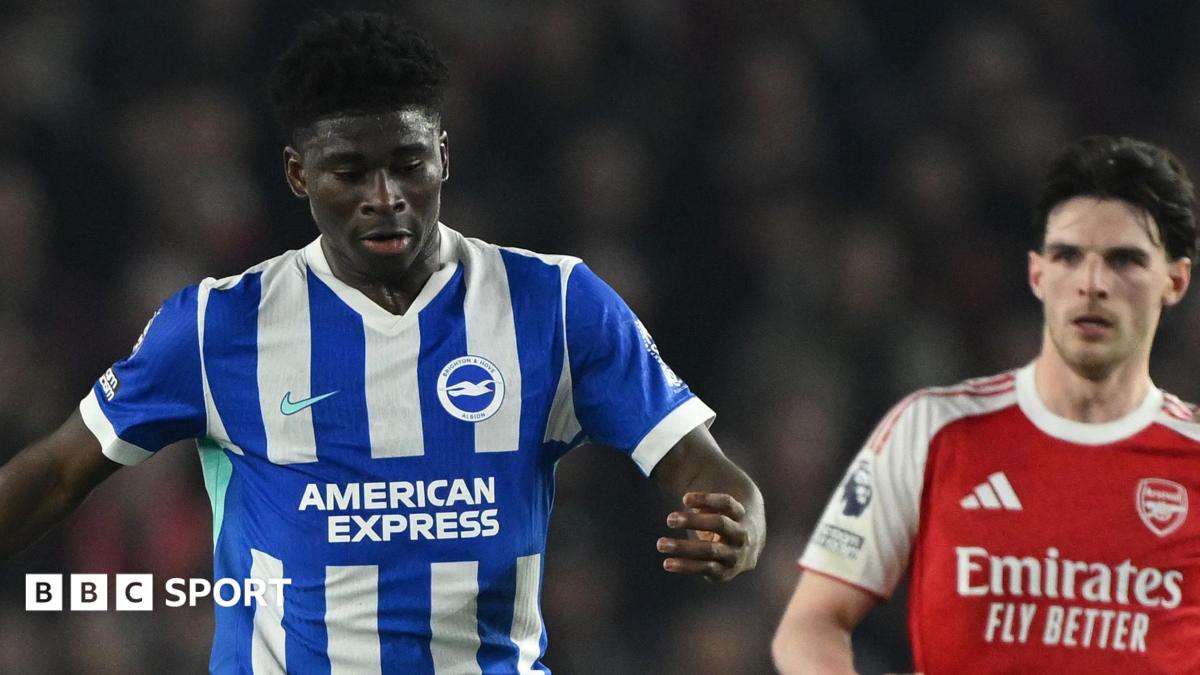
The Baleba situation also highlights a strategic change.
In the past, United have almost trailed the players they want to sign, then spent ages trying to complete a deal – or not.
Barcelona’s Frenkie de Jong was a case in point in 2022. Erik ten Hag felt certain he could do the deal even though United’s recruitment staff were being told it was impossible.
It was well into August before the club admitted defeat; with defeats by Brighton and Brentford triggering the £70m deal for Casemiro.
This summer, there has been stealth behind their work. It suited them for talk around England’s Elliot Anderson to obscure what they were thinking around initial midfield targets as they knew the Nottingham Forest man would be financially beyond their reach.
The Santos deal was wrapped up within a week. The Tielemans one was less than that.
There has been consideration given to Mount being the ‘third midfielder’ because of his exceptional form in the early part of pre-season.
However, although his early exit in the encounter with Paris St-Germain in Gothenburg on 8 August was described as ‘precautionary’, Mount has still to return from the foot injury, which would only have heightened concerns around his injury record.
Baleba was supposedly off the radar as a third midfielder. Tchouameni, Scott, Kone, Berge and Adams were the ones being monitored. Now United have made their move, it would be a surprise if the transfer was not concluded swiftly.
Evidently, Old Trafford’s recruitment plans are now being controlled to a far tighter degree than was previously the case.
>
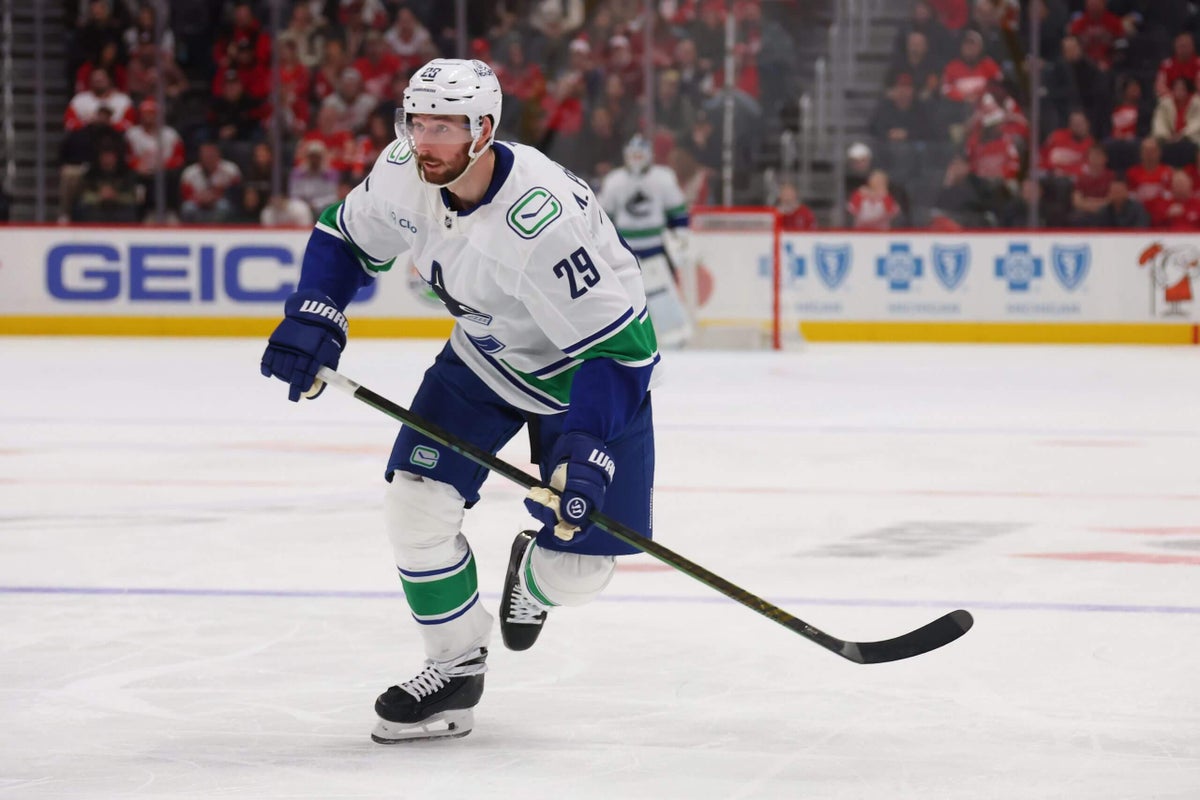
Better late than never, the necessary and long-awaited Vancouver Canucks rebuild arrived this summer.
Over the course of this offseason, Vancouver executed a variety of future-forward moves in an effort to begin to transition this team away from the persistent disappointment of the Quinn Hughes/Elias Pettersson era. The Canucks drafted two times in both the first and second round for the first time in franchise history. They executed a creative trade to maximize their return for Marcus Pettersson. They were even downright disciplined in the free-agent market.
The path back to sustainable relevance promises to be a long and difficult one, and there are valid reasons to be concerned about the organization’s budget-conscious priorities and their inability so far to move expensive veteran players with term and trade protection beyond Pettersson and Nils Höglander. But at the very least, this summer the Canucks finally seemed to put down the shovel and stop digging themselves into an even deeper hole.
Given the context of this summer and the direction being charted under new management, the competitive integrity of this roster has to take a backseat in our analysis. This club is not expected to win — in fact, winning too much would be a setback given the long-term rebuild the Sedin twins and Ryan Johnson are setting up. Nonetheless, the quality of this team and our reasonable expectations for it this upcoming season still matter. There’s still a balance to be struck. You do want to lose, but you want to lose productively in a way that permits you to continue to develop young players and create exchange value.
As September approaches, it’s time for us to wade into the weeds on an annual exercise in which we break down whether this Canucks roster has improved, by how much, and where the most significant holes in the lineup remain using Dom Luszczyszyn’s Net Rating model.
Can the Sedins change the Canucks’ culture?
Sean Gentille and Thomas Drance
Big picture: A minus-13.7 Net Rating
Among the list of meaningful accomplishments from Vancouver’s new-look front office in this first offseason, this one might be the most important: The Canucks look meaningfully less talented as a result of their moves this offseason.
The Canucks shuffled around some bottom-six depth chairs in their forward group, targeted high-character people in trades and free agency, and sent away a fringe top-pair-calibre defenceman while replacing him with a fringe top-four-calibre defenceman who has a similar profile. By prioritizing character ahead of hockey skill, the Canucks have seemingly rather successfully stacked the deck against their own team and first-year head coach Manny Malhotra. Even if this team takes a significant step forward structurally (a low bar given last season) and benefits from sturdier goaltending, and is buoyed by some exponential improvement from some of the younger players on this roster, Vancouver should still be squarely in the mix for the best lottery odds at the end of the 2026-27 campaign.
The Net Rating model effectively viewed the Canucks as among the least skilled teams entering this offseason, and it now rates the Canucks as squarely the least skilled team in the sport.
Now, before we get into specifics, let’s touch on the goal of this exercise and what we’re seeking to break down in particular.
We’re not trying to measure how the Canucks stack up in comparison with their roster 12 months ago or 24 months ago. We’re not trying to linearly chart or analyze Vancouver’s big-picture direction, or the improvement of its prospect system. Our purposes here are more limited than that.
We want a sense of the true talent level of the current roster in comparison with a hypothetical roster if the Canucks had simply signed all of their pending unrestricted free agents and ran back the same lineup we saw finish in 32nd place last season. What we’re trying to weigh is specifically how much the true talent level of Vancouver’s lineup has changed as a result of the decisions the team has made this offseason that affect the NHL roster.
Because of that, we’re not going to assume an older player is necessarily fated to see their effectiveness fall off a cliff, nor will we assume significant improvement from any of Vancouver’s younger contributors. And in any event, given how the Net Rating model works, age-related vacillations in projected value are already baked into the numbers you’ll see in the “Before” and “After” images that will make up the bulk of our analysis.
Additionally, the data contained below is based on an early run of the Net Rating model. There have been no significant ice time adjustments in the data, and as Luszczyszyn tightens up his model closer to the season, it’s possible some numbers will change between now and opening night on Sept. 29.
In reading the charts below, I’d also caution that the numbers that you see may be rounded up or down for simplicity’s sake. Don’t get bogged down by why the total Net Rating number may not reflect the sum of what’s displayed as the Offensive and Defensive Net Rating numbers.
Finally, of course, we acknowledge that hockey is played on an ice sheet, not on a spreadsheet. The game we’re dealing with is a volatile one, contested by elite athletes who are also imperfect human beings. How a team actually performs on the ice will be dictated by a variety of factors that no model could ever possibly project or anticipate. Team chemistry matters, coaching matters (more on that as we go), injuries matters, and so on and so forth.
With that out of the way, let’s take a look at how Vancouver was positioned entering the offseason:

Here’s what the roster looks like once we sub out Höglander, Pettersson, Evander Kane and company, while plugging in Jamie Oleksiak, Luke Schenn, Brendan Gallagher and Paul Cotter:

To summarize the differences: in subtle ways, the Canucks managed to weaken their roster in just about every relevant area. Up front, Vancouver is shallower and less offensively threatening. On the back end, the team has replaced a legitimate top-of-the-lineup option in Pettersson with a solid defensive option in Oleksiak.
Oleksiak is an effective defensive defenceman, but there are levels to the class and quality of top-four blueliners at the NHL level. The gap between Pettersson and Oleksiak is perhaps more significant than fans have realized, and in all areas.
Overall, the model views the Canucks as having taken a massive step back offensively and a small step back defensively, strengthening their case to be the least talented team in the sport entering this upcoming season.
Offence: minus-12.1
The model views the Canucks as significantly worse on the offensive side of the puck, and the bulk of this downgrade comes on the back end.
With the way the blue line was built at the end of this past season, especially with very good or at least decent-enough offensive contributors like Filip Hronek, Tom Willander, Pettersson and Zeev Buium, there was actually some level of below-average-but-reasonable offensive pop on the Vancouver defence corps. By subbing out Pettersson for Oleksiak, and adding Schenn into the equation, the Net Rating model projects the Canucks to be a far less dynamic offensive group from the back end.
Up front, meanwhile, even as the Net Rating model views Teddy Blueger, Höglander and Kane as bottom-six-level contributors across the board, they’re still graded as more offensively threatening than the players we’ve projected as their replacements in Cotter, Max Sasson and Gallagher.
The model strongly expects Vancouver to ice among the most glass cannon offensive team in the league, and to have less offensive pop this upcoming season than it had toward the tail end of last year.
Defence: minus-1.4
Defensively, the changes are more modest across the board, although it’s worth noting that the model is relatively high on Höglander’s defensive impact and doesn’t think the Canucks have replaced that element in their bottom six this summer. Höglander is a reliable play-driver down the lineup, even if his version of defensive impact shows up more frequently in the underlying numbers than it does in the assessment of his coaches.
Oleksiak is a sturdy defensive contributor and should help offset losing Pettersson from the perspective of insulating Vancouver’s younger defencemen, but there is still a sizable gap between what the model projects Pettersson to contribute next season and what it projects from Oleksiak.
What does it mean?
Vancouver was already the most permissive defensive team in hockey, and at least some of the turnstile-level defensive play we saw last year was probably related to the quality of coaching and overall lack of team-level organization.
If you’re thinking to yourself that the model is failing to account for the impact of Vancouver moving on from Adam Foote and bringing in Malhotra, it’s important to note that coaching impacts — to the best of the model’s ability — are already baked into both of the “Before” and “After” numbers above. That said, the Net Rating model itself largely agrees with the notion that we’d be hard-pressed to quantify just how significant the impact of a coaching upgrade could be on what we see on the ice from the Canucks next season.
In a study Luszczyszyn conducted this past spring but hasn’t yet publicized, Net Rating determined that of the 58 new head coaches hired by NHL teams since 2017, Foote had the second-most negative impact on the projected Net Rating of the players he coached in his first year as Vancouver’s bench boss. The only coach that ranked lower than him was Calgary Flames head coach Adam Huska, an output we should take with a significant grain of salt given that he took over from Darryl Sutter, the head coach with the single largest stat-padding five-on-five impact on his teams this century.
Effectively, we can expect the Canucks to get better results this upcoming season than what players, coaches and fans endured over the course of last season. Between regression and improved structural play, the Canucks will be in tough to finish in 32nd place with the same sort of margin they did this past season.
Management, however, has made the necessary moves to weaken this roster even further, and did so while prioritizing bringing in the sort of high-character players who should — in theory anyway — be capable of representing themselves and this franchise with the class and professionalism required to begin to build a winning culture in the midst of the rebuild.
>

Vince Gilligan Interview on ‘Pluribus,’ International Production

David E. Kelley & Norcross Productions Launch Live Migrations Nature Series

Giants trade guard Daniel Faalele to the Jaguars for late 2027 pick: Source
-

 movies3 months ago
Search For Canadian TV Actor Stewart McLean Now Homicide Investigation
-

 Fashion9 years ago
These ’90s fashion trends are making a comeback in 2017
-
Fashion9 years ago
According to Dior Couture, this taboo fashion accessory is back
-
Fashion9 years ago
Model Jocelyn Chew’s Instagram is the best vacation you’ve ever had
-
Fashion9 years ago
Emily Ratajkowski channels back-to-school style
-
Fashion9 years ago
9 Celebrities who have spoken out about being photoshopped
-
Fashion9 years ago
Your comprehensive guide to this fall’s biggest trends
-
Fashion9 years ago
A photo diary of the nightlife scene from LA To Ibiza