Connect with us

Sports

Canucks 2026 offseason moves: Where are they better? Where are they worse?

Published

on

Better late than never, the necessary and long-awaited Vancouver Canucks rebuild arrived this summer.

Over the course of this offseason, Vancouver executed a variety of future-forward moves in an effort to begin to transition this team away from the persistent disappointment of the Quinn Hughes/Elias Pettersson era. The Canucks drafted two times in both the first and second round for the first time in franchise history. They executed a creative trade to maximize their return for Marcus Pettersson. They were even downright disciplined in the free-agent market.

The path back to sustainable relevance promises to be a long and difficult one, and there are valid reasons to be concerned about the organization’s budget-conscious priorities and their inability so far to move expensive veteran players with term and trade protection beyond Pettersson and Nils Höglander. But at the very least, this summer the Canucks finally seemed to put down the shovel and stop digging themselves into an even deeper hole.

Given the context of this summer and the direction being charted under new management, the competitive integrity of this roster has to take a backseat in our analysis. This club is not expected to win — in fact, winning too much would be a setback given the long-term rebuild the Sedin twins and Ryan Johnson are setting up. Nonetheless, the quality of this team and our reasonable expectations for it this upcoming season still matter. There’s still a balance to be struck. You do want to lose, but you want to lose productively in a way that permits you to continue to develop young players and create exchange value.

As September approaches, it’s time for us to wade into the weeds on an annual exercise in which we break down whether this Canucks roster has improved, by how much, and where the most significant holes in the lineup remain using Dom Luszczyszyn’s Net Rating model.

Can the Sedins change the Canucks’ culture?

Sean Gentille and Thomas Drance


Big picture: A minus-13.7 Net Rating

Among the list of meaningful accomplishments from Vancouver’s new-look front office in this first offseason, this one might be the most important: The Canucks look meaningfully less talented as a result of their moves this offseason.

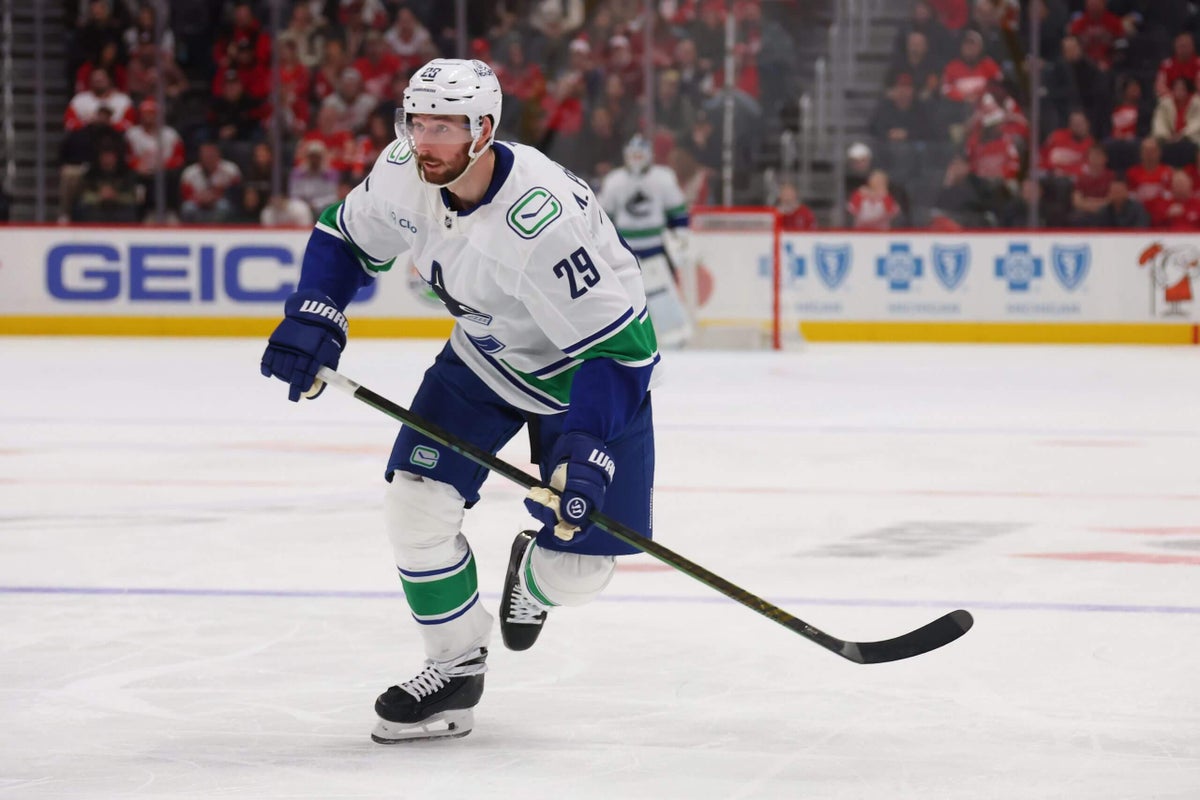
The Canucks shuffled around some bottom-six depth chairs in their forward group, targeted high-character people in trades and free agency, and sent away a fringe top-pair-calibre defenceman while replacing him with a fringe top-four-calibre defenceman who has a similar profile. By prioritizing character ahead of hockey skill, the Canucks have seemingly rather successfully stacked the deck against their own team and first-year head coach Manny Malhotra. Even if this team takes a significant step forward structurally (a low bar given last season) and benefits from sturdier goaltending, and is buoyed by some exponential improvement from some of the younger players on this roster, Vancouver should still be squarely in the mix for the best lottery odds at the end of the 2026-27 campaign.

The Net Rating model effectively viewed the Canucks as among the least skilled teams entering this offseason, and it now rates the Canucks as squarely the least skilled team in the sport.

Now, before we get into specifics, let’s touch on the goal of this exercise and what we’re seeking to break down in particular.

We’re not trying to measure how the Canucks stack up in comparison with their roster 12 months ago or 24 months ago. We’re not trying to linearly chart or analyze Vancouver’s big-picture direction, or the improvement of its prospect system. Our purposes here are more limited than that.

We want a sense of the true talent level of the current roster in comparison with a hypothetical roster if the Canucks had simply signed all of their pending unrestricted free agents and ran back the same lineup we saw finish in 32nd place last season. What we’re trying to weigh is specifically how much the true talent level of Vancouver’s lineup has changed as a result of the decisions the team has made this offseason that affect the NHL roster.

Because of that, we’re not going to assume an older player is necessarily fated to see their effectiveness fall off a cliff, nor will we assume significant improvement from any of Vancouver’s younger contributors. And in any event, given how the Net Rating model works, age-related vacillations in projected value are already baked into the numbers you’ll see in the “Before” and “After” images that will make up the bulk of our analysis.

Additionally, the data contained below is based on an early run of the Net Rating model. There have been no significant ice time adjustments in the data, and as Luszczyszyn tightens up his model closer to the season, it’s possible some numbers will change between now and opening night on Sept. 29.

In reading the charts below, I’d also caution that the numbers that you see may be rounded up or down for simplicity’s sake. Don’t get bogged down by why the total Net Rating number may not reflect the sum of what’s displayed as the Offensive and Defensive Net Rating numbers.

Finally, of course, we acknowledge that hockey is played on an ice sheet, not on a spreadsheet. The game we’re dealing with is a volatile one, contested by elite athletes who are also imperfect human beings. How a team actually performs on the ice will be dictated by a variety of factors that no model could ever possibly project or anticipate. Team chemistry matters, coaching matters (more on that as we go), injuries matters, and so on and so forth.

With that out of the way, let’s take a look at how Vancouver was positioned entering the offseason:

Here’s what the roster looks like once we sub out Höglander, Pettersson, Evander Kane and company, while plugging in Jamie Oleksiak, Luke Schenn, Brendan Gallagher and Paul Cotter:

To summarize the differences: in subtle ways, the Canucks managed to weaken their roster in just about every relevant area. Up front, Vancouver is shallower and less offensively threatening. On the back end, the team has replaced a legitimate top-of-the-lineup option in Pettersson with a solid defensive option in Oleksiak.

Oleksiak is an effective defensive defenceman, but there are levels to the class and quality of top-four blueliners at the NHL level. The gap between Pettersson and Oleksiak is perhaps more significant than fans have realized, and in all areas.

Overall, the model views the Canucks as having taken a massive step back offensively and a small step back defensively, strengthening their case to be the least talented team in the sport entering this upcoming season.

Offence: minus-12.1

The model views the Canucks as significantly worse on the offensive side of the puck, and the bulk of this downgrade comes on the back end.

With the way the blue line was built at the end of this past season, especially with very good or at least decent-enough offensive contributors like Filip Hronek, Tom Willander, Pettersson and Zeev Buium, there was actually some level of below-average-but-reasonable offensive pop on the Vancouver defence corps. By subbing out Pettersson for Oleksiak, and adding Schenn into the equation, the Net Rating model projects the Canucks to be a far less dynamic offensive group from the back end.

Up front, meanwhile, even as the Net Rating model views Teddy Blueger, Höglander and Kane as bottom-six-level contributors across the board, they’re still graded as more offensively threatening than the players we’ve projected as their replacements in Cotter, Max Sasson and Gallagher.

The model strongly expects Vancouver to ice among the most glass cannon offensive team in the league, and to have less offensive pop this upcoming season than it had toward the tail end of last year.

Defence: minus-1.4

Defensively, the changes are more modest across the board, although it’s worth noting that the model is relatively high on Höglander’s defensive impact and doesn’t think the Canucks have replaced that element in their bottom six this summer. Höglander is a reliable play-driver down the lineup, even if his version of defensive impact shows up more frequently in the underlying numbers than it does in the assessment of his coaches.

Oleksiak is a sturdy defensive contributor and should help offset losing Pettersson from the perspective of insulating Vancouver’s younger defencemen, but there is still a sizable gap between what the model projects Pettersson to contribute next season and what it projects from Oleksiak.

What does it mean?

Vancouver was already the most permissive defensive team in hockey, and at least some of the turnstile-level defensive play we saw last year was probably related to the quality of coaching and overall lack of team-level organization.

If you’re thinking to yourself that the model is failing to account for the impact of Vancouver moving on from Adam Foote and bringing in Malhotra, it’s important to note that coaching impacts — to the best of the model’s ability — are already baked into both of the “Before” and “After” numbers above. That said, the Net Rating model itself largely agrees with the notion that we’d be hard-pressed to quantify just how significant the impact of a coaching upgrade could be on what we see on the ice from the Canucks next season.

In a study Luszczyszyn conducted this past spring but hasn’t yet publicized, Net Rating determined that of the 58 new head coaches hired by NHL teams since 2017, Foote had the second-most negative impact on the projected Net Rating of the players he coached in his first year as Vancouver’s bench boss. The only coach that ranked lower than him was Calgary Flames head coach Adam Huska, an output we should take with a significant grain of salt given that he took over from Darryl Sutter, the head coach with the single largest stat-padding five-on-five impact on his teams this century.

Effectively, we can expect the Canucks to get better results this upcoming season than what players, coaches and fans endured over the course of last season. Between regression and improved structural play, the Canucks will be in tough to finish in 32nd place with the same sort of margin they did this past season.

Management, however, has made the necessary moves to weaken this roster even further, and did so while prioritizing bringing in the sort of high-character players who should — in theory anyway — be capable of representing themselves and this franchise with the class and professionalism required to begin to build a winning culture in the midst of the rebuild.

>

Continue Reading

Sports

49ers’ defense shows cracks vs. Chargers, despite Osa Odighizuwa’s heroics

Published

on

EL SEGUNDO, Calif. — Besides a walk-through and a few meetings, the San Francisco 49ers have essentially an off-day at the hotel Wednesday before they play the Los Angeles Chargers in a preseason game Thursday night.

For the defense, that will be more time to reflect on what could not have been a fun film session following Tuesday’s joint practice at the Chargers’ facility.

Los Angeles quarterback Justin Herbert did whatever he wanted, throwing deep to Quentin Johnston and Brenen Thompson, across the middle to Ladd McConkey and even across his body as he scrambled right for another touchdown pass.

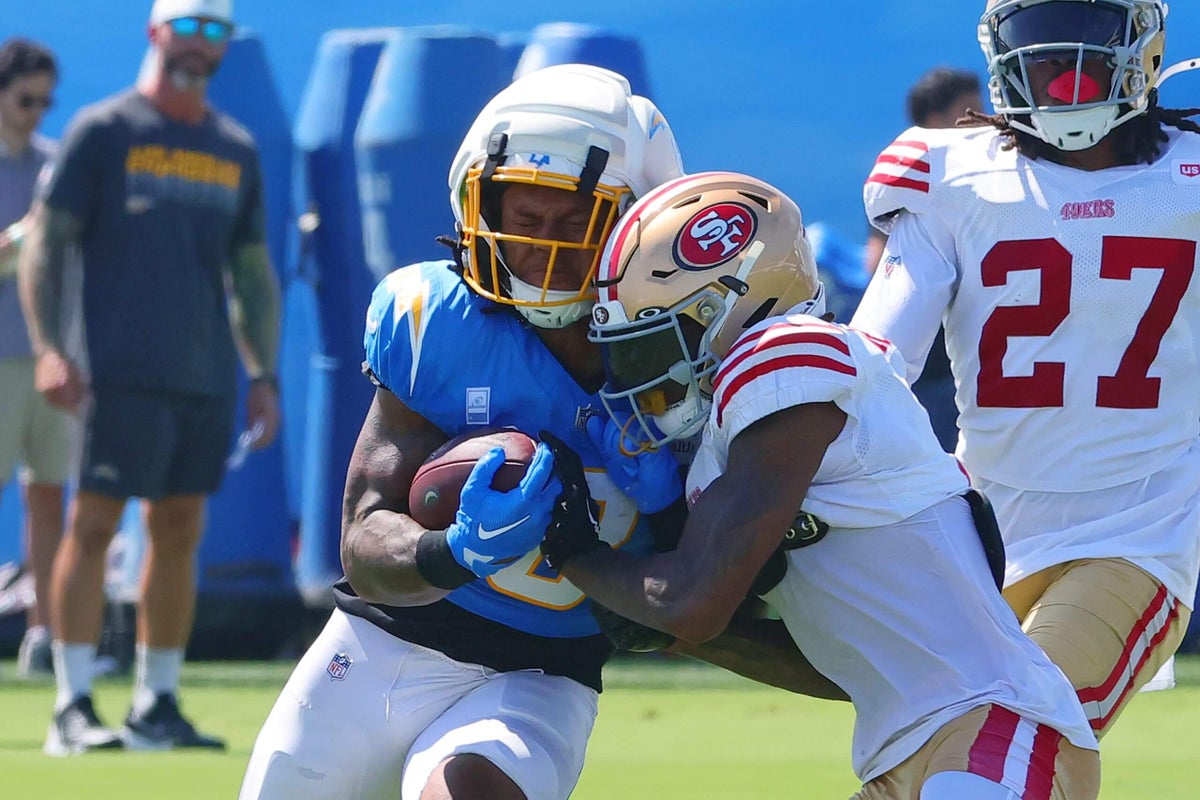
What’s really going to sting the collective pride is running back Omarion Hampton trucking not one, but two 49ers defenders in practice. The speedy Hampton showed his power by sending safety Ji’Ayir Brown and rookie linebacker Jaden Dugger flying on runs.

For the optimists out there, a few of the big plays wouldn’t have happened in real life. The 49ers did get some pressure on Herbert, and sacks aren’t allowed in scrimmages. If they were, defensive tackle Osa Odighizuwa would have had about six.

Trading for the former Dallas Cowboy was one of the best moves the 49ers made this offseason.

“It just seems like he just keeps getting better and better, right?” linebacker Fred Warner said after practice. “I love the mindset, the tenacity, the physicality that he brings to the position and to our defense. We know how important it is to get pressure up front on the quarterback and in the run game.

“I think he’s just gonna continue to get better as we keep going.”

Undrafted rookie defensive tackle James Thompson Jr. built on a strong training camp with some powerful rushes up the middle and a tackle for loss in the running game.

Ogbo Okoronkwo also had what would have been a sack, while cornerback Jack Jones had his daily pass breakup and Renardo Green was solid compared to the rest of the defensive backs …

Enough of the positivity. Here’s a summary of all the carnage on the defensive side:

• The 49ers might have been lulled into a sense of overconfidence coming off last week’s joint practice with the Tennessee Titans. The Chargers are a different animal, starting with their physical offensive line — tackle Joe Alt finished one block on a touchdown after his helmet was knocked off — bazooka-armed quarterback and quick receivers.

The Niners might have known they were in for a long day when they were surprised that Chargers offensive coordinator Mike McDaniel started with unbalanced formations.

• Thompson beat cornerback Deommodore Lenoir and Brown deep right out of the gate, although an Odighizuwa sack would have prevented it in game conditions. Johnston made a one-handed catch deep down the sideline as Lenoir grabbed him and was called for pass interference. Johnston would stop soon after, tweaking his ankle, while center Tyler Biadasz was carted off after sustaining a leg injury, but the Chargers’ offense didn’t miss a beat.

• There were also a lot of soft spots in the middle of the defense, as McConkey slipped free, and Hampton and fullback Alec Ingold each had some big gains on checkdown passes.

McConkey caught a touchdown pass while being held by Jones. He was also the recipient of that ridiculous across-the-body throw by Herbert mentioned above. At that point, the Chargers were scoring on four straight plays during the red zone scrimmage. Tight ends ran free like voodoo-induced kids in a small town after midnight.

• Brown did get revenge on Hampton by lowering his shoulder to hit the running back into the sideline when he tried to turn the corner. That got a rise out of the 49ers defenders, but it was too little too late.

Warner said he didn’t notice if it was that bad for his defense.

“It’s hard to tell, when you’re in the battle, what’s exactly going on,” he said. “You’ve got to see the tape to really see what it looks like. But any time you get to go against another team, it’s a great opportunity to see where you stand.

“Luckily, it was a good test for us.”

And it seems like pass rusher Nick Bosa (knee) might finally be back for Saturday’s practice, while defensive end Keion White (adductor) returned Tuesday. (Coach Kyle Shanahan said, though, defensive end Mykel Williams likely won’t be back by the season opener as he continues to rehab a torn ACL.)

So, things are looking up. Some of the starters will get a chance for some payback Thursday night, as Shanahan said he won’t rest many of them.

>

Continue Reading

Sports

Inter closing in on deal for Liverpool’s Curtis Jones

Published

on

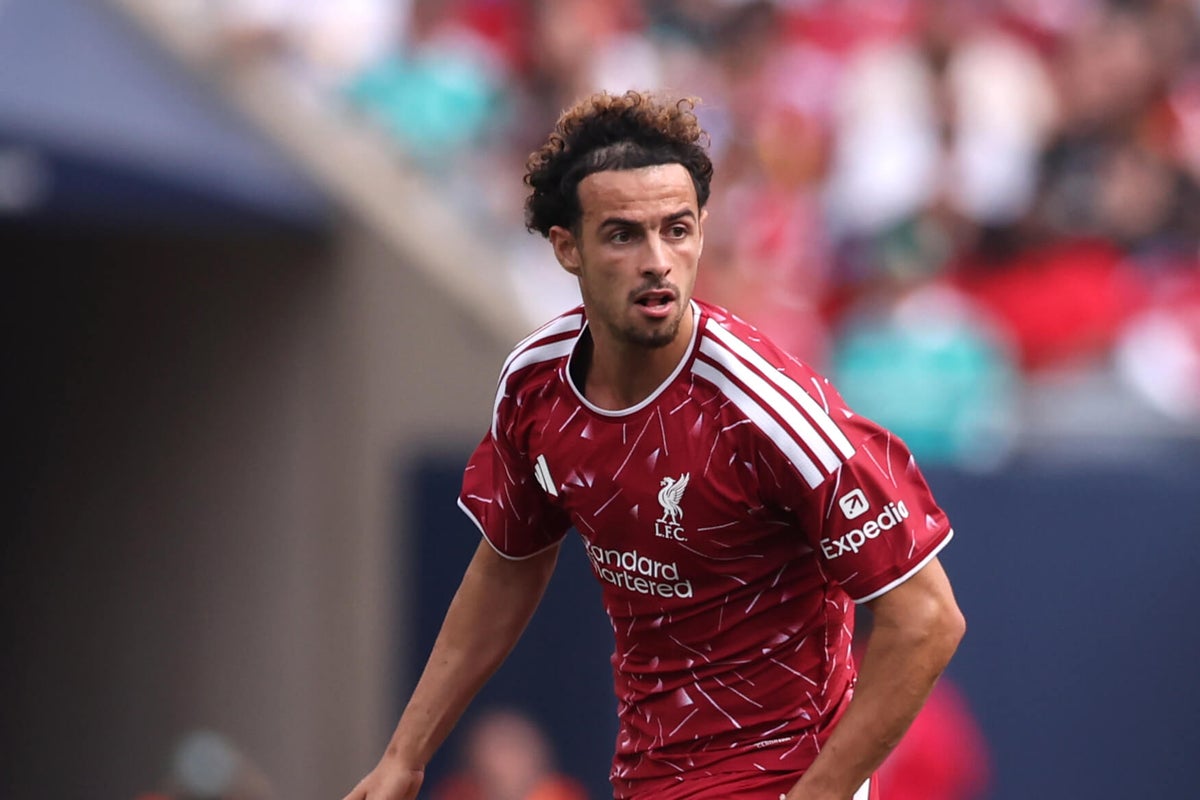
Image of Curtis Jones playing for Liverpool from the waist up

There are fresh talks over a proposed €35m deal after Liverpool previously rejected a bid worth around €25m. Geoff Stellfox/Getty Images

Inter are closing in on the signing of midfielder Curtis Jones after fresh talks with Liverpool over a proposed €35million (£30m) deal.

An agreement is not yet in place but there is a growing expectation on all sides that a compromise will be struck.

Inter initiated Wednesday’s fresh round of discussions after indicating that they were willing to increase their offer for the 25-year-old academy graduate, who has entered the final year of his deal at Anfield.

In June, their bid of around €25million (£21.4m) was turned down by Liverpool, who made it clear they were holding out for around €40million. The Athletic reported on Friday that Inter had renewed their pursuit of the Englishman, having contacted Liverpool via intermediaries, who indicated the Serie A champions are willing to pay €35million ($40.3m; £29.9m).

Inter first tried to sign Jones in January when they failed in an attempt to get him on loan with an option to buy at the end of the season.

Jones has made 228 senior appearances for Liverpool since making his debut under Jurgen Klopp in 2019. He played 49 times in all competitions in 2025-26 but made just 28 starts and grew frustrated at not holding down a regular place in midfield. He finished the campaign playing as a makeshift right-back.

New head coach Andoni Iraola made it clear when he took over that he wanted Jones to stay put, but with no progress over a contract extension and with the player keen to pursue a new challenge amid interest from Inter, speculation over his future has persisted.

If a move goes through, Jones would join fellow England international John Stones at the Giuseppe Meazza after he signed on a free transfer after leaving Manchester City.

Connections: Sports Edition Logo

Connections: Sports Edition Logo

Connections: Sports Edition

Spot the pattern. Connect the terms

Find the hidden link between sports terms

>

Continue Reading

Sports

The Giants’ decision to trade Patrick Bailey continues to be a head-scratcher

Published

on

CLEVELAND — Patrick Bailey has always had a knack for solving the granular problems. How do you exploit a hitter’s tendencies? What’s the best way for a pitcher to set up his breaking ball?

The question put to him outside the Cleveland Guardians clubhouse Tuesday afternoon, as his former team arrived at Progressive Field to begin a three-game series, was a bit broader than that.

How will you think of your time as a Giant?

“Goodness, I mean, it’s where it all started,” said Bailey, who was traded to the Guardians in May. “I’m incredibly grateful to the Giants organization and the fans and the players and all the staff members that I’ve had there. Played my first big-league game there, and looking back at it now, like, so grateful for San Francisco and the Giants.”

The Giants’ Buster Posey put his legacy on the line. Will it work?

Brittany Ghiroli and more

For a catcher who never hoisted any trophies like Buster Posey did, Bailey — who never had the opportunity to catch a postseason game — packed a lot of dramatic moments into three-plus seasons in San Francisco. He’s the only player in major-league history to end games with a grand slam and an inside-the-park home run in the same season. Bailey said those highest of highs, plus catching Blake Snell’s no-hitter in 2024, are “definitely going to be some of the best memories of my career, and hopefully I have many more as we go forward. But no doubt, Giants baseball is a big part of my life.”

Bailey also established himself as the game’s preeminent strike-framing catcher, and the run value that all those borderline strikes created propelled him to National League Gold Glove awards in each of the past two seasons.

If all this Bailey boilerplate has you wondering why the Giants shipped him out, well, that’s another question that requires a broad answer. When you’re trying to take the tactful and high road, you keep the specifics to yourself.

“At the end there, I kind of saw the writing on the wall a little bit,” Bailey said. “It was definitely a surprise. Definitely not the story I had written for this season. But I’m so grateful for the Cleveland organization and just trust in God’s hand in all this.”

The writing that Bailey could only decipher one way? “Catching four of five to one of five. I think you get an idea.”

When Bailey looked at the lineup for a May 5 home game and saw that rookie Jesús Rodríguez was catching right-handed ace Logan Webb, he knew he was no longer viewed as the primary catcher.

Bailey said he didn’t request a trade, but he wouldn’t acknowledge whether he made his unhappiness in a reduced role known to management while the run-starved Giants sought to squeeze more offense out of the position with Rule 5 draftee Daniel Susac. Bailey said that, yes, he has remained in touch with several Giants players and staff members — Webb strolled past while Bailey was speaking to two reporters, and they shared a back-slapping hug — and has kept tabs on the team as it’s continued to slide down the NL West standings. But he declined to venture any thoughts or opinions.

When you’re about to face your former team for the first time, sometimes the less said, the better. Or you fall back on that old standard: “It’s a business.”

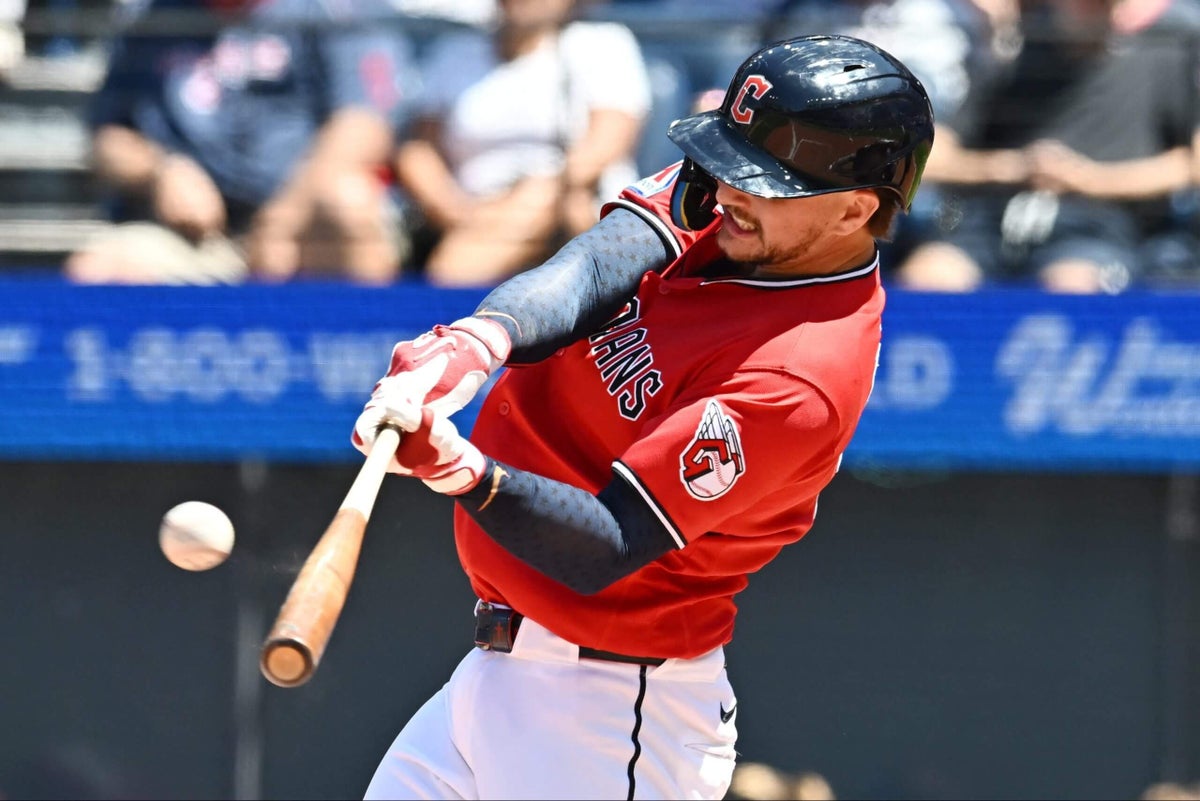
Patrick Bailey (left) and Craig Yoho congratulate each other after a Cleveland win over San Francisco.

Patrick Bailey was behind the plate for the Guardians’ win over his former team on Tuesday night in Cleveland. (Nick Cammett / Getty Images)

Several times in Posey’s two years as the Giants’ president of baseball operations, moves have been made that prioritized run production over run prevention. Even in that theme, the Bailey trade stands out as a head-scratcher.

The Giants received a midlevel pitching prospect, Matt Wilkinson, who coincidentally joined the team on the taxi squad in Cleveland and is set to make his major-league debut with a start on Wednesday. The Giants also received Cleveland’s competitive balance pick, No. 29, which they used to take high school left-hander Carson Bolemon. It will be years before the full results of the trade are known.

At the time, though, Posey justified the deal by saying the Giants were confident in the catching on the rise in the system.

“It’s more the confidence that we have in Jesús Rodríguez and Daniel Susac and the strides that we feel like they’ve made defensively, and both of them swinging the bat well,” Posey said. “And not necessarily only Patty, who’s been off to a slow start offensively this year, but just as a whole, trying to find ways to get more runs on the board.”

It hasn’t worked out, and bad luck has at least something to do with that. Susac has been on the injured list three times this season (elbow neuritis, a strained lower back and then a season-ending fractured kneecap via a foul tip). Rodríguez is working his way back from elbow inflammation as well. The Giants are down to Drew Cavanaugh, an inspirational story who was so buried in the system two years ago that he barely played for Low-A San Jose, and Andrew Knizner, who is back with the team for a second stint because he was available on waivers.

Unfortunate injuries aside, it’s a heck of a statement when you trade away a two-time Gold Glove-winning catcher and turn the position over to a Rule 5 pick not valued enough to merit a 40-man roster place with the Athletics, and a player who fills more of a utility role and happens to have shin guards that fit.

It’s an even louder statement when the Giants official making the trade is Posey, who should have a better idea than anyone about evaluating what goes into being a championship-level force behind the plate.

Sure, it’s a business. That’s what players always say when they try to manage the emotions of getting traded. But when you are a catcher, and it’s Posey who is trading you out of town, how do you not take that personally?

If the impetus behind the Bailey trade was about getting more offense out of the position, then it comes across as more rash than bold, more impulsive than decisive. That’s a fine distinction that Posey acknowledged has been a struggle for him as he weighs kick-starting a sinking team against longer-term aspirations.

Really, the Bailey trade only makes sense if it’s about more than his offensive issues amid a team-wide struggle to score runs. It makes more sense when you learn that members of Posey’s advisory group either weren’t fully sold on the value Bailey’s pitch-framing metrics provided or looked at the adoption of the Automated Ball Strike Challenge System and assumed every other team that lagged in framing was about to catch up.

The Pulse: What I’m looking forward to in sports this week

Chris Branch

Posey provided some not-so-subtle subtext in his comments about Bailey over the years, saying he challenged the young switch hitter to be a leader of the staff and not rest on the value that an evolving industry was placing on his framing skills.

In the spring, before the Giants began to quietly shop Bailey, one member of the front office pitched a story to a well-read writer in the analytics community that would illuminate and attempt to quantify how much value Bailey creates with a pitching staff. Was that an effort to pump the value of a player the Giants were already set on trading?

Ultimately, it’s water flowing under the Hope Memorial Bridge. Guardians pitchers and manager Stephen Vogt rave about Bailey’s preparation, attention to detail and game-planning skills. Bailey is in a better place, nearer to his North Carolina roots, and not playing for a team that could be careening toward a 100-loss season.

The Giants will keep faith that Susac’s injuries, after a healthy matriculation in the minor leagues, are a one-year fluke, that Rodríguez can grow his defensive skills to a playable level as a backup, and that the vacuum at the position this year was the opportunity Cavanaugh needed to show he can be a big-league contributor.

For now, especially with no obvious free-agent fits in the upcoming class, the Giants expect to stay internal at the catching position. And if it doesn’t shake out, then hard questions must be asked. If Posey cannot get the catching right, how can he be trusted to figure out the rest?

Another broad question that’s best not to answer. Not yet, anyway.

>

Continue Reading

Trending

Copyright © 2017 Zox News Theme. Theme by MVP Themes, powered by WordPress.