
Entertainment
David E. Kelley Launches ‘Live Migrations’ Wildlife Series

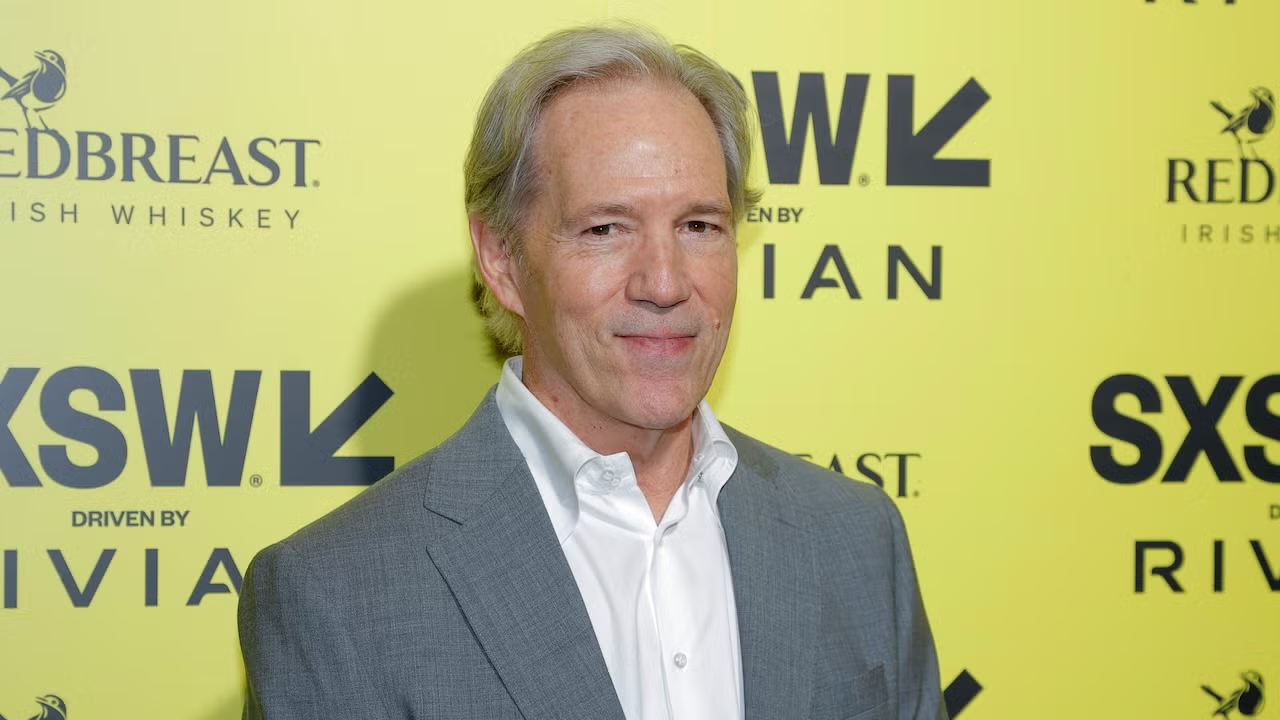
Prolific TV creator David E. Kelley is breaking ground on a new area of interest: wildlife.
Kelley has partnered with Norcross Productions to launch “Live Migrations,” a new series found on YouTube that spotlights the beauty within animal migrations, starting with sockeye salmon.
“The Great Sockeye Migration,” which streams on YouTube and the “Live Migrations” website starting Aug. 19, and is described as a “a live, multi-camera journey into the heart of the world’s greatest wild salmon run in Bristol Bay, Alaska.”
Following the sockeyes’ return from the Pacific Ocean to the rivers and streams where they were born, “The Great Sockeye Migration” will offer “extended, unhurried views and the natural sounds of the landscape,” inviting viewers to observe the migration.

“Live Migrations allows you to slow down and connect with nature and this extraordinary species,” Kelley said in a statement. “If people could only sit by a river and feel the salmon … watching a live migration is the next best thing.”
Kelley, who serves as an EP on the series, and Norcross are planning for additional installments of “Live Migrations,” which will follow animals including sandhill cranes, whales, wildebeest and monarch butterflies, all of which will aims to unfold at the pace of the animals themselves.
“Live Migrations grew out of a simple idea: What if television, a medium built to capture our attention, could also return it?” “Live Migrations” creator and Norcross Productions founder Tucker Malarkey said. “These animals are undertaking ancient, perilous journeys all around us. By slowing down and watching together, we begin to understand what is at stake — and why these migrations must endure.”
The production acknowledges it is filming on the ancestral and living lands and waters of the Alaska Native peoples of Bristol Bay.
“We are not the owners of these stories,” Malarkey said. “We are their temporary stewards. Our hope is to create a place where people can return—to watch the migrations happening now and feel connected to the living world in real time.”

>
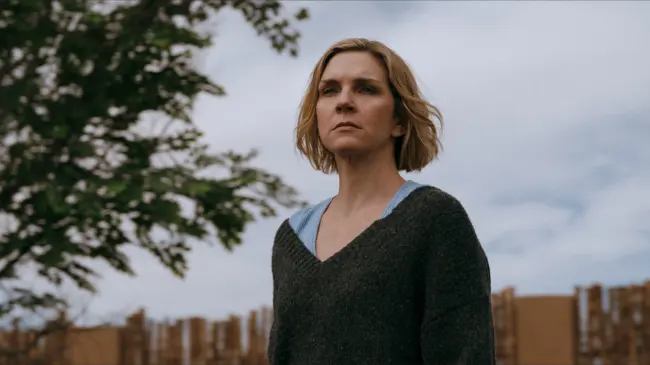
If you have plans to become a time-traveler, you needn’t bother going back 20 years to tell a younger Vince Gilligan about the success of “Breaking Bad.” Not only is he convinced that he wouldn’t believe you, but you might send some serious ripples out into the time-space continuum — Vince Gilligan thinks his past self wouldn’t believe that he’s been able to shoot three TV shows and a movie in Albuquerque, New Mexico.
And yet, as Gilligan preps Season 2 of “Pluribus” and looks back on the first season of the Rhea Seehorn sci-fi series, he and his team have been able to do exactly that.
“It’s in large part because of Christian Diaz de Bedoya, our location manager. He and his wonderful team of location scouts and various folks in his department continue to find new places to shoot in this kinda medium-sized city. We’ve been doing it for 20 years now,” Gilligan told IndieWire on a recent episode of the Filmmaker Toolkit Podcast. “[You might worry] how’s it going to double for all these different places we’re going to want to use for? And lo and behold, it does.”


“Breaking Bad” and “Better Call Saul” were both locked into ABQ as a setting since 2008, but “Pluribus” needn’t have been. Prickly romantasy author Carol Sturka (Seehorn) really could have lived in a lot of different places before an alien virus transforms most of the rest of humanity into a chipper hivemind that wants to spread its particular species of happiness across the stars. And yet, it’s through leaning into the years of specificity and connection to New Mexico that has helped allow Gilligan and his writing to ground the ambitious, high-concept premise.
“If you’re gonna climb Mount Everest, it’s better not to do it with an anvil on your back,” Gilligan quipped. “I love this crew so much, so we could have shot the show [in Albuquerque] but set it, story-wise, in another city. But that would’ve been a mistake. Don’t make it harder for yourself than you have to. Call Albuquerque, Albuquerque. That helps us out a lot.”
It helps what is, at this point, a well-oiled creative team continue to do great work together and push each other, of course. But it also helps in terms of the texture, the colors, the character of the world that Carol inhabits.

In leaning into New Mexico as a home base, Gilligan and his team visually impact the kind of protagonist that she is — flummoxed, cantankerous, self-loathing, and yet dogged and sly and, on occasion, startlingly inventive. By building almost the whole of Carol’s house — nearly twice, interiors and exteriors, thanks to production designer Denise Pizzini — Gilligan and his directing team are able to craft a felt visual sense of both her darkest moments and the moments when, like the vibrant art and plants defying the New Mexico desert, she’s able to make something out of the impossible situation she finds herself in.
The clear visual language at home has also meant that Gilligan and his team can flex what they do abroad. “Pluribus” does have a pretty full passport in terms of traveling around the world in-show, and the production shot internationally in Spain and the Canary Islands, a first for Gilligan. “It was nice to learn that this film community that I’m lucky enough to be a part of, it feels like a fellowship that stretches across oceans. I really enjoyed learning that,” Gilligan said.

And it took a fellowship for some of the most ambitious sequences in the show, including montages of global travel by plane, car, and through deadly jungles, as well as the “Last of Us” level mayhem that breaks out at the end of the “Pluribus” pilot, when the alien virus is unleashed.
“Our UPM on ‘Breaking Bad’ back in the day, Stu Lyons, he would always say, ‘Montage is French for over budget,’” Gilligan joked. But the process montages of “Pluribus” are where the show gets to be huge, and they are a huge statement of purpose for the humanity-wide (also sometimes goats) story that Gilligan and his team are telling.
“There are writers who love writing dialogue and, to me, that’s great for plays. But then there’s cinema. TV and movies. When you can tell a story without dialogue, when you can practically read a character’s mind, or conversely when in their silence they’re more of a mystery, and that is intriguing and pulls you in deeper as a viewer? That’s what I love about cinema,” Gilligan said. “Some of my proudest moments are whole scenes, page after page going by, without a word of dialog in it. To me, that’s cinema.”
It helps, then, that “Pluribus” is building on an established cinematic language Gilligan has spent two decades developing, and that he only wants to push even further in the seasons to come. “All these Emmy nominations, they were just the cherry on top. And I’m so happy for Rhea,” Gilligan said. “And I hope we don’t disappoint in Season 2. I have no intention of doing that; I’m very excited about Season 2. I’m sorry for the long wait, but we’re so excited about the stories we’ve got coming up for you guys in Season 2.”
Season 1 of “Pluribus” is on Apple TV.
>
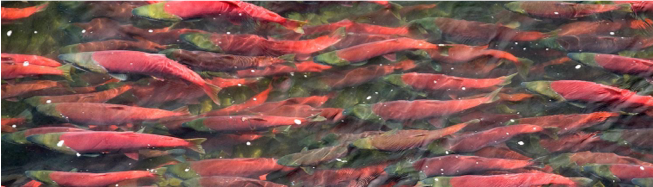
David E. Kelley is heading into nature, teaming with Norcross Productions to launch Live Migrations, a global live nature series that connects audiences with the world’s great animal migrations.
The series kicks off today, Wednesday, August 18, with its inaugural production, The Great Sockeye Migration, a live, multi-camera journey into the heart of the world’s greatest wild salmon run in Bristol Bay, Alaska.
The livestream, which you can view at livemigrations.com and YouTube.com, will allow audiences worldwide to witness the sockeyes’ extraordinary return from the Pacific Ocean to the rivers and streams where they were born, according to the series’ official description. “With extended, unhurried views and the natural sounds of the landscape, The Great Sockeye Migration offers a radically different kind of television: one that invites viewers to pause, observe and experience a major natural event as it unfolds in real time.”
The inaugural livestream is set in the Bristol Bay watershed, home to the most abundant wild sockeye salmon runs remaining on Earth. The production will follow the salmon through a landscape that has sustained Alaska Native peoples and communities for generations, and allows the story to unfold at the pace of the animals themselves, per the description.
Each livestream will combine real-time observation with educational and cultural context, helping viewers understand the animals, ecosystems and human communities connected to these journeys.
“Live Migrations allows you to slow down and connect with nature and this extraordinary species,” said Kelley. “If people could only sit by a river and feel the salmon… watching a live migration is the next best thing.”
Future Live Migrations productions are planned around the journeys of sandhill cranes, whales, wildebeest and monarch butterflies.
“Live Migrations grew out of a simple idea: What if television, a medium built to capture our attention, could also return it?” said Live Migrations creator and Norcross Productions founder Tucker Malarkey. “These animals are undertaking ancient, perilous journeys all around us. By slowing down and watching together, we begin to understand what is at stake—and why these migrations must endure.”
Live Migrations also acknowledges that it is filming on the ancestral and living lands and waters of the Alaska Native peoples of Bristol Bay, and “offers its deep respect to their communities, cultures and enduring traditions, and its gratitude for their stewardship of this extraordinary place and its wild salmon across generations.”
“We are not the owners of these stories,” Malarkey said. “We are their temporary stewards. Our hope is to create a place where people can return—to watch the migrations happening now and feel connected to the living world in real time.”
>
Entertainment
Ross Barkan Apologizes for New York Mag Columns After Ouster: ‘I Promise to Do a Much Better Job’
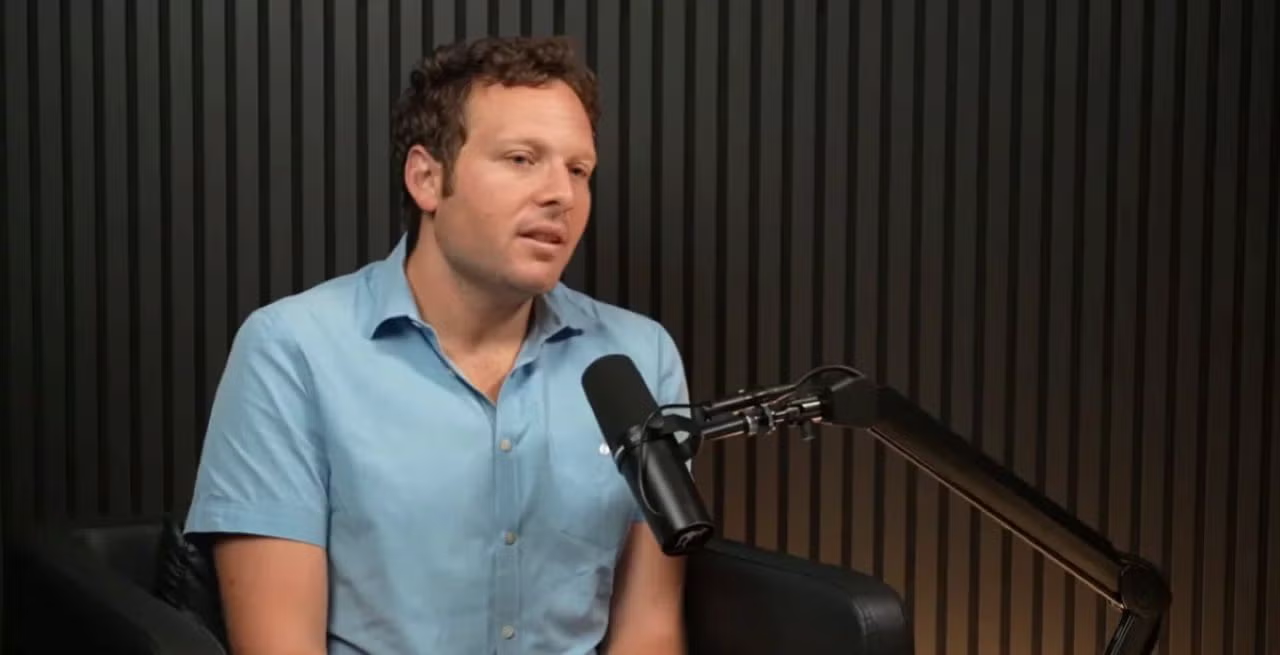
Journalist Ross Barkan apologized Wednesday for failing to properly cite other journalists’ work in his New York Magazine columns, days after the magazine dropped him following an independent review that found attribution problems in 67 of his columns.
“None of them, genuinely, were willful or intentional,” Barkan said in a statement posted to X. “In the course of writing many columns a week, I did not use citations as aggressively as I should have and did not paraphrase well enough.” He added that he “never intended to crib from anyone’s work” and apologized to journalists whose work he did not properly cite. Barkan said he would “take some time away” and pledged to “do a much better job going forward.”
More to come…
>

Vince Gilligan Interview on ‘Pluribus,’ International Production

David E. Kelley & Norcross Productions Launch Live Migrations Nature Series

Giants trade guard Daniel Faalele to the Jaguars for late 2027 pick: Source
-

 movies3 months ago
Search For Canadian TV Actor Stewart McLean Now Homicide Investigation
-

 Fashion9 years ago
These ’90s fashion trends are making a comeback in 2017
-
Fashion9 years ago
According to Dior Couture, this taboo fashion accessory is back
-
Fashion9 years ago
Model Jocelyn Chew’s Instagram is the best vacation you’ve ever had
-
Fashion9 years ago
Emily Ratajkowski channels back-to-school style
-
Fashion9 years ago
9 Celebrities who have spoken out about being photoshopped
-
Fashion9 years ago
Your comprehensive guide to this fall’s biggest trends
-
Fashion9 years ago
A photo diary of the nightlife scene from LA To Ibiza