
‘Everytime’
Courtesy of Cannes Film Festival


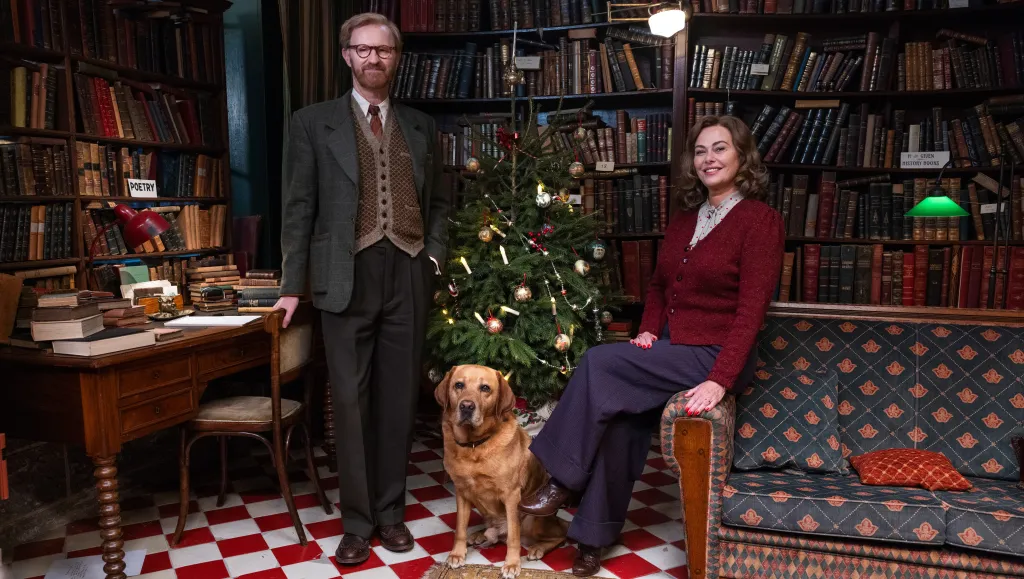
There’s a third chapter coming for Gabriel Book.
Mark Gatiss‘s cozy crime drama, Bookish, has landed a Season 3 order at UKTV‘s U&Alibi channel, and a two-part Christmas special for this year. The third season will run to six episodes and is set to launch in 2027.
Bookish: The Crown of Destiny, the festive special, will see bookkeeper Book (Gatiss) involved in a seasonal mystery, while the third season will go into production later this year. More details will come over the next few months.
Eagle Eye Drama, which is part of ITV Studios, makes Bookish in association with Happy Duck Films, and with supported from the Belgian Tax Shelter. Germany-based Beta Film handles world sales as international distributor and PBS Distribution holds North American rights.
Internationally, Bookish has shopped to over 100 territories, including to Radio-Canada in Canda, HBO Max in Australia, RAI in Italy and AMC Networks in Latin America.
The show follows Gatiss, who created the format, as unconventional bookshop owner Book, who helps police solve crimes in the years after World War II. He has a lavender marriage with Trottie (Polly Walker), which helps hide his sexuality during an era when homosexuality was illegal in the UK.
>
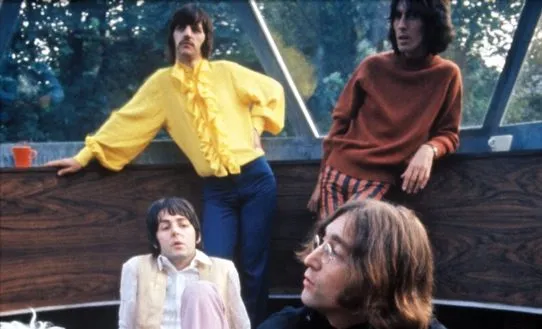
Universal Music Group (UMG) will handle all worldwide physical and digital merchandise, licensing, and e-commerce related to The Beatles as part of a new long-term partnership with Apple Corps.
The deal between the two entities was confirmed this morning. UMG already handles The Beatles’ music catalog and notably brought the band’s recordings to streaming sites for the first time in 2015.
This deal comes just before a series of high-profile cultural events related to the band’s history. In 2027, Apple Corps will launch The Beatles at 3 Savile Row, a new fan experience. The event will feature seven floors of never-seen-before material from Apple Corps’ extensive archives, rotating exhibitions, a fan store, and the recreation of the original studio where Let It Be was recorded.
Sam Mendes’ The Beatles – A Four Film Cinematic is also set for 2028. The project marks the first time Apple Corps Ltd and The Beatles have granted full life story and music rights for a scripted film. Earlier this month, we reported that Mendes and his crew were heading to London’s Abbey Road this summer to shoot key scenes for the movie. Footage of the production recreating the iconic Abbey Road album cover has since made its way onto social media.
Paul Mescal (Gladiator II) plays Paul McCartney in the film. Joseph Quinn (The Fantastic Four: First Steps) is George Harrison, Barry Keoghan (Saltburn) is Ringo Starr, and Harris Dickinson (Babygirl) is playing John Lennon.
In addition to the Fab Four castings, several big names have been tapped to portray other important characters in The Beatles’ lives. Deadline broke the news that James Norton (Happy Valley) has been cast as Brian Epstein, The Beatles’ longtime manager, in the films. Additionally, Saoirse Ronan (Lady Bird) plays McCartney’s first wife, Linda McCartney; Mia McKenna-Bruce (How To Have Sex) will play Starr’s first wife, Maureen Starkey; Anna Sawai (Shōgun) will play Lennon’s wife, Yoko Ono; and Aimee Lou Wood (The White Lotus) will play Harrison’s first wife, Patty Boyd.
>
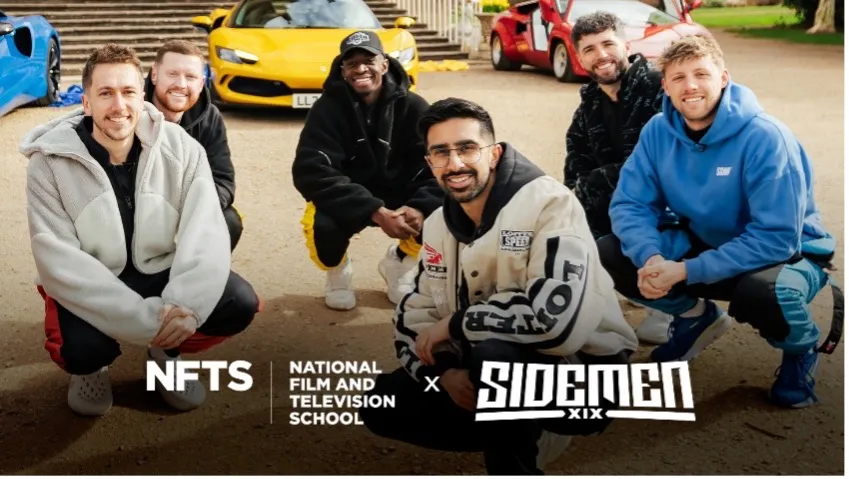
EXCLUSIVE: They might be one man down, but The Sidemen are looking to the future of production.
The British YouTuber group’s Sidemen Entertainment has teamed with the National Film and Television School (NFTS) to find the next generation of unscripted producers.
The move is part of The Sidemen’s belief that the TV, streaming and creator worlds are converging, given they began life as YouTubers before working on several unscripted series and a feature film on Netflix.
The NFTS x Sidemen Entertainment Unscripted Formats Programme will give every student on the NFTS’s one year Developing and Producing Unscripted Formats MA degree first-hand experience inside the influential creator-led Sidemen Entertainment.
Each student will experience a dedicated industry day and a one-week work placement with access to digital formats and professional production. The idea is to explore how concepts are developed, commissioned and delivered across platforms, and expose them to the creative, editorial production decisions that shape content.
The Sidemen – Simon Minter (Miniminter), Josh Bradley (Zerkaa), Tobi Brown (TBJZL), Ethan Payne (Behzinga), Vik Barn (Vikkstar123) and Harry Lewis (W2S) – have over 100 million subscribers across their platforms and accrued more than six billion global views.
The collective shrunk by one earlier this year when Olajide Olatunji (KSI) unexpectedly announced he was leaving back in June, explaining he had been “pulled in a lot of directions” over recent years as his TV and business interests expanded.
The others were blindsided, releasing a statement to followers saying, “This came as a surprise to us and we know it will be an adjustment for you, but we’ve got lots of exciting stuff planned that we can’t wait to share.”
Earlier this year, the collective launched Sidemen Productions, which will see them taking a more targeted approach to digital formats for global audiences. This followed the debut of Netflix unscripted show Inside, whose third season topped Netflix charts in ten countries.
For the NFTS, a top UK production skills school, the Sidemen pact highlights its work to push into emerging areas of the entertainment business, and tightens its links with the creator economy and digital-first production.
“Some of the most exciting innovation in entertainment is happening where television, streaming and creator-led content meet,” said Jon Wardle, Director of the NFTS. “The Sidemen have been at the forefront of that change, building an enormous global following while continually evolving the scale and ambition of their content.
“Our role at the NFTS is to ensure students are prepared for where the industry is heading next and this incredibly exciting new partnership will give emerging producers a unique opportunity to learn directly from a team that understands how to turn distinctive ideas into entertainment that connects with global audiences.”
Sidemen Entertainment CEO Victor Bengtsson said The Sidemen wanted to “to help give the next generation of producers a genuine insight into what the future of the entertainment industry looks like,” adding, “This is what the Sidemen are all about – ordinary people who found a passion and turned it into a career and that’s what we want to help people do. We’ve learned so much by building The Sidemen from the ground up, and we’re passionate about sharing that experience with the next generation who want to be in this industry.”
Students joining the NFTS’s unscripted MA path from January 2027 will be the first to benefit from the partnership, with every participant eligible to take part.
>
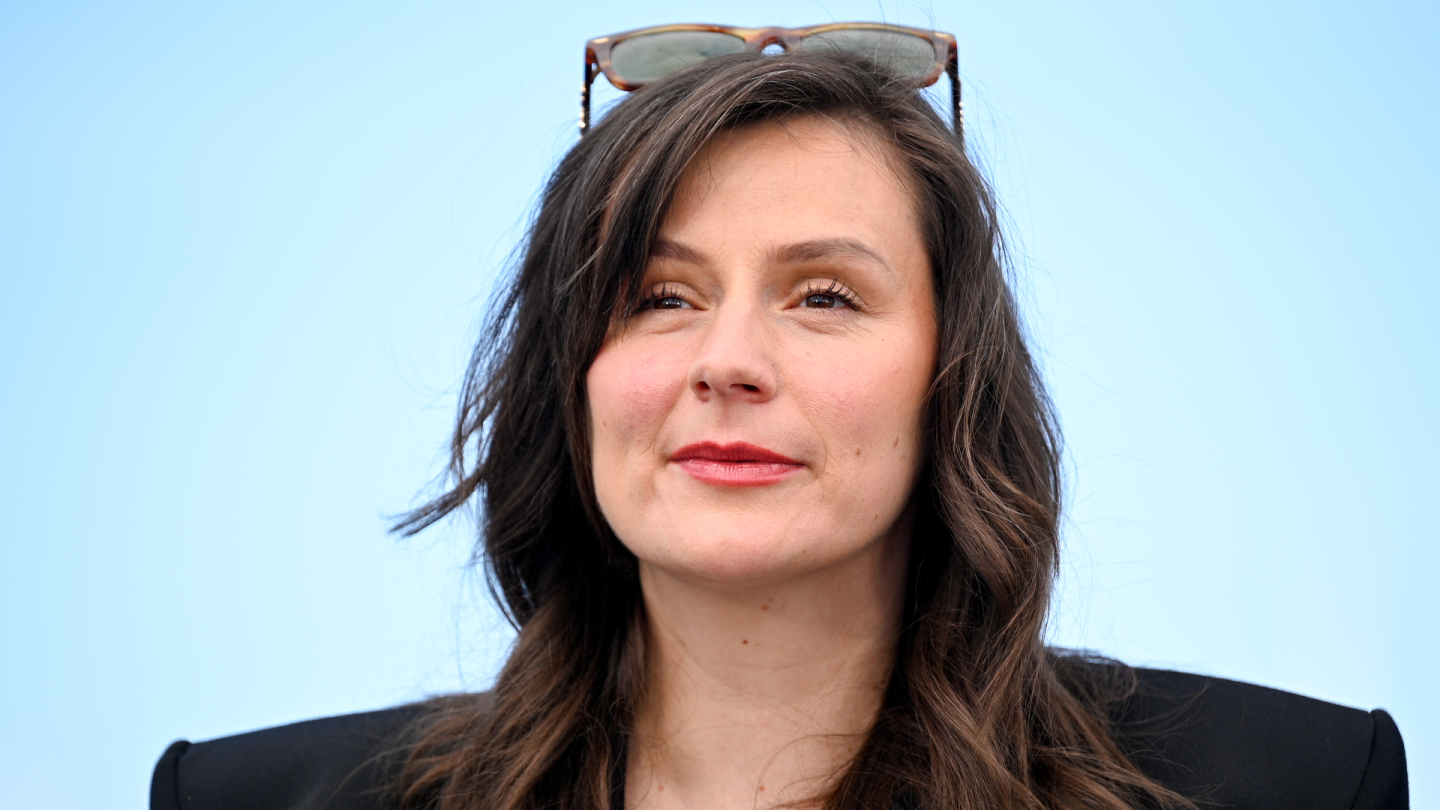
Sandra Wollner is having a pretty thrilling — if not a little exhausting — 2026.
Her third feature film, Everytime, premiered in Un Certain Regard at Cannes in May — her first project to hit the Croisette, which she talked about in depth at the time. “It was quite overwhelming, I have to say,” the Austrian filmmaker laughs to The Hollywood Reporter three months later. “To get this platform and such a big audience — overwhelming in a good way.”
Now, Everytime, screening in competition at the 32nd Sarajevo Film Festival, is venturing into a world beyond Cannes. Led by Birgit Minichmayrhe, the film follows a mother, her young daughter and a teenage boy as they travel to Tenerife in a bid to cope with the tragic death of their eldest daughter and sister. Wollner embraces her knack for surrealism as the piece bends time, past and present blurring. THR critic Jordan Mintzer said the filmmaker is talented at “injecting genuine unease into ordinary events, whether it’s an eerie stroll through the streets of Berlin [or] a text message sent to a deceased person.”
In Sarajevo, Wollner’s partner and one-year-old daughter in tow, she has been paying close attention to the reaction of the locals. “The festival being founded during the siege in 1995, I think that’s very powerful,” she continues to THR. “And you can still feel something of that history here. I felt it yesterday when I had a radio interview. Just from some of the questions, you could get the sense that there might be a different way of approaching trauma or loss here, simply in the way people talked about the film.”
From the Bosnian capital’s National Theatre, Wollner discusses taking Everytime on the festival circuit. She talks about the doors that these festival slots can open for a filmmaker of her calibre, spotlighting grief, blame and memory in her filmography, and why she is staying realistic about the future of European cinema: “What I hope we protect in Europe is the possibility of making films that don’t have to prove their commercial value before they exist.”
How big was it for you to be in Cannes with only your third feature film?
That was, of course, big. I mean, if you’re very pragmatic, it’s just the biggest festival. At least people say so. And it was quite overwhelming, I have to say, to get this platform and such a big audience — overwhelming in a good way. I was already excited that we were invited, and then you don’t really expect anything after that. I certainly didn’t expect such great feedback.
Wherever you are, it’s still kind of miraculous when you see your film through other people, when you see it with an audience. And it just felt like a very appreciative audience. In the cinema with so many people in Cannes, it was a very emotional experience. Some things I felt for the very first time — because when you’re working on things, you’re working on technical stuff all the time. You still feel the flow, but not the emotion, not after seeing it so many times. But then suddenly you have people behind you gasping or being in shock or just being very silent.
So it’s safe to say you were pleased by the reaction in Cannes.
(Laughs.) I was very pleased with the reaction.
You’re on the festival circuit with Everytime now. We’re in Sarajevo. Is it just as meaningful to be asked to be here?
To be here and then also get invited into the competition, I honestly felt very appreciated. Yesterday, we had our premiere, and what the head programmer Elma Tataragić said about the film and how she connected it to my previous films made me feel an immense appreciation for my work. I very much value that.
But being here with nine other films — honestly, I have not seen anything! Being back at work and being here with a kid, it’s a bit tricky to see anything right now.
‘Everytime’
Courtesy of Cannes Film Festival
You’re with your child?
She’s one, so the last year was quite intense with finishing the film. She’s here with me and my partner, and the festival also made that possible. And they made it possible for our cast to come. Birgit Minichmayr would have loved to come, but she’s on a shoot right now. Everyone was super excited. Lotte Shirin Keiling could come with her parents, and our main actor Tristán López also brought his mom and a friend of his mom. Everyone was like, “Oh my god!”
A family affair!
Yeah, and I’ve never been here. I have some friends who come here regularly and who really love it, and I can totally see why.
A very cool origin story as well.
I mean, the festival being founded during the siege in 1995, I think that’s very powerful, and you can still feel something of that history here. I felt it yesterday when I had a radio interview. Just from some of the questions, you could get the sense that there might be a different way of approaching trauma or loss here, simply in the way people talked about the film. I did feel there was a different perception, at least from what I understood through the translation during the interview. People asked, “Is Everytime a memorial for those we lost?”. Since the film is essentially a family drama, this kind of question doesn’t get asked in Germany or Austria, where I’m from.
What can mid-tier festivals like Sarajevo, Karlovy Vary, Locarno, San Sebastian do for films like yours?
I haven’t been to too many festivals. My second film did travel, but then Covid happened. My first film started in Hof, a prestigious little festival in Germany, or at least it used to be. For me it opened some doors, particularly with programmers and film critics who saw it there.
At nearly every festival, there is always the feeling that it opens something up — just the fact that other people see your film, some of them really take it in and spread the word about it. And all of these festivals can do that for your film, in ways that might turn out to be very meaningful even many years down the road.
Did you get to talk with people at the premiere here in Sarajevo about how the film resonated?
We had a Q&A. It was more like a Q&A and press conference in one. It was actually quite nice that there were also locals and not just journalists or festival insiders. People seemed to like it — those who stayed for the Q&A at least. I guess there was no one staying to tell me they didn’t like it. (Laughs.) But yeah, I felt the response in general was very appreciative, again.
There’s a lot that comes up in Everytime — in particular grief and blame. What did you find the audience was drawn to?
I feel it’s grief. I mean, we’re talking about the biggest loss that’s imaginable, losing a child. But still, everyone might have experienced a loss of some family member or friend at some point, so they can relate. And like in Cannes, people came up afterwards to tell us about their loss, and perhaps their own version of grief, which is a very strange emotional process that can manifest in so many ways.
I feel that there are people who can genuinely relate to the topic. And then, of course, there are people who love the formal idea of the film, the way it takes you places you might never expect it to. I do feel it has been the same everywhere. It doesn’t differ from festival to festival, so far.
Are those themes something that you want to keep as a running thread through your filmography?
They run through my last three films in a way: memory and imagination. But I think one has to be careful not to get too self-reflective, you know? I did start to write something which is more or less set in prehistoric times, about how ghosts came into the world. A very different setting. Very different. But let‘s see, I need some time. I really have to fall in love with something again to be able to go through with it for five or six years because, in the end, that’s what it’s gonna take.
Are there any Hollywood names that you would love to work with in the future?
I honestly believe that it really depends on the project. I would never be someone to knock on a door just because of a name, even though maybe that’s sometimes smart. But I really try to understand who’s the perfect fit for the part.
It’s hard to make films right now. All over the world, but very much in Europe.
It’s hard, and I feel very privileged that we had luck with the last two films, which didn’t have a lot of money. The first one was just a student project. The second one was my graduation film, but we still got some funding and it worked out. You might say I was lucky, but this kind of cultural funding is something we absolutely have to protect.
I don’t know if it’s so much easier in the U.S., where you get [private] money and you have to be really struggling and bouncing from [financier to financier] all the time. I don’t know whether this is an easier path than in Europe.
Do you feel optimistic about the future of European film?
I don’t know. I have to be realistic. You can see that there is pressure on public funding everywhere. But I don’t think culture is an “added value,” a kind of luxury item. It’s part of how a society understands itself.
What I hope we protect in Europe is the possibility of making films that don’t have to prove their commercial value before they exist. My own films could probably not have been made in a purely market-driven system. And I think losing that would mean losing a certain kind of cinema altogether.
>


Search For Canadian TV Actor Stewart McLean Now Homicide Investigation


These ’90s fashion trends are making a comeback in 2017
According to Dior Couture, this taboo fashion accessory is back
Model Jocelyn Chew’s Instagram is the best vacation you’ve ever had
Emily Ratajkowski channels back-to-school style
9 Celebrities who have spoken out about being photoshopped
Your comprehensive guide to this fall’s biggest trends
A photo diary of the nightlife scene from LA To Ibiza