Connect with us

Sports

Tottenham working on deal for Savinho and Omar Marmoush of Manchester City

Published

on

Tottenham Hotspur are working on a deal to sign Savinho and Omar Marmoush from Manchester City.

Nothing is finalised but Tottenham’s talks with City are advancing.

The Athletic reported on Tuesday that Spurs were progressing in a deal for Savinho, while Marmoush has also been among those considered likely to leave City this summer.

Savinho, the 22-year-old winger, was not part of Enzo Maresca’s 21-player squad for City’s 3-0 Community Shield final defeat by Arsenal on Sunday. Marmoush, 27, came on as a second-half substitute for Erling Haaland.

The potential deals for Savinho and Marmoush would add to an already busy summer for Tottenham, who have spent a combined £229.5million on Sandro Tonali, Mateus Fernandes and Jan Paul van Hecke.

How can Spurs afford to spend so much money?

Tifo Football and Chris Weatherspoon

Tottenham pursued a move for Savinho last summer, with The Athletic reporting in August 2025 that they had discussed a package worth in the region of €50million (£43.3m, $58.2m) with City.

City, though, did not want to sell the Brazilian, who signed a new deal until 2031 in early October after the close of the transfer window.

Savinho, however, continued to play a bit-part role for City, starting just seven Premier League games last season as Pep Guardiola’s side finished second and won a domestic cup double.

The Brazil international joined City in a €40m deal from French side Troyes, after spending the 2023-24 season on loan at La Liga team Girona, where he recorded 11 goals and 10 assists, helping the club to a top-four finish and the club’s first-ever Champions League berth. Both Troyes and Girona are owned by the City Football Group (CFG).

Marmoush started eight times in the Premier League last term, finishing the campaign with eight goals in 36 appearances. The forward then played five times for Egypt at the World Cup as they reached the last 16. He joined City from Eintracht Frankfurt in January 2025 after scoring 37 times in 67 appearances.

Alongside the signings of Tonali, Fernandes and Van Hecke, Spurs have recruited defenders Marcos Senesi and Andy Robertson and goalkeeper Martin Dubravka on free transfers.


Spurs delivering De Zerbi’s ‘bomba’ promise

Analysis by Tottenham correspondent Jay Harris

A couple of weeks ago, Roberto De Zerbi revealed that Spurs were lining up a surprise “bomba” signing. Supporters have become restless since then but this audacious double swoop has been well worth the wait.

Spurs’ interest in Savinho can be traced back to last summer following Thomas Frank’s appointment. Savinho has failed to live up to expectations during his time in Manchester but is still viewed as a quality, versatile option for the squad even though De Zerbi is now in charge. Savinho would also be reunited with Xavi Simons, who he played with during the 2022-23 season at PSV Eindhoven. This move has dragged on for the entire summer but Spurs appear to be finally closing in on one of their top targets.

Tonali giving a thumbs up for Spurs

Tonali cost Spurs an initial £92.5m, with £7.5m due in potential add-ons (Justin Setterfield/Getty Images)

Savinho’s arrival would not be enough to plug the gaps upfront, which is why their pursuit of Omar Marmoush is so exciting. Spurs desperately need another centre-forward because Richarlison only has a year left on his contract and Dominic Solanke has struggled with injuries over the last 18 months. Marmoush has the flexibility to play through the middle on his own and alongside Solanke or Richarlison.

Marmoush’s star has waned slightly over the last 12 months because he is in the awkward position of playing second fiddle to Haaland at City and Mohamed Salah with Egypt. Before Marmoush joined City midway through the 2024-25 season, he scored 15 goals in 17 games for Eintracht. With the promise of more regular game time, Spurs will be hoping Marmoush can replicate that form if he makes the move to north London.

Spurs have already remodelled their midfield and defence this summer. Signing Savinho and Marmoush would secure their status as legitimate top-four contenders and cap off a remarkable transfer window which, on paper, will go down as one of the best in Premier League history.


How can Spurs afford this spending?

Analysis by football finance writer Chris Weatherspoon

Even by the standards of modern English football, Tottenham’s outlay is eyebrow-raising. Inside the first three weeks of the summer window, they committed a £230m on three signings. Add unreported agent fees and the Premier League’s transfer levy of four per cent on every incoming transfer, and their splurge tops a quarter of a billion pounds. The club’s single-season record is £272.2m (in 2023-24).

Or it was.

Following the signing of Van Hecke from Brighton before the end of the 2025-26 accounting year, The Athletic projects Spurs’ spending on new players landed just shy of £300m last season. On a net basis, we reckon around £240m was spent, comfortably higher than the club’s previous record of £180.1m (again set in 2023-24).

Champions League money will have helped pay the bills last season, but the greater factor has been a shift in strategy at the top of the club. After two decades of parsimony, ENIC, the firm that holds a majority ownership stake in Spurs, is now pumping funds in.

Fans of other clubs might also wonder how Spurs can afford this activity while remaining within football’s financial rules. Yet a relative lack of liquidity (at least prior to ENIC’s funding) bears little relevance to compliance, with football’s regulations previously focused on keeping losses low and, now, trained on how much clubs spend on their squads.

The losses at Tottenham have rocketed in recent seasons, though much of that owes to a huge depreciation charge on the stadium — an expense which is deducted from loss-based calculations. They have dipped into underlying deficits too, but those are not so large that they’ll have trouble with the Premier League’s profitability and sustainability rules (PSR), which, in any case, will cease to operate once clubs are assessed on the 2025-26 season.

Moreover, much to their supporters’ chagrin, Spurs have routinely operated one of the lowest wages-to-revenue figures in both English and European football.

In 2024-25, a season where they were without Champions League football, just 45 per cent of revenue went on total wages. The amount spent on players, relevant for SCR purposes, is even lower. Clubs don’t release player wage details but, per a UEFA report in 2022-23, Tottenham’s player wages were just 32 per cent of turnover.

Even with growing amortisation costs on transfer fees, total wages and amortisation as a proportion of revenue in 2024-25 was just 70 per cent. That also doesn’t include the averaged player profits that are added into the SCR calculation. In other words, they have had plenty of headroom.

Player sales are also taking on added importance. Spurs’ shoddy transfer business of recent years has made that infertile ground.

But recouping £35m on Brennan Johnson when he went to Crystal Palace in January was seen internally as decent business, while the deal agreed to sell Luka Vuskovic to Brighton is better still. Vuskovic, who joined in summer 2025 for £12m but was without a Spurs first-team appearance to his name, having spent last season out on loan, headed to the south coast for a guaranteed £46m, or only £6m less than went the opposite way for Van Hecke.

Cristian Romero has joined Atletico Madrid for £34.1m, while Guglielmo Vicario has left for Juventus on loan with an €8m option to buy and Radu Dragusin has signed for Fiorentina on loan with a conditional obligation.


What to read next

Ahead of the new Premier League season, which begins later this week, we asked Tim Spiers and Phil Hay to rank the division’s top 50 footballers. Three Tottenham players made the list, including two summer signings, but none of their attackers featured, perhaps explaining why Roberto De Zerbi has been so vocal about the need to strengthen the club’s front line. Click here to discover who made the top 50 — and who missed out — and be sure to join the discussion.

>

Continue Reading

Sports

Referee chief Howard Webb ‘really troubled’ by FIFA’s Folarin Balogun red-card decision

Published

on

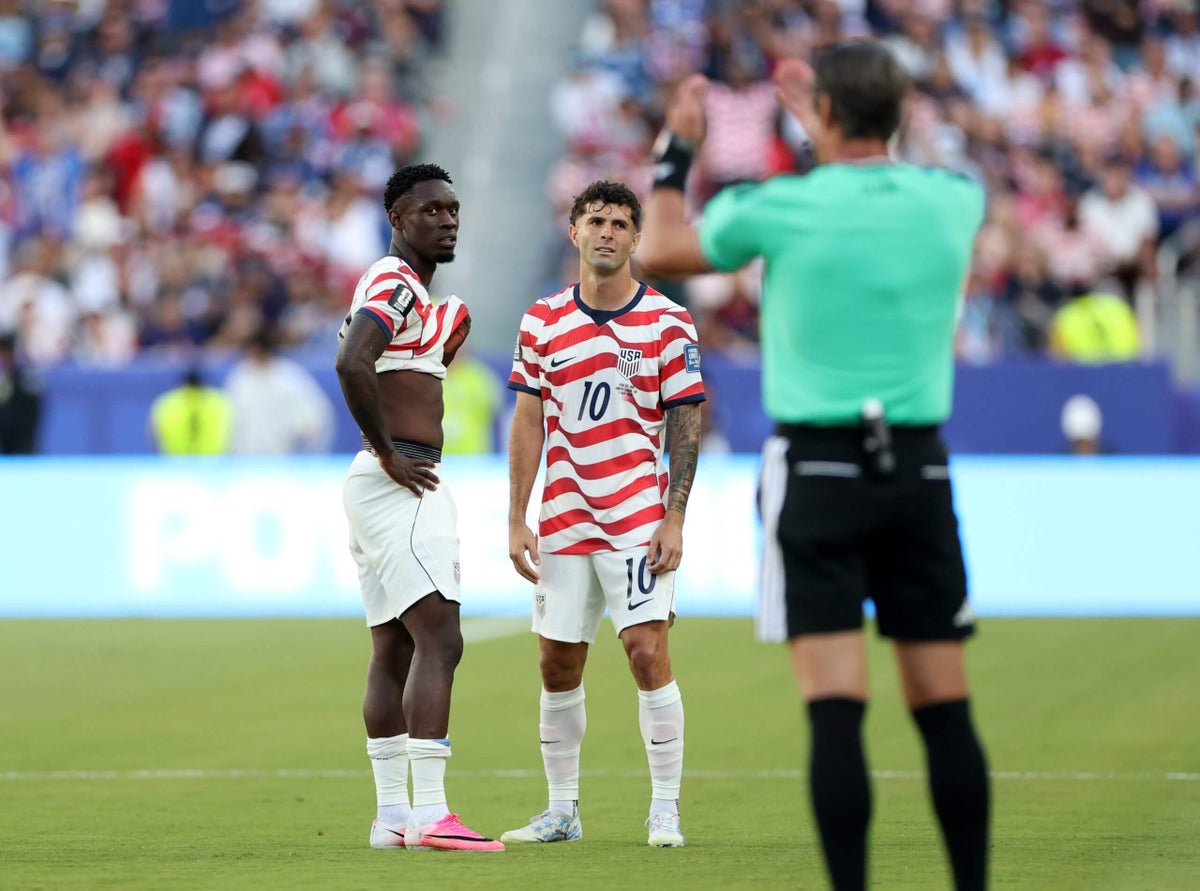
English football’s refereeing chief Howard Webb has said FIFA’s decision to suspend U.S. striker Folarin Balogun’s one-game ban during this summer’s World Cup “really troubled” him, as it will encourage more conspiracy theories about contentious decisions.

Balogun, 25, received a red card during the co-host’s round-of-32 win over Bosnia and Herzegovina on July 1 after a challenge on defender Tarik Muharemovic.

The tackle was seen by many as more clumsy than malicious but any debate about the dismissal itself was soon overtaken by the global storm that broke when FIFA overturned his suspension and it later emerged that U.S. President Donald Trump had spoken to FIFA boss Gianni Infantino about the decision.

FIFA strongly denied that Trump’s call had any impact on the call to let Balogun play in the round-of-16 game against Belgium on July 6, saying it was taken by its disciplinary committee in accordance with FIFA rules, but that did not stop Trump from claiming credit for the ruling.

American fans, U.S. Soccer and Balogun’s coach Mauricio Pochettino all welcomed the decision, but it provoked a combination of confusion and consternation elsewhere. There was also widespread sympathy for Belgium and a sense of justice being served when the European side thrashed the USMNT 4-1.

USMNT fans react to the Balogun news

Henry Bushnell

Some might say that should be the end of the matter but Webb, the chief refereeing officer for Pro Ref, the body responsible for match officials in the English professional game (formerly known as PGMOL), is worried the affair will have a negative impact on his staff and referees everywhere.

Speaking to reporters at a season-launch event at the Premier League’s headquarters in London on Wednesday, Webb said: “I was really troubled by it. I don’t know all the ins and out of the process but what do we know?

“We know a red card was shown — you can form an opinion about the validity of the red card but I understand why it was given. We know there was pressure placed by a politician on FIFA, because that was admitted. And we know that a suspension was taken away through a process that seemingly didn’t exist before.”

Webb, a former policeman who became one of the top referees in world football, explained that officials have no problem with decisions they made on the field being subject to properly set-out review processes.

“Where I was troubled by it is that we live in a world that’s different to when I refereed,” he continued.

“Decisions were previously considered correct or incorrect based on your judgement. Far too often now, decisions are viewed as correct or corrupt by people on social media who try to draw inferences around decisions they don’t agree with. They question the motivation of that decision, with no facts or evidence.

“When you get (the Balogun) type of situation, it opens up space for people to say ‘ah ha, this sort of thing happens all the time’. But it really doesn’t.”

Asked if he feared this would lead to more online abuse of match officials, Webb said: “It doesn’t help does it? It was admitted, it happened.

“I don’t want to get into all the talk about FIFA but, of all the things people have talked about, that’s the thing that troubles me the most – that’s the thing that affects the 90 minutes, the game. The fact that that influence can be had.

“That’s just really not reflective of the game I know. The game is the game.”

Balogun’s challenge on Bosnian defender Tarik Muharemovic ended in a global controversy. (Michael Steele / Getty Images)

Webb’s comment about “all the talk about FIFA” is a reference to the remarkable events of last few weeks, which have seen Infantino’s hold over the international governing body thrown into serious question by his attempt to sell a stake in FIFA’s competitions, including the World Cup, to a group of private investors led by Joshua Kushner, the brother of Trump’s son-in-law Jared Kushner.

Premier League chief executive Richards Masters sees the furore around the Balogun affair as just another example of FIFA’s structural problems and poor governance.

“When looking back at the World Cup, we should be talking about the football that was played, Spain being obviously the best team and England’s agonising semi-final defeat,” he said.

“But we’re not — we’re talking about other issues and I think that’s a huge shame. The Balogun issue stands alone as an incident that is very difficult to comprehend. I think it’s another self-inflicted moment.

“Why don’t FIFA have a red-card review process, like most leagues, that can review a miscarriage of justice — and I’m not saying Balogun was a miscarriage justice — but it can be dealt with on that basis, as opposed to the FIFA system which is about how long the suspension should be. There’s no option to overturn the card, which is what created the controversy.”

>

Continue Reading

Sports

If the NFL goes international, what are the challenges and what cities make sense?

Published

on

NFL commissioner Roger Goodell told a German media outlet Tuesday that he has “no doubt” the NFL will eventually have teams outside of the United States. But what logistical challenges could come with an international franchise?

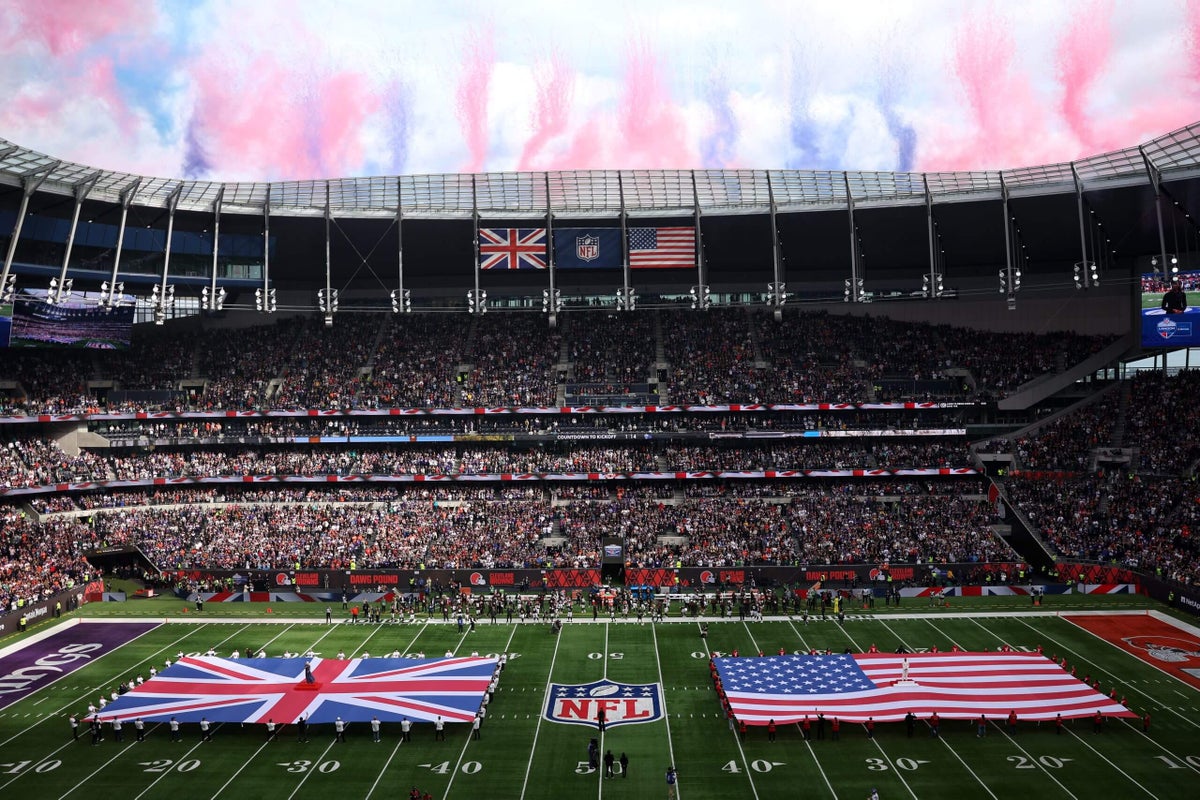
For years, the NFL has been expanding its global footprint with games overseas in new countries and markets. This season will feature a record nine international contests, including first-time trips to Melbourne, Rio de Janeiro and Paris.

But with added travel miles — the San Francisco 49ers will venture a record 38,105 miles in 2026, per Bookies — comes added logistics. NFL teams start preparing for international travel as soon as their games are announced, beginning with obtaining passports and visas for every member of the traveling party all the way down to shipping gear and meals.

Once teams arrive at their destination, there are new facilities to navigate and jet lag to overcome. Take this year’s Week 1 game in Melbourne for example. The San Francisco 49ers are planning to arrive a full week before the game to acclimate to the 17-hour time difference, while the Los Angeles Rams are planning to take a more in-and-out approach. There’s no one way of doing things, and players and coaches have previously bemoaned travel’s impact on performance.

Scheduling is also a consideration. The league avoids scheduling teams coming off international travel for Thursday night games, opting to give either a bye or the full week to recover. In a world with an international franchise, what would the travel look like? Would the NFL schedule blocks of extended home stands followed by weeks on the road? If the latter, would that require a U.S.-based training facility?

There’s also the competitive issue. Would players willingly sign in free agency with a team based in another country? In The Athletic’s 2023 anonymous NFL player poll, a majority of players (55.4 percent) said they would not want to play on an NFL team based overseas (34.9 percent responded “yes” and 9.6 percent said “maybe”).

Perhaps a U.S.-based training facility could serve as the team’s offseason home for OTAs and minicamps, limiting a player’s time required in the other country to just in-season.

However far off it may be before a team is based outside the U.S., robust international travel doesn’t seem to be going anywhere, with the NFL previously saying it could go as high as 16 games — nearly one per week.

Robert Kraft outlines what an 18-game schedule could look like

Chad Graff

Here’s a breakdown of the considerations, complications and reference points the NFL could use when debating the feasibility of an international franchise.

Which locations could be considered for an international NFL franchise?

London has been the most common international host for the NFL, with 42 games played since 2007. The Jacksonville Jaguars have marketed themselves as London’s team, and have hosted a home game in the English capital at Wembley Stadium each season since 2013 (except for the pandemic-altered 2020 campaign).

London was toyed with as a temporary home for the Jags in 2027, when their stadium will be under construction, but the franchise ultimately landed on playing their home games that season at Camping World Stadium in Orlando, Fla. It’s also worth wondering how often the Jags will visit London upon the completion of their $1.4 billion stadium renovation.

Speaking at a UK fan event in 2022, Goodell said there was “no question that London could support not just one franchise, I think two franchises,” according to the British media outlet Sky Sports. Goodell said the question would come down to whether a London-based team — and the teams visiting — would be able to maintain competitive balance.

Logistically, a team in North America would ease travel headaches as opposed to jetting across the pond. Mexico City, which is in the Central time zone, is the NFL’s second-most-visited city with four hosted games (in 2018, poor field conditions led the league to move a scheduled Kansas City Chiefs versus Los Angeles Rams game to Los Angeles Memorial Coliseum). The last game in Mexico City was in 2022, but the league is entering the first year of a three-year agreement to return in 2026 following completion of renovations at Estadio Banorte (formerly Estadio Azteca). The San Francisco 49ers will host the Minnesota Vikings there on Nov. 22, marking their third trip to the Mexican capital.

The NFL hasn’t explored as many opportunities in Canada. The Buffalo Bills hosted a Toronto series from 2008 to 2013, during which the team played six regular-season games and two preseason games at Rogers Centre (home of MLB’s Toronto Blue Jays). The series was postponed and later terminated early due to dwindling attendance and concerns from Buffalo fans about losing a true home game each season. The Green Bay Packers and Oakland Raiders played a preseason game in Winnipeg in 2019 that had to be contested on an 80-yard field with no kickoffs due to an issue with the artificial surface in one end zone.

As for other places the NFL seems to be investing, the league will play its third game in Brazil (first in Rio) this year after opening the international slate in São Paulo the last two years. There has also been a game hosted in Germany in each season since 2022, with a game scheduled in either Munich or Berlin in each of the next four years.

What logistics do teams already deal with during international contests?

My colleague Peter Carline is based in London and has followed the NFL’s presence overseas closely. Here’s how he described the logistics of an international trip:

When the Jaguars first played back-to-back games in England in 2023, around 180 people — players, coaches, staff and families — traveled on their nine-night excursion. The Rams took it to the other extreme last year, staying for one night ahead of their game against Jacksonville at Wembley Stadium.

Teams charter flights to London Stansted Airport and book blocks of rooms at The Grove or Hanbury Manor, two five-star hotels outside London. They are transformed into temporary headquarters ahead of arrival, with multiple meeting rooms and offices.

Both have a custom-built NFL practice field and gym on site, but, recently, the Baltimore Ravens (2023) and Denver Broncos (2025) opted to use the facilities of Premier League club Tottenham Hotspur for practice and media.

Most teams have sleep experts explain several concepts about transatlantic travel and jet lag to players ahead of time, including the effect on circadian rhythms and the importance of taking magnesium to aid sleep. Staples such as condiments and drinks are also imported, while team chefs work with hotels to provide extensive, familiar menus.

The nominal home team has a couple of advantages: They have first choice on hotels and are the first to leave the stadium. — Carline

The Jaguars have played in London every season since 2013,  except the pandemic-altered 2020 campaign. (Alex Pantling / Getty Images)

How have other leagues navigated having teams based outside the U.S.?

For additional perspective, I asked around The Athletic’s newsroom about the challenges non-U.S. teams face in other American leagues. I found it interesting how different currencies impact both player salaries and team revenues. Plus, the NHL has seen examples of visa complications at the trade deadline and competitive disadvantages for Canadian teams.

NHL

The NHL has always been a multinational enterprise operating in both Canada and the United States. The impact of this has been far-reaching and, occasionally, unpredictable.

For example, drawing league revenues in multiple currencies inevitably creates some level of vulnerability for the NHL, as a result of real-world events and value fluctuations. In 2015, for example, the value of the Canadian dollar abruptly plummeted by 16 percent. Given how much of the NHL’s revenues at the time were tied up in CAD, the NHL salary cap — which is tied to hockey-related revenues — was suddenly and unpredictably flat year-over-year, significantly altering the amount of liquidity in the system for free agents and fundamentally altering the exchange value of player contracts that had been previously agreed to.

The COVID-19 pandemic was another illustration of these factors. Because of logistical issues posed by various quarantine protocols on either side of the border, the NHL was effectively forced to hold a form of competition that prevented Canadian and American teams from playing against one another until the conference finals of the 2020-21 season.

On a day-to-day basis, there are immigration challenges to work through. For example, the Washington Capitals last season acquired a player, David Kampf, in a trade at the deadline whose debut with the team was held up over work visa issues. There’s also the taxation dynamic, which has a broader impact on player recruitment outcomes.

This factor has been more pressing in recent years, with star players like Alex DeBrincat, Matthew Tkachuk, Mitch Marner and Quinn Hughes utilizing their leverage before free agency to play for teams based in the United States. It’s a factor that’s noted with increasing frustration among Canadian hockey fans, given that a Canadian team hasn’t won the Stanley Cup since 1993. — Thomas Drance, Canucks writer

MLB

The Toronto Blue Jays are the only Major League Baseball franchise outside of the United States. While there are certainly some players trepidatious about playing in another country, the Jays don’t believe their location is a significant obstacle.

“Every market has its challenges,” general manager Ross Atkins said in winter 2025. “There are players that don’t want to play in certain markets for various reasons. We’ve found Toronto to be exceptionally attractive to a large part of the baseball population.”

There are some logistical challenges, though. All players require passports to cross the border regularly, though that’s not a huge issue in MLB as so many players come from outside of the United States anyway. Both the Jays and road teams need to clear customs upon entry and exit from Canada, as well, but that’s described as more of a minor inconvenience than a major obstacle.

Perhaps the largest issue is that a significant portion of the Blue Jays’ revenue is in Canadian dollars, while every other team earns in American dollars. As of Aug. 18, the CAD is worth about $0.72 USD. The revenue generated from ticket sales, stadium concessions and local merchandise is all in CAD. That earning imbalance hasn’t held the Jays back from spending in recent years, though, as they currently own the fifth-highest payroll in the sport, per FanGraphs. — Mitch Bannon, Blue Jays writer

NBA

You would be surprised at how many players chafe at having to go through customs. Even as this process has become easier over the years, Toronto Raptors players and their opponents still get annoyed at the extra time a cross-border trip takes. Also, draft prospects often don’t have their visas or passports, meaning the Raptors have had to do individual workouts across the border in Buffalo — although that doesn’t figure to be a big issue in the NFL.

There is also the issue of taxes. Again, the Raptors have gotten better at finding their players the right resources over time, but the local/provincial taxes in Ontario are higher than they are almost anywhere in the United States, and significantly higher than in no-state-tax locations such as Florida and Texas. — Eric Koreen, Raptors writer

>

Continue Reading

Sports

Joao Pedro takes Liam Delap’s No 9 shirt as Chelsea confirm squad numbers

Published

on

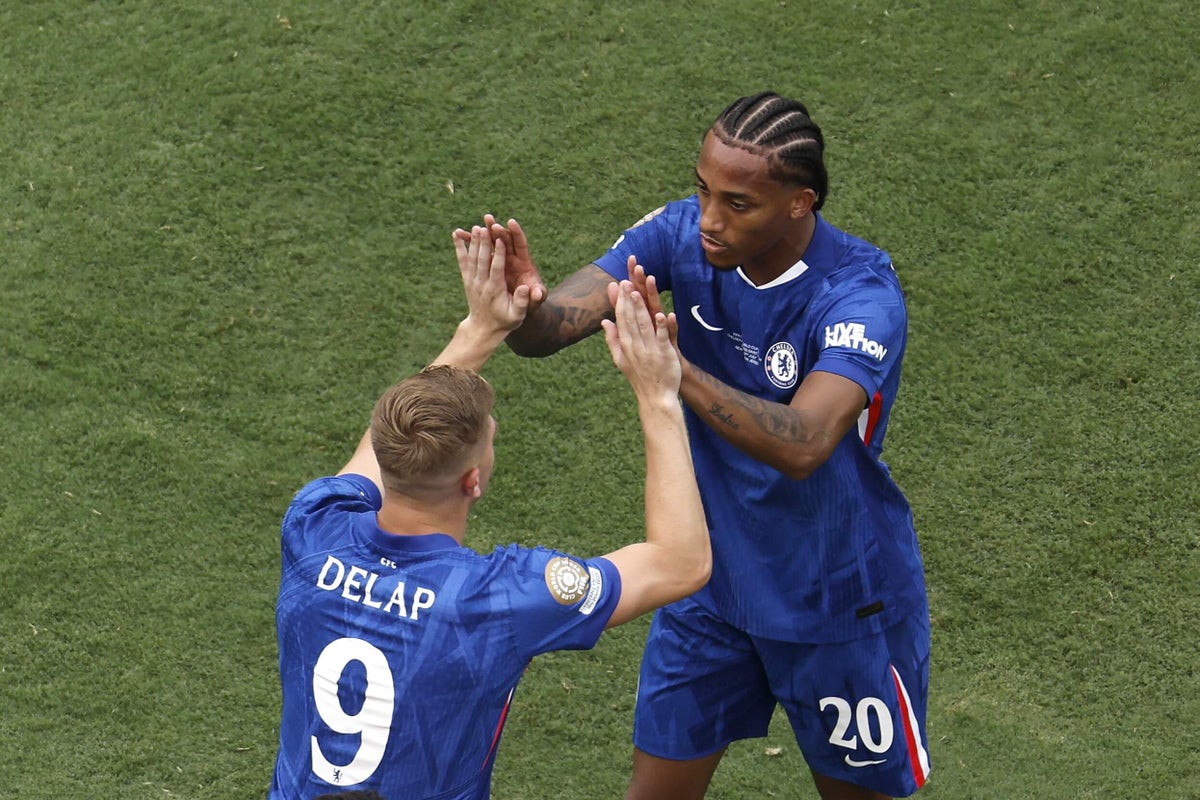
Liam Delap, wearing No 9, high-fives Joao Pedro as he replaces him on the pitch

Delap has switched to No 12. Michael Reaves/Getty Images

Chelsea have announced that Joao Pedro has taken the No 9 shirt worn by Liam Delap last season.

Delap has changed to No 12 in Chelsea’s confirmed list of squad numbers for the 2026-27 campaign, with Joao Pedro giving up the No 20 he wore while scoring 20 goals across all competitions last season to take the traditional striker’s number.

Joao Pedro was voted the club’s player of the year last season and The Athletic reported earlier this month that he is set to sign a new contract, while Delap is available for transfer in the last two weeks of the window, valued at more than £50million.

Wesley Fofana has also switched from No 29 to No 3 for the new season, while summer signings Marco Palestra, Valentin Barco and Maxence Lacroix have been handed No 2, No 4 and No 5 respectively.

Morgan Rogers had already been confirmed as Chelsea’s new No 17. Among the other new faces, Jordan Henderson will wear No 14, Danny Welbeck will wear No 18, Emmanuel Emegha will wear No 22, Geovany Quenda will wear No 23 and Pep Chavarria will wear No 29.


Chelsea’s squad numbers in full

1 – Robert Sanchez
2 – Marco Palestra
3 – Wesley Fofana
4 – Valentin Barco
5 – Maxence Lacroix
6 – Levi Colwill
7 – Pedro Neto
8 – Enzo Fernandez
9 – Joao Pedro
10 – Cole Palmer
11 – Jamie Gittens
12 – Liam Delap
14 – Jordan Henderson
15 – Nicolas Jackson
16 – Dario Essugo
17 – Morgan Rogers
18 – Danny Welbeck
19 – Mamadou Sarr
21 – Jorrel Hato
22 – Emmanuel Emegha
23 – Geovany Quenda
24 – Reece James
25 – Moises Caicedo
27 – Malo Gusto
28 – Teddy Sharman-Lowe
29 – Pep Chavarria
30 – Aaron Anselmino
31 – Reggie Watson
32 – Mahdi Nicoll-Jazuli
33 – Mykhailo Mudryk
34 – Josh Acheampong
37 – Tayo Subuloye
38 – Tosin Adarabioyo
39 – Mike Penders
41 – Estevao Willian
44 – Gaga Slonina
45 – Romeo Lavia

Connections: Sports Edition Logo

Connections: Sports Edition Logo

Connections: Sports Edition

Spot the pattern. Connect the terms

Find the hidden link between sports terms

>

Continue Reading

Trending

Copyright © 2017 Zox News Theme. Theme by MVP Themes, powered by WordPress.