
Sports
Why batting at Lord’s is such a challenge: Sideways movement, inconsistent bounce and unreliable pace

The Athletic has launched a Cricket WhatsApp Channel. Click here to join.
“From someone who loves Test cricket, is that something that will benefit Test cricket? I don’t think so.”
“It’s not a challenge for the bowlers — they just need to run up and hit a length. That’s not Test cricket, that is not skill.”
“The first thing to say is that the pitch … was sub-standard.”
Those were the words of Ben Stokes, the former England captain Michael Vaughan to the BBC, and the MCC chairman Mark Nicholas to the Times after the first Test between England and New Zealand at Lord’s earlier this summer. Three men with very different vested interests across their roles as player, broadcaster and custodian. Three men united in their assessment of how the match played out before them.
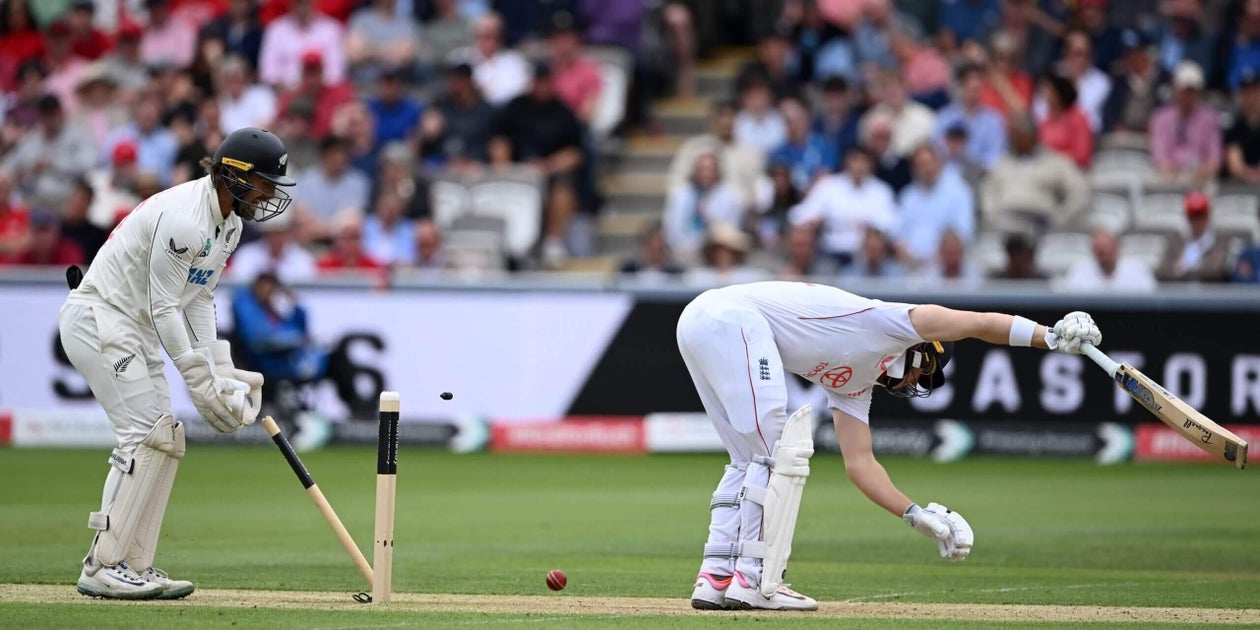
It’s not hard to see why. The first Test of England’s new post-Ashes era, led by Stokes and coach Brendon McCullum, may have resulted in victory but it was a sorry spectacle. For just the eighth time in history, a side won a Test in England with fewer than 1,000 balls bowled.
The pitch was declared “unsatisfactory” by the ICC, and Lord’s received a demerit point. Nicholas was forced to contact members and lay out an extended plan for how the surfaces would be improved, ranging from the straightforward to the nuclear. Typically level-headed commentators were talking of digging up the square — in all senses, pitchforks were in hand.
So why is everyone so bothered about one bad Lord’s pitch?
Well. for one thing, that debacle back in June was far from a one-off. If you look at how top order batters (Nos 1-7 for the purposes of this analysis) have performed in Tests in England over the last five years, Lord’s is comfortably the least batting-friendly venue going around.
It’s the same story at domestic level, too. In that five-year period, Lord’s ranks 16th out of the 18 regular County Championship venues for batting average, and 17th for dismissal rate.
In white-ball cricket, the story is no different, Lord’s being the second-slowest scoring venue across both the men’s and women’s editions of The Hundred. Going back further, England’s one-day international (ODI) World Cup-winning side managed a defeat and a tie in their two Lord’s matches during that 2019 campaign, consistently undone by the turgid, low-scoring nature of the venue — the antithesis of how England’s home pitches had been prepared across the previous cycle.
Of course, there is nothing wrong with red-ball surfaces favouring the ball over the bat. The 2010s produced far more watchable, engaging Test cricket than the run-laden 2000s, thanks in no small part to a shift in pitch preparation.
In this context, Lord’s has more than done its bit — no English ground has seen more swing movement or more seam movement post-pandemic.
The issue is that some of the movement there has been far less sporting.
‘PitchViz’ is a CricViz model that uses ball-tracking data to assess conditions; the model has Lord’s as unquestionably the hardest pitch in the country for batting across the last five years. Within that, the specific element of the tracking data which makes batting so tough is the inconsistency of bounce, with a large number of deliveries either spitting (bouncing excessively) or scooting (bouncing far less than anticipated).
It was the latter that was the issue in the New Zealand Test earlier this summer. That match had 24 dismissals either leg before wicket or bowled, a record for a Test in England. All 24 of those wickets fell to seam bowlers: in matches globally where ball-by-ball data is available, that is an all-time record.
In the post-mortem, the defeated Kiwi captain Tom Latham put it bluntly, telling reporters: “Throughout the whole match, you see the dismissals were either bowled or lbws, guys being caught on the crease, which shows the guys were not able to trust the surface.”
The wickets that fell in England vs New Zealand at Lord’s in June

The surface we saw that week was an historic outlier, but it sits as part of a concerning pattern.
The graphic below shows how many shots per dismissal when playing a defensive shot, essentially a measure of defensive solidity; it demonstrates that, at Lord’s, defences are more likely to be breached than anywhere else in the country. It isn’t the whole story, but how regularly a batter’s rearguard technique is beaten is a good illustration of the quality of the pitch.
If players like Joe Root and Kane Williamson can’t trust their defence, as was the case back in June, then something isn’t right.
Equally, it isn’t the only way in which the surface challenges batters.
The most dangerous length for the seamers at Lord’s, statistically speaking, has been bouncers — arguably the length affected most by inconsistency from the surface. The simple average of these deliveries is skewed by the 2023 Ashes, where more bouncers were bowled than in any Test on record, with England contriving repeatedly to lose wickets to the ball dug in short.
But even with that match removed, the point stands. Even excluding 2023, the bowling average for bouncers rises from just under 24 to just over 26, making it still the most effective ground to bowl them in England.
It’s notable that in response to the unreliable bounce, straight-batted shots have largely been the way to go, despite that huge sideways movement. Drives at Lord’s perform pretty much as well as anywhere else, even marginally better than some venues. Problems have tended to come with cross-batted strokes, batters falling cutting and pulling far more regularly than in other grounds.
On top of all this: you may have already heard, but Lord’s actually has a slope from one square boundary to another. It is arguably the most discussed quirk in world cricket, mythologised over years by pundits and players alike.
In simple terms, the slope doesn’t actually make that much difference. Balls that seam down the slope — in other words, into the right-hander from the Pavilion End — move somewhere between five per cent and 10 per cent more than balls moving in the opposite direction up the slope. There is no evidence that the ball moves more regularly down the slope than up it, with the distribution almost identical to every other venue.
While that 5-10 per cent difference is definitely relevant to the challenges of batting at Lord’s, you can argue that the effects on the batter are far more significant than the effects on the ball. The combination of physical aspects (the imbalance at the crease) and the mental effects of so much being said around the slope means that it does impact batters. Just not in the way you think.
The sideways movement is excessive. The inconsistent bounce is prodigious. The pace is unreliable. Players can’t defend, but they find it harder to attack than anywhere else. And also, the ground isn’t even level.
All of which is to say that the challenges for the Lord’s ground staff are not straightforward. The blend of art and science involved in preparing a Test match pitch is complex, and rarely is it a case of simply solving problem X with solution Y. But even if it were, this would be far from easy.
Speaking to Lawrence Booth of the Daily Mail, Rob Lynch, MCC’s director of cricket and operations, reiterated the number of ways that Lord’s are trying to solve these problems. Drop-in pitches, hybrid surfaces, and external consultancy are among the changes being made to combat these issues of “turf management” that the ground has experienced.
The other change is the use of data, the example given being a way to ascertain the “moisture content” of the pitches. Perhaps this is the most relevant of the responses. For all the ways we can quantify the output of batters and bowlers, on any given pitch — exactly as we have done in this article — there are very few ways to quantify and scrutinise the input, the surfaces themselves before a ball has been bowled.
Pitch-reading is far from an exact science, and plenty of highly experienced, intelligent players and pundits are completely in the dark about interpreting a 22-yard section of grass. Pat Cummins is one of the most successful captains of the modern era, but faced with the most straightforward bowl-first surface in Darwin last week, he batted, and Australia were skittled for 198.
ICC pitch ratings are made after the match, and remain understandably subjective.
Lord’s has not been at the forefront of very much in recent times. The ‘Home of Cricket’ is far more like a childhood home than where the game currently lives, somewhere important to be left behind, albeit thought of fondly. But if this crisis can inspire a new-gen approach to an ancient art, dragging one of the game’s more anachronistic elements into the professional era, then maybe it was worthwhile after all.
Data and visualisations provided by CricViz
>

A year ago, Britain was in full mad-for-it Oasis mode.
Sixteen years after the band’s breakup, Liam and Noel Gallagher had finally reformed. They had played a string of shows in the United Kingdom to huge acclaim and were about to take the tour global. Almost everyone had something to say about the tour — aside from the brothers themselves.
Presumably saving themselves for the upcoming documentary about the reunion, neither agreed to any interviews throughout the tour — with one exception. Noel happily went on UK radio station Talksport because he wanted to discuss Manchester City’s opening game of the season, a 4-0 thrashing of Wolverhampton Wanderers. The only on-the-record quotes about Oasis’ reunion, therefore, were sandwiched between his thoughts about City.
“I was amazed at how good and fluid it looked,” he said. “The new lad, Tijjani Reijnders, looked amazing. The ‘keeper (James Trafford) looks solid, Rayan Ait-Nouri looked great, Rayan Cherki looked great coming off the bench. No one’s talking about Oscar Bobb, who was as big a miss for us as anything last season. He was brilliant. So all the signs are good.”

Reijnders looked the business against Wolves in the August sunshiiiiine (Alex Pantling/Getty Images)
Reijnders has since been shipped off to Al Qadsiah after an underwhelming campaign. Bobb was sold to Fulham midway through the campaign. Trafford was relegated to a backup status and has also departed.
It’s a reminder that first-day impressions can often be misleading: City eventually fell short, and Pep Guardiola left after a decade in charge. This season there has been no shortage of excitement or panic after a lively opening weekend. So what other nonsense did we think after the opening game of last season, and indeed previous seasons?
2025-26
Well, Tottenham Hotspur looked particularly good in a 3-0 victory over Burnley. Coming shortly after a commendable performance in a UEFA Super Cup defeat to Paris Saint-Germain, the Thomas Frank era started positively. Come the end of the season, Frank had been sacked and Tottenham only just stayed up. In fairness to Tottenham supporters, even if the results were decent, they never seemed convinced by the new regime.
In turn, it seemed like Brentford might struggle without Frank. In Keith Andrews’ first game as a manager, Brentford were 3-0 down to Nottingham Forest by half-time, eventually losing 3-1. New Forest signing Dan Ndoye was particularly impressive down the right, scoring the second. It was the only league goal he scored all season. Brentford ended up challenging for Europe, and striker Igor Thiago finished as the league’s second-top goalscorer.
Granted, not everything was misleading. Arsenal won 1-0 at Manchester United courtesy of a set piece, and Liverpool looked far too open in a 4-2 win over Bournemouth, for whom Antoine Semenyo starred.
2024-25
Manchester United have their new centre-forward! Joshua Zirkzee’s well-taken winner after coming off the bench for his debut provided the only goal in the 1-0 victory over Fulham. Unfortunately, Zirkzee would only manage to score in one other game that season: hitting two in a 4-0 win over Everton. Two years on, it’s surprising he’s still around.

Joshua Zirkzee scores a debut goal for Manchester United (Michael Regan/Getty Images)
Another false dawn was Manchester City’s bright start in a 2-0 win over Chelsea, without the man who had just been named player of the tournament at Euro 2024, Rodri. Clearly, City wanted him back in the side quickly. But if this was taken as a sign they could play without him, the season-ending injury he suffered in October quickly disproved this. City badly struggled in his absence, with Guardiola experiencing the worst run of form in his managerial career.
2023-24
Aston Villa travelled up to Newcastle and were smashed 5-1, which cast doubts upon their ability to challenge for the Champions League places.
Unless, as it happens, you were Sir Alex Ferguson. When interviewed the next day on NBC, the former Manchester United manager was asked which matches he had watched. “I watched Aston Villa vs Newcastle, and I can’t believe the scoreline,” Ferguson said. “Honestly, Aston Villa played fantastic football and just lost bad goals. It’s a surprising game, football. You can play teams off the pitch and not score. That’s what Aston Villa did.”
Sure enough, they ended the season in fourth, their highest finish since 1996. The most successful manager in the Premier League era knows not to read too much into the opening weekend’s results.

Villa were soundly beaten at St James’ Park, then ended the season in fourth place (Robbie Jay Barratt/Getty Images)
2022-23
The universal reaction to Manchester United’s 2-1 home defeat to Brighton & Hove Albion, courtesy of two Pascal Gross goals, was that there had been no signs of progress in Erik ten Hag’s first game in charge. Lisandro Martinez was under scrutiny for his lack of height. Ten Hag’s decision to leave out Cristiano Ronaldo raised eyebrows. “The result’s disappointing — the worst possible start,” said defender Harry Maguire.
But this was ultimately a positive season for United, after their wretched end to the previous season under Ralf Rangnick. They finished third in the league and reached both domestic cup finals, winning the Carabao Cup. Ten Hag won the war with Ronaldo, who left midway through the season. His faith in Martinez was rewarded, as the Argentinian was arguably United’s player of the season.
Granted, Ten Hag wasn’t around for long — but this Brighton defeat came at the start of United’s best season, in terms of points, in the last eight.
2021-22
After all, the previous season had started so positively for Manchester United. They thrashed Leeds 5-1, with Paul Pogba collecting a Premier League record four assists. United were in business. Pogba was back to his best after an excellent European Championship for France, but he only managed another five assists in the subsequent 37 games — not that he started more than 15 himself — and United slumped to sixth.
Manchester City got off to a poor start, going down 1-0 to Tottenham, who felt like their bogey side around this period. They would nevertheless go on to win the league, and that result was really treated more as a positive for Tottenham under new management. “It was a good day,” said Nuno Espirito Santo afterwards. “The distances, the covering, the balance, the fight. Very proud.” He won August’s first manager of the month award, and yet was only in charge of Tottenham for 10 league games.

A win over Manchester City was not a sign of things to come for Nuno at Spurs (Michael Regan/Getty Images)
Incidentally, man of the match for his superb defensive display against the reigning champions was right-back Japhet Tanganga. “He’s pacy, he’s great in one-on-ones, he was no-nonsense, he didn’t get closed down and put himself under pressure,” said Stephen Warnock on Match of the Day. “I thought he was brilliant.”
Here at The Athletic, we pondered whether his performance had saved Tottenham £20m. Sadly, Tanganga was then sent off three games later against Crystal Palace and was barely seen again in the Premier League amid injury problems.
>
Sports
Premier League season tickets assessed: Most expensive? Cheapest? Which clubs have frozen prices?
With the World Cup over, attention has turned back to domestic football with the new Premier League season under way.
Ticket prices were a bone of contention at the tournament in the United States, Canada and Mexico over the summer and, while centred on individual matches, the price of season tickets in the Premier League will also be in the back of supporters’ minds as they turn up to watch their club’s matches.
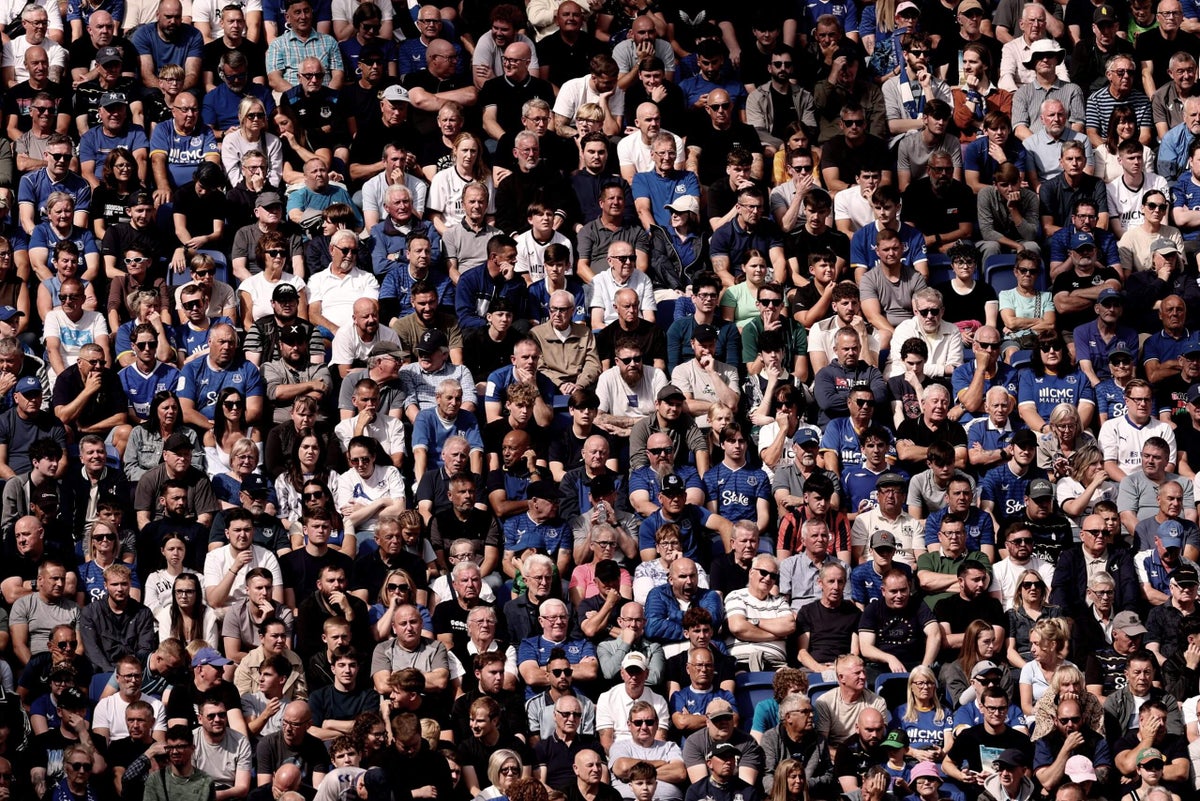
Despite cost pressures continuing to affect match-going fans, every English top-flight club has a waiting list in operation for season tickets, indicating that demand remains high.
That is reflected in decisions made over pricing, with 14 of the 20 clubs raising the cost of season tickets — some by more than the rate of inflation. However, five clubs did freeze prices, which maintains a trend from last season when seven did so.
Supporters have still had to part with significant sums to watch their team, though, with eight clubs going beyond the £1,000 ($1,364) mark for their most expensive offerings.
Bournemouth’s ‘executive’ section last year hit that milestone but appears to have been unavailable for this season, taking their top prices just shy of four figures. A further four clubs are edging closer to breaching that mark.
There has been discontent at those clubs where it is more expensive than last season, most notably at Liverpool, where protests were held during home matches last term. Overall, though, the extent of unhappiness over pricing appears to be relatively mixed, with most clubs’ supporters’ trusts and groups having more limited grumbles.

Liverpool fans have been unhappy at ticket price rises (Lewis Storey/Getty Images)
A season ticket entitles supporters to attend each of their club’s 19 home league matches.
In some cases, there are bundles which include European fixtures or at least reduce costs for those wishing to purchase them additionally, but the vast majority of clubs have a simple ticket, delivered digitally, which entitles fans to sit in their designated seat for each match at a rate significantly cheaper than purchasing individual match tickets.
Here, The Athletic looks at clubs’ prices. This is based on the cost for an adult purchasing a new season ticket, or, in the case of clubs where there are no new tickets available, the final renewal phase.
To standardise as much as possible, we have used non-hospitality season-ticket pricing that can be purchased via the clubs’ ticketing portal and have excluded sections where family tickets are sold at a lower rate for adults who are accompanying juniors.
Sunderland have personalised, individual pricing for 2026-27 and therefore we have used last season’s pricing.

Which clubs have the most expensive tickets?
There will always be debate over the value of each club’s season tickets but, with supporters continuing to feel cost-of-living pressures, attending matches is still expensive.
Although Fulham have not confirmed their prices, they increased them by 3.5 per cent and once again have the priciest adult season ticket. A purchase in their Riverside Stand would have set you back £3,084 last season, making it £3,192 with that percentage increase when they went on sale in June to those on the waiting list.
Other clubs who charge more than £1,000 include Arsenal (£1,835), Aston Villa (£1,297.50), Brighton & Hove Albion (£1,100), Chelsea (£1,095), Manchester City (£1,600), Manchester United (£1,178) and Tottenham Hotspur (£2,223).
Some clubs have more premium offerings that blur the lines between general admission and hospitality, including Chelsea’s Westview seating, which can only be purchased via their hospitality site and where prices for the new season are not publicly available. Last year, prices were set at up to £4,300.
Manchester City’s tickets in the 93:20 areas, covering five blocks in the stadium, cost £1,600 and provide a more polished experience without veering into corporate hospitality, similar to Brentford, whose Dugout seating is their most expensive option, at £855 for an adult and is still general admission.
Fulham’s Riverside Stand not only hosts their premium hospitality section but it offers general-admission season tickets, which are the most expensive in the league.
Unsurprisingly, the lowest prices come at the three promoted clubs, with Coventry City’s highest-priced ticket costing £625, Hull City offering theirs at £600 and Ipswich Town slightly higher at £747. Those clubs who finished outside the European places generally have similar pricing, with Tottenham an obvious notable outlier.
Only Fulham have a junior ticket (under-18) priced at £1,000 or more, again in their Riverside Stand, but Arsenal and Aston Villa charge £917.50 and £990.50 respectively for their top-rate junior tickets.
Ipswich have an under-12 offering at £45 but, for an under-18 category, Newcastle United’s cheapest junior ticket is just £85, the lowest in the Premier League ahead of Hull (£96), Manchester City (£120), Ipswich (£136), Brentford (£135) and Bournemouth (£145).

Have any clubs frozen prices and how much are the increases elsewhere in the league?
To follow on from last season, when seven clubs kept prices at the same level, this time five clubs — Chelsea, Crystal Palace, Manchester City, Nottingham Forest and Tottenham — have done so.
Coventry’s 16 per cent rise was the highest, but those prices were set when they were still in the Championship. Some supporters received a free season ticket after signing up to the club’s Premier League package in previous seasons.
The rise may be beaten by Sunderland, whose prices have not been released publicly and are based on loyalty, with personalised costs showing when supporters log in to their ticketing accounts. We have used their prices for last season but, while those supporters who have held season tickets the longest have the cheapest tickets, some have faced the highest proportionate increase.
Ipswich have increased prices by 12 to 14 per cent and Everton by 7.2 per cent. The remaining rises are between three and five per cent.
At Liverpool, the three per cent rise was confirmed after a huge fan backlash over more severe proposals from the club. Originally, they intended to set a three-year price increase based on the Consumer Price Index but capped at five per cent. This led to protests at home games, including banners, removing flags from The Kop and a ‘not a pound in the ground’ initiative, where supporters were encouraged not to purchase anything inside the ground.
The club backed down, increasing prices by three per cent for this season and introducing a price freeze for the 2027-28 campaign.
How much does season ticket revenue actually matter to clubs’ financial situations?
While season tickets cannot be completely isolated from match-day income, as that includes individual match purchases, it still plays a relatively small part in the overall turnover for clubs.
Of those clubs who were in the Premier League in the 2024-25 season, the highest proportion of match-day income to revenue was Manchester United’s 24 per cent. That was then followed by Tottenham (22.4 per cent), Arsenal (22.3 per cent), Chelsea (17.7 per cent) and Liverpool (16.4 per cent).
Typically the traditional ‘big six’ clubs saw the largest contribution to their overall total from match-day income, likely because their grounds are larger, more modern and/or have premium options for both individual matches and season tickets.
For clubs claiming they need to increase prices for fans to remain competitive, there is an element of truth, especially given the new Squad Cost Ratio rules, and ‘smaller’ clubs may seek to use it as a way to narrow the gap slightly, but it will not make a huge difference.
What else should I know about clubs’ season tickets this year?
Every club offers the opportunity to spread costs over a longer period of time, as is required by the Premier League. Some do not charge extra for this. For those renewing, some clubs prevent access to the cheapest ‘early bird’ phase if paying by direct debit.
The most common approach across clubs is to outsource their direct debit options to V12 Retail Finance, although the timeline for spreading payments and the options offered vary drastically between four- and 12-month plans.
Only newly-promoted Hull City offer a physical season ticket. Premier League regulations stipulate that clubs must deliver 70 per cent of their ticketing digitally, with those coming up from the Championship entitled to a period of grace. Clubs must still comply with the Equality Act and do therefore allow physical cards in limited circumstances.

Hull City have returned to the Premier League and their fans have physical season tickets (George Wood/Getty Images)
All clubs provide a ticket exchange facility for fans to resell their tickets should they be unable to attend a match. But alongside this are policies across the league stipulating a minimum usage rule — where season tickets must be used by the named person or listed on the ticket exchange for a certain number of games.
At Manchester City, this has evolved into requiring that a fan must attend at least 10 games, something their supporters’ trust has criticised as “discriminatory”. There were protests last year, which led to a price freeze. Manchester United have faced issues surrounding the restriction of some supporters’ ticketing accounts.
Arsenal and Aston Villa both have the option to buy 23-game season tickets, which include their club’s guaranteed Champions League fixtures. Villa supporters save 10 per cent compared to buying those European fixtures individually.
Coventry provided supporters who joined a scheme in 2023-24 and 2024-25, in which they would pay a frozen rate until the 2027-28 season (£500 in 2023-24, and £550 for members joining the scheme in 2024-25), with the promise of a free season card should they achieve promotion during this time. More than 5,000 have now received a free season ticket as a result of reaching the Premier League.
Manchester City supporters can purchase a Metrolink Season Ticket to travel to and from the Etihad Stadium on match days, costing £74 for adults, £53 for 18-21 year-olds and £32 for under-18s. Brighton offer free travel on public transport within a specified area on match days.
Clubs continue to look for ways to be innovative in their approach to season tickets but supporters have shown they are not afraid to stand up against what they perceive to be unfair restrictions or prices. That is something clubs will have to bear in mind going forward.
>
Sports
Selling Cody Gakpo might have made sense for Liverpool before the season started. But not now

A well-respected agent with decades of experience suggested to The Athletic that the summer transfer window should be significantly shorter.
The deal-maker was answering questions for last year’s Agent Survey, and his hot take on how to improve the transfer system was to close trading before the season started. By doing so, it would avoid the awkward situation faced by Newcastle United, Brentford and Aston Villa in the opening weeks of 2025-26, when Alexander Isak, Yoane Wissa and Emiliano Martinez were either refusing to play or unavailable for selection because of the noise around their future.
A date change would also give players the chance to enjoy a full season at a new club, rather than enduring the strange opening two or three games of a campaign where many are left wondering what happens next.
Had it been introduced this season, then perhaps Ollie Watkins would still be seen in the same light by Aston Villa supporters as Ezri Konsa, and Unai Emery would have a striker to call on. Julian Alvarez may not have faced boos from Atletico Madrid supporters, either. Consider, too, the debate around Cody Gakpo.
The situation at Liverpool is clear. Liverpool would not want to sell Gakpo to Tottenham Hotspur, Manchester City, or any other club unless two attackers are signed in the next six days. With Bradley Barcola — Liverpool held key talks about him on Tuesday — and Yankuba Minteh on Liverpool’s radar, it still cannot be ruled out, but it’s going to take a serious swing to, first of all, get off the ground and then start to make sense.

Gakpo has had a good pre-season (Darren Staples/AFP via Getty Images)
Without new arrivals, there’s no way Liverpool could even consider weakening their forward line further by parting ways with Gakpo, who has silenced some of his doubters since returning from the World Cup and scored in the 2-2 draw with Newcastle United on Sunday.
Imagine going into the game on Saturday against Nottingham Forest without him. Yet how many Liverpool supporters would have been on board with the Dutchman leaving before a ball had been kicked?
Not that anyone is seriously suggesting this, but let’s say the deadline was moved even further back to before pre-season. There wouldn’t have been too many disappointed fans at that stage, either, given Gakpo’s failings last campaign.
As Liverpool’s season fizzled out towards the closing months of 2025-26, the misfiring forward was identified as the most disposable this summer. A few areas in his game drew particular criticism. Gakpo attempts the same move too often — the step inside to open up his body and shoot, often unsuccessfully, at goal — and in the process occasionally misses the left-back with an overlapping run. It felt like his form had dipped to a point where it could not be revived, and his exit would have made a lot of sense until the football started.
Why Liverpool struggled against Newcastle
Jon Mackenzie
Now, though, he cannot be sold, because unless there’s a flurry of incoming activity, he’s too important to the make-up of this squad, especially without the injured Hugo Ekitike. There’s an argument that, even with the arrival of two new attackers, Gakpo is still important because of the versatility he provides. As Sir Alex Ferguson always made clear during his time at Manchester United, there was never a concern about having too many players who can score goals in the squad, and Gakpo has 33 goals in 128 Premier League games, which is not a bad return for a left-winger.
If his impressive form over the summer is still not enough to highlight his value, then potentially strengthening a rival is, of course, another factor. Although neither interested Premier League club has made formal contact with Liverpool, there’s still time for things to change and with multiple deals being discussed in the closing days, there are still so many ifs, buts and maybes.
It has been a wild summer — Manchester City have lost their Ballon d’Or-winning midfielder Rodri, Chelsea have signed two players born in 1990, Tottenham Hotspur are still spending heavily and Villa are painfully watching their most successful side for over 30 years slowly disintegrate.
Closing the window before the season starts wouldn’t solve everything, but it could have helped Barcola and his PSG team-mate Ibrahim Mbaye, another player of interest to Liverpool, who surely would have featured for their club by now.

Barcola has trained but not played for PSG this season (Lou Benoist/AFP via Getty Images)
Instead, both have missed the UEFA Super Cup final, the Trophee des Champions, and the Ligue 1 opener amid their uncertain futures. They may both move and make up for lost time, but it’s all a bit messy. As is the late dash for recruits at Liverpool, at least until there’s some clarity over what happens next.
Liverpool have known since March that Mohamed Salah was leaving and still there’s no right-sided replacement. On the opening day of the season, two left-sided wingers filled that role: first Rio Ngumoha and then Victor Munoz, both of whom have obvious qualities, but their talents are more evident on the opposite side.
Barcola also favours the left, but Minteh could solve the right-side shortage if a fee can be agreed. The potential of having so many left-sided options would admittedly make it easier to allow Gakpo to leave, but not at this stage. Not when he’s the biggest goal threat and not when other big-money signings have taken way longer than anticipated to settle in.
Liverpool need some stability up front, and despite last season’s troubles, it might just be Gakpo who provides that.
>

A Returner’s Magic Should Be Special Season 2’s New Video Previews Ending Song – News

Why batting at Lord’s is such a challenge: Sideways movement, inconsistent bounce and unreliable pace

‘Bridgerton’ Star Recalls the ‘Scary’ Fan Encounter She Faced on Vacation
-

 movies3 months ago
Search For Canadian TV Actor Stewart McLean Now Homicide Investigation
-

 Fashion9 years ago
These ’90s fashion trends are making a comeback in 2017
-
Fashion9 years ago
According to Dior Couture, this taboo fashion accessory is back
-
Fashion9 years ago
Model Jocelyn Chew’s Instagram is the best vacation you’ve ever had
-
Fashion9 years ago
Emily Ratajkowski channels back-to-school style
-
Fashion9 years ago
9 Celebrities who have spoken out about being photoshopped
-
Fashion9 years ago
Your comprehensive guide to this fall’s biggest trends
-

 Anime3 months ago
Rurouni Kenshin: Hokkaido Arc Manga Takes 1-Issue Break – News