
Entertainment
‘Adults’ Season 2 Review: Hulu Series Gets a Much-Needed Growth Spurt

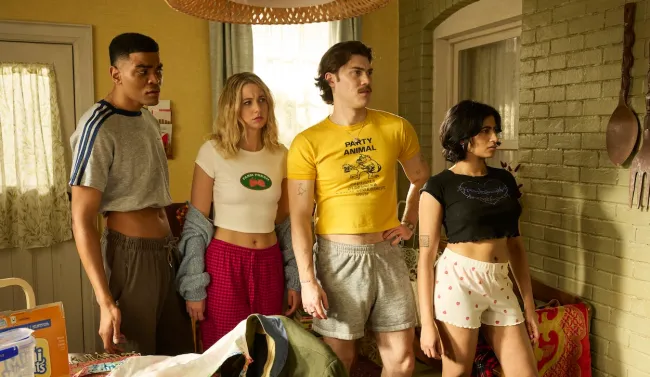
Like a clingy ex holding out hope for a reunion, “Adults” is desperate to show you it’s changed — for the better, and quite possibly for good. The FX comedy (streaming on Hulu and airing on FXX) didn’t transform so totally between its first and second seasons you’ll question what brand new show just slid into your viewing queue; it merely evolved enough to convince you the bad times are a thing of the past, and the good times of the present never have to end.
That’s both expected (for ensemble comedies, if not TV in general) and a notable feat, considering its initial impression. Created by Ben Kronengold and Rebecca Shaw, “Adults” — a Gen-Z “Friends” minus one friend and plus people of color — debuted to mixed reviews and cultural apathy. Critical consensus puts the first season somewhere between Hulu’s D.O.A. “Not Suitable for Work” (53 rating on Metacritic) and Amazon’s slightly buzzier “Overcompensating” (72). Whatever viewership it tallied wasn’t impressive enough to be included in the renewal announcement.


Dig deeper and there are cracks in the sitcom’s foundational elements, i.e. perspective and characters. “I always thought the world was going to be waiting for me, and instead, they’re just annoyed that I’m here” is about as close as “Adults” gets to a take on twenty-something malaise in 2026. That’s OK — hang-out comedies don’t have to be about anything urgent — but they do need to be inviting, and Season 1 is rarely that.
Take the man behind the quote, Samir (Malik Elassal), who’s introduced as an aspiring FinTech bro in the middle of making amends for sleeping with a woman who was too drunk to consent. Yee-ikes! Then there’s Billie (Lucy Freyer), who threatens her boss with a (fake) sexual harassment claim in a misguided attempt to climb the ladder. Double yikes! And these two are our “will they or won’t they” couple! Who’s rooting for them? Who’s even eager to hang out with them?
Hence, changes. Season 2’s biggest swerve is also the easiest to overlook. At the end of July, “Adults” released a standalone episode with a proper origin story for our familial five-some. Origin story? Standalone episode? After a bad first season? That’s right, they made a new pilot! Hulu even lists “Marathon Day” as the first episode of Season 1, bumping the former premiere (“The Window”) to an inconspicuous Episode 2. Of course, that means anyone who logs in to watch Season 2 will have to scroll back to the beginning of a season they think they’ve already watched to find one of the new episodes (and many more may watch “all” of “Adults” without ever realizing there’s one more episode, lurking right where they started). But hey, “Marathon Day” isn’t for the devout; it’s to convert the dubious.
Does it work? Kind of. In explaining how Paul Baker (Jack Innanen) joins the group, “Marathon Day” effectively reorients the ensemble around a new focal point (Paul Baker) while providing the series a fresh (albeit broad) thesis statement: True friends can save you when you can’t save yourself. That’s good! That’s smart! That’s comforting!
But while the new pilot is a step up from the old pilot, it’s inconsistent with its character logic and light on laughs. Too often in Season 1, storylines chase the edgiest angle without considering the consequences for its characters. Samir’s original introduction aims for laughs about what it’s like to be single after coming-of-age during #MeToo, but in doing so, it labels one of the series regulars as dumb, sketchy, and narcissistic, which doesn’t line up with the rest of his depiction.
Billie’s false sexual harassment claim runs into similar issues, as does her arc in the new pilot, when she betrays her principled stand — honesty is always the best policy — to help Anton (Owen Thiele) avoid getting caught in a lie. Her elaborate assistance could work as a testament to how far real friends will go for each other, but not when she’s also lying about her job title to impress people (and secure preferential treatment at her beloved office supply shop). She’s selfless and selfish! She’s all over the map! Just tell me who these people are so I can laugh with them!

To its credit, “Adults” started course-correcting before the first season wrapped. Where the original pilot saw its characters struggling to accept that being the victim of horrific abuse doesn’t equate to being a good person, the second-to-last episode, “Annabelle,” forces them to face the same perceived incongruity when Paul Baker and Anton look after a young woman visiting New York for access to essential health care… and she quickly reveals herself to be an ungrateful hellcat. The two men go out of their way to meet her acidic insults with instructive kindness, but in forcing them to see her beyond the stereotype of a helpless no-nothing from the sticks, Annabelle (Lilah Guaragna) drags “Adults” to its deepest connections and heartiest laughs yet.
Season 2 nearly wipes out trying to ride that wave. The first scene sees Issa (Amita Rao) so overwhelmed with excitement, she extends a long take by breaking the fourth wall. (“It’s Season 2, Paul Baker. We’re doing a oner.”) There’s a recurring joke where one character references a movie no one has seen (including the referencer), and the episode — which is all about erasing or coming to terms with embarrassing secrets they’ve since outgrown — ends with footage of the cast’s own semi-embarrassing videos, as a gag reel-esque shortcut to connect with the audience.
Does it matter that the videos fall well short of anything as shame-inducing as what their characters reveal? Or that characters shout meta filmmaking terms while reveling in a shared ignorance of some of the most popular movies ever made? Or that the joke the oner builds to makes no sense? Not really. The premiere is in kitchen-sink mode, throwing everything it can at the audience to convince them it’s worth sticking around.
And it is! Turns out “Adults” didn’t need to shoot a new pilot because the Season 2 premiere serves the same function, only better. The blind confidence in every joke, coherence be damned, actually works to 201’s advantage once the A-story sets in: Paul Baker has a secret. The sensitive, sweet, bisexual himbo is also a loud, agro, straight-coded bro — how he presents just depends on who he’s with. So when Paul Baker’s chill, “adult” friend group comes face to painted-ass with Baker’s roaming gang of frat-like freaks, a chaotic war to identify the one true Paul ensues. (Naturally, the two crews try to mingle, and naturally, it goes badly.)
Not only does “The Scrub” explicitly ask us to question what we think we know about these characters, it also shrewdly juxtaposes the core five-some against a truly obnoxious horde of man-babies. Similar complaints were levied against the main ensemble in Season 1, when their arrested development and self-centeredness soured the chill hang. But to start Season 2, there’s a gaggle of guys who rate each other’s shits, smack each other’s balls, and howl uncontrollably at the sight of six-pack. They can’t even feign maturity for the length of a lunch without giving into their solipsistic cravings. The message is clear: These guys suck, which by comparison, makes our protagonists look pretty fun.
Briefly combining the friend groups makes for a rollicking start, and Season 2 keeps spirits high by leaning on a stockpile of sitcom tropes. After a lore-building dump of their dark secrets, Billie pretends not to freak out over getting older, Anton really freaks out when his sister refuses to see him as a grown-up, Issa gets a new job, everyone switches rooms, and everyone might get evicted! Toss in a clever subversion of the drug-trip episode (with a real-time ticking clock counting down until the acid hits), and “Adults” finds its groove in the comforting embrace of classic comedy concepts. Rather than reaching for topical talking points, it thrives within relatable, time-tested conventions.

Better still is how the season handles its love triangle. At the end of Season 1, Issa agrees to marry Paul Baker in order to keep him from getting deported. But when she gets cold feet, Paul Baker has to pick one of the other three housemates — and he chooses Anton. That would be all well and good (everyone loves Anton), except for their low-key flirting (throughout the back half of the season) and high-key kiss (in front of everyone, post-nuptials, at their friends’ urging). Now, in Season 2, Issa is on the lookout for signs that her boyfriend is crushing on another housemate, while Anton and Paul Baker keep a watchful eye on one another, as much to quell further flirtation as to savor it.
How Kronengold and Shaw navigate the relatively fresh waters of a sexually fluid friend group proves to be one of the series’ strongest attributes, in part because they don’t over-emphasize or over-complicate the raw human emotions driving the romance. They give each character ample room to be understood, by the audience even more than each other, and they edge the relationships forward within the sturdy structure of a laugh-first sitcom. Thiele remains the stand-out actor (he’s completely dialed in), and Innanen is innately affable (or very, very good at playing innocent without slipping into stupidity), which makes putting the pair at the show’s center a crucial, rewarding adjustment.
Perhaps all “Adults” needed was time — eight episodes is a tight timeframe to hone a hang-out comedy, especially when remembering past versions (“Friends,” “Seinfeld,” “New Girl”) got thrice as many episodes in a single season. If so, Season 3 is on pace to be an all-timer. “Adults” is a show about finding yourself in your twenties, and in Season 1, it felt like it. Too many brash blunders led to too much spoiled fun. But Season 2 clocks the fitful maturation process without mirroring as many of its youthful mistakes.
That’s the nice thing about TV when it’s made the right way: Change isn’t just real. It’s expected.
Grade: B
“Adults” Season 2 premieres Thursday, August 27 at 9 p.m. ET on Hulu and FXX. All episodes will be released at once on Hulu and air weekly on FXX (with two episodes the first week and single episodes thereafter.)
>
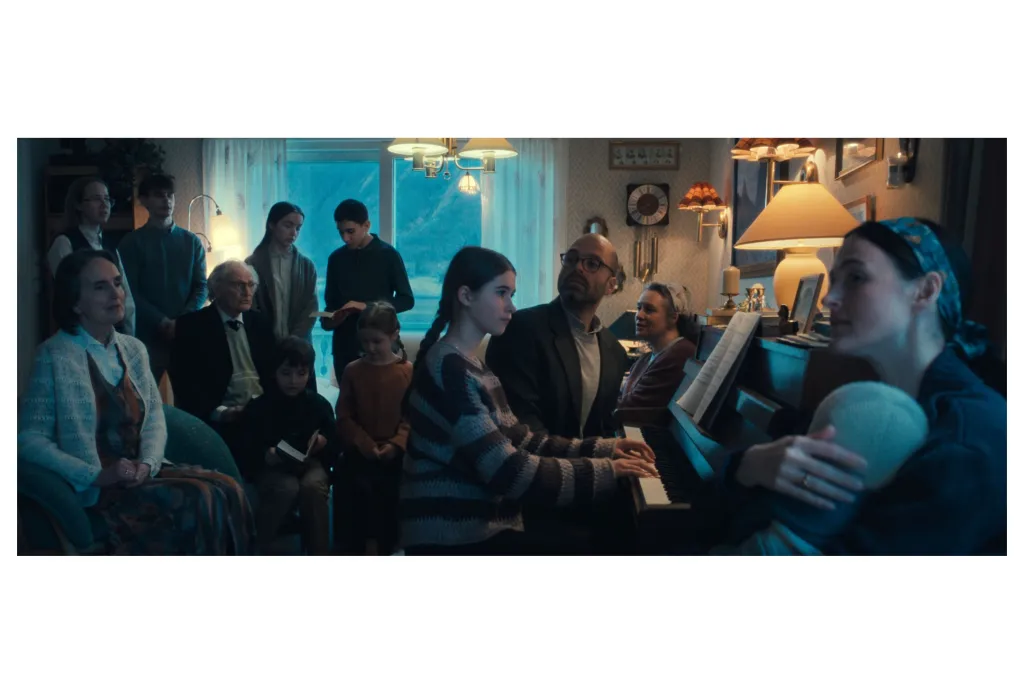
Neon has debuted the official trailer for Cristian Mungiu’s Cannes Palme d’Or winner Fjord ahead of its U.S. theatrical release on October 9.
Reinsve stars as a Norwegian woman who relocates with her devout Romanian husband (Stan) and their five children to a remote, close-knit, coastal town.
Their teenage children form a fast bond with a neighboring family as unease begins to simmer around their rigid beliefs. When allegations of abuse emerge, they are forced to confront a system of judgement that blurs the lines between concern and prejudice.
Neon acquired U.S., Canada, UK, Australia and New Zealand rights to the film on the eve of its world premiere in Cannes and then scored its seventh straight Palme d’Or win after it scooped the top prize.
Deadline’s Chief Film Critic Pete Hammond praised Mungiu for fearlessly tackling contemporary controversial societal issues without taking sides.
“Fjord is an intelligent and gripping movie that finds its power in providing no easy answers, only questions about what is right and what is wrong,” he wrote.
With strong performances from awards regulars Stan (The Apprentice) and Reinsve (Sentimental Value), Fjord is likely to be part of the upcoming awards season conversation over the coming weeks and months.
>
Editor’s note: This review was originally published on January 23, 2026 out of the 2026 Sundance Film Festival. The film will open NYC’s Film Forum on Friday, August 28, with expansion to follow.
More than any other film that comes to mind, Rafael Manuel’s “Filipiñana” taps into something that I’ve always found inherently sinister about golf courses: Sprawling gardens of solipsism that invite players to compete against themselves (and offer masters of the universe an ideal environment to affirm their status as they broker deals with each other between holes), they’re so elegantly imposed upon the land that it’s easy to forget that something else was ever there in the first place. The process evokes an uncanny kind of double terraformation — 150 acres of earth mulched into a more peaceful and better-manicured version of itself where people can forget how weird it is to see random sandpits and perfect circles of grass.


Obliviating the past is always a happy byproduct of gentrification, but with golf courses that always seems to be a more deliberate part of the agenda. It’s no wonder Americans love them so much, or that we’ve left them behind as a parting gift for some of the countries we’ve colonized. Not “here’s something to remember us by” so much as “here’s something to help you forget what it was like before we got there.”
I don’t know how many golf courses there were in the Philippines when America relinquished control over it in 1946, but today there are between 30 and 40 in the vicinity of Manila alone. One of them was built over a former sugar plantation where 14 striking workers were massacred in 2004. Manuel is vague about the history of the fictional country club where his languidly unnerving “Filipiñana” takes place (though the backstory of club president Dr. Palanca does eventually snap into focus), but the director shoots the place with a Haneke-like remove that makes every member, caddie, and Chinese tourist feel like they’re conspiring to bury an awful secret of some kind.
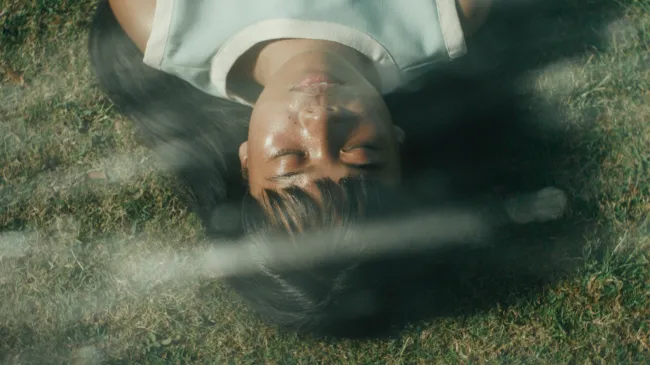
The only potential exception is 17-year-old Isabel (Jorrybell Agoto), who’s recently moved to the big city from the northern region of Ilokos and found a job as the country club’s newest tee girl. I feel like most people wouldn’t be comfortable playing at a place where underpaid teenage girls — dressed like flight attendants in PanAm-inspired turquoise uniforms — are forced to sit inches away from their backswing between strokes, but the patriarchal culture at Dr. Palanca’s takes pleasure in the many different ways that golf allows the rich to lord over the working class. The members don’t care about the game (most of them cheat without thinking), but they love that it requires so much labor for them to enjoy. They love that it allows them to make sport of their country’s enduringly colonialist spirit.

The sly and needling “Filipiñana” invites us to see the country club from several different points of view, if only so that we can feel them all sludging together under the brutal Manilan heat. We enter the club as a group of disembodied foreign tourists, bemused by the band of blind musicians who welcome every new guests, and the rhythmic way that everyone on the driving range swings their clubs in perfect sync (Manuel cites Jacques Tati as a major influence, but the comic interludes have a satirical lightness more reminiscent of “L.A. Story” than “Playtime”). We also experience it through the eyes of a privileged, light-skinned, and unyieldingly skeptical expat named Clara (Carmen Castellanos), whose fatcat uncle is desperate for her to move back from New York. She talks to the caddies with respect, and is clearly repulsed by everything the club represents, but can’t quite bring herself to voice her concerns.
And then there’s young Isabel, the closest thing we have to a protagonist, who’s a bit more determined to get to the root of her disquiet. More composed than Lucrecia Martel’s “La Ciénaga” but similarly determined to weaponize its languidness, Manuel’s narcotized film spends the brunt of its time following the not so naive Ilokan girl as she watches the country club sweat out its sins. She pokes at the mangos that fall on the course, spies on Dr. Palanca as he canoodles with his personal caddie in the shade, and stares at the imported pine trees that are planted around the fairways. Every time one of them dies, another is simply planted where it stood; the golf club doesn’t have a past, and if not for its heat, it wouldn’t have a sense of place either, as Filipiñana slyly positions globalism as an act of forgetting unto itself. (One final but unavoidable point of reference: the work of Jia Zhangke, who joined this movie as an executive producer in the weeks before its Sundance premiere.)
Eventually, Isabel is tasked with returning a misplaced golf club to Dr. Palanca, which spurs her closer into the belly of the beast, and closer to the source of her nagging unrest. Her quest isn’t slow so much as thoroughly narcotized, as Manuel is less interested in generating drama or suspense than he is in crystallizing the air of inaction that allows the country club to be such a lucid — and lethargic — display of colonial torpor at work. Every 4:3 shot is framed to maximize the social verticality of the club, and every sequence is edited to evoke the indolent energy of a hot car on a hot summer’s day. No one has the lifeforce required to fight back against the structural violence that keeps this place humming. No one has the fire left over to tell off the pervy receptionist, or to complain when they get hit in the face by a ball from the driving range, or to nominate someone besides Dr. Palanca in the club’s upcoming election. Everyone at the club chooses to be as blind as its band of musicians.
In that light, the fact that Manuel’s satire operates with all the subtlety of a Ruben Östlund film could be argued as more of a feature than a bug, as “Filipiñana” takes pains to leverage the obviousness of its scenario against the inaction that it inspires. As viewers, however, that friction isn’t quite enough to sustain our attention, and it isn’t until the climactic scene that Isabel’s story distills a sense of urgency from the nebulous atmosphere that surrounds it — that the political finally assumes personal weight. It’s too little too late for a film that internalizes its characters’ struggle to speak up for the past, but “Filipiñana” at least saves its finest stroke for last, as the most crucial moments of its story unfold while the closing credits blithely scroll by, the final moments of Manuel’s feature debut acutely subverting the grammar of Western cinema to literalize Isabel’s relationship to her own erasure.
Grade: B
“Filipiñana” premiered at the 2026 Sundance Film Festival.
Want to stay up to date on IndieWire’s film reviews and critical thoughts? Subscribe here to our newly launched newsletter, In Review by David Ehrlich, in which our Chief Film Critic and Head Reviews Editor rounds up the best new reviews and streaming picks along with some exclusive musings — all only available to subscribers.
>

EXCLUSIVE: The Writers Guild Foundation has revealed the latest cohort military veterans to participate in its Veterans Fellowship program.
The 2026 program will include Jon-Alexander Genson, Kat Castañeda, Manda K. Skelton, Shain Brenden, and Shannon Corbeil.
They will be paired with five mentors: Dennis Lehane (Smoke, Black Bird), David Schulner (New Amsterdam, Memory of a Killer), Aron Eli Coleite (The Spiderwick Chronicles, Locke & Key), Dayo Adesokan (Superstore, Party Down), and Brian Studler (The Blacklist, Motherland: Fort Salem).
The goal of the intensive mentorship program is to provide educational resources, professional guidance, and career-building opportunities specifically to military veterans who are seeking a breakthrough into the television industry.
This is the program’s third year, and once again it will be led by instructor Eli Edelson, a development executive and writer. The fellowship builds on the success of the WGF Veterans Writing Project, which is a yearlong mentorship program that has helped military vets develop their screenwriting craft for more than a decade. Fellowship alumni have had scripts optioned, secured representation and landed positions on shows including Paradise, Watson, Memory of a Killer, and American Blue.
“While the industry landscape continues to be challenging, I believe there will always be a place in Hollywood for writers with incredible stories, and these five talented military service veterans have more than a few stories to tell. With the help of their high-level mentors and the community of the Writers Guild Foundation, I have no doubt they will find their place in the writers’ room before long,” Edelson said in a statement shared with Deadline.
>

Ukraine file formal complaint to FIA ethics committee over decision to lift ban on Russian competitions

5 Best Wave Accounting Alternatives for 2026

Debuts Official Trailer For Cannes Palme d’Or Winner ‘Fjord’
-

 movies3 months ago
Search For Canadian TV Actor Stewart McLean Now Homicide Investigation
-

 Fashion9 years ago
These ’90s fashion trends are making a comeback in 2017
-
Fashion9 years ago
According to Dior Couture, this taboo fashion accessory is back
-
Fashion9 years ago
Model Jocelyn Chew’s Instagram is the best vacation you’ve ever had
-
Fashion9 years ago
Emily Ratajkowski channels back-to-school style
-
Fashion9 years ago
9 Celebrities who have spoken out about being photoshopped
-
Fashion9 years ago
Your comprehensive guide to this fall’s biggest trends
-

 Anime3 months ago
Rurouni Kenshin: Hokkaido Arc Manga Takes 1-Issue Break – News