
Tech
Anthropic and OpenAI are joining the AI stage at TechCrunch Disrupt 2026


AI hasn’t just changed how startups build; it’s broken how they sell, secure their data and customers, and scale it more rapidly than ever before. At TechCrunch Disrupt 2026, the AI Stage is back to dig into the single hottest topic in the community for the past few years, presented by Google for Startups. This time around, we’re exploring the business models AI is rewriting, the wealth of unsolved security gaps, and the entirely new job categories AI has created from scratch.
From October 13–15 in San Francisco at Moscone Center, join leaders from across the AI industry as they get into the real questions founders are facing right now. We’re talking about the matter of how to price AI products when models become commoditized, why agent security has to be rebuilt from the infrastructure up, and what it actually means to have a go-to-market plan in an AI-native world.
We’re also closing in on the end of our current pricing window, so your chance to save up to $200 is ending soon, so grab your ticket here before it’s gone. Without further ado, let’s see what’s on deck for the AI Stage, with more announcements to come:
What Anthropic Sees When Enterprises Actually Deploy Claude
Most enterprise AI conversations happen before deployment. This one starts after. As Head of Applied AI at Anthropic, Cat de Jong works directly with the enterprises putting Claude to work across their most critical workflows — and sees patterns that never make it into press releases. Where deployments succeed immediately. Where they stall. What separates the organizations extracting real value from the ones still running pilots eighteen months in. This session pulls back the curtain on what applied AI actually looks like inside the world’s most closely watched AI company — and what it reveals about where enterprise AI is really headed.
With Cat de Jong, Head of Applied AI, Anthropic
What Building AI Native Actually Means. Join the Conversation with OpenAI’s Head of Productivity
Two years ago, GTM engineering did not exist. Today, it is one of the fastest growing roles in the industry, with independent practitioners building million-dollar businesses. This session traces how AI collapsed the traditional go-to-market stack and created an entirely new discipline in its place. Walk away knowing what AI-native GTM looks like in practice and how it’s changing the way companies grow.
With Tara Seshan, Head of Productivity, OpenAI
The Enterprise Isn’t Broken. Your Assumptions About It Are.
AI is now making autonomous decisions inside the most sensitive enterprise systems in the world, at a speed traditional security frameworks weren’t built for. This session breaks down what enterprise AI security actually requires in 2026 — from observability and governance to the architecture that separates deployments enterprises can trust from ones they can’t afford to touch.
With Arsalan Tavakoli, Co-founder and SVP of Field Engineering, Databricks
The Agent Security Problem Nobody Is Talking About
Agentic AI is powerful, but it was never built to be secure. Now, enterprises trying to harness that are learning to rebuild the basic elements of cybersecurity from scratch. This session is a candid technical conversation about what agent security actually requires at the infrastructure level, why application-level permission models are fundamentally flawed, and the architectural decisions that really matter when deploying agentic AI.
With Ric Smith, President of Product & Technology at Okta
The Video Intelligence Race: Real-Time, Reasoning, and What Comes Next
Visual AI has moved past attention-getting demos into real-time inference and physical reasoning. Founders building at the frontier discuss what happens when generation crosses into genuine intelligence.
With Dean Leitersdorf, Co-founder and CEO, Decart, and Amit Jain, Co-founder and CEO, Luma AI
Rewriting SaaS: Why AI Breaks the Old Business Model
Is the SaaS playook dead, or is it just evolving? This session brings together founders and platform leaders who are grappling with that question in real time – and coming away with real answers. Walk away with a sharper understanding of how to price AI products sustainably, how to build defensible moats when models are commoditizing, and how to make SaaS work in the AI era.
With Arvind Jain, Founder & CEO, Glean, Barr Moses, Co-founder & CEO, Monte Carlo, Cathy Gao, Partner at Sapphire Ventures, and Aaron Jacobson, Partner, NEA
The GTM Engineer: How AI Created Tech’s Next Big Job Category
GTM engineering didn’t exist two years ago — now it’s one of the fastest-growing roles in tech, with independent practitioners building million-dollar businesses. Walk away knowing what AI-native GTM looks like in practice and how it’s reshaping growth.
With Kareem Amin, Co-founder and CEO, Clay
Securing the AI Enterprise: Why the Cloud Just Got a Lot More Complicated
AI is running inside the most sensitive enterprise systems in the world, making autonomous decisions at a speed and scale that traditional security frameworks were never designed to handle. This session delivers the infrastructure-level view of what enterprise AI security actually requires in 2026, from observability and governance to the architectural principles that separate deployments enterprises can trust from ones they cannot afford to touch.
With Chet Kapoor, VP, Security Services & Observability, AWS, Katie Moussouris, Luta Security, Wendy Nather, 1Password
Whether you’re rethinking your pricing model, closing the security gaps in your AI stack, or building the go-to-market playbook that doesn’t exist yet, the AI Stage is where the builders shaping this next wave get specific.
Plus, you’ll be doing all this alongside 10,000+ startup, tech, and VC leaders, with access to every other stage, Startup Battlefield, a wealth of networking opportunities, and the exhibition floor. Register today!
Learn more about Disrupt 2026
Check out Disrupt’s headline speakers
Everything Founders should know about Disrupt
Get the best hotel deals ahead of Disrupt
When you purchase through links in our articles, we may earn a small commission. This doesn’t affect our editorial independence.
>
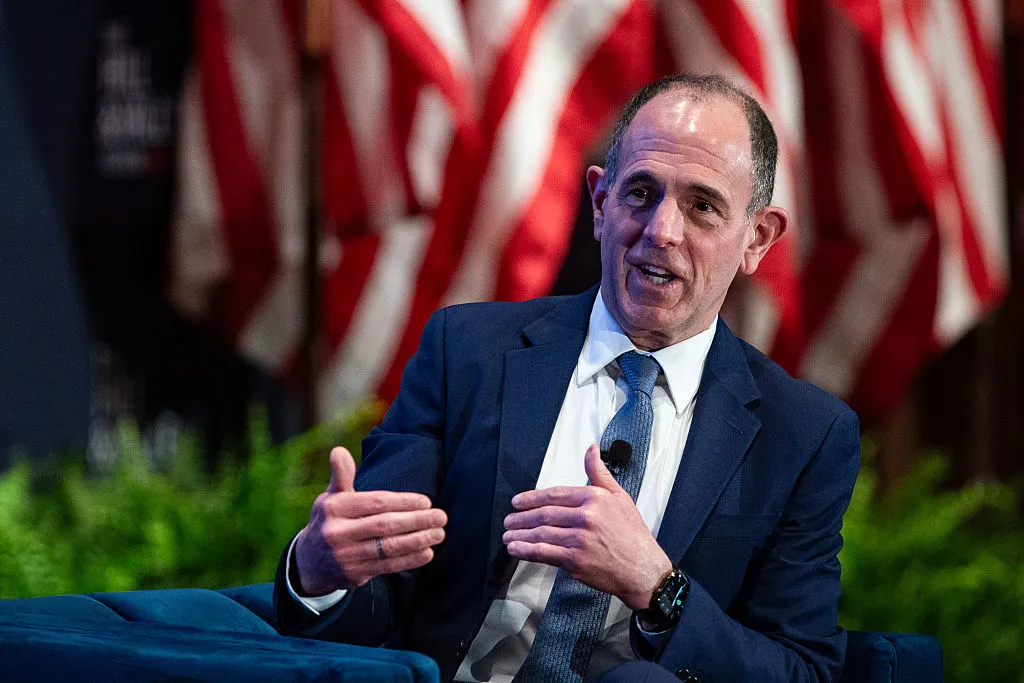
Mark your calendars: on Thursday night, September 10, StrictlyVC — TechCrunch’s boutique evening series — is heading to New York’s West Village (the real one — brownstones, cobblestones, and all — not the Mission Bay stretch of San Francisco that’s earned the nickname “Vest Village” for all the Patagonia-clad VCs roaming around).
It’s our first New York event in two years, and after a run of great nights this year in San Francisco, L.A., and Athens, we couldn’t be more excited to be back — with a stacked lineup to match. What’s in store:
Keith Rabois. We’re kicking off the night with the inimitable Keith Rabois, who recently relocated East from Silicon Valley and, true to form, seems intent on shaking things up wherever he lands. Rabois has never been shy about what he thinks is working in venture and what isn’t — he’s backed Ramp four times and invested as often in State Affairs, a company using AI and local journalists to track statehouse-level news and policy data across all 50 states. He’ll share his strong opinions on founders who raise more capital than they actually need, just because they can. And we’ll get him talking about Khosla Ventures’ boldest AI bet yet: its early $50 million check into OpenAI back in 2019 when the outfit had no clear business model — plus what he makes of the narrative that OpenAI is facing more headwinds right now than its rivals.
Craig Shapiro and Jason Levien. After our sit-down with Keith, stick around for a conversation you won’t find anywhere else. Craig Shapiro’s venture firm, Collaborative Fund, is generously co-hosting the evening with us, and we’ll sit down with Shapiro and Jason Levien, CEO of D.C. United, to talk sports organizations as business investments — and the increasingly tangled intersection of sports, fandom, commerce, and community.

Tristan Walker. Staying on the theme of community, we’ll dig into a conversation with two founders building for a world where AI does more — but also takes something away. Tristan Walker, who sold his last company, Walker & Company Brands (maker of Bevel), to Procter & Gamble in 2018, is back with Heirloom Craft, a startup focused on reshoring American fine craftsmanship — training a new generation of artisans and rebuilding the supply chains behind them.
Brynn Putnam. Walker will be joined by Brynn Putnam, who sold her last company, connected-fitness startup Mirror, to Lululemon for $500 million, just three years after it was launched. Putnam’s newest venture is Board, a game company blending physical play with AI-powered creation tools — built as something of an antidote to the isolation tech has fueled, bringing people back together around, literally, a board.
Deven Parekh. Last but not least, we’re thrilled to catch up with Deven Parekh, who has co-run Insight Partners — the New York powerhouse investment firm — for more than 25 years. Insight doesn’t do a lot of press, but Parekh has agreed to pull back the curtain on how the firm is thinking about a landscape where it’s gotten harder to tell asset classes apart, as some of the biggest funds have grown exponentially larger. What we want to know: how does Insight compete in a world where capital itself is a commodity, but the potential returns on massive investments have also never been bigger?
Expect a fun night all around, with drinks, hors d’oeuvres, and plenty of networking before and after the fireside chats, including with Connie Loizos, Rebecca Bellan, and other TechCrunch writers (as well as our friends from other outlets).
Giant thanks again to the team at Collaborative Fund for making the night possible. More details and ticketing info right here. See you in the (real) West Village.
When you purchase through links in our articles, we may earn a small commission. This doesn’t affect our editorial independence.
>

Apple sold more iPhones even as the global smartphone market moved sharply in the opposite direction.
The iPhone 17 was the world’s best-selling smartphone in the second quarter of 2026, accounting for 6% of global smartphone unit sales, according to Counterpoint Research’s Global Handset Model Sales Tracker.
The result marks the second straight quarter in which the standard iPhone 17 has taken the top spot. Apple also grabbed second and third place with the iPhone 17 Pro Max and iPhone 17 Pro, respectively.
For buyers and IT teams, the results show demand concentrating around a smaller group of Apple and Samsung devices as component shortages put pressure on prices and product availability.
Apple and Samsung each placed five models in the global top 10, with the two companies together accounting for 26% of worldwide smartphone unit sales. That was up 2 percentage points from a year earlier and represented the highest top-10 contribution for a June quarter, Counterpoint said.
Counterpoint estimated that the overall smartphone market contracted 11% year over year, while Apple’s unit sales increased 5%.
“iPhone sales increased across India, Japan, and the MEA, and nearly doubled in South Korea in Q2 2026, driven by the iPhone 17 series,” Counterpoint Senior Analyst Karn Chauhan said.
Samsung’s flagship push pays off
Samsung’s Galaxy S26 Ultra ranked fourth and became the quarter’s best-selling Android smartphone. It also accounted for more than half of Galaxy S26 series sales.
The S26 series launched later in the year than its predecessor, placing more of its initial sales period within the second quarter. Counterpoint said the Ultra also benefited from its privacy display and enhanced AI features.
“The Samsung Galaxy S26 Ultra was the best-selling Android smartphone,” Counterpoint Senior Analyst Harshit Rastogi said, noting that it was the first ultra-premium Android phone to lead Android sales in a June quarter.
Samsung also placed the Galaxy A07 4G, Galaxy A17 5G, Galaxy A17 4G and Galaxy S26 5G in the top 10. Counterpoint attributed their performance to factors including affordability, broad availability and long software support, which helped Samsung remain competitive outside the premium segment.
Must-read Apple coverage
The market is getting more concentrated
The rankings point to a broader shift in the smartphone business: the 10 leading models are accounting for a larger share of global sales.
Counterpoint linked the growing concentration partly to the global RAM shortage, which is pushing manufacturers to focus resources on their strongest volume and premium models. Rising smartphone prices are also making premium devices a larger part of the market.
That environment may play to Apple’s strengths, given its relatively concentrated product lineup and presence across both premium and mainstream price categories. The standard iPhone 17’s upgrades also narrowed the feature gap with the Pro models, making the base version more compelling without eliminating demand for the higher-priced devices.
The iPhone 17e added another point of strength, reaching seventh place with MagSafe and higher storage at the same price as its predecessor. Carrier promotions helped support demand in the U.S. and Japan.
What comes next
The biggest question is whether Apple can maintain that momentum as the smartphone market moves into the second half of the year.
The Q2 results show that consumers are still willing to spend on premium phones, but the concentration of sales also highlights a risk for manufacturers: supply constraints and higher component costs could make it harder to offer affordable devices.
For buyers and IT teams planning device purchases, the next two quarters will show whether component shortages translate into higher prices, narrower product choices or longer replacement cycles. Apple and Samsung currently have the advantage, but maintaining it will depend on keeping their most popular devices available as supply pressures increase.
Read more: Apple’s upcoming iPhone 18 Pro could face memory supply pressures as rising component costs reshape smartphone production and pricing.
>

Bill Gates has spent decades betting on technology to change the world. Now, he argues that AI should not be allowed to replace people in certain jobs, even when it can.
In an essay published Aug. 26 titled “The turbulent AI era is here. The choices we make now are critical,” Gates warns that the AI transition could become one of the most disruptive periods in modern economic history. He argues that automation could spread from software and office work into areas such as construction and hospitality as robotics improves.
His answer is not to stop AI outright, but to establish limits around some forms of automation before mass displacement becomes harder to manage. For employers, the proposal raises questions about which decisions and services should always retain human involvement, regardless of what AI can do.
Gates calls the idea “Human Reserved,” borrowing from the concept of nature reserves.
In his argument, society could decide that some work is worth preserving for humans even when machines can perform it. He also proposes taxing AI tokens and robots to reduce the financial incentive to replace workers as automation changes the labor market.
AI can do more, but Gates says that doesn’t mean it should
Gates’ concern is that this wave of automation may be different from earlier technological shifts that created new forms of work that still required human labor and cognition. Gates argues that AI can increasingly perform tasks that depend on human cognition, while advances in robotics could extend that pressure into physical work as well.
That is where his “Human Reserved” idea comes in.
Gates proposes that society deliberately keep some jobs for humans even when AI becomes capable of performing them, much like a nature reserve protects land that could otherwise be developed. He points to childcare, jury service, education and health care as areas where society might decide to preserve meaningful human involvement.
The reasoning is not simply that humans will always perform better. Gates argues that some work carries a social or human value that efficiency alone cannot measure.
That distinction also explains why Gates is not presenting AI as inherently harmful. He still sees the technology as a powerful tool for improving lives, but argues that whether it reduces or deepens inequality will depend on how the transition is managed.
More must-read AI coverage
Gates wants to make replacing workers with AI less attractive
Gates’ answer to AI-driven job displacement isn’t to stop companies from automating, but to change the financial incentives behind it.
He argues that existing tax systems can make automation financially attractive because employing people creates payroll-tax costs, while investments in AI and robotics may qualify for tax deductions.
Gates therefore raises the possibility of taxing AI tokens and robots to narrow that difference. The revenue could potentially support workers affected by automation, although his essay does not lay out a detailed tax rate or funding mechanism.
Without changes to the incentives, he argues, the more capable AI becomes, the greater the incentive for companies to replace workers with AI.
Some big questions remain unanswered
Gates’ proposal leaves a bigger question than which jobs should stay human: who gets to decide where AI stops?
Governments are the most obvious candidates, although Gates does not provide a detailed process for selecting protected jobs or enforcing the boundaries.
But the decision could also involve independent regulators, companies setting their own limits, industry or worker advocates, or even consumers rejecting AI in roles where they want a human involved.
Governments could establish enforceable standards, but achieving cross-border consistency may be difficult. Regulators could set sector-specific rules; companies could voluntarily offer human-only services; and consumers could influence adoption by what they choose to pay for.
That matters because the answer could directly shape how people work and use essential services. If society decides some jobs should remain human, someone still has to draw that line — and enforce it.
For now, Gates has proposed a principle rather than a workable regulatory system. Employers do not need to change their automation plans because of it, but they can already identify which decisions require human accountability, where AI should assist rather than replace workers, and where automation could create legal, safety or reputational risks.
>

Fantasy Premier League: Ranking defenders from Arsenal. Who are the best options to own?

Tottenham’s summer rebuild will be for nothing if they can’t right the wrongs at home

In praise of Mohammad Abbas, Pakistan’s under-appreciated master of seam
-

 movies3 months ago
Search For Canadian TV Actor Stewart McLean Now Homicide Investigation
-

 Fashion9 years ago
These ’90s fashion trends are making a comeback in 2017
-
Fashion9 years ago
According to Dior Couture, this taboo fashion accessory is back
-
Fashion9 years ago
Model Jocelyn Chew’s Instagram is the best vacation you’ve ever had
-
Fashion9 years ago
Emily Ratajkowski channels back-to-school style
-
Fashion9 years ago
9 Celebrities who have spoken out about being photoshopped
-
Fashion9 years ago
Your comprehensive guide to this fall’s biggest trends
-

 Anime3 months ago
Rurouni Kenshin: Hokkaido Arc Manga Takes 1-Issue Break – News